Daily insights for city builders, delivered every morning at 6 AM ET. I’m Brandon Donnelly — a Toronto-based real estate developer and founder of Globizen. I’ve been writing here since 2013.

Tag: apple watch

  • You never really own it. You simply look after it for a few years.

    I have been wearing an Apple Watch for many years and I love it. I love tracking my workouts. I love seeing my altitude when I’m snowboarding. And I love using it to pay for almost everything. Today I also learned that when you dive into a body of water, it’ll tell you the temperature of said water and your depth. It’s all pretty incredible and, of course, it’s only going to get better.

    Like clockwork (bad pun), new features are continually being added and that means that the watch I have on my wrist right now will likely be obsolete in a matter of a few years. This is a good thing because it means the tech is continually getting better. But it’s also a bad thing because it means my current watch doesn’t have any real longevity.

    Legacy watch companies like Patek Philippe have sold us on the idea that a watch is something you keep for a lifetime and then pass down to the next generation. And there’s something wonderfully romantic about this idea, which is why people do/did it.

    But today, Apple Watches alone outsell the entire Swiss watch industry. Meaning, most people have moved on from this romantic idea of a watch. We want new diving features! And there’s part of me that feels sad about this. My parents got me my current watch and it would be nice if I could tell that to the next generation of our family.

  • NFTs and real estate

    I have started using my NFT collection as a rotating face on my Apple Watch. The one you see below is a Cool Bean, but I have many others in the gallery. Lately, I have been gravitating towards NFTs on the Solana blockchain because of how fast and cheap it is to transact. Though I am still much longer with ETH.

    This is all pretty geeky stuff, but it reminded me just how early we are when it comes to web3. NFT art has exploded over the last year, but the broader ecosystem is still getting built out. We are all going to want mediums in which to display and experience this new form of art. And as soon as that happens, I suspect they won’t be thought of as “just JPEGs” anymore.

    (One of the nicest digital art displays that I have seen is the MONO X7. It’s currently available for pre-order but I haven’t yet pulled the trigger.)

    On a related note, I follow a human on Twitter who goes by 6529, because that is the Cryptopunk number that she/he owns. 6529 is incredibly bullish on crypto and NFTs, and tends to write long and insightful threads about it. One of the most recent ones is about real estate and I think that many of you will find it a worthwhile read.

    What I particularly like about it is that it reminds us that so much of what we consider to be normal and the status quo is actually just a construct that people before us created. Usually it’s not perfect and there are many inherent flaws, but it’s the best that could be done at the time. That or it just worked.

    And because it’s the way it’s been “always done”, it just recedes into the background and most of us don’t give it much thought. Of course, so much of entrepreneurship is about questioning the status quo and doing things differently. Why this way? Could it be better? And it’s precisely during these moments of change where lots of value is created.

  • Why are people buying Apple Watches?

    I have been using an Apple Watch for a couple of months now. A lot of people ask me why I feel it is necessary to have a screen on my wrist, and I certainly get why some would see it as a massive distraction. You have to be selective with your notifications. Generally speaking, I find it very useful, though not necessarily invaluable.

    But every now and then I come across a new use case and think to myself, “well this is pretty cool.” I recently discovered that you can use it for boarding passes, which means one less thing in your hands at the airport. And this week I’ve been using it while snowboarding, which is helpful if you’re trying to manage a WhatsApp group chat and you don’t want to take your phone out on the lifts.

    The numbers also suggest I’m not alone in finding utility. Here are Apple’s sales numbers from Neil Cybart of Above Avalon:

    Apple has sold more than 90 million Apple Watches to date with 29 million sold in calendar year 2019. With an average selling price of more than $400, the Apple Watch is bringing in $12 billion of revenue per year, and that total is growing by 30% per year. After taking into account upgrade trends, the number of people wearing an Apple Watch has crossed 65 million. Based on my forward projections, the Apple Watch installed base will surpass 100 million people in 2021.

    In Neil’s view, the Apple Watch is indeed one of those paradigm shifts in computing. It is taking over tasks that our phones used to do and it is allowing for entirely new use cases. Neil cites three important features. We are now able to (1) seamlessly track/monitor aspects of our health, (2) intelligently receive small bits of information, and (3) augment our surroundings (“contextual awareness.”)

    For more on why the Apple Watch is / could be fundamentally changing mobile tech, click here.

  • iPhone as a Service

    At the beginning of this year – January 2nd to be exact – Apple revised its earnings guidance, downward. It was the first time in 15 years that the company had to do this. 

    Tim Cook’s letter to shareholders, which can be found here, focuses a lot on China and its “economic deceleration.” But M.G. Siegler of 500ish Words believes that a greater pivot could be underway. His piece can be found here. It’s a good read.

    Firstly, Apple’s current growth period is probably over. And secondly, the company is likely going to need to diversify away from high margin hardware/software sales and continue to grow its Services business (something that Microsoft has, ironically, already done).

    Here is an excerpt from M.G. Siegler’s essay (Apple’s Precarious and Pivotal 2019):

    The iPhone has simply been too good of a business. And it’s hard to see what tops it. Certainly in the near term. If Services is to carry Apple in the future, it will likely be only after years of relatively stagnant iPhone revenue growth mixed with a rising overall market. In other words, time and the broader world will have to catch up. And then Apple can have their “Microsoft Moment” — a services-based resurrection of growth.

    As Tim points out in his letter, most of Apple’s Services revenue is tied to its installed base, as opposed to current period sales (also: less exposure to China). Last quarter that number was $10.8 billion – a new record.

    So what we may see in the near future is the end of outright phone purchases and instead some sort of iPhone as a Service (or iPaaS). Pay Apple every month in perpetuity; always have the latest iPhone.

    Of course, Apple has many other irons in the fire. Apple Watch has turned out to be a big business and the company is said to have 2,700 “core employees” working on its autonomous driving project. 

    Maybe some of these businesses will also end up as Services.

  • Spring forward with Apple’s new watch

    image

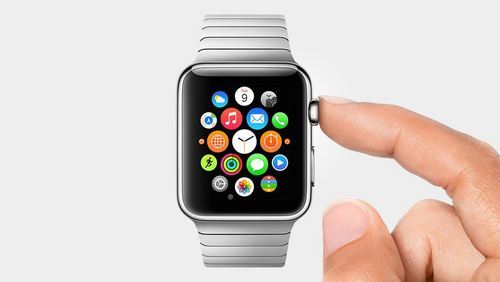
    Today was Apple’s big “Spring Forward” event. We already knew the Watch was coming, but now we know that it’ll be available for sale on April 24, 2015 and that their high-end “Edition” line will start at just $10,000.

    Within the tech community, there are mixed opinions when it comes to the Apple Watch. Some think it’ll be a total flop. Some think it’ll be the next iPhone. And some think it’ll do reasonably well, but that it just won’t be the next category killer for Apple.

    I personally think it will do really well. 

    I think there are enough use cases for which looking at your wrist is a better experience than pulling out your phone – particularly for quick glance activities. Think payments, transit fares, airline tickets, location-based notifications, and so on. 

    However, one of the big challenges for Apple Watch will be that they’re trying to replace an entrenched fashion piece. So not only is Apple trying to solve a problem that most people didn’t know they had, but they’re also trying to get people to give up their Movado or Patek Philippe – which is why they created a super high-end line.

    Whatever the case may be, I plan to pre-order a Watch next month (just the regular one, not the $10,000 one).

    I’m excited to try the health features (it’s a passion of mine). I’m excited to see what kind of data this new device generates both for me personally and in aggregate. And I’m excited to see what clever software developers end up creating for this new platform. Because that’s where the real potential lies.

    It might not seem like a big deal to move a computer from your pocket to your wrist (assuming people are willing to do that). But I think we’ll all be surprised at what kind of new ideas that generates.

    Hopefully I’ll soon be able to board a Toronto streetcar and tap my wrist to pay the fare. That would certainly be a civilized way to travel.

    What about you? Do you plan on buying an Apple Watch?

  • How are you being shaped?

    image

    “We shape the cities, and then our cities shape us.” That’s one of my favorite lines from the documentary The Human Scale, featuring Danish architect and urban designer Jan Gehl. I like it because I don’t think many of us think enough about the way in which the built environment – that we create – ultimately goes on to influence the way we live our lives.

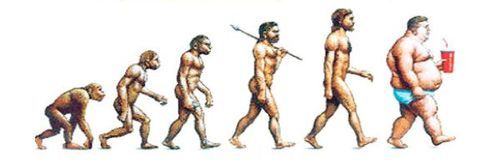
    One of the most interesting connections for me is the link between urban form and public health. There’s been a lot of talk over the years about how suburban sprawl is, or might be, making us fat (among other things). We’ve created environments that are only navigable by cars and that has forced many of us into sedentary lifestyles. We sit in our cars, and then we sit in our offices.

    So today I’d like to conduct a bit of a poll. If you’d like to participate, please share the following 3 things in the comment section below: 1) your city, 2) the type of neighborhood you live in (urban, suburban, rural, etc.), and 3) the amount of time you spend walking or doing something active on an average day.

    Here’s me:

    I live downtown Toronto in the St. Lawrence Market neighborhood (urban). I take the subway to work and the station is a 10 minute walk from my place. So as a bare minimum, I spend at least 20 minutes a day walking. But since I also walk to do most of my regular errands, and since my gym is another 10 minute walk from my place, I’d say I average a good 30-45 minutes of walking each day.

    Now it’s your turn 🙂

    This is a pretty crude survey, but with the advent of things like smartwatches and health monitors, I think we’ll soon have lots of great data on the ways in which our cities might shape our health.

    Image: The Economist

  • How smartwatches will augment location

    image

    So the rumors were right. Apple released a watch today. There will be 3 different “collections”, but lots of flexibility in terms of how each can be customized. There’s a big emphasis on health and fitness monitoring. Prices start at $350. And you’ll need an iPhone. Though you won’t be able to get one on your wrist until next year.

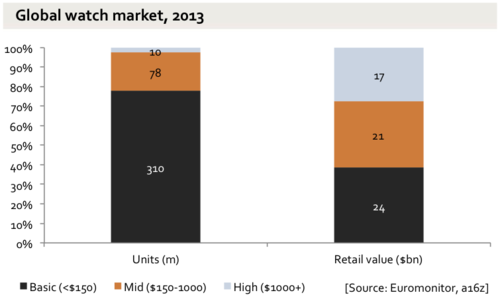
    Who knows whether or not it’ll catch on in the same way that iPod and iPhone did, but I think it has a damn good shot (more on this below). They’ve clearly put a lot of thought into both usability and the whole fashion side of the equation, which obviously needed to be done. Given that most people today use their phone for the time, the watch market strikes me as being heavily about style.

    In case you were wondering, here’s the watch market size as of 2013 (courtesy of Benedict Evans):

    image

    A lot of you might be skeptical about the need for a computer on your wrist (remember those watch calculators from the 80s?). But I think this time is different. Consider the number of people that now walk around with their phone in their hand and/or immediately pull it out whenever they have a free moment. We’ve become reliant (okay, addicted), to notifications and information.

    But in many of those cases, the smartphone isn’t the most efficient medium to be delivering those messages. Just like it’s not ideal to have to reach into your pocket to figure out what time it is, I think the watch could emerge as a new and better medium for a bunch of other pieces of information. And the big one could be location-aware or contextually-aware notifications.

    Here’s a tweet from Dennis Crowley – founder of Foursquare (Swarm) – talking about that exact thing:

    So what does this even mean?

    It means walking into a restaurant and having a tip pop up on your watch telling you what the best dish is (as shown in the tweet above). It’s driving down the street and having your watch notify you that there’s an open house 3 blocks away (and then giving you directions). It’s walking into a condo building and having your watch tell you that one of your friends is having a party on the 23rd floor. And so on.

    All of these notifications are currently already possible on your phone, but it’s not the ideal place for many of them. Which is why we’re all walking through life looking down at our phones. So while a computer strapped to your wrist may feel like we’re going further down that rabbit hole, it may actually free up more of our hands and our attention.

    And I’m sure there are many other possibilities that nobody has even thought of yet. Location just feels like a big one to me.

    //platform.twitter.com/widgets.js