Daily insights for city builders, delivered every morning at 6 AM ET. I’m Brandon Donnelly — a Toronto-based real estate developer and founder of Globizen. I’ve been writing here since 2013.

Tag: apartment

  • Most people still want to raise kids in a house (not an apartment)

    https://500px.com/embed.js

    Yesterday I ran a quick 3-4 question survey on ATC called homes for families. The objective was to get a sense of people’s preferences for apartment vs. ground-related housing (house or townhouse) when it comes time to raise a family.

    The results are public so anybody can take a look at the data. At the time of writing this post there were already 70 responses. That’s not a huge data set, but the data is more or less what I expected to see. 

    Here’s what I found (if the data set was larger, I would have made charts):

    The vast majority of respondents were from Toronto. No surprise there. That reflects the readership of this blog, which itself can be quite Toronto-centric at times. (I’ve been trying to branch out more, I swear.) That said, I was thrilled to also see respondents from cities like Seattle, Denver, Chicago, Porto, and Sydney.

    Of the people who specified that they have kids, 11% live in an apartment. 17% live in a townhouse. And 72% live in a house. If you add houses and townhouses together, you get 89% of people with kids living in some kind of ground-related dwelling.

    Of the people who specified that they don’t have kids, 61% live in an apartment. 6% live in a townhouse. And 33% live in a house. This is the kind of split that I generally expected to see for Toronto.

    For the people who specified that they don’t have kids, they were then asked where they plan to move if/when they do have kids. 13% plan to move to another apartment. 8% plan to move to a townhouse. 33% plan to move to a house. 23% don’t plan to move (i.e. they are planning to stay put). And 23% don’t plan to have a family.

    Interestingly enough, 100% of the people who said that they were not planning to move, were already living in a ground-related housing unit (a house in almost all of the cases). So in reality – and if you exclude the people who don’t plan to have kids – about 83% of respondents expect to raise their kids in a house or townhouse.

    Again, this isn’t a big sample size, but the trend appears more or less flat. 89% of respondents who already have kids are already living in a ground-related unit. And when people were asked to project where they would like to be living once they have kids, 83% said they want a house or townhouse.

    Do you think these numbers accurately reflect consumer preferences in your city?

  • Survey: Homes for families

    I was looking through real estate listings this morning (which I do quite often out of sheer interest), and I started noticing a number of 3 bedroom condos (here in Toronto) that were priced under $1 million.

    Now, this is a lot of money now matter how you slice it. But given that the average price of a detached home in the city is now well over $1 million, I can’t help but wonder if condos will become more accepted as the family home.

    I’ve written about this topic a lot, because it’s something I’m interested in and I like living in a condo. But I’m seeing far more of my network looking for a low-rise house upon marriage/kids than for a bigger apartment/condo.

    So today I thought I would run a very quick survey. There are only 3-4 questions depending on how you answer and it basically revolves around housing type and whether or not you have or plan to have a family. I also ask what city you live in because I think this will have an impact on preferences.

    If you have 30 seconds, I would love to get your input and I’m sure the ATC community would be interested as well. The responses are anonymous, but I’ve made them public. Click here if you can’t see the survey below.

    [googleapps domain=”docs” dir=”a/brandondonnelly.com/forms/d/1wyMguhSlNv6pe6DS3duyJUqpzjImHI_KiYer1CKTVxo/viewform” query=”embedded=true” width=”640″ height=”600″ /]

  • A new chapter

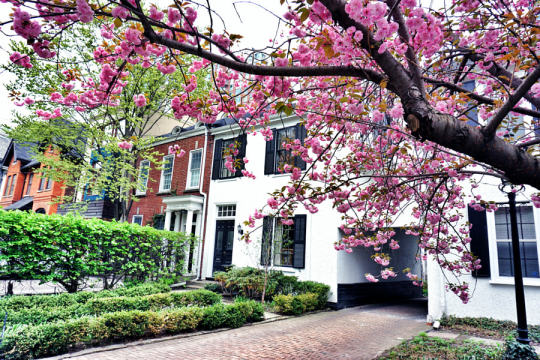
    Photograph St. Lawrence by Ralph Sobanski on 500px

    St. Lawrence by Ralph Sobanski on 500px

    I have an announcement to make on Architect This City today.

    Next week I’m joining the development team at CAPREIT (TSE: CAR.UN) here in Toronto. CAPREIT is one of Canada’s largest residential landlords. They are a growth-oriented real estate investment trust with over 41,839 residential units in major urban centers across both Canada and Ireland.

    They also happen to be headquartered in the St. Lawrence Market area, which means I now live and work in the same neighborhood. As we discussed here, location matters a lot.

    So here’s to a new chapter. I’m looking forward to diving into the multi-family business. Change is good.

  • Muuto stacked shelf system

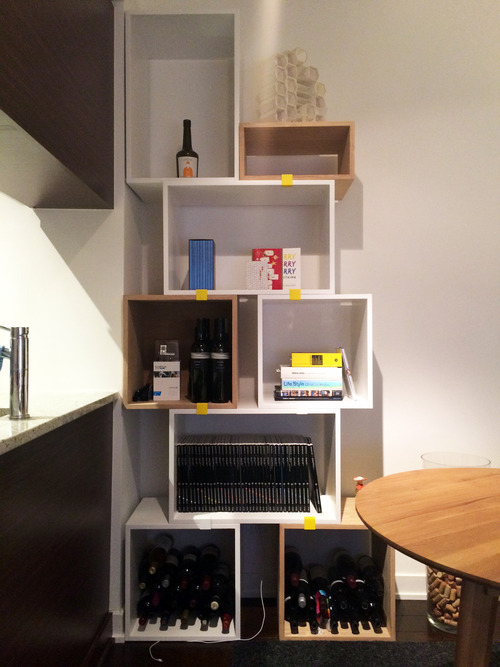
    I don’t have a lot to say today. I had a busy day and then this evening I set up some new shelving in my apartment. Here’s what it looks like:

    There’s a bulkhead directly above it (that you can’t see in this picture) and so I’ve been wanting to put shelving in this corner ever since I moved in almost 2 years ago. I haven’t really organized the contents yet, but I did get some wine into the bottom of it. First things first.

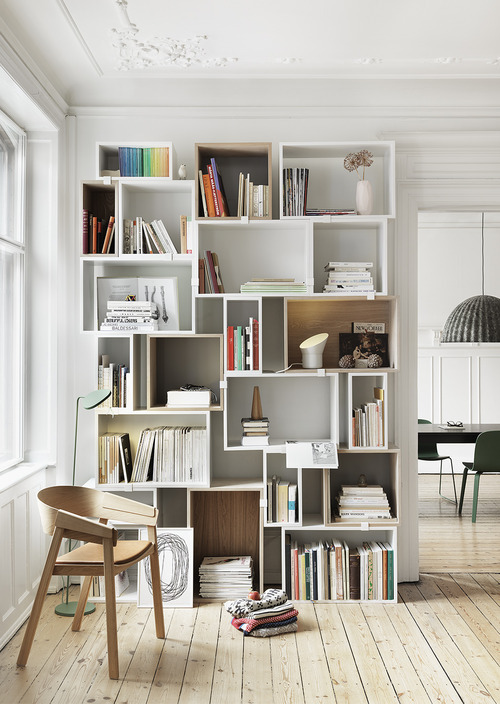
    Initially I thought about getting built-in shelves. But custom millwork is expensive and, to do something even remotely interesting, the pricing got stupid. So I searched and searched and eventually stumbled upon the Muuto stacked shelf system designed by JDS Architects.

    This is the picture that sold me:

    My setup doesn’t look nearly as impressive, but I’m still thrilled with it.

    The way it works is really simple. You stack up the boxes however you would like and then, once you’re satisfied, you just clip them together. That’s what those yellow things are in my picture. You can hide them at the back if you want, but I purposely ordered yellow ones in order to highlight how the system actually goes together.

    It wasn’t the cheapest option out there, but I’d rather have fewer things of higher quality. I already have too many things.

  • 47.55 square meters in Tokyo

    I’ve always been fascinated by Japanese culture.

    A lot of that has to do with how design and technology seem to permeate the culture. But it also has to do with how dichotomous the culture feels to me. On the one hand they’re at the forefront of design and technology, and on the other hand they are very much steeped in tradition. It has always felt like a unique and special place to me.

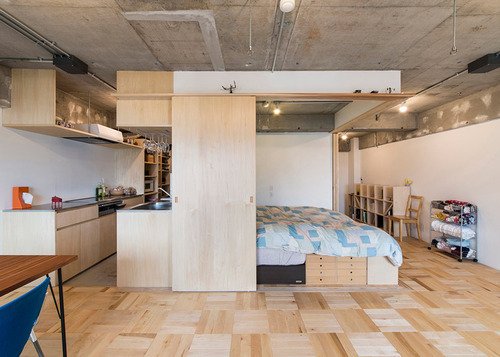
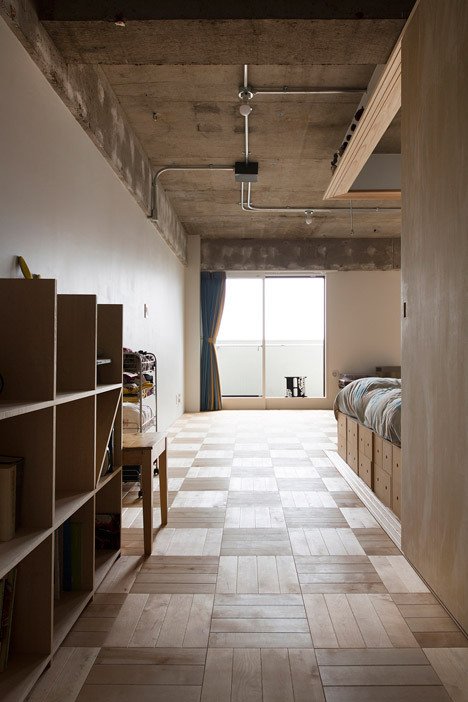
    So today on ATC I thought I would share a piece of Japanese architecture that I found on Dezeen. It’s a 47.55 square meter (512 square foot) apartment in Tokyo that was recently renovated by Yuichi Yoshida & Associates. 

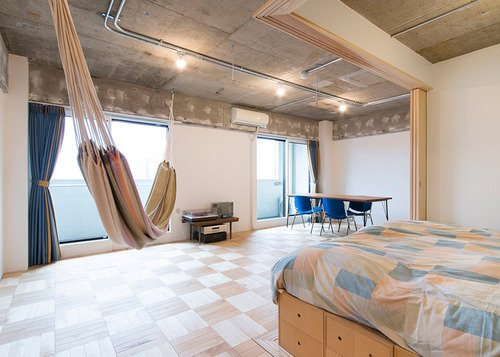
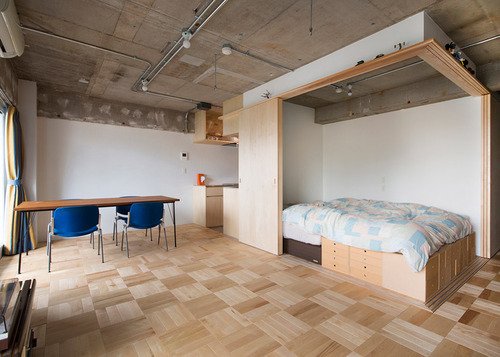
    Here are three views of the main living area:

    image

    image

    Here’s the view from the main entrance:

    image

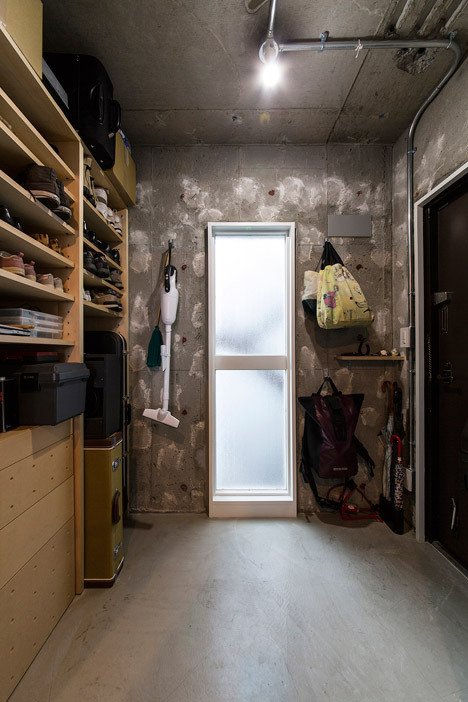
    Here’s the walk-in-closet/storage area (notice how the exposed concrete walls have been dabbed with plaster):

    image

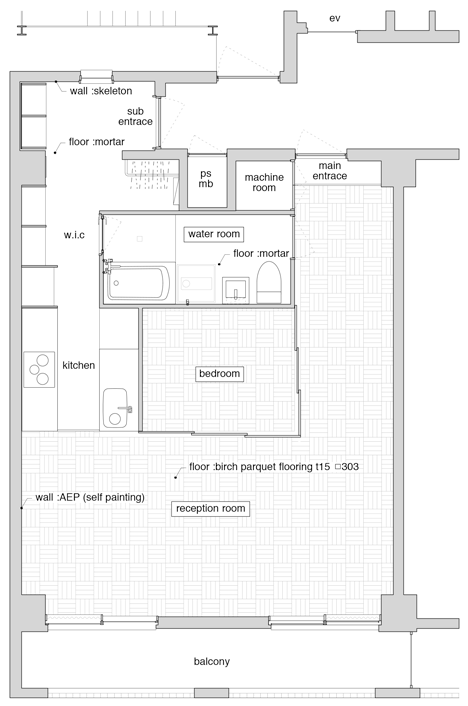
    And here’s the floor plan (I’m guessing sub entrance means secondary entrance):

    image

    The first thing that struck me was the lack of a traditional bedroom. It’s basically a nook with a bed and sliding doors. But that was obviously done to give more space to the remainder of the apartment and the main living area, which they label as the “reception area.” The idea was that this space could be used for both living and working, and so they wanted a large open space.

    The other thing that stood out for me was the amount of storage and shelving throughout the apartment. There’s a bookshelf as you walk in. There are drawers under the bed. There’s a walk-in-closet with floor to ceiling shelving. And if you look closely at the upper track for the sliding bedroom doors, you’ll see a small ledge that was purposefully created for storage and display.

    It all seems very Japanese to me.

    It’s a small space and yet there’s no absolutely zero clutter. I love how organized everything seems. For many of you, this space may be a bit too sparse (even with that hammock!). But there’s something really nice about the simplicity of it all. It’s peaceful.

    Images: Katsumi Hirabayashi via Dezeen

  • Could a decentralized sales model work?

    image

    Since I started blogging last year, I’ve been getting regular emails from both people I know and from readers I don’t know (but hope to one day meet) asking for advice on buying real estate. Usually somebody sends me the link to a place they’re thinking about buying, and they want to know what I think about the property and the neighborhood.

    I’m more than happy to help when I can and I try to be brutally honest in terms of what I think. What’s interesting about this dynamic though, is that I don’t have a vested interest in any of the outcomes. Whether I tell that person I love the place or that it’s shit, I don’t stand to gain anything. And that means I can be brutally honest. It’s for this same reason that customer reviews on websites can work so well. 

    Because on the flip side, if I make money when you buy, then guess what, I’m going to want you to buy. That’s how it works for any industry–from financial services to real estate to retail. That’s why some stores will promote the fact that their sales people are not on commission. Although you could argue that those sales people are then less motivated to help you.

    In any event, all of this got me wondering if there isn’t some way to take customer reviews to the next level. Could a decentralized sales model work?

    Last year I had a conference call with one of the chief officers of one of the top 3 real estate websites in the US and I was told that they had actually tested a “social buying model.” It ultimately failed, but it strikes me as an interesting concept. Reviews are starting to feel a bit dated now on the social web, but I think the idea of crowdsourced input is here to stay.

    Image: Flickr