Daily insights for city builders, delivered every morning at 6 AM ET. I’m Brandon Donnelly — a Toronto-based real estate developer and founder of Globizen. I’ve been writing here since 2013.

Tag: apartment

  • Developer Profile: The Adir Group

    In 2010, Gal and Tania Adir, aged 23 and 24, respectively, began renovating high-value apartments in central London.

    Today, they are known as The Adir Group and have about £50m in development under way.

    But more than just a developer, the group has grown to become “the parent company of a quickly expanding collection of complementary brands bound together by a desire to enhance people’s lifestyle through quality and beauty.”

    In addition to G&T (their residential development arm), they also founded Net.Works (a co-working space) and Nuper (a co-op living scheme). This last focus isn’t up on their website yet, but I read about it on Michael Mortensen’s blog. The goal of Nuper is to create affordable living solutions for young talent in London.

    I wanted to profile The Adir Group because I think it’s incredible how young they were when they got started (I was just starting graduate school at 23) and because I like their approach of creating a collection of complementary companies.

    I am excited to see where the next generation of developers (myself included) take this business. Already we are seeing some new approaches emerge.

  • Maximize your space with square foot hours

    I am more than happy to trade-off living space (that I don’t really need) for a better location. It means I get the benefit of driving less and enjoying the city more.

    But as more of us move to urban centers, we are finding ourselves having to do more with less space. Often this means creating flexible and multi-purpose spaces.

    One strategy for this that I really like – which I just learned about through 5 Kids 1 Condo – is the idea of square foot hours. Here’s how it works:

    “The concept behind ft2hours (square-foot hours) is to add a time-based measurement to how we assess and use our space. So if your 10′ x 12′ bedroom is used only eight hours a day (i.e., when you’re sleeping), your actual usage is 120 ft2 divided by three (one-third of the day), which is just 40 ft2hours of used space.”

    In many ways, this happens intuitively. If you really want to maximize a space, you figure out how to use it more often throughout the day. But I like the idea of applying some math to it.

    Of course, this runs counter to the notion that some spaces should be reserved for specific uses. In the case of a bedroom, it’s sleeping and sex. This is so that your mind doesn’t start associating it with things like work, which might start to disrupt your quality of sleep. But perhaps that’s about to become an anachronism in the modern city.

    Without having the above formula in mind, I have thought along similar lines for my own apartment.

    When I think about where I spend most of my waking hours, it’s bouncing between the kitchen and the living room. And yet my kitchen isn’t up against the windows; it’s recessed towards the back. Instead, my bedroom – where the blinds are almost always drawn – got the windows. (Access to light is a code requirement.)

    If it were up to me, I would have flipped my bedroom and the kitchen. But typically in the real estate world, “recessed bedrooms” are considered less desirable. 

    I don’t think I’ve heard many people complain about a recessed kitchen, but maybe that will change once we start thinking more about things like square foot hours.

  • 50% of New York City’s population is estimated to be single. Here’s what that means for housing.

    Here in Toronto there’s a push for more family-sized apartments. That’s what the planners want to hear.

    Because the city has been trying to encourage developers to build more of them for years, but the challenge has always been that they didn’t sell or that they took a long time to sell. The market wasn’t ready.

    But as I discussed earlier this week, that is starting to change. I think Toronto is reaching a tipping point where low-rise housing has simply become too expensive and people are starting to look to alternatives, mostly at the mid-rise scale.

    It’s interesting though that something of the opposite appears to be happening in New York. I don’t know enough about the New York new construction market to really comment on overall unit mixes and sizes, but there definitely seems to be a push to create more affordable micro-units.

    Curbed published this last October:

    “…a report currently under public review, called Zoning for Quality and Affordability, recommends relaxing density caps and eliminating the 400-square-foot minimum for studio apartments, thereby creating more housing for single people. Almost 50 percent of the city’s population is estimated to be single, but only seven percent of the housing stock is studios.”

    And just recently, New York completed its first all-micro-unit apartment building called Carmel Place. Rents start at $2,650 per month for a 265 square foot apartment. 

    As a point of reference, that works out to be $10 per square foot per month and more than 3x the highest rents you could reasonably achieve in the more desirable areas of Toronto, today.

    The model suite is 302 square feet and looks like this:

    All of the above photos are via Curbed.

  • Condo building identities according to Instagram

    I am very interested in the social side of buildings. What I mean by that is that we usually focus on the quantitative side. We look at sale prices. We look at average prices per square foot. We look at reserve fund balances. And as I recently argued, this is all very important stuff. I think we should do much more to make this data publicly available.

    But there’s also a side to buildings that’s harder to measure: the human side. Sale prices and staged MLS listings don’t tell you what the people who live in the building are like. What the vibe will be like at the pool during the summer. If you can expect to find dog poo in your elevators. But when you live in a multi-family building, I think most people will tell you that the qualitative side also matters.

    So this morning, I thought I would run a little experiment and pull the top Instagram photos for a random sampling of relatively new condo buildings in Toronto. These are public photos that have been uploaded and tagged with that building’s location ID. 

    Obviously there’s an inherent bias since I figure Instagram users probably lean towards Millennials. Also, the top posts could be easily skewed by a small number of heavy influencers. But I still thought it would be interesting to see if any particular identities started to emerge. And I do see some differences that reflect what I would have expected. I wonder how these might relate to the original marketing for the buildings.

    What do you think of the photos below?

    Feel free to do the same for your building and post the photo in the comments below. That could make for a really interesting discussion. My building is the first photo.

  • Throwing butts

    For whatever reason, some of the people living in high-rise buildings believe that if you flick a cigarette butt off a balcony that it will magically disintegrate on the way down. It’s either that or they don’t give a shit about anyone else.

    Because if you happen to live in or manage a building which has patios or terraces at the base of tower, I bet you have this problem:

    image

    Above is a picture of a Belmont cigarette burning through the tarp covering the wooden harvest table on my patio. 

    It’s a destruction of property, an environmental concern (many butts end up in stormwater drains), and a pretty scary fire hazard. I know of many incidences where thrown cigarette butts have started fires in a high-rise building. It happened last year in my mother’s building.

    However, the frustrating thing about this problem is that it’s exceptionally difficult to stop. I know this because I sit on the board of my condo building. The typical response is for management to send out notices to all the residents asking them to stop doing this. But frankly, that does nothing.

    So if any of you know of a company or service (or have a product idea) that can help with this, please contact me. But if no such company or service exists, I am positive that you could create it today and sell to almost every condo corporation and property management company that have a condition where terraces or patios sit below a tower. Because inevitably, there will be someone upstairs throwing butts.

    Many buildings have a similar issue with dog poo. People simply don’t pick up after their dogs. So some property managers have started taking stool samples of every dog who lives in the building. That way they can easily determine which residents aren’t picking up after their dogs. I guess that’s what it takes to get some people to give a shit.

    Of course, this isn’t a problem just in buildings. Cities in general are always fighting litter. That’s why you see ideas like this pop-up:

    //platform.twitter.com/widgets.js

    This particular one (in London) was designed to stop people from throwing their cigarette butts on the street. Instead, you use your butt to vote. In this case: England vs. Australia.

    We talk a lot about big ideas here on Architect This City. What driverless cars will mean for cities, how laneway housing could help with housing affordability, and so on. But the smallest ideas can also matter a lot for city building. Sometimes we forget that.

  • Sam Zell’s Equity Residential sells 23,000 suburban apartment units

    Earlier this week it was announced that Sam Zell – the billionaire who initially made his money in real estate – is selling over 23,000 apartment units to Starwood Capital Group (Barry Sternlicht) for $5.4 billion. The units are all controlled by Zell’s company, Equity Residential.

    This is interesting for a number of reasons, but I’d like to point out two of them today.

    Firstly, Zell is famous for selling another one of this companies, Equity Office Properties Trust, to Blackstone for $23 billion in 2007. This was right before the market fell out and so some people are asking whether this signals the end of the apartment run. Average apartment rents in the US have increased roughly 20% over the last five years.

    But at the same time (and this is my second point), it might not be that at all. Instead, it could simply be a rebalancing of the portfolio. Here’s an excerpt from the Wall Street Journal:

    …Equity Residential has become “less aggressive as buyers of assets” in recent years, Mr. Zell said in an interview late Friday. Instead, it is getting out of suburban markets and into downtown urban centers, where young people are moving and where it is more difficult to build, he said.

    Most of the 23,300 apartment units in the deal, roughly a quarter of Equity Residential’s total, are low-rise and mid-rise units in suburban markets in and around southern Florida, Denver, Seattle, Washington, D.C., and Southern California. Analysts expect a significant amount of new supply to be concentrated in those markets in coming years.

    Of course, Sternlicht is buying these suburban properties and so he clearly has a different investment thesis. (The purchase price works out to be $230,600 per unit at a cap rate of roughly 5.5%.) But that’s what makes these deals so interesting to scrutinize. Nobody really knows what the future holds.

  • How small is too small?

    I was up early on Sunday morning and I tweeted this out:

    //platform.twitter.com/widgets.js

    It’s a link to a Dwell article about a New York family of four that lives in a 620 square foot apartment. It’s technically a one-bedroom apartment but the way they have it set up is that the two kids share the bedroom and the parents sleep in the living room similar to as if it were a studio apartment.

    And my question in the tweet was, could you do it?

    Part of the reason the article caught my attention was because I currently live in a 640 square foot apartment – but as a family of one. And not surprisingly it’s more than enough space for me. Would I still feel the same way if it were a family of two? I believe so. But what about if it were a family of 3 or 4? I suspect it wouldn’t be as effortless, though certainly not impossible.

    I love the idea of distilling one’s life down to only what is absolutely necessary. And if you happen to live in a city, like New York, where the median price of a one-bedroom apartment is somewhere around $3,400 per month, there can certainly be lifestyle advantages to doing more with less.

    So I’d like to re-ask the question here to the Architect This City community: Could you do it? How minimalist could you go?

  • The Philadelphia (real estate) story

    Real estate is a local business. And this weekend in Philadelphia really reminded me of that.

    Here’s what I mean.

    The real estate story in Toronto is condos. We’re buildings lots and lots of condos. When my friend from Chicago recently visited Toronto for the first time, he told me that it feels very similar to Chicago, except that we have modern glass condo towers going up everywhere and they don’t. That’s our story right now.

    Low-rise housing in Toronto is becoming increasingly unaffordable (the average price of a detached home is well north of $1M) and so high-rise condos are now what many people can afford. When young people in Toronto talk about buying their first place, that now usually means a condo.

    But that’s not the story in Philadelphia.

    In Philadelphia, you can buy a 1,600 square foot, 2 storey, 2 bedroom rowhouse in a respectable neighborhood for sub US$400,000. And in speaking with my friends in Philly this weekend, that’s what young people are buying.

    This doesn’t mean that Philadelphia isn’t building new high-rise condos and apartments. It is. Obviously nowhere near as many as Toronto. But it is building. Far more than when I lived there before the Great Recession.

    However, the condo market is typically more upmarket. The target market isn’t so much first time buyers and the mass market; it’s more people who want full floor apartments in Rittenhouse Square. (I’m exaggerating only slightly.)

    Philadelphia is also building more rental towers than condo towers. (Rental has only recently become fashionable again in Toronto.)

    I’m guessing that a lot of this has to do with the fact that Philadelphia draws in a lot of transient students and academics each year. In fact, the most noticeably changed area from when I lived in Philly was University City. That’s the area that houses the University of Pennsylvania and Drexel University.

    So there seems to be strong demand for new rental housing in the city. I’m told vacancies are very low. But when it comes time to buy, young people don’t look to condos like they do in Toronto. They are looking mostly to rowhouses.

    This is interesting to me because it’s the exact opposite of Toronto. In Toronto, low-rise is expensive and so lots more people are buying high-rise. In Philadelphia, high-rise is expensive and so people are buying low-rise.

    I guess that’s why they say real estate is a local business. What works in one city may not work in another.

  • The evolving gig economy

    This morning venture capitalist Fred Wilson wrote a post on his blog talking about the gig economy and Hillary Clinton’s economic speech last night. 

    Here’s a snippet from Clinton’s talk:

    Meanwhile, many Americans are making extra money renting out a small room, designing websites, selling products they design themselves at home, or even driving their own car. This on-demand, or so-called gig economy is creating exciting economies and unleashing innovation.

    But it is also raising hard questions about work-place protections and what a good job will look like in the future.

    So, all of these trends are real and none, none is going away. But they do not determine our destiny. The choices we make as a nation matter. And the choices we make in the years ahead will set the stage for what American life in the middle class and our economy will be like in this century.

    The headlines this morning are making it seem like Hillary Clinton is taking direct aim at companies like Uber. But the transcript suggests that she’s being far more balanced than that: these new companies are creating exciting opportunities, and they are not going away, but there are still things to figure out.

    That’s basically how I feel.

    Take, for example, Airbnb. I think Airbnb is a great idea and company. A lot of my friends use it both as consumers and as suppliers of space.

    But for many (most?) condos in Toronto, owners are strictly prohibited from renting out their units on leases that are less than six months. It’s a direct ban on short-term leasing and it’s written into the Condo Corporation’s Declaration.

    And there’s good reason for that. Who wants to buy a condo only to find out that next door is being operated as a nightly hotel? Most people would even prefer that their neighbor is an owner rather than a renter.

    That doesn’t mean I believe Airbnb should not exist. I think we’ll likely end up getting more transparent about how buildings (and portion of buildings) are operating, as opposed to it being a shadow economy. And that could help.

    If you have any ideas for how companies like Airbnb might be better integrated into urban life, I would love to hear from you in the comment section below.

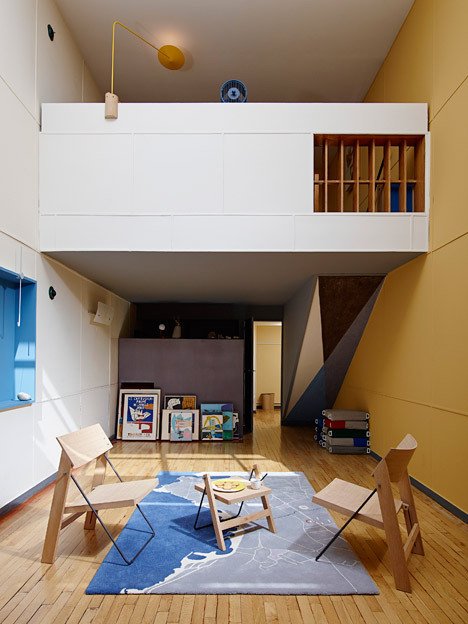
  • Visit Apartment N°50 in Marseille next month

    Completed in 1952, the Unité d’habitation in Marseille, France (more specifically known as the Cité radieuse) is one of the most famous buildings by Swiss-French architect, Le Corbusier. Every architecture student learns about it at one point or another.

    It’s famous because it was a model for a new way to live and build cities. Le Corbusier envisioned the apartment building as a kind of vertical city. The corridors weren’t thought of or referred to as corridors, they were instead called streets and lined with shops and businesses.

    Of course, Le Corbusier later became famous for inspiring an entire generation of buildings that many people now hate. Some believe he was completely misguided and others believe we simply bastardized his intents. But whatever the case may be, he certainly had a profound impact on cities.

    So if you happen to be in Marseille between July 4 to 19 (2015), you should check out an installation at the Unité d’habitation called Apartment N°50.

    It’s an installation put on by Jean-Marc Drut and Patrick Blauwart. They are the owners of Apartment N°50 and, since 2008, they have invited a designer or studio to come in and renovate it on an annual basis. They then open it up to the public during the summer. I think that’s a really neat idea and would love to visit sometime.

    Click here for the official Apartment N°50 website (it’s in French). The image at the top of this post is from Curbed.