Daily insights for city builders, delivered every morning at 6 AM ET. I’m Brandon Donnelly — a Toronto-based real estate developer and founder of Globizen. I’ve been writing here since 2013.

Search results for: “light rail”

  • Affordable housing and the economics behind developing new rental apartments

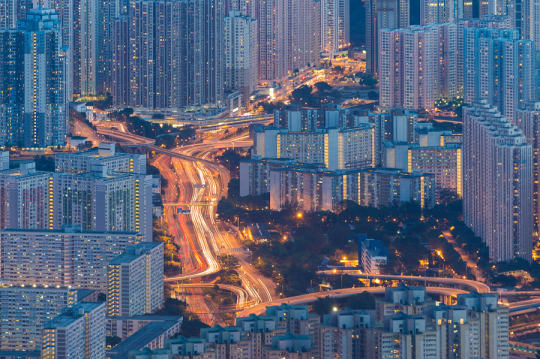
    light trail in concrete jungle by Tassapon Vongkittipong on 500px.com

    https://500px.com/embed.js

    In most big cities around the world, there is a pressing need for more affordable housing. We know that inclusive cities make for better cities. But from San Francisco to Hong Kong, you always hear people talking about how expensive housing is.

    So why is this such a difficult problem to solve?

    Part of the problem, I think, is that many people don’t understand the economics behind building a new building. Oftentimes I hear people say that because developers make so much money, they should just build more affordable housing. Done. Simple.

    But things are not that simple.

    To illustrate my point, let’s walk through the thought process for developing a new rental apartment building.

    In its simplest form, developers are concerned with: revenue – costs = profit. And since many of the costs associated with building a new building just are what they are, it all starts with revenue, which in our case would be rents.

    To build a new rental tower in Toronto, your rents typically need to be at least in the high $2′s per square foot per month. Otherwise the economics don’t work. But to make the math simple, let’s say you need $3 per square foot in rent. That means a 1,000 sf apartment would rent for $3,000 per month.

    That’s not cheap. There are only so many people who can afford these kinds of rents and only so many areas where you can command these kinds of rents, which means there are only so many areas in Toronto where new rental apartments will be built by the private sector.

    If the rents instead happen to be $2 psf – meaning that same 1,000 sf apartment now rents for $2,000 per month – then for-profit developers will not build (barring any unique deal circumstances). Even at $2.50 psf / $2,500 per month, it would be difficult to make the numbers work here.

    And by the numbers, I am talking about tight returns that really only start to make sense in our environment of record low interest rates. Which means that when interest rates start to rise (pushing cap rates up), it may not even make sense to build rental apartments when the rents are in the high $2′s per square foot. This is particularly true if you’re competing against condo developers to buy the land. They can afford to pay more. 

    In this scenario (of rising interest rates), many real estate firms might simply opt to buy existing assets instead of taking on the risk of building anything new. Now all of a sudden your supply of new market rate apartments (not to mention affordable apartments) has dried up. Remember, it’s been decades since Toronto built rental apartments at any sort of meaningful scale.

    It’s for reasons like this that Vancouver launched a program called Rental 100. In a nutshell, it helps to reduce the “costs” variable in the equation mentioned above so that developers are able to meet minimum project returns and build more rental buildings. They do that through things such as reduced parking requirements, additional density, development charge waivers, and so on.

    In some ways, these items are subsidies. The city is giving up revenue that it could have otherwise collected from a developer building, say, a condo. But in other ways, they are freebies. The city could be unlocking development sites that may have otherwise not been developed. In which case it’s not really forgone revenue.

    Vancouver’s Rental 100 program is a market rental housing policy. But there’s no reason that similar thinking couldn’t be applied to create an affordable rental housing policy. It has been done and is being done in many cities.
  • With Vancouver voting “no” to transit tax, could Hong Kong now serve as inspiration?

    https://500px.com/embed.js

    Earlier today it was announced that Metro Vancouver voted “no” to a 0.5% sales tax increase that would have been used to fund a $7.5 billion regional transportation plan. 

    Roughly 62% of respondents said “no”. And not surprisingly, the percentage of people who voted “no” increased as you moved outward towards the suburbs. But even the City of Vancouver itself sided slightly with “no” at 50.81%.

    Since I’m not that plugged into the Vancouver scene, I’m not going to comment on this issue. But hopefully you all will in the comments below. I know that a lot of you are incredibly passionate about this.

    Instead, I’d like to pose two questions. 

    Firstly, why is it that Asian transit operators seem to be so much better than North American transit operators at recovering their costs through fares? (Urban density and car ownership likely have something to do with it). And secondly, why hasn’t Hong Kong’s famous “rail plus property” transit model been exported to North America?

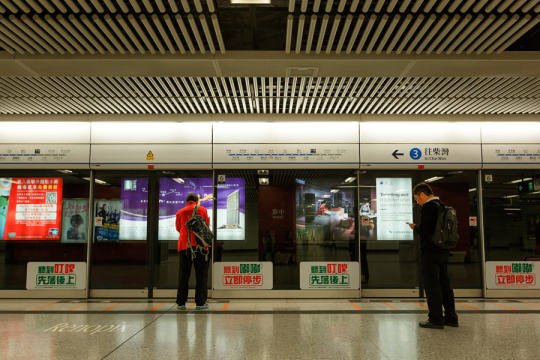
    For those of you unfamiliar with Hong Kong’s Mass Transit Railway Corporation, here’s how much money they make (via The Atlantic from 2013):

    The Mass Transit Railway (MTR) Corporation, which manages the subway and bus systems on Hong Kong Island and, since 2006, in the northern part of Kowloon, is considered the gold standard for transit management worldwide. In 2012, the MTR produced revenue of 36 billion Hong Kong Dollars (about U.S $5 billion)—turning a profit of $2 billion in the process. Most impressively, the farebox recovery ratio (the percentage of operational costs covered by fares) for the system was 185 percent, the world’s highest. Worldwide, these numbers are practically unheard of—the next highest urban ratio, Singapore, is a mere 125 percent.

    In addition to Hong Kong, the MTR Corporation runs individual subway lines in Beijing, Hangzhou, and Shenzhen in China, two lines in the London Underground, and the entire Melbourne and Stockholm systems. 

    And here’s how they do it (also via The Atlantic):

    Like no other system in the world, the MTR understands the monetary value of urban density—in other words, what economists call “agglomeration.” Hong Kong is one of the world’s densest cities, and businesses depend on the metro to ferry customers from one side of the territory to another. As a result, the MTR strikes a bargain with shop owners: In exchange for transporting customers, the transit agency receives a cut of the mall’s profit, signs a co-ownership agreement, or accepts a percentage of property development fees. In many cases, the MTR owns the entire mall itself. The Hong Kong metro essentially functions as part of a vertically integrated business that, through a "rail plus property” model,  controls both the means of transit and the places passengers visit upon departure.  Two of the tallest skyscrapers in Hong Kong are MTR properties, as are many of the offices, malls, and residences next to every transit station (some of which even have direct underground connections to the train). Not to mention, all of the retail within subway stations, which themselves double as large shopping complexes, is leased from MTR.

    I believe that we could do this too. So hopefully we can have a great discussion about it in the comment section below.

  • What’s your complete neighborhood?

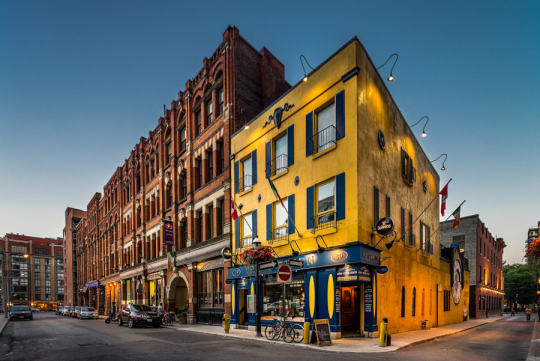
    Photograph Toronto - St Lawrence Market by Chris Dufresne on 500px

    Toronto – St Lawrence Market by Chris Dufresne on 500px

    This past Saturday night I was out with a few friends in my neighborhood (St. Lawrence Market area). And I was delighted to see how busy it was. Virtually every bar or club we walked by had a line down the street.

    Being the city geek that I am, I started thinking about two things: (1) how often I get localized to my neighborhood (I have data to back this up) and (2) what makes a “complete neighborhood”, such that you’re even able to be localized?

    In some ways the idea of a “complete neighborhood” is universal. Everybody needs a grocery store and access to food, for example. But in other ways, a “complete neighborhood” is very much a personal thing – you want goods and services that are important to you.

    So today I thought I would do a quick breakdown of the goods, services, and amenities that I really value in my neighborhood and that I think make it more or less “complete.” This list is a combination of universal and personal choices in no particular order. At the end, I summarize some of the things I wish I had.

    What I have:

    • A 5-10 minute walk to subway and streetcar
    • A 24/7 grocery store
    • A world famous food market (St. Lawrence Market)
    • Staple coffee shops (Starbucks and Balzacs)
    • Lots of restaurant and food choices (including decent Mexican, one of my favorite foods, and Pho, for when I feel a cold coming on)
    • 2 drugstores (Shopper’s Drug Mart and a new Rexall)
    • A great gym that’s less than a 10 minute walk away
    • An outdoor/athletic store that also fixes bikes
    • Cool local bar (AAA) where I can watch the Raptors (because I don’t own a TV)
    • After work bar with a good Happy Hour (Pravda)
    • Patios for the summer (all along the Esplanade)
    • All the major banks
    • Nearby recreational amenities (bike trails, waterfront, etc.)
    • Local employment base (Wattpad, BNOTIONS, etc.)
    • Great architecture (from Daniel Libeskind to the classics)
    • High walkability

    What I wish I had:

    • Less chains and a few more independent businesses
    • A hip indie coffee shop where the (male) staff have waxed moustaches
    • A good takeout sushi place
    • A pool that I could walk to (I ride my bike to Regent Park)
    • A liquor store with longer hours (but alas this is Ontario)

    Those are my working lists. What would create a complete neighborhood for you? And how does your current neighborhood hold up?

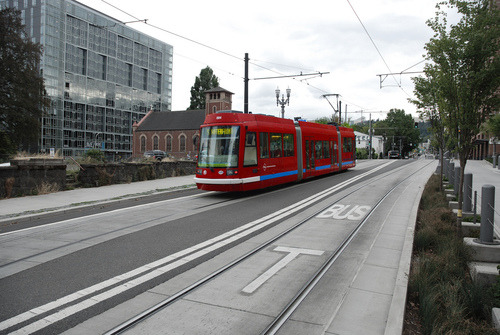
  • Streetcars are just a tool

    Earlier this month the Toronto Star published an article talking about the resurgence of streetcars in American cities. According to the Star, 89 cities in the US are currently implementing or at least considering building some form of surface-rail system.

    But the article also goes on to argue that it could be a snobbish fad. Streetcars are new. They’re shiny. And they make yuppies –  who don’t like taking buses – feel better about themselves. But is the ROI really there? Is the economic impact of streetcars as big as people are making it out to be?

    To support this argument, the Star quoted transportation planner Jarrett Walker, who I’ve mentioned here before on Architect This City. But according to a follow-up post that Walker did on his blog, it would appear that he was misrepresented in the article. Here’s a snippet of his response:

    Here’s the bottom line. Streetcars are just a tool. They can be used in smart ways and in stupid ways. Asking a transit planner for an opinion about a transit technology is like asking a carpenter what his favorite tool is. A good carpenter sees his tools as tools and choses the right one for the task at hand. He doesn’t use his screwdriver to pound nails just because he is a “screwdriver advocate” or “hammer opponent”. Yet the Toronto Star assumes that nobody involved in transit debates is as smart as your average competent carpenter.

    I wanted to share this because I think it’s a great way to approach transportation planning and because I think it gets at a larger issue that we continue to face here in Toronto: We keep politicizing mobility tools. Cyclists have become pinkos. Streetcars are a war on the car. And the list goes on. How about we just look at the problem, and figure out what solution would work best?

    Image: Flickr

  • Why I like Porter and the island airport

    I’m going to New York City tonight. I’ll be flying Porter from the island airport. And I’ll probably walk there.

    I’m a big fan of Porter and, while I’ve noticed some minor slippage over the last few years, it’s still one of the best flying experiences in the city.

    But the island airport has always been a contentious subject. Stopping a bridge to the island was a fundamental part of our last mayor’s original election campaign.

    Today the contentiousness is around expanding the airport so that it flies further using “jets.” Primarily people appear concerned about noise and that the runway will need to be expanded out and into Lake Ontario to a certain extent.

    As someone who lives along the waterfront, I really don’t share the same concerns.

    For one, the “whisper jets” are supposed to produce the same amount of noise as the current fleet, which don’t bother me in the least. I hear yappy dogs barking more than I hear planes.

    Secondly, I think the island airport is fantastic from an economic development standpoint. If we were in Europe, Toronto would have high speed rail connections to New York City, Montreal, and other cities.

    But it’s not Europe and we don’t have those rail lines. What we do have though is short haul flights from the island which, similarly, allow people to leave the city from downtown.

    This may not seem like a big deal, but an extra hour can mean the difference been making and missing a morning meeting or whether your trip needs to be overnight or not.

    If you’re against the expansion, I’d love to hear your thoughts in the comment section below. Debate is important.