Daily insights for city builders, delivered every morning at 6 AM ET. I’m Brandon Donnelly — a Toronto-based real estate developer and founder of Globizen. I’ve been writing here since 2013.

  • Rethinking the suburban dream

    May 12, 2026 · View original


    There’s a conventional school of thought that the best place to raise a kid is in the suburbs. Walkable, urban centers are great for young singles, but when it comes time to grow your family, the default assumption is that it’s time to move on. Anecdotally, I can tell you that, now that we’re expecting, some people assume we’re obviously going to move from our condominium in the city to a low-rise house somewhere else.

    But this viewpoint also shows up in the data. According to a recent article from The Economist, between 2010 and 2024, the total population aged under 18 declined by 22% in Chicago, by 23% in Los Angeles, and by 12% in New York. These figures are the sort of thing that lead some people to conclude that the suburbs are simply a natural market outcome. It’s what families want, right?

    However, it turns out this isn’t universally true! The same dataset also reveals a clear exception: rich white families. Over the same time period, the number of white children grew by 6% in Chicago, by 13% in Brooklyn, and by a staggering 62% in Washington, DC. In certain inner-city neighbourhoods in Chicago, namely Wicker Park, the number of white children has increased by 39% and 94% (based on the two zip codes that make up the area).

    Here’s what’s going on:

    > Families are mostly not moving in; rather people are moving to suburbs less once they become parents. Eric Johnson, a software engineer who grew up in Elgin, an outer suburb of Chicago, now has a ten-month-old baby in hipstery Logan Square. “We love the farmers market…I like not having to drive,” he says. Sara Weston-Shea, a social worker, grew up in suburban New Jersey and now has two children in Bay Ridge, Brooklyn. “We can just easily access the wonderful resources that a city has, the arts, music, whenever,” she says. She likes that her kids are growing up in a multicultural neighbourhood, and that she can cart them around on a cargo bike.

    What this tells us is that, no, the suburbs aren’t necessarily a de facto market outcome for everyone. There are families who have the means to live wherever they want, and they are choosing walkable, transit-oriented urban communities. These are crucial data points because if rich white families are making this decision, how many others would do the same if only they had the means or, more importantly, if we were able to deliver more housing within their means?

    This is a core city-building thesis of mine. There are families who move to the suburbs because that’s what they prefer, and that’s totally cool. But there’s also a segment of the market that moves because they have no other choice. How big this segment actually is can only be accurately determined by figuring out how to meet that demand. And that’s why addressing this need is one of the great opportunities and challenges facing large cities today.


    Cover photo by Brad Knight on Unsplash

  • Electric vehicles do have lower lifetime emissions than gas cars

    May 11, 2026 · View original


    One of the common criticisms of electric vehicles is that, because they generally require more carbon to make than gas cars, they aren’t really “greener.” Well, here’s a chart from Bloomberg that looks at lifetime emissions per vehicle for both gas cars and EVs:

    The orange bars represent carbon emitted during manufacturing and scrapping (i.e., the dismantling of the car and the safe disposal of the battery). These processes are carbon-intensive. But it’s during the driving/fueling phase where EVs shine.

    The above chart assumes a vehicle life of 200,000 kilometres. Over longer mileage periods, this chart of course looks even better. At the same time, companies are actively working to reduce the orange bars. Polestar is targeting a net-zero car by 2035.

    Importantly, this isn’t going to be done through offsets. It’s being done by greening their supply chain, which they record on a blockchain for transparency and finality. Each and every car comes with a Life Cycle Assessment.

    My current car is over 8 years old, and I remember thinking when I bought it that it would be the last gas car I ever owned. That’s right.


    Cover photo by Kenny Leys on Unsplash

    Chart from Bloomberg

  • The current state of unsold condominiums in Vancouver and Toronto

    May 10, 2026 · View original


    According to recent data from CMHC via the Globe and Mail, here’s (at least part of) the housing situation in Vancouver and Toronto:

    – Metro Vancouver has 4,919 newly built unsold homes on the market (including houses, duplexes, row houses, and condominiums). – Of this total, 3,195 are unsold condominiums. All of these figures exclude homes that were sold but where the buyers failed to close. – Across Metro Vancouver, 37% of the unsold condominium inventory is priced above $1 million. – In the city of Vancouver proper, 81% of the unsold condominium inventory is above $1 million, with more than 14% priced above $3 million. – In the Greater Toronto Area, there are only 701 newly built unsold units on the market, and in the city of Toronto, 61% of these are priced at or above $1 million.

    Initially, the 701 figure seemed low to me, but the way I interpret this “unsold” metric is that it’s strictly a best attempt at a moment-in-time snapshot of developer inventory in newly completed projects that have never been subject to a purchase agreement.

    Missing from these figures are unsold homes currently under construction, and recently closed homes that have never been occupied and are now on the resale market or are simply sitting empty. Again, if a buyer failed to close, these homes would not show up in the CMHC figures.

    It also doesn’t include homes in the pre-sale phase. However, I think this supply is mostly irrelevant because if the developer doesn’t get to construction then that inventory quickly disappears from the market. It’s not sitting there needing to be absorbed (though we developers would love for it to be).

    The Globe and Mail article talks about how there are over 40,000 housing units that have been approved in Metro Vancouver but have not yet proceeded to construction, and that “newly built condos in Vancouver are too pricey to sell.” But the salient question is one of product-market fit: What housing do customers actually want, and can afford, today?

    As we have talked about many times before on the blog, I think we need to view this moment in time as an opportunity to reset our housing markets. In other words, it’s an opportunity to look at how we regulate and tax new housing, and at what and how we build, all with the goal of better serving the housing needs of Canadians.

    My specific view is twofold: We need to cut the regulatory fat around delivering new homes, and we need to better optimize for medium-density housing.

  • Paris has really small garbage rooms

    May 9, 2026 · View original


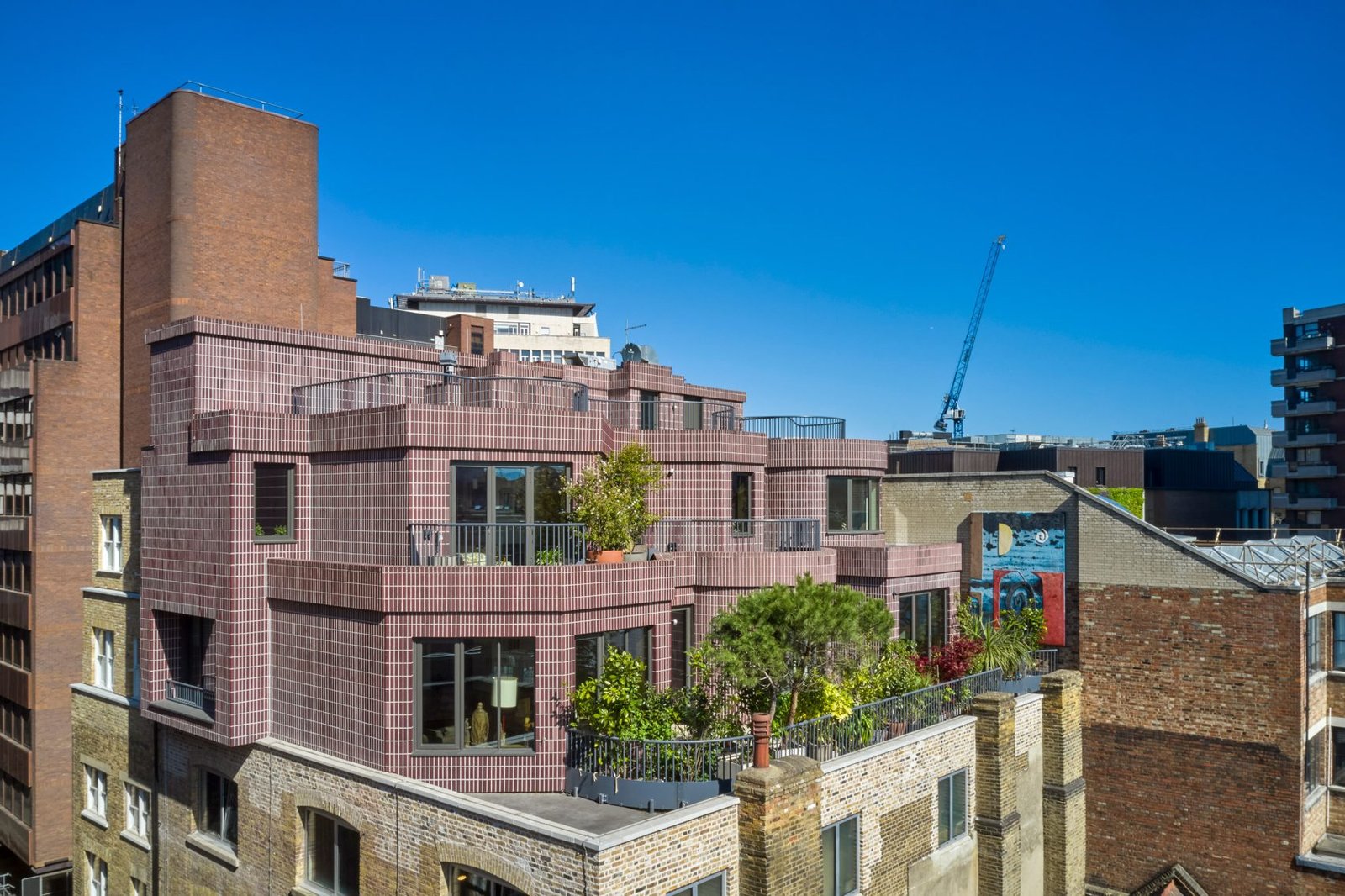
    In today’s episode of “this social housing project in Paris looks better than most market-rate housing elsewhere,” we’re looking at a recently completed boarding house in the 17e by CQFD Architecture.

    The project has 6 storeys, a total area of 690 m2, 19 units, and a hard cost budget that was approximately €2.6 million (excluding tax). At this number, their hard costs work out to ~€3,768 per m2, ~€350 per ft2, or ~C$563 per ft2. So this was not a cheap build. Here’s what it looks like:

    When I first saw the project, I thought the total area would be larger than it is. At 690 m2, it’s basically the size of a multiplex project here in Toronto. Except here in Paris, they’ve gone vertical and they’ve managed to fit 19 studio apartments, plus amenity space.

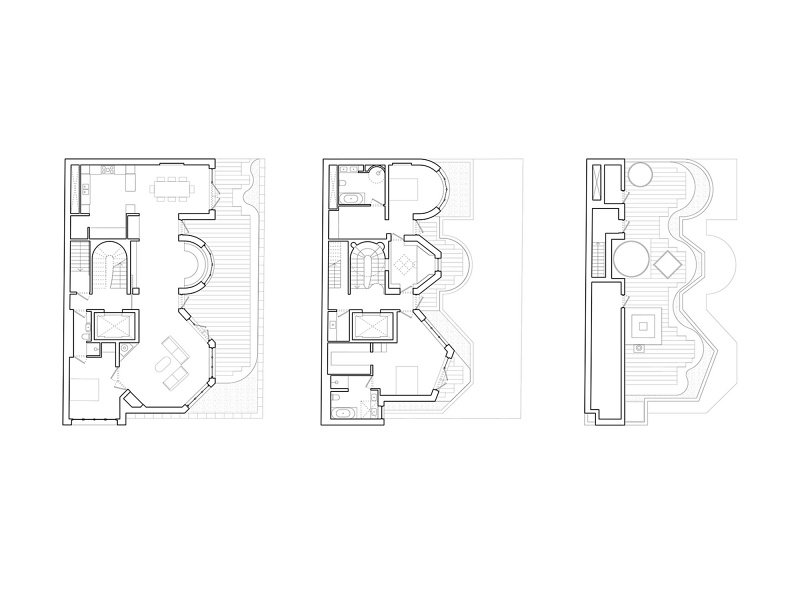
    All of this is possible when you consider the efficiency of each floor plate. The typical floor includes 4 apartments, one stair, one elevator, and a short corridor. Add in a second exit stair and all of this blows up.

    Also interesting is the efficiency of the ground floor. There’s an entrance hall, management office, bike room, recreation room, outdoor garden, and a teeny tiny garbage room (“local O.M.” on the plan). As I understand it, this is all that’s required for refuse because of how frequently it’s picked up.

    If this were in Toronto, we’d probably need a dozen bins, meaning that the bike room and/or recreation room would need to shrink down.

    I love dissecting plans and dimensions from different cities because it shows you the invisible hand of building codes, planning policies, and cultural norms. We get accustomed to certain conventions and then we assume that it’s simply the way that things must be done.

    But the rules we have are simply the rules that somebody decided to create. As Steve Jobs once said, “Everything around you that you call life was made up by people that were no smarter than you.” This implies that everything can be questioned and ultimately changed when there’s a better solution.


    Photos from CQFD Architecture

    Floor plans from Metalocus

  • Old Toronto is unlike anywhere else in Ontario

    May 8, 2026 · View original


    These charts, from the School of Cities at the University of Toronto, are an excellent use case for a ternary chart. A ternary chart is a triangular plot with three different variables that all sum to a constant. In this case, the charts compare driving, walking/biking (active transport), and taking transit, with the constant being 100%. The data is from the 2022-23 Transportation Tomorrow Survey.

    What is clear from the first image above is that Old Toronto (also known as the former City of Toronto before amalgamation) is unlike any other municipality in Ontario. Its tight, pre-car urban fabric and transit coverage mean that nearly 65% of people walk, bike, or take transit! This is compared to about 43% for the entirety of the city today; meaning, Old Toronto is the only place where driving isn’t the majority mode.

    The second chart above shows mode share by age. What is interesting to see, though not surprising, is that younger people are more likely to walk, bike, and take transit. Here, the figures peak between the ages of 15-19 with over 66% of trips falling into these categories, which is just slightly above the Old Toronto figure. Then, as people get older and have greater incomes (which is another one of the charts), they move toward driving.

    Of course, this doesn’t mean that all older people must drive. There are lots of older people who live in Old Toronto where doing something other than driving makes up the majority of trips. Urban form, density, and access to transit play the most important roles in determining what modes of transport people will choose and what they find most convenient.


    Cover photo by Mitch Hodiono on Unsplash

    Charts from the School of Cities

  • ULI Toronto visits One Delisle

    May 7, 2026 · View original


    This week, ULI Toronto visited One Delisle for a behind-the-scenes look at what we believe is this city’s next global landmark. The tour sold out in under 24 hours, and it was great to see so much interest from our industry peers. For those of you who made it out, thanks for taking the time! Here are some photos from the event, all courtesy of Multiplex Construction Canada.

  • If it’s worth conserving, then it’s worth building more of

    May 6, 2026 · View original


    Back in 2016, the New York Times published an article where it cited that at least 40% of the buildings in Manhattan could not be built today because they don’t conform to the city’s zoning code for one or more reasons. These reasons might include too much density (FSI / FAR), too many units, inadequate setback requirements, or something else.

    This is a tricky number to estimate as most cities don’t track it, but I asked Gemini and Claude to try for Toronto, and they returned 70-80% and 45-55%, respectively. Claude’s estimate seems to be lower because it assumed that all of the subdivided single-family houses are now legal because of the new multiplex permissions.

    I don’t know about that, but the point is that there’s a meaningful, non-zero quantity of buildings in our cities that we decided to make illegal, and generally difficult, or impossible to build again. The thing that I’m most interested in dissecting is: why?

    Here’s one way to look at it. My follow-up question to both AI models was: What percentage of buildings within a Heritage Conservation District would you say are illegal to build in Toronto today? And both models agreed that the number is 90%+, and probably very close to 100%.

    Heritage Conservation Districts are a way of saying “these buildings and this urbanism is so good, that it’s worth preserving through extra layers of planning protection.” But at the same time, our other policies say, “you shall never build anything like this ever again.” It’s incoherent.

    A more coherent approach might be to call them Heritage Renewal Districts where we instead codify the following: “this district is now illegal based on our current planning rules and so the objective is to tear it all down and replace it with new, approved buildings.” Sounds like blasphemy, doesn’t it? So then why block more of it?

    If it’s worth conserving, then it’s worth building more of. What ought to be obvious is that we need more rather than less planning flexibility, and we need to legalize the things that have been proven to work, like traditional fine-grained patterns of city-building.


    Cover photo by Ayman Hallak on Unsplash

  • How to protect your NFTs (if any of you still care)

    May 5, 2026 · View original


    Broadly speaking, the market no longer cares about NFT art. I love the collection that I have put together over the last five years and I continue to buy pieces from time to time. But it is becoming harder as fewer artists mint their work and as more marketplaces shut down. For instance, last month, Foundation announced that it would be closing up shop after a failed sale of the company. This was one of the most well-known marketplaces from the 2021 NFT era.

    The other problem with marketplaces shutting down is that now many NFTs are at risk of getting lost forever. But how is that possible given that blockchains are supposed to decentralized and immune to this sort of thing? Here’s my non-technical explanation, which you may want to pay attention to if you own any NFTs.

    The actual images or graphics that make up NFT art can be stored on blockchains in generally one of two ways: either on-chain or off-chain (which is how most NFTs are stored). On-chain means that the code required to render the image (usually vector graphics) is stored directly on the blockchain itself.

    One of the most notable examples is the CyberBrokers collection created by Chicago artist Josie Bellini. In this instance, everything is stored on the Ethereum blockchain. It’s more expensive to do it this way, but it means that as long as Ethereum exists, CyberBrokers exist. So, pretty permanent!

    The other way that NFT art can be stored is off-chain. What this means is that the NFT you are buying is essentially a pointer to an image stored somewhere else on the internet. Owning the pointer is a way of saying, “I own that thing over there!” And since the pointer exists on a blockchain, you should have it forever. The question is whether “over there” still exists or if it’s pointing to nothing. This is the problem to be concerned about if you own any NFTs.

    “Over there” can take many forms. The image could be stored on a centralized server like what Instagram would use when you upload a photo or story. In this case, there’s a high degree of risk that your art could disappear forever and you’d be left with a pointer that points to nothing. The link would be broken.

    Decentralized storage is better than centralized storage, but it’s important to understand the differences. Some decentralized storage networks, like Arweave, are more or less permanent. Arweave works by collecting a fee upfront with the promise that it will be enough to cover the cost of storing the data for at least 200 years. So again, pretty permanent.

    But the most common place for NFTs to be stored is on something called the InterPlanetary File System (or IPFS). IPFS is unique in that it is a peer-to-peer network that uses content-based addressing, instead of location-based addressing. What this means is that you don’t ask the network “where is this file stored?”; you ask the network, “who has this file?”

    This is a crucial difference because it means that as long as your NFT art is stored somewhere in the world, it will remain accessible. However, the challenge is that there isn’t a permanent funding model, so if a marketplace like Foundation was paying to store your art on IPFS and has now shut down, then “stored over there” will disappear and the pointer will point to nothing.

    The good news is that there’s an easy solution if your pieces are on IPFS. All you have to do is store or back up your NFT art somewhere and then there will always be an “over there” to point to! The term used is “pinning” your NFTs and I’ve been in the market for a service for a while. I considered a bunch of companies, and then last week I signed up with Piñata. It’s free for 1GB of storage or $20/month for 1TB of storage.

    If you’ve collected any NFTs that you care about, I would strongly encourage you to make sure that you’ve pinned the ones you can. It doesn’t matter what you use to do it. It doesn’t have to be Piñata. This is not a sponsored post and I’m in no way affiliated with the company. I just care about the crypto and NFT space, and I would hate for any of you to lose any of the work that you’ve collected.

    If you’re a longtime reader of this blog, you might remember that back in 2021 we created the first-ever NFT collection tied to pre-construction condominiums (or at least we think we were the first to do it). It is called the Petra Cortright NFT Collection at One Delisle and you can read more about it here.


    Cover photo by Peter Olexa on Unsplash

  • A festival of doors

    May 4, 2026 · View original


    Multiplexes, as they are called around here, are one of the few housing types that kind of work in Toronto today. According to a recent Globe and Mail article by John Lorinc, the city has issued 2,629 building permits for multiplexes since 2023, representing 4,880 net new homes.

    This is not very much for a city of our size, but this is a new type, and I would bet you two things: that this number will increase and that the city will continue to make it easier to build fine-grained, urban infill housing.

    The great opportunity right now is exactly what architect Craig Race says in the article: “You can’t find 1,500-square-foot, three-bedroom units anywhere other than in multiplexes. The smaller units are the most affordable in the city because the typology costs so much less than mid-rise or high-rise buildings.”

    However, the article also talks about the “festival of doors” that comes with this housing type. This is because each home typically has its own dedicated entry door from grade. Meaning, if you’re building a sixplex, you’re going to have at least six doors sprinkled across the various elevations.

    In some ways, this is a desirable design outcome. Each home is now 100% efficient (rentable area divided by gross construction area), as there are no common areas. I think many residents also appreciate having their own dedicated entrances.

    But on the flip side, an entry door generally equals another staircase. So, from an overall building efficiency standpoint, there are more effective ways to unlock more housing on every infill lot — namely through the adoption of single-egress stair buildings.

    As soon as this becomes a feasible as-of-right option, expect to see an increase in both the quantity and quality of new small-scale infill housing in Toronto.


    Cover photo by White.Rainforest :tm:︎ ∙ 易雨白林. on Unsplash

  • 43

    May 3, 2026 · View original


    I’m writing this post on my birthday (May 2), but by the time you all read it in your inboxes or online, it will be May 3. This is how I write my daily posts, which means when I’m trying to write about something very timely, I sometimes have to adjust my headspace by a day or be off by a day.

    I have always loved my birthday. I woke up this morning to freshly baked croissants from Bianca. That’s hard to beat! This year is also a special birthday for me because I’m going to be this old when our first child (a girl) is born in the coming weeks. Maybe she’ll be a stubborn Taurus like her dad, or maybe she’ll stay cooking for the recommended amount of time.

    I often think of my life in terms of decades. My twenties were all about school, gaining experiences abroad (I spent summers in Taipei and Dublin, and went to grad school in Philadelphia), and, quite frankly, figuring out what I wanted to do with my life. I finished my MBA, which was my second master’s, when I was exactly 30, and I started writing this daily blog that same year.

    My thirties were then about establishing myself in a career. I started working full-time in real estate development when I was 26, right after my first master’s in architecture and real estate, but things take time, and it wasn’t until my thirties that I started hitting my stride. I spent most of this decade working at Slate, and I look back on this time as being both highly productive and a hell of a lot of fun.

    Shortly after I turned 40, I decided to get married and leave Slate at exactly the same time for maximum life change. The love part is not something I thought I could ever plan for, though. I just knew it when I met Bianca. But when it came to my career, the next decade had arrived, and it was time to focus full-time on my own thing (Globizen).

    It’s certainly a tough real estate market in Toronto right now — the toughest since the early ’90s — but I don’t doubt this decision for a second. We’re creating the opportunities that we can, and I’ll never give up. (See stubborn Taurus.)

    I’m now firmly a quadragenarian, working each and every day on things I feel passionate about (making money in this market is an entirely separate matter), and about to add a little human to the mix. I feel fortunate. I’ve also had three croissants today, and I am in no way opposed to having a fourth before the day is done.

    I recently heard David Brooks, whom I appreciate very much, say that we should try and aim for at least three big life adventures each decade. I think this is a fantastic plan. We tend to think back on our lives in terms of punctuations created by milestones, so I’ll be sure to keep aiming for this. Here’s to more adventure!