Daily insights for city builders, delivered every morning at 6 AM ET. I’m Brandon Donnelly — a Toronto-based real estate developer and founder of Globizen. I’ve been writing here since 2013.

  • Art in hospitals

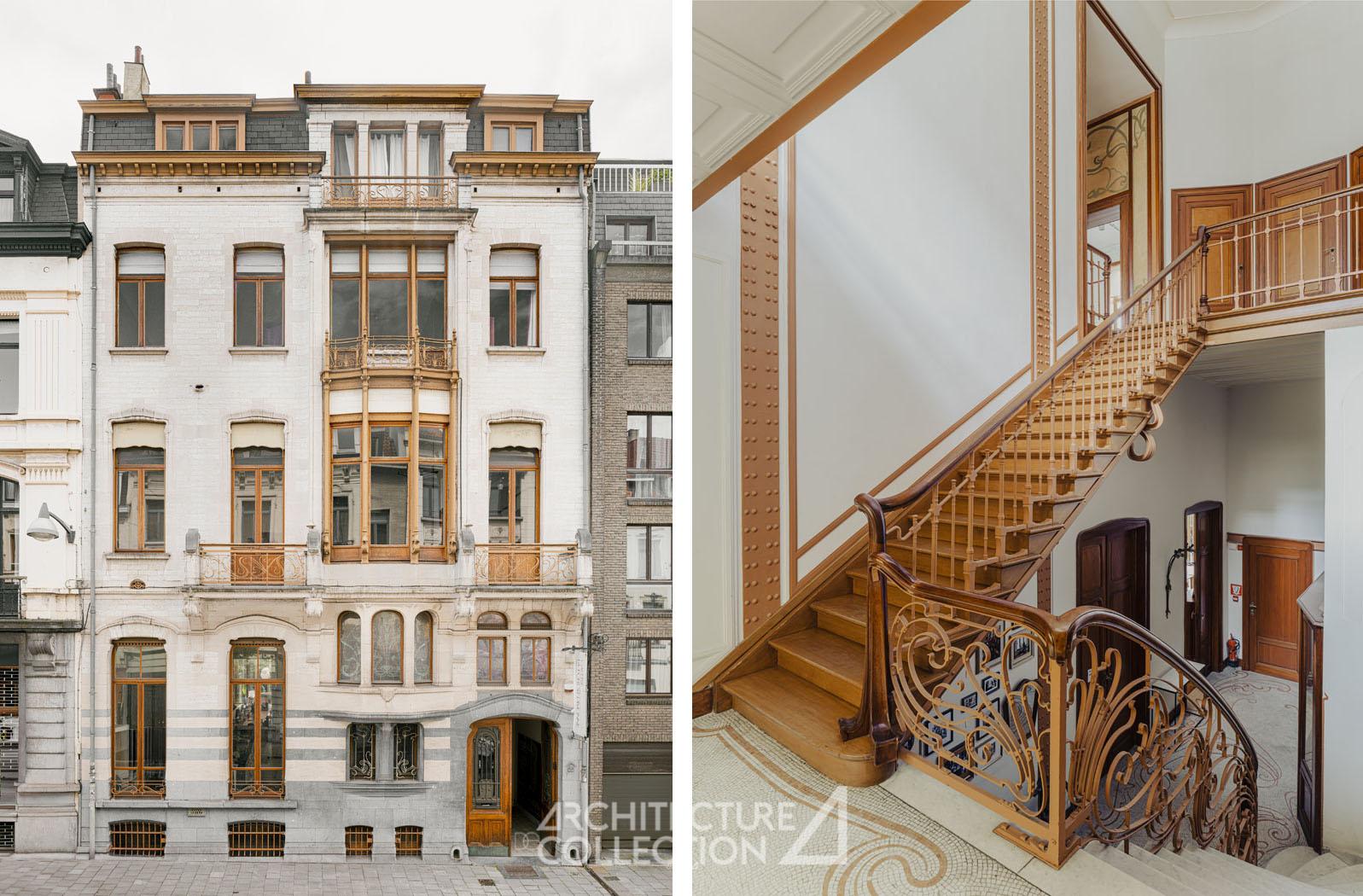
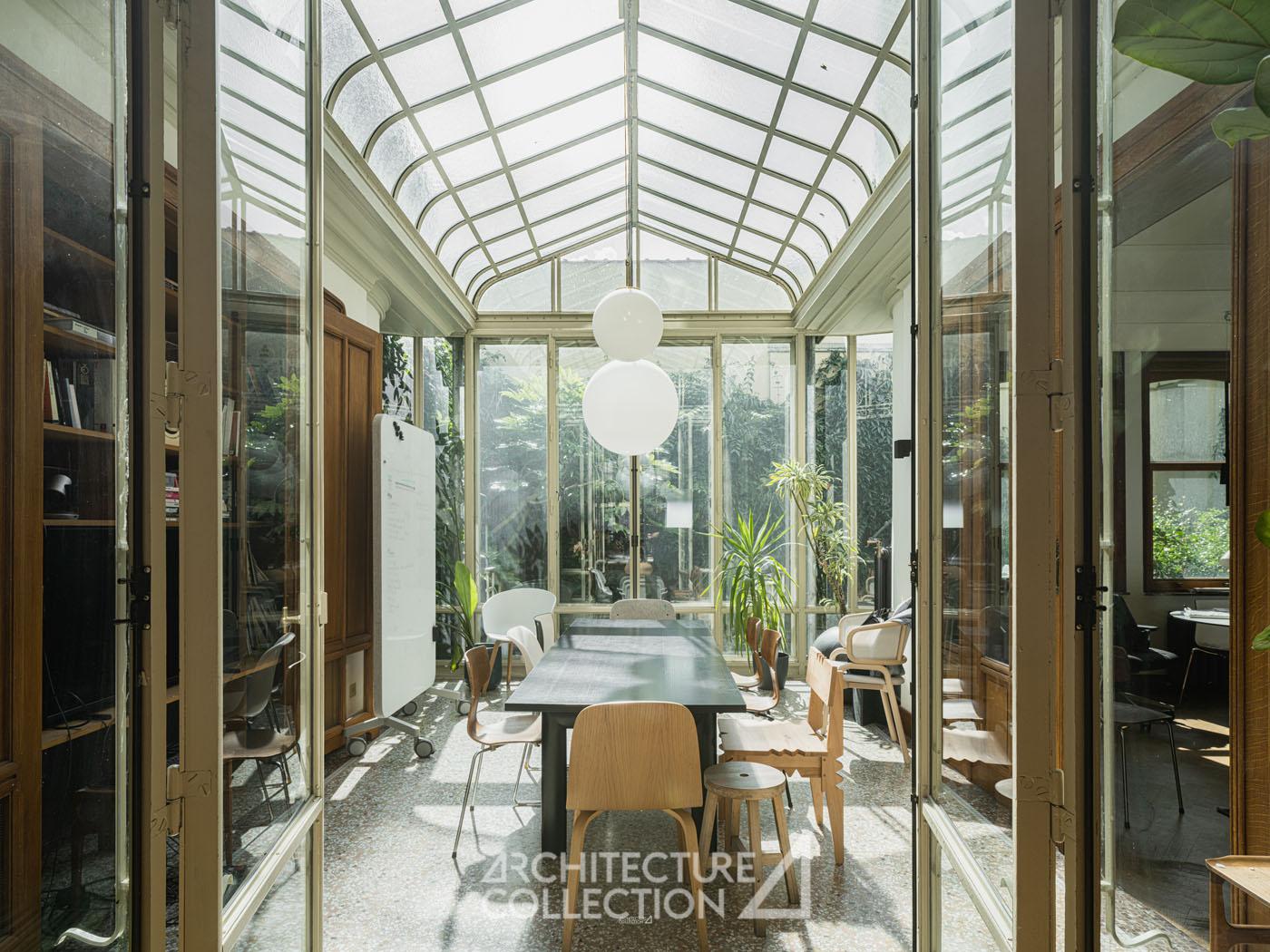
    Art in hospitals is such a good idea. The above photos are from Michael Garron Hospital, here in Toronto. One thing I have never understood is why so many hospitals look and feel depressing. (My mom is a nurse and so I was around them growing up.)

    I fully appreciate that utility is first and foremost and that construction budgets are always tight. But it strikes me that if there’s one place where you want the opposite of depressing, it is in the places where people go when they’re already not well.

    It also doesn’t necessarily need to cost more to be “not depressing.” A little creativity and caring goes a long way.

    I don’t know, maybe this is so often the case because the people making the important decisions don’t believe that our environments affect our well being. So the design process naturally reduces to just getting the utilitarian parts right and not spending a penny beyond that.

    Whatever the case, I do believe that our environments affect us. More than most of us probably appreciate. And so naturally, I think that art in hospitals is a very good thing.

  • Unclear and unknowable

    Development land, as we often talk about on this blog, should be the residual claimant in a pro forma. Meaning, start with your revenue, subtract your costs and required margin, and then see how much money is leftover to pay for the land. This is, in theory, how you should value land.

    It’s also the most disciplined way to go about your underwriting. In fact, it can be beneficial to not know the asking price or broker guidance for a new site until you’ve completed this exercise. That way you won’t bias yourself.

    However, in practice, it can be difficult to do all of this. In a rising market, you might find that there’s always some other developer who is willing to be more aggressive on their assumptions, which means they will be willing to pay more for the same piece of land.

    And so if you want to be in the game, you might find yourself doing the exact opposite: starting with the land price and then trying to figure out how to make the rest of your model work. We’ve all been there.

    During this stage of the cycle, you get punished for being conservative and disciplined — you don’t win sites. But when the market turns, discipline and conservatism get rewarded handsomely. You then become thankful for the deals you didn’t do. And I’m sure that many prudent risk managers are feeling this way right now.

    It is very challenging to underwrite new sites today. Many of the assumptions that go into a pro forma are unclear and unknowable. And so the spread between what developer’s models are telling them to pay and what landowners want to sell for is often significant. That is why everyone is trying to find “creative deal structures” that can be used to close this gap.

    At some point, though, the gap will actually close; things will once again feel clear and knowable. I have absolutely no idea when that will happen, but I do know that when it does, it will then be too late from a maximum opportunity standpoint.

    Because that’s how risk works. Once the uncertainty is gone, it’s no longer a risk. And if it’s no longer a risk, then you’re not going to be paid for bearing it.

  • Cheaper or better?

    One perfectly sound approach is to just be the cheapest. This often entails lower margins, but hopefully higher volumes. However, the problem with this approach is that it can become a race to the bottom. At some point, somebody will find a new corner to cut. As Seth Godin says, “the problem with the race to the bottom is that you might win.”

    On the other end of the spectrum is this approach:

    This is a pamphlet describing full ripeness mangoes from the Miyazaki prefecture in Japan. These are not the cheapest mangoes around. In fact, it’s the opposite; they’re generally known to be the world’s most expensive. But they will almost certainly be the best mangoes that you’ve ever tasted. And you’ll only be able to get them between the months of April and August.

    Sometimes it’s possible to be both cheaper and better. And that’s obviously an ideal position to be in. But in many, or perhaps most cases, you’ll need to choose. Cheaper, or that much better.

  • Forty-one

    Today is my forty-first birthday.

    I had aspirations of making it a slower day, but that didn’t really happen. I did, however, start my morning “on the Bench” for one of our development projects and that was pretty spectacular, especially with the weather we had. Today has to have been the nicest day of the year.

    I very much enjoy my birthdays, but the cadence of them seems to only speed up. It feels like just last month that I turned forty. And so in many ways, birthdays are a reminder to me that it’s important to be decisive and not waste time. Life keeps moving forward whether we like it or not — usually quickly. So it’s best to optimize accordingly.

    At the same time, this is probably one of my biggest faults. I’m bad at slowing down and living in the moment. I get restless. Neat B tells me that I am at my most relaxed when we are traveling in Paris and just sitting idly in a cafe somewhere. That sounds right. But I’d like to do more of this at home.

    So that’s my birthday wish (goal) for this year.

  • Dubai is building the world’s largest airport

    So, Dubai has just announced that it will be building the largest capacity airport in the world at the site of its existing Al Maktoum International Airport. At an expected cost of approximately US$35 billion, the expanded airport is planned to have 400 gates, 5 parallel runways, 5 passenger terminal buildings, and capacity for up to 260 million passengers per year.

    To put this into perspective, Atlanta International Airport is currently the world’s busiest with nearly 105 million passengers last year. Dubai International Airport — their other and main airport — is second with just under 87 million passengers last year. From a physical perspective, though, this new airport is expected to be 5x the size of Dubai International.

    On top of this, Dubai is also planning for the area around the airport — called Dubai South — to form the basis of a new city for 1 million people.

    The scale is mind boggling.

  • Toward more rental housing

    The Greater Toronto and Hamilton Area is expected to see 6,821 new rental homes completed this year. This is a “multi-decade high”, according to Urbanation’s latest rental report. Indeed, you need to go back to the 1970s to get rental supply figures of this magnitude.

    A big part of this has to do with the fact that we are now taxing rental housing less. Toward the end of last year, the federal government removed their portion of the HST on new rental housing and, then in November, the province of Ontario followed with theirs.

    This was “a big first step” for the industry, according to leading apartment developers like Fitzrovia.

    But there’s another reason that many developers are now looking to purpose-built rentals: fewer people are buying new condominiums. And if you can’t presell condos, well then you’re going to need to find another path forward for your land.

    However, flipping over to rental is not necessarily a panacea. The margins are generally razor thin (+/- 50 bps). It requires more and different capital (typically). And you need to believe in some fairly non-consensus assumptions (high rent growth, low cap rates, etc.).

    It’ll be interesting to see how many developers are able to successfully flip over to rental and how sustained this rental supply number will be.

  • Why cars keep getting bigger

    Last week we spoke about parking space dimensions. And my point was that these dimensions can dramatically change parking designs in new developments. In the comment section of this post, you’ll now find a number of examples of how these dimensions vary by city.

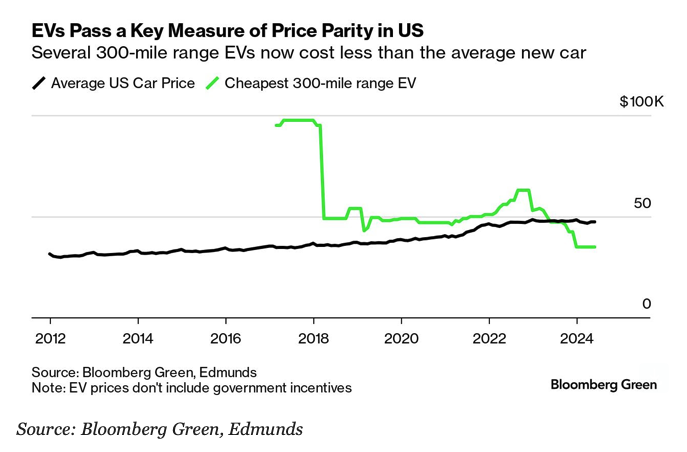
    But the reality is that cars do keep getting bigger — at least in this part of the world. In the 1970s, SUVs and trucks made up less than a quarter of new car sales in the US. Today, this number is greater than 80%. It has become the standard kind of car.

    So this week, let’s touch on why this has happened.

    One argument might be that this was just what consumers inherently wanted. But there’s lots of evidence to suggest that this wasn’t really the case; it was instead encouraged by government policy.

    One specific example is the creation of Corporate Average Fuel Economy standards (also known as CAFE). This was first introduced in the 1970s, but importantly, it was done with two different fuel economy standards: one for cars and one for light trucks.

    Since the light truck standard was less onerous (see above chart), this created a strong incentive for car makers to just make and sell more light trucks. And curiously enough, that’s exactly what they did.

    For much more on this topic, check out this comprehensive Vox article by David Zipper.

  • Three ways to optimize investments in transit

    Sometimes I’ll hear people in Toronto talk pejoratively about all of the development that’s been happening at Yonge & Eglinton (in midtown). They’ll say it’s too much density.

    But then you come across charts like the ones above (source previously shared here) and you realize that this location is the only section along the new Eglinton Crosstown LRT line that is actually starting to have enough people.

    Based on 2021 Census data, there were about 40k people within 800m of the future Eglinton and Mount Pleasant stations. In contrast, there are many downtown stations along the Ontario Line (also under construction) with around 80k people.

    Why this is important is because if the objective is to get people to ride this new transit and collect a lot of fares, then the single most important factor is going to be the amount of people that live, work, and play adjacent to each station.

    Now, I’m not a transportation planner, but in my mind there are three simple ways to think and go about optimizing for this:

    1. You can look at where population densities are already high and then add new transit to service these densities. This is what is happening with the Ontario Line and it was long overdue. We know that ridership is going to be relatively high because of the chart at the top of this post.
    2. You can look at where there’s existing transit and then work to optimize the land uses around it. This is what we should be doing a better job of along the Bloor-Danforth line, where certain station areas have actually lost people over the last few decades. This is the opposite of what you want next to transit investments.
    3. Lastly, you can also proactively plan new transit while simultaneously encouraging more density. An example of this would be the Vaughan Metropolitan Centre (just north of Toronto). Extend the line and encourage growth. This is good. The only thing with this approach is that it can seem a bit misaligned if you’re currently failing at #1 and #2.

  • Ballin’ out for charity

    Today, Rad Marketing and Blackline hosted their second annual “Ballin’ Out For Charity” basketball tournament. And it was a fantastic event. My sore lower back proves it. It’s always fun getting so many Toronto real estate people into one room (or onto a giant court at the University of Toronto). But more important is the fact that it was for a good cause. This year’s tournament raised money for the MLSE Foundation (which you can learn more about here). And last year’s tournament raised over $70,000 for the Daily Bread Food Bank.

    I’m looking forward to this becoming an industry staple. Everyone involved in the organizing of this event should be very proud of what they accomplished. Great job.

  • Toronto’s unstable neighborhoods

    This is a telling map from Jens von Bergmann. It shows the changes in population density across Toronto from 1971 to 2021 (measured in people per hectare). What is obvious is the spikiness of our city. We have been very effective at adding lots of people downtown, along the central waterfront, and in certain other pockets. But at the same time, we have let our older inner city neighborhoods move in the opposite direction and lose people.

    The irony of this outcome is that we have long created policies that refer to these areas as being “stable” neighborhoods. The idea was that they weren’t supposed to change, at least not too much. But what this data shows is the opposite. By restricting growth, we actually created the right conditions for them to lose people as demographics changed and household sizes got smaller, among other things. We created unstable neighborhoods.

    Thankfully, we have started to change course and allow some intensification. We’re not there yet, but I do believe that the next 50-year map will look quite different than the one you see here.