Daily insights for city builders, delivered every morning at 6 AM ET. I’m Brandon Donnelly — a Toronto-based real estate developer and founder of Globizen. I’ve been writing here since 2013.

  • The tallest building in Utah

    May 17, 2025 · View original


    Salt Lake City has two recently completed luxury multi-family developments. Or perhaps I should say, at least two.

    The first is The Worthington by Chicago-based developer Convexity Properties. It has 31 floors and 359 apartments. Leasing started last summer and seems to be going well.

    The second is the Astra Tower by Kensington Investment Company, which is being managed by Greystar. It has 41 floors, 377 apartments, and is 451 feet tall, making it the tallest building in the state of Utah. Construction was completed at the beginning of this year and, according to Building Salt Lake, it’s already about 30% occupied with full stabilization forecasted for summer 2026.

    It’s interesting to compare these projects to multi-family developments here in Toronto.

    First of all, the reported average rent for Astra is US$3 per square foot, which works out to ~C$4.19 psf for us Canadians at today’s exchange rate. I would say that this is at least ~15% lower compared to where I would expect most Toronto developers are underwriting new projects. This suggests to me that it’s more cost effective to build in SLC.

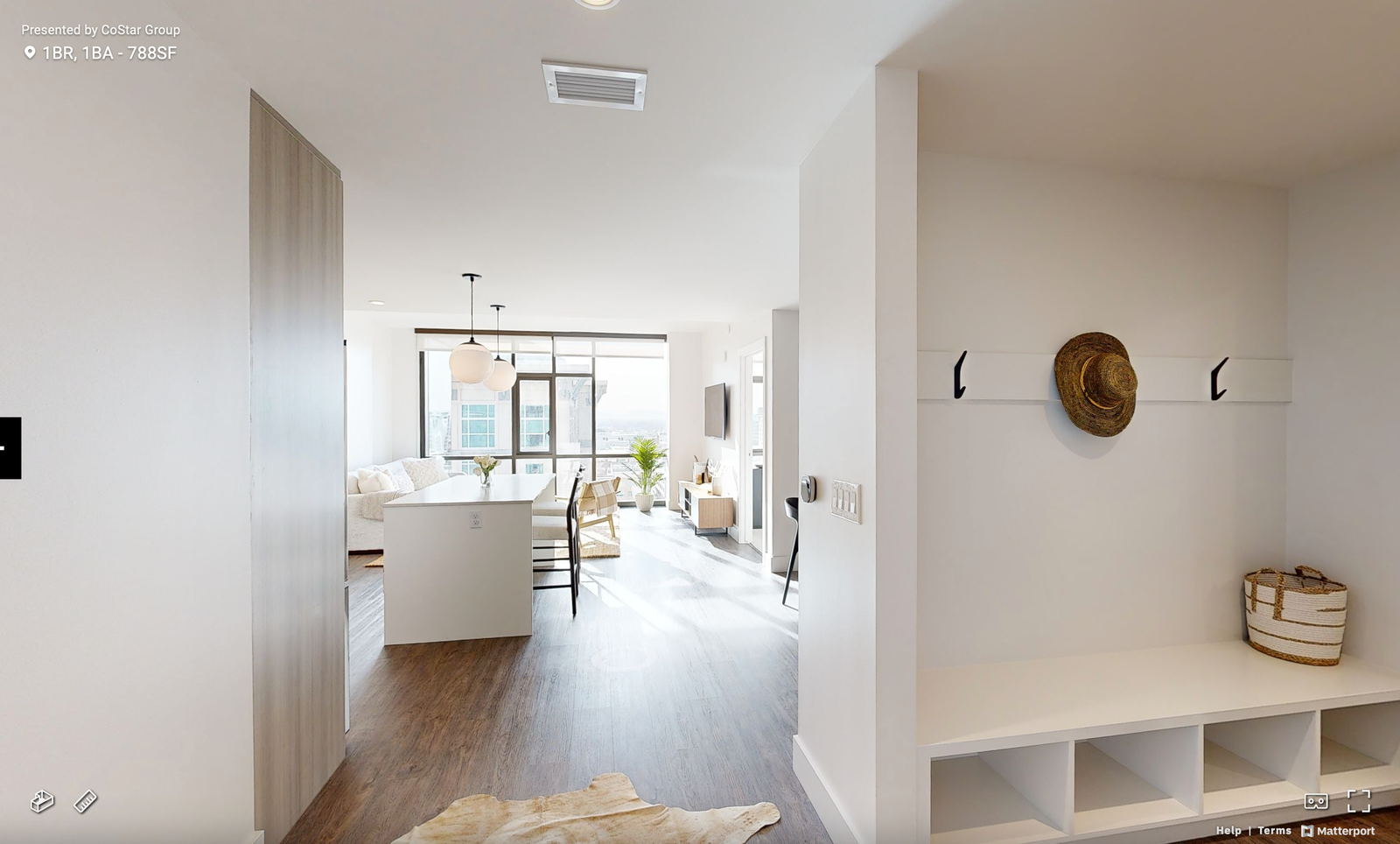
    The product is also different. On Astra’s website, they have two virtual tours.

    The first is for a studio apartment at 554 sf and the second is for a one bedroom at 788 sf. These are meaningfully larger than new apartments in Toronto. Here, the first would have to be a one bedroom and the second would be at a minimum a one bedroom plus den, though probably a two bedroom.

    Every market has its nuances. In the case of SLC, the model suites appear to be very clearly competing with low-rise housing. The one bedroom has a dedicated entrance foyer, there’s a separate dining area, and the bedroom has carpet, among other things. It reminds me of earlier multi-family vintages in Toronto.
    Of course, one really unique feature you get here is views of the Wasatch mountain range (see cover photo above). It’s a special feeling being in an urban center where you have mountains all around you, and it’s one of the primary reasons why an increasing number of people are being drawn to Utah.

    Congratulations to the team on successfully completing such an ambitious project. It’s exciting to see SLC continue to grow and urbanize.

    Cover photo via the Astra Tower
  • Empty London

    May 16, 2025 · View original


    Last month, the UK ended its non-domiciled tax regime. This change had been announced in 2024, but its effective date was April 2025. The way this program worked was that if you lived in the UK but were “domiciled” somewhere else, you could limit the amount of taxes that you had to pay in the UK.

    Only income and gains earned in the UK and foreign income and gains brought into the UK were taxed. If foreign income stayed abroad, it was not taxed. There was still an annual charge for long-term residents of the UK, but at a high level, this is how the tax regime worked.

    The advantage for a rich people is that they could decide to reside in the UK because, hey, London is pretty cool, but at the same time they could nominate a lower-tax country as their domicile. For non-rich people, this became a controversial program, and so it was swapped for tax regime based on residency.

    The reason I mention this is because it seems to be having a direct impact on Milan’s real estate market. Since 2017, Italy has had a flat tax regime that allows new residents to pay a fixed annual tax rate of €200,000, regardless of how much money they earn abroad.

    This has proven to be attractive among rich people and, between 2017 to 2022, the program attracted 2,730 individuals according to the Financial Times. But then the UK made its change and so Italy decided to colloquially rebrand its program to “svuota Londra”, which translates to “empty London” in Italian.

    It became about taking direct advantage of what the UK had done. And it seems to be working even better. In 2024, approximately 2,200 high-net-worth individuals relocated from the UK to Italy, with Milan being the primary destination. This has created a notable uptick in the luxury property market — more transactions and higher prices.

    Whether you agree with these policy decisions or not, they will have an impact on the fortunes of London and Milan going forward. In 2023 alone, it is estimated that individuals holding “non-dom” status in the UK paid almost £9 billion in taxes and contributed to the creation of some 44,000 jobs.

    Part of this is now flowing south to Milan.

    Note: None of this is tax advice.

    Cover photo by ANASTASIIA BUCHINSKAIA on Unsplash

  • 58, rue de la Santé

    May 15, 2025 · View original


    > Tweet: I want to build this in Toronto.

    Yesterday morning I reshared this tweet of a recently completed mid-rise building at 58, rue de la Santé in Paris. And the response was overwhelmingly positive. There was a long list of people saying: please build this in my city, I want to live here, I want to invest in projects like this, and more.

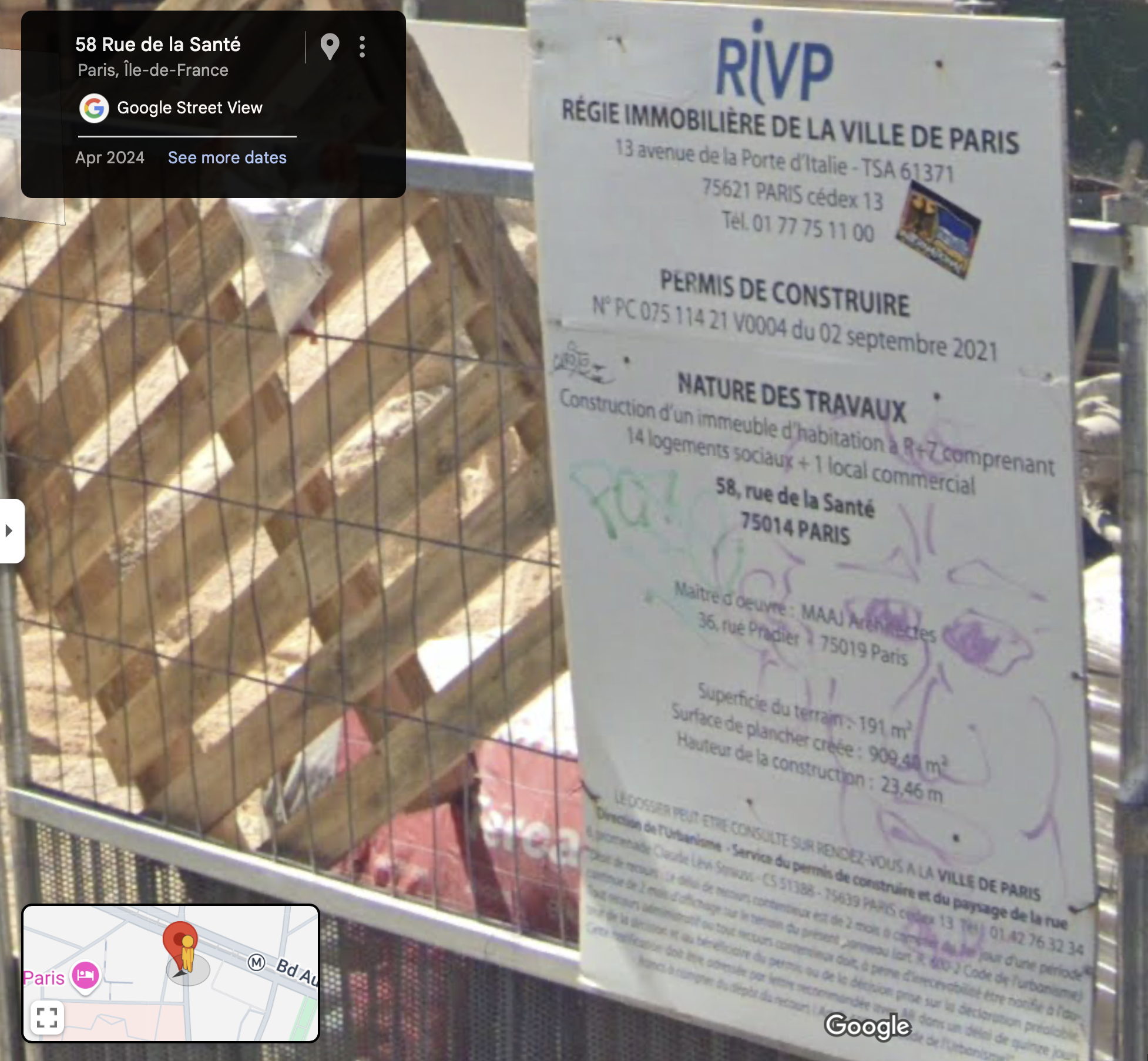
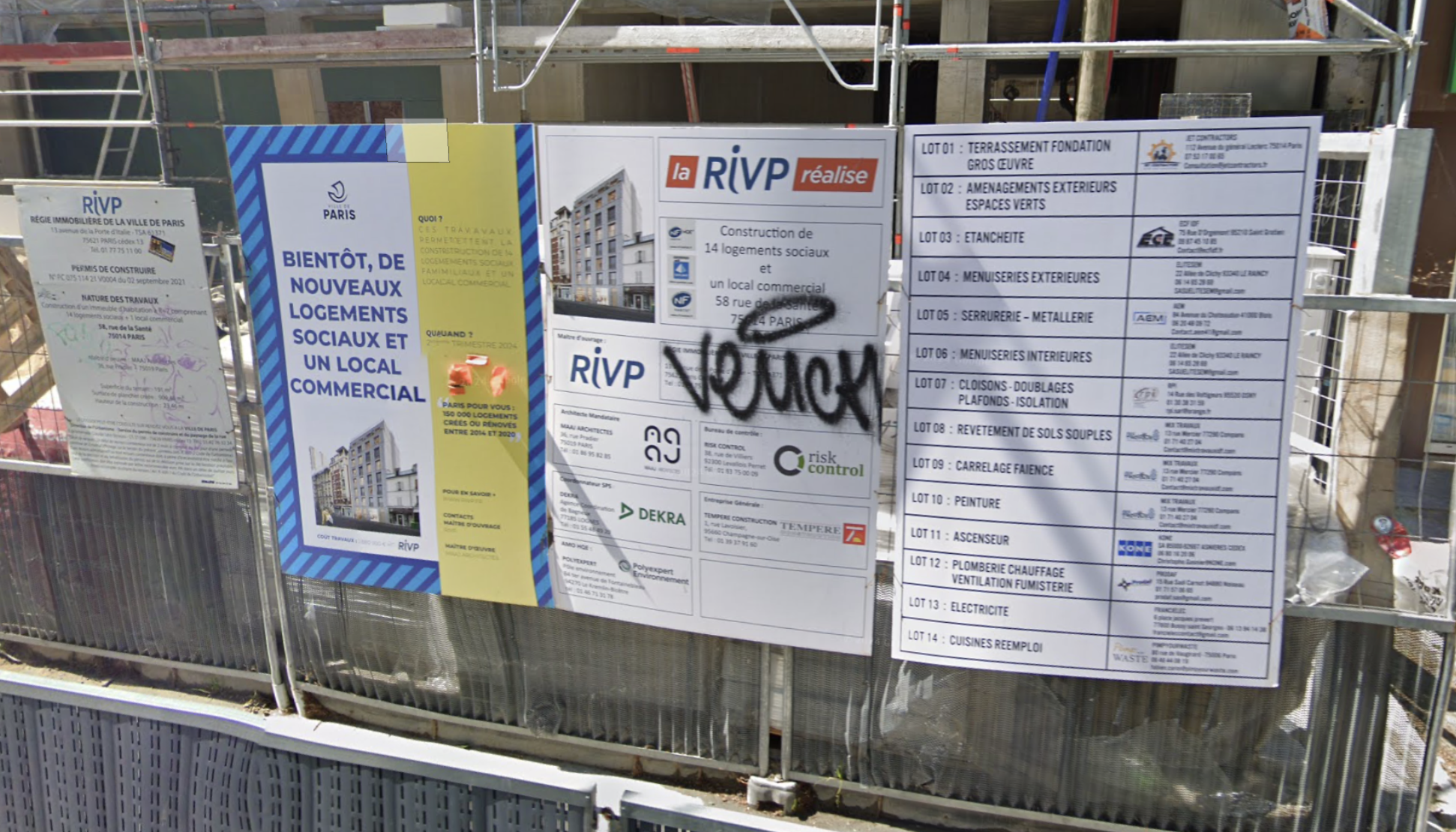
    Based on the echo chamber that I live in on the internet, it would seem that most people like this project, and are wondering why Paris can build it, but we generally can’t. So let’s take a closer look in the hopes of learning something. Here’s an image from Google Street View:

    The developer for the project is RIVP (Régime Immobilière de la Ville de Paris). They are a major social housing developer in the city and are semi-public company, primarily owned by the City of Paris. They build, manage, and renovate social housing, and have somewhere around 66,000 housing units under management in the île-de-France region.

    The project contains 14 social housing apartments and one commercial unit at grade. It’s 8 storeys tall (R+7 is the nomenclature commonly used in France which means rez-de-chaussée plus 7 additional floors). And on its main elevation there are only two small stepbacks at level 7 and 8. Otherwise the building goes straight up.

    The site area is 191 m2 or ~2,055 ft2. This is the equivalent of a single-family housing lot measuring around 20 feet x 100 feet, which would be fairly common in Toronto. Except in this case, it’s not just for one family; it’s for 14 of them and a commercial user on the ground floor.

    The total area, according to the above site signage, is 909.40 m2 or ~9,789 ft2. That crudely works out to about 60.6 m2 per unit (I’m including both the residential and commercial units in this very rough calculation). This is exactly similar to what I would expect to see here in Toronto in terms of an average suite size.

    The floor space index for the site (i.e. its density) is 4.76x. This is not particularly high and is probably on the low side compared to what you’d typically find in Toronto for new mid-rise developments. The key difference here is that they’re achieving it on a relatively small site.

    The total height of the building is 23.46m. Divided by 8 floors, that works out to a floor-to-floor height of 2.93m. This is a bit tighter than what I would expect, but it seems to be because the ground floor is relatively compact, whereas Toronto developers are encouraged to be greater than 4.5 meters tall.

    The project architect — MAAJ Architects — specifically mentions on their website that they used concrete in order to keep the height of the building down. They also show the building as being taller and having 16 apartments, so I’m guessing height was constraint.

    The big question that remains is: how much did it cost to build? And I unfortunately don’t have a good answer for this. Precise hard costs are generally hard to find and total development costs are almost never published.

    That said, the architect does show on their website a hard cost figure of 2,630,000 € HT for 1,242 m2 (again, it looks like an earlier design of the project was bigger). These figures work out to €2,117 per m2 or €196.70 per ft2 or C$289 per ft2.

    Don’t quote me on these figures. I don’t have inside information or first-hand experience in this market. But if it’s even remotely accurate, then I’d say it’s at least 30-40% cheaper than what a comparable build — with hand-laid bricks — would cost in Toronto.

    Cover photo by Arthur Weidmann

  • I’m biking for brain health

    May 14, 2025 · View original


    I like cycling and I like brain health, and so today I signed up to participate in the Bike for Brain Health event that is taking place here in Toronto on Sunday, June 1, 2025. It’s for an important cause:

    > Funds raised for the Bike for Brain Health are used to provide crucial funding for breakthrough research into cognition, Alzheimer’s disease, dementia, and aging brain health; medical programs and services for older adults living in our community; and education that supports healthy aging and healthcare solutions for a growing aging population.

    > One hundred percent of all donations go directly to the Baycrest Foundation, some of which support the cost of the event. Proceeds are then invested in leading-edge cognitive neuroscience research, advancements in the mitigation of age-related illness and impairment and the care and treatment of patients living with dementia, Alzheimer’s and other brain function related illnesses.

    And it’s always fun to ride on the Don Valley Parkway without any cars.

    The last time I participated, many years ago, I did the 50 km route on a single-speed bike. I ended up getting a flat tire along the way and was completely exhausted by the end of it. When I got back to base camp I think I had 3 or 4 hamburgers before going home to nap for a few hours.

    This year I signed up for the 75 km route. I’m not sure that I’m better conditioned, but I do now have a bike with gears and I do have really tight fitting clothes. Surely this will help. I also have two weeks to get out and train. Hit me up if you’d like to lap High Park and “Mount Olympus.”

    And if you’d like to support my cycle and donate to Baycrest, here’s my personal page.

  • Doors Open Toronto

    May 13, 2025 · View original


    Every May, Toronto hosts something called Doors Open, which entails buildings around the city opening up their doors for free to the public. It’s an opportunity to visit buildings of architectural, historical, and/or cultural significance that might normally be closed to the public.

    This year, over 150 buildings are participating, including a number of sites that are new this year. You can find the complete list here.

    When I was in architecture school, I used to always make a point of going. But I honestly can’t remember the last time I participated. That’s a shame, and so this year I’m going to try and check off some sites.

    If you’re around the weekend of May 24-25, you may want to do the same. The new St. Lawrence Market North building is on the list, as is the Consulate General of the Republic of Bulgaria.

    I sometimes describe Toronto as a city where you need to scratch beneath the surface to find its true architectural beauty. It doesn’t hit you in the face as much as it does in some other cities. But it’s there. And initiatives like Door Opens Toronto are a great way to help you see it.

    Cover photo by Scott Webb on Unsplash

  • Seoul turned a one-and-a-half-hour commute into a 22-minute one

    May 12, 2025 · View original


    The other day I was speaking to a Korean friend of mine and he was telling me about Seoul’s new GTX-A commuter railway line. This line opened at the end of 2024 and is part of a broader Great Train eXpress initiative that includes 3 lines (A, B, and C) and that is intended to establish a new “30-minute commute zone” surrounding Seoul. A is the first line to open. C is scheduled for completion in 2030. And already, three more lines are now being planned: D, E, and F.

    What this first line has accomplished is pretty extraordinary. GTX-A connects Paju in the north to Seoul in the south. Paju sits at the northern border of South Korea (and therefore houses many US and South Korean Army bases) and has a population of over half a million people. Prior to GTX-A opening, this commute used to take approximately 90 minutes by conventional subway and up to 90 minutes by car, depending on traffic.

    Today it takes exactly 22 minutes! If you’re interested in seeing a complete walking video of this commute, click here.

    YouTube video

    The GTX system is a higher-speed railway line. Meaning, the trains are designed to operate up to a maximum speed of 180 km/h. Average speeds vary depending on the segment and stop spacing, but it seems to operate at an average speed of around 100 km/h. Paju to Seoul, for example, is around 33 km. So at 22 minutes, that’s a blended average of 90 km/h. This means that there’s no faster way to travel between these two points.

    What this also means is that, as new GTX lines continue to come online, the geography of the Seoul urban region will continue to get redrawn. Suburban regions that were previously far out, are now going to get “pulled in” and function as more integral parts of a contiguous city. This improved access should also alleviate housing pressures by effectively opening up more supply.

    I mean, 22 minutes is nothing. It can take longer than this to travel 3 blocks on a Toronto streetcar during rush hour. GTX is a prime example of the magic of rail and what’s possible once you accept that highways (and tunnels underneath them) aren’t going to be what efficiently move the most number of people around a big global city.

    Cover photo by Ethan Brooke on Unsplash

  • Early wins are good for city building

    May 11, 2025 · View original


    Here’s a new opinion piece from the Globe and Mail talking about the importance of “early wins” when it comes to building better cities. And whoever wrote it is right.

    One of the examples that is given is New York’s congestion pricing program. We’ve talked a lot about this initiative since the beginning of the year, and one of its important features is that it pretty much started working immediately.

    Travel times, in some cases, dropped by as much as 48% and, in the first two months of its operation, it brought in over $100 million of new revenue for the city. Less congestion and more money. That’s what congestion pricing does.

    Because of this, support for the program has risen. In December 2024, which is before the pricing went into effect, some polls suggested that around 51% of New Yorkers were opposed to the charge.

    But by March 2025, more New York City residents seemed to support the program than oppose it. And again, this is almost certainly because its positive effects were felt right away.

    City building doesn’t always work this quickly. Many or most things take too long. But finding ways to post early wins is good practice. It also provides a quick feedback loop just in case things need to be changed.

    Cover photo by Murat Onder on Unsplash

  • The wind tree

    May 10, 2025 · View original


    New World Wind is a French company that makes something known as wind trees. These are trees that come in a few different models and produce renewable energy using 36 micro-turbines shaped like leaves (their Aeroleaf technology). There is also the option of supplementing these turbines with solar panels.

    According to New World Wind, one wind tree can produce enough electricity to cover 80% of a typical French households’ annual consumption needs (excluding heating) or about 100 m2 of office space. And on top of this, for every wind tree, the company goes out and plants 10 real ones.

    Here’s a video of one of their trees being installed outside of a factory in Taiwan:

    YouTube video

    I think these are pretty neat. And already, they have been installed all around the world. But unfortunately, there has yet to be one installed in Canada. That should change, so maybe one of you will consider installing a wind tree at one of your projects.

    I’ve already reached out for more information so that we can consider doing the same.

    Cover photo via New World Wind

  • Do you digitally twin your construction sites?

    May 9, 2025 · View original


    I have written before about how Thursdays have become my construction site visit day. And that is still very much the case. It’s something I look forward to — seeing our progress, testing my discomfort with heights, and learning what not to do in the future.

    One of my rules for site visits is that you can never take too many photos. Because invariably, at some point in the future, something will come up and you’ll wish you had a progress photo to look back to.

    I find that having text somewhere in the image is the easiest way to search for stuff later. So if it doesn’t already exist, I think someone should make a flip card-like contraption with common construction words on it that you can use when taking site photos. You know, with fun words like schluter.

    Taking this logic even further, the best practice is a full 3D scan at each inspection stage. A digital twin is naturally going to be better than photos for finding where a particular pipe is going or what the waterproofing detail looks like in the location where you’re now experiencing a leak.

    We’ve been using Matterport, but I’m writing today to see if any of you have any other construction software that you would highly recommend. It could be for this exact purpose or for any other construction-related purpose. If you do, please leave a comment below.

  • Blocking time for ambitious projects

    May 8, 2025 · View original


    Back in 2016, I wrote a post called Manager vs. maker,” where I cited an essay by Paul Graham that talks about these two modes of working. To quickly summarize, the manager’s schedule is for bosses. It’s a calendar broken down into units of an hour that gets filled with lots of calls and meetings. Things are said, and then the manager moves on to the next appointment.

    Makers, on the other hand, can’t operate in units of an hour. If you write, program, design buildings, create financial models, or do anything that requires uninterrupted focus, sporadic meetings are the most effective way to neutralize any sort of productivity. You need solid blocks of time. I was reminded of this post today because, as I said back in 2016, I like making things.

    But it’s even more than that. Deep work, reading, and strategic thought are, in my opinion, how you win. And to do these things you also need solid blocks of time. You need mental space. And the 12 minutes you have before your next call, isn’t it. So I’m reviving my old post, and Graham’s old essay from 2009, as a reminder to myself to be more ruthless about saying no and guarding my calendar.

    Because:

    > Don’t your spirits rise at the thought of having an entire day free to work, with no appointments at all? Well, that means your spirits are correspondingly depressed when you don’t. And ambitious projects are by definition close to the limits of your capacity. A small decrease in morale is enough to kill them off.

    Don’t kill off ambitious projects. Block time for them.