Daily insights for city builders, delivered every morning at 6 AM ET. I’m Brandon Donnelly — a Toronto-based real estate developer and founder of Globizen. I’ve been writing here since 2013.

  • Visiting the motherland

    June 6, 2025 · View original


    Bianca’s maternal lineage is Portuguese — specifically the Azores.

    Sinfully though, she had never been. But that is changing right now. We’re all here, and I was fortunate enough to get an invitation. Thank you! One thing I didn’t appreciate until recently is that a large majority of the Portuguese in Toronto (70%?) are of Azorean descent, particularly from the island of São Miguel (which is the largest and where we are right now).

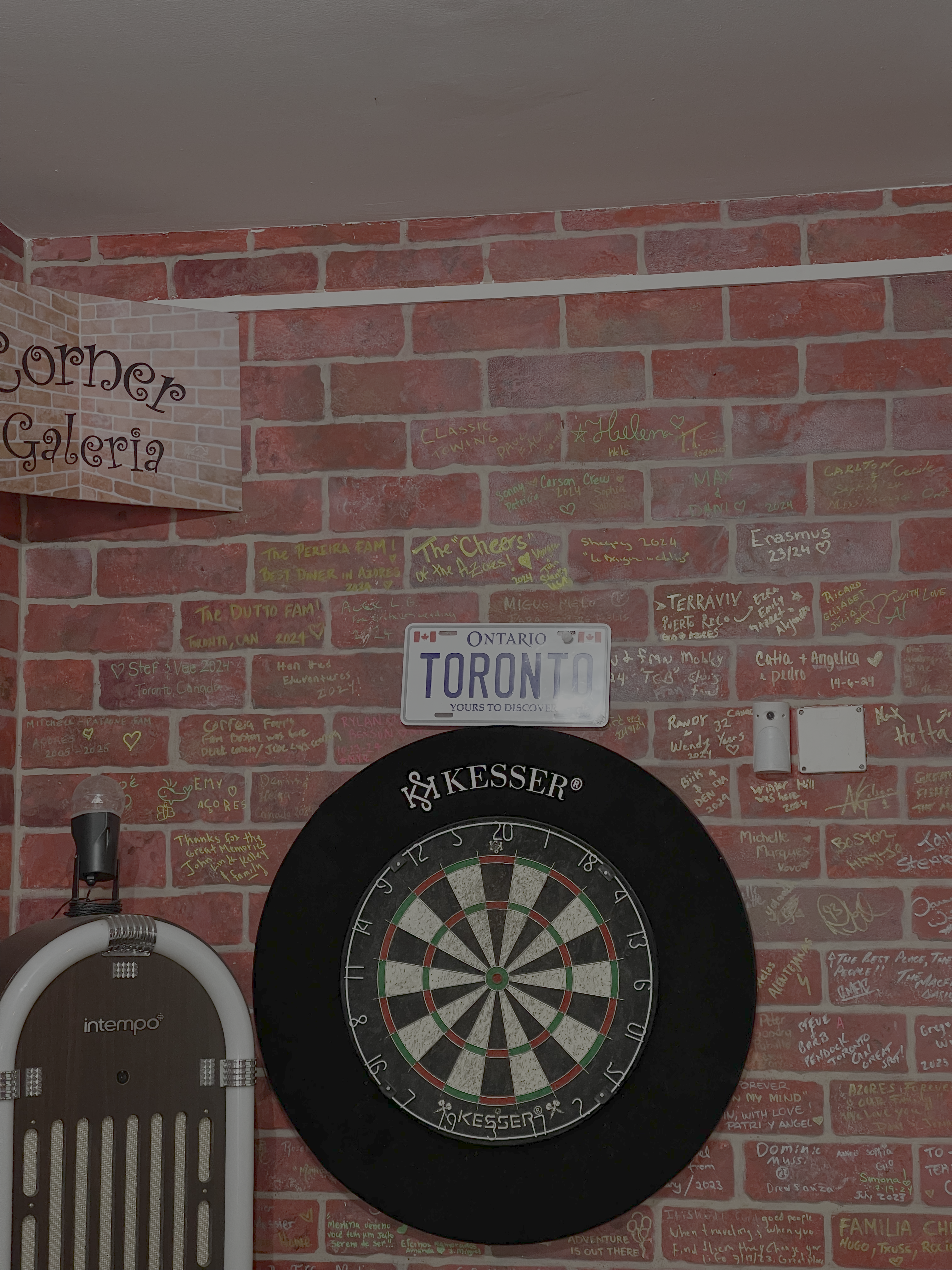
    This is the result of a major wave of immigration that occurred between the 1950s and 1970s, where Azoreans came for economic opportunity and to fulfill a labor shortage in Canada. This strong connection between Canada and the Azores can be found all around the island. In fact, the first restaurant we walked into had this plate prominently displayed on the wall:

    As soon as I saw it I said to the owner, “I like your license plate!” And she replied with, “thank you, yes, Toronto!”

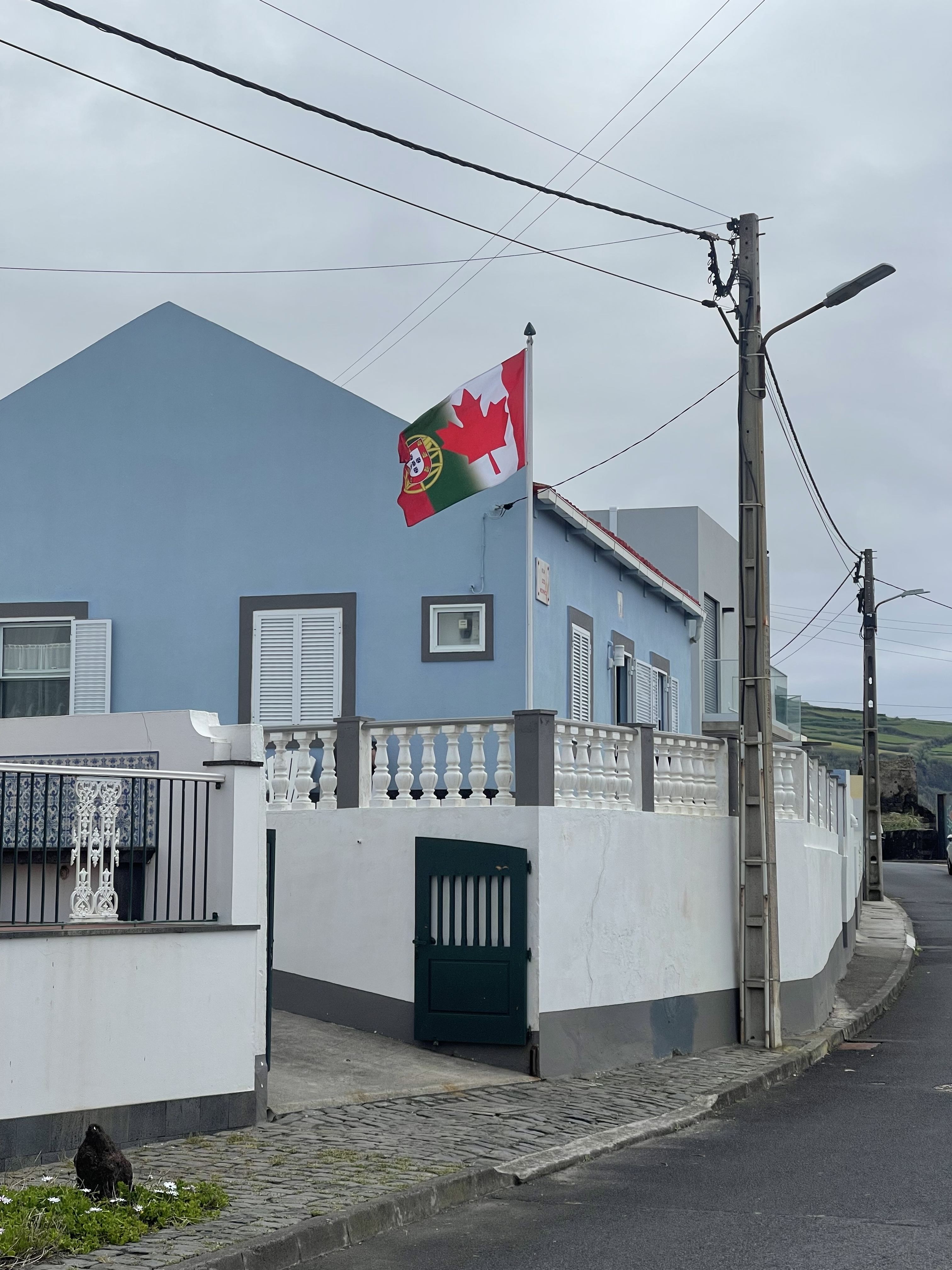
    I’ve also been spotting Canadian flags all around the island, including this hybrid Portuguese-Canadian one:

    São Miguel is a beautiful place with stunning landscapes, warm and welcoming people, and incredible food. (If you’ve had lapas grelhadas before you’ll know that it’s an optimal delivery mechanism for butter and garlic.) I’m excited to share my photos with all of you, both here on the blog and on Globizen’s Instagram page. Unfortunately, I forgot to bring the card reader for my Fujifilm, and so my best photos will have to wait until I’m back in Toronto.

    Stay tuned.

  • AI is going to change our physical world

    The Waymo Driver is in control at all times

    June 5, 2025 · View original


    Bond — which is a San Francisco-based VC firm with a cool website — just published this 340-page report on Artificial Intelligence. One of the authors of the report is Mary Meeker. She has been called the “Queen of the Internet” thanks to a 20-year run of presentations about the state of the internet, and her perceived ability to identity new trends early. So people are paying attention to this report. Her last one was in 2019 and I mentioned her 2018 report on this blog, here.

    At this point, it’s boring to say that AI is ushering in “unprecedented” global change. Everyone sends around snippets from ChatGPT. I incorporate some sort of AI-powered tool all the time in my daily workflow. And we’ve started using it on our development projects to help with tedious things like design coordination. Eventually we’ll probably stop calling it out as “AI” and just refer to it as the things that computers and the internet can do.

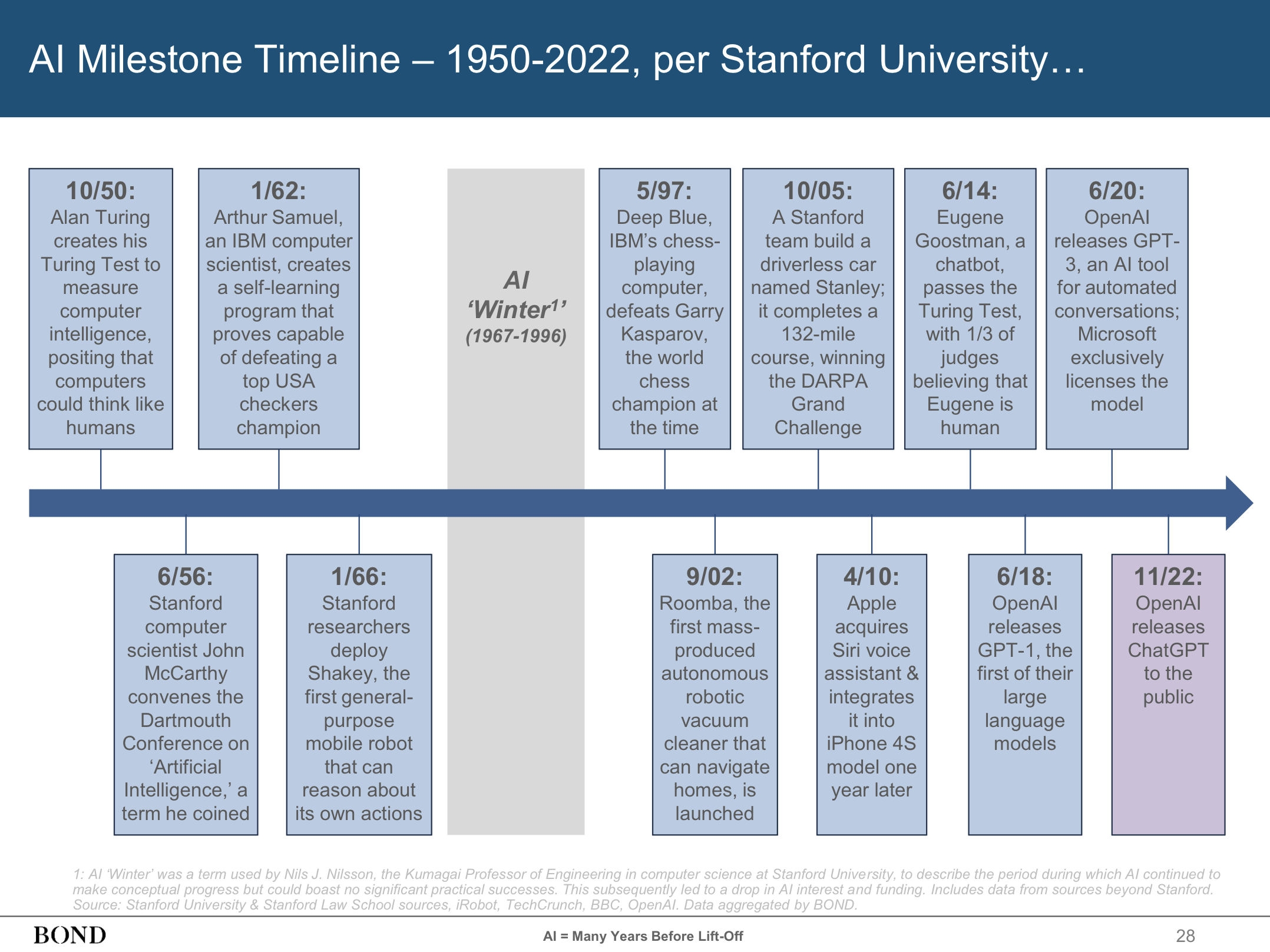
    But I think it’s valuable to point out that this has been a really long time coming. The report talks about an “AI winter” from 1967 to 1996. That’s a long time to stay motivated and interested in something that doesn’t seem to be gaining traction. And it’s a reminder that crypto is still early. Even though I also use blockchains every day and I’ve already transitioned (or am transitioning) a lot of my online life, including this blog.

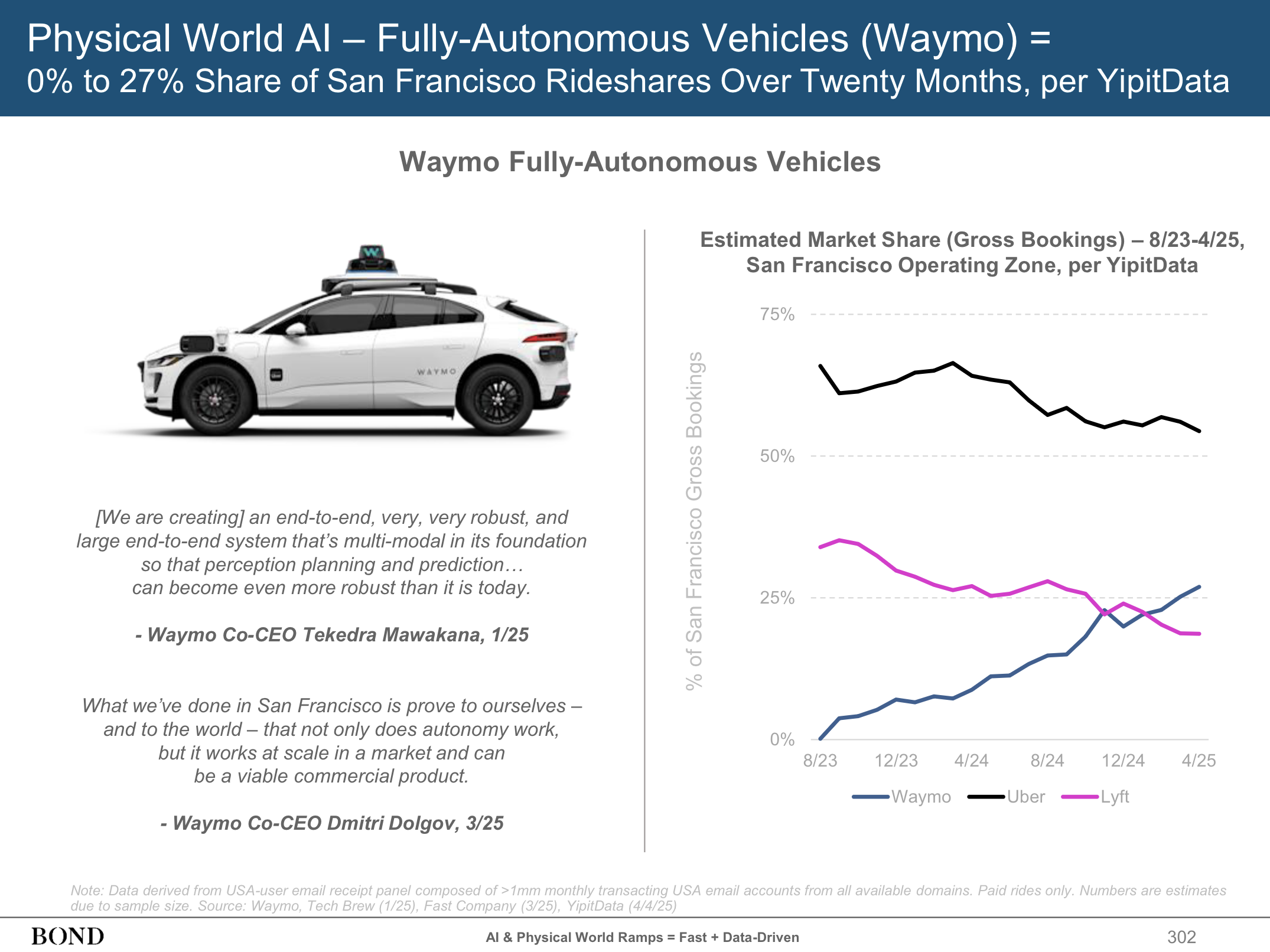
    Of particular relevance to this community is probably the fact that AI is also going to have a meaningful impact on our built environment. One of the sections in the report is called “Physical World AI,” and it talks about how quickly data centers are now being built (compared to housing) and how Waymo (using AI) has taken something like 27% of the ride share market in San Francisco in the span of just 20 months.

    This transportation product is now scaling, and cities have always responded and remade themselves according to new mobility innovations. This time won’t be any different.

    Cover photo by Annie Spratt on Unsplash

  • Height in the back

    June 4, 2025 · View original


    I came across this tweet the other night showing Toronto’s Yonge Street.

    > Tweet: ️ Tall buildings now line up along Yonge Street in behind the low-rise commercial storefronts that have lined the street for decades. In this image looking northwest across Yonge at the corner with Wellesley Street by UrbanToronto Forum contributor Lachlan Holmes, the new https://t.co/DU0INUNrZs

    In the foreground are small, two-storey main street—type buildings. And behind them are tall buildings. This is very Toronto. What you’re seeing here is a condition that occurs all around the city. Though in many ways, it feels counterintuitive. I mean, shouldn’t the tallest buildings be right on the main street?

    In my opinion, this condition is happening for at least two reasons.

    The first is that Toronto’s historic main streets tend to have a fine-grained lot fabric, which means they’re more challenging to assemble for larger developments. Assemblies are a complex art, and they get exponentially more difficult the more property owners and feuding siblings you add into the mix. So the path of least resistant is larger and chunkier sites.

    The second reason has to do with context. We tend to want to preserve the feel of our historic main streets. One Delisle is an example of this. The podium of the tower is scaled to exactly match what was there before — an Art Deco-style facade from the 20s that will return to the site.

    However, we didn’t have this same constraint on its other elevation (Delisle Avenue) and so we fought not to have your typical podium + setback tower. Instead, we wanted a street level experience that had more presence and urban grandeur.

    This, to me, is an important distinction to consider. Are we setting height back because of history and context? Both of which are important. Or are we setting it back because we’re pretending to still be a provincial Anglo-Protestant town? Sometimes it seems like it’s because of the latter.

    Cover photo by Yi Wei on Unsplash

  • Poles and overhead wires are ugly

    June 3, 2025 · View original


    > Tweet: Dufferin now, without hydro poles and then with trees. https://t.co/BUZFBOm32v

    If you’re familiar with Toronto, you’ll know that one ubiquitous feature of its urban landscape is street poles and overhead wires. They’re everywhere. And even if you aren’t acutely aware of their presence, they’re probably impacting your experience in some way. It’s one of the reasons why some streets just feel nicer than others.

    As an example, here are two AI-generated images that show what the same street in Toronto might look like if you (1) removed the street poles/overhead wires, (2) added some trees, and (3) expanded the boulevard on one side. The AI images do look like AI — and that helps them appear broadly cleaner/nicer — but even still, the streetscape impact is dramatic.

    As Toronto expands its Avenue network and works to rethink its Major Streets, we should also be thinking about bringing beauty and grandeur to our most important arteries. As it stands right now, many of our urban streets do not reflect the kind of global city that we have become.

    Cover photo by Dmitry Gerasimenko on Unsplash

  • I biked for brain health

    June 2, 2025 · View original


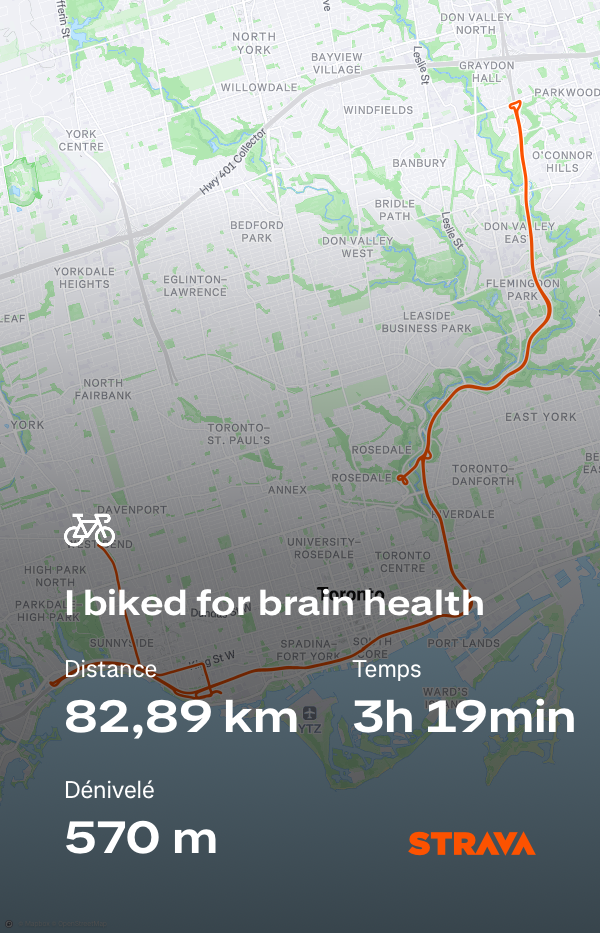
    Yesterday was the Mattamy Homes Bike for Brain Health event here in Toronto.

    I’d really like to thank everyone who donated to my ride. I raised $3,800. And the broader Multiplex Construction team raised over $14k. 100% of these donations will go directly to the Baycrest Foundation to fund work related to dementia, Alzheimer’s, and other brain function related illnesses.

    As advertised, I rode 75 km, which is an improvement from the last time I did a charity cycling event like this. My friend Akbar Ahmad reminded me that not only did I do 50 km on a single-speed bike and get a flat tire along the way, but I did it in boat shoes. Hmm. This time around, I dressed more appropriately. It was also 7 degrees when I left home at 630AM and so I bundled up.

    A big kudos to my riding partner, Len Abelman of WZMH Architects, who rode downtown from Vaughan, did 75 km like it was no big deal (I drafted behind him), and then rode all the way back home. His total was 150 km for the day and my knee would not have supported such an endeavor.

    Today was also a reminder of just how big the cycling community is in Toronto. Something like 10,000 people participated and it seemed like the majority of riders were fully geared up. It was great to see and it’s always fun riding on the Gardiner Expressway and Don Valley Parkway without any cars.

    At one point I was beside two guys chatting about how one of them is soon to become a father. The other guy asked if it was a boy or a girl and his response was, “it’s a girl — and I really hope she likes cycling as much as her dad does.”

    Toronto is a cycling city.

  • Jony Ive’s city building efforts in Jackson Square are the way to do it

    June 1, 2025 · View original


    You’ve probably heard:

    > Sam Altman, OpenAI’s chief executive, said the company was paying $6.5 billion to buy IO, a one-year-old start-up created by Jony Ive, a former top Apple executive who designed the iPhone. The all-stock deal, which effectively unites Silicon Valley royalty, is intended to usher in what the two men call “a new family of products” for the age of artificial general intelligence, or A.G.I., which is shorthand for a future technology that achieves human-level intelligence.

    $6.5 billion is a damn good valuation for a one-year-old startup, which says something about the current AI cycle. But what you may be less familiar with are Jony Ive’s efforts to revitalize Jackson Square in downtown San Francisco. In a recent interview with Monocle, published in their June 2025 issue, it was reported that his company LoveFrom (check out their website, it’s fun) has spent nearly $100 million on buildings in the area, equating to at least half a city block.

    Jackson Square is one of the oldest areas of San Francisco. It dates back to the 1849 gold rush and is currently on the National Register of Historic Places. Ive also has a soft spot for the area. Apparently it was where he first landed in the US in 1989, after receiving a bursary following his graduation from Newcastle Polytechnic (now Northumbria University). So this is allegedly not about money:

    > “There’s no fiscal benefit for us in investing in these buildings; these aren’t a means to an end, if that end is generating revenue,” says Ive.

    From a real estate perspective, I don’t think this first part is true. There likely will be a fiscal benefit. As of the first quarter of 2025, downtown San Francisco’s office vacancy rate was hovering somewhere above 30%. The pandemic infamously hollowed out the city and led to a bunch of negative externalities. But the city has always been a place of extreme boom and busts, and a place of disruption. It will reinvent itself.

    So whether or not he cares about fiscal benefit, I think Ive has been accumulating property at exactly the right time — when almost everyone else is pessimistic on the city. At the same time, he’s going above and beyond what a typical landlord would do. For instance, LoveFrom, quite famously, provided a pro bono rebrand for a much-loved and 50-year-old bookstore in the area, William Stout Architectural Books. The design agency allocates time for side projects just “for the love of doing it.”

    This is a form of city building that seems far less common in Canada. I’m talking about the scenario where a singular rich person decides that they really love a place and want to revitalize it. The other example that I have in my mind is Dan Gilbert and downtown Detroit. As of 2024, his firm Bedrock was reported to own 131 properties and approximately 18 million square feet of space, making him the largest and most prominent landlord in downtown.

    I would also argue that this is the most effective way to do it. Because who is going to give more shits: the person running a fund with a 5-7 year time horizon and an IRR clock, or the intrinsically motivated person with a deep personal attachment to a place who wants nothing more than to see it thrive and succeed? My bet is on the latter. It also doesn’t hurt when you strike an all-stock deal with OpenAI for $6.5 billion.

    Cover photo by Frames For Your Heart on Unsplash

  • Land use planning according to what you can versus can’t do

    May 31, 2025 · View original


    I got a notice in the mail this week for a public meeting related to Toronto’s multiplex zoning by-law. Multiplexes are house-like buildings with two, three or four dwelling units. This housing type became newly permissible across the city in May 2023, but as part of the approval, the city was asked to keep an eye on things and report back on anything that might need to be changed. What is now being proposed are amendments to this original by-law.

    One change is the introduction of the term “houseplex.” This is meant to get away from unit-specific terms like duplex, triplex, and fourplex; but it also sounds like it was designed to placate single-family house owners. Another proposed change is a limit on the number of bedrooms in a building. For houseplexes with three or more units, the maximum number of bedrooms is proposed to be 3 x the number of dwelling units. This is designed to block rooming houses.

    It’s a reminder that zoning is, at least in this part of the world, about fine-grained control. It’s typically about narrowing the universe of options down to a minimum so that it’s clear what we can expect. This is why zoning by-laws have things called “permitted uses.” It’s a strict list of things you can do. And if it’s not on the list, it’s off limits. A different and more flexible approach would be to do the opposite: list only what you can’t do. This broadens the universe of possibilities, but gives up some control.

    Roughly speaking, this is how zoning works in Japan. Land use planning starts at the national level, as opposed to being strictly delegated to local governments. And from my understanding, there are 12 main zones, ranging from exclusively low-rise residential to exclusively industrial. (Here’s an interesting undergraduate paper I found on the topic.) What’s fascinating about this system is that it’s organized by nuisance or intensity level, and it works cumulatively.

    Meaning, as you move up in allowable nuisance, things of lesser intensity still tend to be allowed. For example, just because you might have a commercial zone with restaurants and department stores, it doesn’t mean you still can’t build residential. It’s a less intense use. At the same time, the starting point is also more permissive, because even the exclusively low-rise residential zone allows “small shops or offices.” What all of this creates is a planning framework where most zones are by default mixed-use.

    This is a fundamentally different approach. It relinquishes some degree of control, embraces more flexibility, and accepts that cities are chaotic living organisms. It’s impossible to draw lines on a map and figure out exactly where each permitted use should go. We’ll never get it right and/or keep up. What this means is that we’re artificially stifling our cities by not just focusing on the obviously bad stuff (like heavy industry next to a daycare), and letting the market decide where a ramen stand should go.

    Cover photo by Susann Schuster on Unsplash

  • Wait, how many days do I have to go into the office? As many as it takes

    May 30, 2025 · View original


    This week, the largest publicly traded company in Canada by market capitalization — the Royal Bank of Canada — told its employees to return to the office at least four days a week starting this fall (you know, once the summer is over). This is a first among Canada’s largest banks, but it’s still more timid than what US banks have been doing. JPMorgan Chase, for instance, asked its employees at the start of this year to return to the office 5 days a week. Goldman Sachs did the same way back in March 2022. And when people weren’t doing it, they sent reminders.

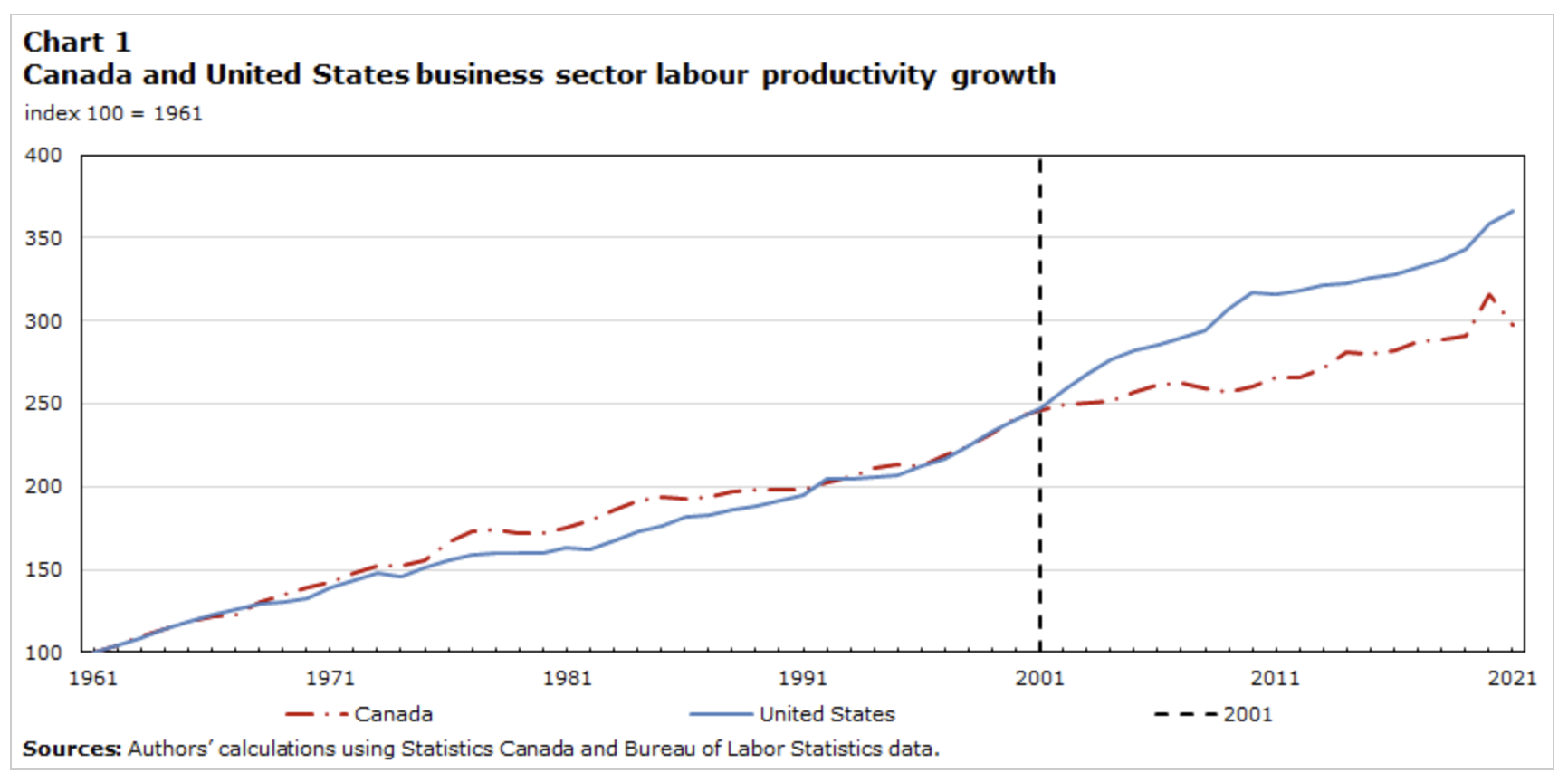
    Since at least 2023, RBC has been saying that remote work is hurting productivity. And if that is true, then this is an imperative. Of course, it’s also a positive thing for cities. In-office work is a centralizing force. But the really important thing to be focused on here is productivity. Canada has an existential productivity crisis. We used to closely track the US, until we didn’t. From 2001 to 2021, the US saw its labor productivity grow at roughly 2% per year. In Canada, our growth rate fell to 0.9% per year, which is why this chart from Statistics Canada looks the way it does.

    What this suggests is that the Canadian economy has not yet entered the 21st century. We haven’t innovated enough. We aren’t commercializing enough of our research. We aren’t taking enough risks and funding new ideas. We aren’t starting enough big new companies (despite being smart and highly educated). And I would argue that we over-indexed on housing and construction. And I say this last point as a real estate developer! Though it’s not as self-sabotaging as it may seem. Developers need a strong macro environment in which to build into. You can’t grow a robust economy by just building housing.

    Now, I don’t know if any of these things will absolutely require people to be in an office 5 days a week. Maybe hybrid is enough. Productivity isn’t perfectly correlated with in-office work from what I can tell. But I do know that for Canada to enter the 21st century it’s going to require hard work, a culture of greater risk taking, more innovation and entrepreneurship, and a relentless desire to out-compete the rest of the world. The goal is to be the best, or at least it damn well should be. But for this to happen, I do believe that, broadly speaking, it will demand more, not less, time together with people.

    Cover photo by Annie Spratt on Unsplash

  • Not grand retail

    May 29, 2025 · View original


    The Frank Gehry-designed Grand LA is a prominent mixed-use development in downtown Los Angeles that sits across from the celebrated Walt Disney Concert Hall (which was also designed by Gehry). Developed by Related, the project occupies an entire city block and contains a 305-room hotel by Hilton, 347 luxury rental apartments, 89 affordable apartments, and over 164,000 sf of retail space.

    According to Bloomberg, most of the project is doing quite well. The hotel occupancy rate is at 69%, the hotel restaurant is busy, and the residential is more than 95% leased. The problem is the retail.

    Since the project opened in 2022, most of it has gone unleased. Though two new anchors were just announced: an AI museum called Dataland and a permanent home for the University of Michigan’s Ross School of Business, which runs an executive MBA program in LA.

    But these aren’t traditional retail tenants. And it’s almost certainly not what was being modeled when the project broke ground in 2019. Back then, everyone was still going into the nearby offices. And those humans would have brought foot traffic. This is one of the tricky things about development — you end up building through different macro environments.

    But even in the best of times, it’s generally hard to say with exact precision what will be successful. That’s development. If there’s comparable product, then you can comp against that (less risk). But if there isn’t (more risk), you’re faced with the question: Does comparable product not exist because there’s no market for it, or does it not exist simply because nobody has done it yet?

    If you’re developing, it’s because you believe the latter.

    Cover photo by Spiwok V on Unsplash

  • 18 rue Pradier

    May 28, 2025 · View original


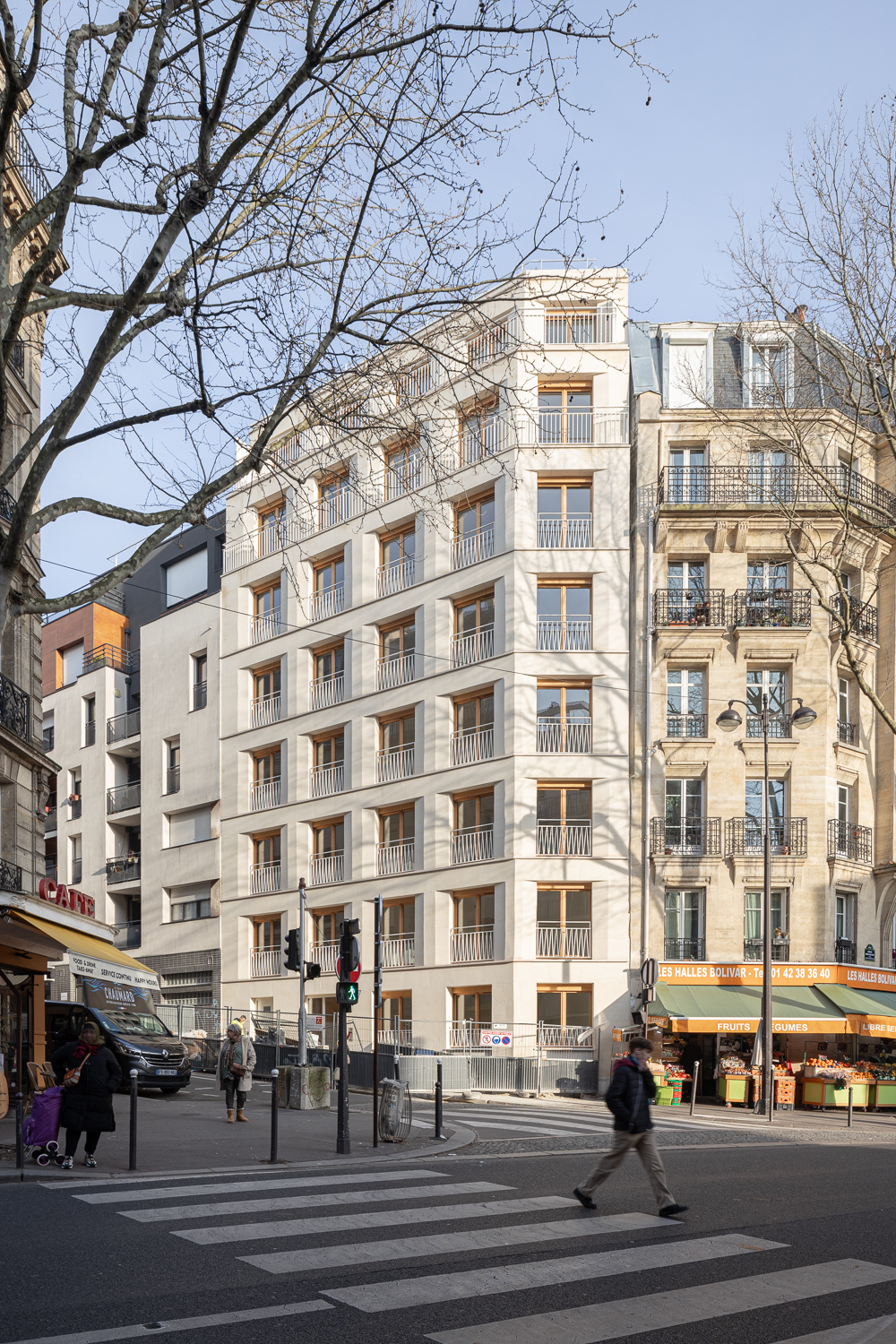
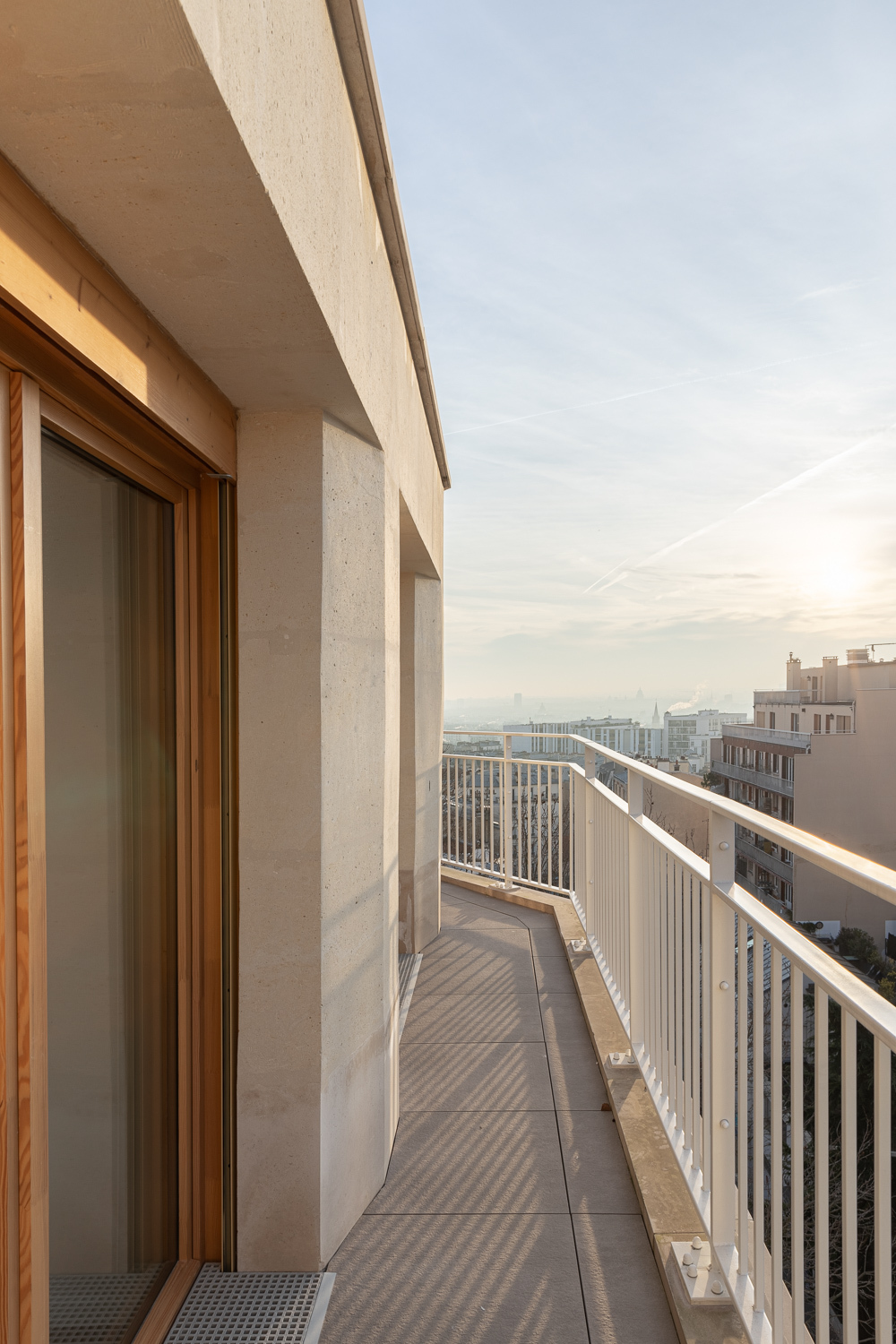
    I continue to be amazed that cities, like Paris, can make small housing projects, like this one at 18 rue Pradier, work.

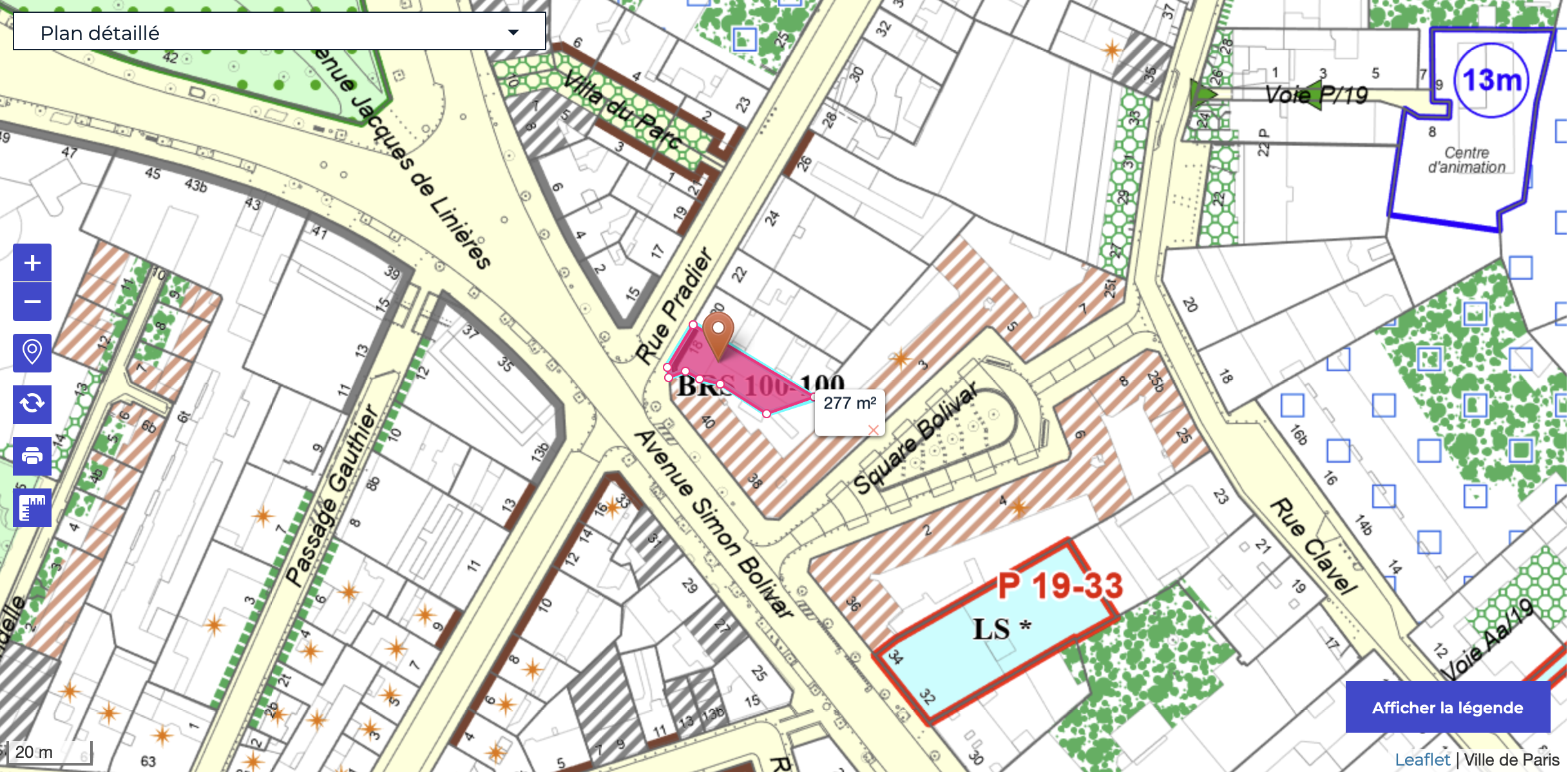
    The site is approximately 277 m2:

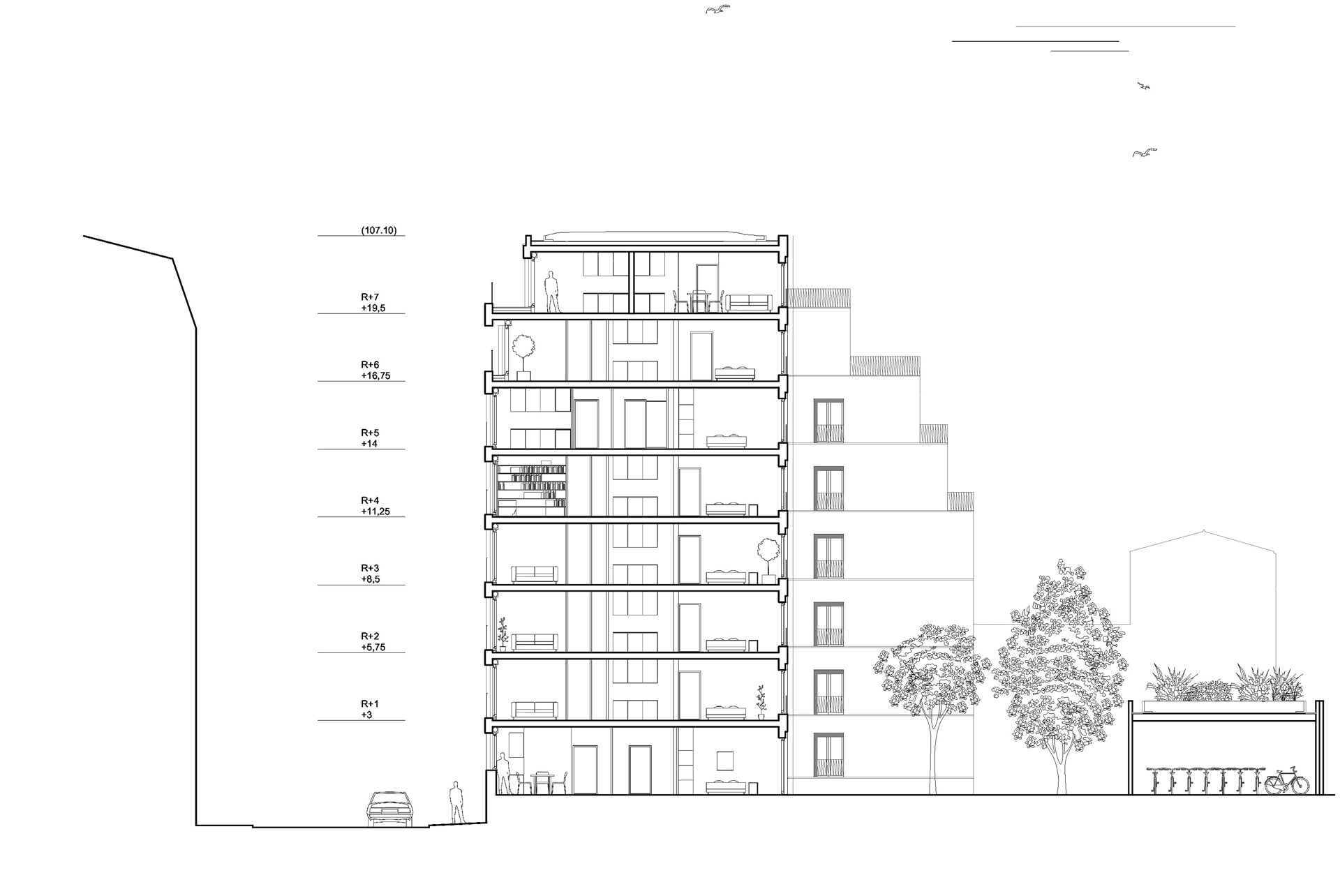
    And yet, social housing developer Seqens built 8 floors, 15 apartments, and even used a stone facade with built-in sun shades on the windows.

    The total building area is approximately 1,030 m2 (~11,086 ft2). That’s an average of 1,385 ft2 per floor, which would be unthinkable here in Toronto with our two required means of egress.

    So let’s consider some of the math.

    My internet sleuthing tells me that this site last sold on December 6, 2018 for €3,950,000. That works out to ~€263k per door or €356 per buildable square foot. This is a wild land basis!

    So is it that construction costs are that much lower or that the project received heavy subsidies? Maybe it’s both. I shall continue sleuthing.

    Project photography by Cyrille Lallement via ArchDaily; building section from Mobile Architectural Office