Daily insights for city builders, delivered every morning at 6 AM ET. I’m Brandon Donnelly — a Toronto-based real estate developer and founder of Globizen. I’ve been writing here since 2013.

  • Unsurprisingly, lots of people want to live in Cape Town

    June 16, 2025 · View original


    According to the Financial Times, Cape Town’s population (metropolitan area) grew by 27.6% from 2011 to 2022, landing at approximately 4.77 million. Last year it was estimated at 4.97 million. At the same time, residential property prices increased by about 160% during the period from 2010 to 2024, outpacing all other cities in South Africa. Last year the average price of a home increased by 8.5% in Cape Town versus the national average of 4.5%. And as is the case in most desirable cities around the world, this has some people worried.
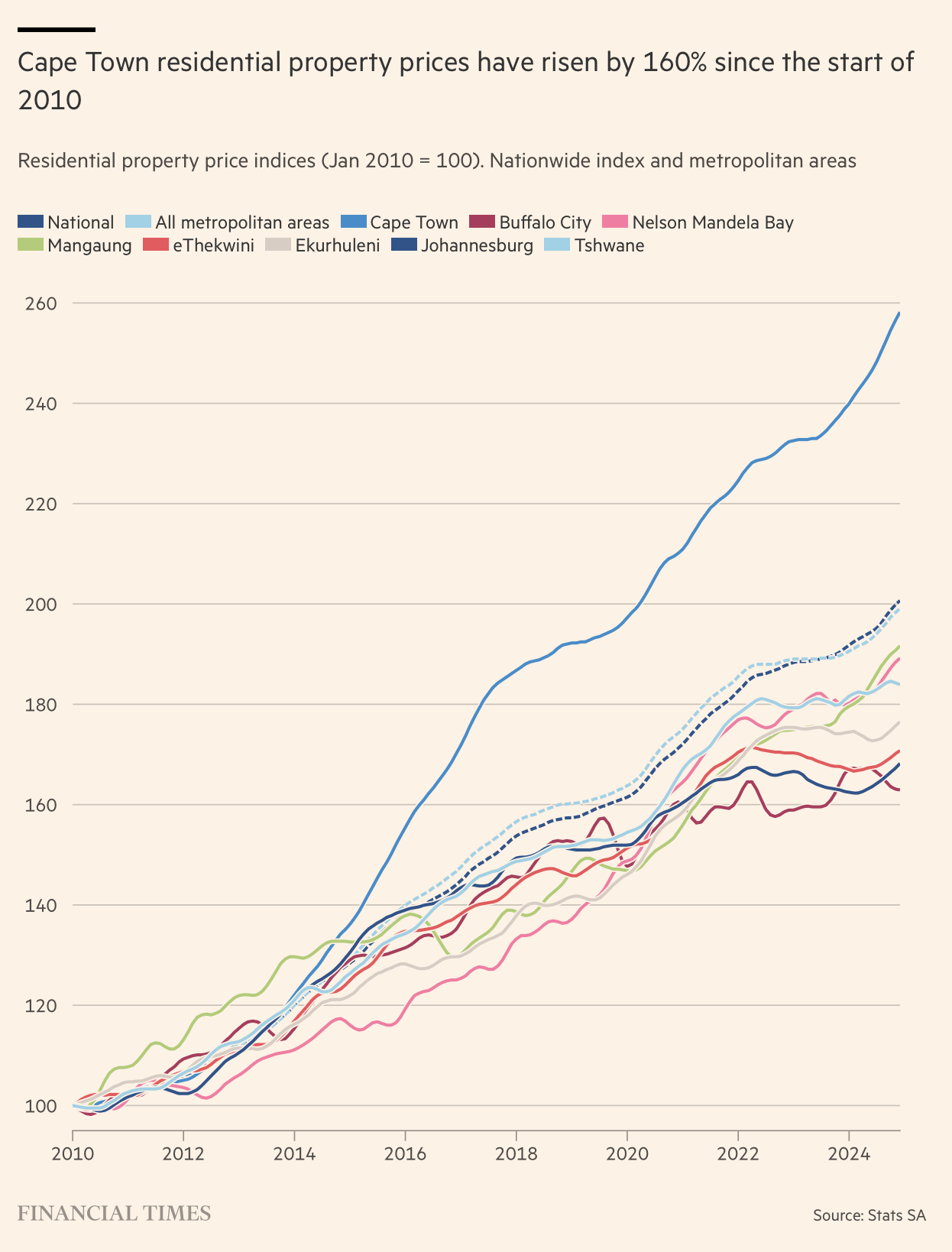
    But who and what is to blame?

    Is it because of tourism? It is estimated that there are some 25,800 active short-term rental listings in the city. Is it digital nomads? South Africa recently launched a Digital Nomad Visa program allowing foreign nationals to live and work in the country provided they can demonstrate an annual income of at least 650,976 ZAR (US$37,500). However, this is a recent thing. Is it foreigners coming with US dollars, euros, and/or pounds? Or is it because of internal migration, which South Africans refer to as “semigration?”

    As always, it’s a debate. But I think the outcome we are seeing makes intuitive sense for at least three reasons. One, Cape Town is an objectively beautiful and amenity-rich city sandwiched between mountains and the ocean. See above cover photo. It also has a warm and temperate climate. The average high in January (their summer) is 29 degrees and the average high in July (their winter) is 19 degrees. This is a huge competitive advantage — albeit a natural one.

    Two, it’s a relatively safe place. The above FT article quotes a transplant from Johannesburg saying, “You can’t ride your bike in Joburg unless you are in a walled-off estate.” If you have the means, that’s a strong motivator to move somewhere else. And it’s understandably easy to assign a lot of value to safety and security. “Sure, this home may be more expensive, but I can walk to places and ride my bike without fear.” That’s something worth spending money on.

    Lastly, we are all becoming less tethered to specific locations. Digital nomadism and remote work are here to stay. But I don’t think this means that people are going to just decentralize and move to the middle of nowhere. I think it means that people are going to increasingly vote with their feet and choose exactly where they want to live their life. What this means is that the need to create better places is only going to become more important. Because more than ever, every place is now in a global competition for talent and investment dollars.

    Cover photo by Tobias Reich on Unsplash
  • You can’t manage what you don’t measure

    June 15, 2025 · View original


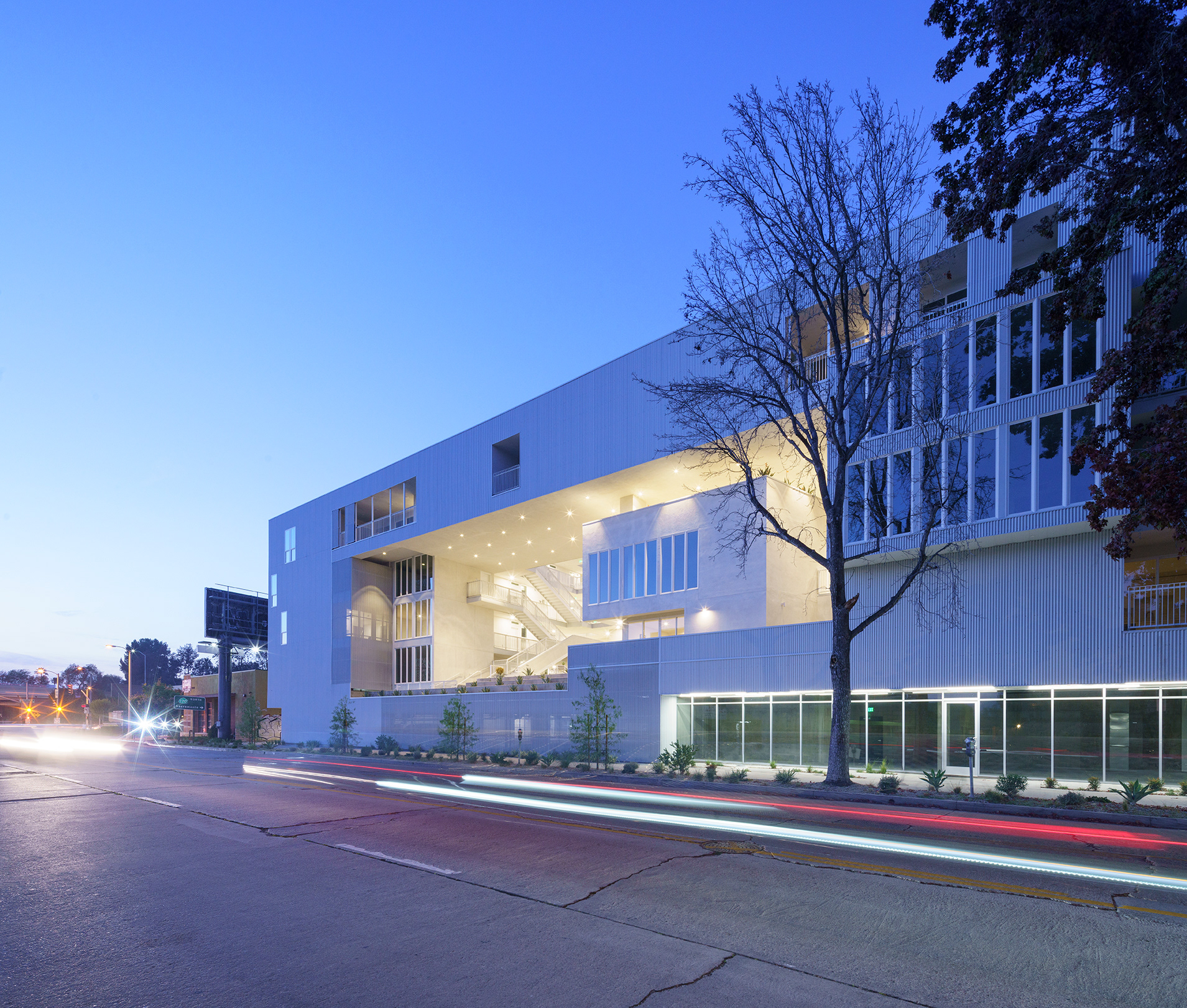
    Broadly speaking, cities tend to have better data on vehicular traffic than on pedestrian and bicycle traffic. This is because road design has traditionally prioritized the movement of cars, above all else. So it has felt right to bias traffic counts. But there are lots of places where pedestrians and cyclists greatly outnumber vehicles.

    For example, I was on Queens Quay yesterday visiting my mom and, if you’ve ever been to Toronto’s waterfront in the summer, you’ll know that it has one of the busiest bike lanes/trails in the city — if not the busiest. But if you ask ChatGPT just how busy it is, it will more or less say, “I don’t know. Really busy?” And that’s because we don’t have real-time usage data. We have estimates. And the same is true of pedestrian counts.

    (If you’re aware of a great dataset, please share it in the comment section below.)

    But this is starting to change with the advent of AI traffic monitoring solutions that can handle multi-modal environments. Meaning they’re capable of counting everything from pedestrians and scooters to cyclists and trucks. This is what cities need to make better decisions. And as this new tech becomes more widespread, I think it’s going to show us just how much we’ve been missing.

    Cover photo by Joshua Chua on Unsplash

  • Good architecture, bad urbanism; bad architecture, good urbanism

    June 14, 2025 · View original


    > Tweet: You can have bad urbanism with good architecture, and good urbanism with bad architecture https://t.co/RSXicNU4Ui

    I like and agree with this tweet: “You can have bad urbanism with good architecture, and good urbanism with bad architecture.” The two provided examples of this are (1) Brasilia and (2) what appears to be some random little street in Japan.

    Brasilia is the capital of Brazil. It’s a masterplanned city designed by Lúcio Costa, Oscar Niemeyer and Joaquim Cardozo in the 1950s. And it was all part of a plan to move the capital from Rio de Janeiro to a more central location in the middle of the country.

    The result is some incredible architecture by Oscar Niemeyer that, for me, is emblematic of the country. Brazil was one of the first countries outside of Europe to adopt modern architecture and it’s precisely for this reason that Brasilia is high on my list of places to visit. (Rio is also one of my favorite cities.)

    But whenever I tell a Brazilian that I want to visit the city, the usual response is, “Why?” I then have to explain that it’s because of Niemeyer and the architecture, and then they say, “Oh, okay, that makes sense. But besides the architecture, there isn’t much else to see or do there.”

    Part of the reason for this could be because the city has objectively bad urbanism. When you look at it in plan view, the layout of the city resembles a plane or bird in flight, and that is, I guess, symbolically cool when you view it on Google Maps. But on the ground, cities are not at their best when they’re designed around abstract symbols.

    They’re at their best when they’re designed around people. And this is what example number two does well. The architecture is ugly and nondescript, but the street is narrow, the road is shared, and the buildings contain a mix of fine-grained uses.

    It’s a dead simple approach, but it works — really well. It’s good urbanism.

    Cover photo by Thandy Yung on Unsplash

  • Extroverted courtyards in Southern California

    June 13, 2025 · View original


    The American Institute of Architects (AIA) just announced its 2025 Architecture Award winners. This is a program that celebrate the best contemporary architecture in the US, spanning all scales and budgets.

    Firstly, I’m obligated to share that Studio Gang won an award for its Kresge College Expansion at the University of California, Santa Cruz. This is a beautiful project consisting of 4 new mass-timber buildings — three residential halls and an academic center — in the middle of a redwood forest in northern California.

    But since we talk a lot about housing on this blog, I also wanted to highlight two projects by Brooks + Scarpa. The first is 11NOHO in North Hollywood, CA. This is a 5-storey apartment consisting of 60 suites, 12 of which are affordable (which allowed for a density bonus).

    The second is the Rose Mixed-Use Apartments in Venice, CA. This one is a 4-storey apartment and is 100% affordable. I’d like to know how they got the pro forma to work, but regardless, it’s proof that Europe doesn’t have a monopoly on beautiful social housing projects.

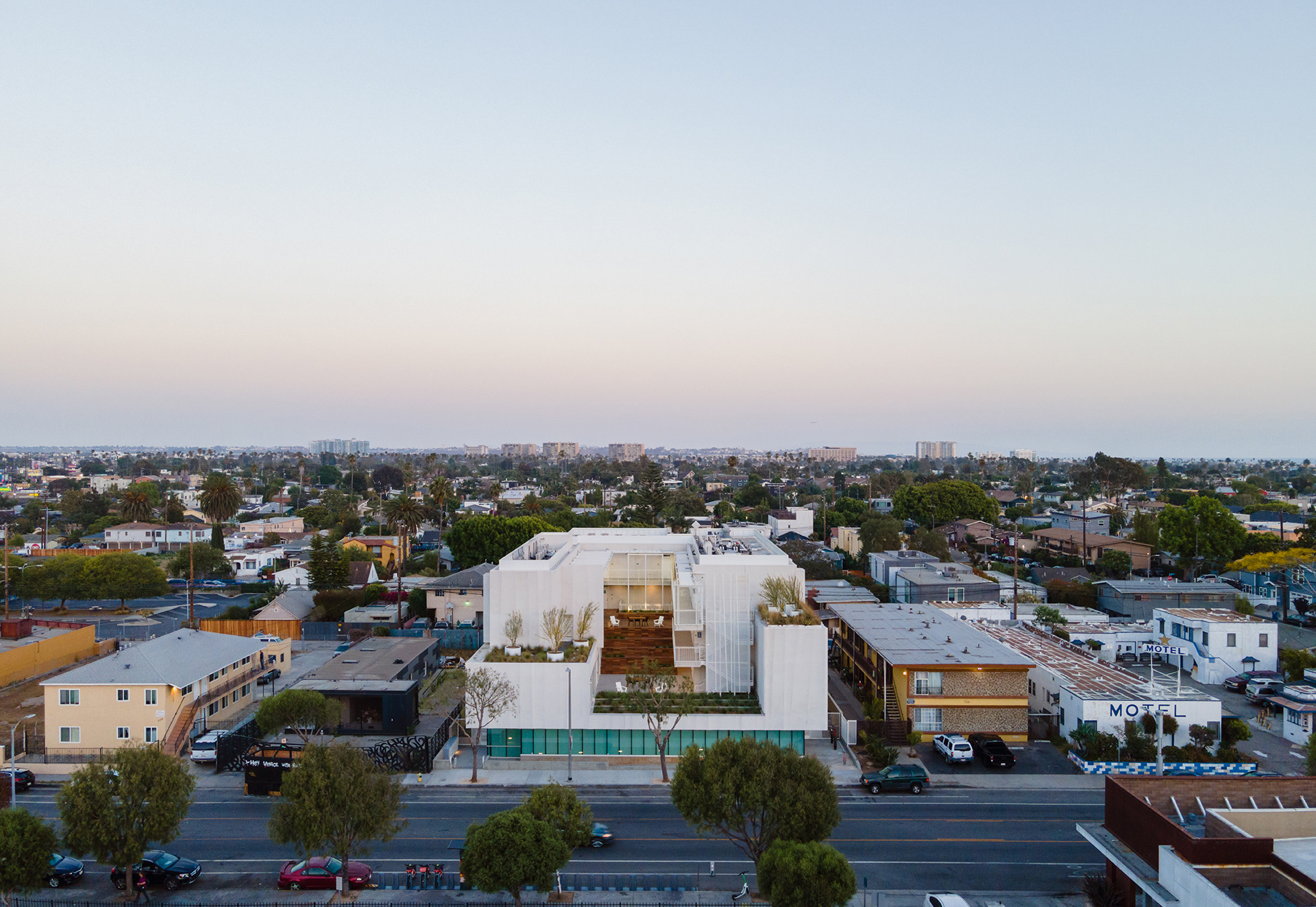
    What I really wanted to point out, though, are the projects’ courtyards. Southern California has a rich history of courtyard buildings and these two projects offer a contemporary interpretation of this tradition. Both include an elevated courtyard and both have found a way to maintain a connection to the street.

    What I like about this approach is that it’s simultaneously extroverted (there’s a connection to the broader urban context) and introverted (residents get a semi-private amenity).

    I think this duality can be particularly helpful when you’re designing and developing in a context that maybe isn’t the most conducive to intimate urban spaces. It allows you to create your own new ground plane, while not turning your back on the city.

    Coincidentally, it also happens to be one of the design moves that Globizen put forward in a recent submission to Salt Lake City for the redevelopment of a full city block in the Granary District.

    Photos from Brooks + Scarpa

  • The narrowest street (or lane?) on São Miguel

    June 12, 2025 · View original


    The Azorean adventure is over. But it wouldn’t be a trip to Europe without some sort of post about street dimensions.

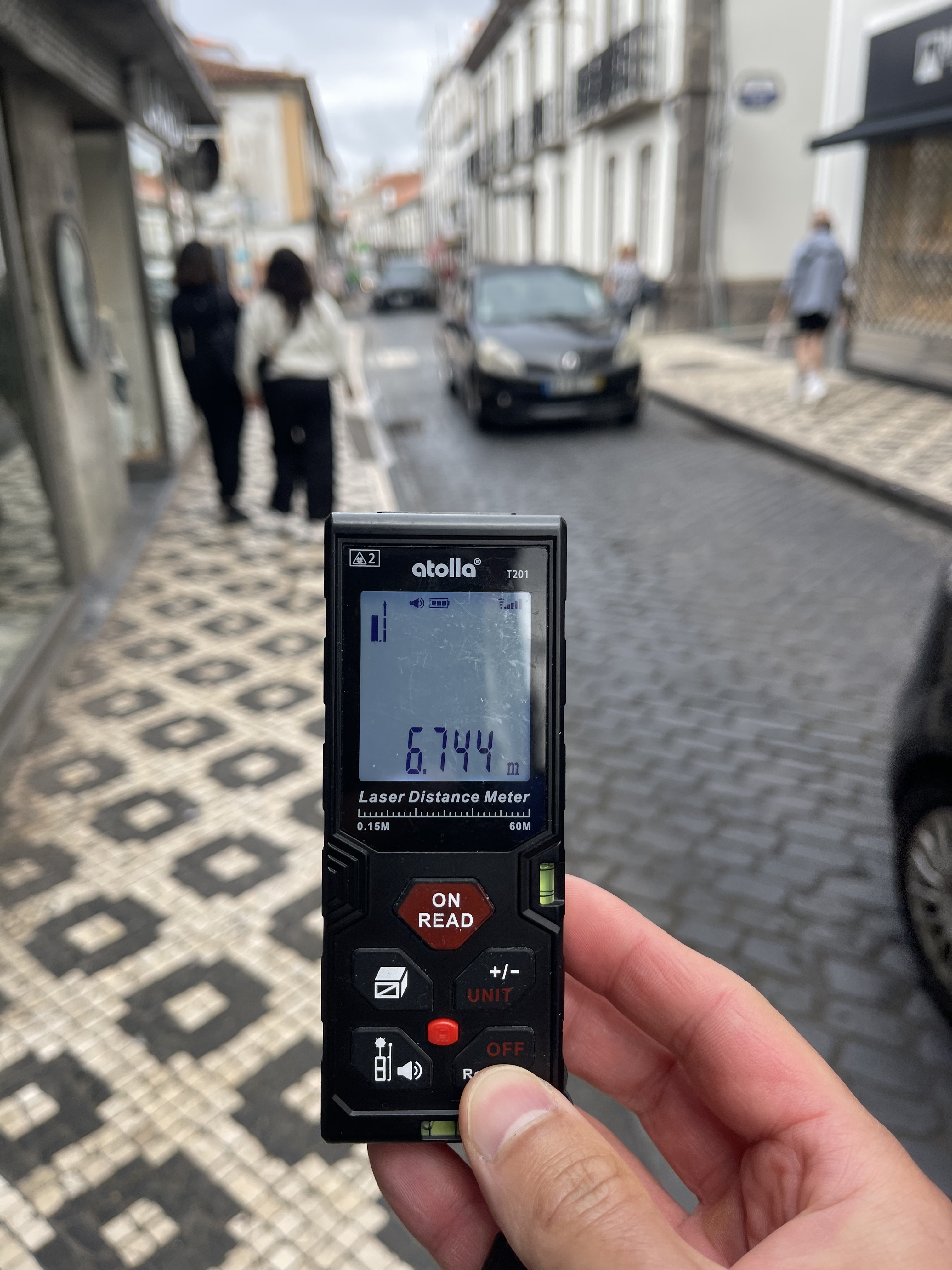
    So here’s a primary retail street in downtown Ponta Delgada — 6.7m from building face to building face, or about the size of a standard two-way drive aisle in Toronto.

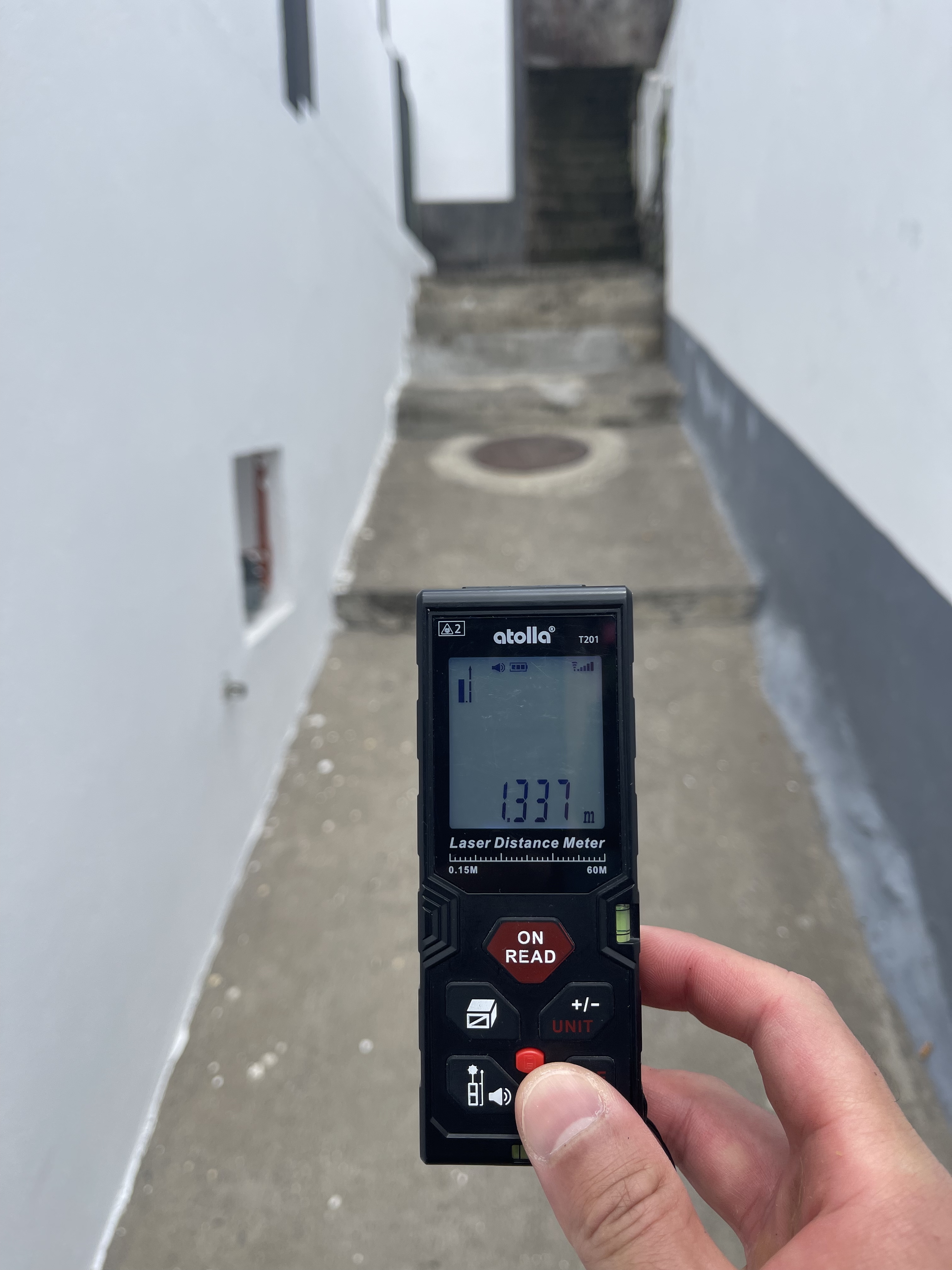
    And here’s the narrowest street/lane that I came across on the island. I couldn’t find a street name, but it did have utility meters on it, and it was about the size of a residential building corridor.

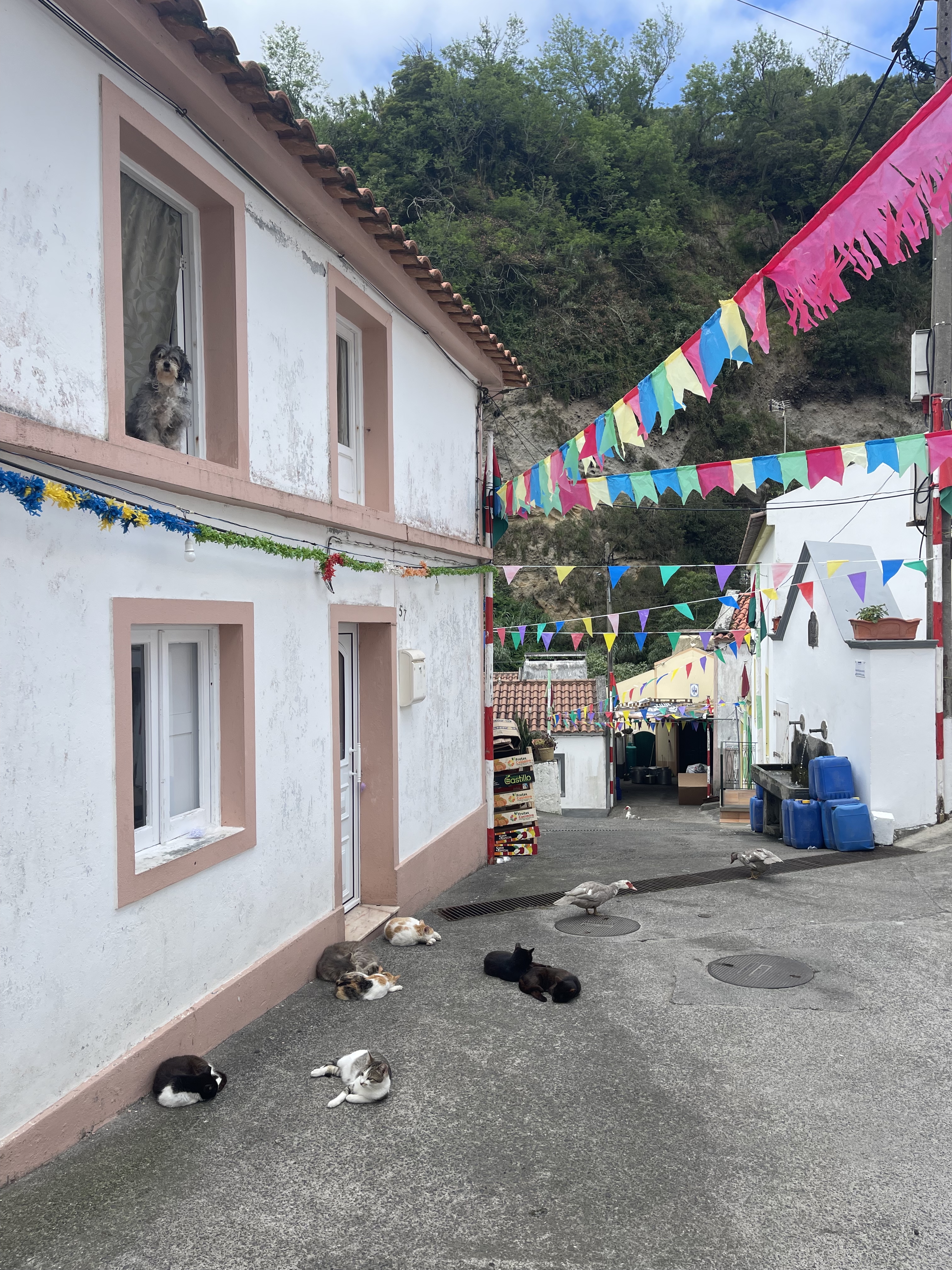
    We also stumbled upon quite the street party in this same area. There’s a lot happening in this photo.

    I did also manage to find a memory card reader for my camera at a Continente (supermarket) along the way. So make sure you’re following Globizen’s Instagram page.

    Regularly scheduled programming will resume tomorrow.

  • The Blue House Azores

    June 11, 2025 · View original


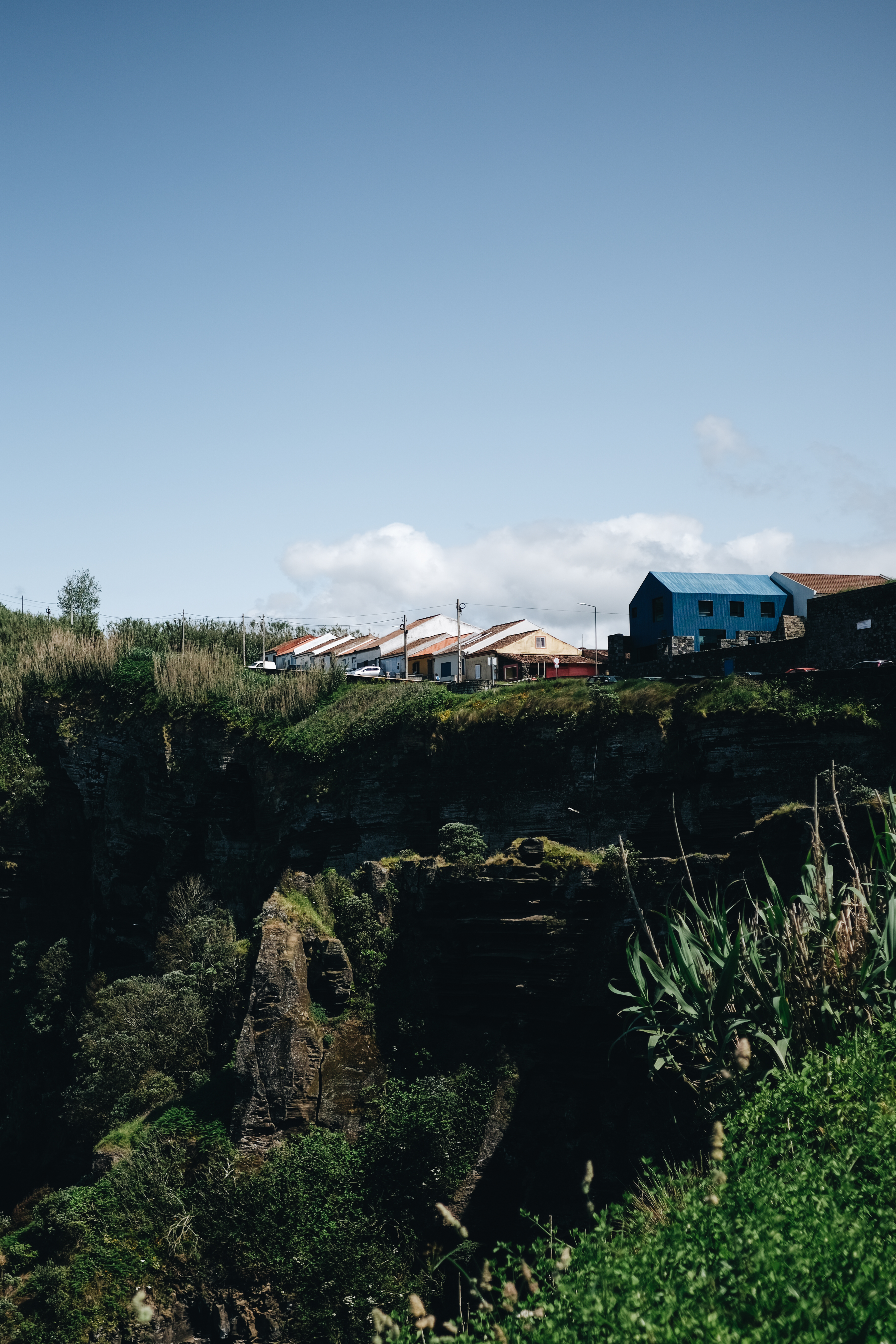
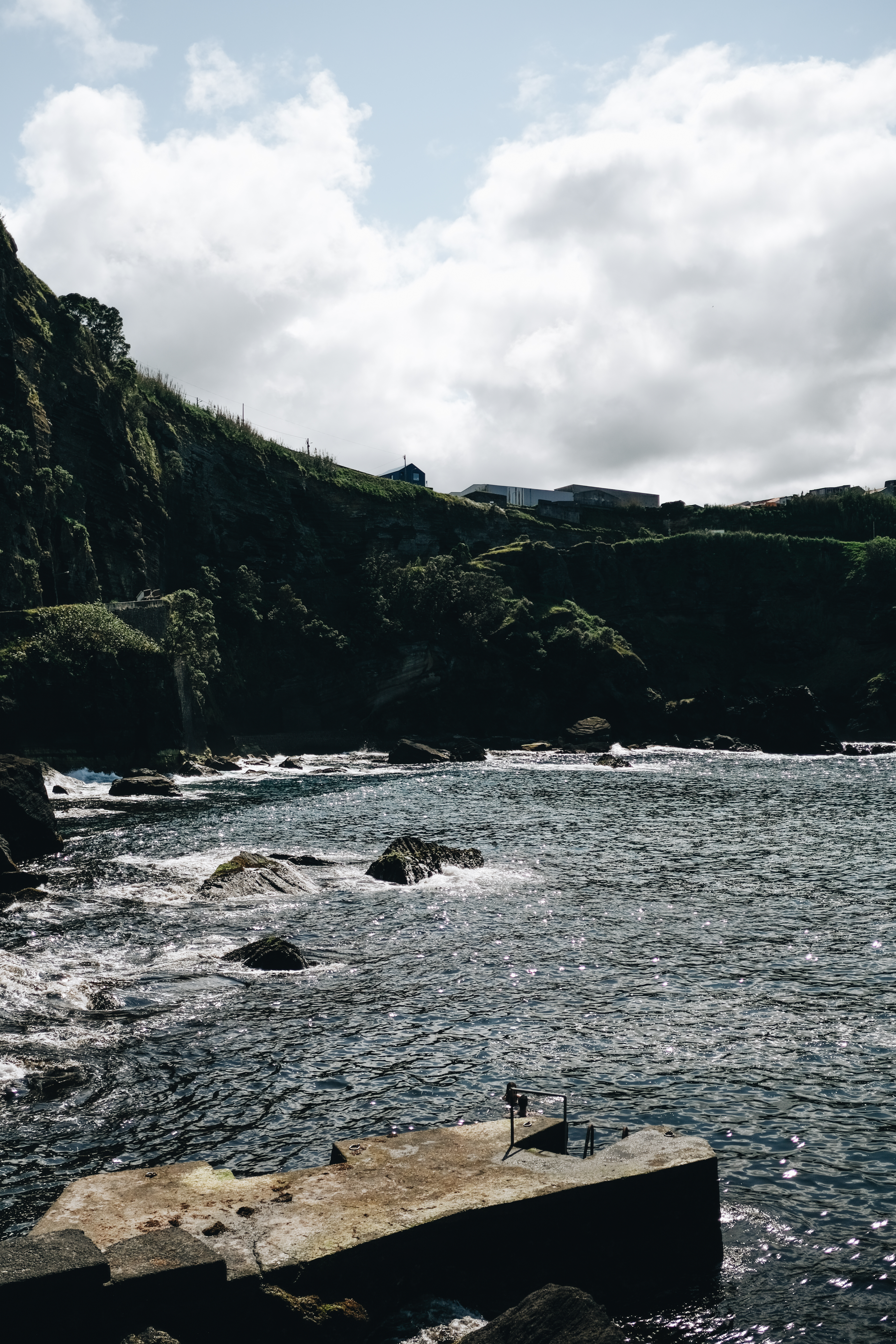
    These are photos of the Blue House — and its siting — in the civil parish of Capelas on the island of São Miguel. Designed by the Portuguese firm Atelier Backlar, the house was completed in 2023 and now serves as a popular short-term rental in the Azores. If you’d like to take a look inside and/or book it, here’s the Airbnb listing. Right now it’s going for over C$1k per night.

    But what’s even more interesting about this property is that it once belonged to Bianca’s maternal great-grandparents. Her great grandfather was a whaler and so its location on the water beside the Porto das Capelas was naturally ideal for days in the office. This is also where Bianca’s grandmother lived prior to emigrating to Toronto in the 60s.

    Like a lot of real estate, there’s an emotion-filled story that explains why it’s no longer in the family. But I do think it’s nice that the architects chose to preserve some of the existing walls of the previous house (which they describe as an abandoned ruin on their website). I also think it’s cool that it has become one of the most noteworthy examples of modern architecture on the island.

    Let’s call this the second-best outcome.

  • The margins were too thin

    June 10, 2025 · View original


    After seeing this beautiful 6-storey and 21-unit social housing project in Lyon, I decided to retweet it and share the fact that we recently had a site under contract in Toronto with the intention of doing a very similar build. We wouldn’t have been able to do the same outdoor spaces at the corner, but it was going to be 6 storeys and without any setbacks. The overall dimensions appear to be similar.

    However, in the end, we had to drop the site because the margins were simply too thin. I was disappointed. Of course, some people responded to my quote retweet by calling this an example of developer greed. But once again, I don’t think most people understand how development economics work. If the margins are too thin it, among other things, means:

    – It’s going to be hard/impossible to raise capital and finance the project – You might be better off buying a “risk-free” government bond instead – That unexpected situations could sink the project (i.e. you lose money)

    To give a specific example, let’s assume that your expected base case rent at the time of occupancy is $4.75 psf. This would mean that if your average suite size is around 600 sf (which ours was), you would need a face rent of about $2,850 per month.

    But what happens if you’re off by only $0.25 and your face rent for this same 600 sf apartment is now $2,700 per month at initial lease up? $150 per month may not seem like a big deal, but it is. If you capitalize this income at something like a 4% rate, you will find that it becomes material.

    This is what I mean by “the margins are too thin.” And it’s similar to any other professional not wanting to take on a job because they might lose money or because it’s “not worth their time.” It’s about managing risk and understanding the opportunity cost of taking on such a project.

  • Factory of culture on São Miguel

    June 9, 2025 · View original


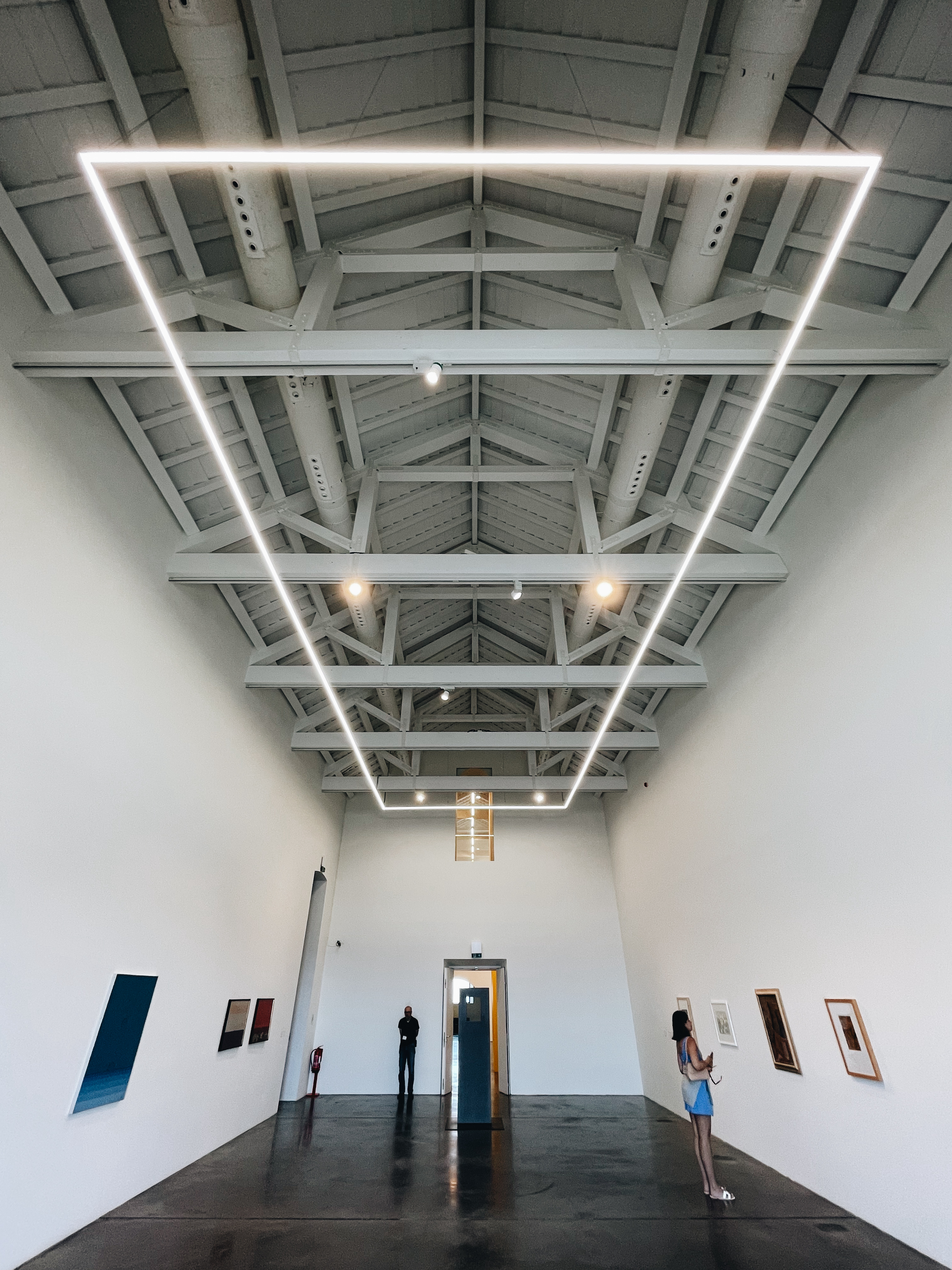
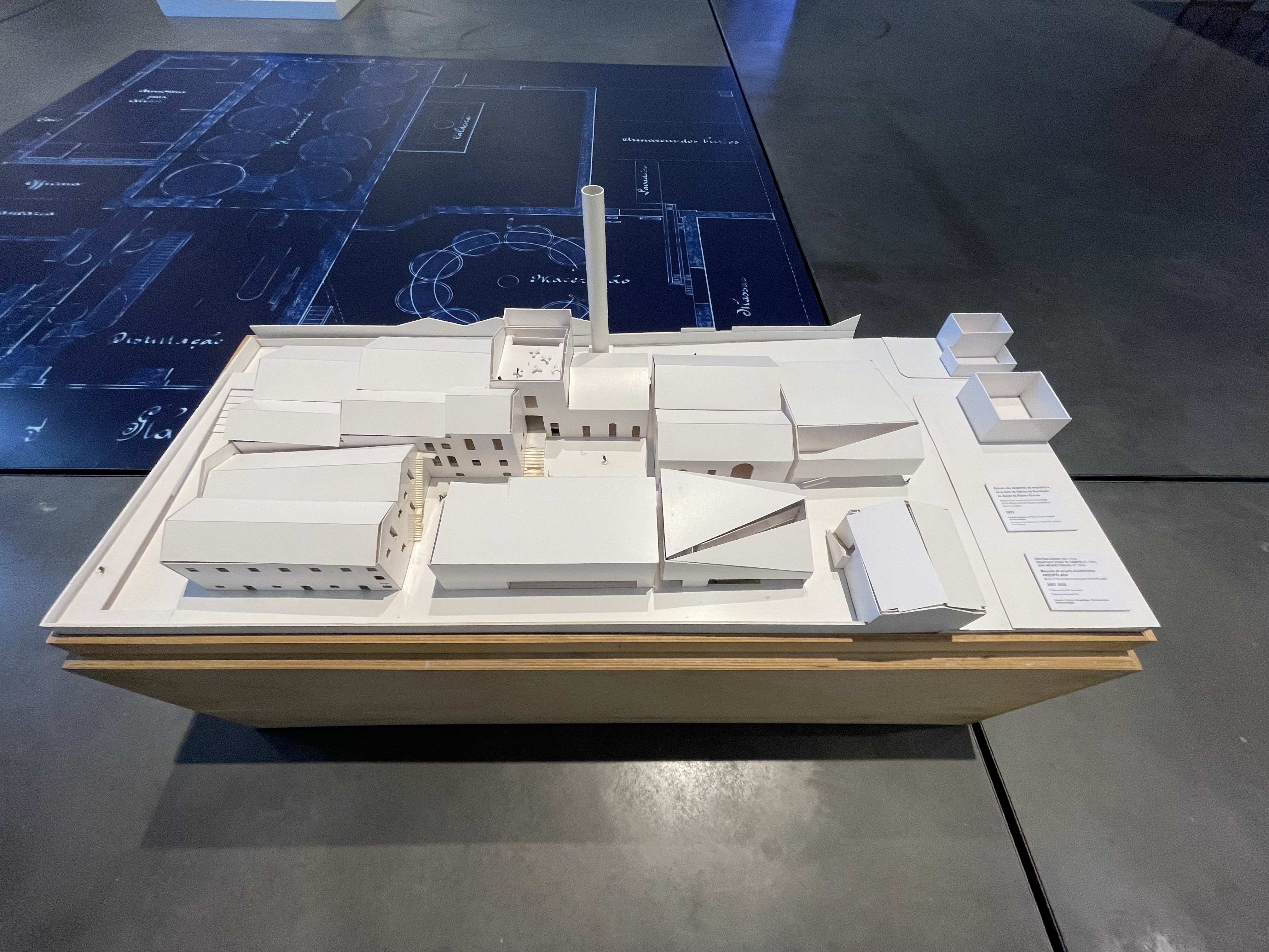
    Yesterday we visited the Arquipélago — Centro de Artes Contemporâneas in Ribeira Grande on the northern part of the island. Originally the Ribeira Grande Distillation Factory, the site dates back to the late 19th century. Construction on the original buildings began in 1893 and the first export of alcohol was reported in 1896. However, production was short lived.

    In 1901, due to pressures from the Portuguese mainland, a protectionist measure was put in place capping alcohol production across the Azorean islands to 2 million liters per year — a drop from 10 million liters per year. The mainland simply couldn’t compete with low-cost alcohol from the islands and so they complained. This crippled the local industry and the factory shut down shortly after.

    Subsequent to this, the site was repurposed for tobacco drying and storage, and even served as military barracks for a period of time. Then in 2006, the property was purchased by the Azorean government and, using money from the EU’s Regional Development Fund, it was remade into what is now fittingly referred to as a “factory of culture.”

    The architects for the project were João Mendes Ribeiro and Menos é Mais Arquitectos, and if you ever find yourself on São Miguel, I would highly recommend you visit the center. The architects did a wonderful job creating a cohesive dialogue between the old (constructed out of black volcanic basalt) and the new. It was recommended to me and now I’m recommending it to all of you.

  • São Miguel’s abandoned five-star hotel

    June 8, 2025 · View original


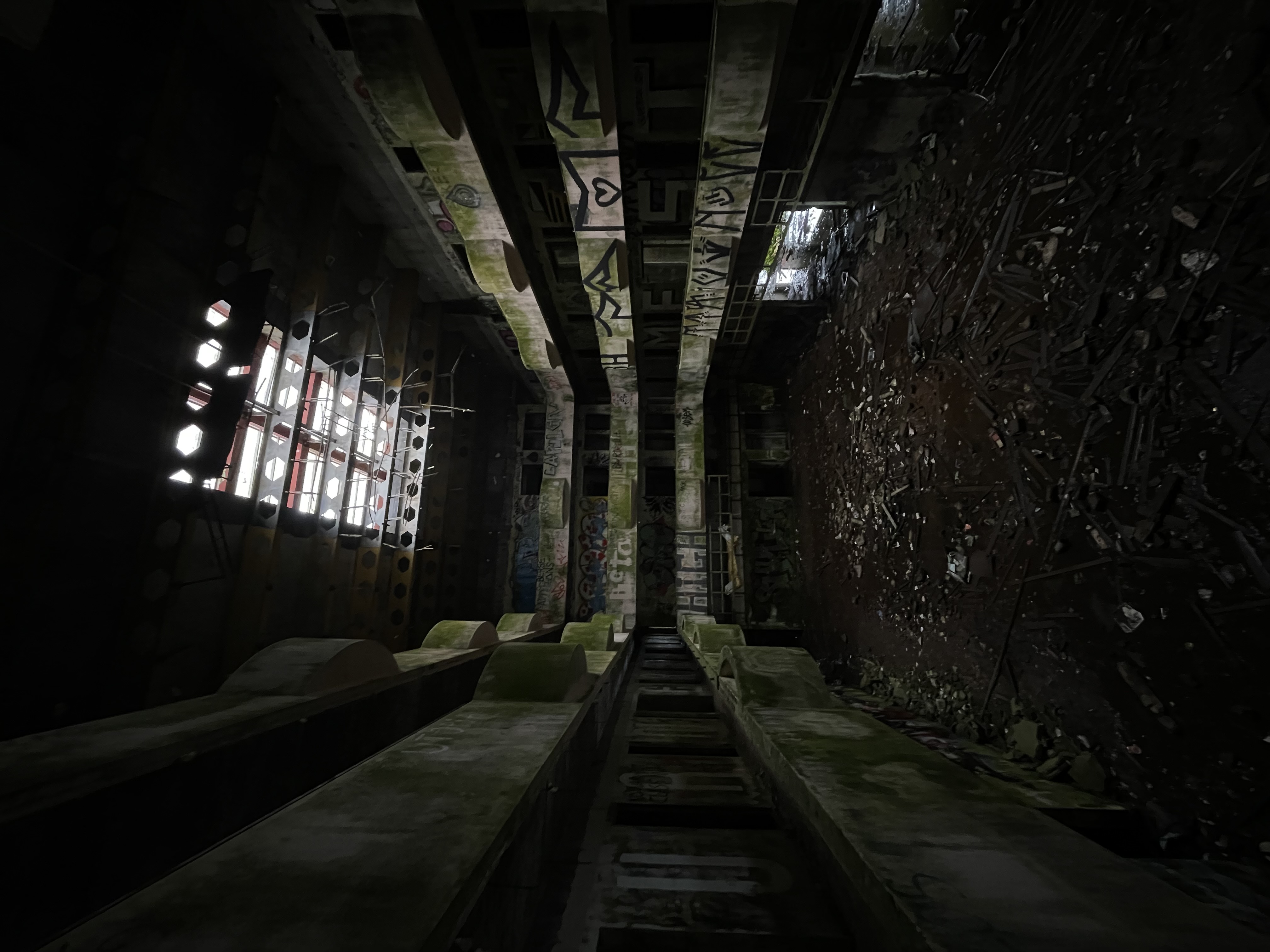
    The Monte Palace Hotel on São Miguel Island opened in 1989.

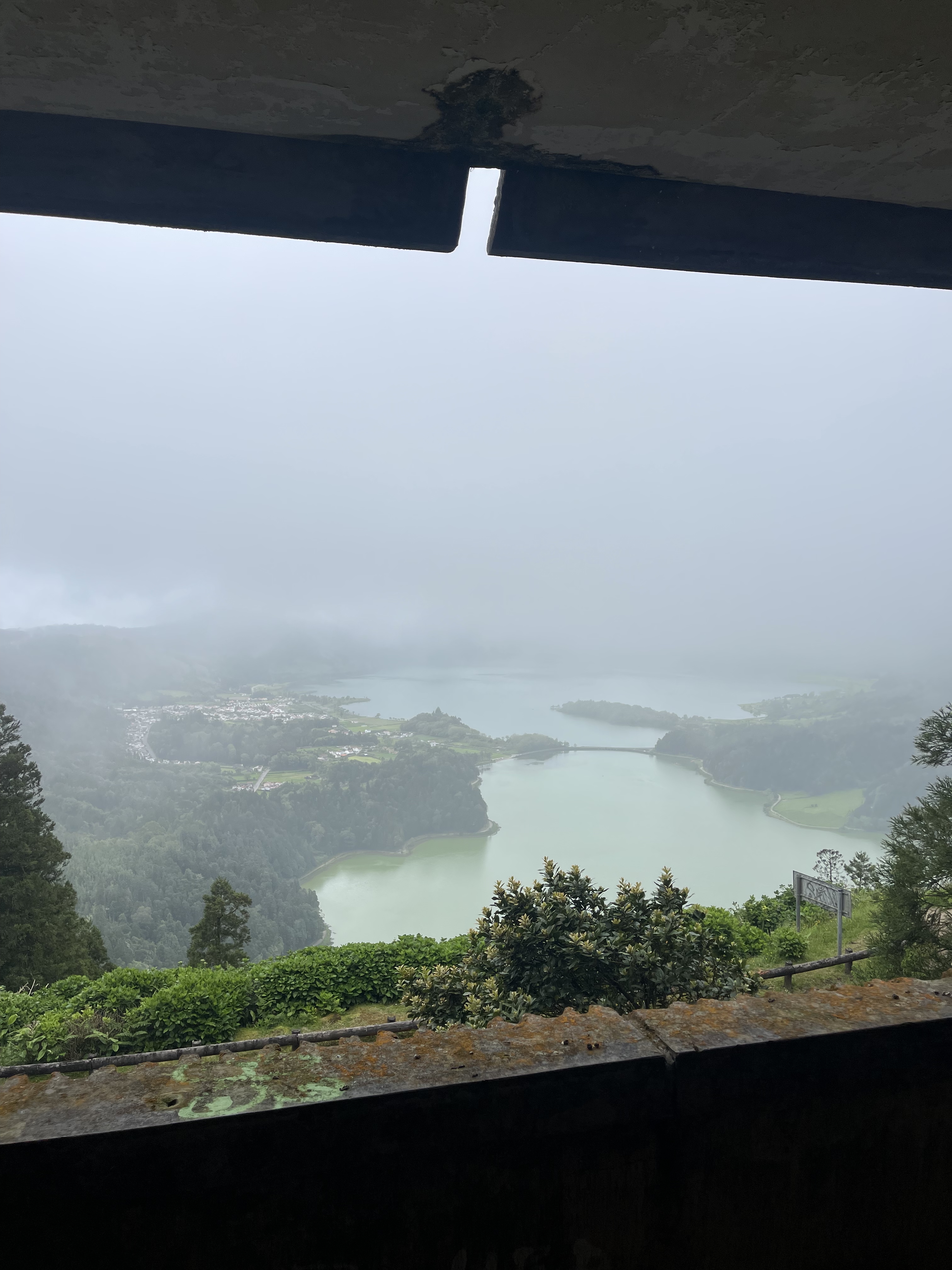
    Perched up 500 or so meters above sea level, the hotel offered panoramic views of Lagoa das Sete Cidades. It had 88 rooms, two restaurants, a bar/nightclub, and a total construction area of approximately 13,104 m². Notably, it was the first luxury five-star hotel in the Azores. And in 1990 it was even awarded “Hotel of the Year” in Portugal.

    Then, the place closed — just 18 months after its opening.

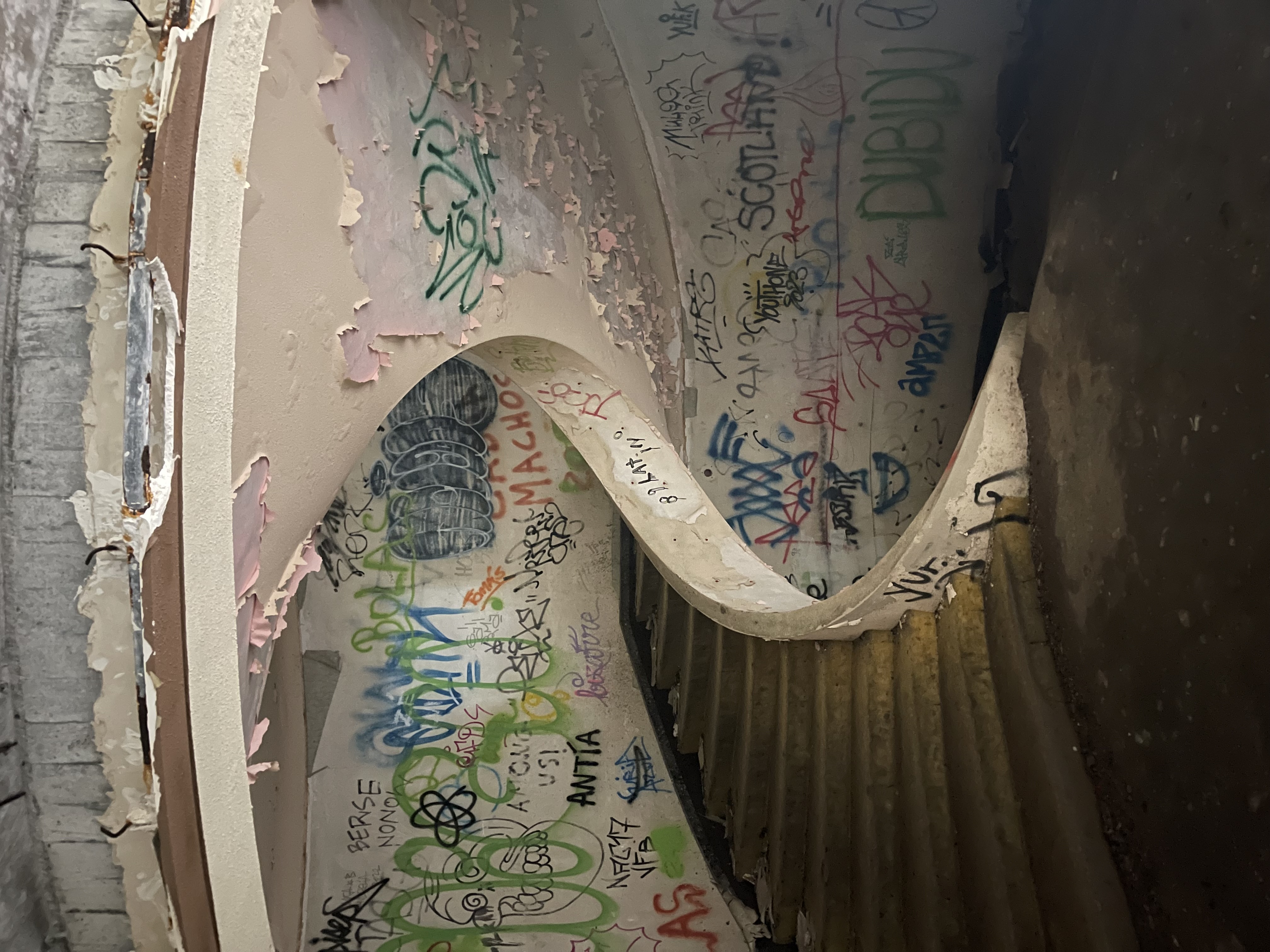
    Today, it looks like this:

    Supposedly the hotel failed for a number reasons. It was hard to get to. It lacked on-site amenities. It didn’t, for example, have a pool. And the unpredictable (and often foggy) weather of the Azores made it so that a lot of the time you couldn’t even see the main attraction, which was the view. The sponsors may have also overshot the market at the time.

    In 2017, the abandoned property was finally listed for sale at €1.5 million. Level Constellation ended up buying it for an undisclosed amount at the end of the year. They are a Lisbon-based developer founded by Chinese entrepreneurs. The plan was/is to reopen another 5-star hotel, but that hasn’t happened yet. Though there’s certainly no lack of visitors to the property today!

    I don’t know how you address the weather thing, but nowadays there are many other 5-star hotels on the archipelago. Regardless, my bet is that the existing structure will end up being demolished. I mean, it’s been abandoned and unmaintained for about 35 years.

  • The utility meter vitrines of São Miguel

    June 7, 2025 · View original


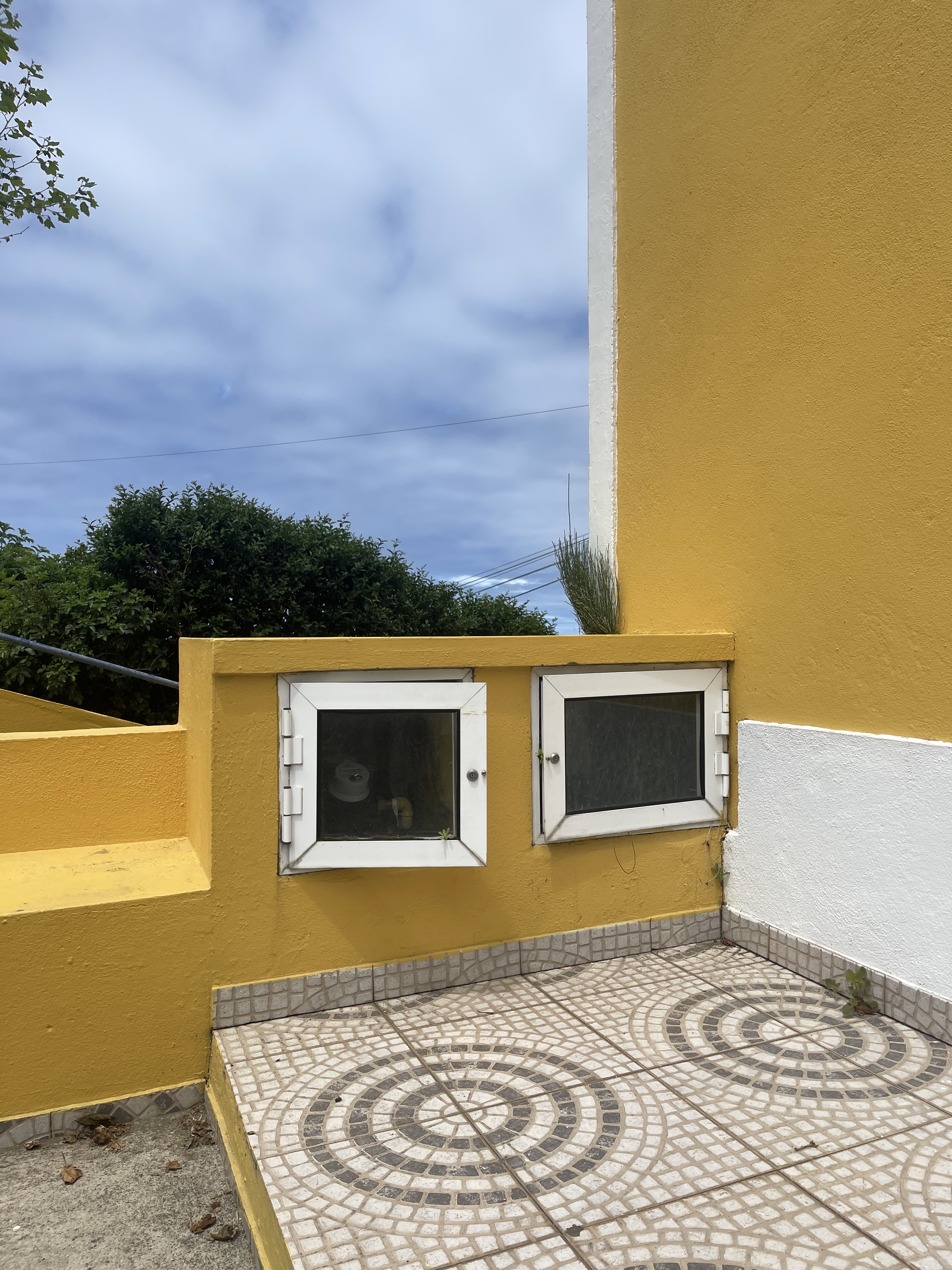
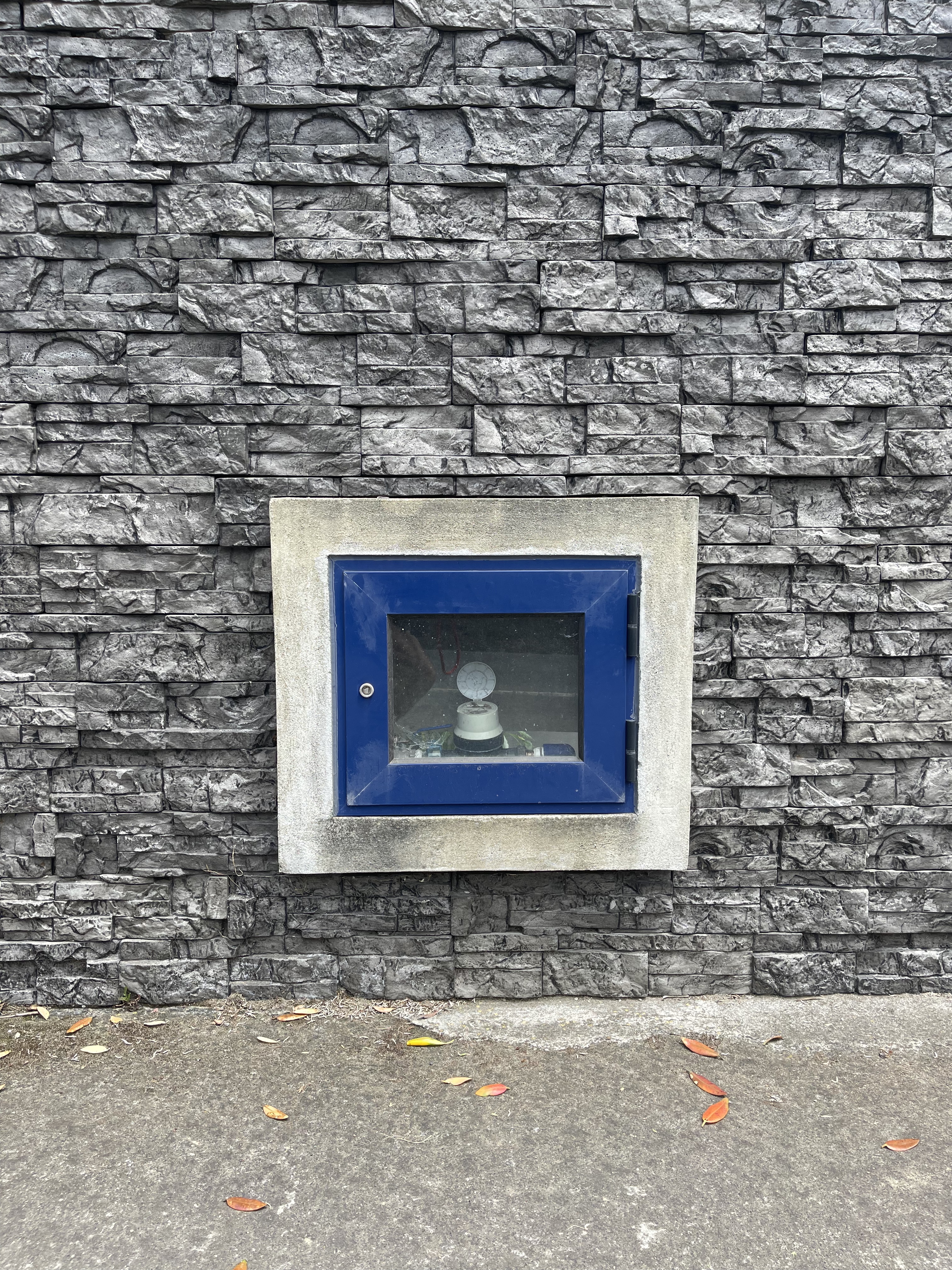
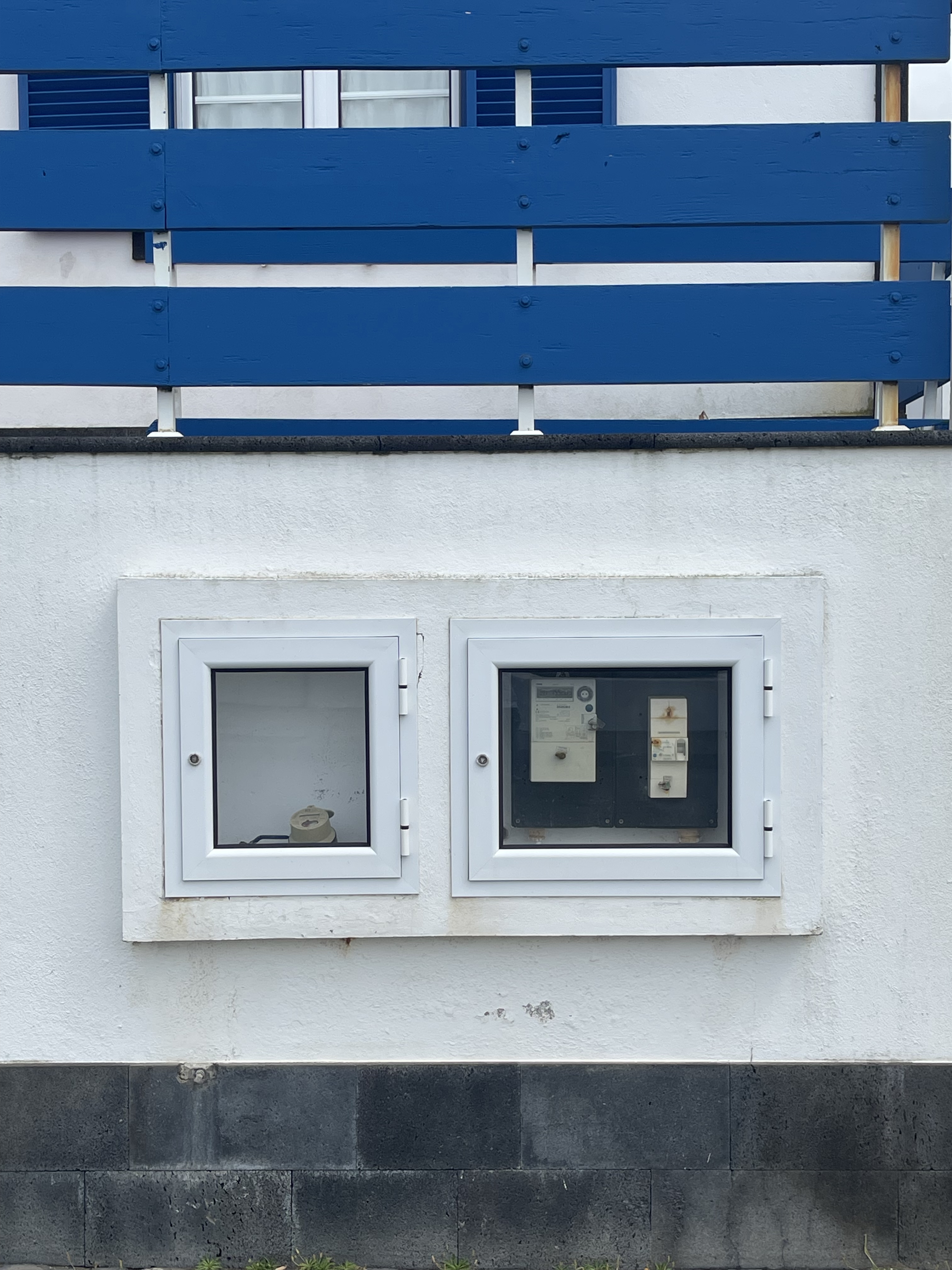
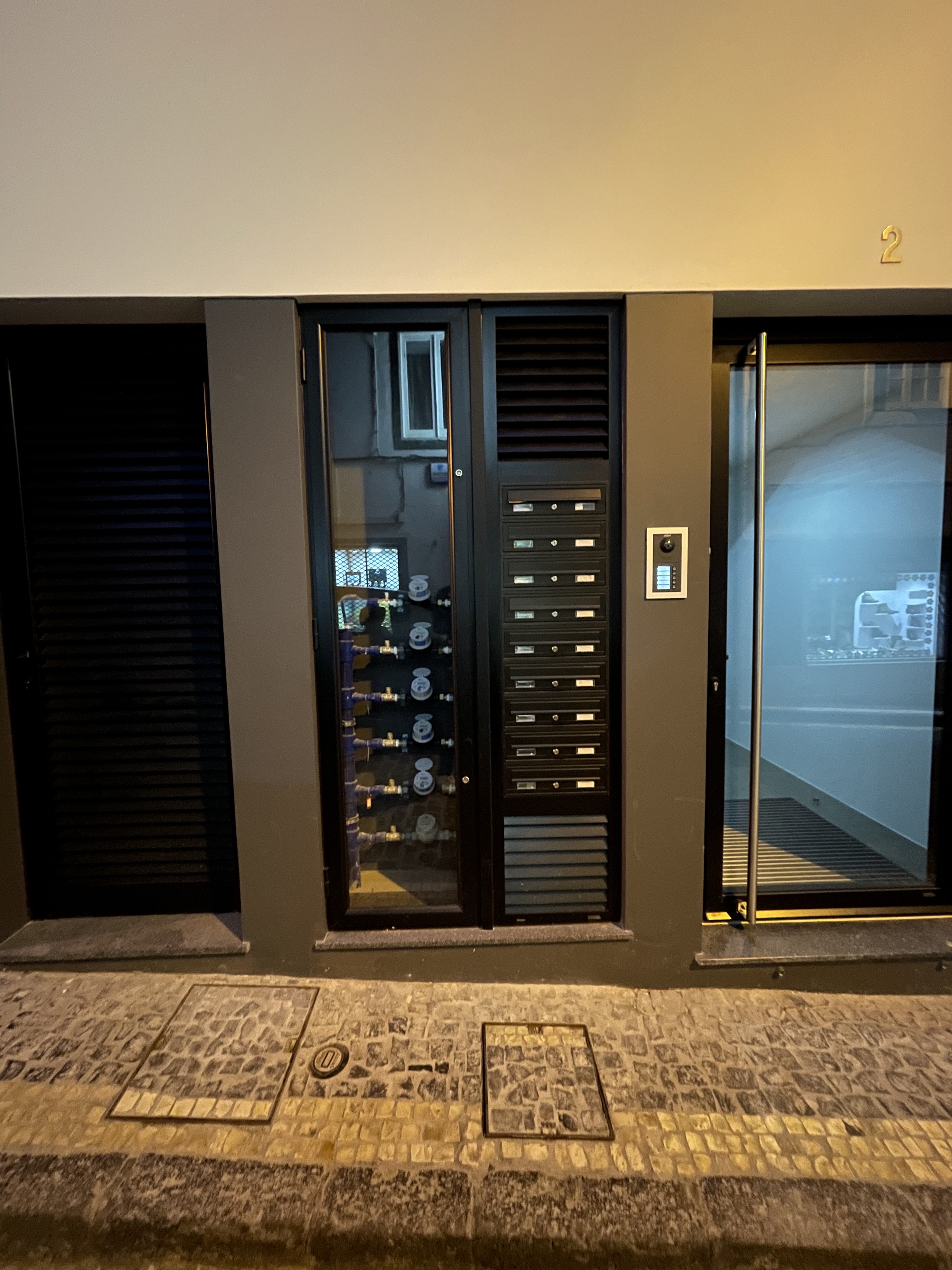
    One of the small things that I’ve noticed about the island of São Miguel is that most properties have their utility meters (for things like electricity and water) in small vitrines next to the street. Here are a few examples that I came across:

    Utility meters aren’t the sexiest of things. So if you have to have them on the street for quick readings, having them tidily installed in niches behind glass is, I guess, a better look. It also offers security.

    But apparently the other reason this is done is to protect them from the weather. The Azores have a mild maritime climate characterized by high humidity and frequent rain. This, combined with the salt air, could corrode the equipment.

    And so they lock them up in vitrines.