Daily insights for city builders, delivered every morning at 6 AM ET. I’m Brandon Donnelly — a Toronto-based real estate developer and founder of Globizen. I’ve been writing here since 2013.

  • The Inditex trophy asset index

    July 17, 2025 · View original


    So this seems like a pretty cool strategy.

    Amancio  Ortega — who is the founder of the fashion brand Zara — is a ~59% owner of Inditex, which is the largest fashion group in the world and the parent company of Zara. This ownership stake sits in his investment vehicle Pontegadea and each year the dividends of Inditex result in many billions of euros being deposited into its accounts.

    In 2022, it was ~€1.7 billion. In 2023, it was ~€2.2 billion. And this year, it is forecasted to exceed €3 billion for the first time. What Ortega has decided to do with these billions is diversify risk away from the fashion sector and preserve generational wealth through stable, income-generating real assets. In other words, the strategy is to go around the world, buy the coolest trophy assets, and build a wealth fortress.

    For example, in 2022, Pontegadea acquired Royal Bank Plaza in Toronto for ~C$1.2 billion. This was one of the largest office building transactions in Canadian history and, as far as I can tell, it’s the largest single-asset purchase made by the company to date.

    This year alone, they’ve acquired an apartment building in Fort Lauderdale for €165 million, an office building in Barcelona for €250 million, and Hotel Banke in Paris for €97 million. This was their second acquisition in Paris this year, and hospitality seems to be a new push for the firm.

    Having billions of euros show up every year to recycle into global real estate acquisitions is pretty neat in its own right. But I also think it’s interesting to monitor where and what he’s buying. Pontegadea is not trying to time the market or bet against short-term dislocations. They’re methodically building a fortress of core assets in the world’s top global cities.

    Intuitively, we know what these core assets should be. But these intuitions are not always reliable. Prior to the pandemic, downtown San Francisco had one of the tightest office markets in the US. Today, it has one of the highest vacancy rates. I’m sure many investors would have labeled these same assets as core back in 2019.

    Watching Pontegadea feels like a direct commentary on what he/they see as having enduring long-term value. And boy is it fun to watch.
    Cover photo by Zarif Ali on Unsplash

  • Cold air drainage

    July 15, 2025 · View original


    I was on the Bench yesterday for meetings and, as is usually the case, I learned a little more about how wine is made. Typically when you’re laying out grapevines you want to align them for sun exposure. In hotter regions, you might align them east-west to minimize the harsh afternoon son. And in cooler climates, like Niagara or Burgundy, you might align them north-south to try and maximize sun exposure.

    But what I learned is that topography often takes priority over sun exposure — especially in cooler regions. In practice, this means you generally want to align the grapevines so that they follow the slope of the land. Why? Because cold air is heavier than warm air. Aligning with the slope allows cold air to naturally drain away, which helps the vines survive the winter and reduces the risk of things like spring frost.

    If, instead, you aligned the vineyard rows across the slope (as opposed to up and down), well then cold air might get trapped. The same is true for water drainage. I’m told you don’t want pooling. And this is why it tends to be more important to optimize for topography rather than just sun exposure, though I’m sure it gets a lot more nuanced when you really know what you’re doing.

    Regardless, I find all of this fascinating because it’s an intensely local activity. You need to understand how the sun moves across the site. You need to understand the site contours and where air and water will flow. And then you need to optimize for these specific conditions. It’s exactly how architecture used to work before we had active mechanical systems, like AC, that could do all of the work for us.

  • Canada should be celebrating Vancouver’s new Terminal 2 port

    July 14, 2025 · View original


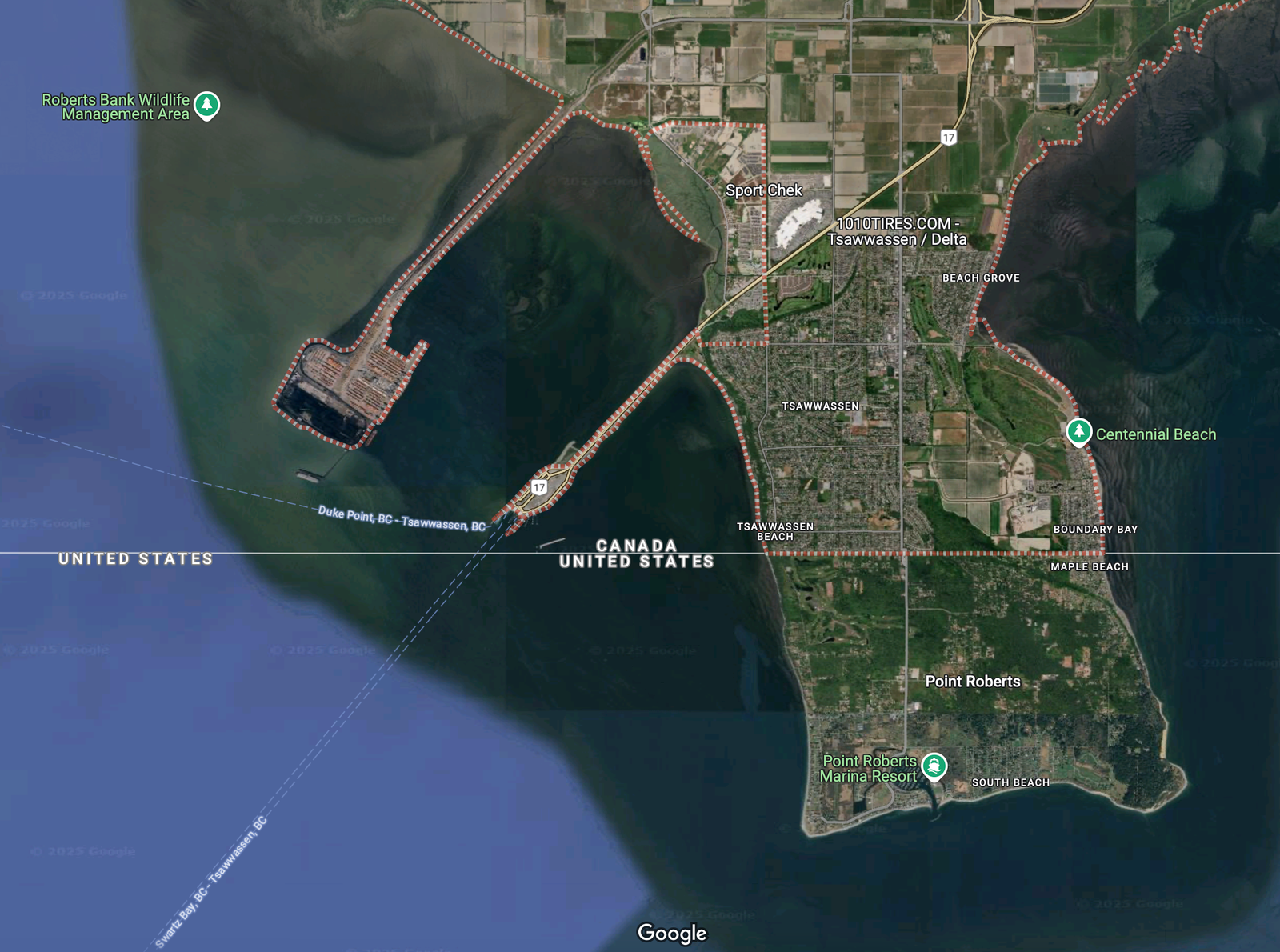
    Last week, the Vancouver Fraser Port Authority kicked off procurement for the new Roberts Bank Terminal 2 project by issuing a request for qualification (RFQ). Bidders now have until September 25, 2025 to submit their qualifications with the hopes of eventually being selected to deliver this “nation-building project” in the Lower Mainland of BC.

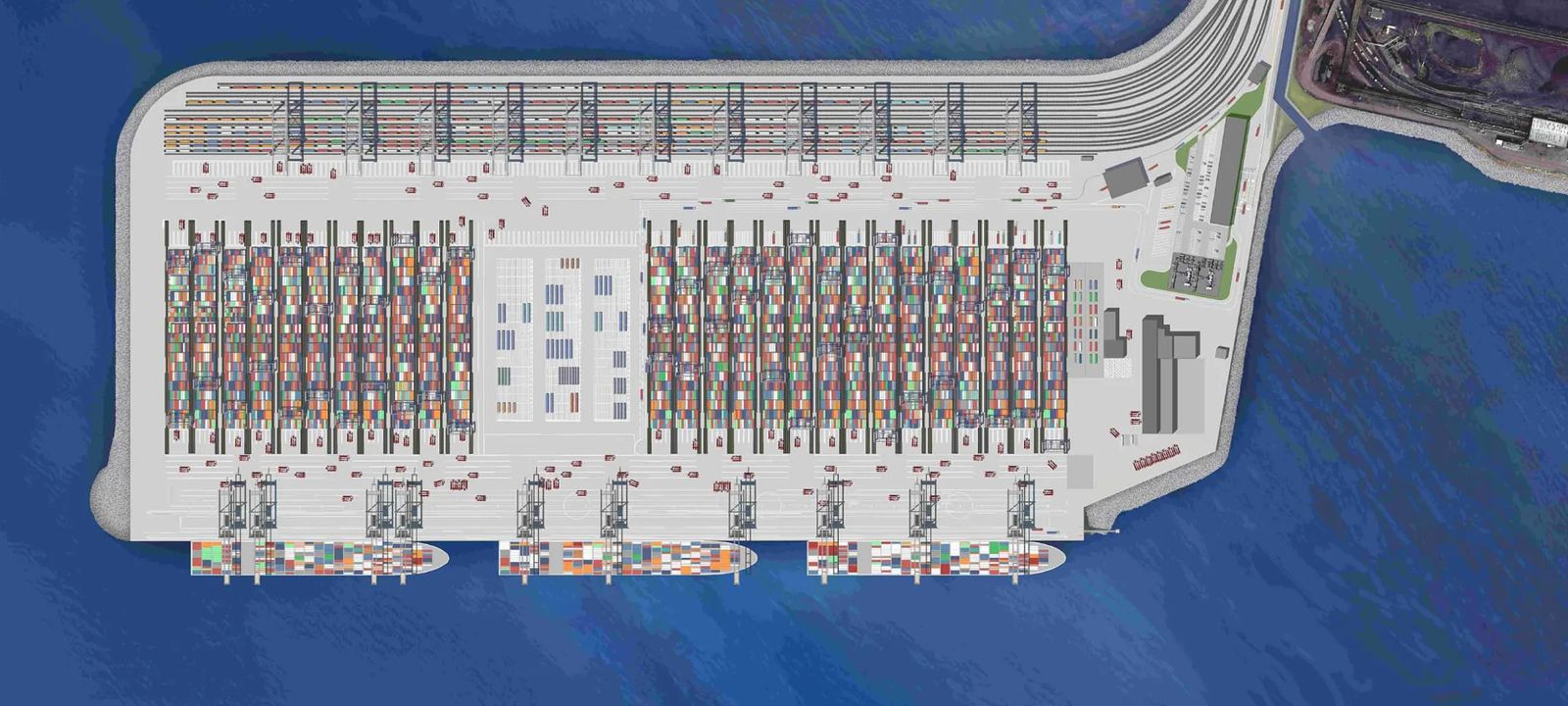
    The contract will include the delivery of an approximately 100-hectare marine landmass (~247 acres), 35-hectare widened causeway, 1,300-meter wharf structure and berth pocket, and expanded tug basin. And when complete by the mid-2030s, the new terminal is expected to create more than 17,000 well-paying long-term jobs, unlock $100 billion in new trade capacity, and contribute somewhere around $3 billion in annual GDP.

    Here’s a rendering of the new marine landmass:

    The Port of Vancouver is the largest port in Canada by tonnage and TEUs (twenty-foot equivalent units). It’s also one of the largest in North America. This expansion is expected to increase its capacity by up to 50%, which could have it leap ahead of several major US ports by the time it’s complete in the mid-30s. That could place it among the top 4 container ports in North America.

    It would be hard to overstate the importance of this project for Canada. The economic center of gravity for the world is steadily moving toward East Asia. In the 1980s, if you were to map and drop a pin at this economic center — according to GDP — it would have landed in the North Atlantic (between the US and Europe). By 2030, this economic center is projected to be near the border of India and China.

    Already, China is Canada’s second largest trading partner (after the US). And over 60% of the container trade flowing through Vancouver is transpacific. More specifically, it is trade with China, Japan, South Korea, Vietnam, and India. If we don’t expand our port capacity and if we allow our container supply chain to become bottlenecked, well then these containers will simply shift south to the US West Coast. It’s that simple.

    Though this project was approved by the federal and provincial governments in 2023, it has faced stiff opposition from local community groups and environmentalists. This is partly why it took approximately 10 years. The Federal Environmental Assessment process began in 2013. And it wasn’t until April 2023 that the feds granted approval with a list of 370 legally binding environmental conditions.

    What this means is that by the time this project is (hopefully) complete in the mid-30s, it will have taken at least two decades! And perhaps even longer knowing how construction works. This is far too long, which is obviously why we are working to make changes to how we, as a country, green light important nation-building projects. There’s no question that this is one of them, and so today I think it’s important to celebrate this milestone.

    It’s time to build, Canada. And as fast as possible.

  • The banking system is frustratingly archaic

    July 13, 2025 · View original


    I experience this feeling on a regular basis, especially because I’m also someone who interacts and uses crypto on an almost daily basis. This week’s frustration came about as I was trying to move money around from our Parkview Mountain House account in the US. We bank with US Bank and, for the record, the people in the Park City branch are absolutely lovely people.

    But here’s one of the things: US bank cannot interface with my mobile phone because I have a Canadian number. And because I live in Toronto, I’m also not able to download and use their mobile app. This means I cannot do rudimentary digital things like deposit a cheque (also known as checks in America). I’m constantly hamstrung and forced to do a lot of things in person. Is there really no simple solution to this?

    In contrast to this, I own brandondonnelly.eth, which links to my personal Ethereum wallet. It’a also linked to my Farcaster account (Twitter-like social network), as well as many other onchain platforms and products. And it works, as expected, anywhere in the world.

    If someone in Botswana would like to send me 0.001 ETH (~C$4) because they like what I write on this daily blog or they just want to buy me a morning coffee, they could easily do that by entering brandondonnelly.eth on their phone. They could also choose to do so with a stablecoin pegged to the US dollar. And when I eventually do my income taxes and I review my wallet’s ledger, this transfer would show up and I would be able to categorize it accordingly.

    This, to me, is very clearly the future of the global economy.

    Full disclosure: I am long ETH and companies like Coinbase.

    Cover photo by Ales Nesetril on Unsplash.

  • Up to 170,000 jobs are at risk of disappearing from Canada’s new construction sector

    July 12, 2025 · View original


    The Globe and Mail just published this piece about job cuts across the real estate industry. And pictured in the article is my friend Norm Li, who runs a renowned visualization company here in Toronto, but just recently had to lay off 75% of his team.

    This is sad — and quite a departure from the way things were before 2022. You used to have to book Norm and his team many months in advance just to get in the queue. That’s how busy they were creating visual content for the architecture and development industry.

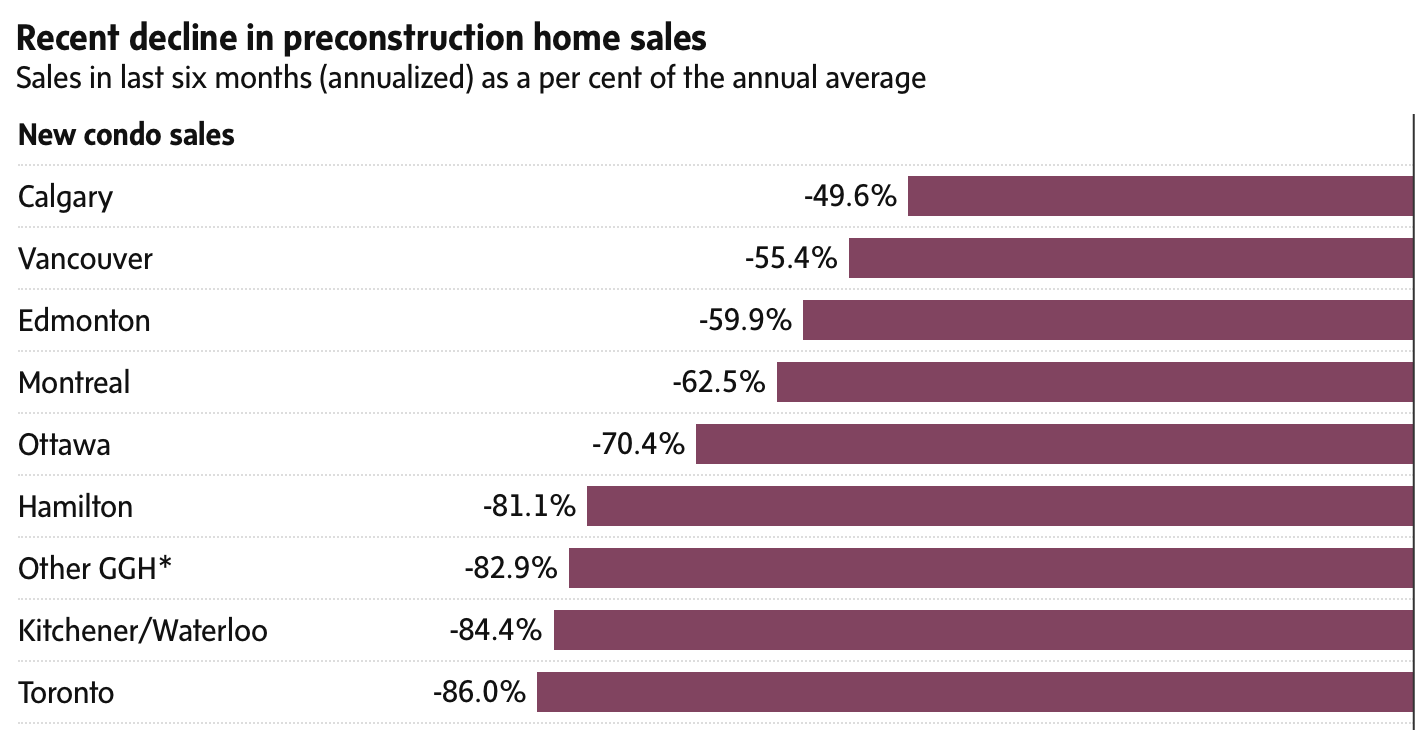
    But there’s not much you can do when the market more or less shut offs. And Norm is not alone. The article estimates that there are some 536,300 jobs in the new construction sector in Canada. And based on the way the above chart is looking, up to 170,000 of these jobs are currently at risk of disappearing.

    If you look at the comment section of the article you’ll find that a lot of people either couldn’t care less or actually relish the fact that the real estate industry is shedding jobs. A lot of people responded with “good.” This is not at all surprising (and not just because it’s, you know, a comment section). Homes remain unaffordable in Canada.

    In the first quarter of this year, RBC estimated that the share of income needed to cover homeownership costs in Toronto is still averaging over 60%. And so for many/most people, the new construction sector isn’t a source of personal utility; it’s a creator of things that aren’t affordable.

    Oh, you can’t make money anymore? Good.

    But here’s a better kind of “good” to consider: as painful as the current conditions are for everyone in the industry — myself included — the market is being forced into a reset. Among many other things, municipalities are rethinking their development charges, construction costs are coming down, and nearly every developer seems to be pivoting their new-home business toward bona fide end users (as opposed to investors).

    What I think this means is that when the market does return — and it, of course, will — it is highly likely that it will be rooted in sounder fundamentals. And this, I would say, is good.

    Cover photo by Maarten van den Heuvel on Unsplash; pre-construction home sales chart from the Globe and Mail

  • The tallest mass timber residential structure in Toronto

    July 11, 2025 · View original


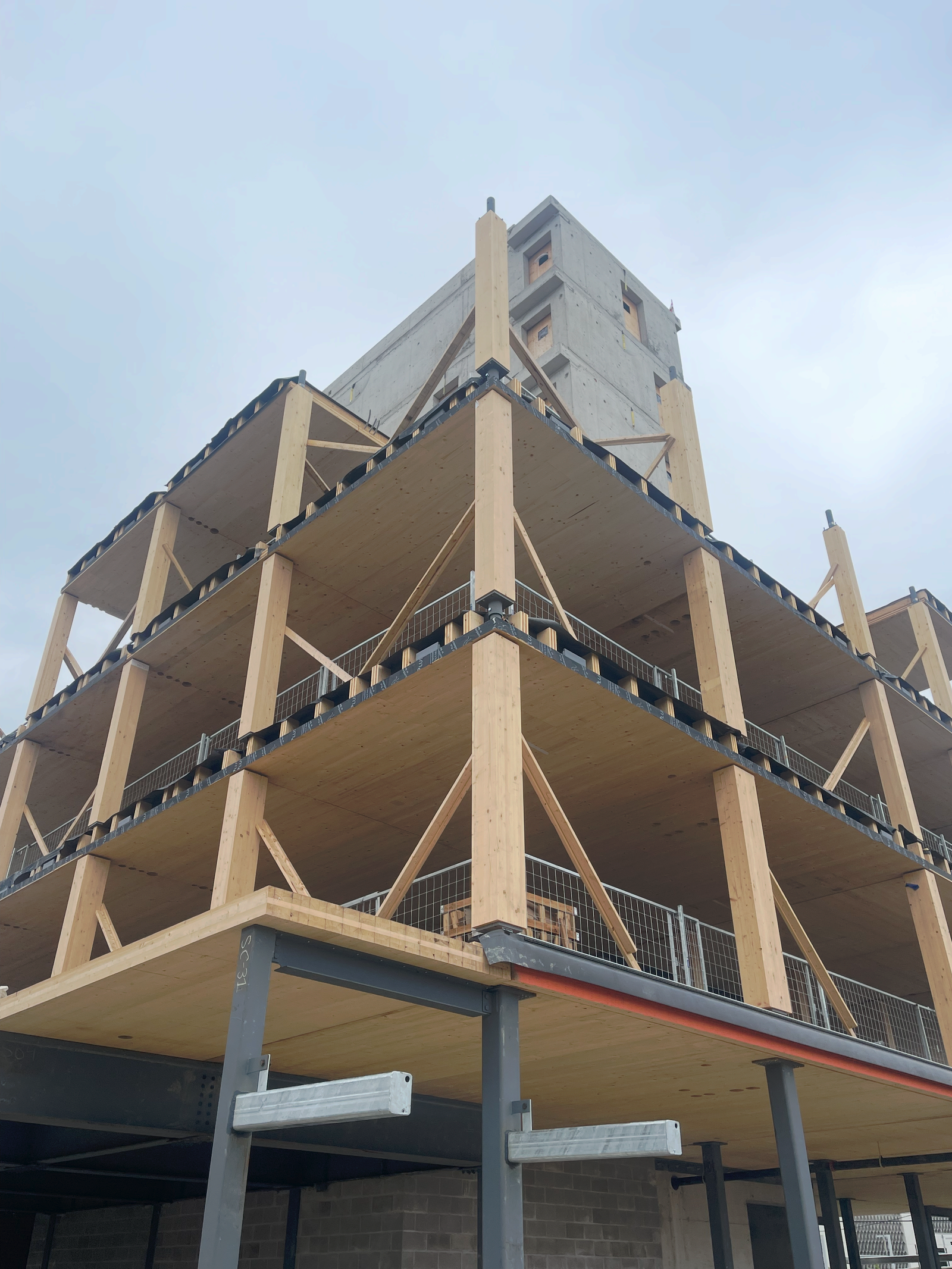
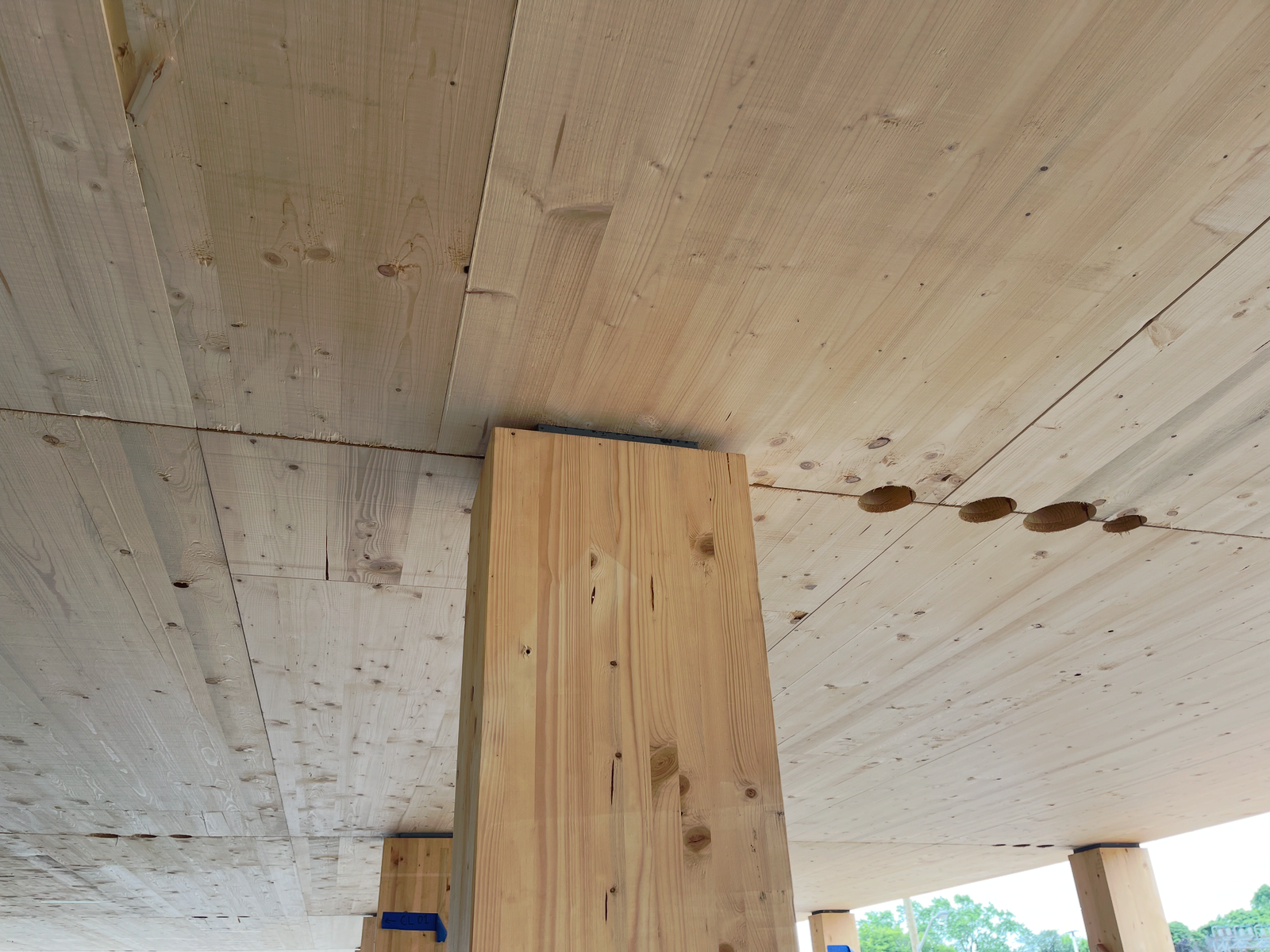
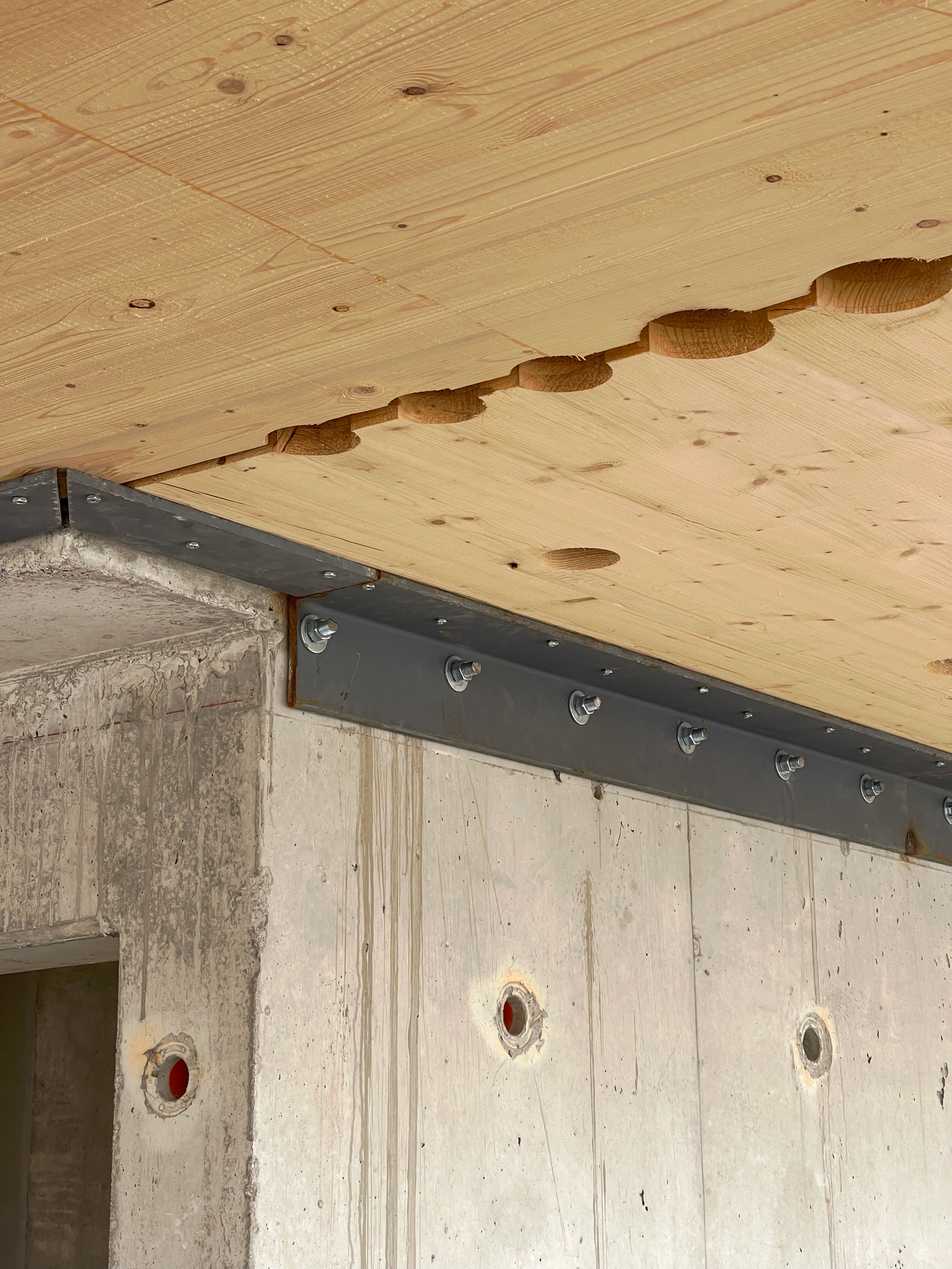
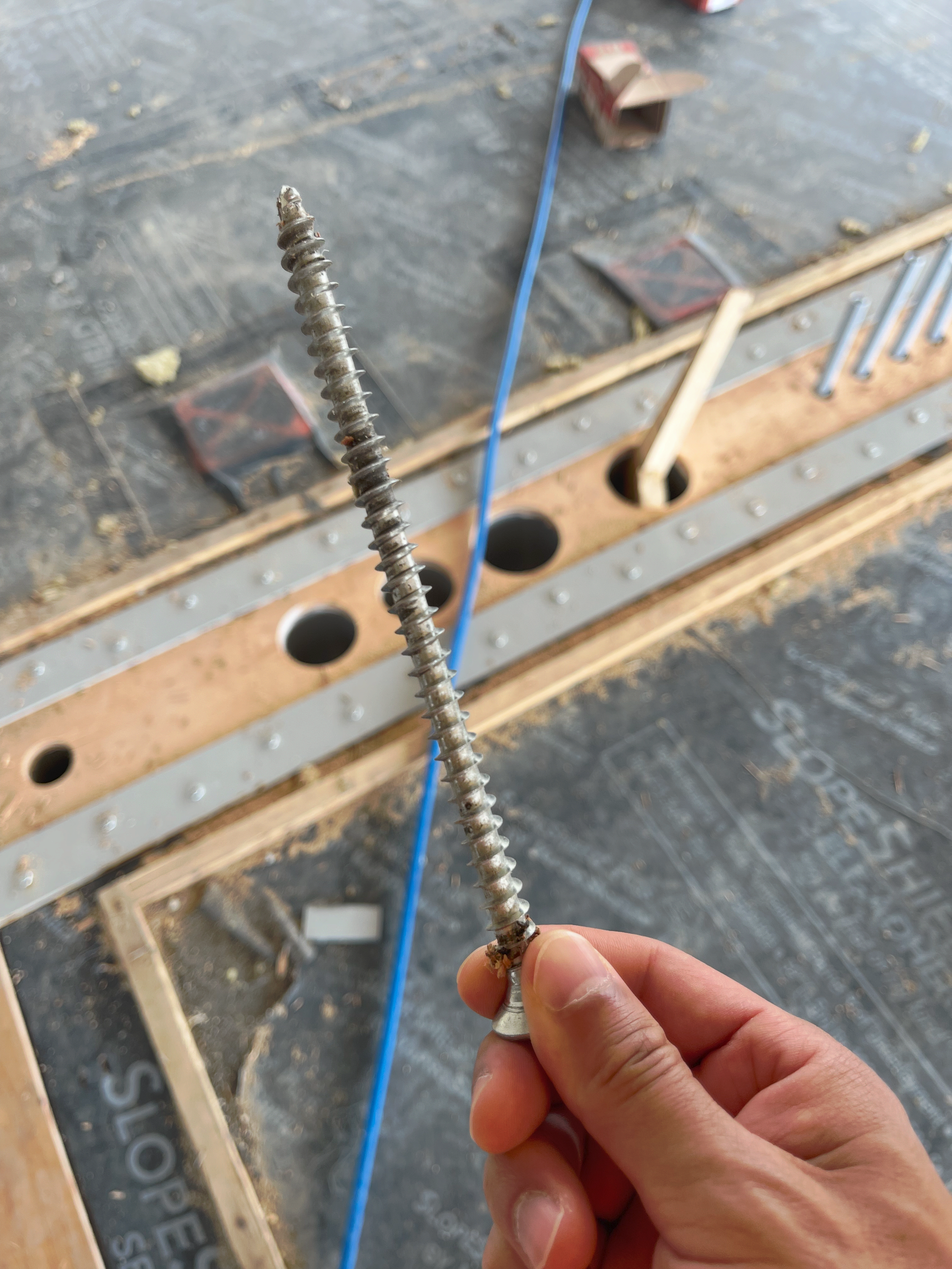
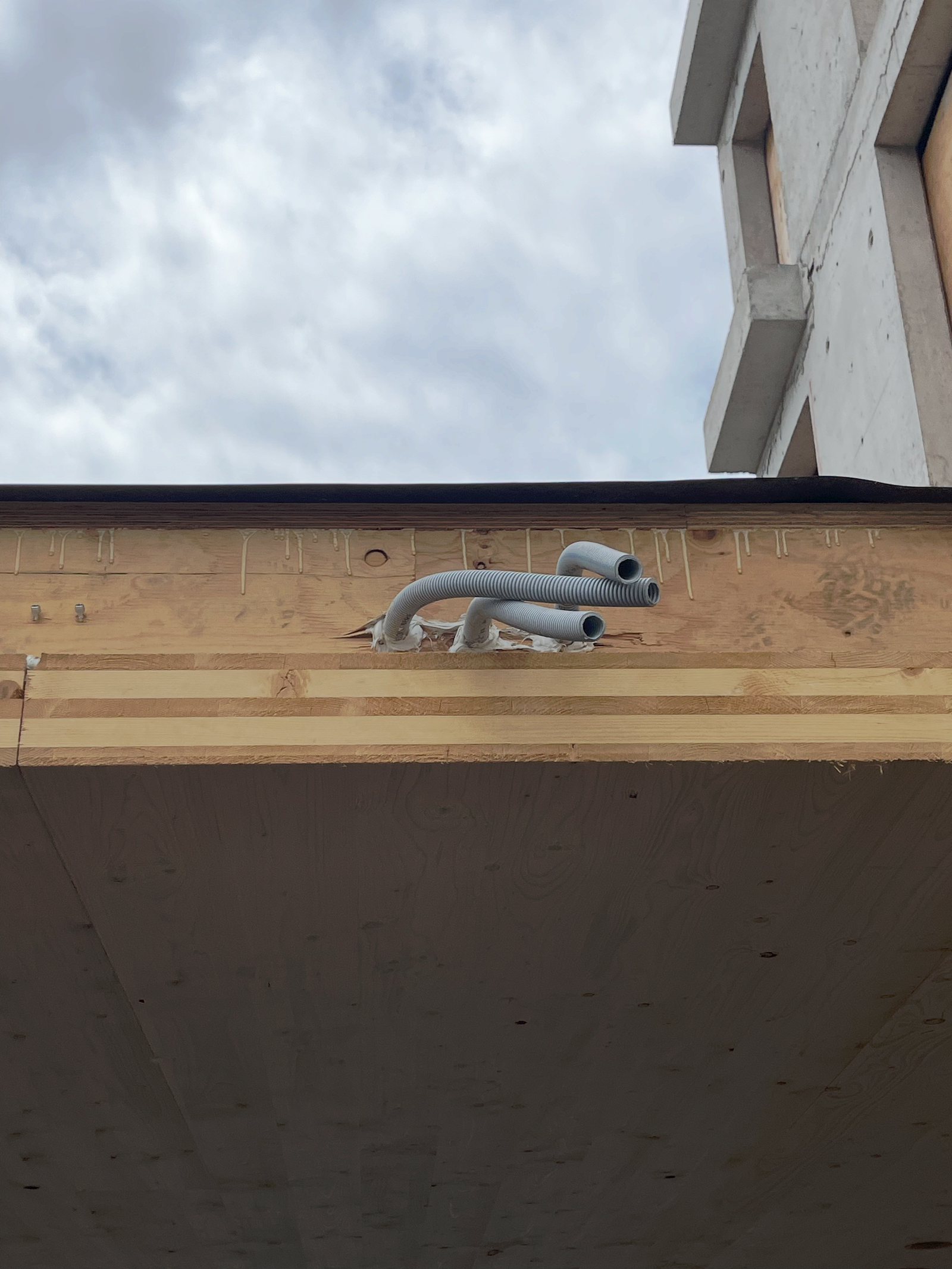
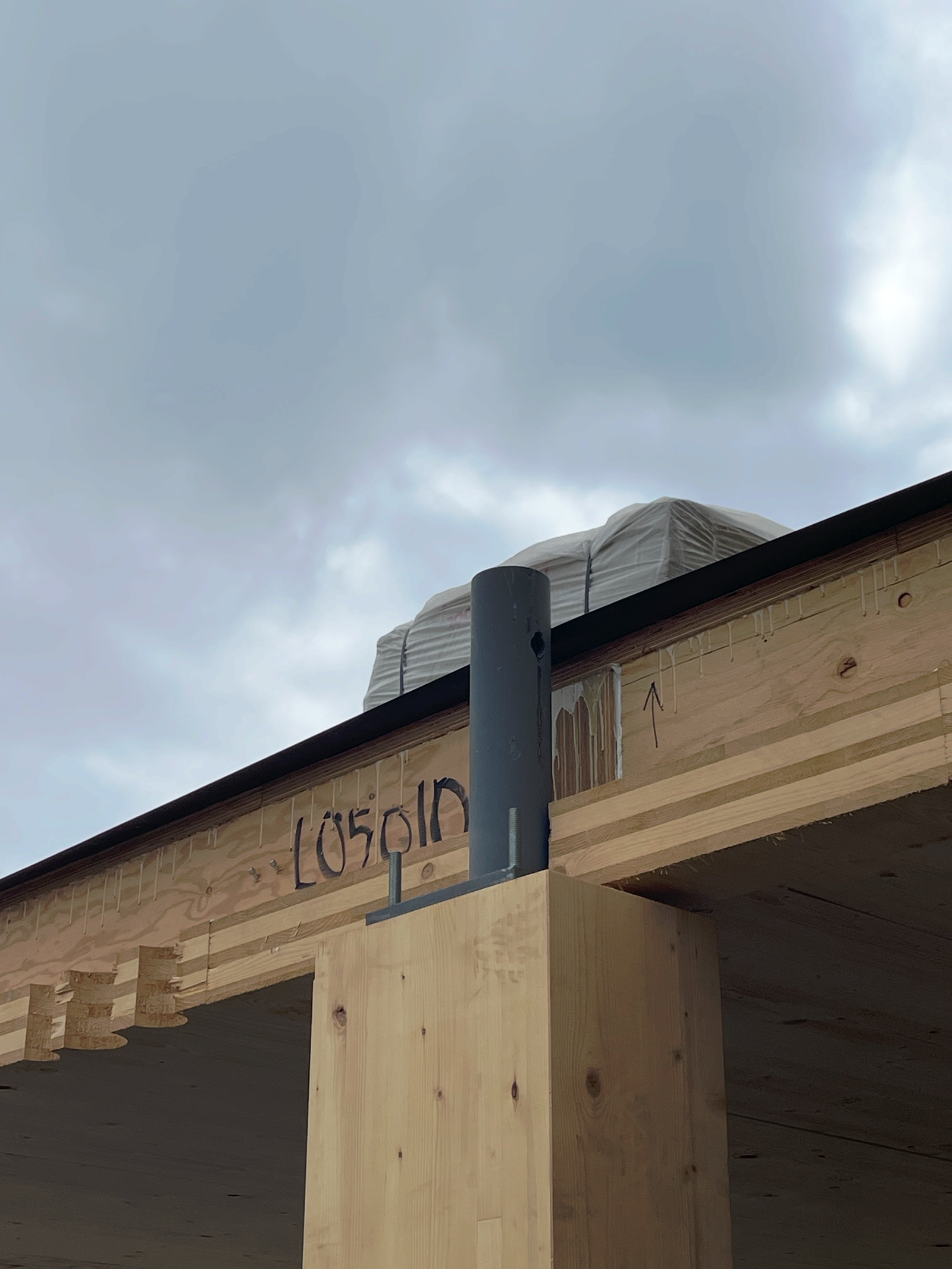
    This week, our team toured a new 9-storey mass timber residential building going up at 230 Royal York Road in Toronto. The developers are Windmill Developments and Leader Lane Developments. The construction manager is Oben Build. The mass timber company is Vancouver-based Intelligent City. And when it’s completed, it is expected to be the tallest residential building in Toronto. But I suspect it won’t hold this title for very long. Building out of wood is destined to become a major part of how we build in this city and country. So here are a bunch of photos from the site walk. I tried to include as many detail shots as possible so that you can all get a sense of how it pieces together.

  • Episode 88 of the Toronto Under Construction podcast

    July 10, 2025 · View original


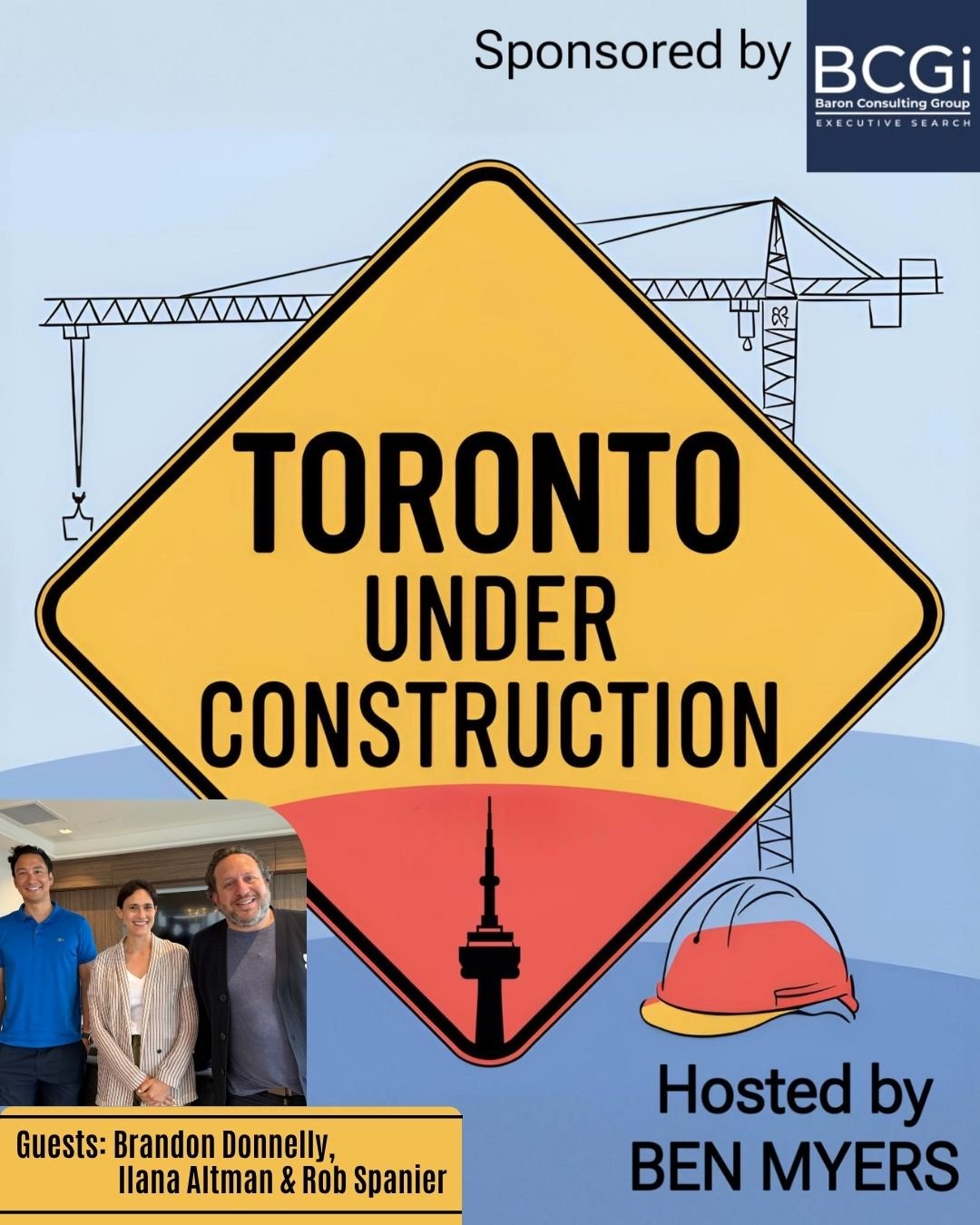
    I was recently on Ben Myers’ Toronto Under Construction podcast with Ilana Altman (The Bentway) and Rob Spanier (Spanier Group). It was generally a discussion about what makes for great public spaces, how Toronto is evolving its public realm under infrastructure like the Gardiner Expressway, and what it means to design cities with people at the forefront. If you’d like to have a listen, click here. I hope you enjoy it.

  • Generalist vs. specialist developer

    July 9, 2025 · View original


    A few weeks ago I accidentally sparked, via this tweet, an entertaining debate about what it takes to be called a developer. This led to my post “Do you even develop, bro?“, where I explained my view on when it might be appropriate. (Spoiler: It’s a broad term.) But my friend Brendan Whitsitt of Imprint Development has just published an even better post on the topic. It’s called “Developer vs. Dirt-Flipper” and you should give it a read.

    In it, he says this:

    > So if we tried to sketch a Platonic ideal for what a developer is, we might say that the ideal developer would have a solid understanding of, and experience in, all phases of development, including construction. This person will have a holistic perspective that attempts to optimize across all phases of a project rather than just one part.

    This doesn’t relate directly to the debate of who should be called a developer, but I think it’s an insightful comment. Developers have very specific skillsets, but they also tend to be generalists. Our job is to stitch together lots of different disciplines and elements to ultimately produce a space that people can live, work, play, and/or do other things inside. The more you know about the entire process, the better you can be at any one part.

    I even think this transcends just the development process. The more you know and understand about cities, market trends, human behavior and countless other things, the more thoughtful you can be about formulating new developments. It’s never ending and it makes for an interesting line of work. But I do think this raises the question of: When is it valuable to specialize?

    For example, some development companies like to follow a division of labor model. One team focuses on acquiring new sites, one team focuses on approvals/entitlements, and so on. Once a particular phase is completed, the project gets passed on to the next group. And in theory, these specialist teams should be able to go deeper and harder than a team forced to spread their time.

    But on the flip side, it means that the person trying to buy sites might not be thinking about what a pain in the ass it will be to build on. They may just be trying to get deals done. Let the other team worry about building the thing. So personally, I’ve always liked the accountability that comes with taking a project from beginning to end — it’s never somebody else’s problem. It’s your problem.

    Of course, even if you don’t do this, you’re still a developer.

    Cover photo by Max Langelott on Unsplash

  • What are Uber and Travis up to?

    July 8, 2025 · View original


    Uber’s stock has done exceptionally well this year. At the time of writing this post, it’s up over 60% year-to-date. But at the same time, it remains unclear to me what the relationship will be between Uber and this brave new world of autonomous vehicles.

    I mean, right now, if you’re in Phoenix, I’m told you can order a Waymo car through Uber’s app. But if you’re in San Francisco, Waymo customers must use the Waymo app. It’s all bit mirky right now, but Uber is just trying to put “as many cars on Uber’s network as possible.”

    There’s also an argument that, for the foreseeable future, ride-hailing networks are going to need some mixture of both human and robot drivers. I get this argument. But beyond the short term, I think there will be strong incentives to completely eliminate human drivers.

    Last month, the New York Times announced that Uber is in talks with Travis Kalanick, the company’s co-founder who got pushed out 8 years ago, to help him buy autonomous vehicle company Pony.ai.

    It’s a bit of an interesting story. Pony is a Chinese company, but because the US doesn’t want Chinese tech to become too deeply embedded in the American economy — and has become increasingly hostile to such companies — it has been readying a clean US subsidiary of the business for sale.

    This is what Travis allegedly wants to buy with the help of Uber. And it’s particularly noteworthy because it could be an indication that Uber is worried about Waymo and wants to have its own AV unit (which it had previously, but then sold off in an effort to quickly reach profitability).

    My sense is that Uber needs to do something along these lines. The risk of not having autonomous vehicle capabilities is simply too great.

    Cover photo by Viktor Avdeev on Unsplash

  • Attention Paris city builders

    July 7, 2025 · View original


    Neat B and I just booked some end-of-the-summer travel. We’re going to bounce around to a few different places, but the plan is to end up in Paris and then spend a week there working remotely — you know, from the Paris office.

    And by the Paris office, I mean a generous 323 sf aparthotel with a small kitchen, workspace, and shared laundry facility that we rented in the 10th. I started by searching diligently for an Airbnb; but I couldn’t find anything we liked, so I ended booking something through Edgar Suites.

    As part of this trip, I’m aiming to meet as many industry people as possible and hopefully tour some development projects. One of my goals is to better understand how Paris consistently pulls off beautiful infill housing projects like this.

    So if you’re a developer, architect, investor, or other kind of city builder based in Paris, please drop me a line at brandon.donnelly@globizen.com. I’d love to connect and learn more about your city and market, and about what you’re up to.

    Coffee and yummy pastries on me, of course.