Daily insights for city builders, delivered every morning at 6 AM ET. I’m Brandon Donnelly — a Toronto-based real estate developer and founder of Globizen. I’ve been writing here since 2013.

  • The Tate galleries in London have seen a 27% decline in patronage — is Brexit to blame?

    August 5, 2025 · View original


    Compared to 2019, the Tate galleries in London are seeing ~2.2 million fewer visitors, representing an approximately 27% decline in patronage. Much of this is coming from a decline in international/European visitors. They’re at 61% of pre-COVID levels, whereas domestic visitors are at 95%.

    One of the biggest groups to fall off has been young visitors (aged 16-24) from the EU. Between 2019-2020, the Tate Modern alone welcomed 609,000 people from this segment. By 2023-2024, this had dropped to 357,000 and it remains depressed.

    So now the Tate is cutting its staff and blaming two macro changes: the pandemic and Brexit. Though some people are arguing that it’s really because the programming has been too woke and stuff.

    In my mind, the Brexit excuse makes the most sense because it has clearly created additional friction. If you’re a school traveller in France and want to visit the UK, you now need to complete a school trip information form (I’m assuming this wasn’t the case before).

    And if you’re a student from any another country, you need a passport. In some cases you may also need a visa. So it makes sense that schools and teachers might say, “yeah, let’s make our lives easier and just stay within the EU.”

    Based on a very cursory review of how other cultural institutions are doing, this possibly checks out. In 2019, the Centre Pompidou in Paris welcomed over 3.2 million visitors and in 2024 it welcomed 3.2 million visitors. In 2019, the musée d’Orsay and the musée de l’Orangerie welcomed over 4.6 million visitors, and by 2023, this number had jumped to over 5.1 million.

    Could it simply be better programming? Yes, of course. But it’s hard to argue that erecting barriers to become more closed off from the rest of the world, won’t, you know, make you more closed off from the rest of the world. Here we’re just talking about one cultural institution in the UK. But the lesson scales.

    I’m thinking of you right now, America.
    Cover photo by Clifford on Unsplash

  • Cycling dramatically reduces the risk of dementia

    August 4, 2025 · View original


    Cycling is good for you. This much is obvious. But what might be some of the lesser known benefits?

    Here’s a fascinating study (that I discovered through Lloyd Alter’s blog), which looked at the association between active travel modes and brain health — specifically dementia risk. For this study, the researchers analyzed nearly 500,000 people in the UK and then tracked them for a median period of 13.1 years. How people got around was classified according to the following groups: non-active (like driving or taking public transit), walking only, mixed-walking, and cycling and mixed-cycling. This latter category is meant to capture people who cycle exclusively and who mix it with other forms of mobility.

    Based on this, the researchers uncovered these cycling benefits compared to non-active travel:

    – 19% reduction in all-cause dementia – 22% reduction in Alzheimer’s disease – 40% reduction in young-onset dementia – 17% reduction in late-onset dementia

    Cycling was by far the best performing category. Why is that? Well, exercise in general is good for brain health. It increases blood flow and oxygenation to the brain, decreases cortisol levels (stress hormone), and reduces anxiety and depression, among many other beneficial things. But perhaps the most important feature for this particular discussion is that it’s simultaneously a physical and cognitive activity. In other words, it’s exercise, but your brain also has to do a lot of other stuff like balance the bike, avoid obstacles (such as car doors being flung open), and generally navigate an environment with many stimuli.

    This gives new meaning to biking for brain health. And it reinforces the case that bike lanes are actually one part mobility infrastructure and one part public health initiative.

    Cover photo by Mak on Unsplash

  • Clean, cool, and reasonably priced

    August 3, 2025 · View original


    YouTube video

    Here’s a recent video from The Wall Street Journal talking about the “secrets behind hotel design.” It’s interesting in that it gets into some of the ways in which designers are shrinking hotel rooms and then making up for it with amenities. This is a strategy you’ll find in many other real estate asset classes ranging from multi-family housing to co-living.

    But if you scroll through the comments, you’ll see that the responses are overwhelmingly negative. In fact, I was hard pressed to find any positive ones. Most people simply don’t like the idea of hotel rooms shrinking and of not having the same amenities. This is not surprising. The comments are similar to what you’ll hear people say about shrinking condominium suites.

    At the end of the day, though, the strategy outlined in this video is designed to cater to a very specific market: young travelers (roughly 25 to 40 years old) who want to stay somewhere fun and social — and at a reasonable price. Room size is the lever that helps bring rates down. But it’s not for everyone, and that’s why hotel companies have so many different brands in their portfolio. It’s so they can precisely target different customers and types of travel.

    Speaking from personal experience, I can tell you that my wife and I have stayed in numerous hotels where the entire room was basically just the bed. Here’s Tokyo from this past winter. And in one particular hotel in Paris, there wasn’t even enough space for me to fully open my carry-on suitcase. If I wanted to open and close the window beside our bed, I had to first close my suitcase.

    I’d happily stay there again. The place was well-designed, clean, had good bathroom products, was in a great location, and the pricing was reasonable, especially for Paris. As a hotel customer, I consistently value design and experience over square footage. And the market suggests that I’m not alone. Cool and reasonably priced is often a winning strategy no matter what industry you’re in.

  • The information asymmetries of the real estate industry

    August 2, 2025 · View original


    Touring and generally looking at buildings is, in my opinion, an important part of being a developer. Whenever I tour a project, I always learn something new. Because invariably, someone will say something like, “the building inspector made us do X.” Immediately after you then email all of your project teams and ask them if they’ve run into this same problem. And then, hopefully, you’re a little bit better than the last project.

    This kind of knowledge transfer is a good thing, but I also think it’s a reminder of just how opaque and fragmented information is within our industry. There’s a lot of information and experience that simply isn’t stored anywhere, other than in someone’s head or deep on someone’s hard drive never to be found ever again.

    Sometimes it might be part of a firm’s competitive advantage and they don’t want to share it with others. That’s fair. But in my experience, most people in this industry are more than happy to share what they know and where they’ve made mistakes. It helps us all get better. But might there be a more effective place to share this knowledge beyond individual conversations, conferences, building tours, and group chats?

    There has to be. And my prediction is that it will eventually live on a blockchain.

  • When should foreigners be allowed to buy homes?

    August 1, 2025 · View original


    Given how nice it is outside right now, some of you may be forgetting that Canada does have winter. And it is largely because of winter that we are the biggest foreign buyer of homes in the state of Florida (and the US as a whole for that matter). In 2024, Canadians bought over $2.4 billion worth of homes in Florida. And between April 2023 and March 2024, it is estimated that Canadians accounted for nearly 25% of all foreign home sales in the state (this is according to the National Association of Realtors).

    Because of this strong demand, I would imagine that many and perhaps even most Canadians would tell you that being allowed to buy a home in the US — or elsewhere in the world — is a nice freedom to have. (Although demand is waning because of the strong US dollar and because of the current geopolitical climate.)

    If we flipped this around and asked Canadians whether foreigners should be allowed to buy homes in Canada, I suspect that we might get a different leaning. And that’s why there is the Prohibition on the Purchase of Residential Property by Non-Canadians Act (which is currently set to expire on January 1, 2027). This was and likely still is the politically popular thing to have in place.

    Now, it could be the case that these two groups are mutually exclusive. In other words, the people who own homes outside of Canada (a small minority) do not overlap with the people who support a ban on foreign buyers (the majority). And so when looked at in aggregate, the majority of Canadians do in fact want this ban. That said, I would not be surprised if Canadians buy more homes abroad than foreigners buy homes in Canada, which would make our current policies, at the very least, mildly hypocritical.

    Whatever the case may be, it is in the news this week that some of the largest builders in British Columbia have just sent a letter to our governments arguing that the foreign buyer ban and BC’s foreign buyer tax need to be reconsidered — or modified to something that resembles Australia’s model. (Australia restricts foreign ownership to newly constructed homes and pre-sales. Foreigners can’t buy resales.) The letter was signed by 25 companies including developers like Amacon, Beedie, Strand Development, and Westbank.

    At the very least, I think there’s a strong argument to be made that pre-construction and new home sales should be exempt from the ban. Most people probably don’t appreciate that developers rely on pre-sales to finance the construction of new homes. It is significantly more challenging for end users to buy in this same way given how long projects take. We can certainly have a conversation about whether this is the optimal financing approach, but it is the way things work today.

    So my view is this: If foreign capital wants to finance new housing and help increase our overall housing supply, that’s a good thing. Let’s take their money and use it to build lots more homes for Canadians. With this approach, foreigners won’t be competing for our existing housing stock and, over the longer term, it is likely that most of these pre-sales will end up as new rental supply or as a resale home for Canadians.

    The alternative is building fewer new homes, waiting until there’s a worse housing shortage, and then turning the industry back on to deliver new homes in 5-7 years.

    Cover photo by Denys Kostyuchenko on Unsplash

  • NYC introduces European-style on-street garbage containers

    July 31, 2025 · View original


    Let’s talk some more about garbage.

    Manhattan Community District 9 has just become the first neighborhood in New York City to containerize 100% of its trash. This is being done through a pilot program that now requires all residents to dispose of their trash into either an individual bin (the kind you’ll find in most cities) or a new “Empire Bin.” Empire Bins are required for buildings with more than 31 units in the pilot district. Properties with 10-30 units can choose whichever bin they want. And properties with fewer than 10 units have to go with the smaller individual bins.

    The new Empire Bins look like this.

    > Tweet: As a New Yorker, these made me way more excited than I should be https://t.co/yRzRn5O9YJ

    These are stationary bins that live on the street and take up about half a parking space each. Each bin is also assigned to a specific property and can only be accessed by building staff using an access card. So these are not general purpose bins. In the pilot area, there are some 1,000 bins, replacing hundreds of parking spaces. And if this were to be expanded citywide, it is estimated that it would require the removal of more than 50,000 on-street parking spaces.

    In this instance, the use case is different than what we spoke about last week. The problem is not that large garbage trucks are taking up too much space inside of main street buildings. The problem is that these spaces don’t exist, and so NYC has had to default to an approach that is remarkably efficient for fostering a vibrant rat population: collect rat food, place it in easily accessible plastic bags, and then set it out on the street like a buffet.

    These efforts are about containerizing the city’s trash. And yeah, that makes a lot of sense.

  • How should we plan for a world of ubiquitous data centers?

    July 30, 2025 · View original


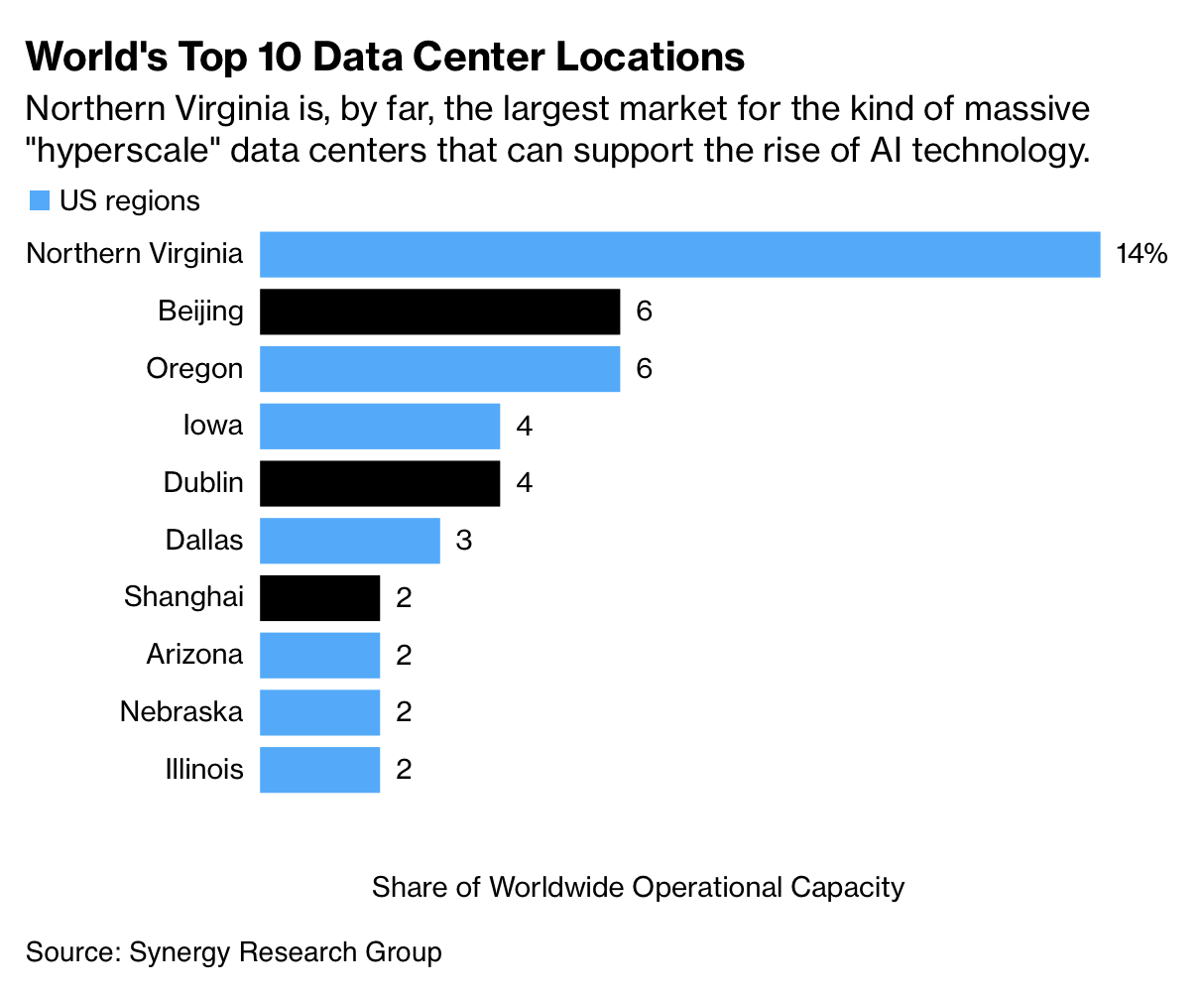
    As you know, Northern Virginia is now referred to as “data center alley.” It has, by far, the largest agglomeration of data centers in the world. The latest figures are somewhere around 200 completed facilities and some 49 million square feet, with a lot more in the pipeline.

    Here’s the global top 10 list via Bloomberg:

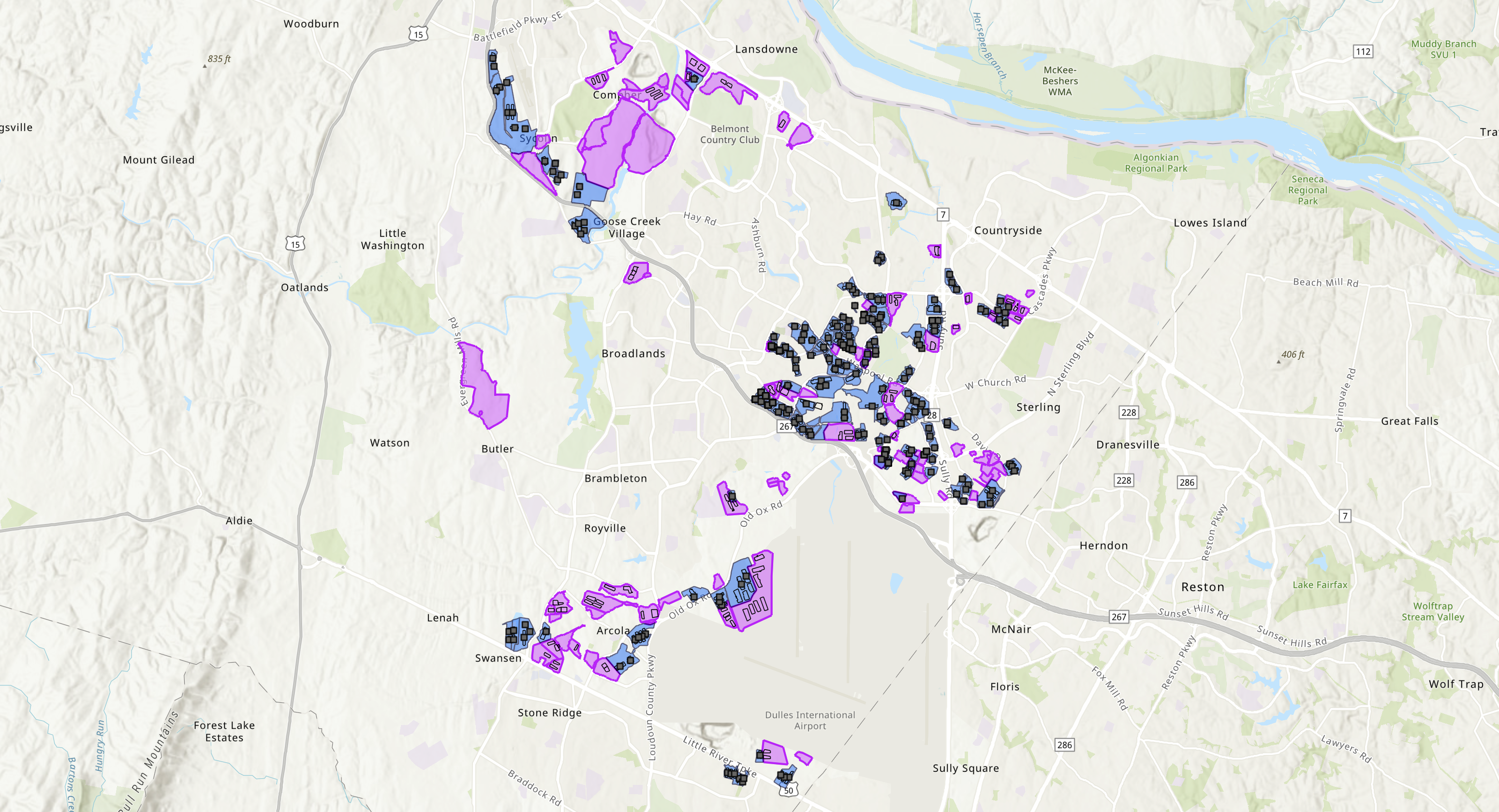
    And here’s a map of existing (blue) and proposed (purple) data centers via Loudoun County, Virginia:

    This has been an economic boon for Virginia. It’s estimated that the data center industry contributes up to 74,000 jobs and $9.1 billion in GDP to the state each year. But along with these benefits come some trade-offs, one of which has to do with the region’s built environment.

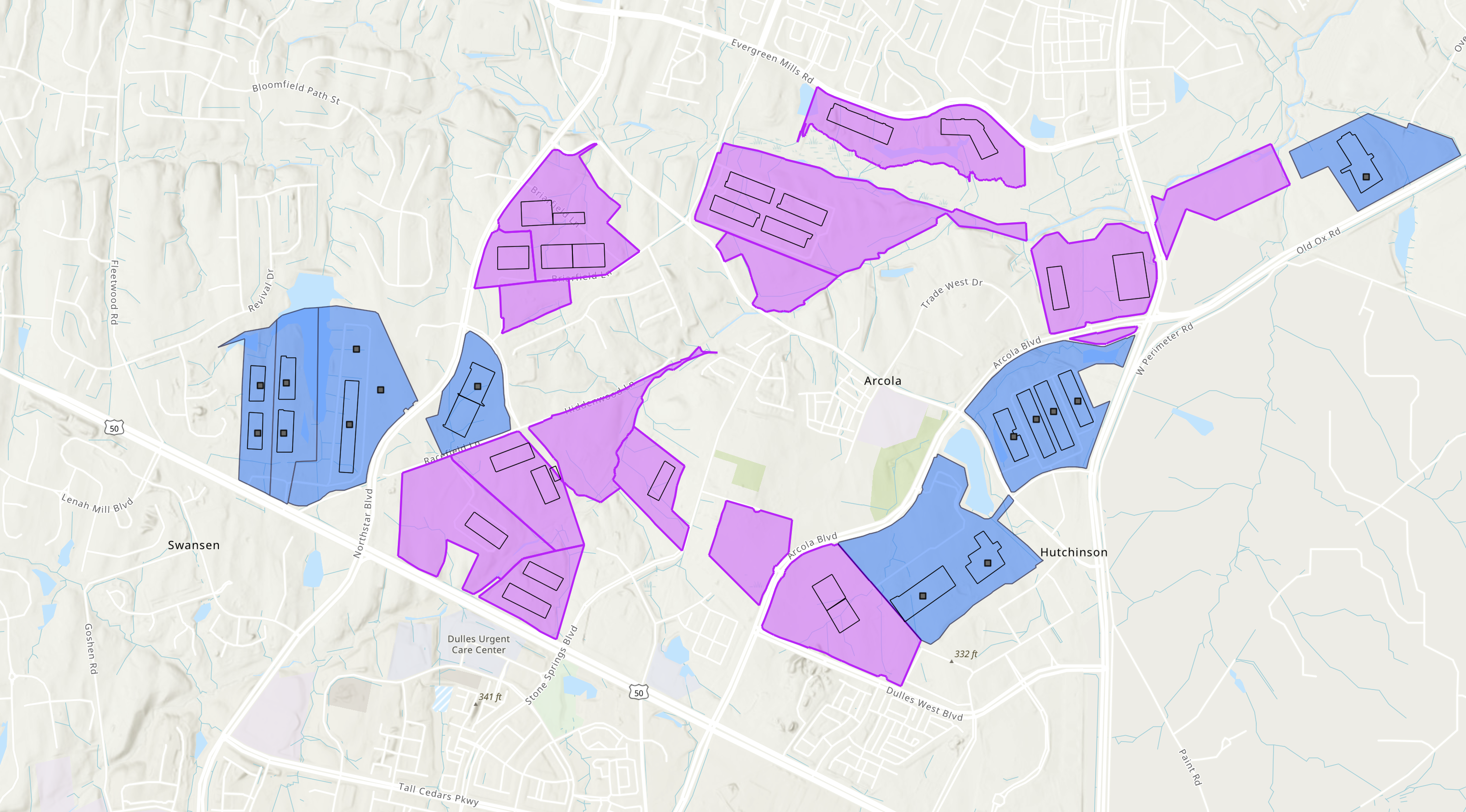
    Here are two zoom-ins of an area to the west of Dulles International Airport:

    These maps raise a question that is only going to become more important as time goes on: What’s the best way to insert large insular boxes into the fabric of a city or suburb? Of course, in some ways, this is not a new phenomenon. The suburbs are no stranger to this kind of built form.

    But it’s unique in that these boxes are not meant to be experienced in real life. They’re a physical manifestation of our online activities, juxtaposed against our offline lives. It’s two different worlds colliding. And already, it may be more appropriate to ask our question in the opposite direction: What’s the best way to plan a city or suburb around data centers?

  • Sprawl works, until it doesn’t

    July 29, 2025 · View original


    The Wall Street Journal recently published an article called, “Atlanta’s Growth Streak Has Come to an End.” It’s behind a paywall, though, so I don’t actually know what it says. But Paul Krugman did write about it, here, and I do know that one of the key statistics that you should know is this: For the first time since the data was collected, net domestic migration to Atlanta has turned slightly negative.

    Overall, the metro area is still growing because of natural births and international migration, but it’s still noteworthy that more Americans are leaving Atlanta than moving there. Because up until recently, Atlanta was a high-growth metro region. It’s an important logistics hub and it has had an elastic housing supply model. That is, it used suburban sprawl to keep home prices in check.

    But that is starting to change. Housing supply is dropping and traffic congestion has become one of the worst in the US. Paul Krugman hypothesizes that this is an example of “the limits of sprawl.” And I would agree with this. Sprawling cities have the advantage of being able to grow quickly when they’re relatively small. But eventually, they reach a population and geographic limit where the model starts to fail.

    The Atlanta urban region is massive. As defined by the US Census Bureau, it is 6,612.4 km2. The only urban region that is bigger is the one around New York City. Los Angeles — which might come to mind as another large car-oriented metro region — is smaller. It’s about 4,239.4 km2, but with ~2.4x the population of Atlanta.

    It may also surprise you to learn that Los Angeles is remarkably dense. When looking at the entire built-up urban area, it’s the densest in the US at 2,886.6 people per km2; whereas Atlanta is one of the least dense big city regions at 771.3 people per km2. This figure really stands out when you compare it to its peers, which means it’s going to be that much harder for it to overcome the limits of sprawl.

    Density is the unlock that allows you to get people onto trains.

  • The energy-to-value equation

    July 28, 2025 · View original


    One traditional metric for measuring the performance of a company is revenue per employee. And in a knowledge-based economy, this makes a lot of sense. Human capital is often the biggest expense. But as we enter the age of AI, this is now being called into question.

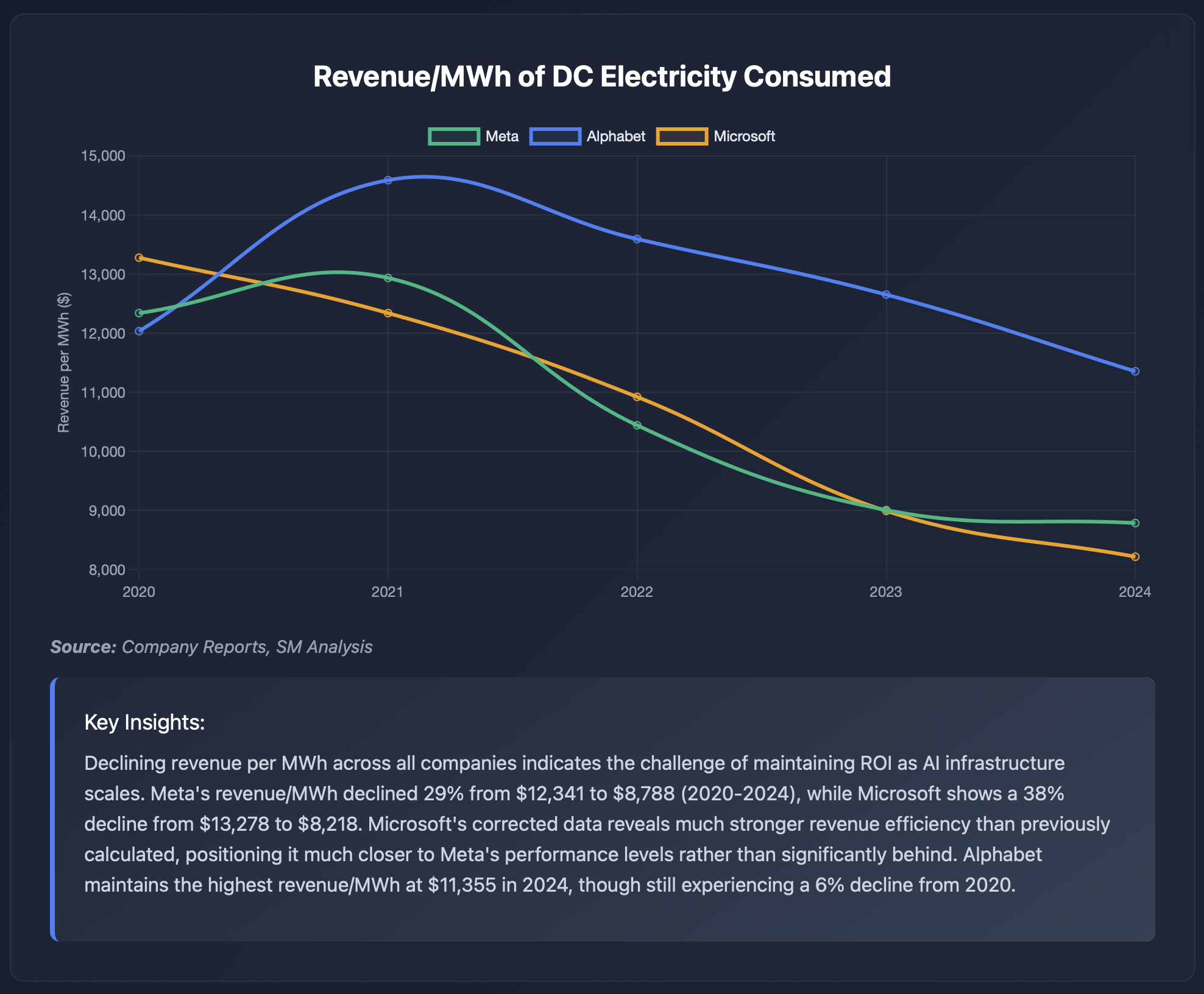
    Sara Menker has, for example, proposed a new metric: revenue per MWh. (See above comparing Meta, Alphabet, and Microsoft.) This is meant to reflect the fact that, as AI infrastructure scales, it is likely that operating costs in the future will be dominated by electricity consumption, rather than employee count.

    Naturally, this should make you wonder about a few things, namely: How will we manage the inequality that might (or will) arise from the decoupling of revenues from employees? And how are we going to sustainability supply this rapidly growing need for more and more electricity?

    Albert Wenger argues that the comparable metric for nations will be GDP per GWh. This means that, to win, you’re going to want cheap electricity. And as I understand it, the cheapest sources are wind, solar, and hydropower. This bodes well for Canada given that we dominate in the latter.

    Cover photo by Thomas Reaubourg on Unsplash

  • Iridescent balcony guard glass

    July 27, 2025 · View original


    Yesterday morning, Neat B and I were up at Friday Harbour messing about on jet skis with some friends. It was a lot of fun. It’s a good little day trip if you’re ever looking for something to do in the summer.

    I think that the developers of Friday Harbour have done a wonderful job creating a new waterfront resort and creating an alternative to traditional cottages. I know a bunch of people who have opted for a place here instead. It’s closer to Toronto, you don’t have the same upkeep, and you get to enjoy urban amenities while still feeling like you’re “up north.”

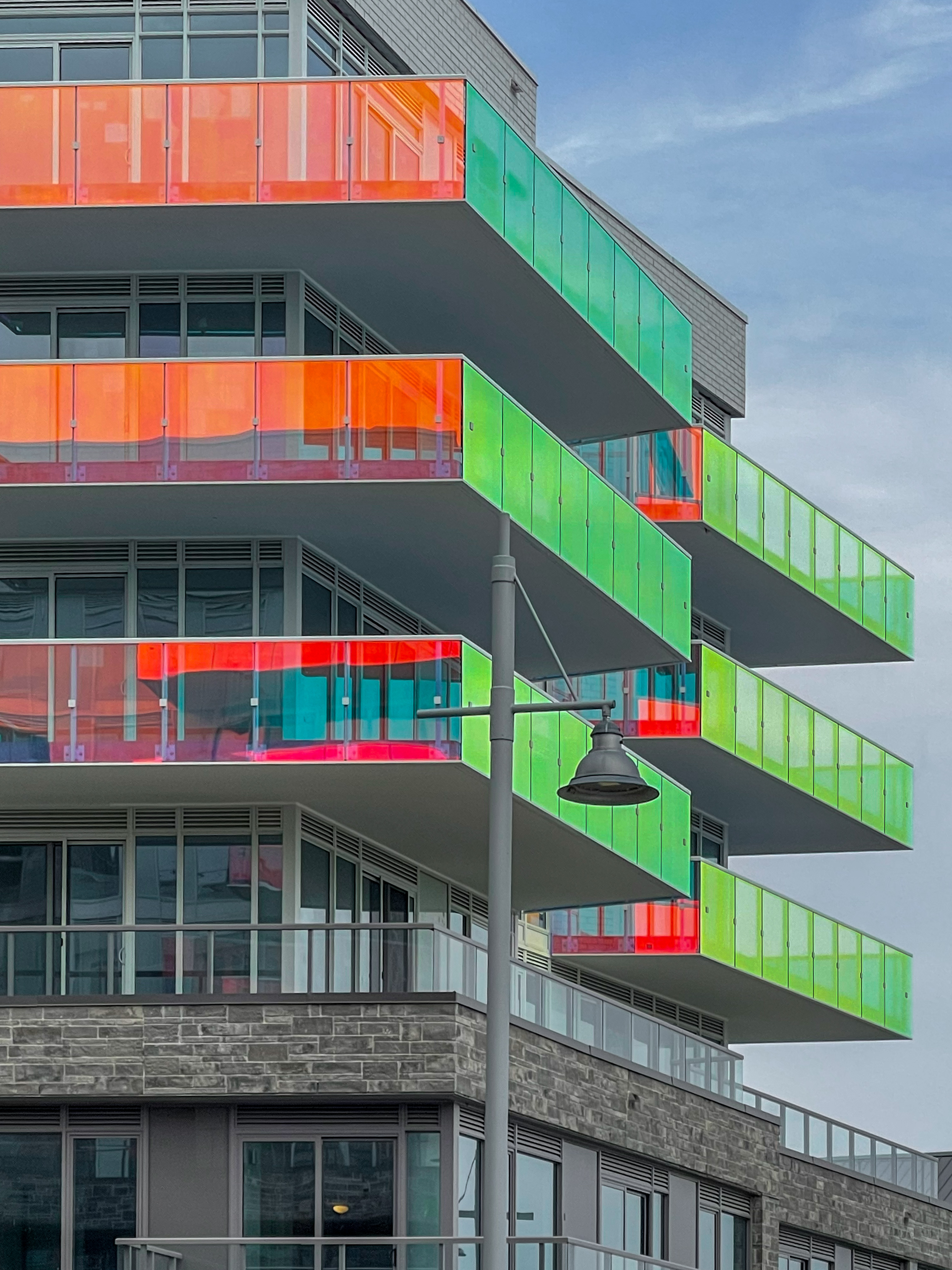
    Yesterday I also noticed that the most recent phase — which is just finishing up construction — looks like this:

    Never before have I seen balcony guard glass like this — at least not here in the Toronto region. It is some kind of iridescent laminated glass, which changes color depending on the light and the viewing perspective. I would imagine that it also offers some degree of privacy benefits, because it got fairly opaque from some angles.

    But the primary feature is that it just looks cool. And I think more projects should have fun like this. There’s no need to be afraid of color.

    What do you think?