Daily insights for city builders, delivered every morning at 6 AM ET. I’m Brandon Donnelly — a Toronto-based real estate developer and founder of Globizen. I’ve been writing here since 2013.

  • Toronto Community Council voted unanimously in favor of laneway suites

    It happened.

    Today, Toronto and East York Community Council voted unanimously in favor of adopting a planning framework that would allow laneway suites on lands within the Toronto and East York District that are designated as “Neighbourhoods.” 

    If you’d like to see the actual vote (and the clapping that ensued), check out this YouTube video at the 41 minute mark. There are also some great speeches prior to the vote by Councillor Bailão, Councillor Perks, and others.

    Now, it still needs to go through City Council, but today remains an important milestone and a positive step forward. So kudos to everyone who has been working tirelessly to push this initiative forward.

    I would also like to take this opportunity to address some of the comments that I recently received about this blog, one of which is that I continue to offer a one-sided perspective on this issue of laneway housing in Toronto.

    Think of this blog – and I’m stealing this analogy from another blogger – as a bar. I am the bartender and I show up here pretty much every day. I’ve been doing that consistently for almost 5 years now.

    At this bar I sip on negronis – okay, it’s probably beer – and I talk about topics and issues that excite me and that are usually related to city building. If it doesn’t excite me, I don’t talk/write about it. And I get lots of emails every day asking me to write about things that do not excite me.

    If you would like to take a seat at the bar, have a drink, and join the conversation, you are more than welcome to do that in the comment section at the bottom of every post. In fact, it’s encouraged. I make a mean vodka soda.

    So maybe I’ll see you at the bar. The bartender is a fairly open-minded guy who enjoys good conversation.

  • Planners on bikes getting coffee

    Over the weekend, Jason Thorne, who is the General Manager of Planning and Economic Development at the City of Hamilton, tweeted this out. He said, if Jerry Seinfeld can do Comedians In Cars Getting Coffee, then he was going to do Planners On Bikes Getting Coffee. And that’s exactly what he did in Barrie with their Chief Planner, Andrea Bourrie.

    I immediately responded by asking: Is this really a thing you are doing? Because if not, it is something you should absolutely start. He was kidding but I think the response he received on Twitter got him reconsidering if he should make it a thing. I think this is a great idea, and so I hope he does consider it. If you agree, maybe send him a tweet.

    I have a GoPro, gimbal stabilizer, and a bicycle. So if this doesn’t become a thing, maybe there needs to be a Developers On Bikes Getting Coffee.

  • Toronto laneway suites go back to Community Council

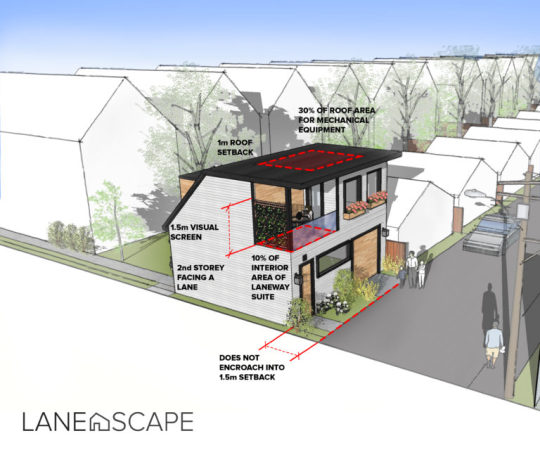
    Last month the Official Plan Amendment and Zoning By-law Amendment that would have permitted laneway suites as-of-right in Toronto was deferred by Community Council. 

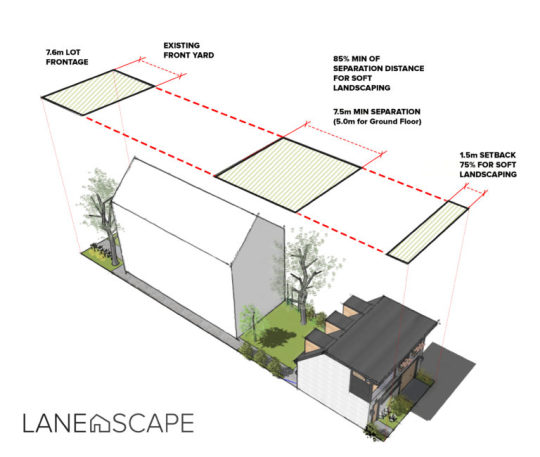
    So the “Changing Lanes” policy has been updated – to obviously make it more restrictive – and it will head back to Toronto and East York Community Council this week on Wednesday, June 6th. 

    Lanescape did a great job summarizing some of the updates on their blog. Here are a couple of their images:

    If you haven’t already, now is the time to write your local Councillor and TEYCC to tell them that you support laneway suites and the proposed Changing Lanes policy. I did that last month and I did it again this month. I hope that many of you will do the same.

  • Relationship between female literacy and total fertility rate

    This recent post by Sam Karam at NewGeography illustrates the relationship between female literacy and total fertility rates in Sub-Saharan Africa, India, and China. The overarching argument, which won’t surprise any of you, is that, “higher female literacy is a reliable predictor of lower fertility and improved prosperity.”

    The following graph uses data from populyst, the UN Population Division and UNESCO. The time period for the dataset varies by country but approximately corresponds to the latest 2000′s. All Sub-Saharan countries are represented, except for the Congo, Somolia, and South Sudan.

    image

    Noteworthy about this dataset is that the biggest decline in the total fertility rate happens precipitously after female literacy reaches and exceeds 80%. What is also interesting, but not surprising, if that the countries with the lowest gender equality rankings tend to also have high fertility rates. And that’s because low gender equality tends to translate into lower female literacy rates. 

    According to populyst, the above phenomenon – precipitous decline in TFR with rising female literacy – has already proved itself out in China. 

    Based on data from the World Bank, China’s total fertility rate dropped from 6.38 in 1966 to 2.75 in 1979. And since the one-child policy was only enacted in 1979, it doesn’t appear to be driven by that. (I would have initially expected some sort of surge in births prior to that policy.) From 1982 to 2000, the female literacy rate in China rose from 51% to 87%. Today it is 99.6%, which is basically the same as it is for males.

    For a more detailed look at the above data, check out this populyst post.

  • Urban American life before the car

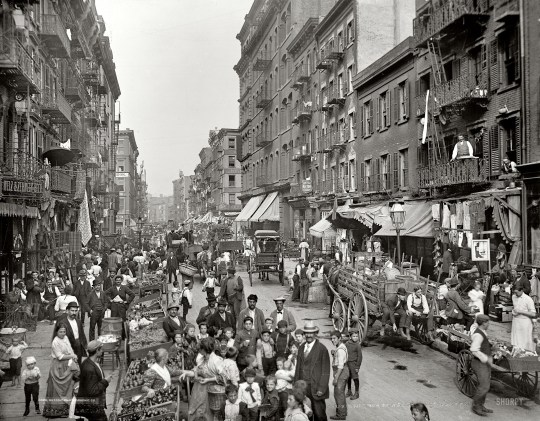
    This morning I stumbled upon an old (2013) post from Rebel Metropolis that documents urban American life through street photos taken before the automobile. 

    Above is Little Italy, New York City, 1900. All of the photos in the post are from Shorpy. 

    The photos are beautiful architecturally and from a photography standpoint. But as is pointed out in the post, they also speak to a different kind of street:

    What’s more, the street here is not purely the thoroughfare – it is the essential common gathering place for demonstrations, for buying and selling food, for children to play in, for celebration, for lingering and people watching.

    That sounds like a great street. And now I am off to start my day. Because I have meetings all around the city today, I’ll be driving to the office. 

  • A celebration of skateboarding culture

    I used to skateboard when I was growing up and so I have a lot of respect for the sport. This summer, from June 30 to August 12, The Bentway here in Toronto will be working with Build for Bokma and Vans to transform its outdoor (ice) skating trail into a summer-long celebration of skateboarding arts and culture. This is great.

    I am sure you all know Vans. But you may not be aware of Build for Bokma. They are a non-profit whose mission is to create skateable public structures. And their long-term goal is to develop a permanent skatepark that commemorates the late Canadian pro skateboarder, Justin Bokma.

    A big part of skateboarding culture is reimagining spaces and adapting to different urban environments. And if you think about it, that’s exactly what The Bentway is doing. They are reimagining a part of this city’s urban infrastructure. So I think this is a perfect fit and I am excited to see it come to life this summer.

  • The Siren opens in downtown Detroit

    Three years ago I wrote about the design and development firm, ASH NYC. What attracted me to them was how they were vertically integrating design, development, property management, and even hospitality management.

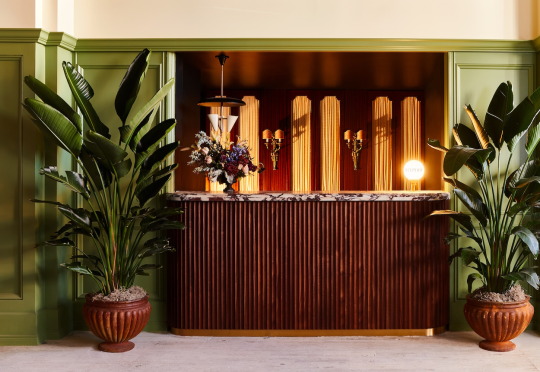
    Well they have continued to grow and this spring they opened up a new 106 room hotel in downtown Detroit called The Siren. It is located in the Wurlitzer Building, which the firm purchased back in 2015.

    With The Siren, ASH NYC also introduced their first-ever furniture line. It goes to show you just how focused they are on design and on the details. Surface Magazine did a good feature on the hotel, and the firm, here.

    The other thing, which I think is very cool, is how they paid tribute to the late and great Detroit street photographer, Bill Rauhauser. Check out the culture section of The Siren website to see what I mean.

    So if you’re planning to be in Detroit or are looking for an excuse to be in Detroit, maybe check out The Siren.

    Image: Christian Harder via Surface Magazine

  • Why confidence is so important in ______

    Those of you who are regular readers of this blog know that I like to incorporate tech into the topics I cover here and that I follow a lot of venture capitalists. 

    Well, I was reading Mark Suster’s recent post on why confidence is so important in (venture capital) fund raising and immediately thought that this audience may also find it interesting.

    Maybe you’re trying to raise money for a real estate development project. Maybe you’re trying to start a small business. Or maybe you’re just interested in human psychology.

    Here’s an excerpt from the post:

    But confidence is CRITICAL in fund raising. Investors are human and humans want what they can’t have and what they perceive other people want. It’s human nature — just read Cialdini and others on this topic. We don’t think we work that way, we do. If you don’t act in demand, people will subconsciously know you’re not in demand.

    It reminds me of one of my favorite lines from one of my favorite movies (which I have posted before on this blog):

    “Now the trick is that we gotta look like we don’t need this shit and they give us the shit for free.“ –Mike Peters

    There’s a lot of truth to that.

  • Fastest growing large cities in the US

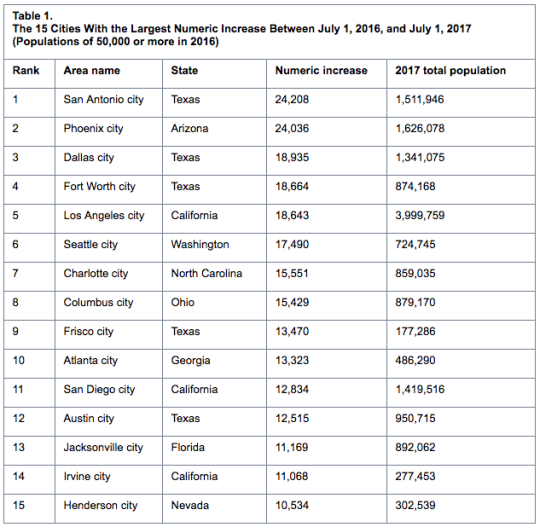
    Last week the US Census Bureau released its 2017 population estimates for the largest cities in the country. All of the figures are for the city itself and not the broader MSA or some other boundary.

    Here are the top 15 cities with the largest numeric increases between July 1, 2016 and July 1, 2017:

    However, if we switch over to percentage increases, Frisco, Texas – which is part of the Dallas-Fort Worth metro area – jumps up to number one with an increase of 8.2%. 

    In fact, the top 3 cities (on percentage basis) are in Texas and 10 of the top 15 cities are located in the South. That shouldn’t come as a surprise to many of you. Related post: Follow the sun and sprawl.

    However, if we only consider the 25 largest cities in the US, the fastest growing city on a percentage basis was Seattle at 2.47%. Number two was Fort Worth at 2.18%. And number three was Charlotte at 1.84%.

    New York City sits at 0.08%. And Detroit lost people. But it’s not a horrible figure (-0.35%). For more tables and data, click here.