Daily insights for city builders, delivered every morning at 6 AM ET. I’m Brandon Donnelly — a Toronto-based real estate developer and founder of Globizen. I’ve been writing here since 2013.

  • Blue Zones and the luxury of organic movement

    December 15, 2025 · View original


    Most of us have heard of the so-called “Blue Zones.” These are the parts of the world where there is an exceptionally high number of centenarians — people over the age of 100. We’ve talked about this topic before, covering the importance of things like diet, community, and constant moderate physical activity. But I would like to reiterate just how impactful our physical environments can be on our overall well-being.

    The island of Sardinia is one of the world’s Blue Zones. But it’s not actually the entire island of Sardinia; it’s a specific inner mountain region that is the Blue Zone. And in this region, at least two things are fascinating: First, the men have some of the longest average life expectancies in the world and second, the men live just as long as the women do. This is unique. Ordinarily, women outlive men. But not here.

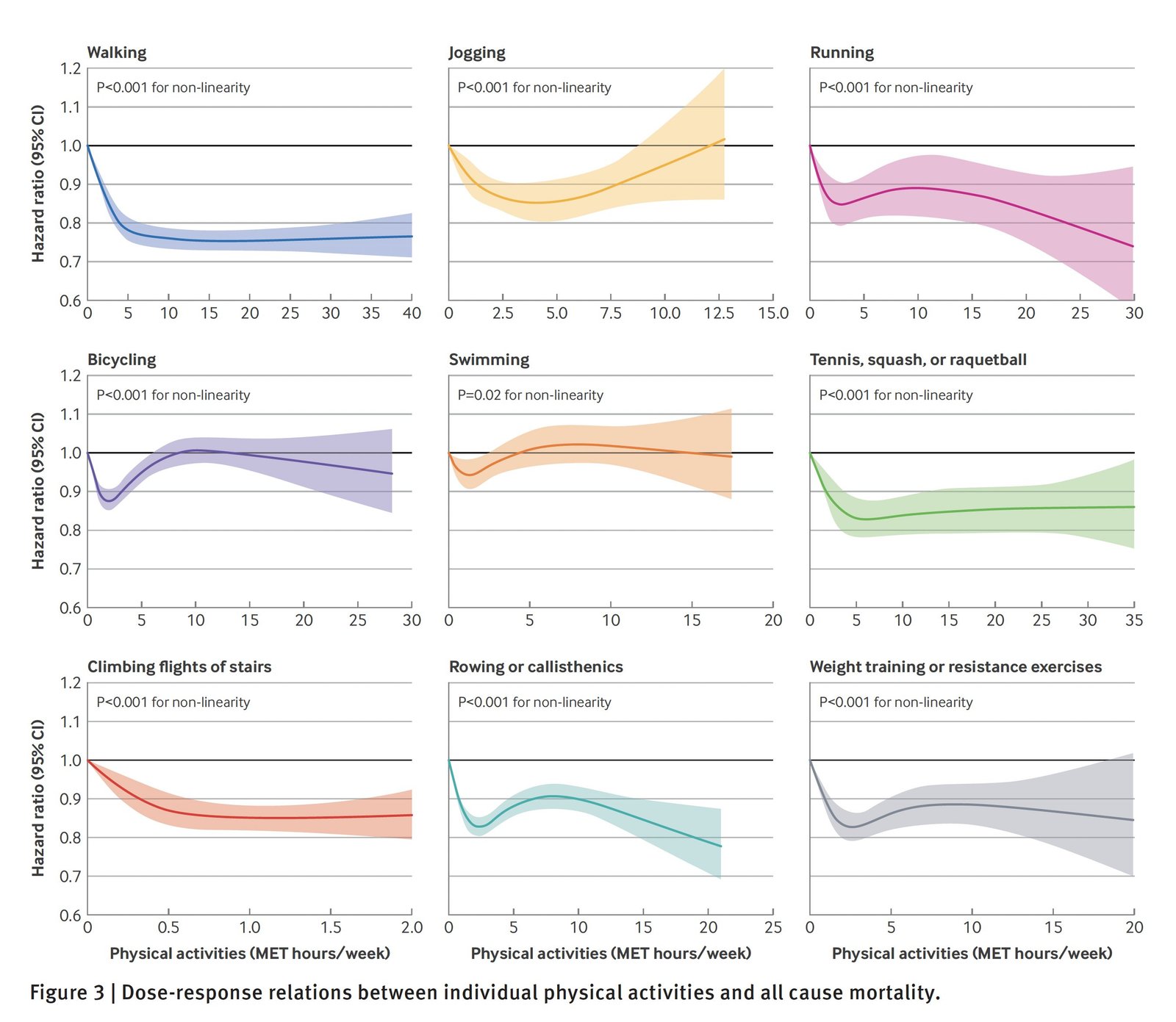
    The data overwhelmingly suggests that this outcome is the result of topography and employment. Because it is a mountainous region, the built environment is filled with steep inclines and staircases everywhere you go. The result is that even walking down the street to go to church or the grocery store results in organic moderate physical activity.

    At the same time, the men in this region have historically worked as shepherds. This meant that work also involved walking up and down hills all day. Again, more organic moderate physical activity. Because of this, research has found very significant correlations between longevity and pastoralism, the average slope of the territory, and the average daily distance required to reach work. The steeper the better.

    There’s little mystery here. We know that more activity is better for us than less. The challenge is that we can’t all live in bucolic mountain towns and chase sheep around all day. Modern society demands a lot of sitting and typing and vibe coding. We also have a market economy that is constantly looking for ways to make our lives more convenient so that we’re able to do even more sitting around.

    We try to compensate for this with gyms and other fixes (“Urban Cycles” cover image by Marcellus Hall):

    But the better and more fundamental solution is organic moderate physical activity. Meaning, moderate physical activity that we don’t have to actively seek out, and that is organically embedded throughout our everyday lives. It’s best when it’s a lifestyle. And this is one of the reasons why I view cities where walking and cycling are ingrained as a great luxury. All else being equal, these places are destined for better health outcomes.

    If I look up my Apple Health data for 2025, there are very clear spikes in steps whenever I’m traveling. This makes sense. It’s because I like going to places where I can walk around all day and be physically active. I can only sit on a beach for so long. But it’s also ironic that modern life dictates that I have to go on vacation in order to be more active. That’s not how Blue Zones work.

    There is no greater luxury than our health. Without it, nothing else matters. And so I think it behooves us to make it a fundamental component of city building.

    Cover photo by Valentina Uribe Posada on Unsplash

  • The banking and legal hurdles of building in the US as a Canadian

    December 14, 2025 · View original


    We completed and started renting Parkview Mountain House in Park City, Utah about a year ago. Construction took slightly longer than we had initially scheduled, but we finished construction under budget, which is always a good thing. Getting our building permits was easier than expected (thank you, Summit County) and closing them out involved as much back and forth as you would expect for a challenging mountain site. I would happily build another project in Park City.

    Some of our greatest challenges happened on the legal and financing side. When we acquired the site, we formed a single-purpose Limited Partnership in Utah that was initially owned by one of Globizen’s Canadian corporations, and later with two other partners (another Canadian corporation and a New York LLC).

    Limited Liability Companies (LLCs) are very common in the US. They offer a kind of hybrid “sweet spot.” They offer the limited liability that comes with corporations, but with the option of having the pass-through taxation you get with Limited Partnerships. However, they don’t exist in Canada, and so the legal and tax advice we got was to instead form a Limited Partnership. I’ll come back to this later.

    The first challenge we had was the seemingly simple task of opening up a bank account for the project LP. Wells Fargo, Chase, and others would not accept a Utah LP owned by a Canadian corporation. Too foreign. Too complicated. We finally managed to get one opened with US Bank, and they’ve been great, but being Canadian still poses challenges. For example, I can’t use their mobile app in Canada. And I can’t deposit cheques/checks online without first verifying my mobile number. But I can’t verify my mobile number because their system won’t send codes to Canadian numbers.

    The next hurdle was construction financing. It was frustrating to learn about all of the simple and cost-effective “one-close solutions” available to US entities, but not available to foreign nationals. We could have gotten a great rate, and a construction loan that automatically converts to a permanent facility at substantial completion. Instead, we had to finance construction through a combination of equity, lines of credit, and a private loan. Not ideal, but at least the draws were flexible and easy.

    Then came our take-out loan at completion. This proved to be impossible with our legal structure and foreignness. So much so that we ended up having to convert our Utah Limited Partnership to a Limited Liability Company, and become “members” of the LLC personally. This is a clean, common, and widely accepted structure for real estate ownership in the US. But in order to do this, we had to have KPMG advise us on how we could do this without triggering a massive tax liability. We were able to figure that out and close the facility. But our year-end tax filings are going to be a little more complicated this year.

    In the end, we overcame the obstacles. But it was certainly challenging, more so than the actual building part I’d say. Every time I mentioned that I was Canadian, I came to expect a pause, where the other person would then need to start processing what to do next. As international as the US is, it feels paradoxically insular when it comes to the things I described in this post. But this is how you gain experience. Now we’ll be slightly better prepared for our next US project, whatever that might be.

    Note: Nothing in this post should be viewed as legal or financial advice. I’m just sharing our experiences.

  • The Pacific Palisades doesn’t want duplexes and smaller lots

    December 13, 2025 · View original


    So, here’s what’s happening in the Pacific Palisades right now:

    > A pro-development organization has sued Gov. Gavin Newsom over an executive order blocking duplexes in Los Angeles neighborhoods stricken by January’s wildfires.

    > Newsom issued his order in July in response to lobbying from property owners in the Pacific Palisades, the coastal L.A. community that was largely destroyed in the blazes. Palisades residents argued that allowing duplexes and spitting [sic] lots into two parcels would undermine the neighborhood’s character and worsen evacuation efforts in the event of future disasters. Following the governor’s order, all the jurisdictions affected — the cities of Los Angeles, Malibu and Pasadena and L.A. County — banned SB 9 rebuilds in high-risk fire areas. The suit includes each local government as a defendant as well.

    This is interesting.

    On the one hand, there is, of course, a logic to not allowing too much density and too many close-together houses in an area prone to wildfires and where there are only so many roads leaving the community. But on the other hand, it’s not clear that this is really what it’s all about.

    The counterargument, from groups like the one suing, is that this is actually about perpetuating exclusivity, and perhaps even about “cleansing” the neighborhood of households who don’t have the means to rebuild in a way that suits the “character” of the place. Duplexes = rental homes. And smaller lots = less expensive houses.

    So, which is it?

    My view is that this should be looked at from an overall population standpoint, and not from a housing type standpoint. According to 2023 census data for zip code 90272, the Pacific Palisades had a population of approximately 21,438 residents. This is a decline of just over 10% over the last 23 years. (Source: U.S. Census Bureau Decennial Census 2000 & ACS 2023)

    On top of this, the number of households has also declined from ~9,319 in 2000 to 8,282 in 2023. So by all accounts, the area is shrinking and becoming less dense. There are fewer residents and fewer occupied homes. This is a directionally good thing if your primary concern is evacuation congestion and the safety of residents.

    But then, what’s the concern with duplexes and smaller lots? Is the concern that the area might regain its previous population and household count? Is the objective to continue shrinking and reach some more optimal set of numbers? Should there only be 15,000 residents, or maybe even 10,000?

    Because if that’s the case, then I think a more effective policy would be: “This neighborhood can only support X number of residents and Y number of households, because otherwise people can’t evacuate quickly enough in the case of emergency. Once we reach these limits, we will stop processing building permits for all housing types.”

    When a policy only restricts specific housing types, as opposed to more directly addressing a stated problem, it suggests to me that the stated problem is not actually the primary concern.

    Cover photo by Beau Horyza on Unsplash

  • The hardest part about writing a daily blog

    December 12, 2025 · View original


    The hardest thing about writing a daily blog is not the actual writing part; it’s coming up with a new topic every single day. I’m often asked, “How long does it take you to write your posts?” And the truthful answer is that it varies greatly.

    Part of this variability, of course, has to do with the length and depth of each post, but another big part of the variability is that I have to first land on a topic.

    The usual criteria are that I’m looking for something that is roughly aligned with the topics covered on this blog, that is interesting to me (and where I can hopefully bring a unique perspective), and that I haven’t already written about over the last 12+ years. Another challenge is remembering what I have written about!

    The two techniques that I have found most helpful in optimizing for the topic problem are to 1) keep a list of topics as they hit me (I do this in the to-do app on my phone) and 2) read the internet until I land on something that excites me.

    Technique one is the most efficient because it means I’m more or less ready to go once I sit down to write. But I don’t always have topics on the list. It’s not easy having a daily writing practice. It’s a huge commitment that sometimes feels worth it and sometimes doesn’t.

    That said, hard things tend to be the things you want to do in life. There’s probably also something to be said about the fact that the hardest part is the thing that AI isn’t good at.

    Cover photo by Klim Musalimov on Unsplash

  • How to offer free rent in Santa Monica

    December 11, 2025 · View original


    Customarily, landlords induce tenants to lease space in a building by offering X months of free rent, as opposed to discounting the actual face rent.

    For example, let’s assume that the rent for a particular apartment is $3,000 per month or $36,000 per year. Assuming the inducement is equal to one month of free rent, the two logical options are: (1) offer the first month for free and then charge $3,000 for the remaining 11 months or (2) charge $2,750 per month.

    Both options equal $33,000 in gross annual rent, but the second option permanently impairs the value of the real estate asset by lowering the overall rent roll on a go-forward basis. So when you capitalize the net operating income of the property, you end up with a lower value. For this reason, option one is the standard approach. You want to offer as much free rent as possible before touching your face rents.

    But there can also be local nuances to consider on top of this standard practice. For example, I found this recent tweet from Paul, a multi-family landlord in Los Angeles, interesting. He notes that in rent-controlled buildings in Santa Monica, you also have to be careful not to offer free rent in the first 12 months of a lease. Instead, you need to offer it starting in month 13 or beyond.

    His example:

    – Lease rate of $3,000 – Inducement equal to 2 months of free rent ($6,000) – Tenant pays 10 months x $3,000 = $30,000 in Year 1

    Apparently, the way Santa Monica looks at this is that the tenant is paying $30,000 / 12 months = $2,500 per month in rent. So, after year one this becomes the Maximum Allowable Rent (MAR) going forward under the city’s rent control policies. In other words, the monthly rent becomes the $2,500 number and not the $3,000 number that you thought you had contracted for.

    It’s an annoying gotcha detail, but it’s a meaningful and permanent one until the apartment turns over. Landlord beware. Real estate may be subject to the flows of global capital, but in many ways, it still remains a local business.

    Cover photo by Demian Tejeda-Benitez on Unsplash

  • Why Toronto’s Finch West LRT sucks

    December 10, 2025 · View original


    The new Finch West LRT line opened this past weekend in Toronto. This is a 10.3-kilometer transit line that runs from Humber College to Finch West subway station, and replaces a bus route that was previously one of the busiest in the city.

    It’s also a line that dates back to 2007. I vividly remember reading about this proposal while I was in grad school in the US. Some of you might remember that it was part of Mayor David Miller’s Transit City proposal. Since then, the project got cancelled and revived at least once, which is partially why it took some 18 years to complete.

    Transit openings are typically exciting. A bunch of people lined up on Sunday morning in the cold to be first to ride it. I slept in instead of doing that, but I do fancy myself a transit nerd. Whenever I’m in a new city, I always try to take (or at least test out) their transit system.

    And when the Eglinton LRT finally opens, I do have aspirations to ride from end to end while spinning house and techno music from the rear car. (I have yet to reach out to the TTC to see if they might be interested in accommodating such an activity.)

    But it’s not all excitement. Now that the Finch line is open, the customer reviews are in and the general consensus seems to be that it sucks:

    > A CBC Toronto reporter rode the entire 10.3-kilometre line from east to west Monday morning, finding it took roughly 55 minutes to complete. As a reference point, over 400 runners ran this year’s Toronto Marathon 10-kilometre event in under 55 minutes.

    > CBC Toronto’s eastbound return trip to Finch West Station was about eight minutes shorter, clocking in at roughly 47 minutes. Still, several riders Monday told CBC Radio’s Metro Morning that the previous bus route on Finch Avenue W. was faster and had more stops along the way, making it easier to access.

    So now Torontonians are rightly questioning why our various levels of government spent ~$3.75 billion and took 18 years to build a line that performs worse than what was already there. Hmm. Good question.

    The problems — and I defer to experts like Reece Martin — seem to be a lack of transit signal priority, stop spacing that’s too tight (~500 meters on average), and too many slow zones, among other things. This is highly problematic from a value-for-money standpoint and from an overall transit investment standpoint.

    If we don’t fix this, we haven’t just wasted billions; we’ve probably killed the argument for light rail in this city for a generation. The good news is we know this can work, and that’s because it’s being done successfully all over the world. Let’s go, Toronto. Make it happen.

    Cover photo via Wikipedia

  • From labor-bound to energy-bound

    December 9, 2025 · View original


    In yesterday’s post about bottom-up urban development, I mentioned (in parentheses) that the focus on regenerating local economies is arguably even more important in the context of Japan, where a shrinking population is creating urban decline in many communities. And the reason I said this is because it is widely known that Japan has a demographic problem.

    Since 2009, the country has seen its population decline every single year. Currently, it is hovering at just over 120 million people, but by 2050, it is expected to fall to roughly 100 million (or lower), with people aged 65+ accounting for nearly 40% of the population.

    When this is your backdrop, you’re usually more concerned about urban decline than you are about building enough new housing. As Fred Wilson mentioned in this recent post, “pressing issues like the unaffordability of housing, for example, can quickly change if we are living in a shrinking world, not a growing world.”

    Of course, it’s not just Japan. The global fertility rate (as of 2024) stands at around 2.25 live births per woman. This is not that much higher than the replacement level of 2.1, and it’s being largely propped up by only one region: Sub-Saharan Africa (>4 births per woman). Remove this region, and the world is now already shrinking in population.

    This will have dramatic consequences not just on our cities and real estate markets, but on the global economy as a whole, which is why some people, like venture capitalists, are already betting that the world will need to move from labor-bound to energy-bound. What this means is that we’re going to need a lot more energy-consuming tech to compensate for the fact that we have less of the other stuff.

    You know, humans.

  • Combining bold vision with soft infrastructure

    December 8, 2025 · View original


    Sometimes I am an advocate for big, bold urban change. This is where I tend to be closely aligned with urbanists like Joe Berridge, co-founder of Urban Strategies. (We sat on a panel together this past October at the Council for Canadian Urbanism Forum, and I found myself agreeing with him on this point.)

    For example, last week I tweeted that the edges of High Park would be better off looking like Central Park in New York. By this I meant that High Park is an urban park with a major subway line running on top of it — we should not be shy about embracing a more urban future.

    This stretch of Bloor Street, at the north edge of the park, has got to be one of the dullest stretches of street along the entire line. It’s hardly fitting for Toronto’s most famous urban park.

    Some of you didn’t like this tweet. Serendipitously, it also happened to align with a heated community meeting for a major two-tower rental development in High Park North. But this project is one block from a subway station, and it should be approved. The unfortunate reality is that we have underdeveloped much of the land around our transit infrastructure.

    At the very same time, I am a strong advocate for small-scale, incremental change. We’ve spoken a lot about this topic over the years, particularly in the context of Tokyo. Japan is renowned for its flexible approach to zoning and for the way that it allows small, ground-up interventions. The result is an approach to urbanism that is often referred to as emergent.

    A good example of this approach is the work of Japanese developer Staple. Staple calls itself a “soft developer” and what that translates into is a bottom-up model that is focused on regenerating local economies. (This is arguably even more important in the context of Japan, where a shrinking population is creating urban decline in many communities.)

    To achieve this, they rely on “soft infrastructure” such as local shops and grocers, hotels, housing, workspaces, restaurants, regenerative agriculture, lifelong learning centers, and more. In other words, they are focused on the nuts and bolts that make for thriving local communities and that can be easily missed if you’re too focused on the bigger picture.

    One recently completed project is Soil Nihonbashi in Tokyo’s Nihonbashi-Kabutocho neighborhood. Designed by architect Kiyoaki Takeda, the project opened in September and includes a coffee shop, cocktail bar, dim sum spot (and other dining options), co-working space, parklet (bakery), rooftop agricultural garden, and 14-room hotel.

    It’s the kind of hotel that global brands tend to avoid like the plague. It’s too small. Too many diseconomies of scale. But it’s exactly the kind of hotel and mix of uses that is wonderful for local communities. Think of what the Drake Hotel here in Toronto did for West Queen West when it opened back in the day.

    All of this brings me back to something I have said before. A good recipe for city building is to be stubborn on vision, but flexible on the details. Cities are at their best when you allow and empower bottom-up change. Get out of the way. There’s no way that top-down planning will get it all right. So if you can combine bold vision with flexible implementation, well then, you’ve got the secret sauce.

    Cover photo from architect Kiyoaki Takeda

  • The public health case for eliminating human drivers

    December 7, 2025 · View original


    We’ve been talking a lot about autonomous vehicles, and in particular Waymo, on this blog. In my opinion, the safety records — which Waymo has published after driving more than 100 million driverless miles — already suggest that none of us should be driving cars anymore. Some or many of you will disagree with this statement, but there’s a reason why car crashes are the number two cause of death for children and young adults in the US.

    So not only is this a tech breakthrough and a profound city-building shift, but it’s also a public health breakthrough. Here’s a recent opinion piece published in the New York Times by Dr. Jonathan Slotkin, the vice chair of neurosurgery at the Geisinger Health System in Pennsylvania. I found this statement particularly interesting:

    > In medical research, there’s a practice of ending a study early when the results are too striking to ignore. We stop when there is unexpected harm. We also stop for overwhelming benefit, when a treatment is working so well that it would be unethical to continue giving anyone a placebo. When an intervention works this clearly, you change what you do.

    Now the imperative:

    > There’s a public health imperative to quickly expand the adoption of autonomous vehicles. More than 39,000 Americans died in motor vehicle crashes last year, more than homicide, plane crashes and natural disasters combined. Crashes are the No. 2 cause of death for children and young adults. But death is only part of the story. These crashes are also the leading cause of spinal cord injury. We surgeons see the aftermath of the 10,000 crash victims who come to emergency rooms every day. The combined economic and quality-of-life toll exceeds $1 trillion annually, more than the entire U.S. military or Medicare budget.

    Dr. Slotkin goes on to talk about some of the cities that are pushing back against AV adoption, or simply erecting barriers, namely Washington, D.C. and Boston. That’s too bad. This is a decision that can be easily guided by data: Which is the safest option for the greatest number of people? Just do that. Dr. Slotkin gets it right: “policymakers need to stop fighting this transformation and start planning for it.”

  • Thoughts on Toronto’s Major Street grid

    December 6, 2025 · View original


    This map, showing the right-of-way widths of Toronto’s major streets, is one of my favorite maps. It tells you so much about the scale of the city.

    Even if you were entirely unfamiliar with Toronto, you could look at this map and gather from the width and spacing of its major arteries that the orange streets (20 meters) represent the oldest parts of Toronto and that the red streets (36 meters) represent the newer and more suburban parts of the city.

    It’s also interesting to think about this map in the context of other cities. Manhattan, for example, has a famous grid plan that generally contains north-south avenues and east-west streets. Most, but not all, of the avenues are 100 feet wide, or ~30 meters. And most, but not all, of the streets are 60 feet wide, or ~18 meters.

    I tried to get Gemini to create a New York version of the above map using the same color legend, but it hallucinated and didn’t give me what I wanted. So you’ll have to use your imagination. Manhattan’s avenues typically correspond to the dark blue lines on Toronto’s map, and its streets are even narrower than the orange lines.

    If you were to overlay these two maps at the same scale, you’d see at least two things: one, Toronto doesn’t have the same kind of broad avenues cutting through its most urban areas (meaning it’s harder to move cars around) and, two, Manhattan has a much thicker web of urban streets. Consider the density that exists on Manhattan’s 18-meter-wide streets.

    Toronto did not lay out its urban grid ahead of time like New York did with its Commissioners’ Plan in 1811. In many ways, Toronto feels more like an accidental global city. But that doesn’t mean we can’t look at our urban grid today and decide what it wants to be for the next 200 years. I think that would be a good idea.

    Cover photo by Tianlei Wu on Unsplash