Daily insights for city builders, delivered every morning at 6 AM ET. I’m Brandon Donnelly — a Toronto-based real estate developer and founder of Globizen. I’ve been writing here since 2013.

Category: Uncategorized

  • The richest person in Utah wants to buy the largest ski resort in the US

    June 10, 2026 · View original


    The richest person in Utah is a man named Matthew Prince. Prince, who grew up in Park City and was once a ski instructor at Park City Mountain Resort, is the co-founder of a tech company called Cloudflare. I’m assuming his riches came from the tech company and not from being a ski instructor. But he still seems to like skiing because he’s been mounting a highly public and aggressive campaign to buy the resort from Vail.

    There is a narrative in the ski and snowboard community that Vail has destroyed the industry through poor management, expensive lift tickets, homogeneity, and just an overall loss of what the vibe used to be. The market may also agree with this narrative because Vail’s stock price is down nearly 60% over the last five years.

    So Prince’s message to Vail is “you’re a bad capital allocator” and his pitch to the Park City community is one that sounds really nice. It’s basically a community-first rescue mission. He has promised zero personal profit of any kind (he apparently has enough money), pledged to reinvest 100% of the resort’s profits into infrastructure upgrades and employee compensation, and floated ambitious ideas to build a massive gondola network connecting Main Street Park City to some of the neighbouring canyons (which would be totally awesome).

    Vail’s response continues to be that the resort is absolutely not for sale. But Prince is trying to encourage them to adopt a more asset-light model, where they control the brand and the Epic Pass, and local billionaires like Prince run the physical properties.

    To provide a bit of real estate context here, Vail owns the mountain infrastructure, the snowmaking equipment, and the overall business operations, but much of the resort sits on land owned by Toronto-based Talisker. My understanding is that the land lease gives Vail all the practical indications of ownership for a very long time, but I thought I would explain this nuance given that we like to talk about real estate specifics on this blog.

    I have no idea where this public pursuit will go, and I know nothing about Prince’s values as an individual, but the story is certainly compelling. There’s something to be said for a rich local wanting to buy a resort just for the love of skiing.


    Cover photo by Patrick T’Kindt on Unsplash

  • The great American elevator tragedy

    June 9, 2026 · View original


    And we’re back!

    It has been said that the definition of a habit is that you don’t feel normal until you do it, and that’s certainly how I’ve been feeling over the last few days without writing this blog. I’ve been unusually preoccupied. At the end of the day, you don’t write a daily blog for 13 years without being someone who enjoys routine and consistency. I’m assuming I’ve written over 4,600 posts at this point.

    Anyway, I just listened to this podcast by Malcolm Gladwell.

    It starts with Malcolm proudly declaring himself a YIMBY. This is a recent thing for him, and so he goes on to say that he has “all the zeal of the recently converted.” Then comes Stephen Smith, Executive Director of the Center for Building in North America, and they talk about the great American elevator tragedy.

    It has been well documented that elevators in Canada and the US generally cost many multiples more than elevators in other developed countries. The result is that we tend to have fewer elevators per capita. Only certain projects and building types can afford and/or physically accommodate them. In the words of Malcolm, aiming for perfection comes with costs — fewer elevators and more expensive housing.

    If you’re interested in this topic, the Center for Building in North America has an extensive report titled Elevators that you can download here. But even if you aren’t particularly interested in the trials and tribulations of elevators, all of this is an important reminder that the challenges facing new housing are fundamentally multifaceted.

    If we want to unlock as much housing as possible and make it as affordable as possible, it’s not just a question of zoning. It’s also a question of utilities, environmental regulations, levies, construction methods, building codes and, yes, elevators.


    Cover photo by Bagzhan Sadvakassov on Unsplash

  • Vivienne Maria Donnelly

    June 4, 2026 · View original


    Welcome Vivienne Maria Donnelly.

    You arrived June 3, 2026 at 1:42 AM in downtown Toronto.

    Right now, both you and mom are resting comfortably.

    We’ve known you for less than 24 hours and we are already completely in love.

    You’ve unlocked a new part of our hearts.

    And one day, when you’re old enough to understand, I’ll send you this blog post.

    <3

  • For the rich, climate risk in Florida doesn’t matter

    June 3, 2026 · View original


    I was recently debating with a friend about climate risk in Florida. He is less concerned about climate risk than I am and part of his argument was, “Why would the world’s elite move to Florida only to get pushed out by sea-level rise in the near future?”

    My view is that we shouldn’t necessarily view the migration of high-net-worth individuals to the state as clear confirmation that they all believe everything will be fine (though I’m sure some or many do). Instead, I see it as rational consumer and economic behavior.

    If you’re a wealthy individual and have the means to be highly mobile, Florida offers two obvious benefits: warm winters and lower taxes (including little to no risk of something like a California wealth tax).

    Let’s look at some numbers.

    If you had a $100 million capital gain from your private placement in SpaceX and you switched your tax residency from New York City to Miami, you would save 14.776% in state (10.9%) and city (3.876%) taxes, equaling about $14.8 million at t = 0 (definitely not tax advice!).

    You could then use these tax savings to buy a waterfront home and get this benefit for all future income streams. In addition, you would get the benefit of warm winters going forward and the optionality of bottle service at LIV whenever you want to see David Guetta. I’m personally not an EDM fan. I prefer house and techno, but to each their own.

    So in a total doomsday scenario, if the market started pricing in climate risk and your $14.8M waterfront property went to $0 at t = 10 years, it would still be a rational lifestyle and economic decision. And if the value destruction happened at t = 25 years, it would matter even less. It’s probably outside of the forecasting period.

    For wealthy people, the value of their personal residence generally makes up a much smaller percentage of their net worth compared to that of the middle class. And my assumption is that the wealthy are making self-serving economic decisions and/or they really want to live in Florida for lifestyle reasons.

    The greater concern is for less-wealthy people for whom an erosion in principal residence value would have a more meaningful impact on their financial health. At a certain point, the tax benefits and lifestyle benefits may not outweigh the climate risks, assuming you believe this is a risk in the foreseeable future.


    Cover photo by Alex Guillaume on Unsplash

  • Berkshire Hathaway’s plan to create a combined housing platform

    June 2, 2026 · View original


    Over the weekend, Berkshire Hathaway announced that it has come to an agreement to buy Arizona-based homebuilder Taylor Morrison for US$6.8 billion in cash. The agreed-upon price is $72.50 per share, representing a 24% premium over the company’s closing stock price on the prior Friday. Once the transaction closes, Taylor Morrison will be delisted from the New York Stock Exchange and become a privately held company within the Berkshire Hathaway conglomerate.

    Now, the press release only says so much, but I did find the canned quotes interesting. Greg Abel of Berkshire said that the company wants to “unify our site-built homebuilding operations into a combined platform.” And Sheryl Palmer, CEO of Taylor, said the acquisition “will allow us to scale the Taylor Morrison platform in ways that would not be possible as a standalone company.”

    Berkshire has a long history in housing. It also owns a manufactured home company (i.e. not site-built), and various companies that make up the housing supply chain: bricks, paint, insulation, roofing, sales, and more. So it’ll be interesting to see what they are able to achieve by way of a “combined platform.” It has elements of both vertical and horizontal integration.

    The other interesting thing about this announcement is that it also seems to signal the following: Abel wants Berkshire to be more of an active manager (finding those “synergies” across its subsidiary companies), and he likely feels the housing market is at or near the bottom of the cycle (despite current inflation risks). Regardless, the US has a structural housing deficit and so homebuilding is probably a good business to be in for the long term.


    Cover photo by Josh Olalde on Unsplash

  • Summer nostalgia: 60 kilometres, 25 years, and one pending baby

    June 1, 2026 · View original


    I hope you all had a great weekend.

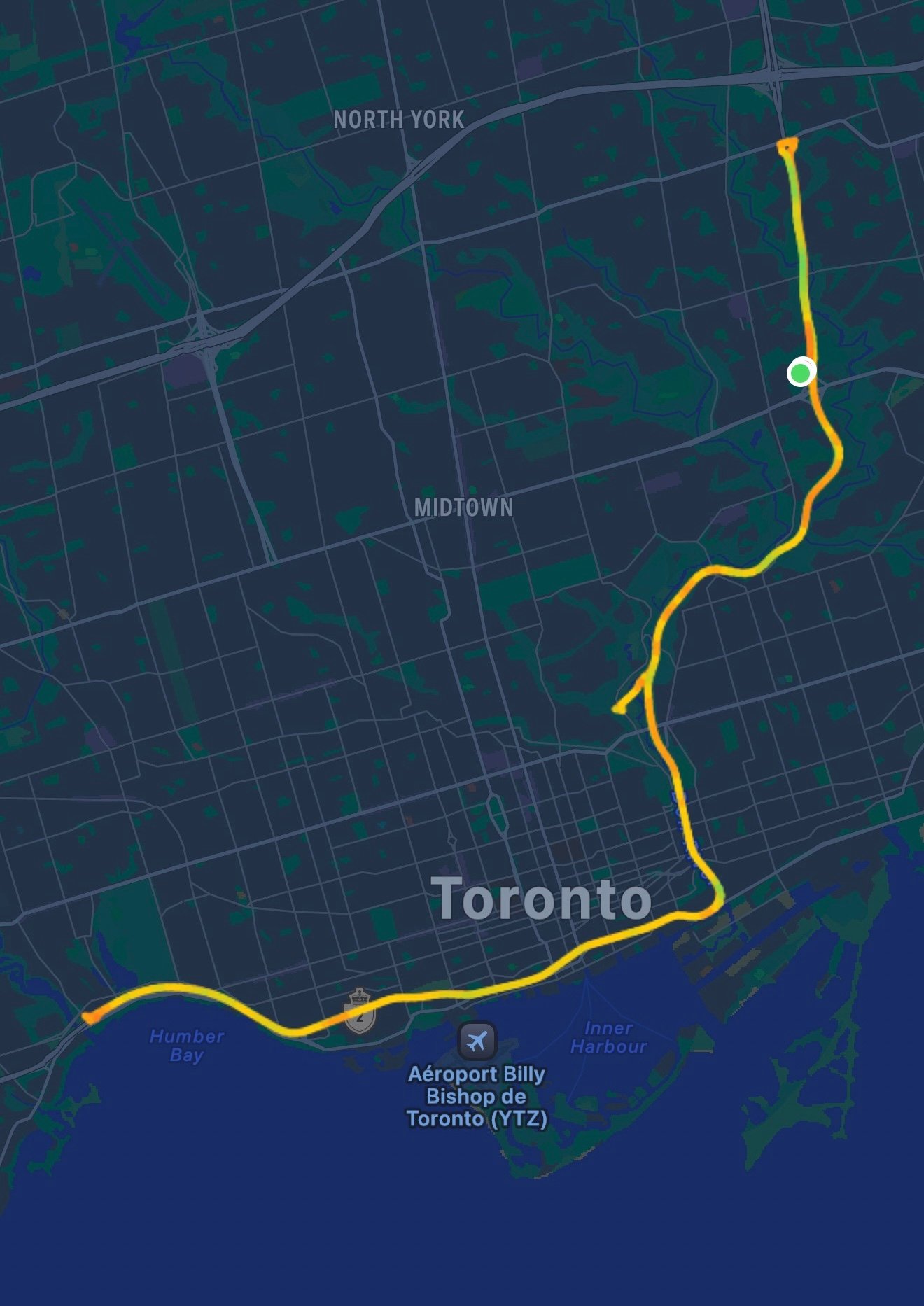
    Yesterday was the annual Bike for Brain Health ride in Toronto. It was an absolutely beautiful morning (much warmer than last year) and I rode 60 km. I’m sorry, I didn’t have it in me to do the 90 km circuit. I’ll try to be more committed next year.

    The good news is that Bianca didn’t go into labour while I was on the DVP and so I didn’t need to show up at the hospital in full spandex. While clearly suboptimal, I feel like that would have made for a useful story to embarrass our daughter with in the future.

    It’s starting to feel a lot like summer in the city and with that comes the feeling of nostalgia. There’s something obviously magical about this time of year, and this past weekend was particularly nostalgic for me because on Friday I also had my 25-year high school reunion.

    Unnecessary details: I went to two different high schools and this reunion was for the first one, which was also my elementary school. It was nice of them to invite me.

    Seeing friends that, in some cases, I hadn’t seen in over 25 years reminded me that you can’t replace the people that you grew up with. High school is a high-definition time.

    Among many other things, it’s when you’re figuring out which clique you belong to, what music defines you, what it means to nervously ask a girl out on a date (and have her say no), and what it’s like to have your heart broken.

    My unproven theory (rigorously developed over the weekend) is that you will always share a unique bond with the friends that you had during this period of personal development. I mean, they were there during the really awkward years.

    We also had small class sizes and everyone knew everyone. I’m sure that helped. I’m still close with a number of people from high school and from elementary school, but this weekend reminded me that I should make even more of an effort.

    I’d also like to be a better cyclist, but let’s not get ahead of ourselves here. Something tells me that I’m going to have less rather than more free time going forward. And I can’t wait.

    Regularly scheduled city-building programming will resume tomorrow.

  • Ontario’s “new” new home HST rebate seems to be working

    May 31, 2026 · View original


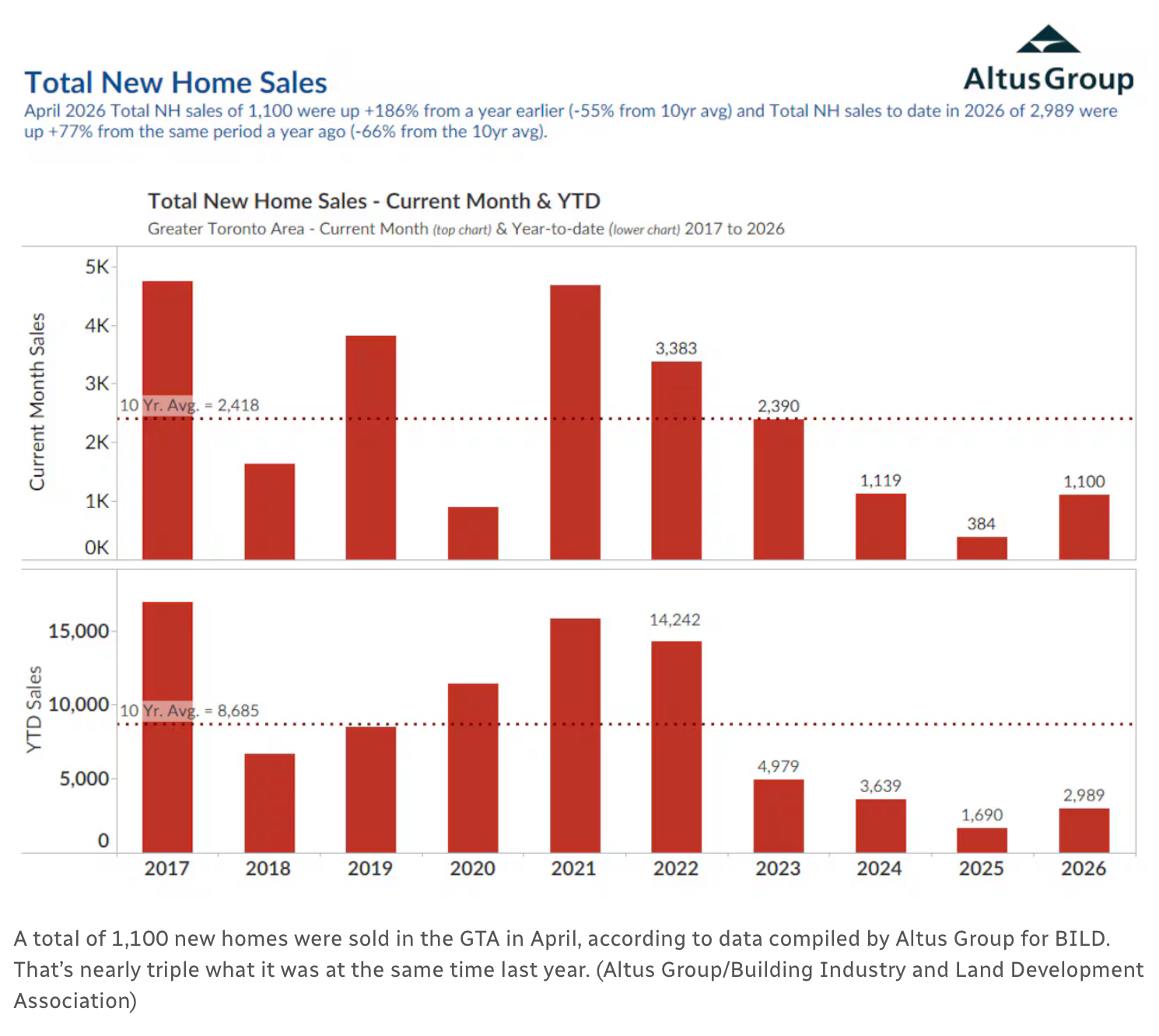
    According to recent data from Altus Group and BILD, a total of 1,100 new homes were sold across the GTA in April. This is a noticeable increase from 384 in April 2025, though it’s still below the 10-year average of 2,418.

    Importantly, this was the first month that new home sales could qualify for Ontario’s new HST rebate, and the data suggests that the program is starting to have a positive effect on the market.

    But let’s not forget that this policy is not yet fully enacted.

    The window for buyers is open and everyone fully expects the required federal legislation to pass, but that has not happened yet. The result is that there’s still friction around how exactly the rebate will be administered.

    As things become clearer, I suspect we will see an even greater uptick in new home sales.


    Cover photo by Patrick Tomasso on Unsplash

    Chart via the CBC

  • 1 Kid, 1 Condo

    May 30, 2026 · View original


    The countdown is on. Our baby girl will be arriving at some point in the near future (we’re on her schedule) and so I think you should all expect to see more baby-in-an-urban-condo-related content.

    If you’re familiar with planning in Toronto, you’ll know that there are specific urban design guidelines related to children in vertical communities. (The final 2020 report can be found here.) They include neighbourhood guidelines, building guidelines, and specific unit guidelines, which include, among other things, recommendations for “ideal” family units.

    Why all of this matters is that approximately 95% of the new housing built in the City of Toronto today is now multi-unit housing (buildings greater than 5 storeys). Our future is vertical. So even though only about 32% of all households with children currently live in a multi-unit community (Toronto proper figure), it’s not hard to imagine this number going up. Either that, or we’re left with more sprawl, plummeting birthrates, and a bleak, childless city.

    As I was writing this post, I asked my wife what she thought would be the biggest benefits and drawbacks of having a kid in a condo. On the positive side she said she likes the safety of being in a building and our nice walkable, urban community. On the negative side, her mind went straight to stroller management and general space constraints.

    Indeed, when you visit friends and they have a driveway big enough to park an aircraft, a basement with a climbing gym for the kids, and bedrooms bigger than many urban apartments, it’s hard not to think to yourself, “Yeah, you know what, maybe this would be nice!”

    Interestingly enough, neither of us thought once about elevators. We live in a mid-rise building and never have to wait more than a few seconds. Now onto stroller management. Right now, it’s sitting folded in our front hall closet:

    It fits nicely, but it’s obviously going to be work to constantly fold it up and put it away. We’ll see how that goes. We are, however, fortunate in that we have two floors in our place, so it is house-like in that there’s greater physical and acoustic separation between the main living areas and the bedrooms. We also have a good-sized outdoor space, but a backyard with grass it is not.

    Back in the day, I used to enjoy following a blog out of Vancouver called 5 Kids, 1 Condo. Adrian Crook stopped updating in 2020 (presumably his kids grew up), but it was a good example that home is not a housing typology; it’s both a physical and psychological space where humans (hopefully) feel a sense of comfort and belonging.

    As our urban home grows, I’m looking forward to sharing what we learn along the way on this blog. It feels extremely relevant to the work that many of us do as city builders.

  • Beautiful urbanism is not a housing affordability strategy

    May 29, 2026 · View original


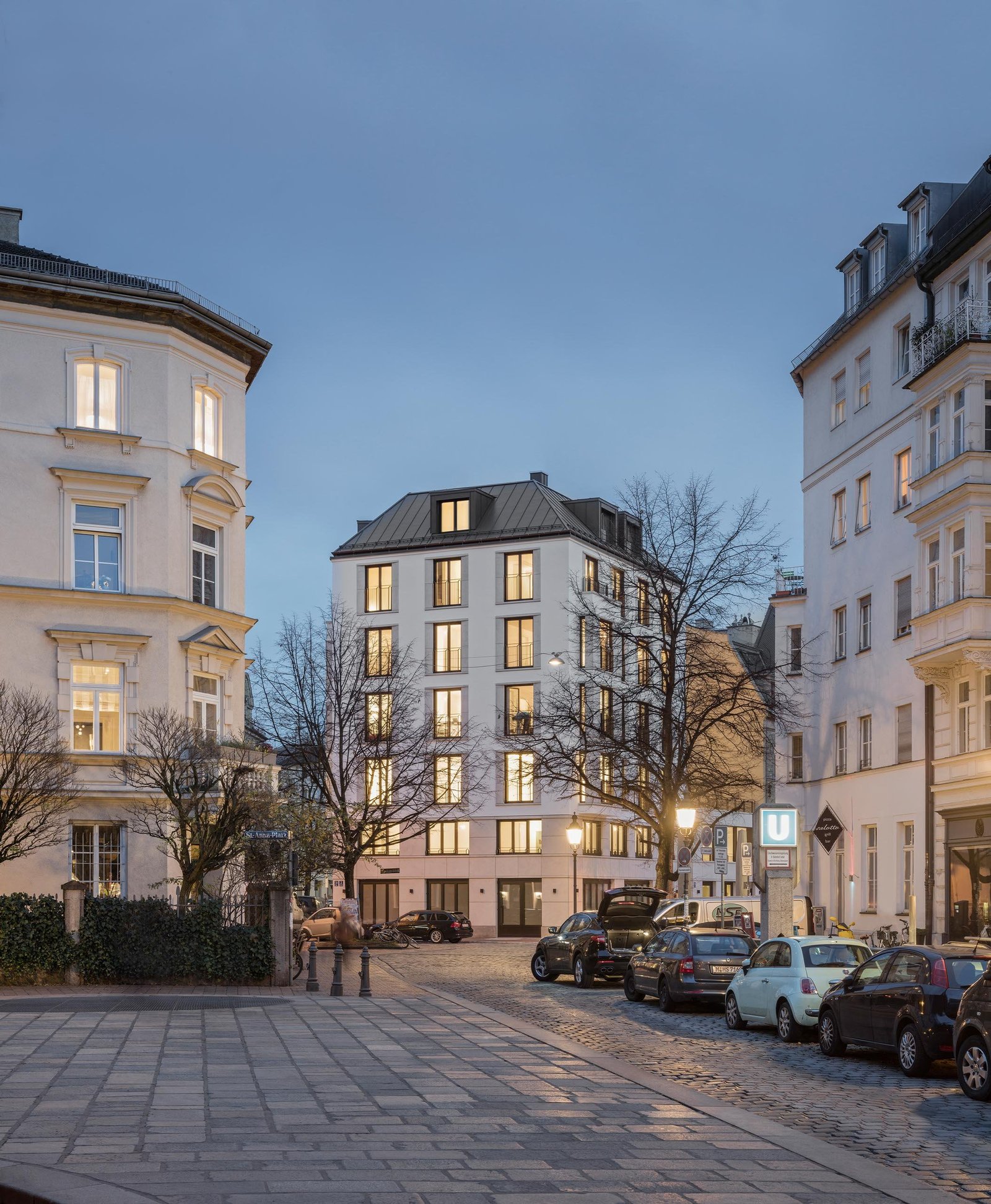
    I recently tweeted this photo of St.-Anna-Strasse 16 in Munich (the building in the centre) along with a pithy comment about how I really like the look and scale of this neighbourhood. It’s beautiful, right? The tweet blew up and, as of right now, it has over 170k views. Pithy comments with pretty pictures always seem to outperform anything more nuanced that I might share. But in the spirit of yesterday’s post about housing affordability, let’s dig a little deeper.

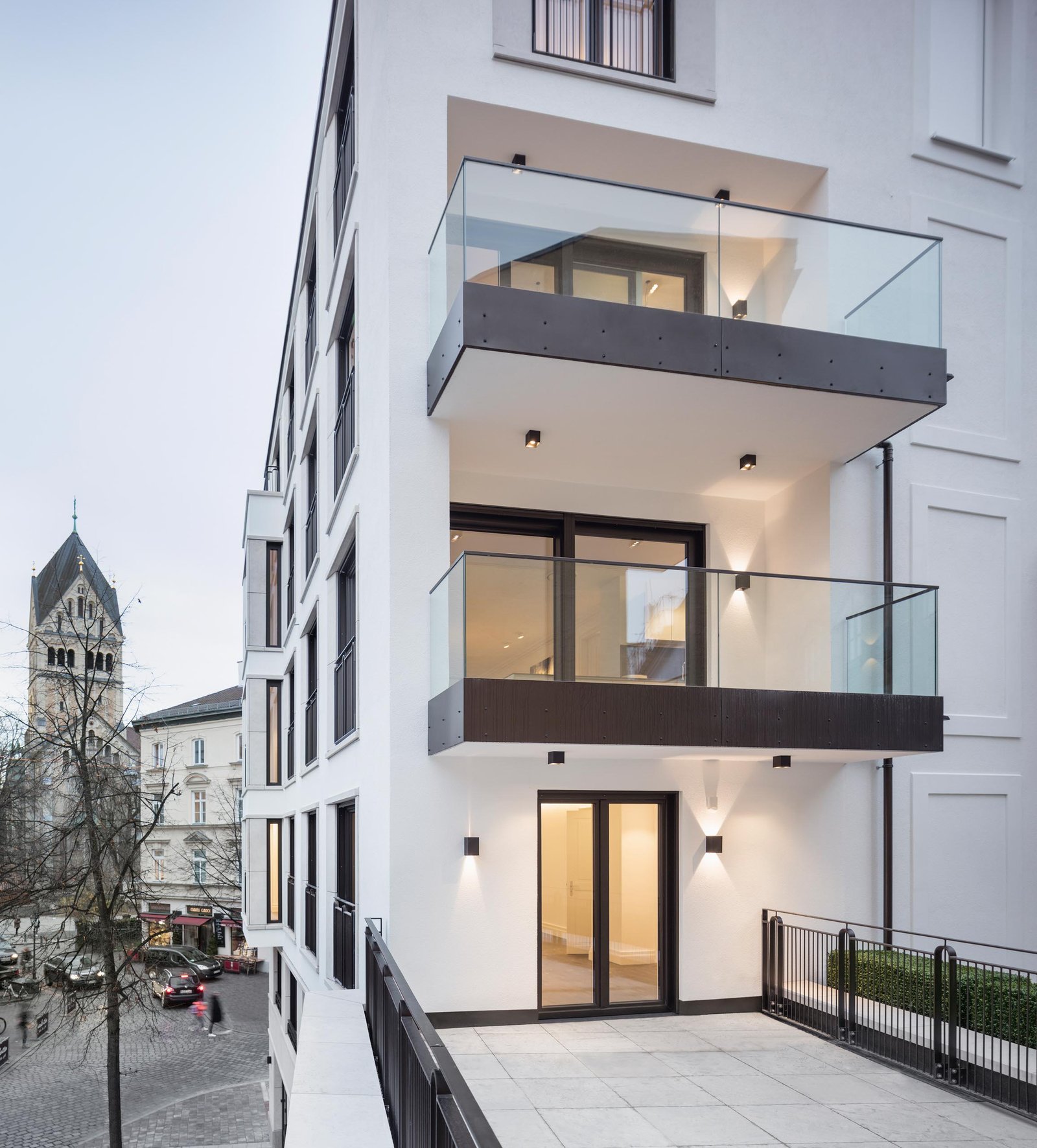
    Developed by Legat Living and designed by Munich-based Landau + Kindelbacher, the mixed-use building is located in Lehel, which I understand is one of the most desirable areas in the city. It’s about 960 m2 and has five apartments (ranging from 140 to 200 m2) and one commercial unit at grade. Each home has direct elevator access and its own landing. To give you a better sense of the suites, here’s a photo of the rear elevation:

    What is clear is that this is a luxury, boutique offering. Based on a cursory review of the Munich real estate market, Lehel seems to be the most expensive neighbourhood, with an average apartment price of €12,468.33/m2. If we apply this average to their smallest apartment, that’s a starting price of €1,745,566. But presumably, this isn’t your average building. It was completed in 2020, so I’m going to assume these homes sold for meaningfully more.

    All of this leaves us with a really beautiful building and a nice urban scale, but certainly not the secret to a magically affordable city. This is not a criticism of the project by any means. I stand by my original tweet. It’s a beautiful development, but it does demonstrate some of the affordability challenges of building urban. Legalizing urban infill housing is not a silver bullet in and of itself.


    Photos via Landau + Kindelbacher

  • Is Canadian urbanism failing?

    May 28, 2026 · View original


    So:

    > Urbanism is failing in Canada, and a two-decade-long effort to reduce sprawl through policies such as urban growth boundaries has caused sprawl to accelerate due to the leapfrogging effect, in which development is pushed out to smaller communities without transit, leaving middle-class workers facing long daily commutes back to the metros where their jobs are located.

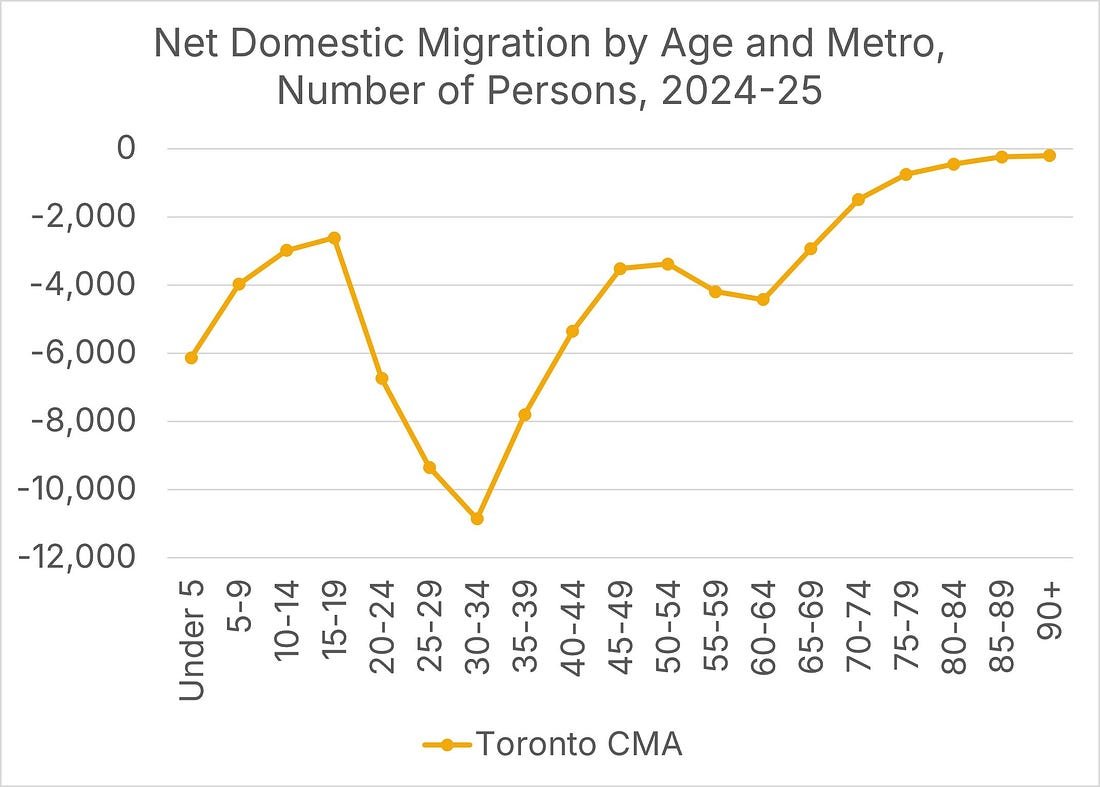
    Indeed, the data show that net migration out of Canada’s largest metro areas is particularly strong among those early in their careers (late-20s to mid-30s). In the words of Mike Moffatt from the Missing Middle Initiative, “Canadians are choosing affordability over density.”

    This statement highlights the inherent tension between dense, walkable communities and car-oriented sprawl. The former may be nice, better for the environment, and advantageous for agglomeration economies, but the kind of built form that comes along with it tends to be fundamentally more expensive to build.

    Now, we can get into a debate about transportation costs, environmental costs, and how people tend to discount the value of their time relative to direct costs, but regardless, it is clear that affordability is dictating where people move.

    So Moffatt is not wrong in stating that the communities that we urbanists often like to celebrate as “success stories” are, in fact, the ones that many young people are leaving. And in my view, this highlights a missing success criterion. Great design and urbanism are all well and good but, how attainable is the resulting housing?

    The most promising solution right now appears to be happening on the multiplex front. It’s the most cost-effective way to build multi-unit homes, and I think our goal should be to apply this same general approach — as-of-right, cost-effective builds — to larger and larger housing typologies.

    If we can unlock the same market enthusiasm for six-storey wood-framed builds, then I think we’ll really be on to something.


    Cover photo by Craig Cook on Unsplash

    Chart from the Missing Middle Initiative