Daily insights for city builders, delivered every morning at 6 AM ET. I’m Brandon Donnelly — a Toronto-based real estate developer and founder of Globizen. I’ve been writing here since 2013.

Category: Uncategorized

  • No is the second best answer

    February 6, 2026 · View original


    Many years ago, a real estate broker said this to me, and it has stuck ever since. I often go back to it in my mind. The logic behind it is as follows.

    The best answer is customarily “yes.” “Would you like to invest $100 million into my development project?” “Yes, I’d love to! Where should I send the money? I’ll do that right now.” This is the outcome you want.

    The second-best answer is “No, I don’t like you and I don’t like your project.” This is not what you want to hear, and it will probably sting at first, but it’s the next-best answer in that it offers complete certainty. You know where the person stands, and you can move on.

    The absolute worst answer is a “no” disguised as a “maybe.” “I don’t know. Seems interesting. We’ll see. Let me talk to my partners about it and get back to you.” This answer creates false hope and delays things. Whenever possible, you want to suss out and avoid delaying an inevitable “no.”

    It’s, of course, okay to need to think about things and do due diligence when it comes to important decisions, but ultimately, the goal is to get to either a “yes” or a “no” as quickly as possible.

    It’s okay to just say “no.” In fact, it’s the second-best answer you can give to someone.


    Cover photo by Ryoji Iwata on Unsplash

  • Why record rentals won’t stop our looming housing shortage

    February 5, 2026 · View original


    As most of you know, the Toronto housing market has shifted its attention from condominiums to rentals. This is out of necessity. According to the Toronto Regional Real Estate Board, the GTA saw approximately 71,392 condominium apartments leased (counting only those leased through MLS) in 2025.

    | Quarter | Units Leased | Y-o-Y Change | | — | — | — | | Q1 2025 | 14,797 | +16.7% | | Q2 2025 | 20,417 | +16.6% | | Q3 2025 | 22,491 | +20.2% | | Q4 2025 | 13,687 | +16.0% | | Total | 71,392 | |

    These increases are a result of having no other option. As demand has waned for new condominiums, a greater number of investors have decided to rent out their new condos. If you’re a tenant looking for a new home to rent, this has been good news.

    At the same time, Urbanation just reported that a total of 9,821 purpose-built rental apartments started construction in 2025, representing a 42% increase from the year prior. This is the highest annual total since the 1970s.

    At year-end, this resulted in a total of 27,815 purpose-built rental apartments under construction in the Greater Toronto & Hamilton Area. And like individual condominium buyers, developers are doing this because there is, in most cases, no other option.

    But while these may seem like large numbers, it’s important to keep in mind that new condominium completions are currently on a downtrend toward zero completions in the coming years (for all intents and purposes).

    Even with rental starts approaching 10,000 units per year, it’s not enough to replace the condominium supply that is starting to evaporate. Based on current sales and starts, 2029 looks to be the year where we’ll hit our housing supply bottom.


    Cover photo by Nadine E on Unsplash

  • That’s a wrap

    And why urban messiness is an important feature of cities

    February 4, 2026 · View original


    I’m back in Toronto. And another “fresh pow annual” is in the books.

    The BC interior is a specific kind of ski and snowboard trip. It’s not about dancing on tables in neon onesies while Champagne gondolas fly overhead. It’s about chasing champagne powder with like-minded middle-aged men, all pretending that they don’t otherwise live a sedentary, low-range-of-motion lifestyle for the balance of the year.

    Both have their merits.
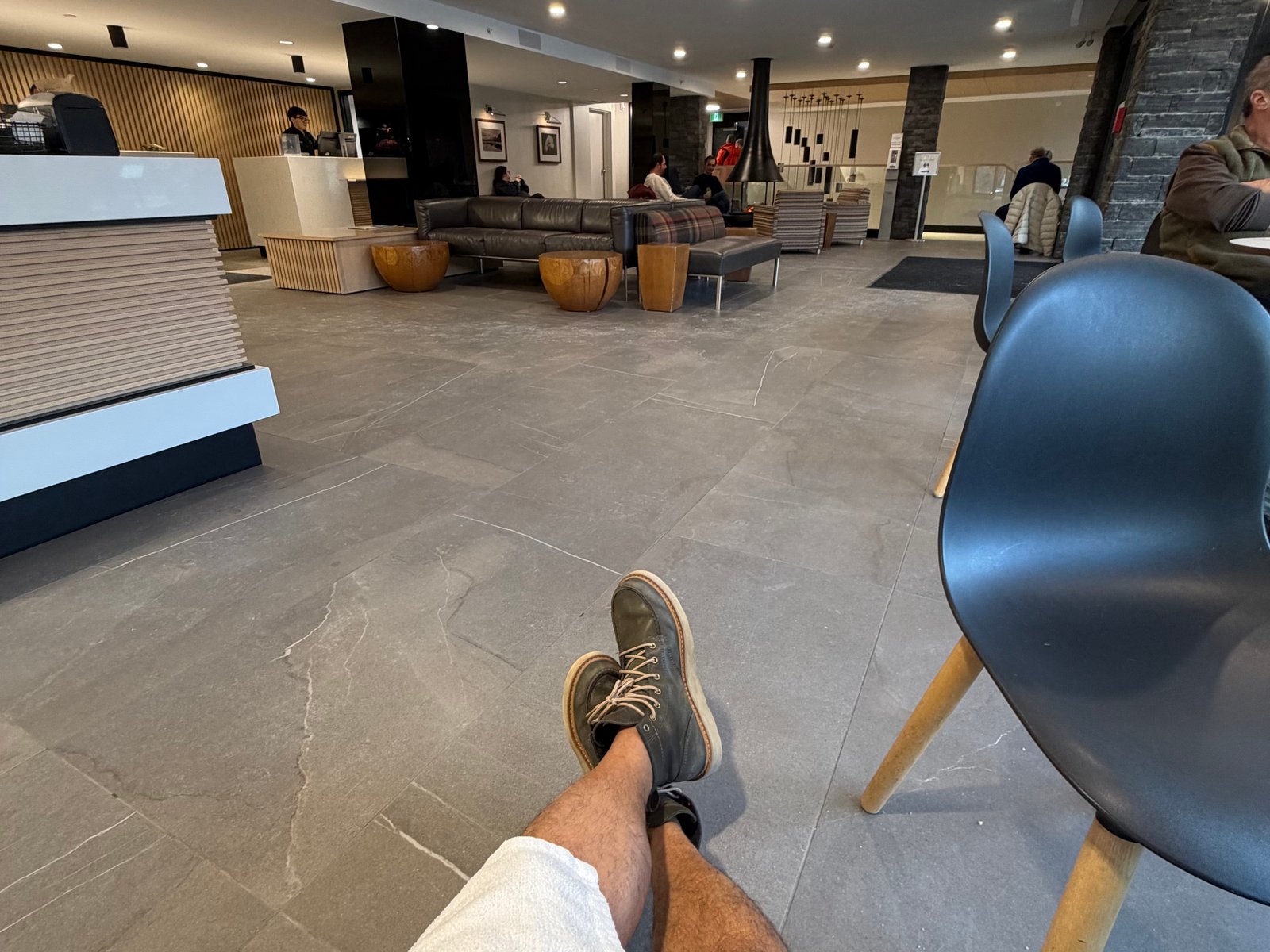

    We stayed in four different accommodations for this trip, and one of the things that became very apparent is that everyone is trying to over-optimize around “good service.” In each case, I was getting text messages and emails before the stay, during the stay, and after the stay.

    “Here’s how to prepare before check-in.” “Is there anything we can do to make your stay more enjoyable?” “How was your stay?” “Please share your experience with us here.” In one case, I even received a phone call from the front desk as soon as I got to my room: “We just wanted to see if everything in your room is to your liking.”

    On the one hand, this level of communication and responsiveness is fantastic when you do need something. But on the other hand, it can be overwhelming. Blasting everyone with automated text messages and emails does not, in my opinion, stand out as exceptional hospitality, especially since everyone now seems to be doing it.

    Outstanding hospitality is emotional, rather than technical.


    In city-building news, Bloomberg recently published an article about why cities should embrace “messiness.” In it, they cite a book that was assembled by some fellow Torontonians:

    > This premise — that urban planning’s efforts to impose order risk editing out the culture, character, complexity and creative friction that makes cities cities — is a guiding theme in Messy Cities: Why We Can’t Plan Everything, a collection of essays, including Thorne’s, gathered by Toronto-based editors Zahra Ebrahim, Leslie Woo, Dylan Reid and John Lorinc. In it, they argue that “messiness is an essential element of the city.” Case studies from around the world show how imperfection can be embraced, created and preserved, from the informal street eateries of East Los Angeles to the sports facilities carved out of derelict spaces in Mumbai.

    Messiness and allowing for ground-up urban interventions are themes that I have written a lot about on this blog over the years. I think we have gone overboard with rules and regulations, to the point that we stamp out many of the things that make cities so wonderful.

    Top-down planning will never get everything right. It’s impossible. And the big thing about over-planning is that, in the end, we don’t actually know what we’re missing out on. We don’t know what might have been possible if only we had allowed for it or were more flexible in our approaches.

    Messiness is a feature of cities, not a bug. We should be embracing it.

  • Waymo AV hits child in Santa Monica

    February 3, 2026 · View original


    On January 23, a Waymo autonomous vehicle hit a child in Santa Monica, California. The age and identity of the child are not public, but “minor injuries” were reported. Waymo responded with this blog post where they essentially argued that “if this had been a human driver, the accident would have been worse.”

    > The event occurred when the pedestrian suddenly entered the roadway from behind a tall SUV, moving directly into our vehicle’s path. Our technology immediately detected the individual as soon as they began to emerge from behind the stopped vehicle. The Waymo Driver braked hard, reducing speed from approximately 17 mph to under 6 mph [~9.7 km/h] before contact was made. > > To put this in perspective, our peer-reviewed model shows that a fully attentive human driver in this same situation would have made contact with the pedestrian at approximately 14 mph. This significant reduction in impact speed and severity is a demonstration of the material safety benefit of the Waymo Driver.

    All car accidents causing human injury are unfortunate, but car accidents involving AVs are obviously more noteworthy right now. In my mind, it makes sense that a Waymo should be more responsive than a human driver in the face of a pedestrian jumping out into a roadway.

    But being “less bad” is not going to win everyone over. The accident is being investigated to ensure “the Waymo AV exercised appropriate caution given, among other things, its proximity to the elementary school during drop off hours, and the presence of young pedestrians and other potential vulnerable road users.”

    The headline is suboptimal for AVs, but it’s very possible the Waymo did everything it could, and did it better than any one of us could ever do. We shall see.


    Cover photo by Andri Aeschlimann on Unsplash

  • France opens its seventh urban cable car line

    February 2, 2026 · View original


    I was surprised to learn this week (I should have already been aware) that France operates seven urban cable cars (or gondolas). Its first was built in Grenoble, at the foot of the Alps, in 1934, and its latest opened in December 2025 in the country’s capital region.

    Called Câble 1 (or C1), this latest line is 4.5 kilometres long, carries 11,000 passengers per day in 105 gondolas, and connects Villeneuve-Saint-Georges to the Métro Line 8 in Créteil (a southeastern suburb of Paris). The total trip takes 18 minutes, compared to an estimated time of 40 minutes by bus or car.

    Importantly, the project only cost €138 million, or about €30.6 million per km, which is about 10-15% of what a subway might have cost based on data from the Grand Paris Express. Estimates for the latter were over €1 billion, meaning it would have likely been a non-starter.

    Gondolas are most commonly used to navigate mountainous terrain, but they’re increasingly being used in urban settings to stitch together isolated communities. Forty minutes to eighteen minutes is a significant quality-of-life upgrade. I think more cities should be considering cable cars as a possible mobility solution.


    Cover photo via Région Île-de-France / Aymeric Guillonneau

  • Until next time Revelstoke

    February 1, 2026 · View original


    Revelstoke is out. Golden is in. But before we move on, here are several things I noticed about Revelstoke compared to the last time I was there in 2015.

    – It is clear that the city and resort have gotten significantly more popular (mind you, when we came in 2015 the weather was suboptimal). – The city has been investing in great wayfinding signage (separate post here). – Monster luxury homes have been built around the resort and across the valley. I don’t recall seeing these, or at least this many, on my last trip. – A modest single-family house in the city now lists for around $1 million. – Anecdotally, I can also say that I spoke to a number of people on the lifts who had moved from Toronto and other big cities in order to “retire” or “spend the winters” in Revelstoke. – The city and the resort were very busy over the weekend. The resort could probably use some more lifts and/or gondolas during these peak periods. – The après spots on the mountain were full. And there are fantastic restaurants downtown, a number of which are quite fancy. Think $50-60 entrées. – I noticed more Australians living/working in the city.

    I’m sure that the locals would rather that Revelstoke remain more under the radar. But that’s not what is happening. It’s quickly becoming a global destination for skiing, snowboarding, and other outdoor activities.

    I left feeling very bullish on its future.

  • Landfilling Toronto’s Parliament Slip

    January 31, 2026 · View original


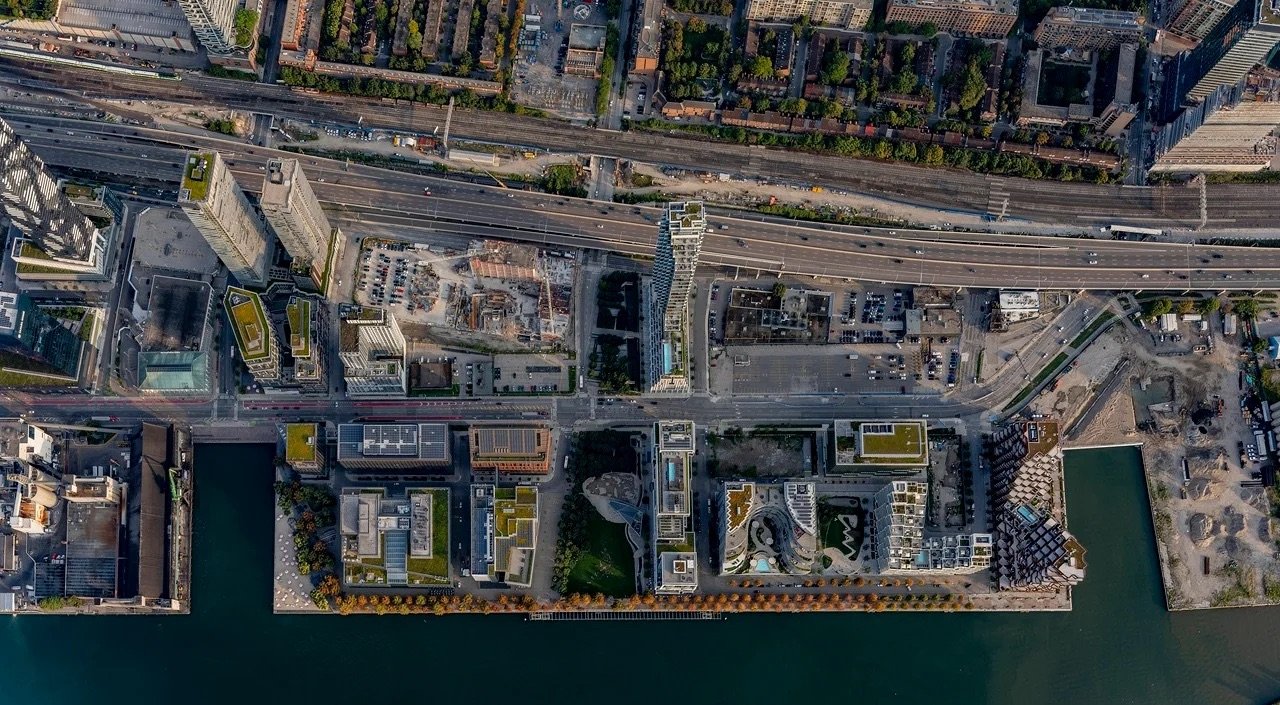
    Toronto’s East Bayfront has changed dramatically over the last twenty years. Remember when we used to complain that the waterfront was under-utilized?

    Here’s what it looked like circa 2005 (photo via Waterfront Toronto):

    And here’s what it looks like today:

    The waterfront has, in my opinion, become one of the nicest neighbourhoods in the city. I’m bullish on this part of Toronto. But it’s not done yet.

    One key piece of infrastructure that was just completed is the landfilling of a part of the Parliament Slip.

    If you go back to the previous aerial photo, you’ll see that the water’s edge now runs parallel to Queens Quay East in this section.

    This was an important piece of city-building work because it will allow Queens Quay to continue eastward to Cherry Street, establishing a new city grid that can be used for transit and future development in the area.

    If you’d like to see what it takes to landfill part of Lake Ontario, below is a time-lapse video, also from Waterfront Toronto.

    YouTube video

    If you can’t see it embedded in the post, click here.


    Cover photo from Waterfront Toronto

  • Can London really build 180,000 homes on its roofs?

    January 30, 2026 · View original


    As a general rule, building a new building is easier than trying to do surgery on an existing one, because you never know exactly what you’re going to find when you start the latter. But there are instances where surgery is necessary.

    According to Bloomberg, developers in London are becoming increasingly interested in the airspace above existing buildings, and it supposedly started because of some policy changes:

    > In 2020, then housing minister Robert Jenrick introduced reforms that relaxed rules to add airspace builds above existing buildings. Owners can now construct additional residential stories to either expand their own dwelling or to create new units altogether without going through full planning permissions, which are often a long and costly process. This was part of a broader set of reforms to boost housing supply, and the current Labour government has not shelved these changes.

    Here’s an example site listed for £150,000:

    > The site currently comprises the roof and airspace above a 3-storey mixed-use residential-led block (Block B) within The Glassworks Development. > > The existing development was constructed in 2017 and comprises 23 residential apartments plus ground floor commercial space, all of which are sold off on long leases.

    I had an old boss who was very interested in this idea. For him, it was “free” land and a way to further extract value from an existing real estate portfolio. Of course, it’s also a way to build new homes in already built-up cities. Some industry people think that London could accommodate up to 180,000 new homes using this strategy.

    But these are not simple builds. Can the existing structure and foundations support additional levels? How do you modify the existing elevator(s) while the building below remains occupied? How do you do the mechanical tie-ins without impacting the suite(s) below?

    All of this makes me wonder how feasible it will be for London to build 180,000 new homes in this way. If it can, that would be a great accomplishment, and one that other cities should aim to emulate. But regardless, I’d love to get under the hood of one of these projects.


    Cover photo by Travis Fish on Unsplash

  • Signage tells you more than just where to go

    January 29, 2026 · View original


    We arrived in Revelstoke, BC, yesterday afternoon. The last time I was here was in 2015, and already I can tell that a lot has changed since then. I’m sure I’ll have more to say on this over the next few days, but one of the first things that stood out to me was the city’s signage.

    In 2020, Revelstoke City Council approved a $3.2 million, multi-phase wayfinding plan designed by Cygnus Design Group. So, what I have been seeing are the first completed phases.

    Wayfinding signage serves (at least) two critical functions. The first, and most obvious one, is that it tells people where they are and how to get to where they likely want to go. The sign in the cover photo of this post is what you see right before you enter downtown.

    The second function of wayfinding signage is to send other signals. It communicates to visitors that things are well-managed, that the place is hospitable, and, most importantly, that the place attracts visitors from around the world. It conveys importance.

    Before I had even reached downtown, the signage made me think to myself, “Wow, Revelstoke has grown a lot since I last visited!” That’s the power of good communication, and it’s a vital part of placemaking.


    Cover photo from Cygnus

  • 15th annual

    Plus, Extell and Hilton announce new Waldorf Astoria in Park City

    January 28, 2026 · View original


    Whistler is out, the Interior of BC is in. Huge real estate deals are out, powder chasing is in. If you’re a long-time reader of this blog, you’ll know that I do a ski and snowboard trip with a group of friends each year around this time.

    Our last three trips were to Park City (where it snowed so much we lost power); Trois Vallées (which also served as my bachelor party and which involved equal parts snowboarding and dancing on tables); and Hokkaido (where it looked like Toronto looks right now).

    This year — for annual number fifteen — we’re headed to Revelstoke and Kicking Horse in the Selkirk and Purcell Mountains.

    On some trips we like to combine an urban trip with the mountains, so that we can also gawk at architecture and urbanism. That’s what we did in Japan last year. But this year’s trip is not about that. It’s about unadulterated time in the mountains.

    It has been a weird season for snow. The west coast has been too warm with not enough of it, and the east coast has been too cold with unusual amounts of it. I have no idea what’s in store for us this week, but here’s to hoping it looks like the cover photo of this post.


    In some related real estate news, Extell Development Company and Hilton just announced that they’ll be opening a Waldorf Astoria Resort and Residences in the new Deer Valley East Village.

    It’s going to have 132 hotel keys and 105 one- to six-bedroom branded residences ranging from 1,099 to 5,155 square feet. Of the 105 branded residences, 56 will be “hotel residences” located above the hotel, and the remaining 49 residences will be in a more exclusive standalone residential building.

    Architecture for the project is by KPF and the interiors are by AvroKO.

    If you missed my recent post about the East Village and the new Four Seasons that is also currently under construction, click here.


    Cover photo by Zach Wear on Unsplash