
The City of Vancouver recently published this video talking about missing middle housing. For those of you who are following this trend (and reading this blog), there won’t be a lot that is new in the video (although Uytae Lee is great). But I’m sharing it here, anyway, for three reasons. One, it’s an example of Toronto being ahead of Vancouver, which wasn’t the case with laneway housing. Vancouver started allowing these first. Two, it is further evidence that this shift toward intensifying low-rise residential neighbourhoods is really happening — and gaining momentum — all across North America. And three, the City of Vancouver is about to bring forward new multiplex housing policies. So now is a good time to get involved and say things.
Category: Vancouver
-
Vancouver proposes empty stores tax
When you buy commercial real estate, you are buying a stream of future cash flows. Sometimes these cash flows are already in place and sometimes these cash flows are based on future expectations. Either way, as a general rule, it is better to have more rather than less rent.
But there are some short-term exceptions to this rule. If there is a higher and better use for your property and you’re planning to redevelop it, you probably don’t want to encumber the asset with any leases. Certainly not with any long-term leases. So vacant is likely better.
Another possible short-term scenario might be that the market has moved and you’re no longer able to command the same rents. But instead of adjusting your expectations, which would negatively and immediately impact the value of your asset, you decide to hold out in the hopes that the market will return.
Yet another more dire scenario could be that the market has moved entirely and you’re no longer able to find tenants at any price. But this isn’t a choice and so I wouldn’t consider it an exception to our more-rent-is-better rule. This is a systemic kind of problem.
I am going to assume that for Vancouver to propose an empty stores tax the belief is that scenario two, or some permutation of it, is what is playing out on retail streets. It’s not that the tenants aren’t out there (because of changes in the retail landscape), it’s that landlords are greedy and want too much money.
But my view is that this proposal ignores (at least) two things.
One, you can’t punish and tax your way to vibrant urban streets, particularly if something structural is going on in the market. If this were the case, the way to revive a declining post-industrial city would just be to tax any vacant buildings.
And two, the fundamental value of commercial real estate is, again, determined by rents. So sooner or later the rule of more rent being better than less rent will take hold. Vacancies are not in anyone’s best interest.
-
A walking tour of Vancouver House
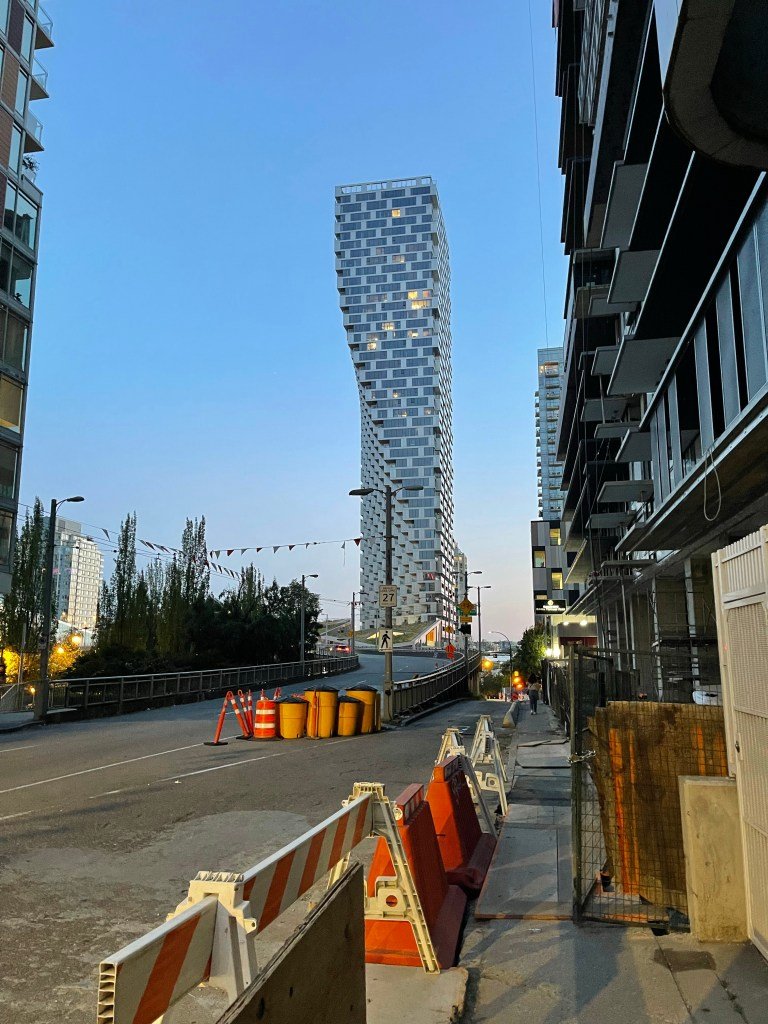
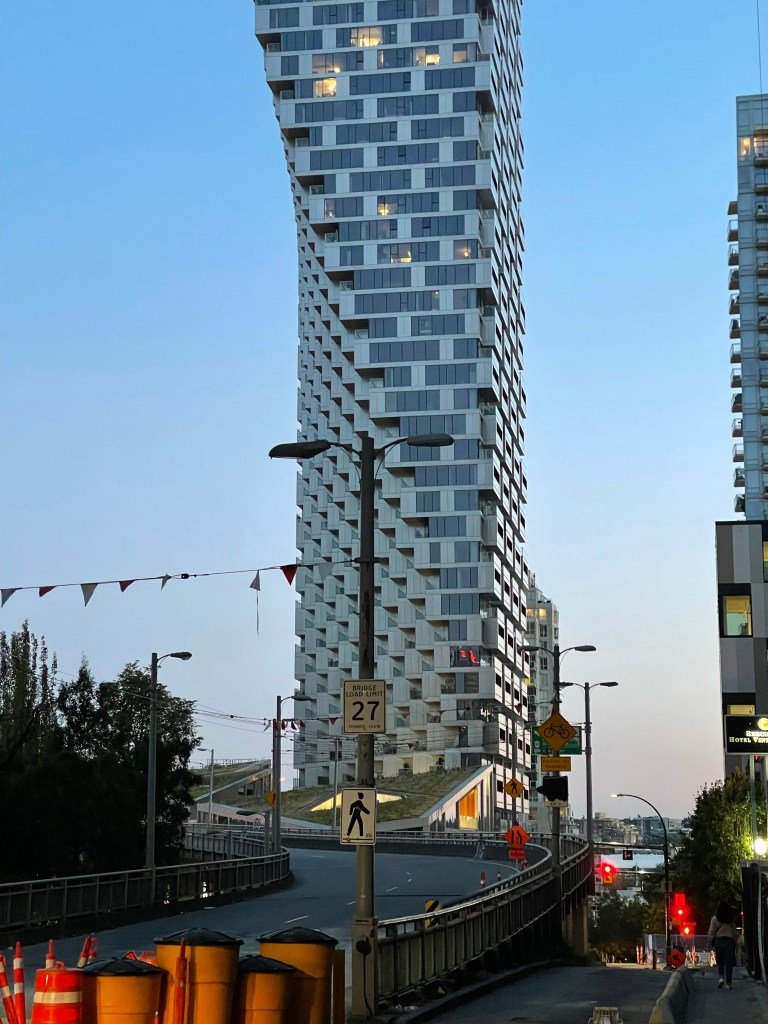
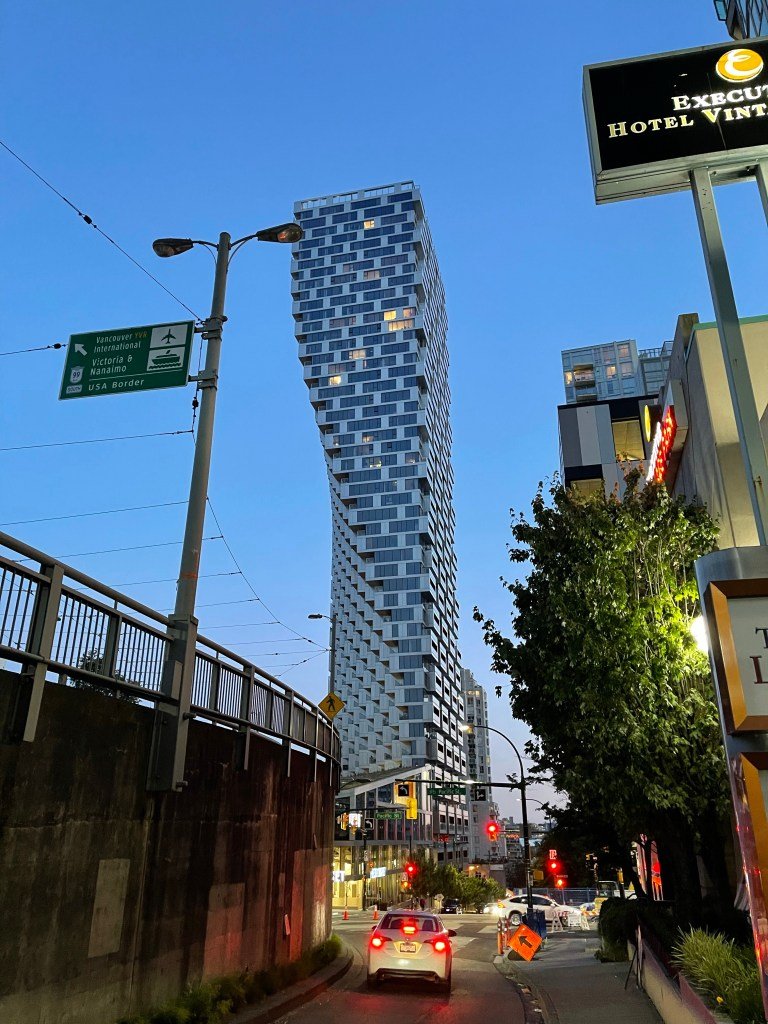
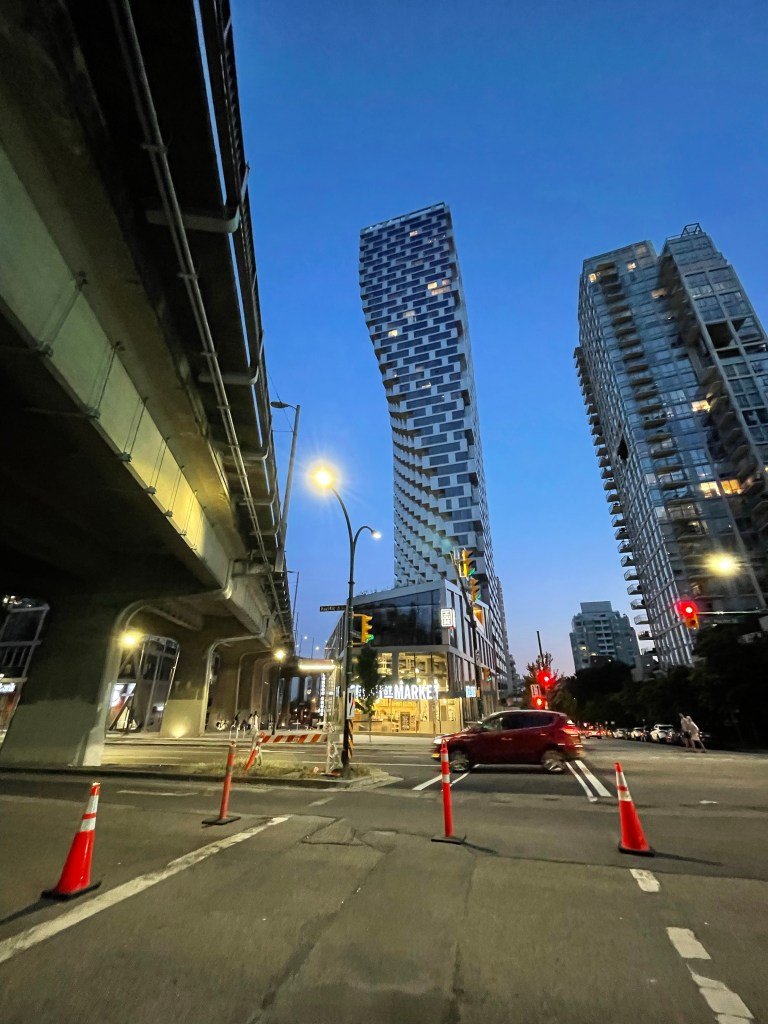
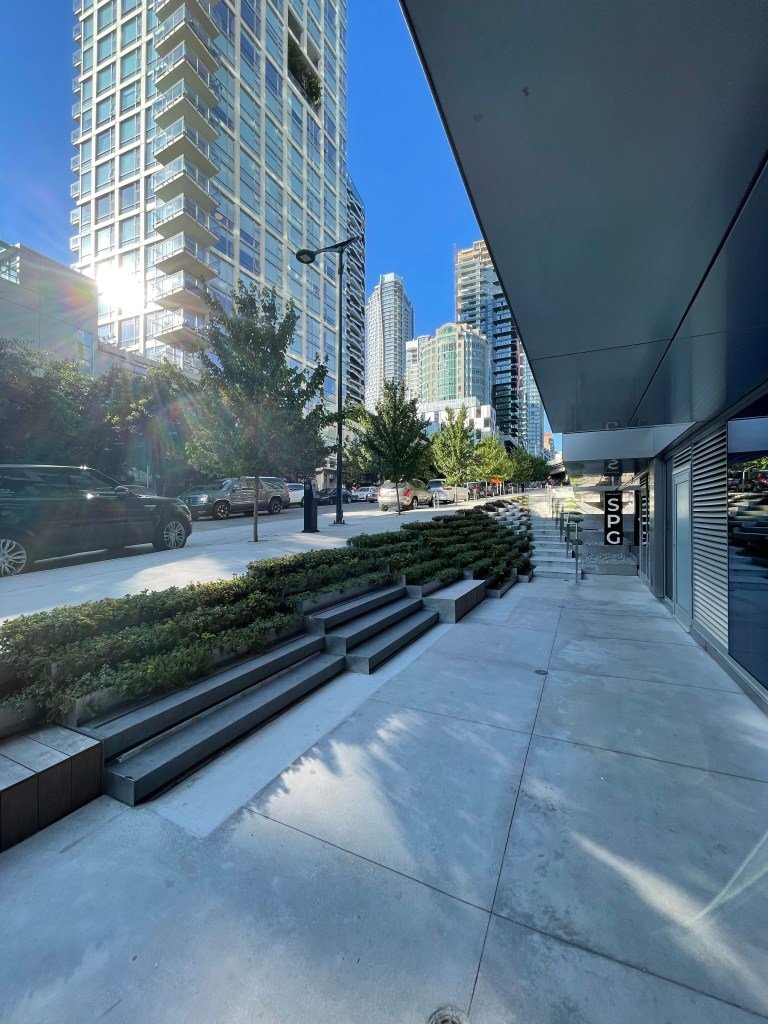
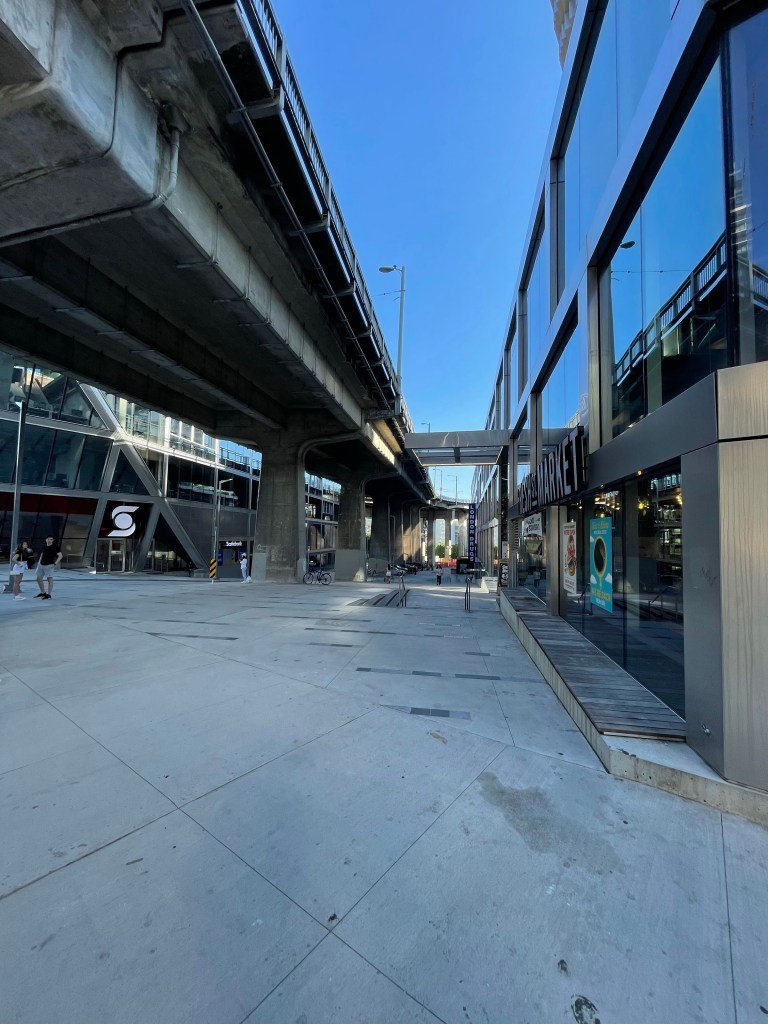
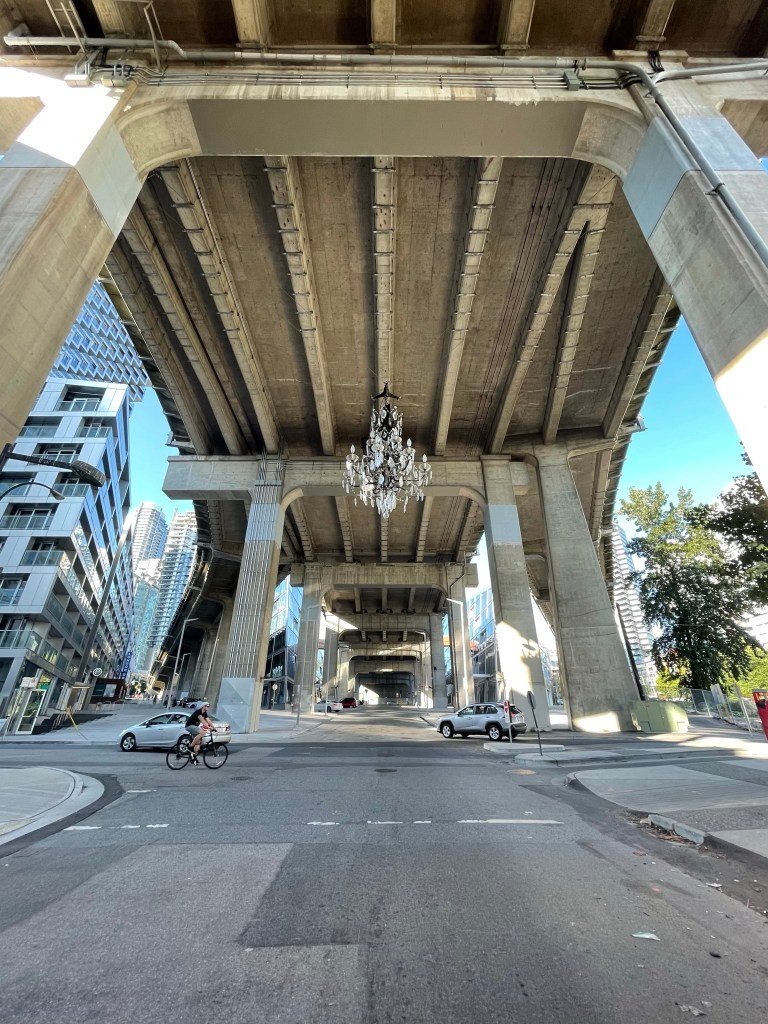
Vancouver House is such a wonderful example of great city building. It’s an awkward site hugging the off ramps of the Granville Street bridge. It’s less than ideal.
And yet Westbank (developer) and Bjarke Ingels Group (architect) have turned it into something remarkable. The tower is incredibly unique, though it is not form for the sake of form. It is a direct result of the site’s setback constraints.
But perhaps more importantly, the project manages to activate the ground plane and underneath the off ramps through its architecture, a mix of uses (retail and office) and a giant chandelier.
So if you happen to find yourself in Vancouver, I would encourage you to visit the Beach District and do a walking tour of Vancouver House.
There’s also a great Italian restaurant in the base of the tower (Autostrada Osteria) that you should try once you’ve finished your tour.
-
Speed and simplicity in Vancouver
This is a good follow-up to my recent post about the barriers to developing mid-rise here in Toronto. I have just learned (thanks to Michael Mortensen) that Vancouver has proposed some specific zoning changes that are intended to increase the supply of new rental housing.
Oddly enough, some of these proposed changes are consistent with what I put forward in my post and include 1) streamlining the development approvals process and 2) simplifying the allowable built form. i.e. Fewer step-backs.
Here’s a capture from the report that went to City Council:
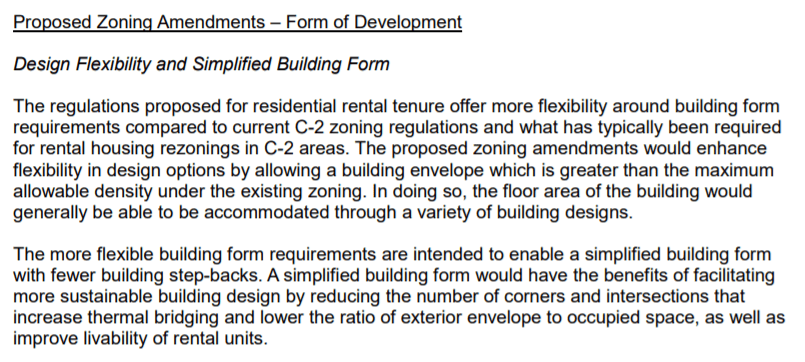
The report is dated May 2020 and I truthfully don’t know the current status of these proposed changes. I’m sure Michael would have all of the details. But regardless, the report very clearly acknowledges that lengthy entitlement timelines are a barrier to new rental housing, as are more complicated building forms. Speed and simplicity can go a long way.
For the full staff report, click here.
-
Parasol installation unveiled in downtown Vancouver
Tangible, which is a Vancouver-based art and design studio, has just unveiled its latest “immersive experience.” It’s called Parasol and it can be found in downtown Vancouver in front of the Bentall Centre near the intersection of Dunsmuir and Burrard. An illuminated canopy-type structure, the 40 fins that make up each Parasol are equipped with LEDs and are designed to mimic the underbelly of a mushroom. If you can’t see the embedded video above, click here.
I am a big fan of urban lighting and I have long felt that we don’t do nearly enough to light our cities in ways that are fun and playful and that promote a stronger sense of place. This is particularly true during the winter months where, in cities like Vancouver, the sun sets before many people even leave work. So I am sharing Parasol with all of you today as a kind of call to action: Let’s be more fun with our cities. This is a great example for how to do that.
-
Vancouver is probably getting transport pricing
Earlier this month, Vancouver City Council approved a plan that will have staff developing a “transport pricing” strategy for the city’s core. (Transport pricing is just another term for road pricing or congestion pricing.) The plan is for staff to go away and work on this and then report back to Council with a pricing strategy sometime in 2022. At that point Council will look to approve the plan and it will all get implemented by 2025. Or at least that’s the plan. I remain somewhat skeptical because Vancouver certainly isn’t the first Canadian city to look at pricing its roads and congestion. Toronto has tried and failed. And so if Vancouver does end up doing this, they’ll likely be the first city in the country.
So why are they doing this, or least trying to do this? Well, if you’re a regular reader of this blog you’ll know that I’ve been a supporter of road pricing for many years. Lots of old posts over here. But in the case of Vancouver, their stated goals are really as follows: 1) They want to reduce congestion and encourage people to use other forms of mobility; 2) they want to reduce carbon emissions by 50% by 2030; and 3) they want another revenue stream that can be used to fund things like transit and active transport. Put differently, it’s about pricing/taxing the things that we want less of and then using that money to pay for the things we want more of.
Some of you might be wondering whether this is a good idea at a time when the centralizing pull of cities is being called into question. But I think it’s important to keep in mind that Vancouver thinks it needs at least five years to implement its transport pricing. We’ll be living through the roaring twenties by then. I am also a firm believer that cities are going to snap back significantly faster than most people think.
-
Vancouver approves new rental housing policy
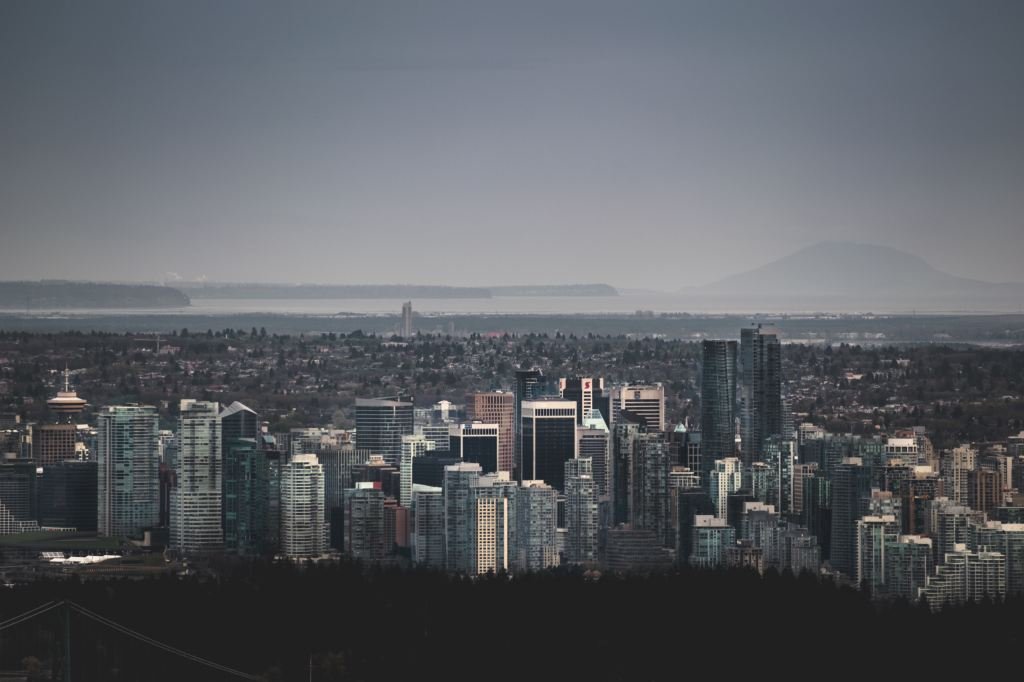
New rental housing measures were approved by Vancouver City Council this week. I haven’t gone through the policies in the detail (you can do that here), but they aim to increase rental housing supply by doing things such as “pre-zoning” for 6-storeys on main streets and by allowing rental apartments to be built on some side streets (up to 150m away from arterial roads).
Here’s an excerpt from the staff report:
Enabling new rental housing in all neighbourhoods would support an increase in supply and choice. The incentive programs have concentrated secured market rental development in selected neighbourhoods and along arterial streets. This has been effective at creating larger multi-unit projects, but has created an inequitable environment, where renters have limited housing choice. Expanding program coverage into low density areas, areas zoned for single detached housing and non-arterial locations to allow for a greater mix of structure types and densities (e.g. townhouses, small apartment buildings) are important considerations moving forward.
It is yet another data point for what I wrote about here — the loosening of single-family zoning. Turns out, it can be difficult to meet the demand for new housing when you set aside a large part — or most — of your land for low-rise single-family homes. And there seems to be growing acknowledgement of that on the part of cities.
Photo by Aditya Chinchure on Unsplash
-
Paris and Vancouver population densities compared
In this January 2018 report from the Fraser Institute, they pegged the average population density of Paris to be about 21,067 inhabitants per square kilometer (2014 population year). It is the second densest city in their report after Hong Kong, but the densest in Europe. By comparison, Vancouver sits at around 5,493 inhabitants per square kilometer (2016 population year).
Now, these are of course city averages. Some neighborhoods will be higher and some will be lower. According to a January 2018 study by Alasdair Rae — who is a works in the Department of Urban Studies and Planning at the University of Sheffield — these are the most densely populated square kilometers across Europe (or at least within the 39 countries that he looked at).
Paris, once again, comes in near the top with a peak density somewhere around 52,218 inhabitants per 1km square. The square in question is in the neighborhood of Goutte D’Or. And the only square within the study to come in denser is one from the L’Hospitalet de Llobegrat in Greater Barcelona (53,119 inhabitants per square kilometer).
Now let’s take a look at how these sorts of densities actually manifest themselves. Below is an aerial capture from Google Maps showing a section of Goutte D’Or in Paris. The buildings are all pretty much 7 storeys (mid-rise), but the blocks are mostly filled in. Lots of interior courtyard apartments. This is one way to get to over 50,000 people per square kilometer.
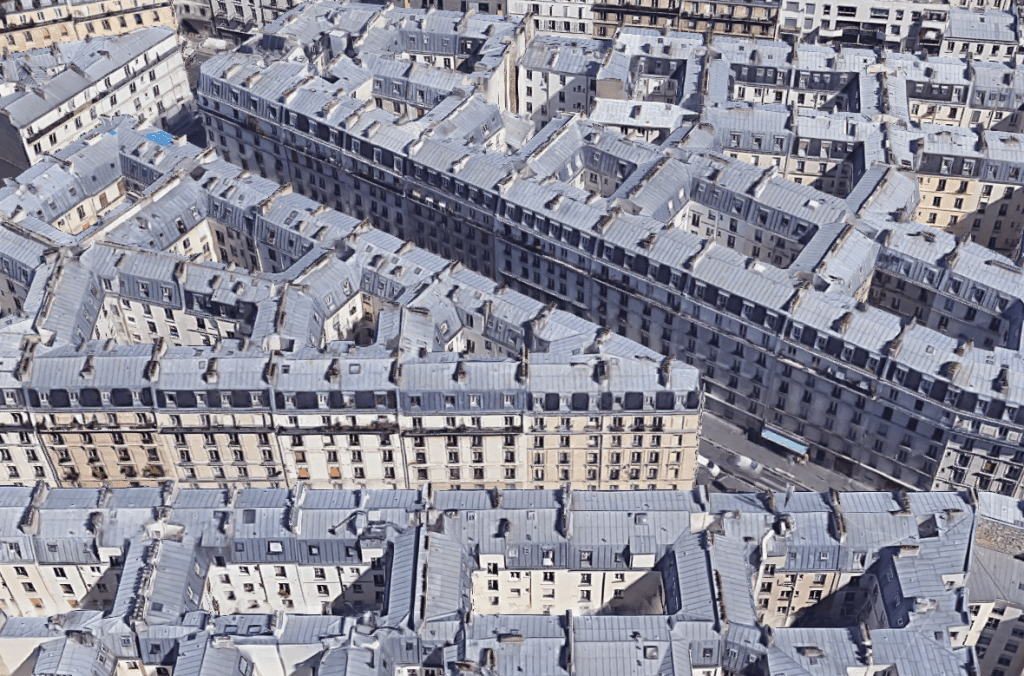
Returning to Vancouver as a point of comparison, below is an aerial capture from downtown Vancouver at exactly the same scale as the Paris capture. I couldn’t find a density map of downtown, but it’s probably safe to assume that it’s greater than 5,493 and a lot less than 52,218 residents per square kilometer.
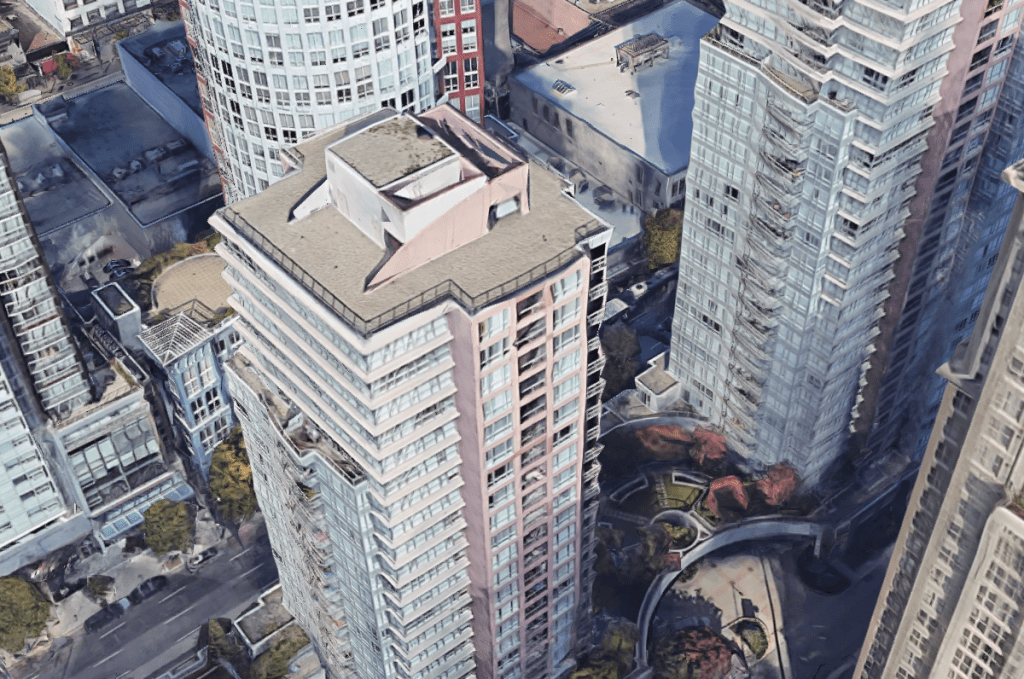
What you see here is typical Vancouverism. Lots of slender point towers, careful tower positioning and spacing, and generally low podiums. It is a perfect demonstration that height and density do not necessarily correlate. It is possible to have low buildings and high density, which is something that Europe obviously does very well.
But here’s the important question: In which of these two examples would you rather live? Please leave a comment below.
-
Vancouver revisits laneway house program

Vancouver is light years ahead of Toronto when it comes to laneway housing/suites. And by light years I mean that their Laneway House (LWH) Program is about a decade old now.
Last month the City of Vancouver published this staff report which outlined recommendations for improving the program. It includes simplifying the regulations, reducing processing timelines, and improving livability in LWHs.
This aligns with their Housing Vancouver Strategy (2018-2027), which has set a target of 4,000 new LWHs over the coming ten years. That may not seem like a lot and certainly it won’t solve everything, but I reckon that 4,000 is better than 0.
The city also estimates that approximately 50% of these new LWHs will be two and three bedroom homes, which makes them a viable housing solution for families who want to remain in the city. (Related post: Where are all the kids?)
There’s a lot of good stuff in the staff report if you’re so inclined, but I’ll leave you with a few facts about the current LWH program in Vancouver. 90% of LWHs are built along with a new house. And 45% of all new houses, so almost half, are now built with a LWH.
Only 10% of LWHs are single storey, which certainly helps to support the above percentage of two and three bedroom homes. And in both 2016 and 2017 over 500 building permits for LWHs were issued each year.
So 4,000 LWHs over the next decade may actually be a fairly conservative estimate. Thank you to Michael Geller for sending me this staff report.
Photo by Spencer Watson on Unsplash
-
Vancouver’s Empty Homes Tax
In an effort to curb the much talked-about and much debated empty home situation in Vancouver (supposedly the number is ~20k vacant homes), the city, as many of you know, implemented an Empty Homes Tax.
To enforce this, the City of Vancouver now requires that every year, every owner of residential property must file a status declaration. If you don’t file this by the deadline, the property is automatically deemed vacant and the tax (1% of assessed taxable value) and a penalty ($250) are applied.
Last month, 11 days before the 2017 deadline, the city published the below heat map showing the concentration of Vancouver property owners who hadn’t yet made their declaration. There were just under 4,000 undeclared properties.
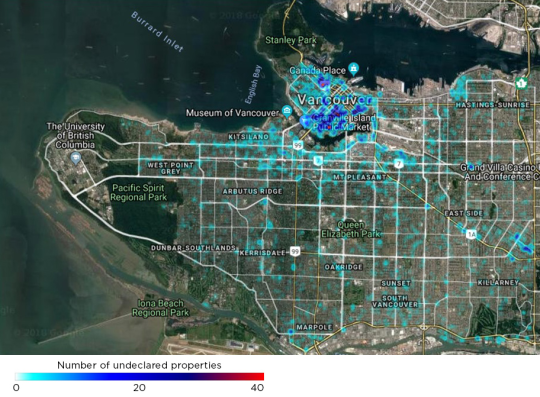
But as Jens von Bergmann points out on his blog, Mountain Doodles (great data-driven blog), this was really just a map of where people live. Because if you also create a map of residential properties subject to the tax, which he did, it looks pretty similar to above.
