Daily insights for city builders, delivered every morning at 6 AM ET. I’m Brandon Donnelly — a Toronto-based real estate developer and founder of Globizen. I’ve been writing here since 2013.
When many (or perhaps most) people think of Miami/Miami Beach, they think of its beaches and resorts. And that is certainly a mainstay of the region’s offering. But over the past few decades, Miami has also emerged as an important global city (albeit at a more regional scale) and as a center for art and culture. Miami has the second largest concentration of international banks in the United States after New York, which begins to speak to the region’s importance for Latin America.
New York City is what it is today because it was the port of entry for new immigrants coming to the United States. This same phenomenon is what reshaped the Miami economy, starting first with Cuban exiles. Today, the city remains a refuge for Latin Americans searching for greater political and economic stability. As my friend from Miami likes to tell me, “the best thing about Miami is that it’s so close to the United States.”
I’m enjoying this book and I bet some of you will as well.
Since 2012, a team at New York University has been working on something called the Atlas of Urban Expansion. What they are doing is collecting and analyzing data related to the quantity and quality of urban growth around the world. Everything from population densities to how well the streets were laid out during each geographic expansion.
The Atlas defines a city as having at least 100,000 people, which is a commonly used benchmark. According to this definition, there were 4,245 cities on the planet as of 2010. Included in their study is a representative sample of 200 of them, all of which can be found here.
They are also, rightly, looking at each city in terms of its extrema tectorum — the limits of its built-up area. This is as opposed to using administrative boundaries, which wouldn’t be as relevant in a study like this.
I really like the animations that they created depicting urban growth from 1800 to 2014, because they show: (1) where each city started (the dark nucleus); (2) how different urban shapes emerge as a result of geography, transport, and other factors; and (3) how land consumptive many of our cities have become in recent years.
Joe Berridge’s recent opinion piece in the Globe and Mail makes the case for why Shanghai is destined to become “the capital of future.” Brash city building, massive scale, and entrepreneurial hustle are among some of the reasons why he believes the city is on a path to global supremacy. And similar to other great capitals, it has benefited from a strategic geographic position on an important waterway — in this case the Yangtze River.
By way of comparison, Toronto is said to be the fastest growing urban region in both North America and Europe right now. We add somewhere around 125,000 people each year. Shanghai, on the other hand, is adding between 700,000 and 800,000 people each year — much of it from internal migration. The city currently has a population of around 24 million people and it is expected to grow to somewhere between 35 and 45 million people by 2050. (Figures from the Globe.)
Notwithstanding all of our successes as a global city region, as I was reading Berridge’s piece I couldn’t help but come back to this comparison. Shanghai opened its first subway line in 1993. Today it has one of the most extensive networks in the world; whereas, it would probably take Toronto this long to figure out if that first line should be light rail or a below-grade subway. And we haven’t even gotten to the number of stops yet.
But that’s one of the differences between top-down and bottom-up city building: speed.
According to the National Association of City Transportation Officials (NACTO), scooter trips in the US surpassed station-based bike share trips for the first time in 2018. Here is a chart taken from Streetsblog:
Dockless electric scooters have created a public nuisance in many of our cities, but what is clear is that the demand is there. Which perhaps isn’t all that surprising given that they require less effort than traditional cycling.
The other interesting takeaway from NACTO’s analysis, which is likely also not that surprising, is that bike share trips are heavily concentrated in a select few cities.
In 2018, there were about 36.5 million bike share trips across the US. And about 84% of them took place in just 6 cities: New York, Boston, Chicago, DC, Honolulu, and San Francisco.
Almost half of the 36.5 million trips were on NYC’s Citi Bike network.
About a year ago I wrote about how NYC is considering a congestion charge on vehicles entering Manhattan below 60th street. Well it looks like that plan could be adopted as early as April 1 (however the fees won’t start until 2021).
Here’s a map of the proposed congestion pricing zone from the NY Times:
I have written extensively on road pricing over the years and so I won’t repeat myself here today. Suffice to say that I think creating a sustainable funding source for transit and other mobility options is a positive step forward.
London is currently running a 12-month pilot on its first ever 3D zebra crossing. The objective is to improve pedestrian safety by making the crossing more visible to drivers. A 3D zebra crossing stands out by appearing to float above the road.
While this is the first of its kind in the UK, similar crossings have already been installed in Iceland, India, Taiwan, and other countries. According to the trials in India, they do appear to have a meaningful impact on vehicular speeds. They also feel like public art.
If this first one proves to be successful, the plan is to roll out these 3D crossings across the entire borough of Westminster. Assuming they do actually work, I’m surprised there hasn’t been more noise around them here in Toronto.
A London-based software company is also working to completely rethink the zebra crossing for today’s smartphone world. Their system imagines LEDs embedded into the street so that a crosswalk can be triggered basically anywhere.
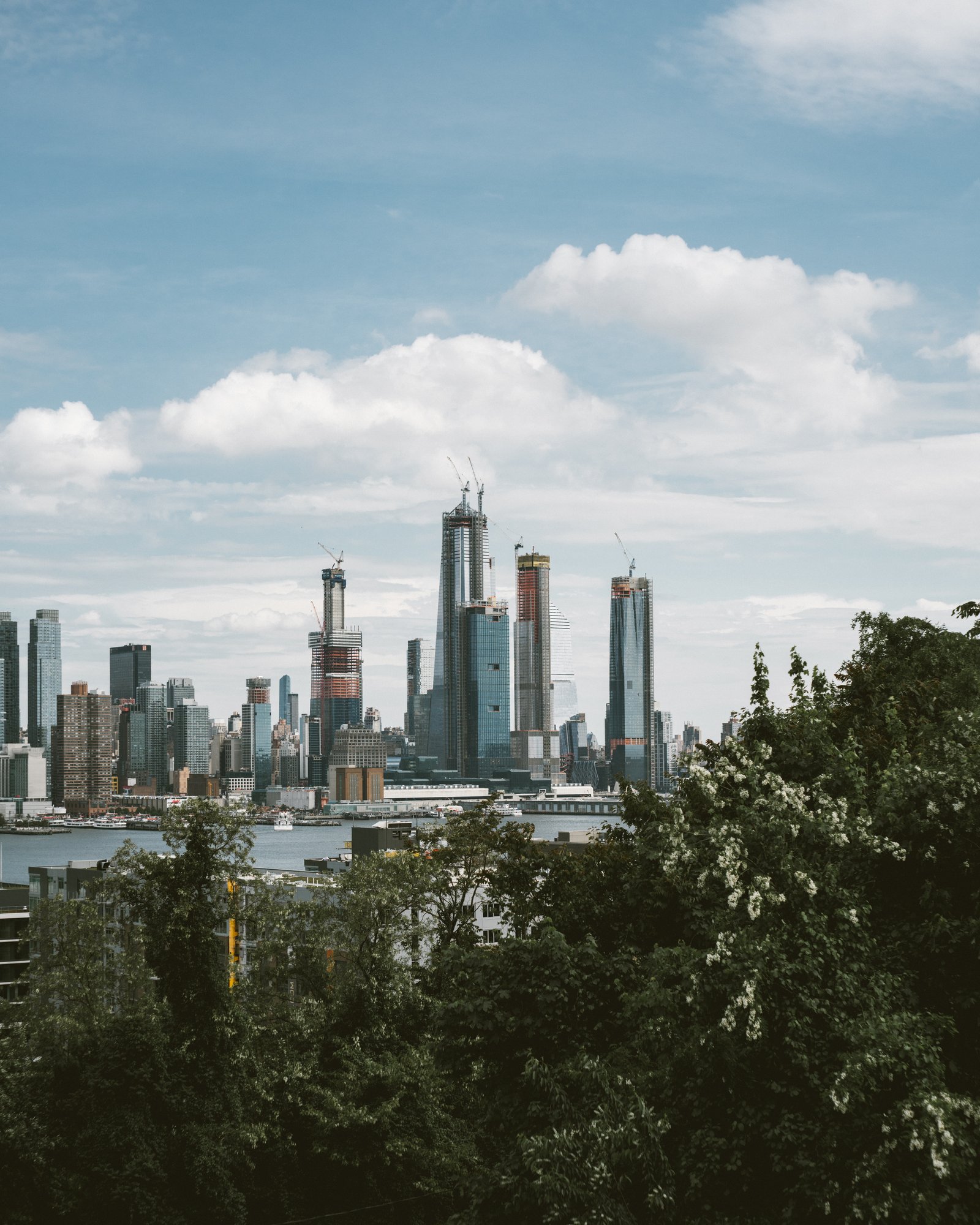
Hudson Yards officially opened today on the west side of Manhattan. More specifically, the eastern half of Hudson Yards opened. There’s a second phase to come on the western yards. And the highly anticipated observation deck at 30 Hudson Yards — the highest outdoor observation deck in the Western Hemisphere — is also not quite ready. It is expected to open in early 2020.
Considered the largest mixed-use private real estate project in American history by square footage, Hudson Yards has been in the works for many decades and was previously part of New York’s (failed) bid for the 2012 Olympic Games. Dan Doctoroff, who is now the CEO of Sidewalk Labs, led the bid under the Bloomberg administration.
So today is a bit of a big deal.
To commemorate the opening, the architecture critic for the New York Times, Michael Kimmelman, published this searing, but highly visual, piece about the project. I think it is fairly safe to assume that he isn’t a huge fan (he doesn’t seem to love developers either).
Purportedly inspired by ancient Indian stepwells (it’s about as much like them as Skull Mountain at Six Flags Great Adventure is like Chichen Itza) the object — I hesitate to call this a sculpture — is a 150-foot-high, $200 million, latticed, waste-basket-shaped stairway to nowhere, sheathed in a gaudy, copper-cladded steel.
It preens along the critical axis between the High Line and the newish No. 7 subway station at Hudson Yards, hoping to drum up Instagram views and foot traffic for the mall, casting egregious shadows over what passes for public open space, ruinously manspreading beside the Shed, the most novel work of architecture on site, and the only building the private developers didn’t build.
If any of you have formulated your own opinions about Hudson Yards, I would love to hear from you in the comments below. I’m looking forward to exploring the neighborhood in person sometime soon. If you’re interested in learning more about the project, Curbed also just published, The ultimate guide to Hudson Yards.
As I wrote about last month in this pithy post, the relationship between building height and density are often misunderstood. They mean different things and so the implications for our cities can also be vastly different.
I woke up this morning to a couple of tweets by John Michael McGrath that I think hit the nail on the end with respect to this duality. If you can’t see them below, click here.
Paris is known, and largely celebrated, for its “European-scaled” mid-rise buildings. But as John points out, these buildings often line narrow streets (see above). They are typically also built across large blocks with compact internal courtyards and with few setbacks and/or stepbacks. The combined result is that Paris is one of the densest cities in Europe. It has mid-rise at scale.
The North American context is quite different. The large majority of our land is usually reserved for low density housing. (Here in Toronto this land has been nicknamed the “Yellowbelt.”) We have a policy context that only allows intensification in select places, and that can create pressures to build up. It’s a bit like squeezing a closed tube of toothpaste.
In 2012, Eurostat ranked Paris as the densest city in Europe with an average population density of approximately 21,516 people per square kilometer. Whereas, according to Wikipedia, the population density of metro Toronto was around 5,905 people per square kilometer in 2016.
What is it, again, that we love so much about Paris?
Last weekend I went by Sidewalk Toronto’s “experimental workspace” at 307 Lake Shore Blvd East. It is open to the public every Sunday from 11am to 5pm if you’d like to drop in.
This week they had their #BuildingRaincoat on display, which is an adjustable awning system designed to protect public sidewalks, mitigate the impacts of adverse weather, and improve outdoor comfort.
Also installed were a number of the paving systems that they are currently piloting. They’re working with over 20 different vendors to try and create the “holy grail” of street paving.
They define that as a system capable of the following four key features: modularity, heating, lighting, and permeability. Here’s an example of what one of them looked like (it was snowing at the time and, yes, Doc Martens):
With modularity, the goal is to make it possible for a single person to be able to pull up and replace one of the hexagonal slabs. This would dramatically change how we repair and patch our roads. Supposedly, they’re also more resistant to cracks, which means fewer potholes.
The key benefit of a heated paving system is an obvious one. When needed, their test system automatically heats the slabs to 2-4 degrees celsius in order to melt any snow and/or ice. That’s as warm as you need apparently.
They have two heating systems running at 307. The first is hydronic (fluid in pipes just below the pavement) and the second is conductive heating (thin conductive film in or under the pavement).
I’m sure many of you will be questioning the environmental and carbon impact of a heated public realm. And that is certainly a good question. But the status quo in this city involves about 131,000 tons of road salts per year. That’s a problem.
The lighting feature is pretty neat because there are a variety of different use cases beyond just demarcating space. One example that Sidewalk gives is that it could be used in a bike lane to tell you how fast you need to ride in order to hit all green lights.
Finally, permeability matters because it minimizes runoff and allows water to be absorbed in situ. The tradeoff is that it makes the slabs structurally weaker. So that is still being worked on.
I am thrilled to see this sort of urban innovation taking place right here in the city. If you haven’t already, I recommend checking out 307.
Earlier this month it was announced that the on-demand electric scooter and bike startup, Lime, had closed a $310 million series D round. This values the 18-month old company at around $2.4 billion and brings its total raise to $867.1 million. For comparison, Bird — its main competitor — has raised around $400 million.
These numbers should tell you about the kind of growth that the “micromobility” startup is seeing. They are now in 15 countries and its riders have taken over 34 million trips. In the last 7 months alone, the company reports that it has seen a 5.5x increase in ridership. They are seen as an affordable last-mile solution. Supposedly 1/3 of its users report an income of less than $50,000 per year.
Lime entered the Canadian market last fall via Waterloo. They have yet to expand anywhere else, though I suspect we’ll see them in Toronto this spring/summer. One of the barriers is that their scooters (with airless tires) aren’t equipped to deal with snow, so they currently pack them up during the winter months.
This is in addition to the regulatory challenges they are facing in cities all around the world. But like Uber, I am sure there is a compromise to be had.