Daily insights for city builders, delivered every morning at 6 AM ET. I’m Brandon Donnelly — a Toronto-based real estate developer and founder of Globizen. I’ve been writing here since 2013.
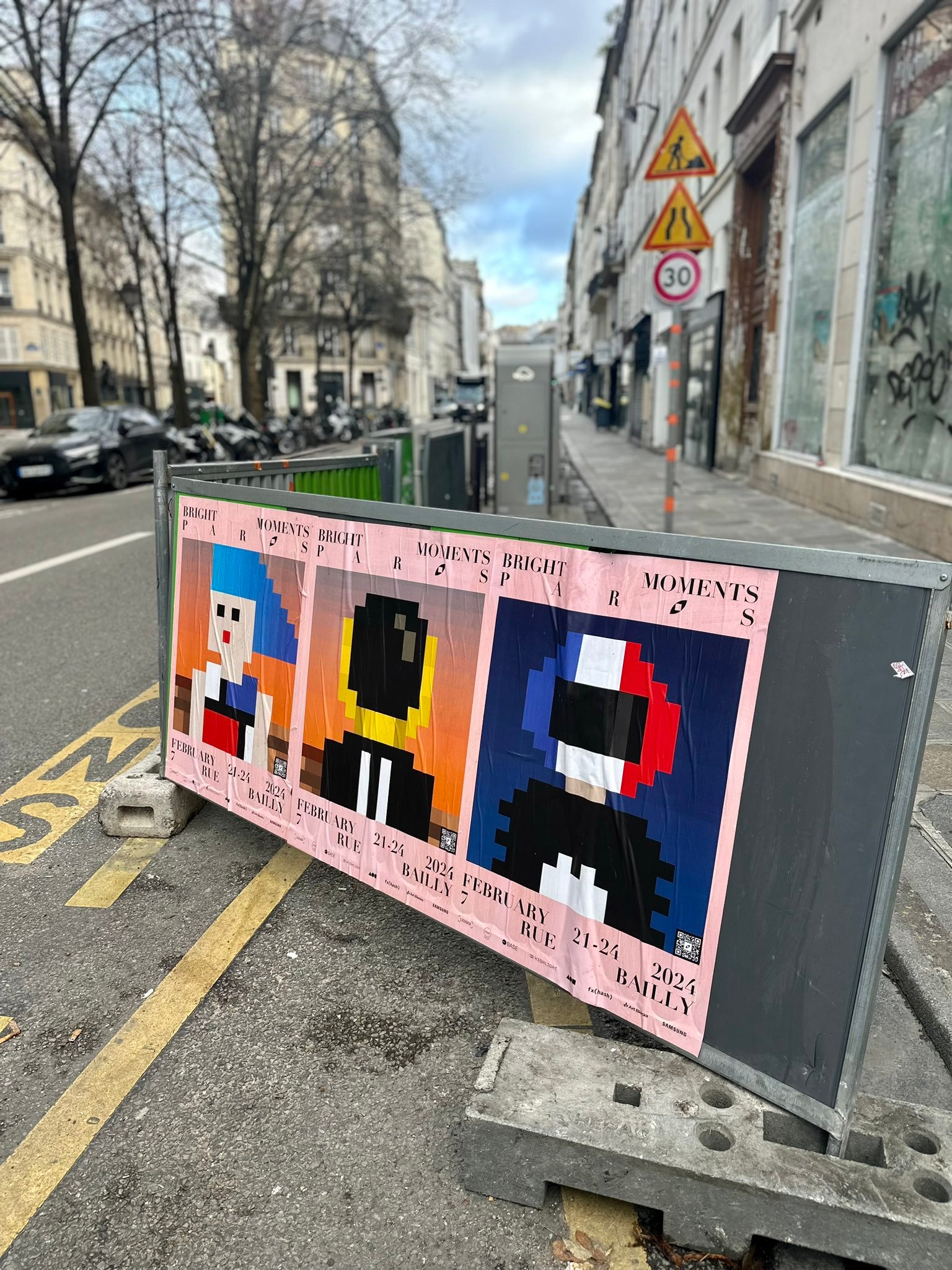
Crypto Citizens are a collection of 10,000 NFTs that were minted between 2021 and 2024, starting first in Venice, California and ending in Venice, Italy. Each of their 10 locations has a sub-collection of 1,000 pieces and I am the owner of CryptoParisian #112, because, well, Paris was the next best city for me after they egregiously skipped over Toronto.
This is one of the most ambitious projects in the NFT art community and, now that they’ve completed their world tour, they’ve just released a documentary called Venice to Venice. It is currently being screened in private venues around the world, but eventually there will be a world premiere at a film festival. This is when I presume they will land in Toronto!
If you’d like to watch the trailer and/or mint it, click here.
Over the weekend, we spoke about using road pricing as a way to correct supply and demand imbalances on city roads and highways. Because it turns out that when roads, or anything else for that matter, are free, people tend to use them a lot more. It’s why when you suddenly submeter utilities in an apartment building, consumption tends to drop off significantly. Now it’s no longer “free”.
It’s for this exact reason that Venice — a city that has been complaining about too many tourists for many years — has decided to implement a new entrance fee. Starting spring 2024, day trippers will have to pay €5 to enter the “old city” of Venice.
If you own a home there, you’re exempt because presumably you’re already paying property taxes. And if you’re staying overnight, you’re also exempt, because presumably you’re going to be paying whatever hotel taxes the city levies. But if you’re just coming in for the day, you’re going to need to pay.
Now, I don’t know if €5, structured in this way, is going to fully address the city’s overtourism concerns. Maybe it needs to be a lot more. But it is a step in the right direction. If you have too much demand for a certain amount of supply, you can generally lower demand by increasing the price. Perhaps the only exception is a Birkin bag. Apparently you can charge any price for these.
We are on the train headed to Milan this morning, so as is customary on this blog, here are a few observations from the last few days in Venice:
Venice was a dominant republic for some 1,000 years. It was the fulcrum point of trade in Europe and, at one point, its wealthiest city. But that started to change in the 15th century, which is an important reminder that nothing is guaranteed. The world changes. Markets change. And maybe you won’t be as relevant tomorrow, unless you can find another economic reason for being.
If you’re an old city with lots of history, perhaps the easiest fallback plan is tourism. And it goes without saying that Venice gets a lot of tourists. I was, of course, one of them. After Italian, the most commonly overheard language on the streets seemed to be French. Maybe it was the time of year?
Besides my debilitating spring allergies, May feels like a reasonably optimal time to visit the city. I don’t think you want to visit Venice in peak summer. Too many meandering tourists taking photos (myself included). And too hot and humid. A high probability of “walking rage.”
Hotels in Venice are not cheap. But the city itself didn’t seem overly expensive, at least compared to many other top tourist destinations. Think €2.50 jugs of wine, €20-30 for very nice local leather goods, and €110 for a 7-course Michelin-starred meal.
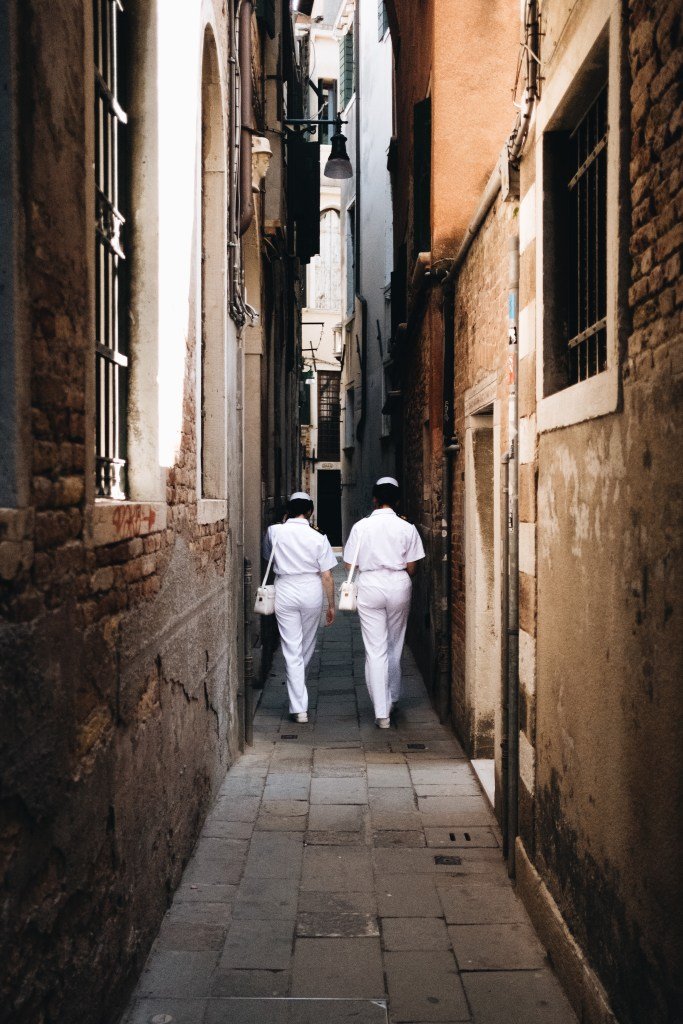
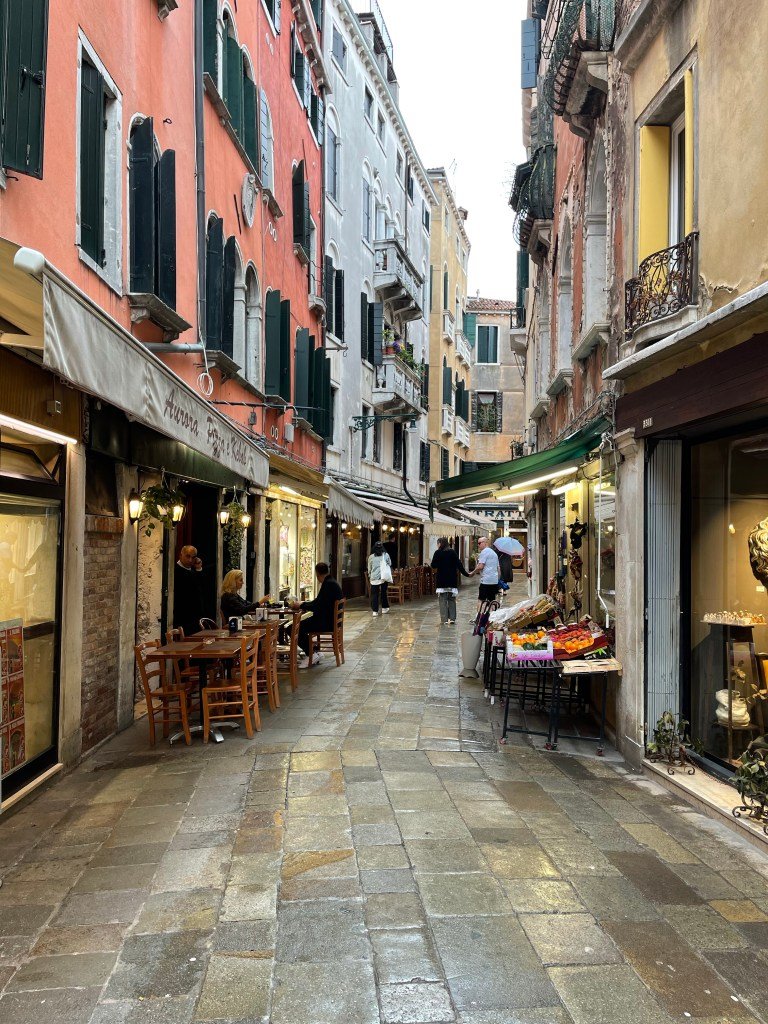
Venice has some of the most compact streets I have ever walked in. I didn’t have my laser distance measurer on me, but in many cases, you can barely fit two people side-by-side. I certainly couldn’t extend my arms fully outward. (See above photo.)
Wonderful doorbells. Virtually every apartment in Venice, has an array of doorbells at its front door. They are beautiful, typically in metal, and almost always round. But in addition to looking nice, there is also something very personal and about seeing people’s names right on the street. This probably tells you something about how differently privacy and security are viewed in the city.
That said, Venice isn’t a place where I would want a pied-à-terre. (I like to think about this sort of thing when I travel because it speaks to impressions of a place.) I mean, I love it, but: Too many tourists and the whole “we are sinking and have regular floods” thing seems like a bit of a problem. For me, it’s a city that I’d like to regularly visit. We spent much of our 2 days at the Venice Biennale, and there’s obviously a lot more to see.
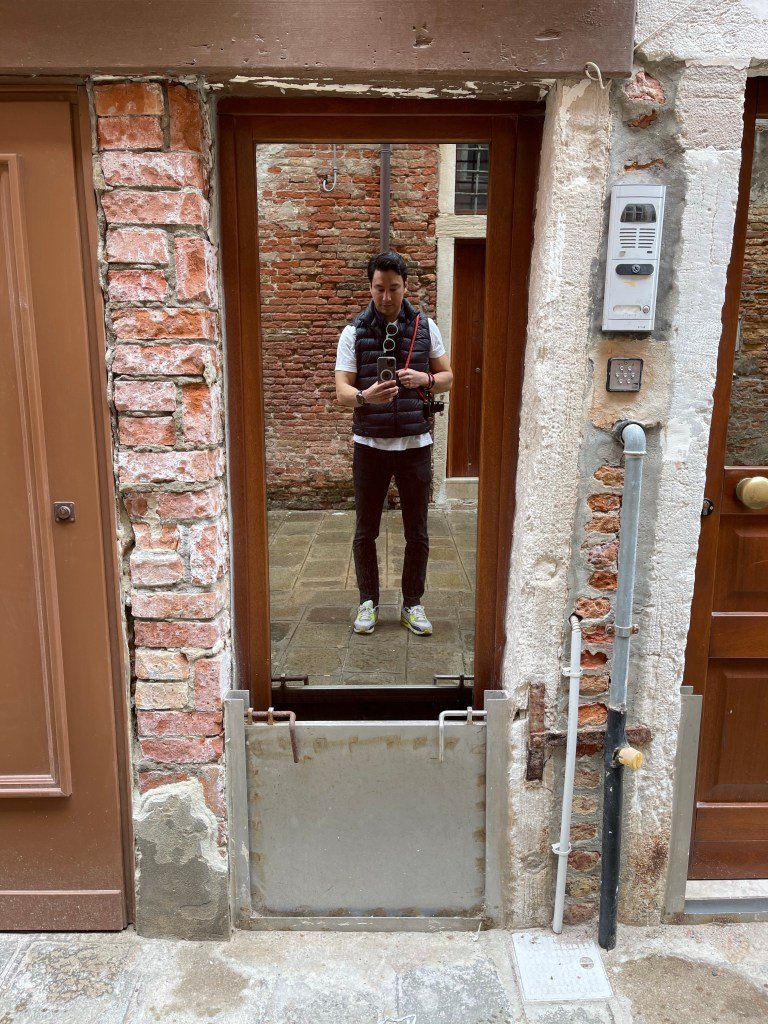
Finally, and this also goes without saying, but Venice is a city that is necessarily preoccupied with controlling water. Our hotel room had big rain boots in it, just in case. The base of every building is generally solid up to knee height. Interiors have tall tile baseboards. Front doors have removable flood dams. And there are markings across the city indicating some of its historic flood levels. As I understand it, this was always a problem for Venice; however, it is getting worse. I think it tells you just how economically valuable it was for Venice to be located where it is, in a shallow lagoon at the top of the Adriatic Sea.
This entire city is centered around controlling water. Omnipresent front-door flood dam:
Venice has great doorbell game. If it hasn’t already been done, I think someone should make a coffee table book of these:
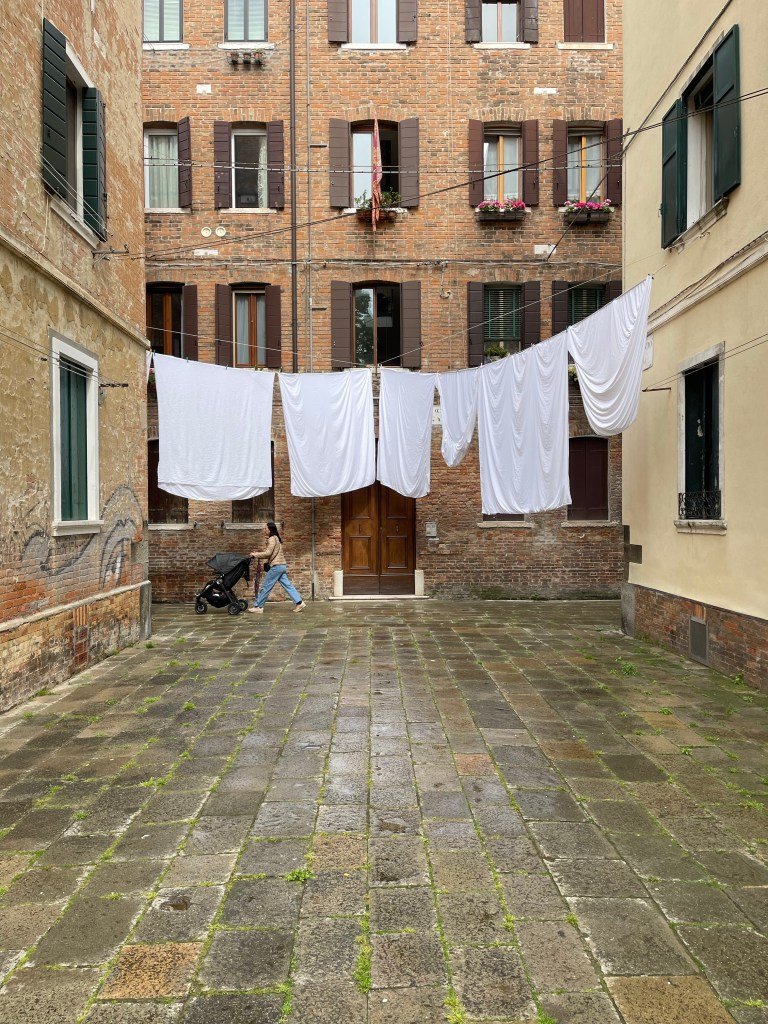
This city is also quite prolific when it comes to urban laundry:
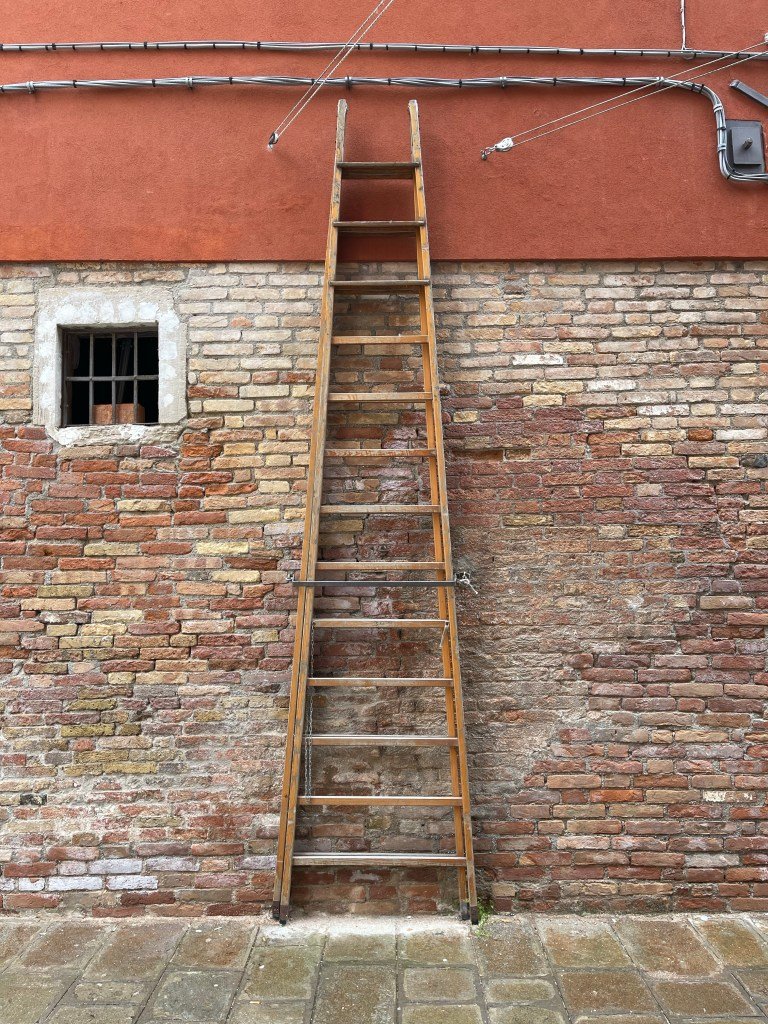
We found a number of these street ladders. Presumably laundry related:
Religion in the streets:
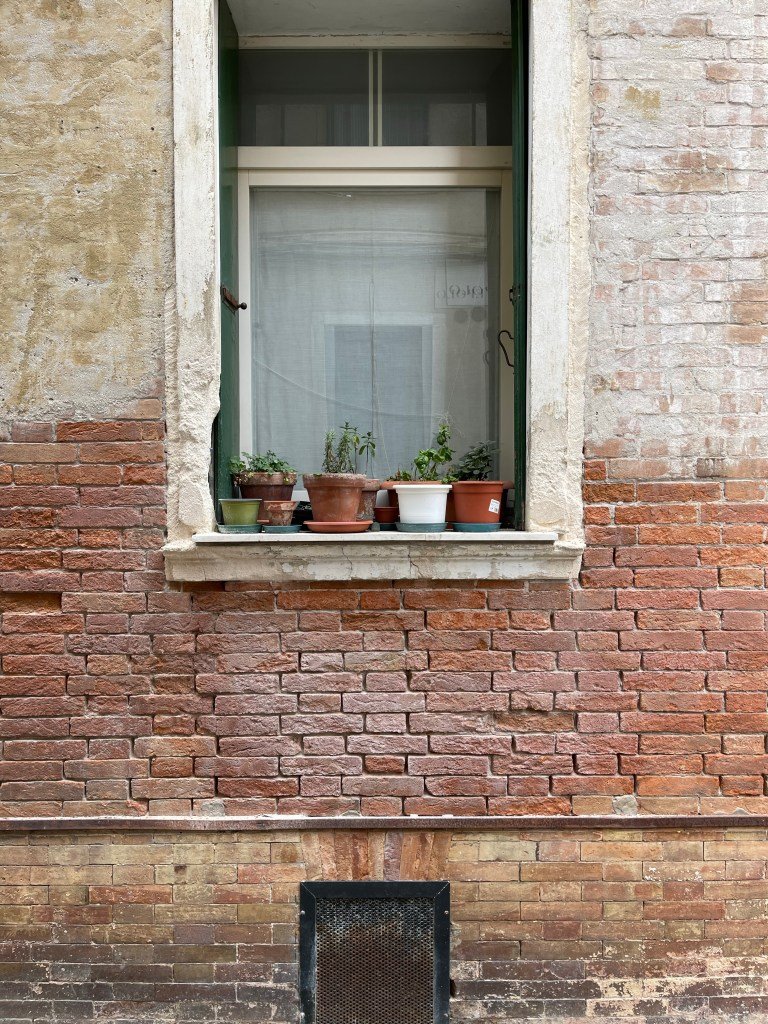
Window garden:
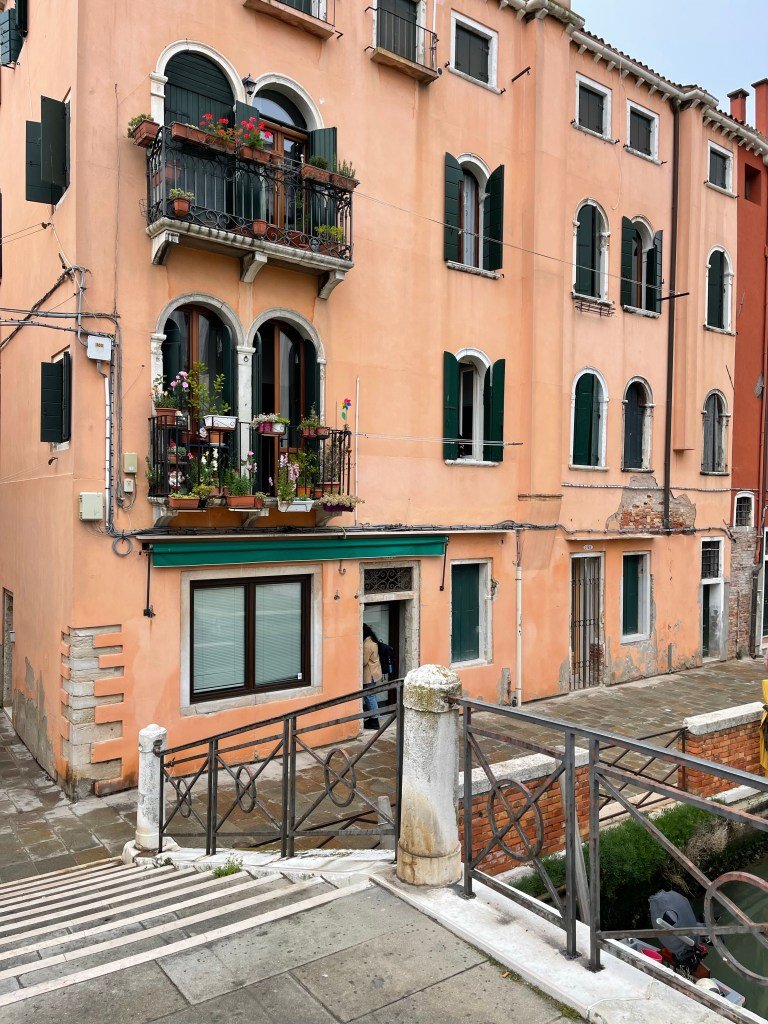
Balcony gardens. Your reminder that (1) small balconies can still be impactful and that (2) balconies with a relationship to the street are used differently:
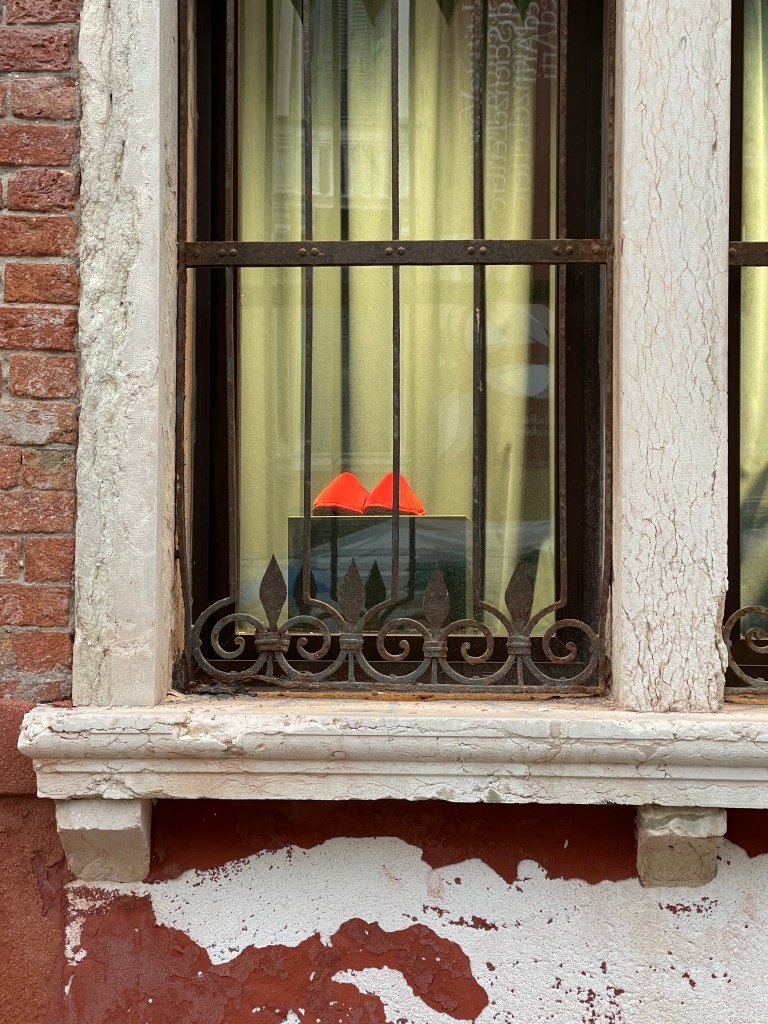
Colorful shoes and green curtains:
Grand Canal:
The kind of street we should allow in North American cities:
Tourist visits to Venice last year were estimated to be about 1/5 of what they usually are
Short-term rental bookings as of December 2020 were down about 74% year-over-year
It is estimated that short-term rentals normally represent about 12% of homes in Venice (this is significantly higher than the “typical city” which is estimated to be about 1-2%)
Even before the pandemic, average property prices had declined from about €4,500 per square meter in 2018 to €4,341 in 2019 (2020 data is still coming)
Pre-pandemic, the population of the city was about 50,000, which is less than a third of what it was back in the 1950s
A 2018 study by Airbnb reported that for every local Venetian the city had 74 tourists on average (wow)
Being a dominant port city, the city has generally been disproportionately impacted by plagues and other health crises throughout its history
The Lazzaretto Vecchio, which still stands today, is a small island in the Venetian Lagoon that was founded in the 15th century as a hospital to care for plague victims; apparently it was the first of its kind in the world
During the 15th century, Venice saw its population drop by about two-thirds as a result of an epidemic
At the height of the Republic of Venice in the 1790s, the city had a population of about 170,000; after falling to Napoleon it halved to about 96,000
It’s worth pointing out that the “height of the republic” occurred after many great epidemics; the subsequent population decline was seemingly the result of a conquest and not pestilence
Venice has been keeping flood records for 150 years, though it is generally understood that the city has been regularly flooding since the very beginning. It usually happens between the fall and the spring and the earliest record is believed to be from the 6th century.
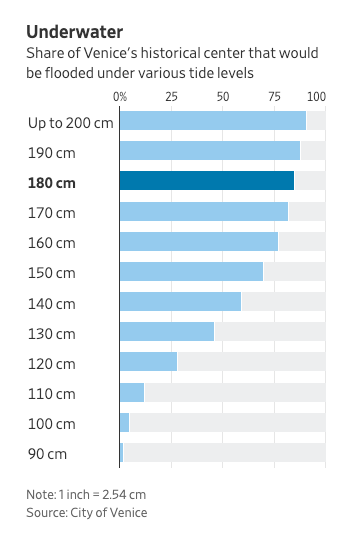
This past week, Venice saw its acqua alta (or high water) peak at 187cm (6’2″) above its normal level. This is the second highest number on record and is just below its 1966 peak. At these numbers, about 80% of the historic center is underwater. Here is a chart from the WSJ explaining that:
Venice has been working on a flood management project called MOSE since the 1980s. The name is an acronym, but there’s a deliberate biblical reference here. Remember when Moses parted the red sea?
The project has been mired in engineering delays and corruption scandals, and so it’s not yet operational. If it were, it would have, in theory, protected the city this past week. 2022 is the anticipated completion date, but I don’t know if that’s realistic or not.
The system consists of 78 mobile gates that fill with water and sit flat on the seabed when the tide is low. When a high tide is predicted, the gates are then to be pumped with air so that they rise (hinged on one side) and close off the three inlets that connect the Venetian Lagoon to the Adriatic Sea.
As I was reading about this project and everything else that has been going on in Venice this past week, I became curious about how exactly the Dutch have been managing to hold back the sea. I mean, a big chunk of the Netherlands sits below sea level.
If you’re also curious, here’s a video that explains how they do it.