Daily insights for city builders, delivered every morning at 6 AM ET. I’m Brandon Donnelly — a Toronto-based real estate developer and founder of Globizen. I’ve been writing here since 2013.

Category: Toronto

  • How to fall in love with Toronto

    May 17, 2026 · View original


    This weekend I went on a long bike ride across the city with my friend Ev (who, by the way, just recently got married. Congratulations again to you both!). This was not a ride to pump my feeble Strava stats, but a ride to see and explore our wonderful city. And once again I was reminded that one of the easiest ways to fall in love with Toronto is to get on a bike and ride across it. Biking offers the best of both worlds: it’s both fast and efficient, and it’s granular. You can easily slow-ride through smaller spaces or quickly get off and walk them.

    If I’m ever in the mood to elicit a shitstorm of negative reactions, all I have to do is go on Twitter and tweet something pithy about how much I love Toronto. I don’t know why so many people seem to react like this, but I genuinely feel this way about our city. City-building is a slow process, but a spring ride after a cold winter will reveal to you all of the projects we’ve been working on quietly in the background: new streets, new mid-block connections, new public spaces, new businesses, and beautiful architecture.
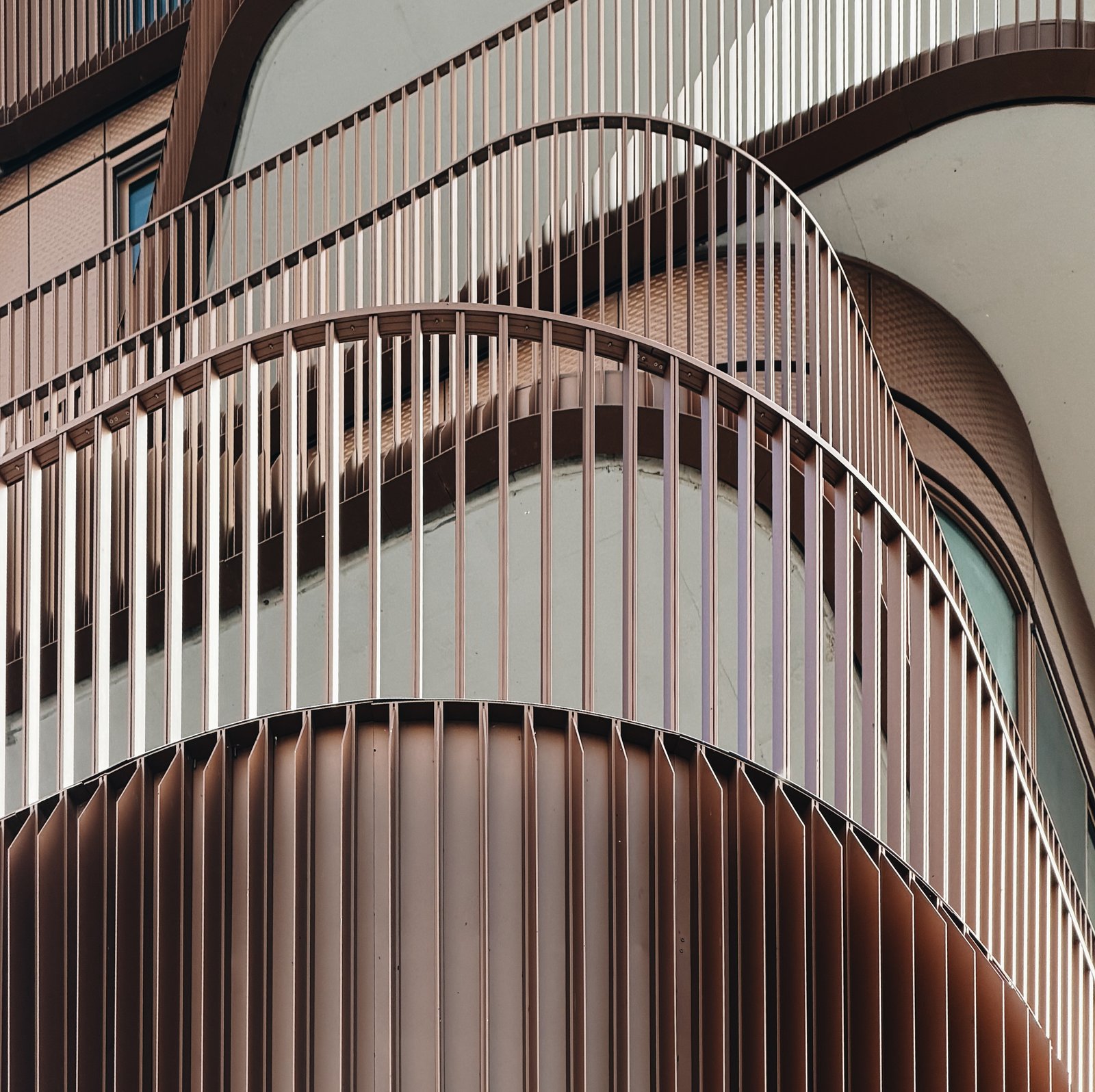
    Of course, not all of it is exceptional. At one point, Ev and I came across two newly constructed courtyards in the middle of large developments that will remain unnamed. One was beautiful and held the promise of businesses and F&B lining its edges, while the other was empty and grim looking. We then turned to each other and said: “Isn’t it amazing how different these not-so-different courtyards are?”
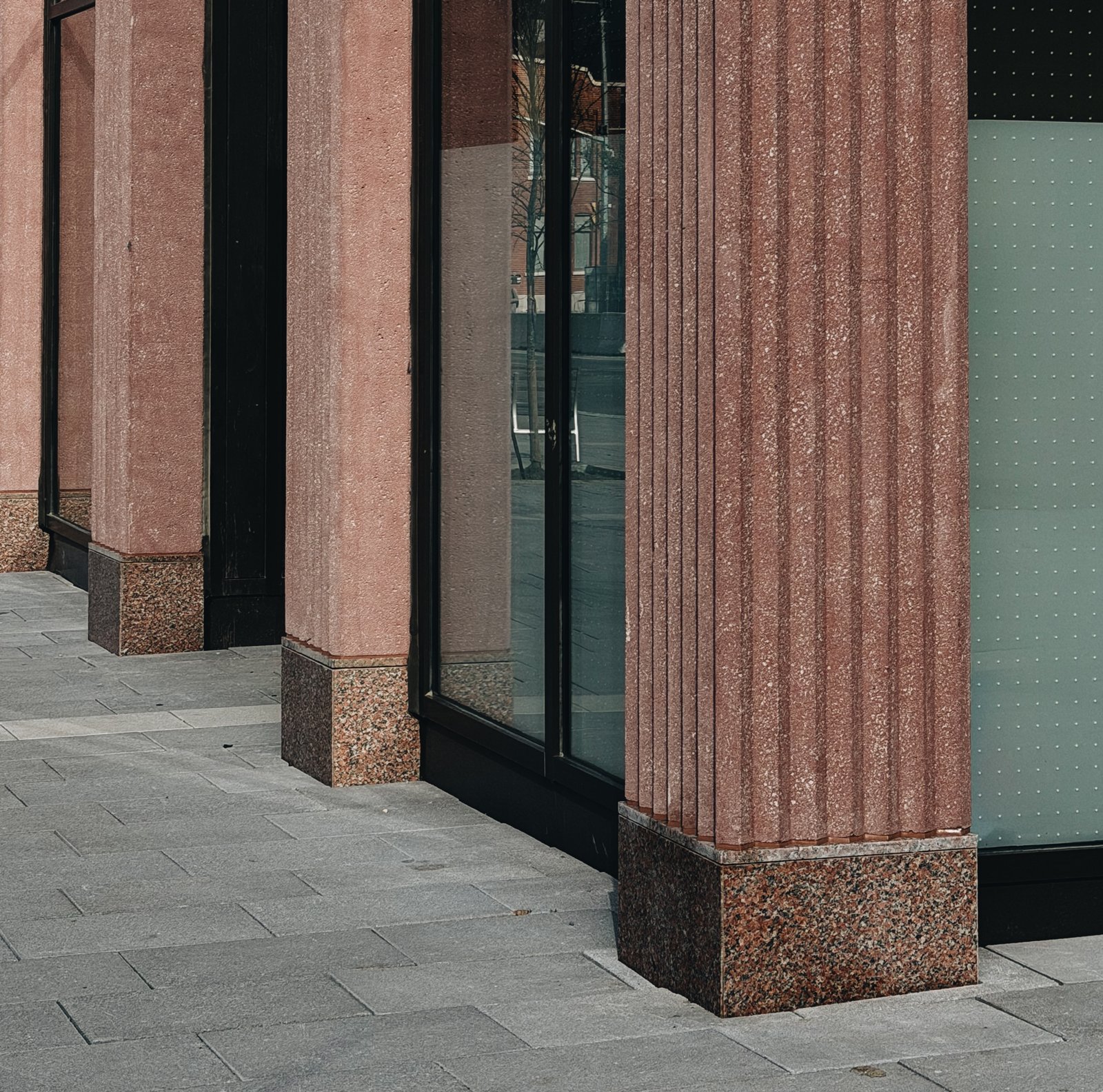
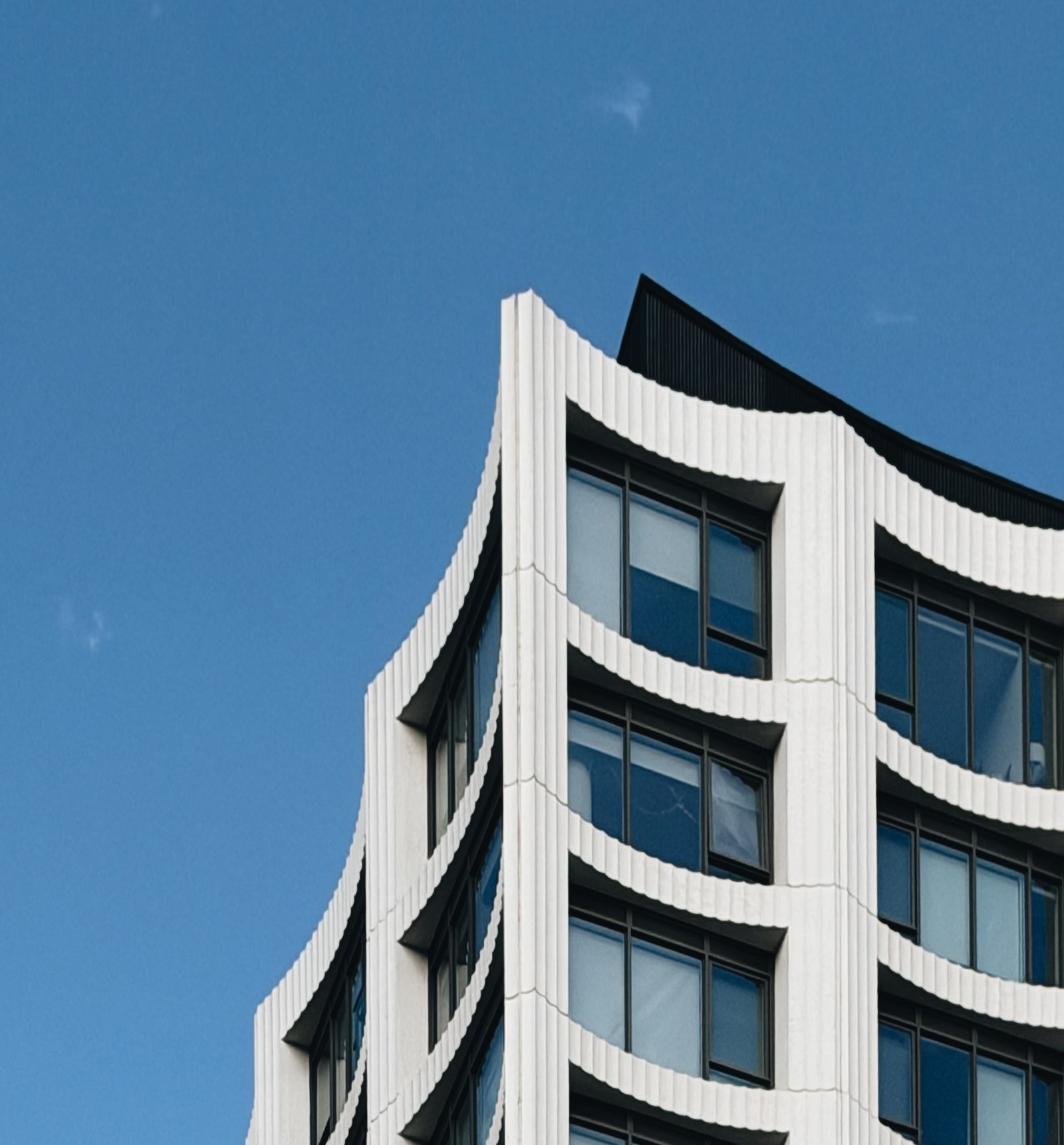
    But objectively, there’s so much that we are getting right. New streets are now subdividing formerly large, unwalkable blocks. Existing neighbourhoods are growing, adding sustained urban vibrancy. New megaparks, like Biidaasige Park in the Port Lands, have already become fantastic, well-used spaces, setting the stage for new urban neighbourhoods to crop up all along their edges. And many of our new buildings are, quite frankly, gorgeous.
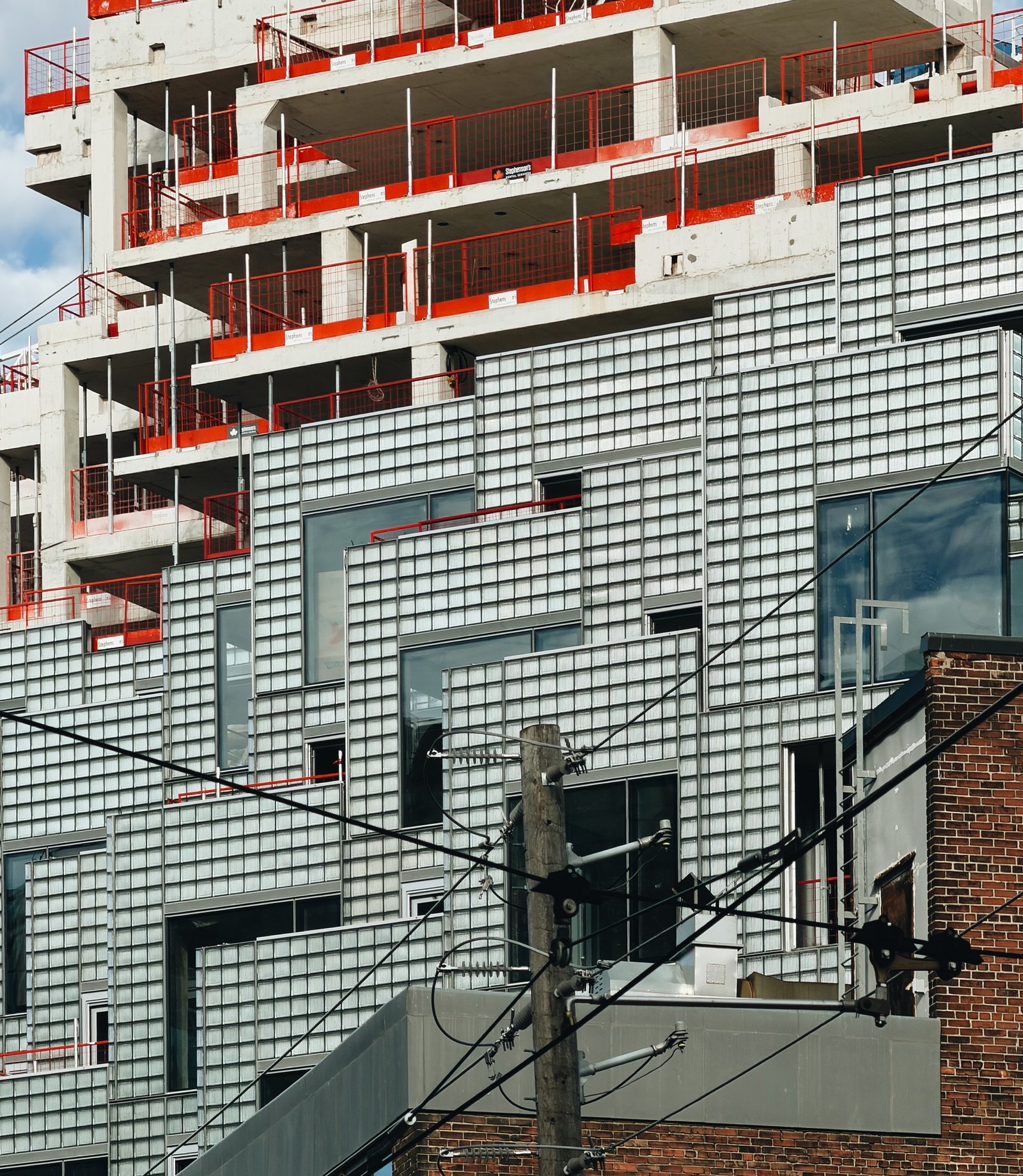
    Most importantly, though, people are using these spaces — a lot. They’re filling sidewalks, hanging out on patios, and cycling on new bike lanes. It’s easy to focus on the things that Toronto isn’t or doesn’t have, just like it’s personally easy to focus on what you may not be or have. Bringing positivity doesn’t mean ignoring the challenges that our city is facing, but being grateful for everything we are achieving is a great way to reframe our perspectives toward an abundance mindset.
    If you’re looking for an easy way to do that, try getting on a bike on a beautiful sunny day.
  • Toronto Pearson breaks ground on one of Canada’s largest airport expansions

    May 14, 2026 · View original


    Toronto Pearson Airport has just announced a $3 billion investment called LIFT, which stands for Long-term Investment in Facilities and Terminals. (This feels like a “how do we make this acronym work” kind of name.) The investment includes an upgraded baggage system, an expansion of the airfield to 2.2 million square metres, and a bunch of new tech.

    Following this, the plan is to refresh Terminals 1 and 3, and look for opportunities to create some net-new terminal space. And when it’s all said and done, the program is expected to grow the airport’s capacity to about 65 million passengers per year by the early 2030s.

    My first reaction when I read the announcement was, “Great, let’s make Pearson better.” My second reaction was, “Why only 65 million passengers? Why not 100 million or even 125 million?” (Side note: I love airports and I think it would be a lot of fun to design and/or work on one.)

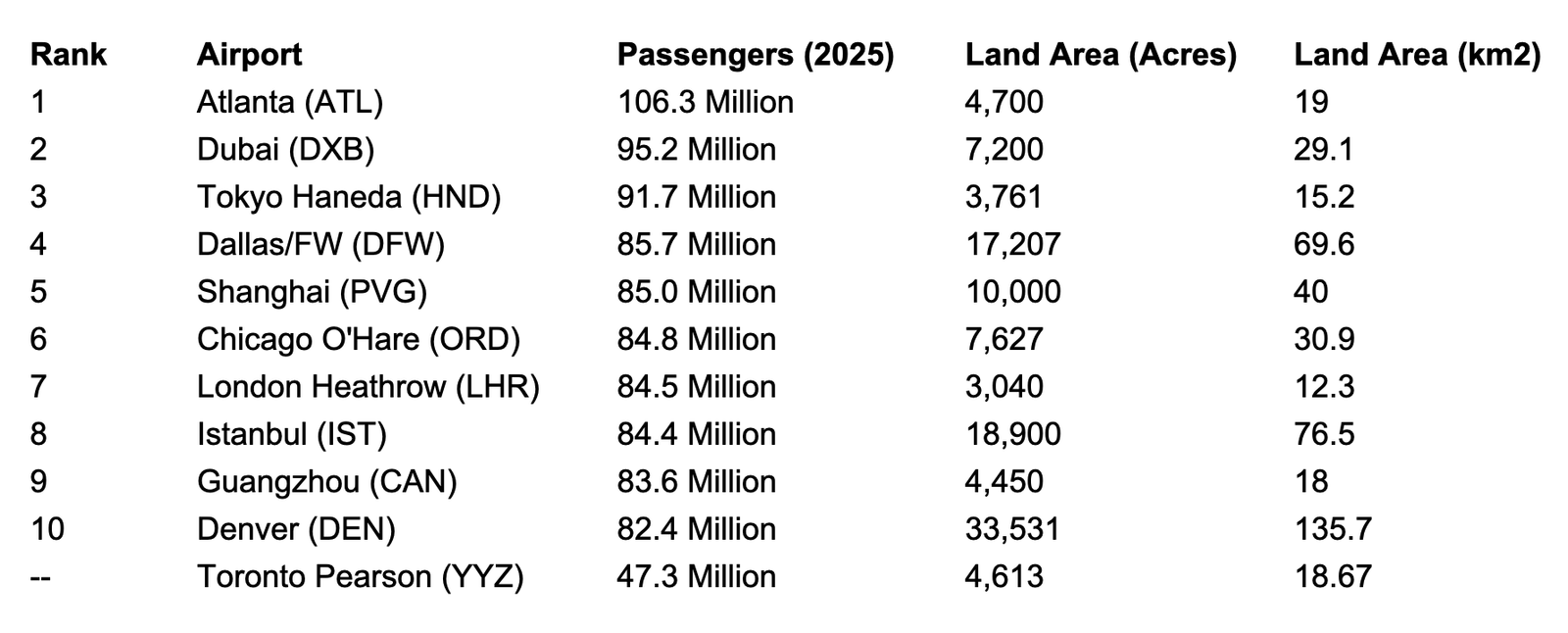
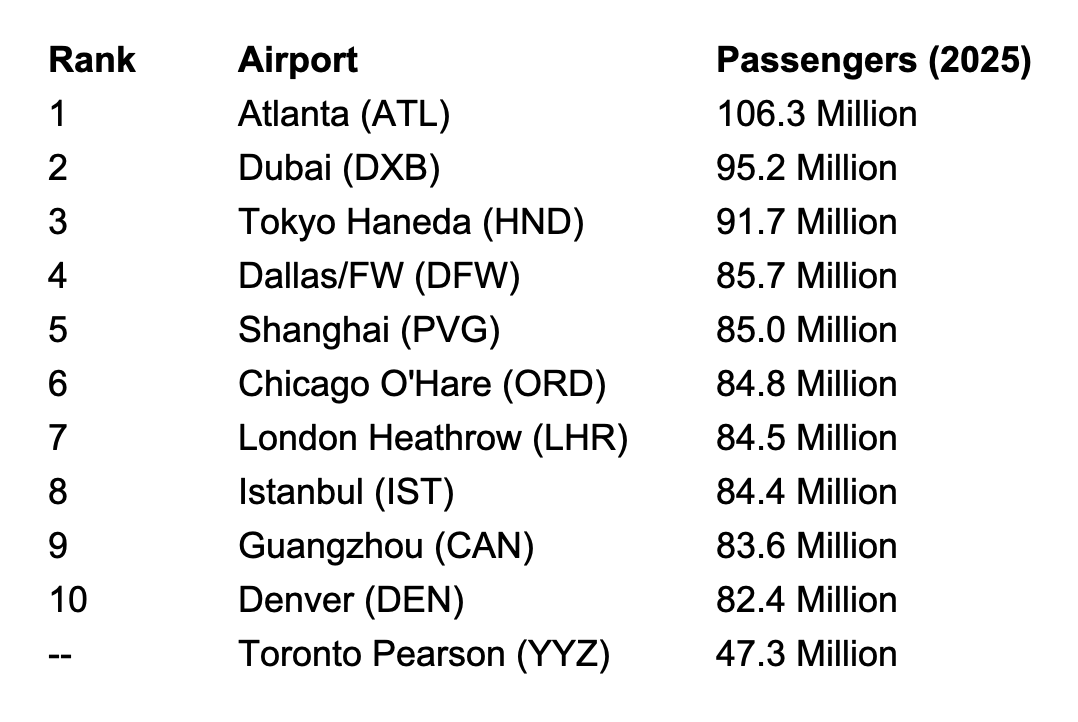
    For those of you who are curious, here are the top 10 busiest airports in the world by annual passenger volume (according to Gemini):

    My follow-up question to Gemini was my second reaction: Why not target 100 million passengers? The response I got was, “Yeah, well, the airport is physically constrained and simply doesn’t have the room for this kind of volume.” So then I asked it to give me the land area in both acres and square kilometres for the same list of airports:

    The obvious question: If Tokyo and London can achieve close to 100 million passengers on less than 4,000 acres, why can’t Toronto? Gemini then said, “Okay, yeah, I guess it might be possible,” but then gave a number of reasons why it’s currently more challenging; everything from the layout of the runways to the high percentage of origin & destination travel over connecting flights.

    I frankly don’t know enough about the operations of international airports to comment intelligently, but at the end of the day, the LIFT program is fundamentally about densifying the existing airport lands and unlocking additional capacity. And that’s what it will take to eventually get to 125 million!


    Cover photo by Michael on Unsplash

  • Jesta Group announces $30M bulk condominium buy in downtown Toronto

    And a larger $500 million condominium program

    May 13, 2026 · View original


    Montreal-based Jesta Group has just announced the acquisition of a bulk condominium portfolio in downtown Toronto valued at $30 million. This also marks the launch of a larger $500 million program targeting more than 1,000 residential units over the next 12 months. Here’s a snippet from the press release:

    > “Toronto’s fundamentals remain strong and the current market environment has created a unique window to deploy capital at scale,” said Anthony O’Brien, Senior Managing Director at Jesta Group. “We are aggressively pursuing opportunities that fit this investment ethos and encourage developers with qualifying inventory to reach out directly.”

    Anthony’s email is [aobrien@jesta.com](mailto:aobrien@jesta.com).

    Sentiment seems to be changing here in Toronto. Maybe it’s because summer is coming and the winter was long, or maybe it’s because our looming supply bottom is drawing nearer. Regardless, a $500 million program certainly suggests that somebody believes we are at or near the bottom.


    Cover photo by Rodolfo Flores on Unsplash

  • The current state of unsold condominiums in Vancouver and Toronto

    May 10, 2026 · View original


    According to recent data from CMHC via the Globe and Mail, here’s (at least part of) the housing situation in Vancouver and Toronto:

    – Metro Vancouver has 4,919 newly built unsold homes on the market (including houses, duplexes, row houses, and condominiums). – Of this total, 3,195 are unsold condominiums. All of these figures exclude homes that were sold but where the buyers failed to close. – Across Metro Vancouver, 37% of the unsold condominium inventory is priced above $1 million. – In the city of Vancouver proper, 81% of the unsold condominium inventory is above $1 million, with more than 14% priced above $3 million. – In the Greater Toronto Area, there are only 701 newly built unsold units on the market, and in the city of Toronto, 61% of these are priced at or above $1 million.

    Initially, the 701 figure seemed low to me, but the way I interpret this “unsold” metric is that it’s strictly a best attempt at a moment-in-time snapshot of developer inventory in newly completed projects that have never been subject to a purchase agreement.

    Missing from these figures are unsold homes currently under construction, and recently closed homes that have never been occupied and are now on the resale market or are simply sitting empty. Again, if a buyer failed to close, these homes would not show up in the CMHC figures.

    It also doesn’t include homes in the pre-sale phase. However, I think this supply is mostly irrelevant because if the developer doesn’t get to construction then that inventory quickly disappears from the market. It’s not sitting there needing to be absorbed (though we developers would love for it to be).

    The Globe and Mail article talks about how there are over 40,000 housing units that have been approved in Metro Vancouver but have not yet proceeded to construction, and that “newly built condos in Vancouver are too pricey to sell.” But the salient question is one of product-market fit: What housing do customers actually want, and can afford, today?

    As we have talked about many times before on the blog, I think we need to view this moment in time as an opportunity to reset our housing markets. In other words, it’s an opportunity to look at how we regulate and tax new housing, and at what and how we build, all with the goal of better serving the housing needs of Canadians.

    My specific view is twofold: We need to cut the regulatory fat around delivering new homes, and we need to better optimize for medium-density housing.

  • Old Toronto is unlike anywhere else in Ontario

    May 8, 2026 · View original


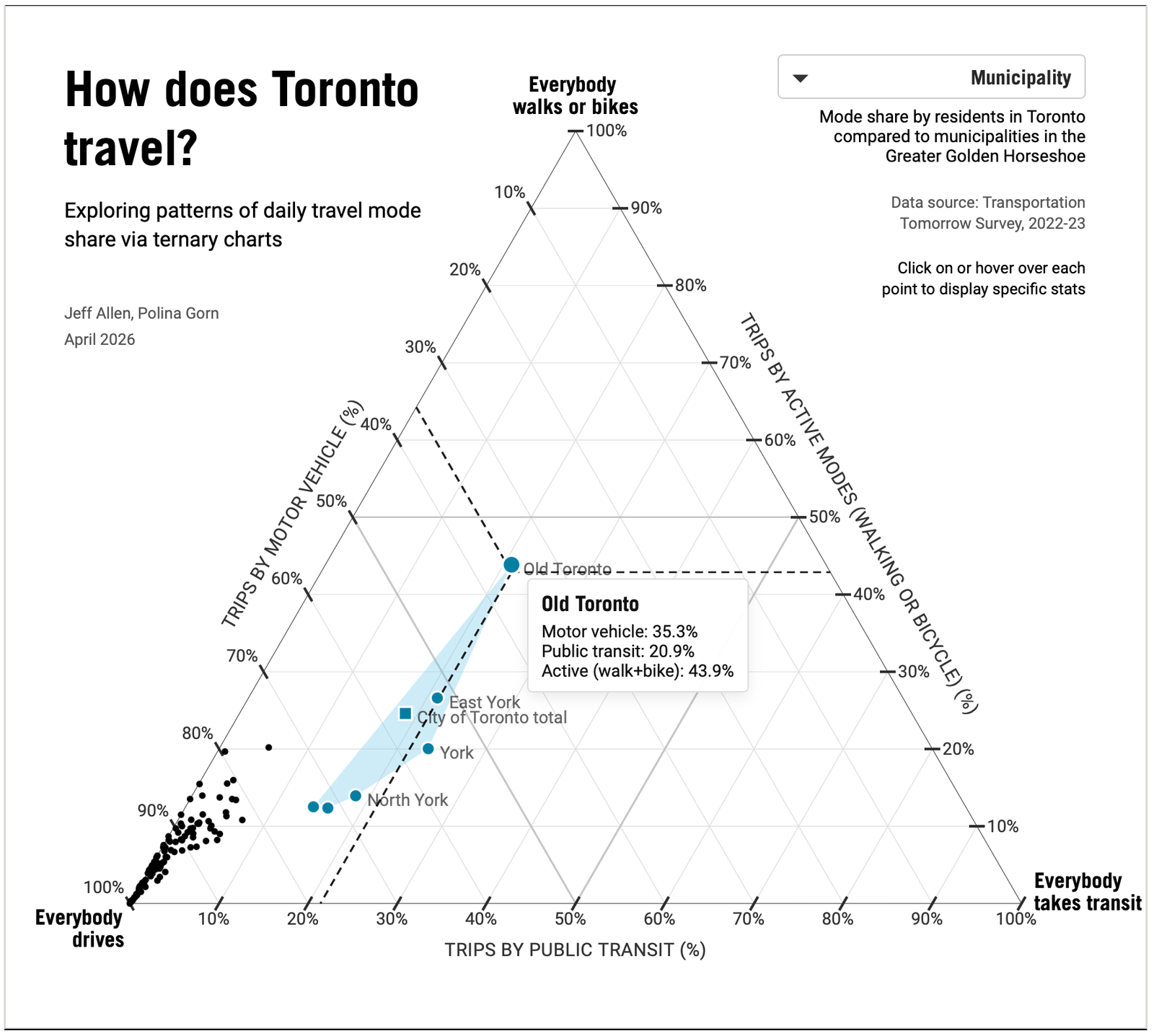
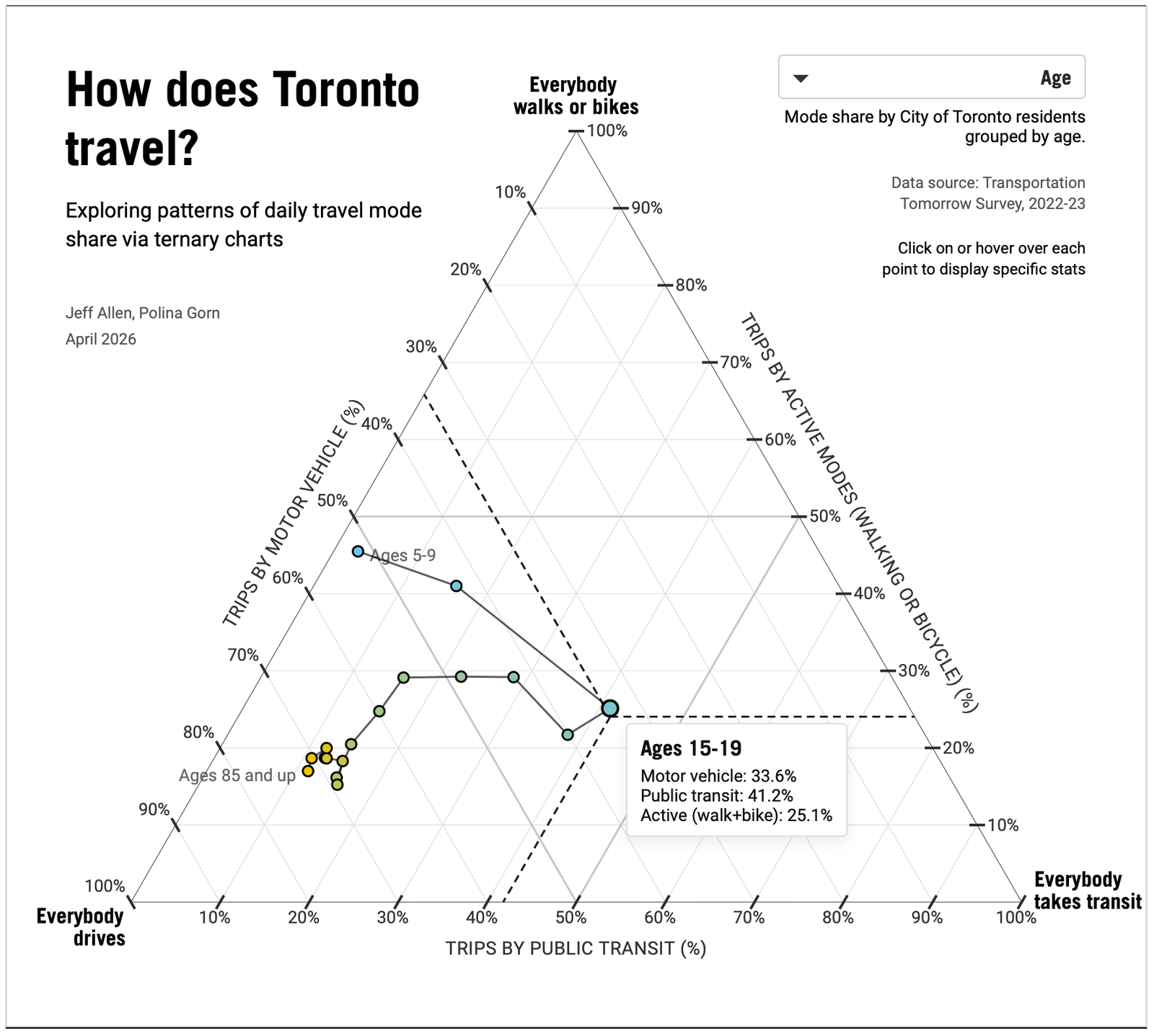
    These charts, from the School of Cities at the University of Toronto, are an excellent use case for a ternary chart. A ternary chart is a triangular plot with three different variables that all sum to a constant. In this case, the charts compare driving, walking/biking (active transport), and taking transit, with the constant being 100%. The data is from the 2022-23 Transportation Tomorrow Survey.

    What is clear from the first image above is that Old Toronto (also known as the former City of Toronto before amalgamation) is unlike any other municipality in Ontario. Its tight, pre-car urban fabric and transit coverage mean that nearly 65% of people walk, bike, or take transit! This is compared to about 43% for the entirety of the city today; meaning, Old Toronto is the only place where driving isn’t the majority mode.

    The second chart above shows mode share by age. What is interesting to see, though not surprising, is that younger people are more likely to walk, bike, and take transit. Here, the figures peak between the ages of 15-19 with over 66% of trips falling into these categories, which is just slightly above the Old Toronto figure. Then, as people get older and have greater incomes (which is another one of the charts), they move toward driving.

    Of course, this doesn’t mean that all older people must drive. There are lots of older people who live in Old Toronto where doing something other than driving makes up the majority of trips. Urban form, density, and access to transit play the most important roles in determining what modes of transport people will choose and what they find most convenient.


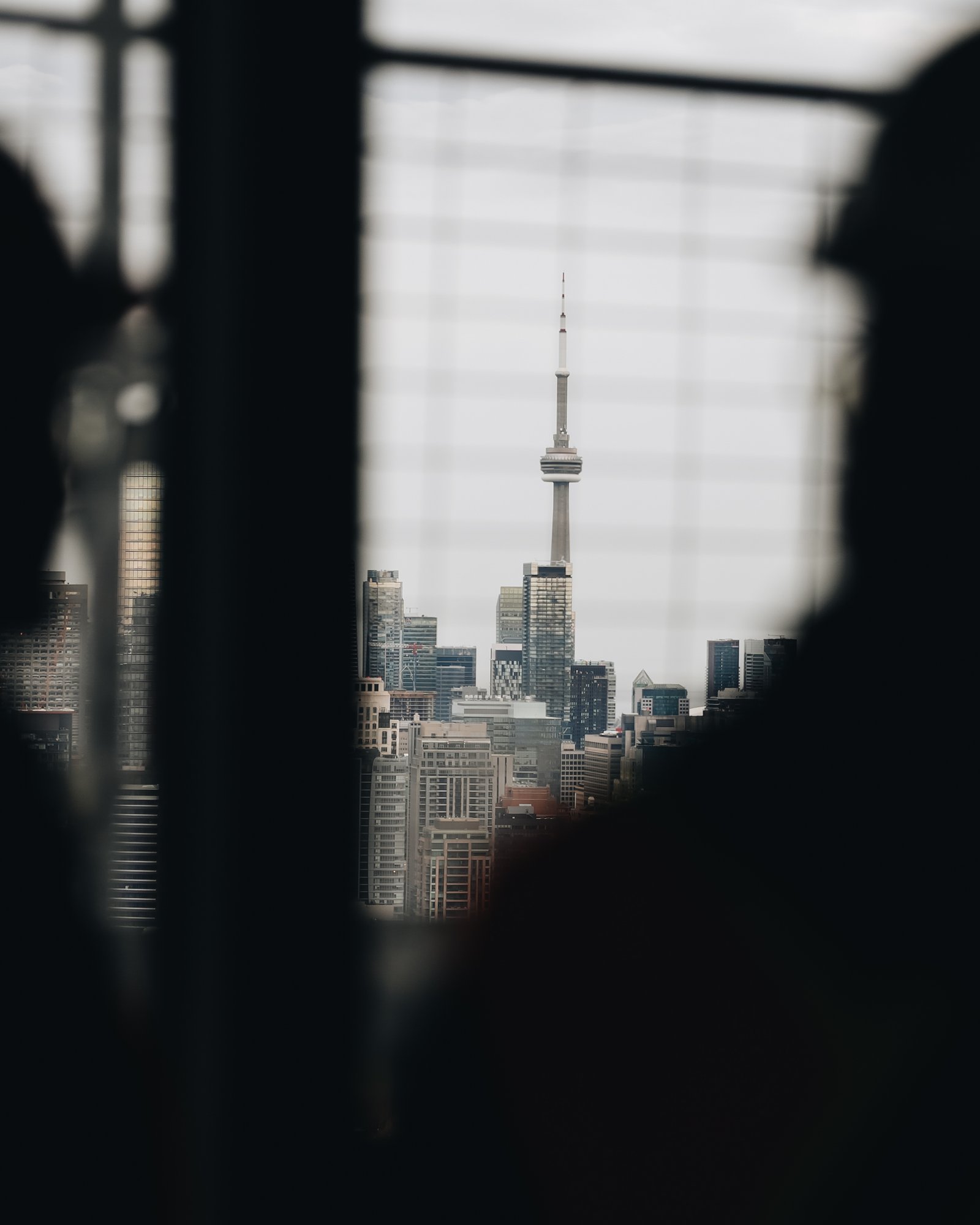
    Cover photo by Mitch Hodiono on Unsplash

    Charts from the School of Cities

  • ULI Toronto visits One Delisle

    May 7, 2026 · View original


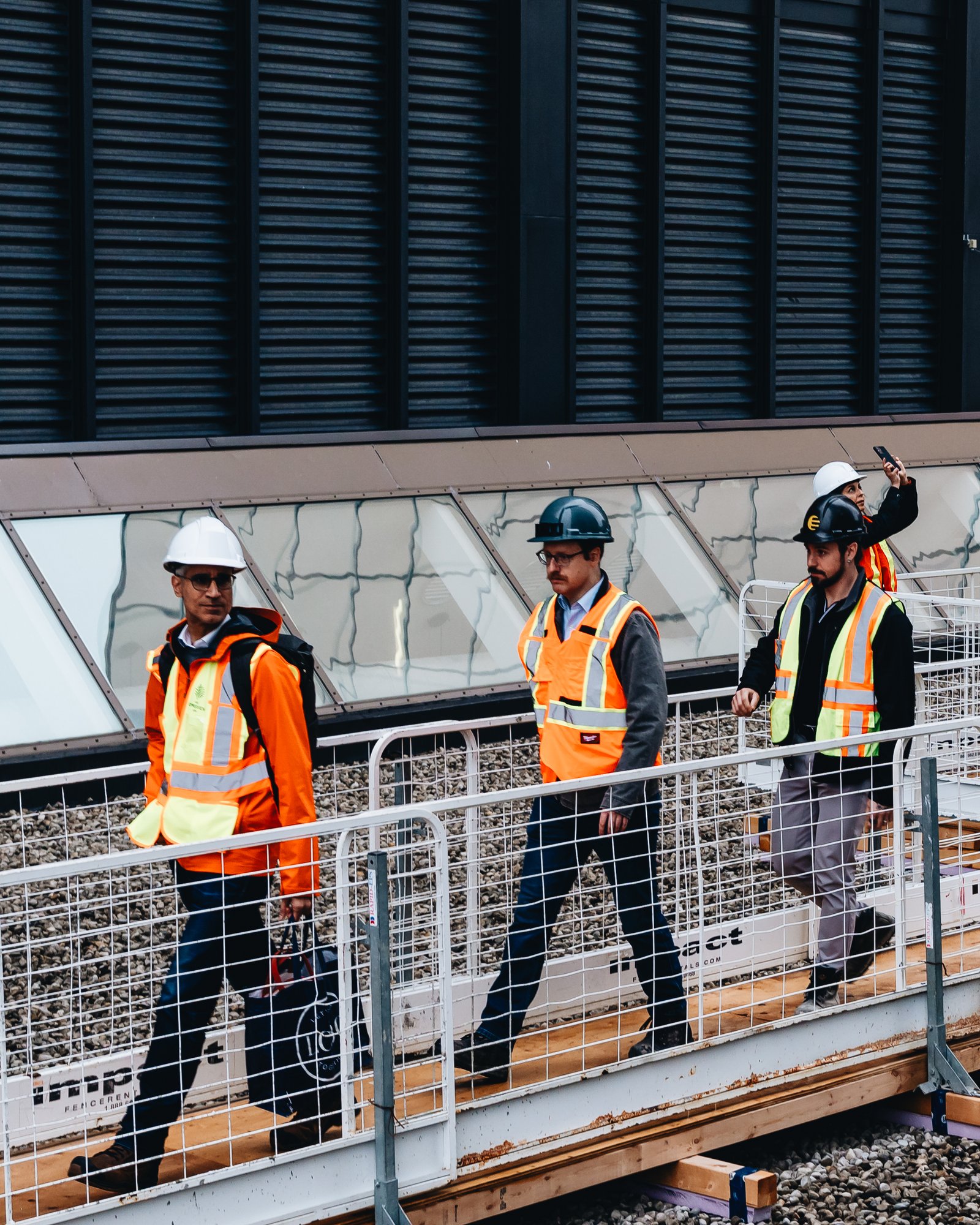
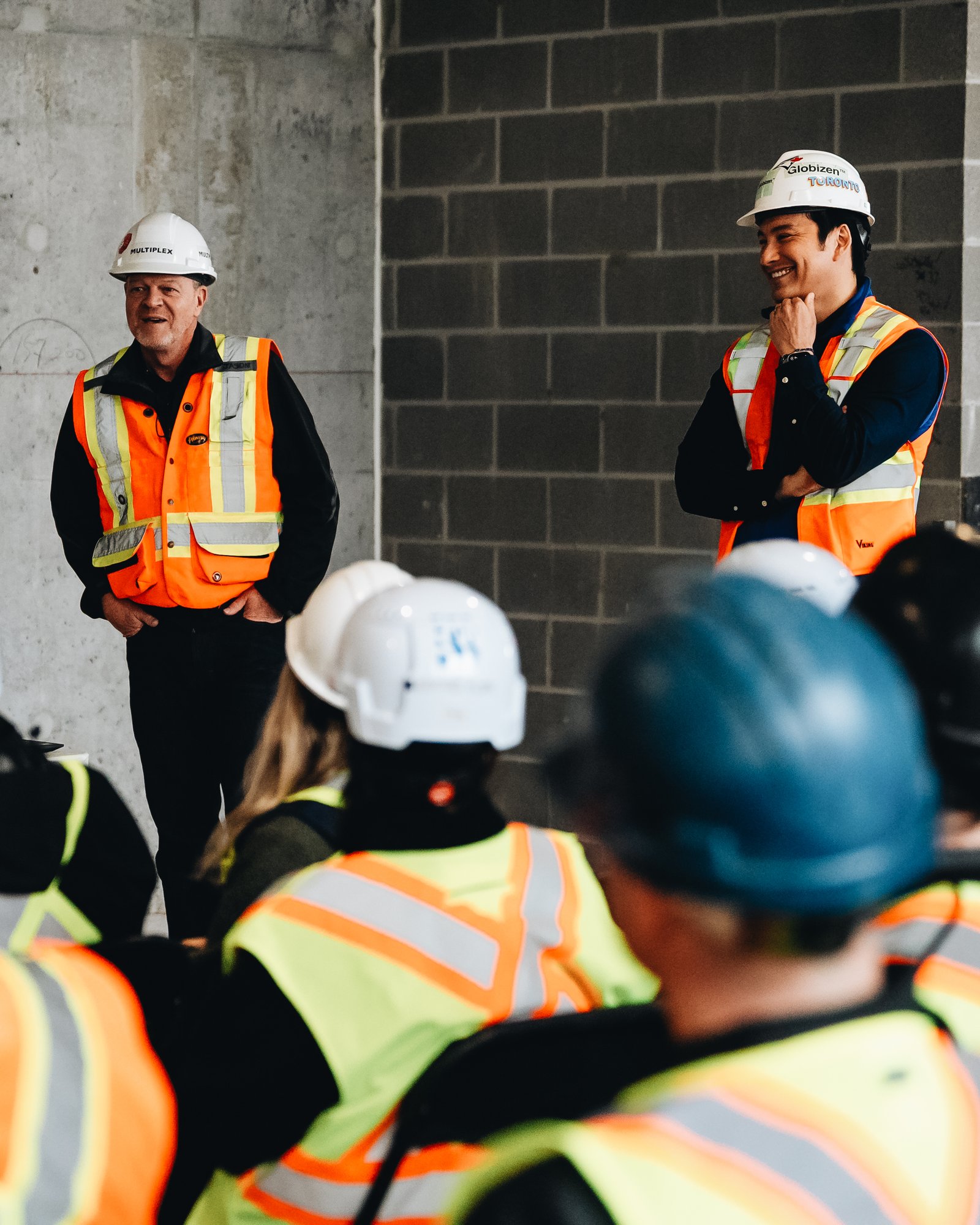
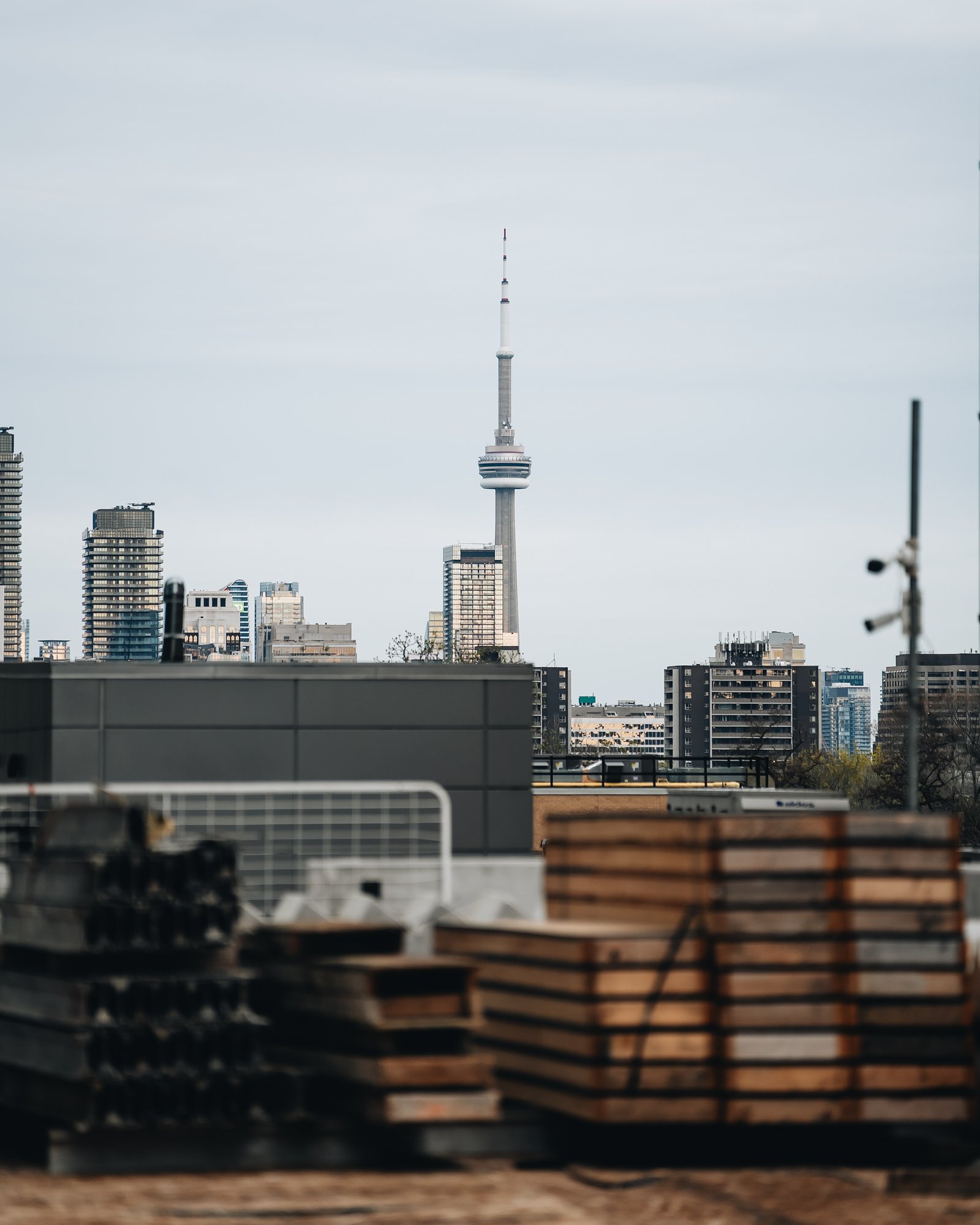
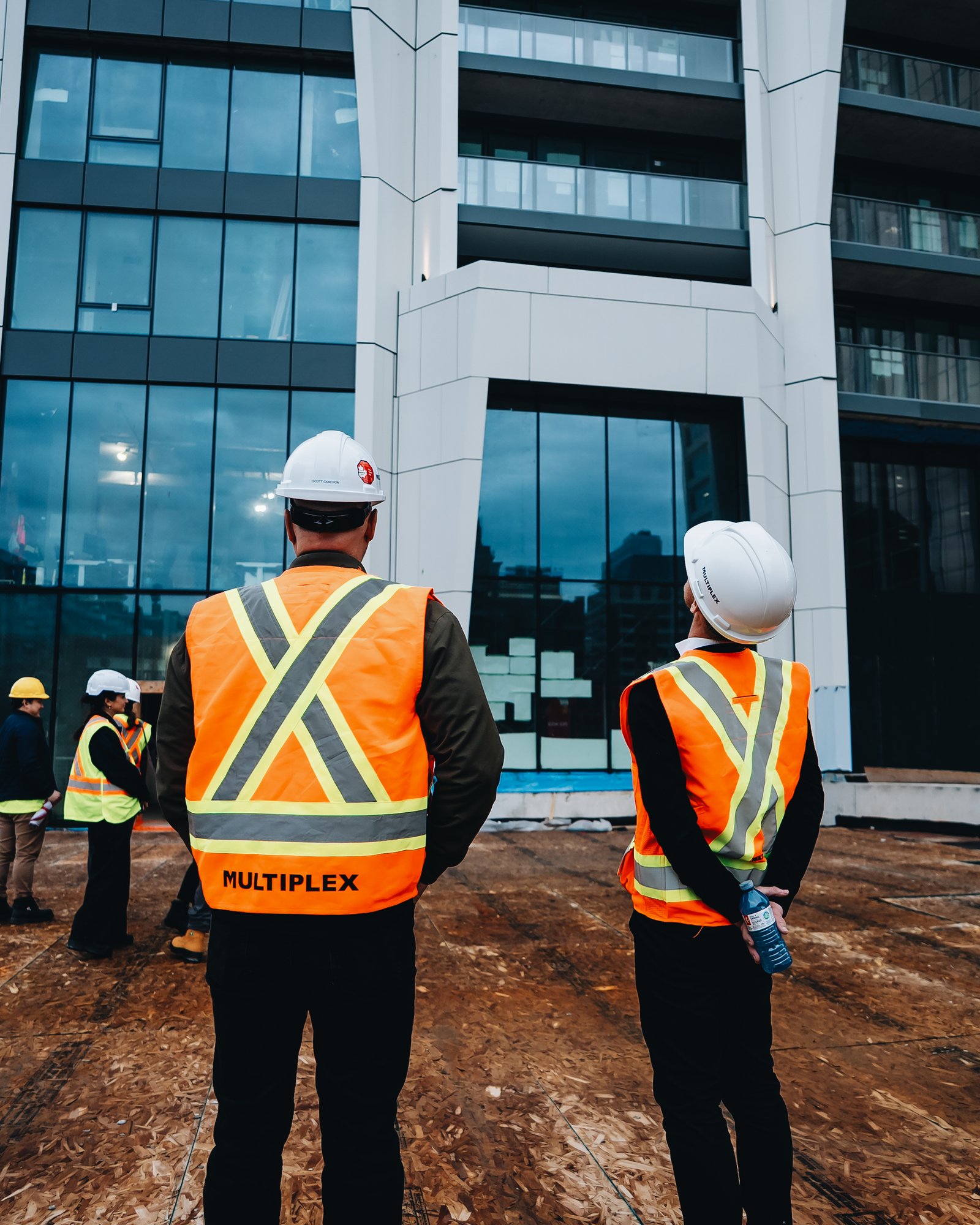
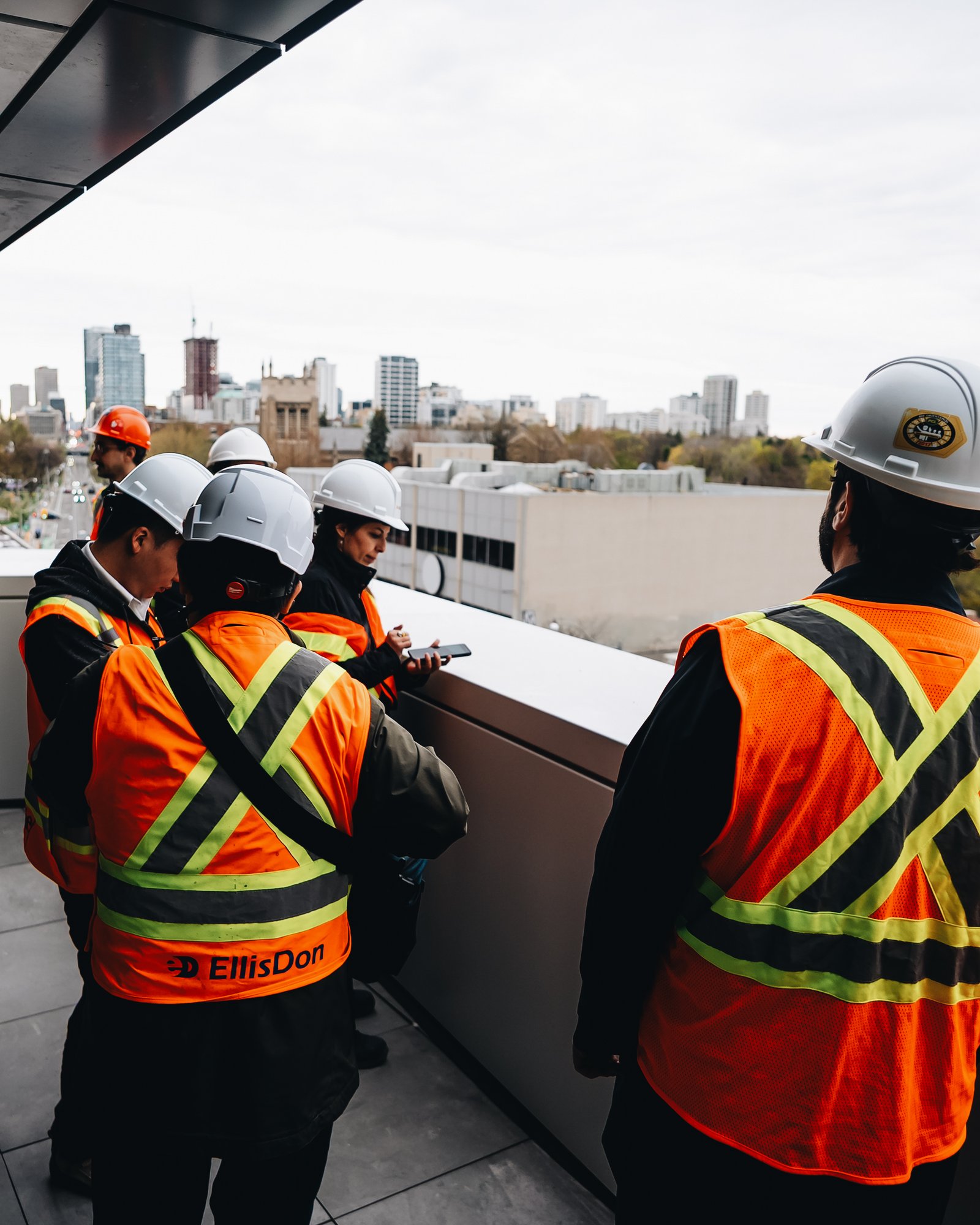
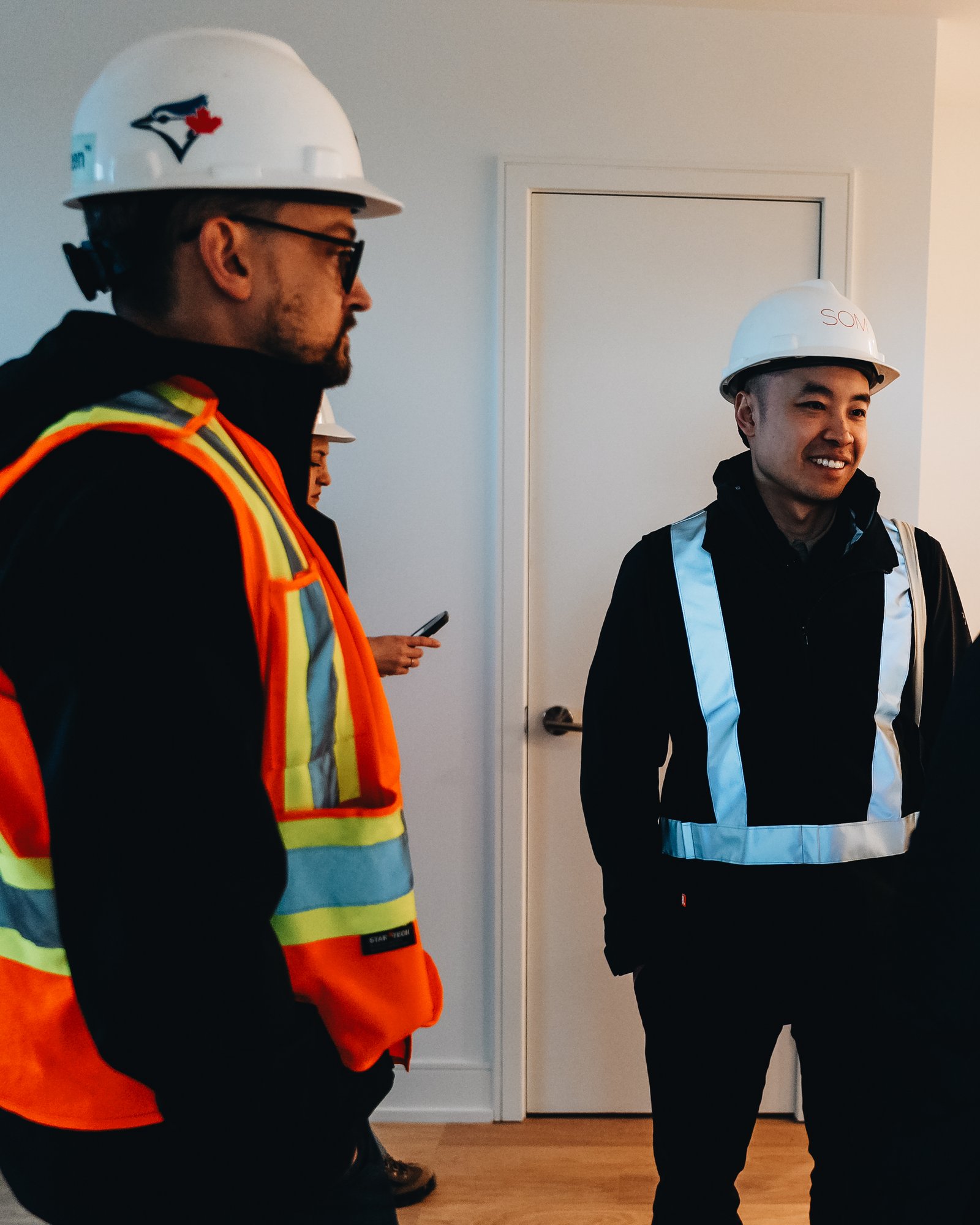
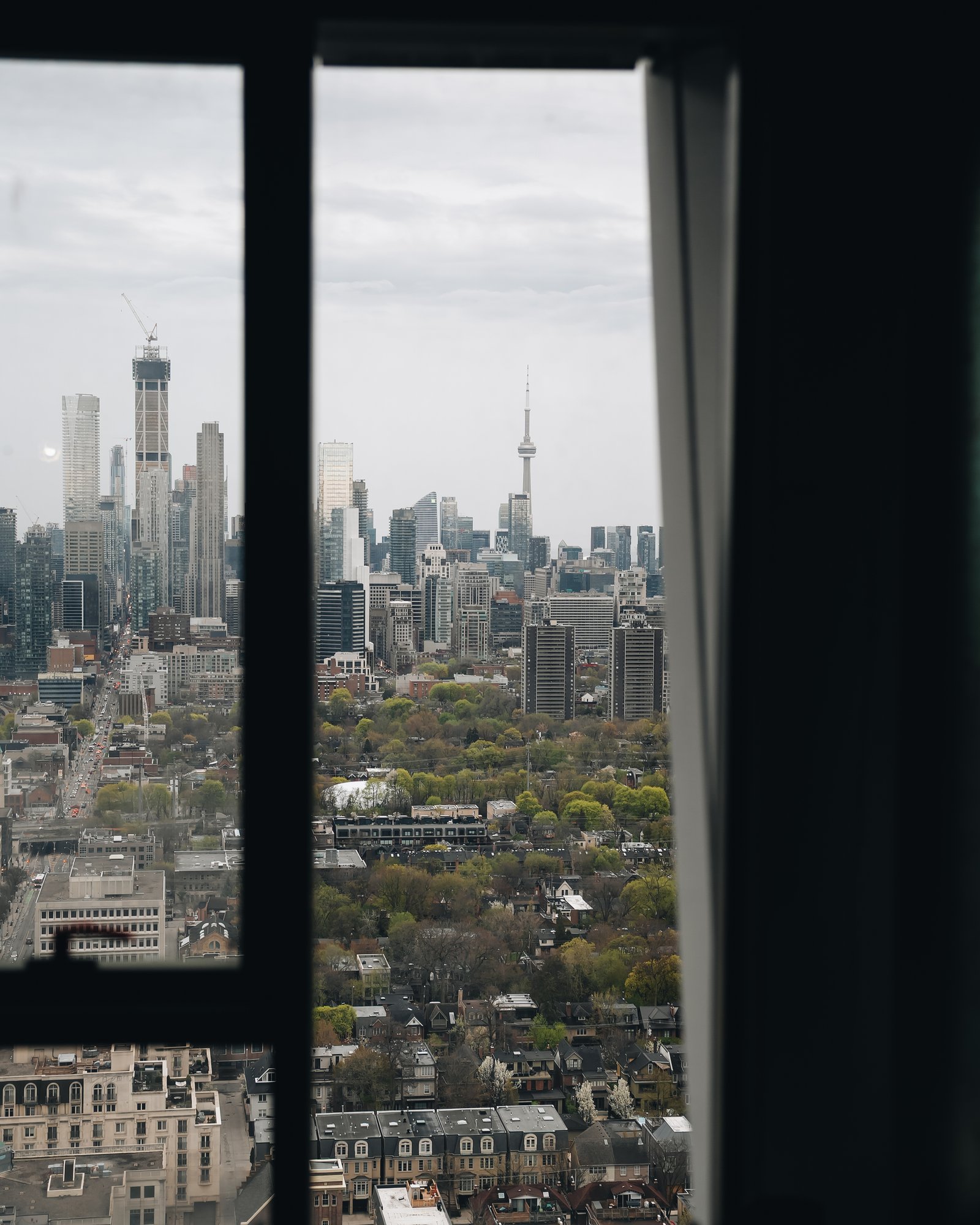
    This week, ULI Toronto visited One Delisle for a behind-the-scenes look at what we believe is this city’s next global landmark. The tour sold out in under 24 hours, and it was great to see so much interest from our industry peers. For those of you who made it out, thanks for taking the time! Here are some photos from the event, all courtesy of Multiplex Construction Canada.

  • Inside the plan for Toronto’s longest car-free street

    May 2, 2026 · View original


    Toronto, by and large, does not like car-free urban streets. I mean, we have very few of them. Let’s try and name them. The most notable would be the Distillery District. Next to this would perhaps be the intersection of Gould Street & Victoria Street on TMU’s campus. Then there’s Willcocks Commons at the University of Toronto, though it’s not the prettiest.

    After this, I can only think of small, unremarkable or temporary ones. I’m not counting seasonal closures. Technically, the Toronto Islands are the largest car-free community in North America, but I wouldn’t call this urban. So I’m now at a loss. If I’ve missed any noteworthy ones, I would be happy to be corrected.

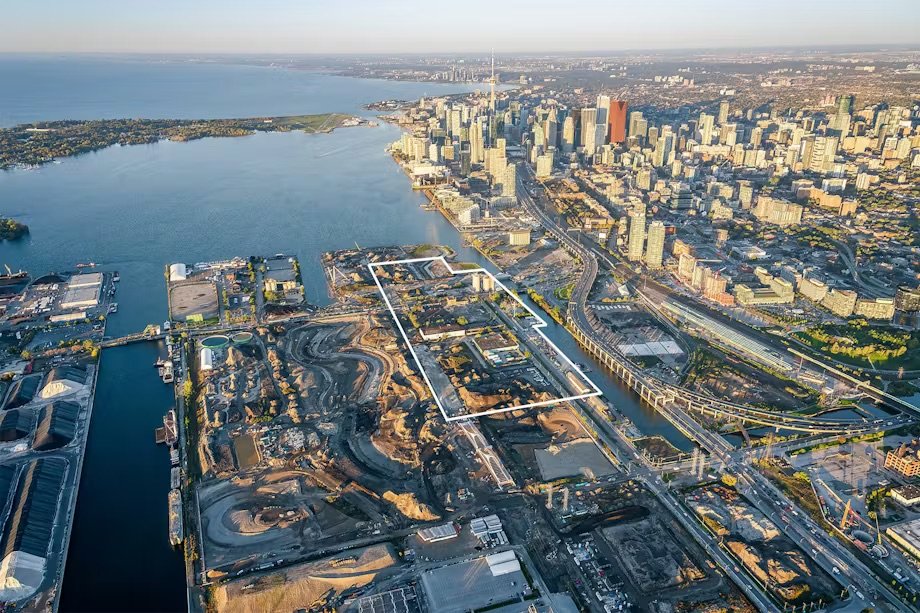
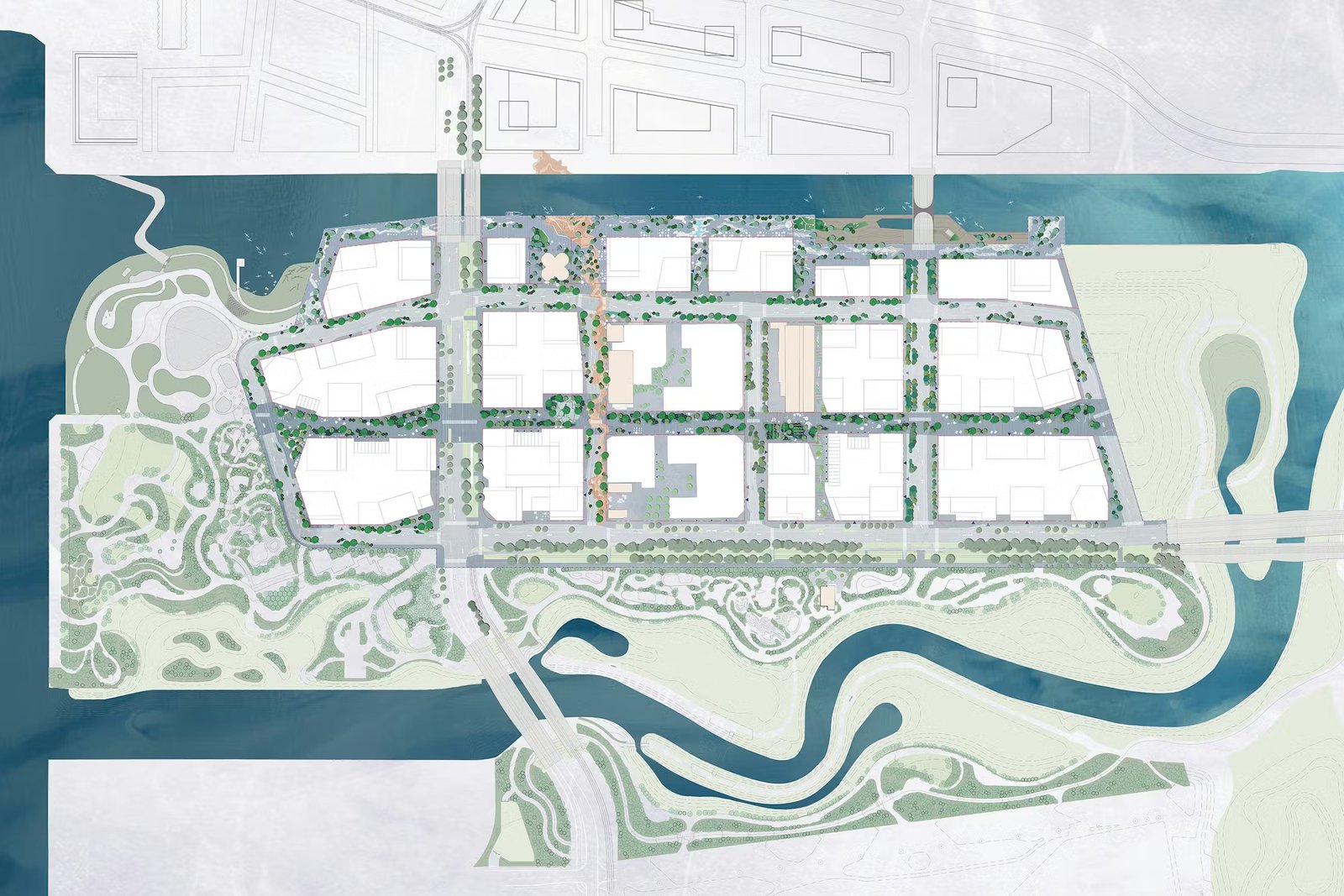
    This concise list makes the recently revealed masterplan for the island formerly known as Villiers — now called Ookwemin Minising (or OM) — all the more exciting. The 16-block plan now includes a 760-metre-long, fully pedestrianized public space called Centre Commons. It runs east-west in the site plan below, and is intersected by a north-south street called The Sandbar Trail.

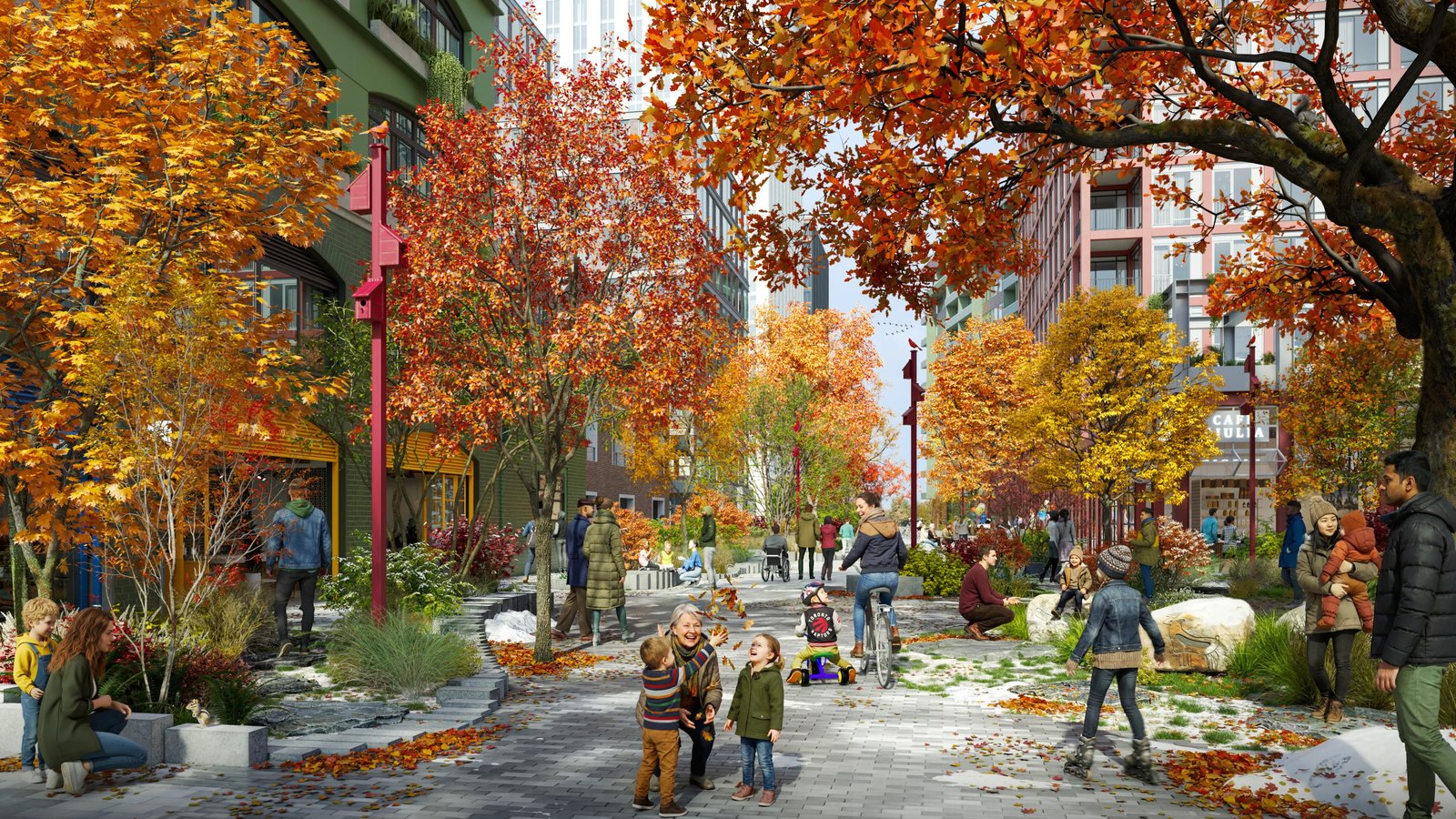
    As designed, Centre Commons is expected to be the longest car-free street in the city and look something like this:

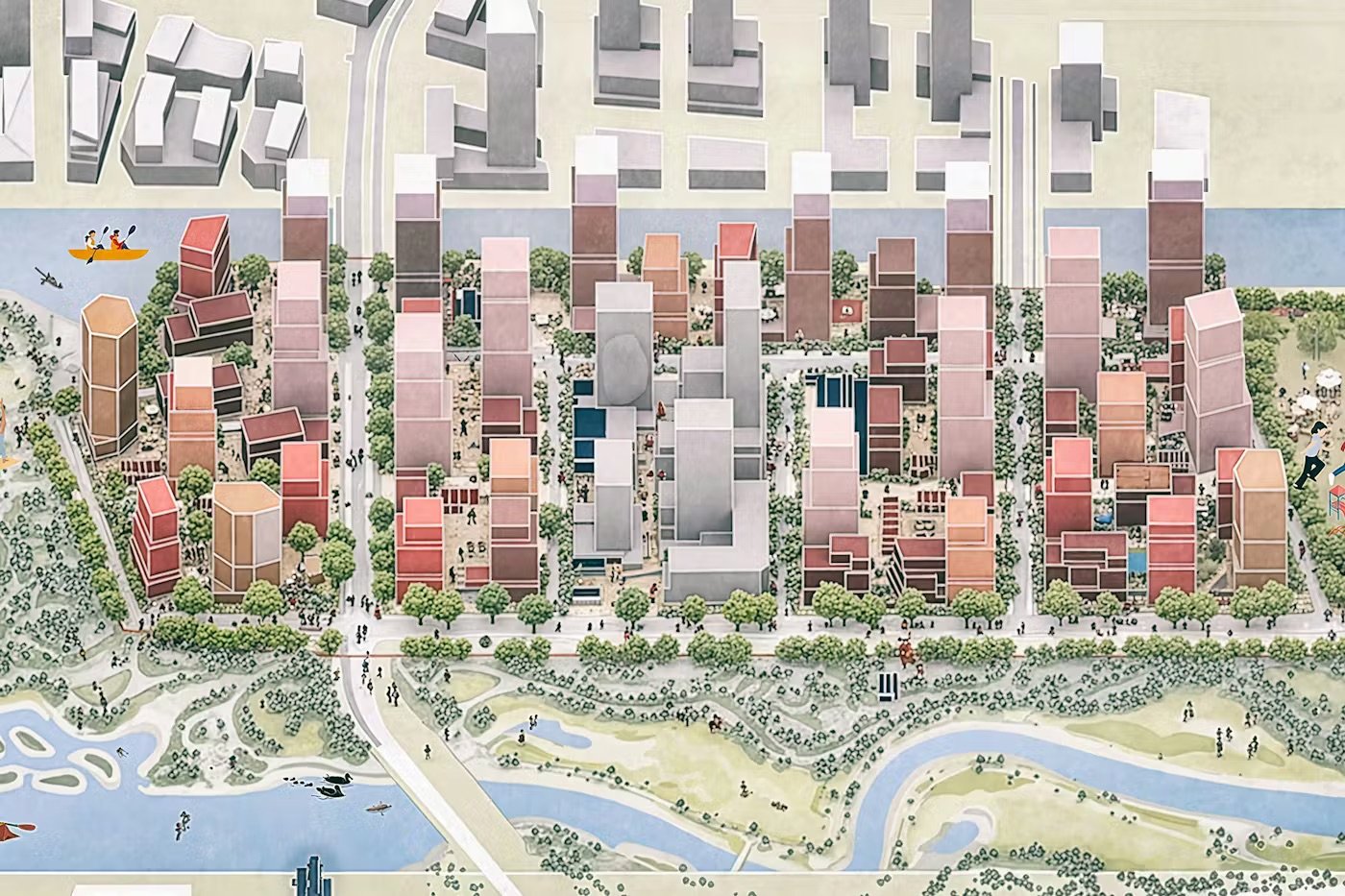
    This is the space in between the buildings. Equally important is the fact that the new masterplan unlocks a 27% increase in finer-grained density, without compromising on the quality or quantity of public space on the island. This is a major improvement over the previous masterplan, which had all the hallmarks of bland pseudo-urbanism. Meaning, it was supposed to be urban, but it wasn’t actually.

    I love the above massing diagram because it feels like a real, organic city, as opposed to just a series of repeating towers on podiums. It has a variety of scales and a more fine-grained urban pattern. This, as we have talked about, is notoriously difficult to achieve in new master-planned communities. But it is possible: loop transit through the island, lower the parking requirements, and give developers the freedom to build.

    The design team includes SLA of Copenhagen (landscape architects), Trophic (Indigenous-owned landscape architects), GHD (prime consultant and technical lead) and Allies and Morrison of London (architectural lead). And when built out, OM is expected to support approximately 12,000 new homes (including 3,000 affordable homes) and 2,900 new jobs.

    I say we build it.


    Cover photo by Allies and Morrison

    Aerial image from Waterfront Toronto

    Centre Commons rendering by Norm Li via SLA

    Area plan and massing diagram by SLA

  • Toronto cycling year in review

    April 17, 2026 · View original


    The City of Toronto just released its 2025 Cycling Year in Review report. You can download it here. At the highest level, Toronto is now considered to be the 7th most bike-friendly city in North America, according to the Copenhagenize Index. Our snowier sibling, Montréal, is number one on the continent. And globally, we’re ranked 55th.

    Neither of these positions is particularly impressive given our scale and prominence as a global city, but progress is being made. In 2025, City Council approved 33 km of new bikeways, installed 14.11 km, and upgraded 9.02 km. Our infrastructure continues to get better.

    What I find particularly noteworthy and telling, though, is the adoption of the city’s bike share network. 2025 was another record year, with 7.8 million rides, representing a 13% increase from 2024. We’re still not at the level of Montréal, which recorded 13 million rides in 2024, but adoption is growing quickly.

    We have gone from around 665,000 rides in 2015 to nearly 8 million in the span of a decade. That’s a compounded annual growth rate of approximately 28%! Once again, we are reminded that if you build it, and make it easy and safe, more people will ride bicycles.


    Cover photo by Jason Ng on Unsplash

  • The Toronto Effect

    February 20, 2026 · View original


    A few weeks ago, we spoke about the dramatic change that Toronto’s East Bayfront has undergone over the last two decades. It’s now a place. I also shared a time-lapse video from Waterfront Toronto showing how the Parliament Slip was landfilled in order to improve the street network in this area. If you missed it (and you like to nerd out on construction), it’s worth watching.

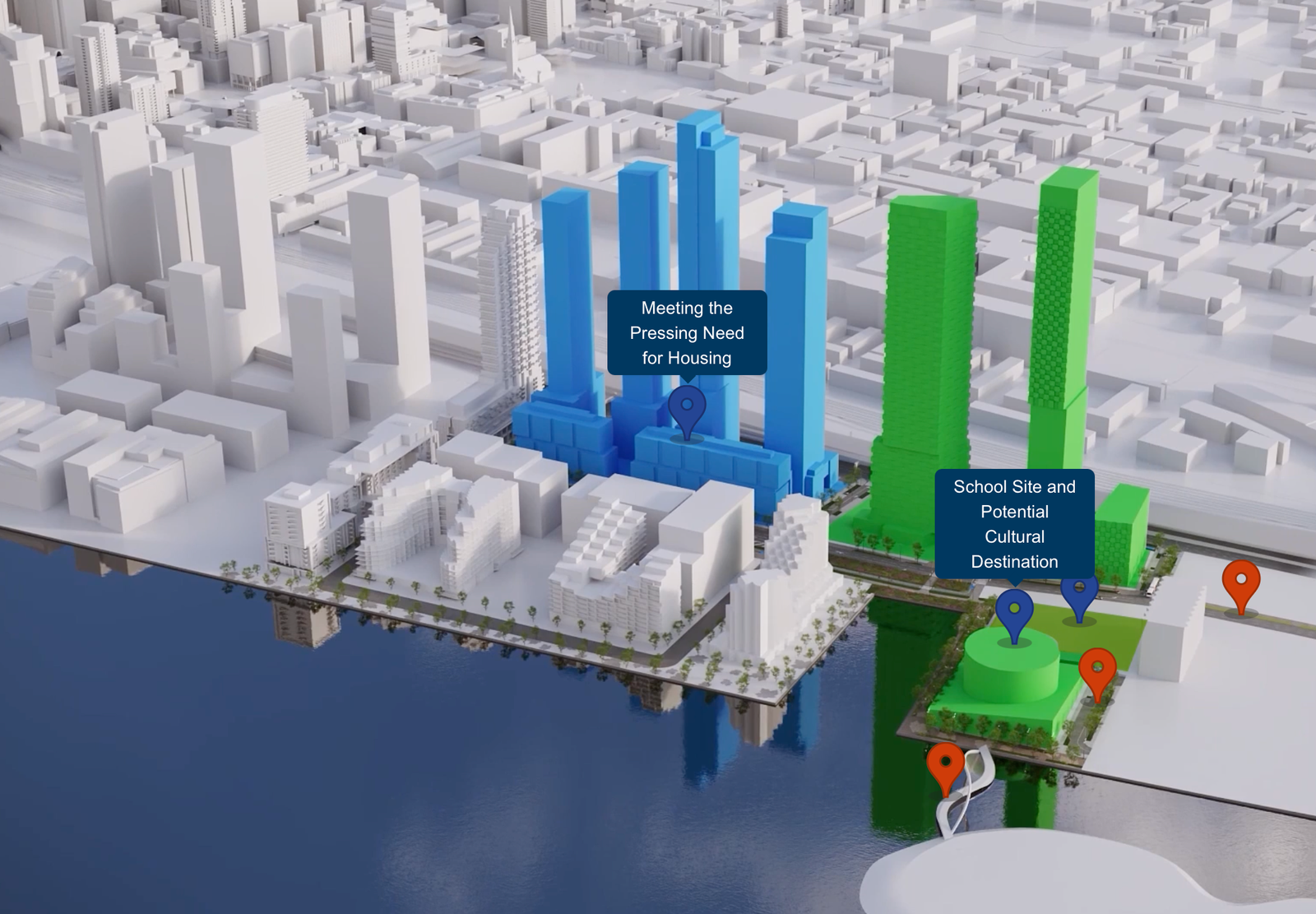
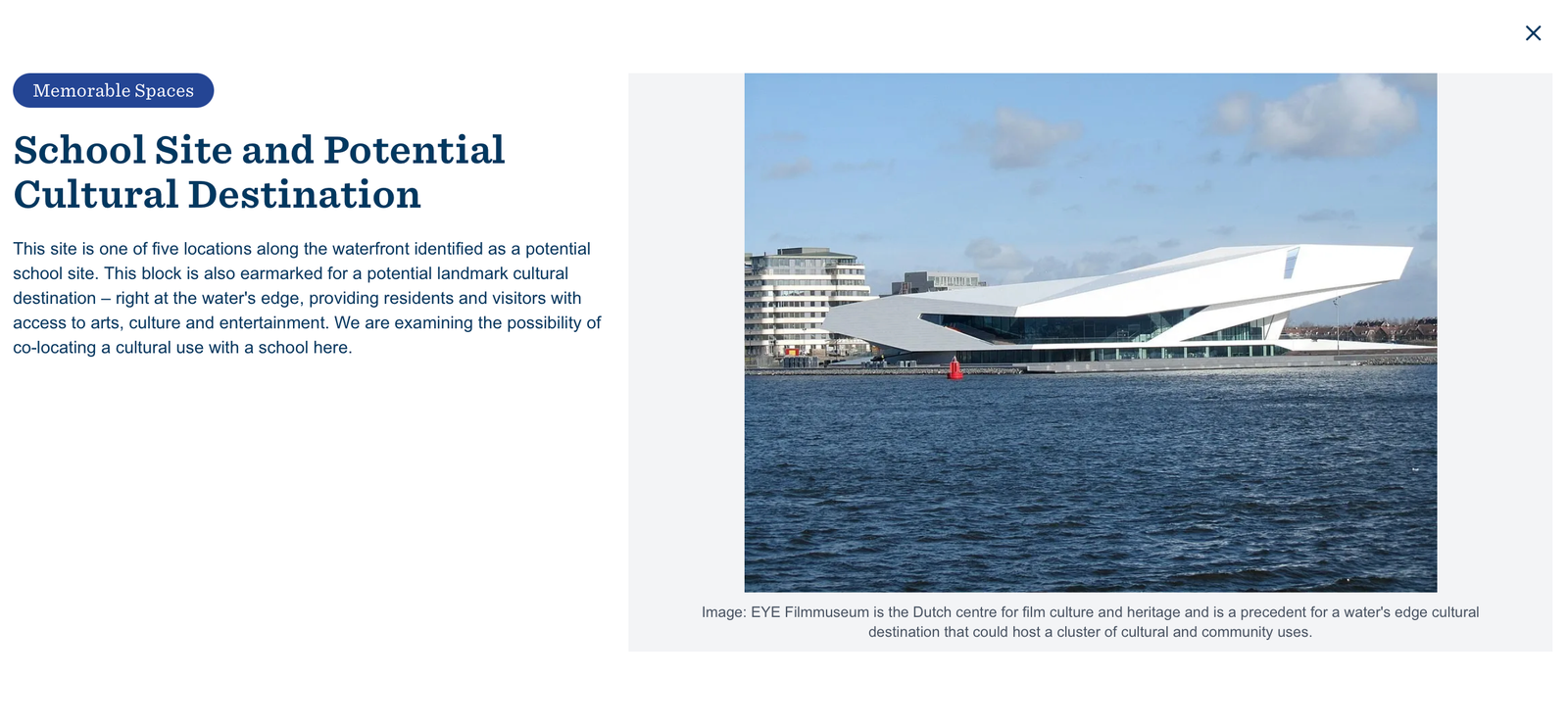
    In addition to this, Waterfront Toronto has (just?) released this interactive website showing in more detail what’s planned for the Quayside area. And if you make it all the way to the end of the experience, you’ll land on the below image, which shows some towers and the site earmarked for a school and potential cultural destination.

    Clicking on the site leads to this pop-up:

    Schools are obviously critical. Education is the number one predictor of household wealth. Build it. But I also think it’s important that we take advantage of this opportunity to build a truly remarkable cultural destination on Toronto’s doorstep. This is an opportunity for a globally recognized symbol that elevates the city’s brand, drives tourism, and serves as an economic development catalyst.

    So I would like to encourage those in charge to take this seriously. (If Globizen can help in any way, give us a call.) The right way to do it would be to host an international design competition and put the challenge to the world’s best architects. This is not the time or place to be timid. Rather, it’s the time and place to beat our chests. This could be a Sydney Opera House or Bilbao moment.

    Actually, it could be something even greater: The Toronto Effect.


    Cover photo by Antonio Gabola on Unsplash

  • The housing bias still holding back the Toronto of tomorrow

    February 17, 2026 · View original


    Last week, we spoke about one of Toronto’s failures when it comes to new “missing middle” housing, namely our inability to look forward to the Toronto of tomorrow, as opposed to only thinking about the Toronto of today. But let’s not forget that there are greater biases at play here influencing these outcomes.

    Beneath our concerns about not enough parking (how dare you wage a war on the car?) and congruency with neighbourhood character is a deeply rooted aversion toward higher-density apartment living; one that is arguably most prevalent in the English-speaking world.

    Consider Toronto’s response to the handsome Spadina Gardens apartment building at the start of the 20th century. We were certain that only people of questionable moral fibre would ever want to live in a four-storey apartment block!

    Since then, we’ve become far more open-minded, but survey people in the Anglosphere about whether they’d like to live in an elegant Parisian block, and you’ll often discover a stark preference for detached housing. In contrast, survey people on the European continent, or in Asia, and you’ll often see different preferences.

    Combine these preferences with the common law system prevalent throughout English-speaking countries — where individuals can more easily object to and block projects if, you know, the “vibe” is off — and the broad result is very different housing outcomes. There’s data to suggest that civil law countries tend to build more housing.


    Cover photo by Clarisse Croset on Unsplash