But that doesn't mean that you shouldn't invest in cycling infrastructure. Chicago, for instance, has been building out cycling infrastructure over the last few years (2020-2023) at an average rate of approximately 30 miles per year. This is double its rate from 2011-2019. And the results show.
According to recent data from Replica and the Chicago Department of Transportation (CDOT), Chicago saw the highest growth in cycling among the 10 largest cities in the US between fall 2019 and spring 2023.
Biking overall was up 119%. Crosstown trips were up 180% (bike trips that spanned across four or more neighborhoods). Trips related to shopping were up 117%. And notably, zero-car households were up 207%.
But that doesn't mean that you shouldn't invest in cycling infrastructure. Chicago, for instance, has been building out cycling infrastructure over the last few years (2020-2023) at an average rate of approximately 30 miles per year. This is double its rate from 2011-2019. And the results show.
According to recent data from Replica and the Chicago Department of Transportation (CDOT), Chicago saw the highest growth in cycling among the 10 largest cities in the US between fall 2019 and spring 2023.
Biking overall was up 119%. Crosstown trips were up 180% (bike trips that spanned across four or more neighborhoods). Trips related to shopping were up 117%. And notably, zero-car households were up 207%.
Remember, this is a city that basically has the same weather as Toronto. It gets cold in the winter. And sometimes it snows. But clearly if you build good cycling infrastructure, people will use it.
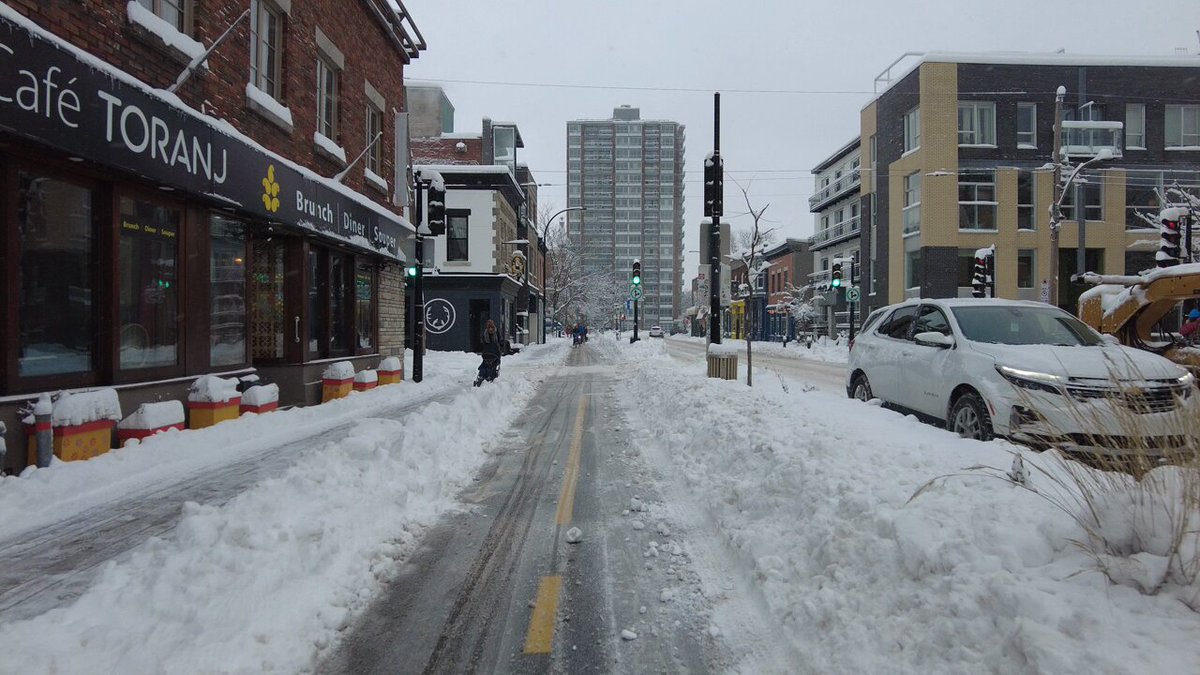
Interesting how people project based on wherever they're from. No one could come to central Montreal in the winter and not see lots of cyclists. Not the same volumes as summer but it's still common and visible.
Remember, this is a city that basically has the same weather as Toronto. It gets cold in the winter. And sometimes it snows. But clearly if you build good cycling infrastructure, people will use it.
Interesting how people project based on wherever they're from. No one could come to central Montreal in the winter and not see lots of cyclists. Not the same volumes as summer but it's still common and visible.
We landed in Lyon around 12:30 PM local time today. And it was about 15 degrees and sunny. This doesn't bode well for fresh snow in the mountains. But it does bode well for getting a nice raccoon tan.
Our flights and connections were heavily delayed, and so I had started mentally preparing for the possibility of an overnight layover in Montreal. Thankfully, we managed to make our connection. Unfortunately, some of our skis didn't. Hopefully they come tomorrow.
It's for this reason that I usually throw an AirTag in my bag(s). It probably won't help you get your delayed luggage any faster, but at least it gives you some peace of mind knowing where it is.
For whatever reason, I also slept really well on last night's flight. I don't generally sleep well on planes. So I've been up all day, and we've been eating our way through Lyon.
The general rule of thumb with these overnight European flights seems to be that you want to stay up as best you can once you arrive. If you nap, it'll only prolong the adjustment period.
Our first meal was during that awkward time in between lunch and dinner when most restaurants are closed. But we went to Bistro Bondy (our hotel recommended it) and it was exactly what we needed. For dinner, we ended up at La Tête de Lard and it looked something like this:
There was a bit of cream and cheese involved in this meal and so, at this point, I am ready for bed. See you all tomorrow.
What's remarkable is the number of people who, at least from these tweets, continue to cycle in the winter. In fact, in the above video, there looks to be more bikes on the road than cars. Plowed lanes certainly help!
According to the city of Montréal, about 80% of the network is maintained for year-round use (717 km of its 900 km network). But I'm sure that there are a lot of people who still can't imagine anyone wanting to cycle in these conditions. So what is the actual winter usage?
Thankfully, Montréal has bike counters. 55 of them to be exact. And all of the data can be viewed, here. The busiest location is Saint Denis and Rue des Carrières. This falls within their Réseau Express Vélo (REV) network, which is a series of protected lanes intended to do what the name suggests.
The daily average for this counter is currently 4,403 riders, but the summer peak looks to be closer to 10,000. And this year, it has seen close to 1.5 million rides in total. This is a significant number. I mean, imagine 1.5 million more car trips on the road.
Looking at yesterday's data, the daily count was 1,292. If you very crudely divide this by my 10,000 summer peak estimate, you get to around 13%. And this happens to line up with what seems to be the city's generally accepted winter cycling retention ratio.
Not surprisingly, fewer people want to cycle in the winter. But the number is not nothing. If you multiple 1,292 cycling trips by 120 days (roughly December to March), that's still over 150,000 trips (I know, I didn't account for weekends). On top of this, the city's winter cycling retention rate appears to be increasing.
So just because you may not want to cycle to work in the winter, it doesn't necessarily mean that others feel the same way.
We landed in Lyon around 12:30 PM local time today. And it was about 15 degrees and sunny. This doesn't bode well for fresh snow in the mountains. But it does bode well for getting a nice raccoon tan.
Our flights and connections were heavily delayed, and so I had started mentally preparing for the possibility of an overnight layover in Montreal. Thankfully, we managed to make our connection. Unfortunately, some of our skis didn't. Hopefully they come tomorrow.
It's for this reason that I usually throw an AirTag in my bag(s). It probably won't help you get your delayed luggage any faster, but at least it gives you some peace of mind knowing where it is.
For whatever reason, I also slept really well on last night's flight. I don't generally sleep well on planes. So I've been up all day, and we've been eating our way through Lyon.
The general rule of thumb with these overnight European flights seems to be that you want to stay up as best you can once you arrive. If you nap, it'll only prolong the adjustment period.
Our first meal was during that awkward time in between lunch and dinner when most restaurants are closed. But we went to Bistro Bondy (our hotel recommended it) and it was exactly what we needed. For dinner, we ended up at La Tête de Lard and it looked something like this:
There was a bit of cream and cheese involved in this meal and so, at this point, I am ready for bed. See you all tomorrow.
What's remarkable is the number of people who, at least from these tweets, continue to cycle in the winter. In fact, in the above video, there looks to be more bikes on the road than cars. Plowed lanes certainly help!
According to the city of Montréal, about 80% of the network is maintained for year-round use (717 km of its 900 km network). But I'm sure that there are a lot of people who still can't imagine anyone wanting to cycle in these conditions. So what is the actual winter usage?
Thankfully, Montréal has bike counters. 55 of them to be exact. And all of the data can be viewed, here. The busiest location is Saint Denis and Rue des Carrières. This falls within their Réseau Express Vélo (REV) network, which is a series of protected lanes intended to do what the name suggests.
The daily average for this counter is currently 4,403 riders, but the summer peak looks to be closer to 10,000. And this year, it has seen close to 1.5 million rides in total. This is a significant number. I mean, imagine 1.5 million more car trips on the road.
Looking at yesterday's data, the daily count was 1,292. If you very crudely divide this by my 10,000 summer peak estimate, you get to around 13%. And this happens to line up with what seems to be the city's generally accepted winter cycling retention ratio.
Not surprisingly, fewer people want to cycle in the winter. But the number is not nothing. If you multiple 1,292 cycling trips by 120 days (roughly December to March), that's still over 150,000 trips (I know, I didn't account for weekends). On top of this, the city's winter cycling retention rate appears to be increasing.
So just because you may not want to cycle to work in the winter, it doesn't necessarily mean that others feel the same way.