Deloitte recently asked 1,000 Americans if they would be willing to give up car ownership in favor of something that they are calling "Mobility-as-a-Service." This umbrella moniker is meant to capture everything from public transit and bike shares to Ubers and car rentals.
Deloitte recently asked 1,000 Americans if they would be willing to give up car ownership in favor of something that they are calling "Mobility-as-a-Service." This umbrella moniker is meant to capture everything from public transit and bike shares to Ubers and car rentals.
What's interesting is how willing young people seem to be to forgo car ownership. (Note: Willing, here, includes people who answered somewhat willing, willing, and very willing.)
It's also doesn't seem to be dependent on geography. Broadly speaking, urbanites are more likely to say that they would be willing to give up owning a car. In this survey, 50% of people in urban areas said that they would be at least somewhat willing, whereas the number drops to 17% for people in rural and suburban areas. But oddly enough, young people in rural and suburban areas are just as willing, if not more willing than their urban counterparts. I wonder why.
This maybe suggests that we are seeing a generational shift in how younger people view car ownership. That, or they haven't started having enough kids yet and their perspective will change as they get older. If I had to guess, I'd say it's a mix of both, but more of the former. Because look at the large spread between the next two cohorts in the above chart. There are some trends here (assuming this data is representative). It's not just about family life.
Also noteworthy is the fact that Canadians are some of the most unwilling people, according to this survey:
Personally, I hate driving. I look forward to the day when most cars drive themselves. So I'd place myself in the very willing camp. What about you?
The key to making transit useful for people is not very complicated. It is highly dependent on population densities. In other words, it works best when it's proximate to as many people as possible. And so the more low density a city is, the harder it is for this to be true. It just isn't feasible to run that many lines. To that end, here's an interesting study by the School of Cities at the University of Toronto that compares rail transit and population density for 250 cities around the world.
This is what Toronto vs. Hong Kong looks like:
I chose Hong Kong because, according to this dataset, it has the highest percentage of people living within 1 km of a major rail transit station at 75.8%. Toronto, on the other hand, sits at 20%, which is frankly not very good (though I don't see our slow-moving streetcars on the above map). It's also why our bus network has to do so much heavy lifting to get people to rail. This places us 8th in the US and Canada (see below). Once again, when it comes to transit in this part of the world, there's New York, and then everyone else:
But add in the rest of the world -- most notably Europe and East Asia -- and New York drops down to 17th position:
This, to me, is a critically important metric. For what share of residents is rail transit close and convenient? In cities like Hong Kong, Paris, and Stockholm, it is the majority of the urban population. But for the majority of cities in Canada and the US, the answer is a very small percentage. To improve this, you can obviously build more lines. And that's certainly part of it. But to really maximize the value of these investments, you also need density. I hope our city leaders are paying attention to this metric.
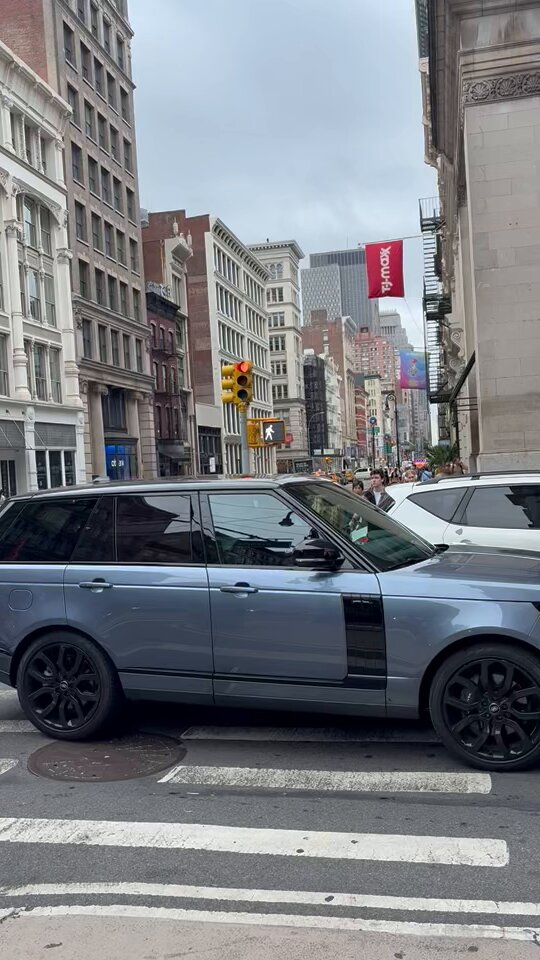
After decades of delay and negotiations, New York City finally implemented congestion pricing for the area of Manhattan south of 60th Street. This is a first for the United States, and so it's a big deal not just for the city, but for this part of the world. It went into effect yesterday, on Sunday at midnight, so that the MTA could work out any kinks before this morning's rush hour. And apparently everything went smoothly. Drivers are now required to pay $9 to enter the zone during peak hours (5am to 9pm during weekdays). The charge is also expected to rise to $15 by 2031. Of course, this is a highly contested initiative. Trump is still vowing to kill the program as one of his first acts in office and, as soon as the pricing came into effect, suburban drivers started protesting it in Manhattan. I thought Jarrett Walker had a clever response to this:
To protest congestion pricing, Suburban drivers are driving into Manhattan and blocking traffic with their cars. These extreme activists plan to make streets so unsafe and gridlocked that NYC businesses lose money! Only car owners can shut NYC down and send a message!
What's interesting is how willing young people seem to be to forgo car ownership. (Note: Willing, here, includes people who answered somewhat willing, willing, and very willing.)
It's also doesn't seem to be dependent on geography. Broadly speaking, urbanites are more likely to say that they would be willing to give up owning a car. In this survey, 50% of people in urban areas said that they would be at least somewhat willing, whereas the number drops to 17% for people in rural and suburban areas. But oddly enough, young people in rural and suburban areas are just as willing, if not more willing than their urban counterparts. I wonder why.
This maybe suggests that we are seeing a generational shift in how younger people view car ownership. That, or they haven't started having enough kids yet and their perspective will change as they get older. If I had to guess, I'd say it's a mix of both, but more of the former. Because look at the large spread between the next two cohorts in the above chart. There are some trends here (assuming this data is representative). It's not just about family life.
Also noteworthy is the fact that Canadians are some of the most unwilling people, according to this survey:
Personally, I hate driving. I look forward to the day when most cars drive themselves. So I'd place myself in the very willing camp. What about you?
The key to making transit useful for people is not very complicated. It is highly dependent on population densities. In other words, it works best when it's proximate to as many people as possible. And so the more low density a city is, the harder it is for this to be true. It just isn't feasible to run that many lines. To that end, here's an interesting study by the School of Cities at the University of Toronto that compares rail transit and population density for 250 cities around the world.
This is what Toronto vs. Hong Kong looks like:
I chose Hong Kong because, according to this dataset, it has the highest percentage of people living within 1 km of a major rail transit station at 75.8%. Toronto, on the other hand, sits at 20%, which is frankly not very good (though I don't see our slow-moving streetcars on the above map). It's also why our bus network has to do so much heavy lifting to get people to rail. This places us 8th in the US and Canada (see below). Once again, when it comes to transit in this part of the world, there's New York, and then everyone else:
But add in the rest of the world -- most notably Europe and East Asia -- and New York drops down to 17th position:
This, to me, is a critically important metric. For what share of residents is rail transit close and convenient? In cities like Hong Kong, Paris, and Stockholm, it is the majority of the urban population. But for the majority of cities in Canada and the US, the answer is a very small percentage. To improve this, you can obviously build more lines. And that's certainly part of it. But to really maximize the value of these investments, you also need density. I hope our city leaders are paying attention to this metric.
After decades of delay and negotiations, New York City finally implemented congestion pricing for the area of Manhattan south of 60th Street. This is a first for the United States, and so it's a big deal not just for the city, but for this part of the world. It went into effect yesterday, on Sunday at midnight, so that the MTA could work out any kinks before this morning's rush hour. And apparently everything went smoothly. Drivers are now required to pay $9 to enter the zone during peak hours (5am to 9pm during weekdays). The charge is also expected to rise to $15 by 2031. Of course, this is a highly contested initiative. Trump is still vowing to kill the program as one of his first acts in office and, as soon as the pricing came into effect, suburban drivers started protesting it in Manhattan. I thought Jarrett Walker had a clever response to this:
To protest congestion pricing, Suburban drivers are driving into Manhattan and blocking traffic with their cars. These extreme activists plan to make streets so unsafe and gridlocked that NYC businesses lose money! Only car owners can shut NYC down and send a message!
One of the common rebuttals when it comes to things like road and congestion pricing is this one: "yeah, this might work in cities like London which have great transit systems, but it doesn't work in our city because we don't have that and it will unfairly disadvantage those who have no other alternative but to drive." In fact, this exact excuse was recently raised by local politicians here in Toronto. But this is New York fucking City. It has the highest annual transit ridership in North America (beating out Mexico City by nearly 2x) and it has the largest system by total length. According to the 2012-2016 American Community Survey, 85% of people traveling to Manhattan's CBD (I'm assuming lower Manhattan here) also take transit. And only 11% drive a car. So what exactly is the problem here?
This objection also ignores the fact that, generally speaking, congestion pricing has two main goals: (1) to, of course, reduce traffic congestion and (2) to generate money for more efficient modes of transport. In this case, the MTA is hoping this new congestion relief zone will generate up to $15 billion that can then be reinvested in transit and other infrastructure. Demand for roads can also be relatively inelastic in the short term, meaning demand doesn't change all that much as the price moves up and down. This makes it a good place to find money for public infrastructure, but it might mean that $9 is too low to have a dramatic impact on traffic congestion. We will see; I'm sure we'll get some data soon enough.
My prediction is that this will ultimately have an impact on congestion and that people in New York will get over the $9 charge. They'll also come to appreciate the reduced traffic congestion within the zone. So I think this road pricing will stick, and my hope is that it will become an example for other cities in the US and across North America. Congratulations on finally getting this over the line, NYC. It was certainly a hard-fought battle.
One of the common rebuttals when it comes to things like road and congestion pricing is this one: "yeah, this might work in cities like London which have great transit systems, but it doesn't work in our city because we don't have that and it will unfairly disadvantage those who have no other alternative but to drive." In fact, this exact excuse was recently raised by local politicians here in Toronto. But this is New York fucking City. It has the highest annual transit ridership in North America (beating out Mexico City by nearly 2x) and it has the largest system by total length. According to the 2012-2016 American Community Survey, 85% of people traveling to Manhattan's CBD (I'm assuming lower Manhattan here) also take transit. And only 11% drive a car. So what exactly is the problem here?
This objection also ignores the fact that, generally speaking, congestion pricing has two main goals: (1) to, of course, reduce traffic congestion and (2) to generate money for more efficient modes of transport. In this case, the MTA is hoping this new congestion relief zone will generate up to $15 billion that can then be reinvested in transit and other infrastructure. Demand for roads can also be relatively inelastic in the short term, meaning demand doesn't change all that much as the price moves up and down. This makes it a good place to find money for public infrastructure, but it might mean that $9 is too low to have a dramatic impact on traffic congestion. We will see; I'm sure we'll get some data soon enough.
My prediction is that this will ultimately have an impact on congestion and that people in New York will get over the $9 charge. They'll also come to appreciate the reduced traffic congestion within the zone. So I think this road pricing will stick, and my hope is that it will become an example for other cities in the US and across North America. Congratulations on finally getting this over the line, NYC. It was certainly a hard-fought battle.



 extreme activists
  plan to make streets so unsafe and gridlocked that NYC businesses lose money!