Daily insights for city builders, delivered every morning at 6 AM ET. I’m Brandon Donnelly — a Toronto-based real estate developer and founder of Globizen. I’ve been writing here since 2013.

Author: Brandon Donnelly

  • Location data companies Foursquare and Factual announce merger

    This week it was announced that Foursquare and Factual are planning to merge. Both use location data to improve advertising and overall business intelligence. But unlike Foursquare, Factual doesn’t have a consumer-facing app. So most of us probably haven’t heard of them before. But they are some of the data and tech behind many of the companies that we do all know, including Starbucks.

    I have long been fascinated by location-based startups — like Foursquare — because they are inherently spatial. And how we move about our cities and spaces is rich with information. Companies want this data because, among other things, it is a register of intent. Me going somewhere signals certain things, including where else my kind might want to go.

    But location data can also be used for many other things beyond advertising and retail analytics. Foursquare has started sharing aggregated and anonymized foot traffic data with local governments and public health officials in the fight against COVID-19. That data is currently powering http://www.visitdata.org. Foursquare is also publishing a regular insights report.

    Here is a chart from them showing casino visits in Clark County since March 1:

    In many ways this chart is fairly obvious. In fact, it actually mirrors my own journey into isolation. After the NBA shutdown on Wednesday, March 11, things started to feel pretty real and on Friday I was working from home. But there’s a lot more that can be done with location data and there’s a lot more that will be done going forward. I am confident that will help not only business, but also society more broadly.

  • China’s meat supply chain is the problem

    There is a growing global concern around China’s “wet markets.” Last week, Dr. Fauci was on the record saying that they need to be shut down immediately and that it boggles his mind that we continue to allow something which very clearly results in zoonotic viral infections. This is as China begins to slowly reopen its economy — including its wet markets.

    The more precise problem is China’s meat supply chain. Last month, Bain & Company published a brief arguing that this current pandemic — it was still just an outbreak at the time of publication — highlights the need for China to shift away from open-air markets toward the cold-chain model that is common in North America and Europe.

    Here is one of their charts comparing China and Europe:

    There are both upstream and downstream problems. The downstream problem is its “wet markets.” Chinese consumers apparently prefer “hot and fresh,” as opposed to chilled and frozen meat. But there are going to need to be changes, including stricter safety regulations and widespread food-tracing so that epidemics can be quickly identified and quashed. Now is the time for these changes.

  • Stairway House, Tokyo

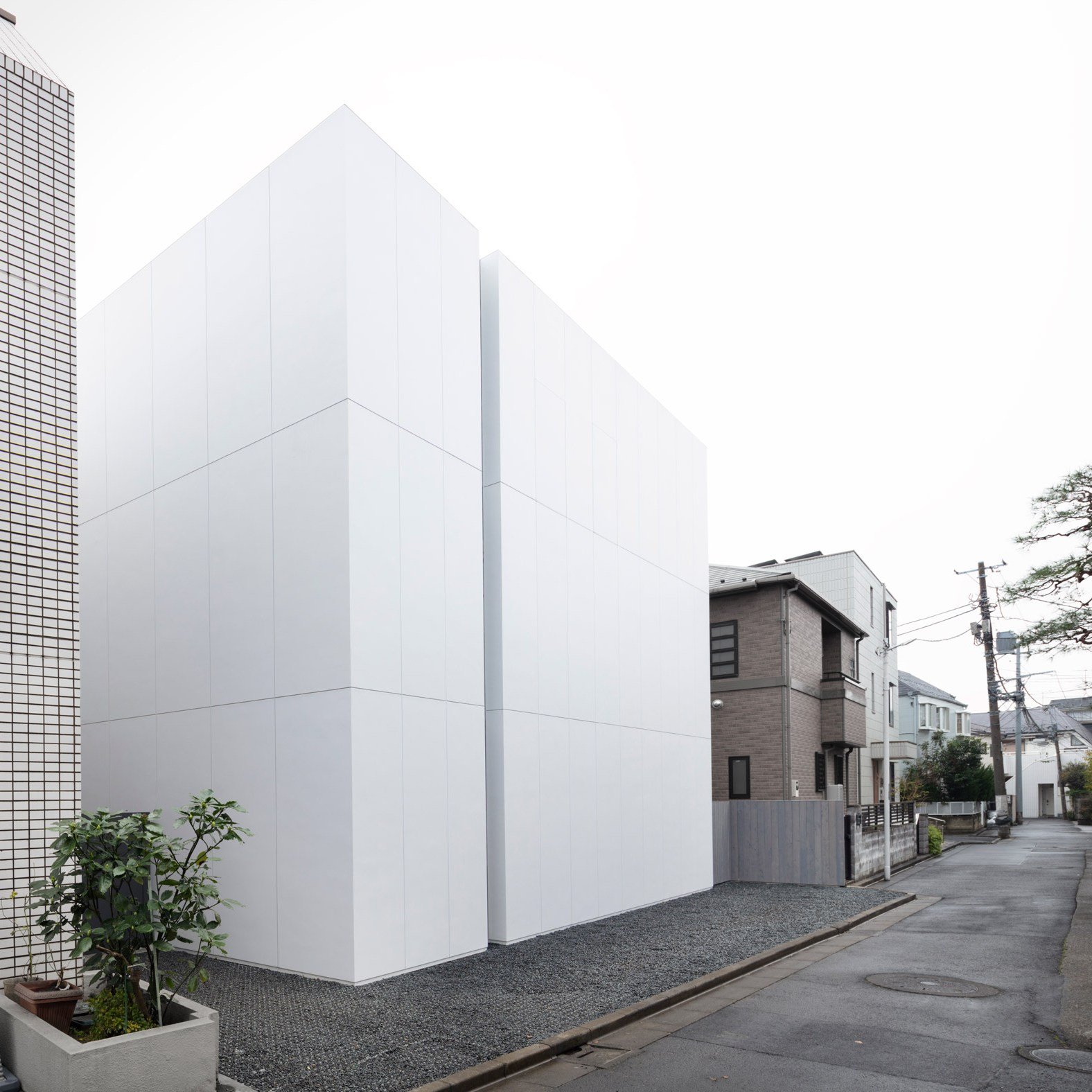
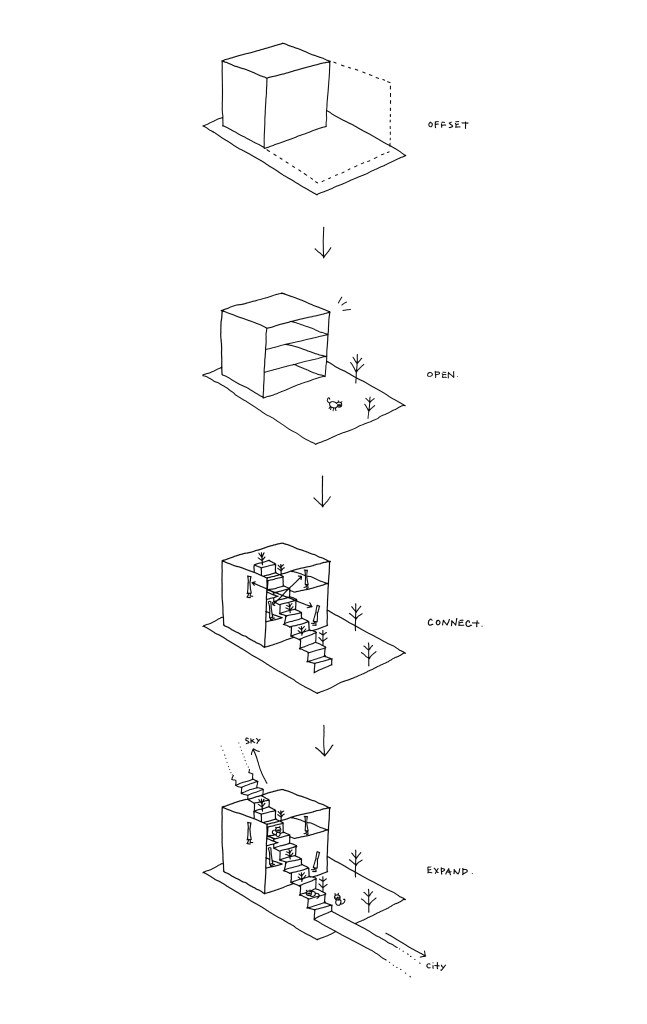
    These sketches tell you everything you need to know about the recently completed Stairway House by Nendo Studio.

    The house is setback from its south property line as a result of the surrounding context. A south-facing green space is then introduced, preserving one of the existing trees.

    Given that the house serves as a multi-generational household, a central “staircase” is introduced that visually connects all three floors of the house and serves to mitigate any sort of feelings of social isolation across the families.

    (The staircase-like structure is only partially functional.)

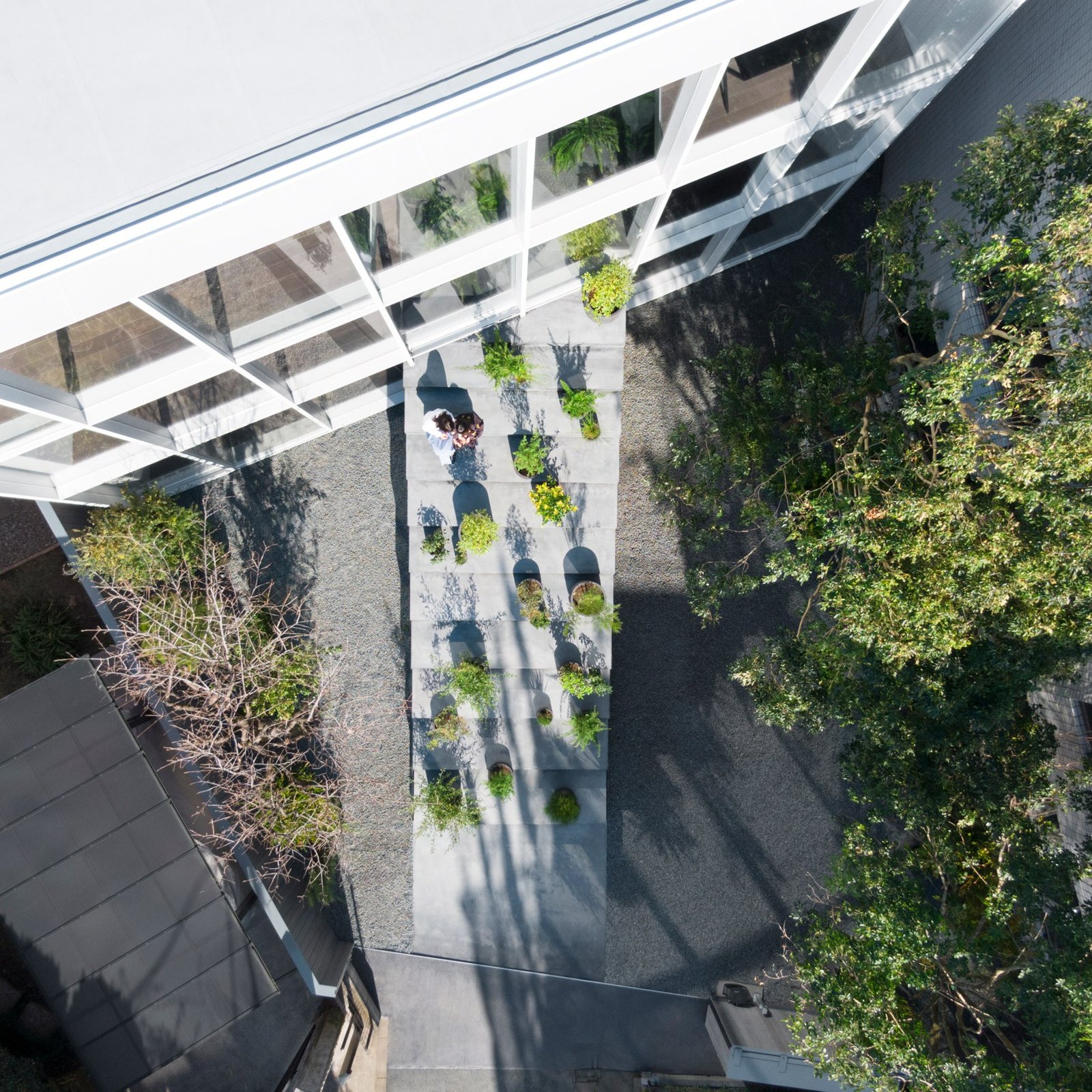
    Finally, the staircase is then expanded outward to connect with the broader city. As you can see from the context plan below, the staircase is on axis with a neighboring city street.

    Here’s how it all turned out:

    Photos and sketches via Nendo Studio

  • People like us

    Seth Godin wrote on his blog today about what it means to be a lifelong fan — whether it be of a sports team, a car company, a political party, or, in his words, “anything where affiliation drives our sense of self and community.”

    There’s a powerful sentence in the middle of his post and it’s this one here:

    People like us do things like this.

    We often make decisions about products, brands, and even where to live based on a narrative that we craft for ourselves. We tell ourselves that I am the kind of person who lives in this neighborhood and drives this car. People like us do things like this.

    There’s an innate, emotional, and sometimes nonsensical desire to be part of what Seth calls our chosen “tribe.” And tribe does really feel like the right word. We all want to be a part of something. It helps to create meaning.

    So what’s your internal narrative? It probably determines how you hire for many of the “jobs” you need filled.

  • Would wider sidewalks induce demand?

    One of the debates that is happening in cities all around the world right now is about whether or not it makes sense to redistribute public space in order to help with current social distancing measures. We are all being told to stay at home as much as possible, but as we venture out for food and/or sanity walks, many have started noticing that a lot of our sidewalks are in fact too small if you’re trying to stay 2m away from other humans. So with vehicular traffic way down, the question becomes: Should we start borrowing some of that space for pedestrians?

    Here in Toronto the official position is no. Closing down streets and lanes to car traffic is usually referred to as creating an “open street.” And the intent of these open streets is typically to bring people together for public life, which, of course, is the exact opposite of what we’re trying to do right now. What this implies, however, is that there’s a belief that additional space for pedestrians would induce demand, similar to what is believed to happen when you add additional lanes on a highway.

    Lewis Mumford probably had it best when he allegedly said, “Adding highway lanes to deal with traffic congestion is like loosening your belt to cure obesity.” So on the one hand, if you believe that more lanes doesn’t solve traffic congestion, you might also be inclined to believe that more and bigger sidewalks isn’t going to dampen the anxiety we currently feel when other humans get anywhere near us. The additional space would simply get filled with more bodies.

    But maybe you could argue that this is a little bit of a different situation. We’re in a global pandemic for God’s sake and most of us have the better sense to stay home unless it’s absolutely necessary. Perhaps in this case, demand would not increase and the greater supply would simply better serve the demand that is already there. Perhaps. I don’t have a strong stance on this, but I’m fairly certain that technology could help with this decision.

    What do you think?

    Photo by Jason Blackeye on Unsplash

  • Parco de Principi, Sorrento

    Italian architect Gio Ponti is one of the most important architects and designers of the 20 century. An early adopter of modernism, he is credited with helping to renew Italian design after the Second World War through his design work, his writing, and his teaching.

    As many of us dream of one day traveling again (I am currently devising an elaborate list of adventures), I thought I would share one of his projects — the Parco de Principi Hotel in Sorrento, Italy.

    When it was completed in 1962, it represented a new kind of architecture for the town. Sorrento was ancient. The Parco de Principi was not. Ornament had been removed and its rooms consisted of largely two colors: white and blue.

    Here is a photo by Rich Stapleton:

    In some ways this feels like a dreadfully obvious approach. Let’s celebrate and frame views of the Bay of Naples, and introduce the color blue while doing that. But the results are clearly anything but dreadful.

    Ponti was more than just an architect, he was more broadly a designer. His furniture and industrial designs are also widely celebrated. And this attention to detail at multiple scales can make all the difference in the world.

    For more photos of Parco dei Principi, click here.

  • A post corona world

    There’s a lot of speculation (that’s all you can really do) about what our world is going to look like on the other side of this pandemic.

    I think it’s easy to overreach at a time like this and prognosticate dramatic change — such as the demise of cities and urbanity as we know it. But while I do believe that there are bound to be changes, I also know that after 9/11 most of us eventually stopped being afraid of flying and of being in tall buildings. We forgot and moved on.

    So, what might change?

    Scott Galloway argued on his blog today that “things won’t change as much as they will accelerate.” In other words, this pandemic is simply going to make the future happen faster. And one of those things is going to be a faster shift to online for higher education. It is untenable for education costs to continue increasing at the pace that they have been.

    In this recent Intelligencer interview with Chamath Palihapitiya, he puts forward the idea that medical data might start to be used publicly. Meaning that, after this is all done, we might be willing to give up a certain amount of our personal freedom in exchange for knowing whether we’re in a restaurant with someone who is shedding a communicable disease.

    And finally, Richard Florida recently published this online talk about how cities can bounce back from COVID-19. In it, he argues that, yes, cities will survive and that it could actually reinforce the “winner-take-all urbanism” that we have already been seeing.

    This, of course, is really just the start of the conversation.

  • A midrise on top of a warehouse

    The Fenix Lofts & Docks in Rotterdam’s Rijnhaven port district is a cool example of adaptive reuse. The base (or podium) is a warehouse that was built in 1922. It has a concrete structure. On top of it, a new 9 storey apartment building (also concrete) is supported using a steel table and frame that goes through the existing warehouse.

    Here is a photo from inside the warehouse:

    Parking is accommodated above grade within a portion of the existing warehouse. You don’t want to go underground here. This is certainly not the most cost effective way of building new housing, but it is a solution that could work in some situations. If any of you have a site or are looking at a site with an existing building worth preserving, this might be an option to consider.

    Architecture by Mei Architects. Photos by Marc Goodwin. For more information, check out Dezeen.

  • Jason Statham’s home is on the market for $6.995 million

    I keep coming across actor Jason Statham’s homes (or former homes) in design publications. At the beginning of this year, he and model Rosie Huntington-Whiteley sold their Malibu beach house for $18.5 million. It was beautiful. And last month, he listed a home — he seems to have many — near LA’s Sunset Strip for $6.995m. (Pictured above.) A renovation of an existing 1957 house, Statham purchased the house in 2015 for $2.7mm and completed a meticulous renovation with Standard Architecture. Look at that roofline! For those of you in the market, here’s the listing.

    Photo: ©Benny Chan | fotoworks

  • Mapping spring breakers

    The following video was published last week showing the “secondary locations of anonymized mobile devices that were active at a single Ft. Lauderdale beach during spring break.” Said differently, the company used anonymized mobile phone data to see where spring breakers went after they left the beach. This was in order to better understand how they may have contributed to the spread of COVID-19. If you can’t see the video below, click here.

    The video is astonishing for two reasons. One, it shows you the extreme reach of just one beach in South Florida. Imagine if they had analyzed all of the beaches up and down the coast. And two, a lot of you are probably freaked out that this sort of mobile phone data is available to private companies. If you’d like to learn more about how this all works, check out this opinion piece from the New York Times.