Daily insights for city builders, delivered every morning at 6 AM ET. I’m Brandon Donnelly — a Toronto-based real estate developer and founder of Globizen. I’ve been writing here since 2013.

Author: Brandon Donnelly

  • The fundamental contradiction in Canadian housing

    July 6, 2026 · View original


    > “Show me the incentive and I’ll show you the outcome.” —Charlie Munger

    Canada is, broadly speaking, a nation of homeowners. In the 2021 census, 66.5% of Canadians owned their own home. So, most. And this is encouraged. Owning your own home is typically viewed as a way to generate wealth, build equity, and provide tangible evidence that you have enough creditworthiness to make a mortgage payment every month.

    Given the above, you could say that the majority of Canadians are incentivized to do things to protect the value of housing and, in turn, their personal net worth. But we also know that this creates an inexplicable housing paradox. We want housing to be more affordable for some, but ever more valuable to others. How exactly should we achieve this?

    In this recent opinion piece in the Globe & Mail, John Turley-Ewart argues that the recent announcement in Vancouver translates into housing no longer being a home. Rather, it has become a “supply-managed good in a protected industry,” similar to dairy and telecom in this country. So: “The result will be a country where homeownership is reserved for the few by design. It shouldn’t be that way.”

    Here’s a thought exercise: Why would it be a problem if Canada’s homeownership rate dropped to, say, one-third — the same rate as Switzerland? Is it because housing should appreciate faster than the rate of inflation and generate wealth for Canadians, or is it simply because pride of ownership is good for people’s moral well-being? If it’s the former, well, then the argument eats its own tail.

    We are saying we want housing to be more affordable so more people can own it, but if it were constantly depreciating (getting cheaper), or even just appreciating at the rate of inflation, should people even want to own it? Why not just rent and invest the down payment elsewhere to earn greater returns? That’s what the Swiss do by and large.
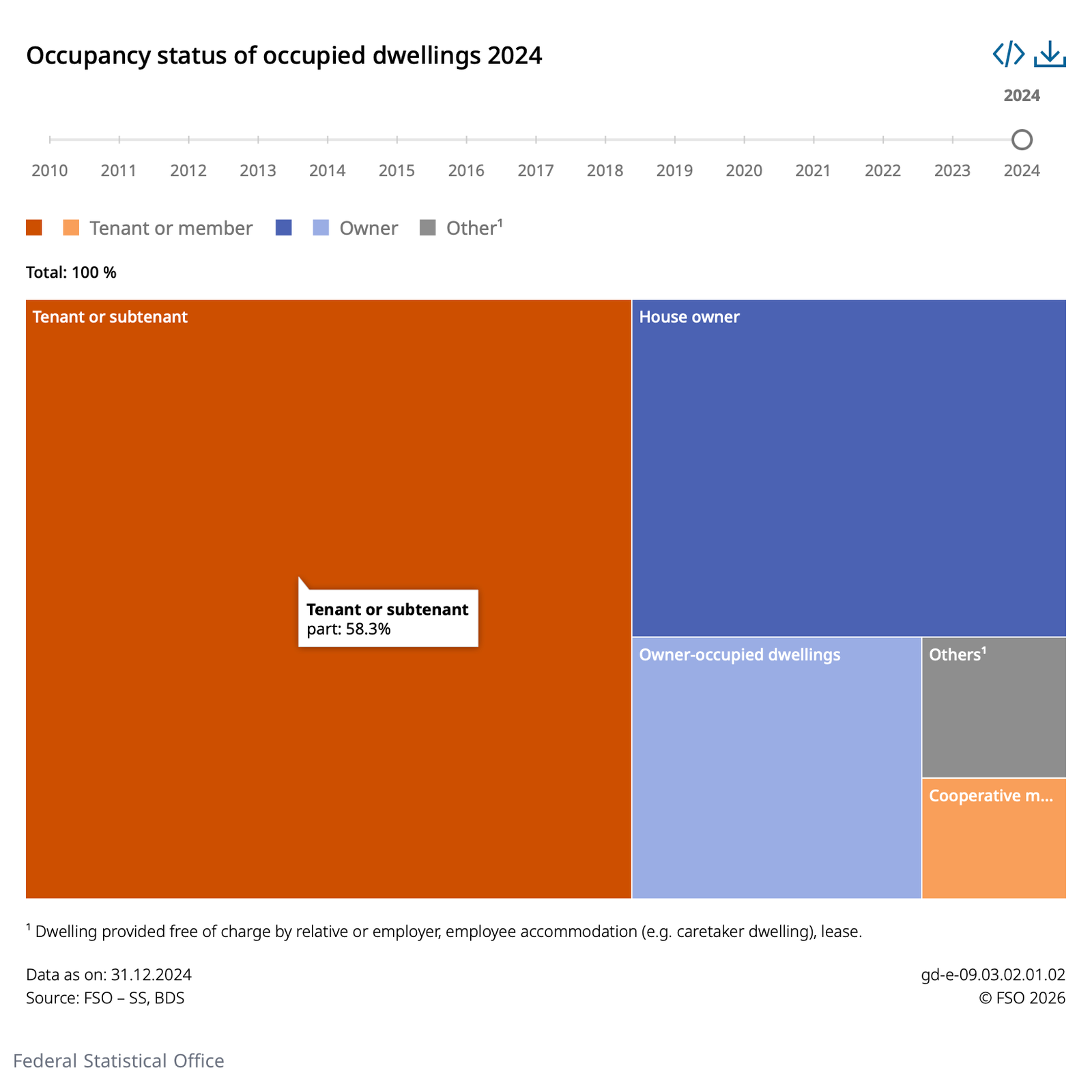
    Swiss households tend to rent rather than own.

    I believe the more precise argument being made in the Globe & Mail is that housing has simply gotten too expensive for middle-class incomes, so what we need is less government meddling and a reset before the market begins to re-appreciate in favor of the 66.5% of Canadians who are invested. While I certainly agree with the basic idea that we need to stop overtaxing new housing and reset our development cost structures, let’s not ignore our clear housing paradox.

    In Canada, we view housing as an investment, and that runs counter to the idea that housing should be as affordable as possible to the greatest number of people. As we know, this viewpoint isn’t the same everywhere. Japan, for instance, has historically viewed housing as a consumer good. You bought it new, or built it new, when you needed it, and once you were done with it, the expectation was that there wouldn’t be many buyers for it.
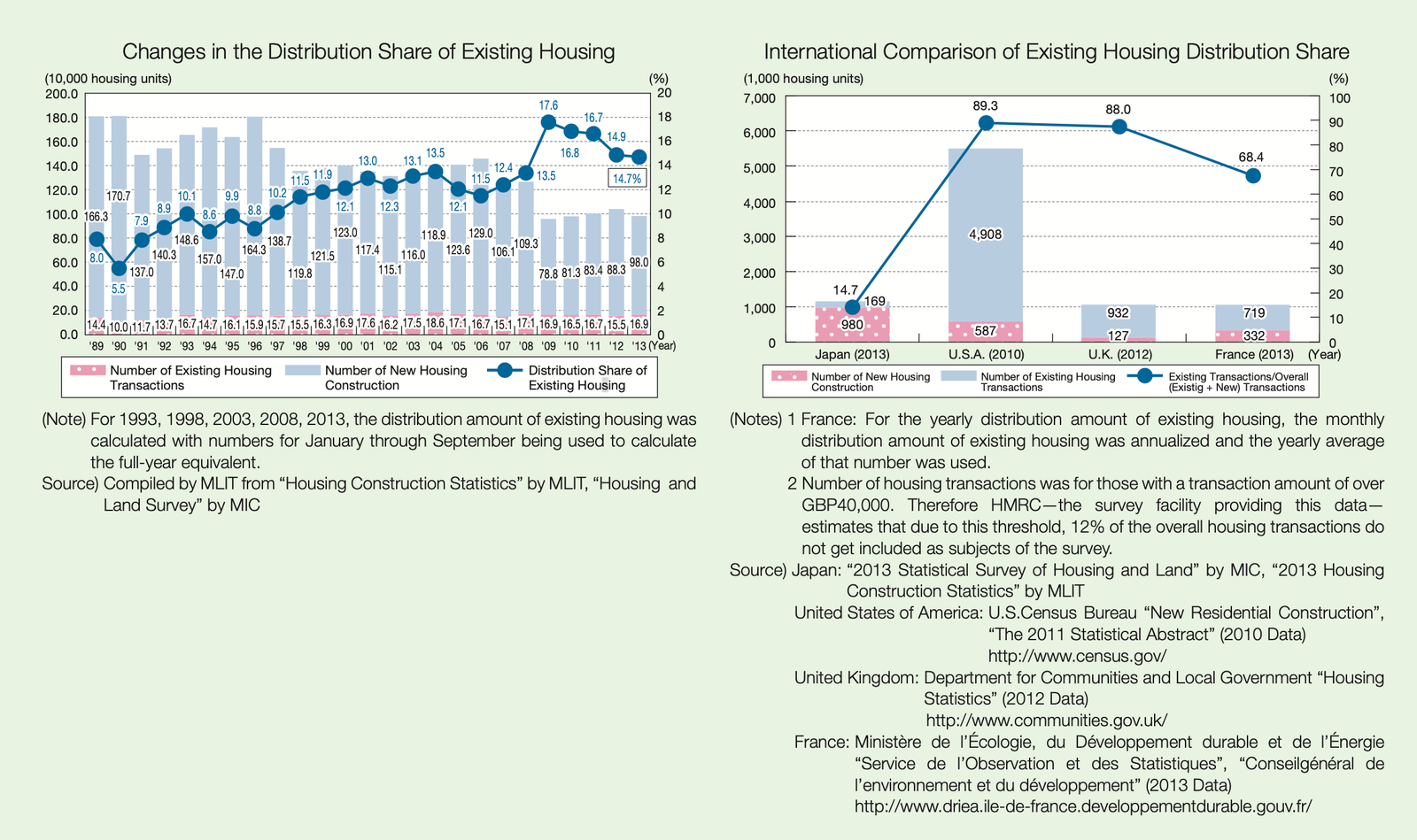
    Historically, Japanese households have greatly favoured new construction over resale housing

    As recently as 2013, the percentage of existing housing transactions as a share of the overall housing market in Japan was only 14.7%, compared to over 89% in the US (2010 figure). The government has since worked to get this number up, but it shows a distinct historical view of housing. It also led to more daring residential architecture. If you’re not concerned about what the next buyer might think, you become a little more free-willed.

    The point of this post is not to pass a value judgement on any one approach; rather, it is to point out that there are many different ways to think about housing. Deciding the precise outcome we want is always going to be helpful in determining the right solutions.


    Cover photo by Aditya Chinchure

    Swiss housing occupancy status diagram from the FSO

    Japan charts from the White Paper on Land, Infrastructure, Transport and Tourism in Japan 2015
  • Butts for nuts

    Why we couldn’t train crows to clean up our cigarette butts

    July 5, 2026 · View original


    Back in 2022, a Swedish startup called Corvid Cleaning made headlines by launching a pilot program in the city of Södertälje involving an operant conditioning device in the city’s public realm. The machine allowed crows — which, it turns out, are pretty smart and social animals — to deposit discarded cigarette butts in exchange for food.

    The machine itself would scan whatever the crows brought in, and if it was, in fact, a dirty butt, the machine automatically dispensed a small piece of food, such as a peanut. And because crows are social animals, the thinking was that they would then run and tell their friends, “Hey, I found us a great dinner spot!”

    It’s an alluring and unexpected concept. The hope was to slash the city’s annual cleaning bill by getting the crows to do our dirty work. And that’s why this “new pilot” seems to go viral periodically. But the reality is that Corvid Cleaning filed for bankruptcy in 2025 and, as far as I’m aware, this has in no way taken off as a viable solution for keeping our streets free of cigarettes.

    The obvious problem is that cigarette butts are highly toxic, and so encouraging animals to transport them around is a suboptimal solution. Supposedly, crows are also a little too smart, and they started to try to game the system. Regardless, the prototype is dead. If only more of us could be like the Japanese, and not throw our garbage on the street.


    Cover photo by Fatemeh Heidari

  • Where green towers thrive

    July 4, 2026 · View original


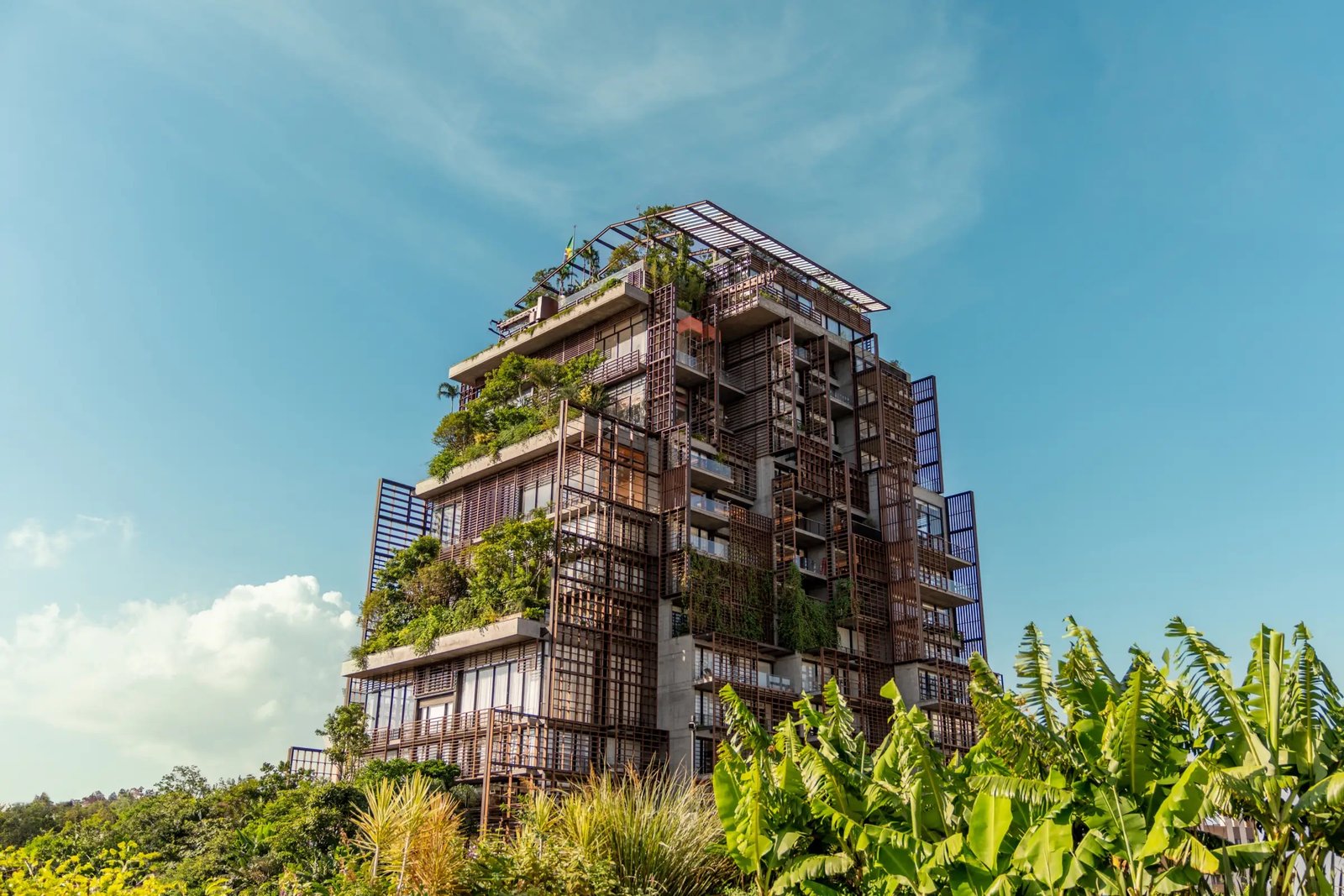
    Many years ago, I was in a design meeting for a tall building we were working on and I brought up the idea of planting greenery all the way up the tower. You know, something like the Bosco Verticale in Milan.

    But after I said this, our landscape architect looked at me and simply said, “No, it doesn’t work, not in our climate.” And that was it.

    Of all the people in the room, I thought I could get the landscape architect excited about this suggestion, but nope. It got immediately shot down, and for good reason.

    The greenery would be dead here in Toronto for not an insignificant part of the year, and the additional dead loads created by water-saturated soil and structural planters raise questions about whether it’s the most sustainable way to build tall buildings.

    But there are climates where green towers make a lot more sense, namely in places like Brazil. In fact, São Paulo rewards developers for integrating features such as green facades.

    Here’s a specific project example: The Rosewood Hotel in São Paulo, designed by Jean Nouvel. The 25-storey tower features an extensive lattice system on its exterior that, over time, is expected to fill in with greenery from adjacent roof gardens.

    The hotel opened in 2022, and street view images from 2024 reveal that it still has some growing to do, but clearly it’s a popular idea. I was just in the wrong city.


    Photos via Rosewood São Paulo

  • Behind the sweating towers of Shanxi

    July 3, 2026 · View original


    A residential community in China’s Shanxi province has been in the news recently for a cooling system that sprays mist from its rooftops to lower the surrounding surface temperatures. Here’s a video in case you missed it.

    As I understand it, this evaporative cooling technique can lower nearby surface temperatures by 5°C to 8°C within minutes, and it uses significantly less electricity than air conditioning.

    This, by the way, is the same scientific principle behind how sweat cools human skin. We sweat, the sweat then evaporates, and in the process it helps to lower our body temperature.

    But the obvious question here is: Doesn’t this waste a bunch of water?

    Generally, these systems tend to rely on (1) very fine mists of water (so as little water as is necessary) and (2) collected rainwater and/or recycled greywater. The general idea is to just lower surface temperatures so that less air conditioning is needed.

    Next, it becomes a question of electricity saved vs. water consumed. A study done on a 5-storey apartment building in Osaka found that outdoor misting reduced the building’s cooling loads by an average of 36%, and from a financial standpoint, the value of the electricity saved was greater than the cost of the water consumed.

    Importantly, it also helped reduce the overall urban heat island effect in the area. The amount of waste heat trapped in the nearby city streets decreased by over 60%.

    Hotter streets are a byproduct of air conditioning because the cooling process effectively sucks heat out of interior spaces and transfers it outside. Misting counteracts that and also reduces peak AC loads.

    So, as wild as these sweating towers may appear online, there is some logic behind them.


    Cover photo via this Twitter post

  • London developers continue to look up, building on top of existing buildings

    July 2, 2026 · View original


    In recent years, a new housing typology has emerged in London that involves the practice of building penthouses on top of existing buildings. Here’s a post I wrote back in 2021. This is not the simplest way to build new housing, but there are clear benefits. New housing does get created (however incremental it may be), existing buildings are preserved (which is positive from a sustainability perspective), and housing complexes with maintenance and repair needs have a new way to raise money.

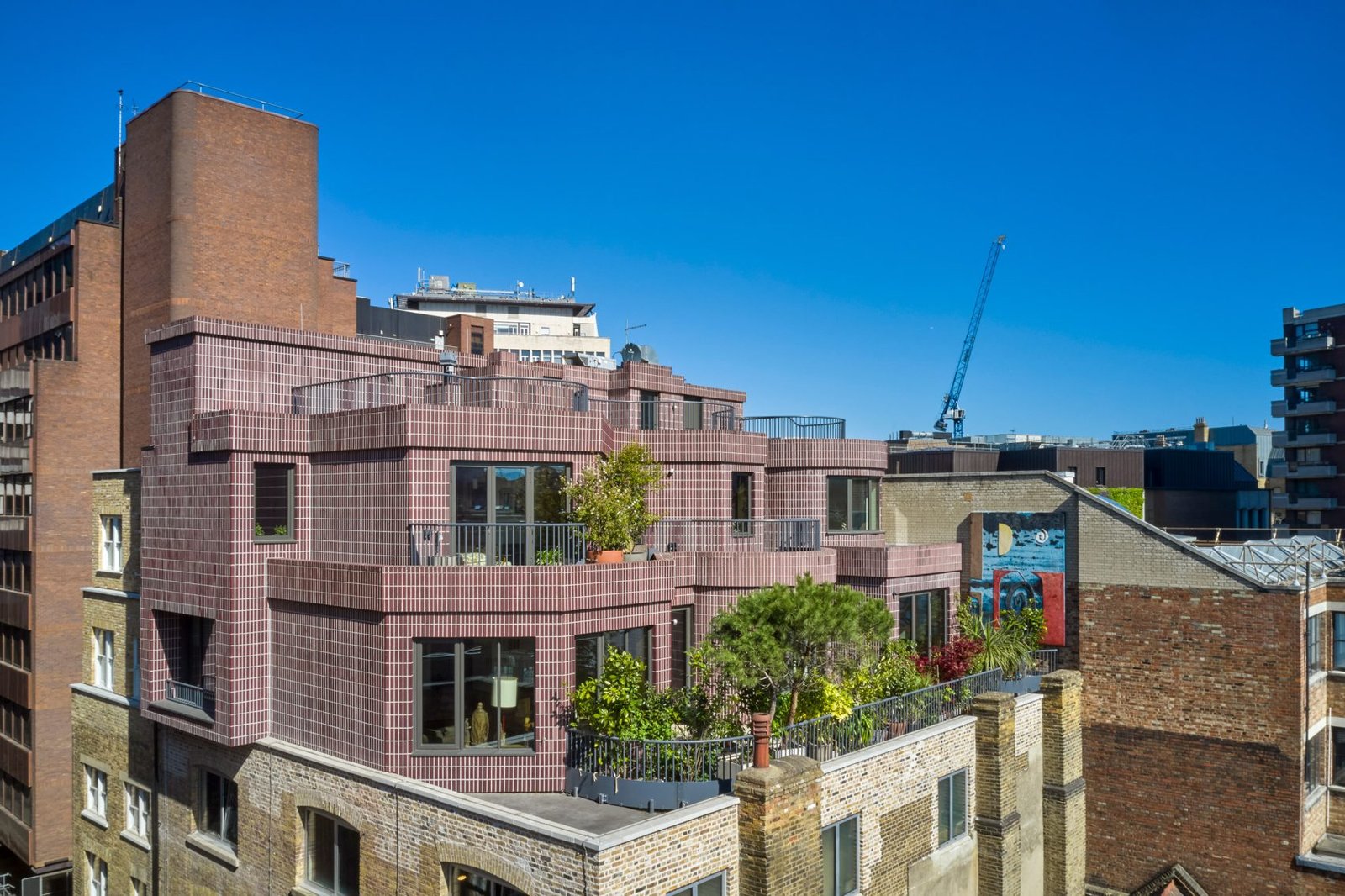
    Here’s a penthouse example completed in 2023 that was designed by David Kohn Architects for Baylight Properties.

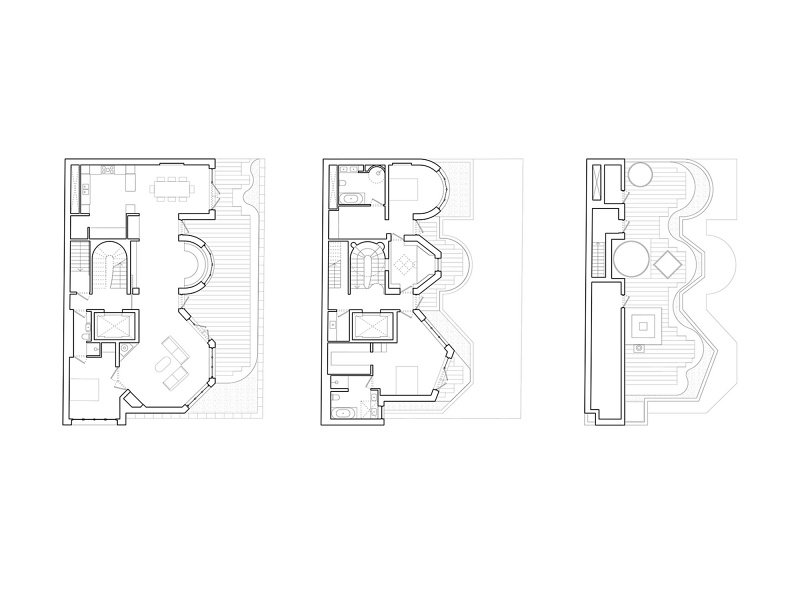
    What I think I glean from the plans is that the building’s existing elevator and exit stair were extended up into the new penthouse space, and a new internal stair was added within the penthouse. This would have required a great deal of coordination to minimize disruption to the existing building. Presumably, they built the new shaft extension, got everything ready, and then shut down the elevator for the shortest possible period of time to switch everything over. The existing building is only 4 floors, so it’s not the end of the world.

    As an aside, Baylight Properties has other rooftop projects underway, including the Sky Houses at Ransome’s Dock. I also very much appreciate the ethos of the firm. On their website, they clearly state: “Our overwhelming interest has been to combine the harsh realities of business with all the benefits good architecture bring.” It sounds a lot like how we think about our approach at Globizen. Maybe it’s time we also start looking at some rooftops.


    Project photograph by Will Pryce via David Kohn Architects

    Plans from David Kohn Architects

  • Happy Canada Day

    Summer euphoria, Kawhi’s return to Toronto, and the physical constraints of tech

    July 1, 2026 · View original


    Happy Canada Day! As a reminder, today marks the anniversary of Canadian Confederation, specifically the union of the Province of Canada, Nova Scotia, and New Brunswick on July 1, 1867.

    Summer is reaching its zenith with a high of 32 degrees expected here in Toronto today. I know that everyone thinks their city is the best when it’s hot and sunny outside, but I do think there’s something magical about Toronto in the summer. One thing I always look forward to is the feeling of riding a bicycle around the city on a hot and humid night.

    On top of this summer euphoria, it was just announced that Kawhi Leonard will be returning to the Toronto Raptors, presumably because he wants to win another championship and he misses Toronto. So, I’m fairly certain that real estate in the city just appreciated 5% over the last 24 hours.

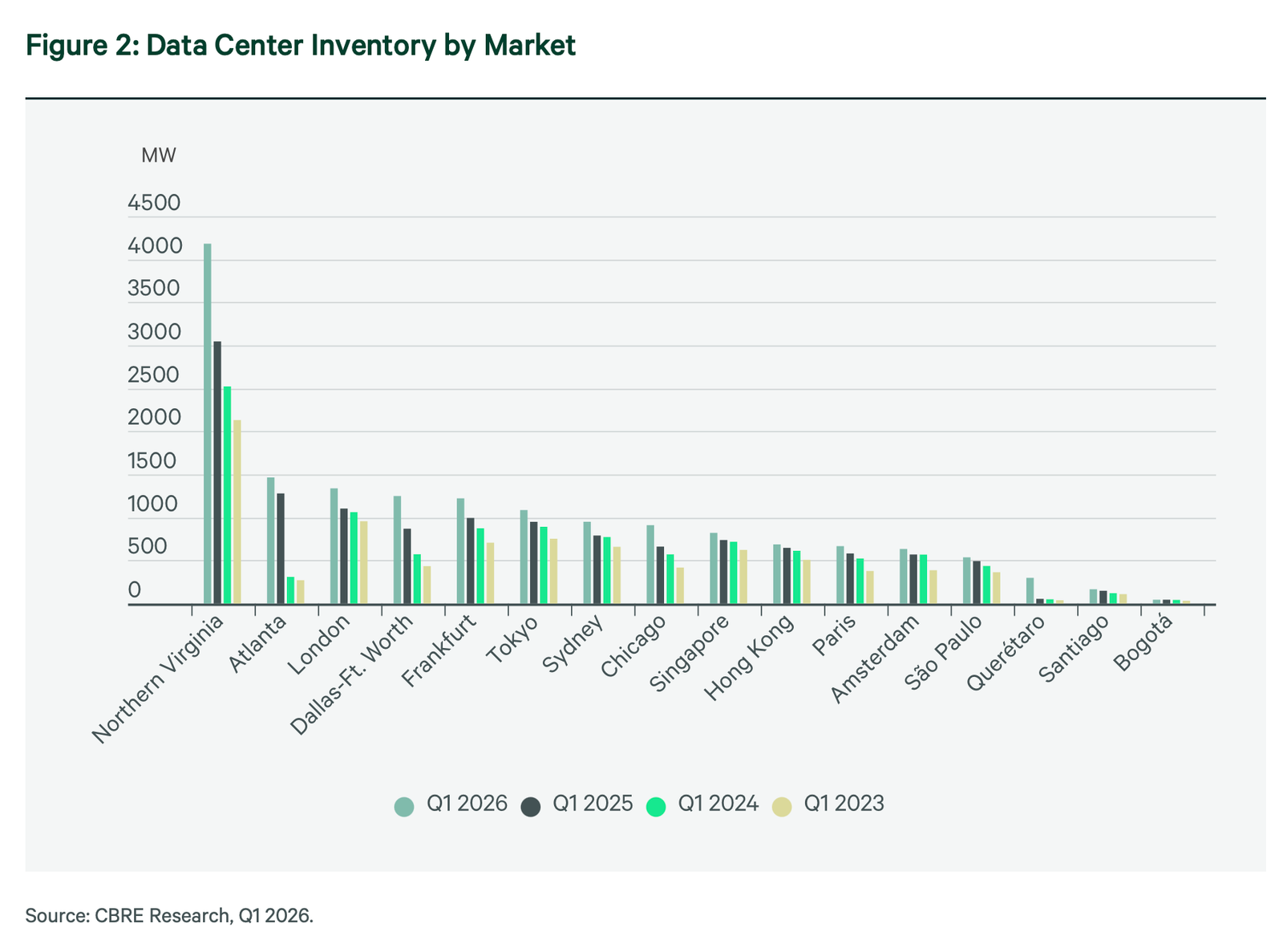
    If you’re looking for something city-building-related to dig into, here’s an interesting report from CBRE on global data centre trends. It specifically looks at the 4 largest markets in North America, Asia-Pacific, Europe, and Latin America. (It’s a reminder that Canada needs to step up!)

    Latin America led year-over-year global growth (as of Q1 2026) with a 41.3% jump in inventory (primarily Mexico). Meanwhile, the world’s largest data centre market (Northern Virginia) saw its vacancy rate drop to an all-time low of 0.3%.

    Overall, power availability and grid infrastructure continue to constrain new supply, and that is expected to persist beyond 2030. The tech industry is not used to being fettered by physical constraints, but we’re seeing that today with the practical end of “zero marginal cost.”

    Enjoy the day, everyone.


    Cover photo by Mayur Arvind on Unsplash

    Inventory chart from CBRE

  • Our cars are outgrowing our cities

    June 30, 2026 · View original


    Now that a car seat lives permanently in the backseat of my car and I have learned how much it compresses the passenger seat in front of it, I have on more than one occasion thought to myself, “I guess this is why people feel the need to buy bigger cars.” And the data shows this is true: cars generally keep getting bigger.

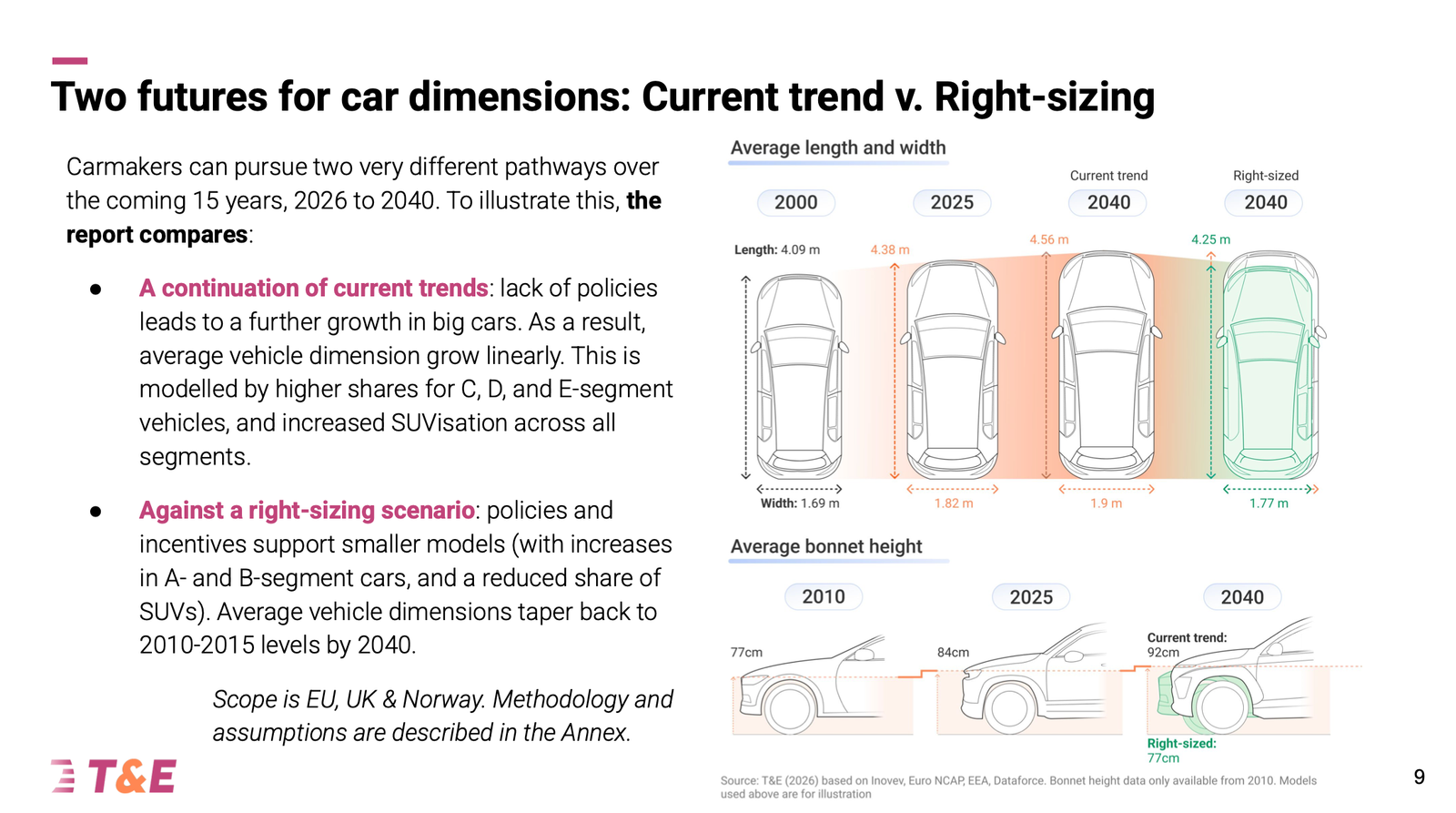
    A brand-new report from Transport & Environment found that over the last 25 years in the EU, the UK, and Norway, the average newly-sold car has increased in length by 1.2 cm per year, in height by 0.5 cm per year, and in width by 0.5 cm per year.

    But it’s not necessarily because buyers are looking to fit more kids and car seats. Average household sizes have fallen in the US, so it’s similar to housing: people are having fewer kids and, therefore, want to consume bigger homes (and cars). My cursory understanding is that there tends to be some gamesmanship with car sizes and emissions targets, but I do also think it’s a case of consumers just wanting bigger and better.

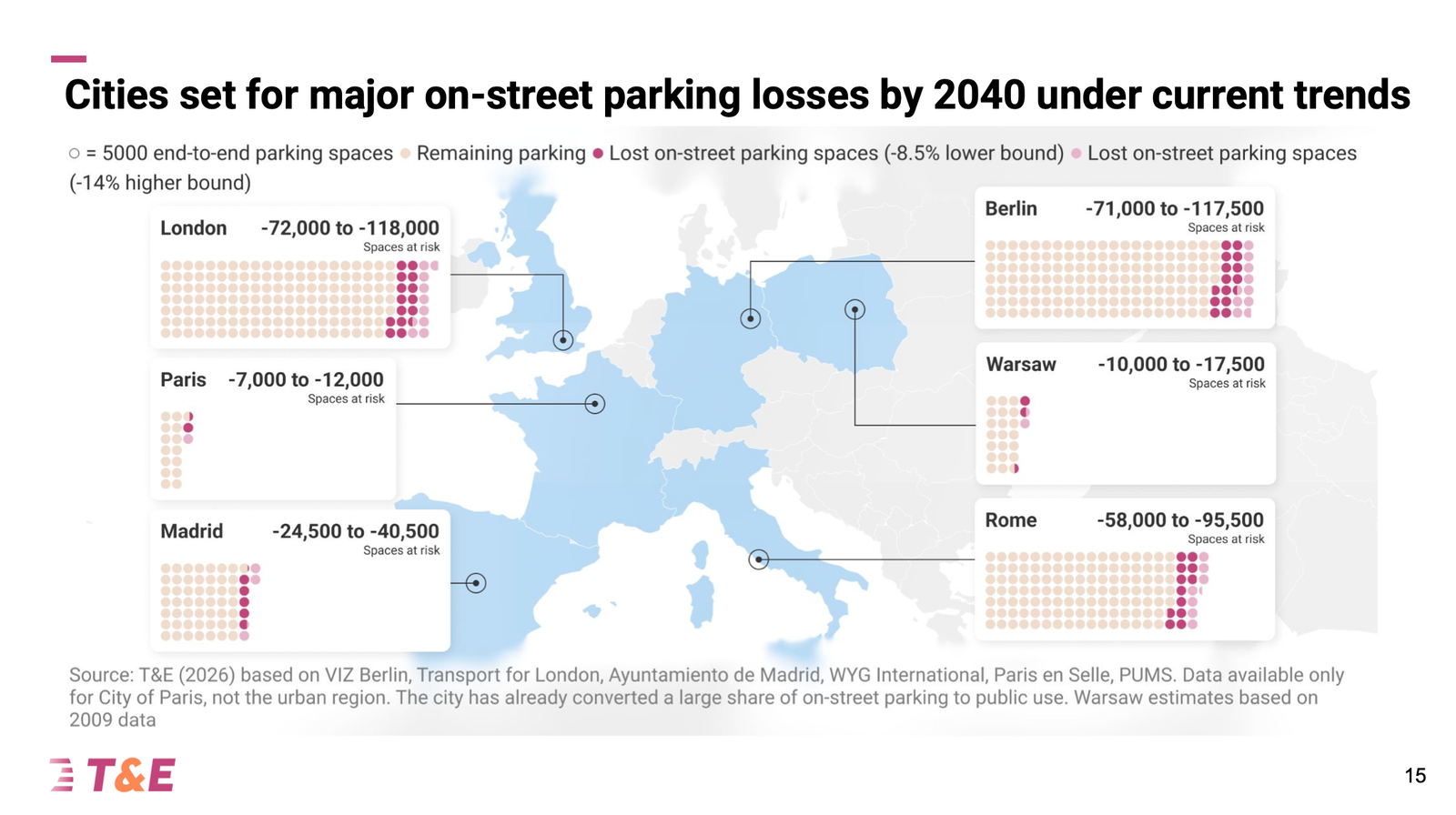
    For those of us who deal in the built environment, this is an important trend to consider because larger cars (1) tend to kill more pedestrians and (2) take up more space in our cities. The report estimates that, if current trends continue, European cities could lose between 8.5 and 14% of their on-street parking spaces by 2040.

    Small marginal changes of only a few centimetres may not seem material on an individual basis, but when you layer on pedestrian deaths, urban parking constraints and traffic congestion, it only strengthens the case for the Tokyo model of urbanism.


    Cover photo by Oleksandr Voloshchenko on Unsplash

    Slides from Transport & Environment

  • Tokyo proves that futuristic megaprojects can still feel human

    June 29, 2026 · View original


    It’s that time of year again. Monocle just released its annual survey of the most liveable cities in the world.

    If you’re a regular follower of the magazine and/or its quality-of-life survey, you’ll know that North American cities don’t generally fare well in this ranking. This year, the only one to appear is Vancouver. You’ll also know that there are some usual suspects that appear near the top (here comes the spoiler). This year’s top city is Tokyo.

    One of its standout features, yet again, is its liveability and orderliness despite being one of the largest urban regions in the world. But there’s also talk about some of its grandiose city-building initiatives, one of which includes the new Takanawa Gateway City.

    The 13-hectare (32-acre) development is a transformation of a former rail yard in south Tokyo into what is being called a futuristic “global gateway.” The megaproject includes retail, office, hotel, residential, and cultural uses, plus a 1.1-kilometre elevated pedestrian promenade that stitches it all together.

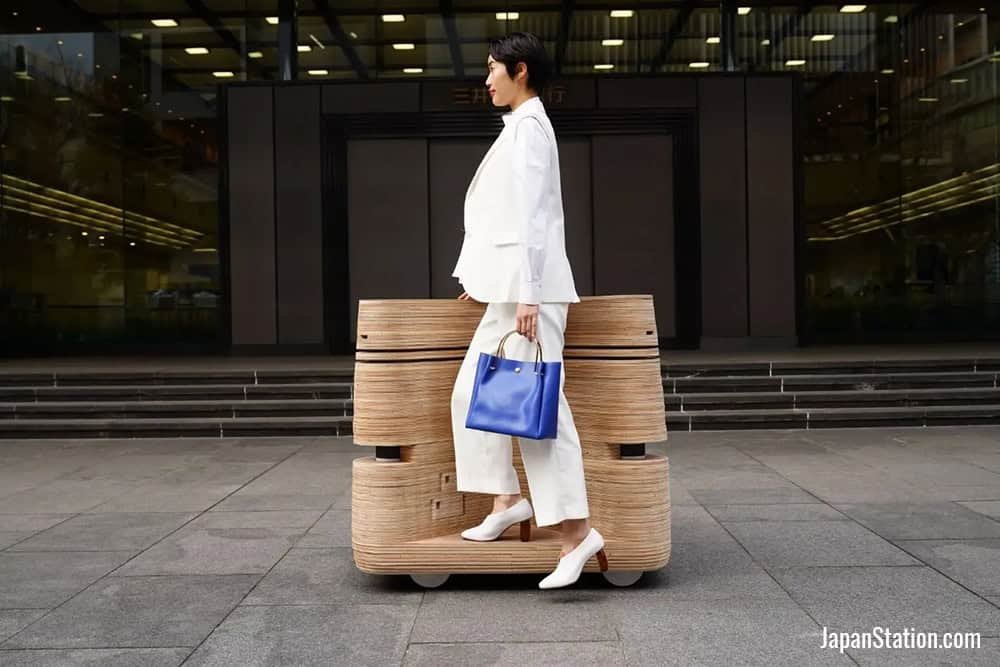
    There are also autonomous mobility devices called “iino” that actively roam the district and offer pedestrians free, futuristic rides. Here’s a video and an image from JapanStation:

    We talk a lot on this blog about Tokyo’s granular, small-scale urbanism. But obviously the city also builds big, though it’s not exactly what you’d find in other cities. For one thing, the development is vertical in a way that is difficult to achieve outside of cities like Tokyo.

    Here’s a comprehensive walking tour of the district. At 42:02, you’ll see a rooftop public space that is extremely well used, especially given that the development only recently opened. I also find it remarkable that so many people in the video have taken their shoes off to use the free, public foot bath.

    Could you imagine doing that in your city? It’s perhaps a perfect example of how Tokyo miraculously pulls off being both big and liveable.


    Cover photo by Tsuyoshi Kozu on Unsplash

  • Why Canada should want to renovate 24 Sussex Drive

    June 28, 2026 · View original


    24 Sussex Drive in Ottawa is technically the official residence of the Prime Minister of Canada. However, the last time it was used for this purpose was in 2015 by Stephen Harper. When Justin Trudeau took office, he opted to live at Rideau Cottage because of the house’s current state of disrepair. In 2021, the National Capital Commission listed the property as being in “critical condition,” and the following year it was officially closed for “health and safety reasons,” including a rat infestation. Since then, the 35-room, 12,000-square-foot house has had its interiors stripped down and has sat there in an uninhabitable state.

    The political reasons for doing so are obvious. Going back to the 1950s when it was first used as a residence, no Prime Minister has wanted to spend taxpayer money on what effectively amounts to a house reno for themselves. And so the status quo has persisted. But then last Friday, Prime Minister Mark Carney announced that the house will finally be renovated by way of (1) a design competition and (2) private donations. Importantly, only individuals will be able to donate (no corporations), all donations will be made public, and no single donation can exceed 10% of the total project cost.

    Not surprisingly, opposition leader Pierre Poilievre responded by arguing that renovating 24 Sussex should absolutely not be a government priority while Canadians face a housing and overall affordability crisis. My view is that it makes a lot of sense to have an official prime ministerial residence that is actually habitable by human beings. I also think that Build Canada raises an interesting point about this: What does it say about Canada that we have not been able to achieve this for one of our national symbols?

    Excerpt from Build Canada:

    > In countries with confident, reasonably secure national identities, the maintenance of official institutions isn’t a political risk, it’s an expectation. Nobody asks the French president to apologize for maintaining the Élysée. Nobody expects the British prime minister to crowdfund Chequers. These are national institutions, and their upkeep is understood as a basic obligation of government. Citizens in those countries would be more alarmed by neglect than by expenditure. Even in the United States, the concern over what Donald Trump is doing to the White House and the National Mall stems from the fact that these things are seen as belonging to all Americans as a meaningful part of their national symbolism. The fact that Canadian politicians spent decades calculating that voters would punish them for fixing 24 Sussex reveals something very disturbing about how this country sees its own symbols and institutions.

    Raising money from private donors is the obvious hack to try and make this politically palatable. But all of this remains a fascinating design and political problem. What should 24 Sussex be? The Élysée Palace is 118,000 square feet of lavish opulence on 3.7 acres, and the White House is 55,000 square feet on 18 acres, excluding the wings and Trump’s gold Home Depot decorations. Should 24 Sussex be something equally impressive and internationally significant? Then maybe it would appear in movies and get blown up by alien invaders from Mars. We have 5.3 acres to work with here.

    Alternatively, the government could be frugal stewards of Canadian taxpayer money and either leave the house vacant (or maybe the Ottawa rats still live there?) or opt for a simple interior renovation using only materials and finishes readily available from the local Home Hardware store. We could hire a guy with a dog and a van from the neighbourhood and make it as cheap as possible to ensure that no Canadian gets too bothered. Yeah, I suppose we could do that, but let’s not forget that architecture is always a reflection of the zeitgeist of the time and what a society values the most.

    What do Canadians value the most?


    Cover photo by Robbie Palmer on Unsplash

  • Why transit networks built for 9-5 commuting are failing

    June 27, 2026 · View original


    As we know, many cities have not seen their transit ridership levels rebound to pre-pandemic levels (2019). This is true in the San Francisco Bay Area, where ridership levels are hovering around 70%. But it is not true in Paris, where things have more or less returned to where they were, albeit with a different demand profile throughout the week.

    As far as I can tell, the determining factor seems to be whether a city has a network designed for 9-5 commuting or whether the entire city is generally oriented around transit. If a city is in the latter camp, demand has naturally proven to be more resilient.

    It is tempting to want to use 2019 as the benchmark for comparison, but Jarrett Walker makes a good point in this recent post: “When are we going to stop describing our ridership as a percentage of pre-COVID?” His point is that our cities have permanently changed, and so it’s time to set goals and benchmarks based on today’s reality.

    Many transit networks, particularly in North America, were designed to concentrate peak demand into a singular central business district. That is not happening in the same way anymore, and we are seeing an increase in new riders at different times. For example, Walker also points out that a number of transit agencies have seen weekend ridership exceed 2019 levels.

    I have argued before that cities like Toronto are starting to plan for a post-car future. This is the only way we know how to solve traffic congestion, but it requires new land use patterns and a grid transit network, as opposed to a CBD funnel. In assessing their performance, cities will need to decide if this is their goal, or if they’re content to focus on the past.


    Cover photo by Emma on Unsplash