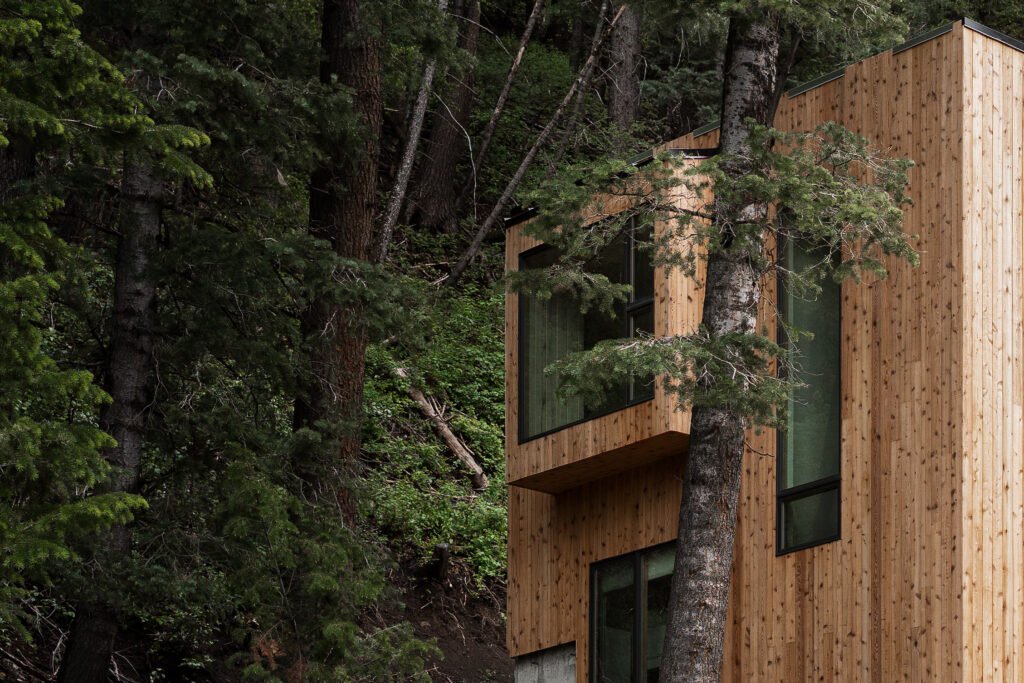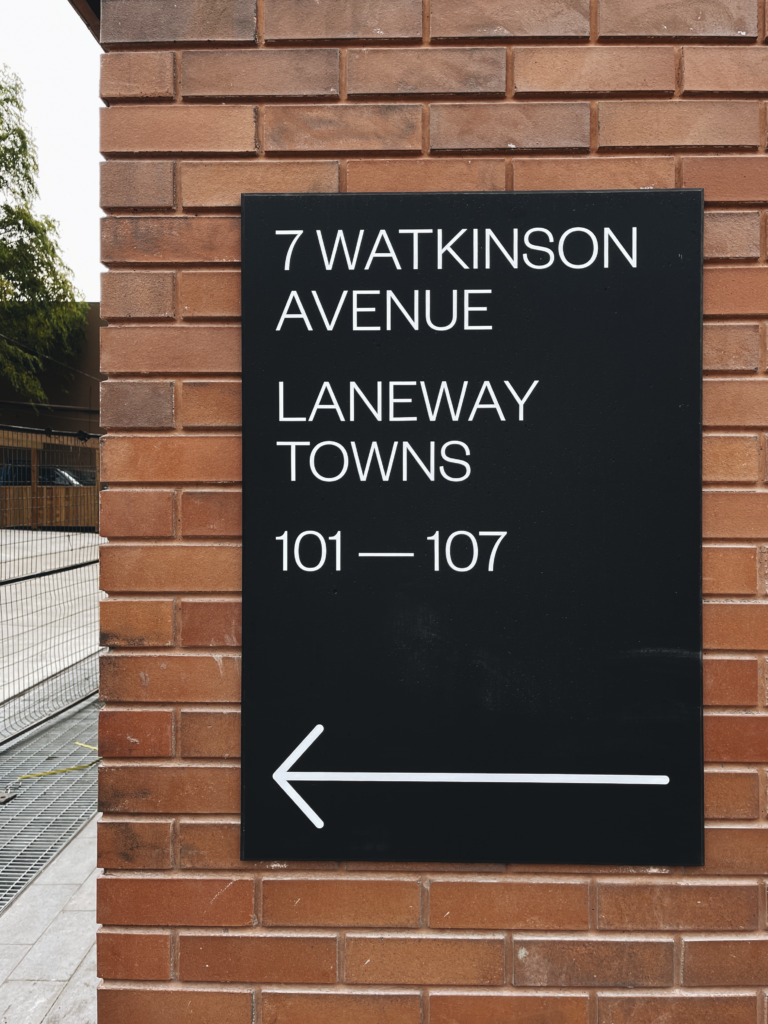
Junction House was designed with 7 laneway towns on the north side of the building. The above photo is from 2023, right after we installed the wayfinding signage, which is why you can see the construction fencing sitting in the laneway. Alongside Superkul (architects), we made the design decision to incorporate ground-related towns for two reasons.
First, we are supporters of laneway housing, and one of our city-building agendas is to find ways to revitalize and animate these spaces in Toronto. Incorporating laneway towns was a natural way to do this.
Second, we were able to tuck these two-storey suites into the same height as our ground-floor retail on the south side. This meant that, even though our sales team was advising us that these would likely sell for a relatively low price per square foot compared to the rest of the building, it was the right business decision. It was still more accretive than additional single-level retail (or retail with a far less valuable mezzanine space) or some other unproductive back-of-house space.
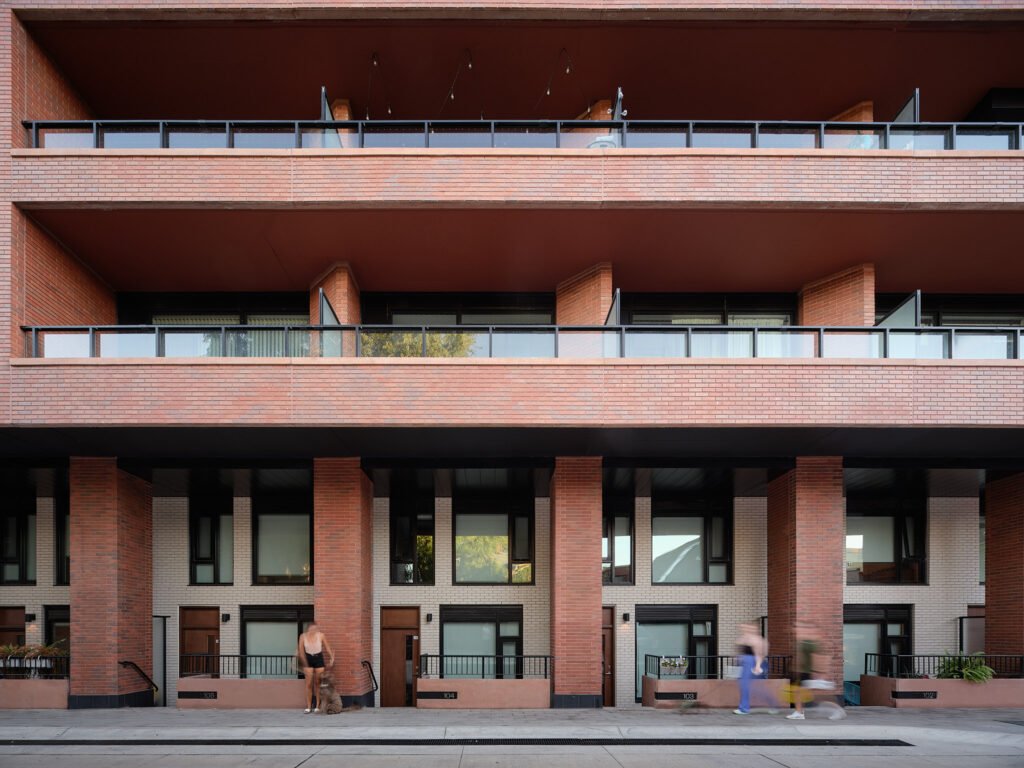
As a development aside, we originally designed these towns to be raised up from the laneway, accessible via a few steps. But during the rezoning process, the city asked us to shave down the overall height of the building to meet some symbolic height in metres that the local City Councillor demanded we achieve. It was frustrating, but we complied, and that’s why the towns are designed the way they are.
Looking back on these suites a few years later, I continue to believe that we made the right big-picture decision, especially because of how they are now being lived in. These suites have a very high percentage of families with young children — children who often make use of and play in the quiet laneway.
In hindsight, this makes perfect sense. These are larger, grade-related suites that offer some degree of relative affordability. In my view, it’s further evidence that not all families want to flee to the suburbs. We just have to find ways to deliver the right kind of urban housing for them.
Second photo by Doublespace Photography