Daily insights for city builders, delivered every morning at 6 AM ET. I’m Brandon Donnelly — a Toronto-based real estate developer and founder of Globizen. I’ve been writing here since 2013.

Month: January 2026

  • Negotiating leverage is everything

    January 21, 2026 · View original


    Back in the fall of 2006, almost twenty years ago, Sam Zell’s Equity Office Properties Trust announced that it had entered into a definitive agreement to be acquired by Blackstone Real Estate Partners, in a transaction valued at approximately US$36 billion. This was a massive deal at the time, so much so that Sam Zell would later come to the University of Pennsylvania, where I was in grad school at the time, to talk to real estate students about how smart he was.

    The transaction closed in 2007 and, in hindsight, it looked like he had timed the peak of the real estate market perfectly. But in all fairness, when asked about his clairvoyant timing, his response was that he had no idea (probably with a strong expletive somewhere in the middle). His honest answer was that Blackstone simply offered him a price for the portfolio that was greater than their own internal valuation, and so he accepted it.

    Another question that he was asked went something like this: “Blackstone is likely going to break up the portfolio, sell off the assets individually or in chunks, and make boatloads of money. Why didn’t you just do that?” Despite the peak-market timing, this statement ended up being true. Blackstone generated something like a $7 billion profit on the deal.

    But Sam’s response was that he couldn’t. He cited an esoteric IRS rule that stipulates that once a REIT decides to sell all of its assets and formalizes a liquidation plan, it has a 24-month window to do so, or else get hit with additional corporate taxes. Regardless of the specific IRS section, his reasoning was simple: you never want to be a seller when buyers know you need to sell by a certain time.

    This is, of course, intuitively true. Negative leverage is bad in negotiations. In other words, it is highly unlikely that Sam could have generated the same $7 billion profit. I mean, as far as I can tell, Blackstone didn’t sell the last office building from the portfolio until 2018, over a decade later.

    I was reminded of this principle when reading Prime Minister Carney’s speech to the World Economic Forum this week. (This entire post was the best real estate segue I could come up with.) If you haven’t read or heard it yet, I would strongly encourage you to do so. Leverage is crucial in negotiations, and it’s best to do everything you can to manufacture it.

    Cover photo by Kyle Fritz on Unsplash

  • Alex Honnold is about to free solo Taipei 101

    January 20, 2026 · View original


    My palms are sweating as I write this post, because even the thought of someone free soloing a skyscraper makes me clammy. (Free solo means climbing with no ropes.) But that’s what climber Alex Honnold is scheduled to do live, on Netflix, on January 23, 2026, at 8 PM ET.

    He will be climbing Taipei 101, which is over 500 meters tall, one of the tallest buildings in the world, and formerly the world’s tallest. Dubai’s Burj Khalifa stole this superlative in 2009 when it was completed.

    My palms continue to sweat, but Alex is of the opinion that, as far as enormous towers go, this one is relatively safe for free soloing:

    > Honnold said the shape of the building makes it safer to climb because there are balconies every eight floors. “You could actually fall in tons of places and not actually die, which makes it safer than a lot of rock climbing objectives,” he said.

    I can see the logic.

    The architecture of Taipei 101 consists of inverted trapezoids that are stacked on top of each other. Each is 8 storeys tall and they angle outward as you move up, creating a roof condition or terrace on top of each module.

    Eight is an important number in Chinese culture because of a homophone in Mandarin; the number sounds like “to prosper” or “to make a fortune.” So that’s why the modules are the height that they are.

    It is now also dawning on me that the nested modules of One Delisle are 8 storeys tall. That’s good! This was never talked about during the design phase, but now that I’m aware of it, I’m going to pretend it was deliberate.

    I guess this also means that One Delisle would be a relatively safe building to free solo climb. Please, nobody try this.

    Good luck, Alex.

    Cover photo by Timo Volz on Unsplash

  • Who says buildings need stepbacks?

    January 19, 2026 · View original


    > Tweet: Who says buildings need stepbacks? https://t.co/PXlIf8o6Rv

    I recently tweeted a photo of 701 Côte de la Place-d’Armes in Montréal and asked: Who says buildings need stepbacks?

    The response was exactly as I expected. Modern planning, as you know, is obsessed with setbacks, stepbacks, angular planes, shadow studies, skyviews, and lots of other things that inform the overall massing of new buildings. But then you point out a building like 701 Côte de la Place-d’Armes — which is not set back from the street and does not have any stepbacks above — and lots of people seem to love it.

    In fact, I specifically chose to share this building because it’s exactly the kind of architecture and urban design that conveys the feeling of grandeur I get when I’m in Montréal. I also chose it because it’s taller than six storeys, which is the height that Toronto is hoping to one day deliver along its major streets at scale.

    But here’s a question: If this stepback-less building is so great, why are stepbacks so in-demand?

    Firstly, I should point out that when the building was completed in 1870, it only had five floors. The top floor was an attic storey and had a mansard roof reminiscent of Haussmannian Second Empire architecture.

    Then in 1909, the attic floor was removed, and three new floors were added (a net increase of two floors). If you look closely above the fourth floor, you’ll see a slightly different architectural expression, but one that remains harmonious with the original design of the building.

    This approach breaks many of the rules for how modern planning thinks about heritage buildings. Today, it is likely that someone would have asked for a stepback above the existing building, with a completely new expression above it. Admittedly, this can produce desirable results. But it’s not what was decided in 1909, and the result is a very handsome building.

    This gets us back to our original question: Why do we insist on stepbacks, but still like architecture like this one so much? I think there are at least two answers at play here.

    The first has to do with architecture and design. If you were to pluck random people off the street and ask them about their architectural tastes, I would bet you that more people would prefer something Neoclassical or Beaux-Arts over something modern. And if people actually like the architecture, then I think they become more comfortable with scale, or perceived scale.

    The second answer has to do with the fact that one way to look at stepbacks is as a defensive architectural tool. They have become a tool we use when someone doesn’t actually want a building to be built. We use them to try and soften the massing by hiding as much of it as possible.

    The problem with this approach is that it also means we’re not playing offence. And if you want urban grandeur, I think you need to play offence. You need to be confident and decisive about what you’re trying to do. And I think this is part of the reason why so many people seem to like 701 Côte de la Place-d’Armes. It is all of these things, and it’s not in their backyard.

    Cover photo by Macy Nguyen on Unsplash; historic photo from Hôtel Place d’Armes

  • Thoughts on the new Deer Valley Four Seasons

    Spoiler: It’s not for me

    January 18, 2026 · View original


    New York-based Extell Development is currently under construction on a Four Seasons Resort and Private Residences in the new Deer Valley East Village in Utah. When I was there in December, Bianca and I went by to check out the overall progress in the village, and the crew was in the midst of laying the decking for the ground floor. ODA designed the architecture, interiors, and landscaping.

    The residential offering consists of Private Residences and Hotel Residences. The former are located in an owner-exclusive building and the latter are in the hotel building, where the units can be put into the Four Seasons Rental Program. I’m not sure if this is indicative of their overall inventory, but the remaining Hotel Residences are meaningfully larger than the Private Residences.
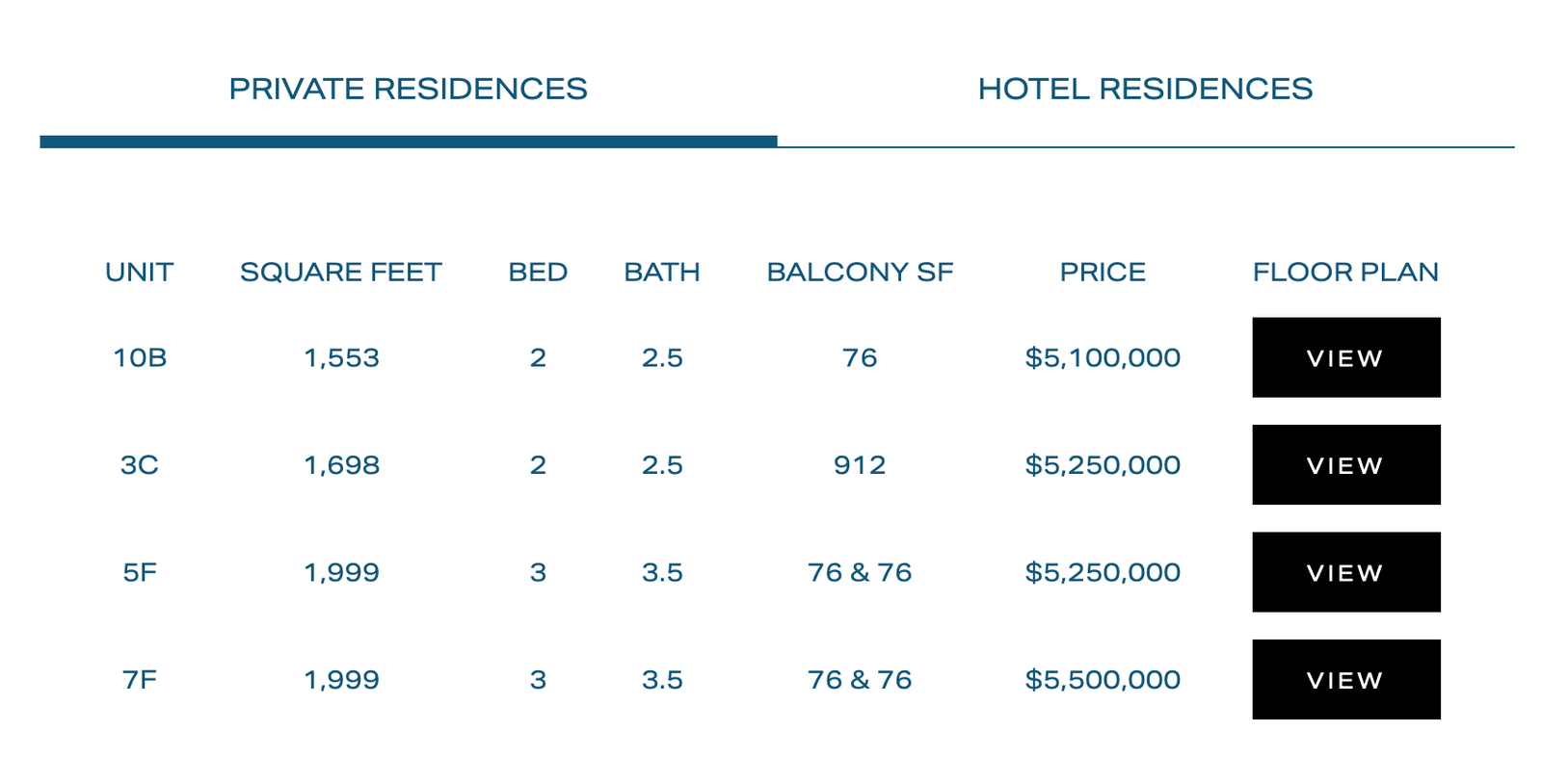
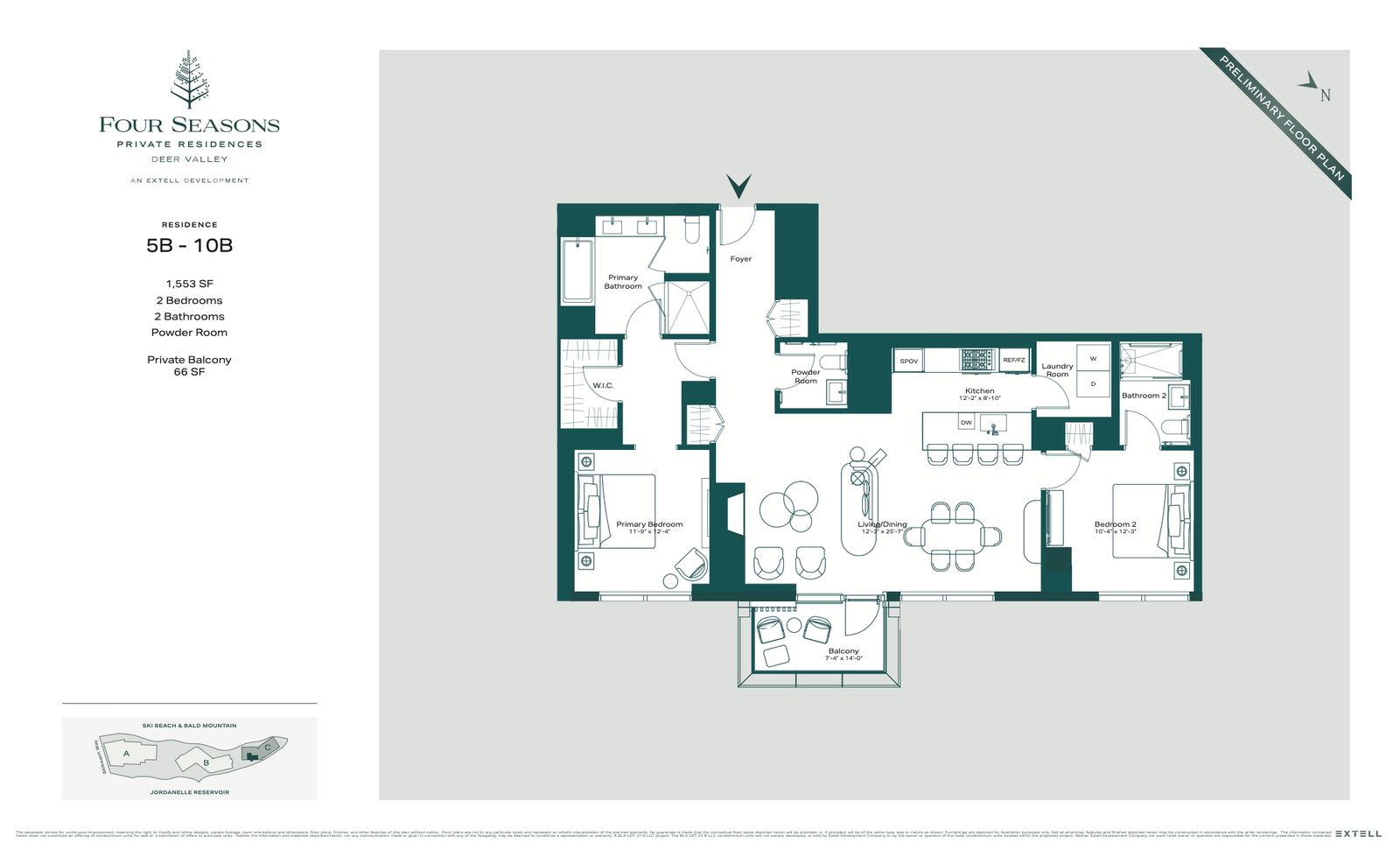
    Based on current availability, the smallest remaining Private Residence (1,553 sf) is going for US$3,283 psf.
    As a Park City booster, I think this additional village is exciting. There are now two large interconnected resorts and four distinct villages lining the Wasatch Back: Park City Mountain Resort, Park City Canyons Village, Deer Valley, and the Deer Valley East Village. Visit Utah would say that there’s also a third resort in Woodward Park City (which happens to be adjacent to Parkview Mountain House).

    But as a real estate developer and snowboarder, I do wonder about two things.

    First, Deer Valley East Village is located in an area on the Wasatch Back that receives noticeably less snow compared to other areas because of its lower elevation and broad east exposure. If I refer back to Jim Steenburgh’s book, Secrets of the Greatest Snow on Earth, the average annual snowfall at the base of the Jordanelle Gondola (located just north of the East Village) is probably less than 150 inches. This compares to 350+ inches at higher elevations in Park City and 500+ inches in the Cottonwood Canyons.

    Because of this, the East Village has obviously invested heavily in snowmaking equipment. But artificial snow is not the same as natural snow. The higher elevations will be just fine, but the lower elevations will likely see marginal conditions. So why build a new village here? And was and is this a consideration for buyers at this new Four Seasons? Or are the luxury amenities and après events the real deciding factors? I’m not their target demographic, but from my perspective, this is reason enough not to buy here.

    On the topic of the target buyer, my second question is about Deer Valley’s “no snowboarding” rule (which is another reason why I’m not their target demographic). There are only 3 resorts in the United States that ban snowboarding. One of them is Deer Valley, and the other two are Alta (Utah) and Mad River Glen (Vermont). This seems to be a wildly popular rule among resort guests, and I support Deer Valley’s decision to weed out “riff-raff” like me. Deer Valley is also known for capping daily lift tickets to keep the crowds down, so they don’t seem to be hurting for patrons.

    But according to recent data from Snowsports Industries America (SIA), the rough participation split in the US between skiers and snowboarders is somewhere around 60-70% and 30-40%, respectively. There are also many instances where families have a mix of skiers and snowboarders. If you’re the Four Seasons at Deer Valley, this segment of the market is excluded. Oh well. The rich snowboarders have Park City, The Colony at Canyons Village, Powder Mountain, Aspen, and many other locations.

    My assumption is that the ban on snowboarders is an unapologetic feature of Deer Valley and developments like the Four Seasons. It creates an air of exclusivity and differentiation. Some data also suggests that snowboarders tend to be a more ethnically diverse group compared to skiers (SIA reports show that among female snowboarders, 25% are Hispanic, and among males, 13% are Black — the highest diversity rates in winter sports), so one could argue that it’s not just about the type of device used to get down the mountain. And, it seems to be working.

    In July 2025, the Extell announced that they had closed a $600 million construction loan for the project from JVP Management and that 60% of the hotel residences were already sold. This is believed to be the largest construction loan on record for a hotel and residential condominium project in Utah.

    At the same time, I’m also certain that the Four Seasons lost sales to certain buyers, perhaps a wealthy Boomer or Gen Xer with kids or grandkids who snowboard. Extrapolating this demographic trend, it is also believed that Millennials represent the first generation in the US with near-parity between skiers and snowboarders. So what will this mean for luxury real estate as these Millennials become the dominant buyer segment? My prediction is that the real estate market will respond.

    Would you buy at the Deer Valley Four Seasons? Or have you already?

    Cover photo: Deer Valley Four Seasons

  • Stand with crypto

    January 17, 2026 · View original


    If you’re looking for strong evidence that crypto is entering the mainstream, here it is:

    > The cryptocurrency and banking industries are locked in a lobbying battle over digital tokens that yield annual payouts, a fight that threatens to derail legislation intended to bring crypto into mainstream finance. > > The two sides are clashing about what crypto firms call rewards, or annual payments to investors based on a percentage of their total holdings. They are commonly used for stablecoins, popular tokens typically pegged to the U.S. dollar and used for trading, overseas payments and money transfers. > > To banks, rewards on stablecoins from companies such as Coinbase Global that pay out 3.5% resemble high-yielding deposits—but without the regulations they face for holding customers’ cash. Bank-industry groups have flooded lawmakers with letters and phone calls arguing the rewards would decimate Main Street lenders. The national average interest rate for a standard interest-bearing checking account is below 0.1%.

    Whenever incumbents start panicking, you know change is happening. It happened with Uber fairly recently, and now it’s happening with crypto. This change involves, among many other things, the tokenization of real-world assets and the integration of crypto within the global financial system. But clearly, it’s not going to be a simple transition.

    If you are a Canadian who believes that Canada should be doing more to position itself as a global leader in blockchain (and that it needs effective stablecoin regulations), I would encourage you to check out Stand with Crypto, a non-profit advocacy group primarily founded and backed by Coinbase.

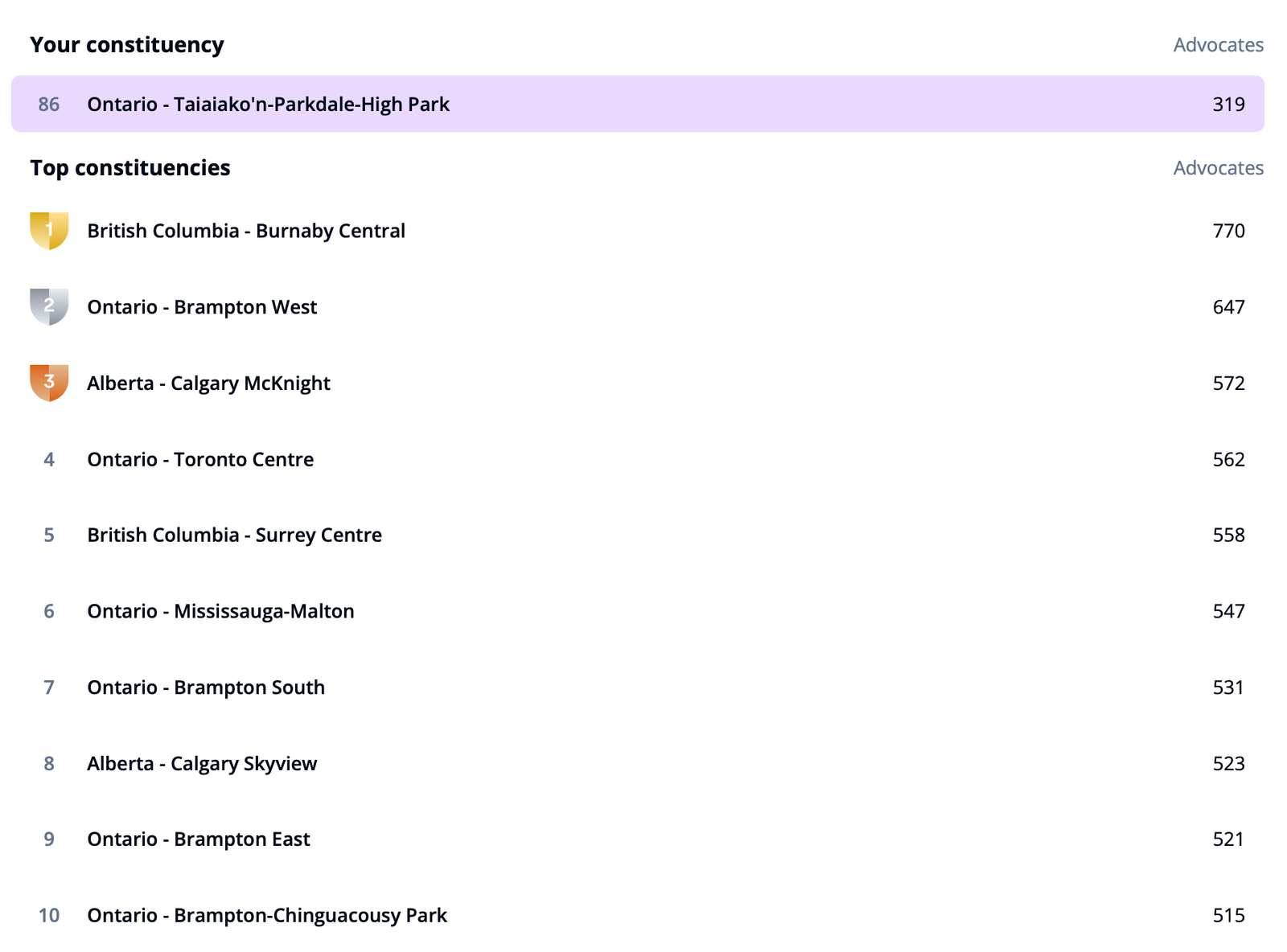
    The site allows you to quickly email your Member of Parliament and see which politicians are pro- or anti-crypto. I just joined, and my riding is currently 86th in terms of the number of advocates. Number one is Burnaby Central. There’s a lot of work to be done to get these numbers up. A thriving blockchain ecosystem is an opportunity to drive economic growth in this country at a time when it is badly needed.

    Cover photo by Francisco Delgado on Unsplash

  • Real estate has moved from faceless corporate to parasocial

    January 16, 2026 · View original


    My friend Chris Spoke sent me this article yesterday. It’s by Paul Stanton (at Thesis Driven), and it’s about “why the next generation of real estate fund managers will be built on video reels and newsletters.” As someone who has been writing a personal blog-slash-newsletter for the last 13+ years (though largely focused on real estate and cities), this post really resonated with me. I wish I could say that I was early and that it brought me great riches, but sadly, that is not the case.

    Regardless, what all of this is getting at is the value of parasocial relationships:

    > A parasocial relationship is a one-sided connection where a person feels they know and have a bond with a public figure (celebrity, influencer, fictional character) who is unaware of their existence, often stemming from media exposure like TV, social media, or podcasts.

    I wouldn’t call myself a public figure, but a daily blog does inherently foster parasocial relationships. Generally, though, the real estate industry has been slow to adopt new media. The prevailing thought has been that social media is good for selling stuff like fashion, but not appropriate for syndicating large and serious real estate deals. I’ve even heard some people argue that a strong social media presence is probably inversely correlated with actual real estate performance.

    This is true of the grifters that Paul talks about in his article. These are the people posing in front of fancy cars or on a private jet, claiming that they can 10x your money using some dead-simple real estate strategy. They cannot. These people are not in the real estate business. But the marketing strategy clearly does work for raising capital, which is why you now have accomplished people who actually know real estate and finance becoming influencers:

    > Top executives of Wall Street’s largest private equity firms have recently joined the social media influencer ecosystem—perhaps none more so than Jon Gray, President and COO of Blackstone.   > > Gray has become known for his candid videos filmed in Central Park during morning runs, sharing his views on recent shifts in the capital markets, macro events and even celebrity gossip—all with a sunny and sometimes self-deprecating disposition.   > > I’ve watched many of these videos, and I now know (or, Blackstone has successfully planted in my brain) that Jon is exactly who I’d want running a massive pool of long-term capital: measured, self-aware, allergic to hype. Blackstone no longer feels like a faceless capital machine.

    The fact that Jon Gray is doing this should give everyone in our industry the confidence that it’s more than okay to be a real estate social media influencer. In fact, it’s the name of the game today, even for the most sophisticated companies with long and proven track records, like Blackstone. There’s nothing to be shy about. People do not want to follow faceless companies. They want to follow humans. So, be a human.

    I was thinking about this very topic over the holidays, and I ultimately landed on it needing to become a bigger part of what I do in 2026. I will obviously continue to write this daily blog, but I want to be better at putting myself out there in other ways, creating more video content, and building up Globizen’s overall brand as a city-builder committed to creating better places.

    We have started by posting regular (almost daily) content to Instagram (Globizen & Parkview Mountain House), but there’s more we want to do. The first obstacle is getting over the fear of what people might think if I take candid videos of myself running in Central Park (people couldn’t care less). And the second obstacle is time. It’s a lot of work. But building a company and raising capital have always been a lot of work.

  • Will drone delivery ever become an urban solution?

    January 15, 2026 · View original


    Wing, the aerial delivery company owned by Alphabet, recently announced an expansion to 150 more Walmart stores across the US this year. This also includes four new cities: Los Angeles, St. Louis, Miami, and Cincinnati. The company now says that it has completed over 750,000 deliveries since it launched in 2012. And the goal is to be flying out of 270 Walmart locations by 2027.

    There was a period over a decade ago when drone delivery was in its “hype phase.” This also coincided with retail being out of favor as a real estate asset class. Drones made e-commerce seem even more threatening. Then things quieted down when regulation, noise, privacy, and other obstacles got in the way of the drone hype. But as with all new and promising technologies, the building continued, just less publicly.

    Noise and privacy are serious concerns, but I understand that there are now “bladeless” drones and drones that use shrouds to direct sound upward. For the sake of argument, let’s assume these problems can be solved. Now I wonder: Who is this for and where do they live?

    Because of weight limitations, drone delivery payloads tend to be smaller items (under five pounds). And because there’s only so far that these drones can fly on a single battery charge, they tend to be for quick local deliveries. So, the use case seems to be for people who don’t have the luxury of being able to walk 10 minutes to a corner store, or can’t be bothered to do so.

    This also aligns with the early adopters of this tech: people who live in suburban homes and have driveways where a drone can easily land. This makes sense as an easy first solution, though I think you could make the case that landing on the roof of a tall building might actually be less conspicuous and disruptive at scale.

    As it stands, drone delivery is an overwhelmingly suburban solution. The environment is convenient for takeoff and landing, and it’s an environment where fetching small items probably isn’t convenient. This solves that. And the company appears to be scaling. But how far will it go? And will it ever become a widespread urban solution?

  • Bottom-up budgeting

    January 14, 2026 · View original


    One of the ways that cities determine where they should spend money and invest is through something known as Participatory Budgeting. The birthplace of this approach is generally thought to be Porto Alegre in Brazil, which first adopted it in 1989. Since then, it has become a mainstream practice and spread to cities all around the world, including New York and Paris, both of which operate ambitious programs.

    In the case of Paris, they have committed 5% of their capital budget to be spent in this way. The way it generally works is simple: citizens get to propose ideas and then vote on which urban projects they think should be funded. Last year, Paris saw 2,079 ideas proposed, 261 projects put to a vote, 162,395 votes, and 104 projects selected. And since the program launched in 2014, over €768 million has been allocated.

    Some of these projects are very local and specific, such as “build a sports facility on this street,” while others are city-wide, like “make things cleaner, be better at sorting waste and recycling, and reduce noise.”

    While there’s lots of debate about the effectiveness of Participatory Budgeting, it does offer a number of benefits. Studies have shown that it can improve public trust in government institutions by making them more accountable. It can also help to educate residents on what things actually cost, making trade-offs more understandable. But most importantly, it can help to better allocate funds.

    After all, who better to decide what a neighborhood needs than the locals who live there every day? Just don’t ask about building new housing.

    Cover photo by Ness P. Colmart on Unsplash

  • Ontario proposes to pause Inclusionary Zoning policy in three municipalities

    January 13, 2026 · View original


    Oh boy, have we spoken a lot about inclusionary zoning over the years (see here, here, and the full list of 43 posts that I have tagged with “inclusionary zoning” here). Politicians tend to like this policy because they can present it as no-cost or “free” affordable housing. Few people have much sympathy for real estate developers, so it’s easy to just say, “Don’t worry, we’ll just get the developers to pay for it.”

    But the reality of inclusionary zoning is that you need a robust housing market that can absorb the additional cost burden of delivering affordable homes. There’s no such thing as a free lunch in economics, which is why when you read IZ reports and policy documents, you’ll typically find language to the effect that it only works in a strong economy and a strong housing market.

    These two descriptors do not generally apply in Ontario today, and so the province has just proposed an amendment that will pause the inclusionary zoning by-law. More specifically: developments with a complete application for a zoning by-law amendment, site plan approval, or a building permit on or before July 1, 2027, will not be subject to IZ in the cities of Toronto, Mississauga, and Kitchener.

    Why?

    Because IZ is deemed unviable under the current market conditions. In other words, there’s nobody to whom the cost of building affordable housing can be passed. If you’d like to comment on this proposal, you can do that here, and you have until January 19, 2026.

    Cover photo by Gleb Kozenko on Unsplash

  • It’s a long game

    Why early success does not predict exceptional performance as an adult

    January 12, 2026 · View original


    Conventional wisdom suggests that the way to get really good at something is to (1) start as early as possible learning the thing and (2) focus exclusively on the thing. This is relevant information for elite schools, sport academies, and other institutions because it leads to, “let’s find the best young talent and then further accelerate their skills through discipline-specific practice.”

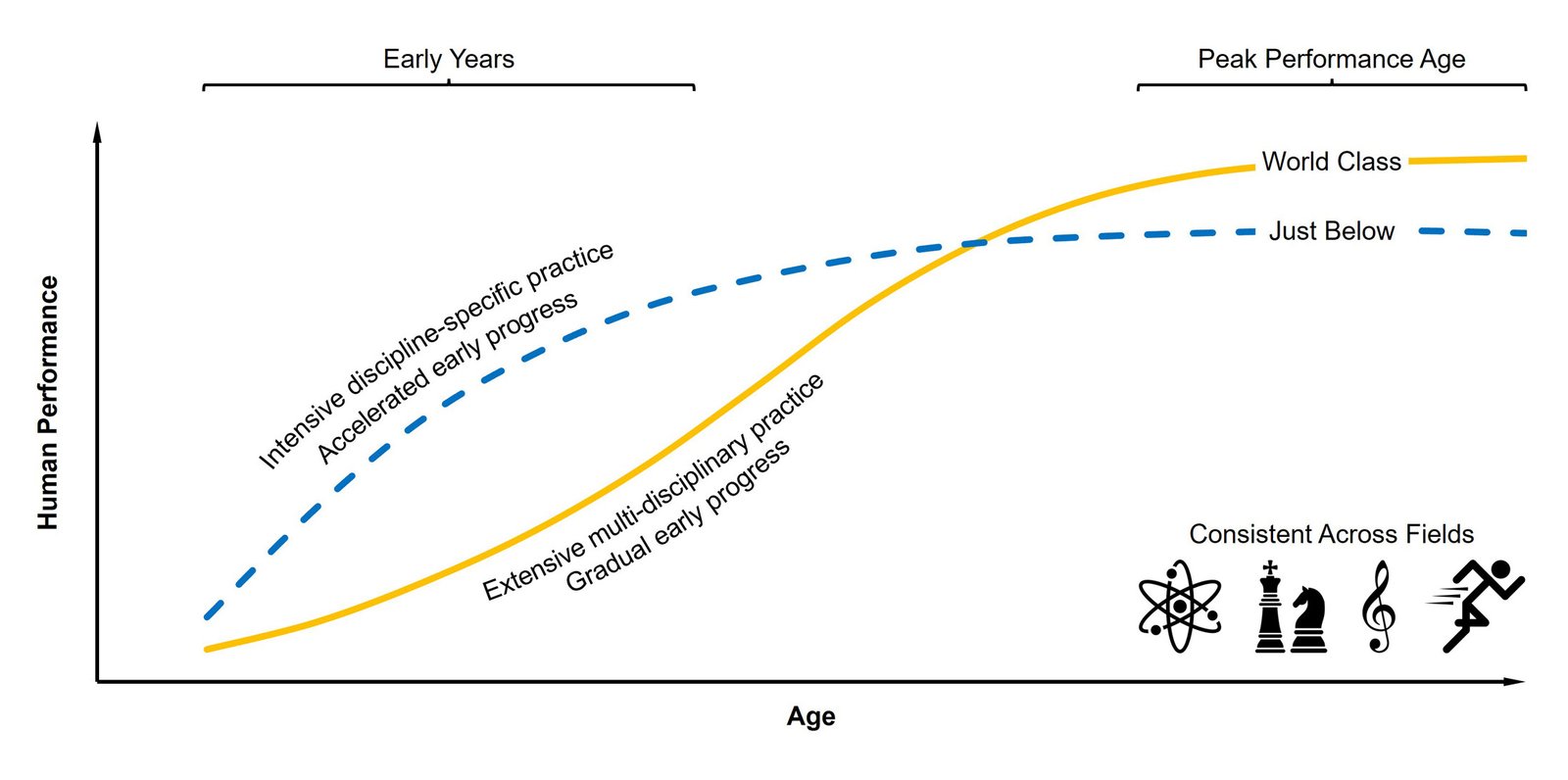
    But recent research has found that this typically isn’t the case. By looking at more than 34,000 adult international top performers in different domains ranging from classical music composers to Olympic champions, researchers found the following three major features associated with human development (quoted verbatim from here):

    1. Early exceptional performers and later exceptional performers within a domain are rarely the same individuals but are largely discrete populations over time. For example, world top-10 youth chess players and later world top-10 adult chess players are nearly 90% different individuals across time. Top secondary students and later top university students are also nearly 90% different people. Likewise, international-level youth athletes and later international-level adult athletes are nearly 90% different individuals. 2. Most top achievers (Nobel laureates and world-class musicians, athletes, and chess players) demonstrated lower performance than many peers during their early years. Across the highest adult performance levels, peak performance is negatively correlated with early performance. 3. The pattern of predictors that distinguishes among the highest levels of adult performance is different from the pattern of predictors of early performance. Higher early performance in a domain is associated with larger amounts of discipline-specific practice, smaller amounts of multidisciplinary practice, and faster early discipline-specific performance progress. By contrast, across high levels of adult performance, world-class performance in a domain is associated with smaller amounts of discipline-specific practice, larger amounts of early multidisciplinary practice, and more gradual early discipline-specific performance progress. These predictor effects are closely correlated with one another, suggesting a robust pattern.

    In other words, it’s a long game:

    The most successful and highest-performing adults seem to start off as well-rounded kids.

    Cover photo by Patrick Tomasso on Unsplash