Daily insights for city builders, delivered every morning at 6 AM ET. I’m Brandon Donnelly — a Toronto-based real estate developer and founder of Globizen. I’ve been writing here since 2013.

Month: September 2025

  • None of us should be driving cars anymore

    September 20, 2025 · View original


    About a year ago, I wrote this post saying that autonomous vehicles were already safer than human-driven ones. This claim was based on safety data from Waymo and about 22 million rider-only miles. (Rider-only means no human driver.) A year later, Waymo now has over 96 million rider-only miles across Los Angeles, San Francisco, Phoenix, and Austin (through to June 2025) — and their safety record is only becoming more compelling.

    Here’s an updated data set and a chart showing any-injury-reported crashes (average benchmark vs. Waymo):

    What immediately stands out is that Waymo has virtually eliminated the most common and deadly type of crash: vehicle-to-vehicle crashes within intersections. Compared to the benchmark, they are down 96%. They’ve also reduced single-vehicle crashes by 96%, pedestrian crashes by 92%, motorcycle crashes by 89%, and cyclist crashes by 78%. These are all remarkable figures and evidence that we are solving one of society’s greatest safety problems.

    It also tells me that, as humans, our driving days are numbered. Pretty soon nobody will want us behind the wheel of a car. It will be viewed as too dangerous. And that’s fine by me.

  • Running through New York City

    September 19, 2025 · View original


    YouTube video

    I’m not a runner. I’ve just never gotten into it. But I can appreciate why people love it, and I imagine that some of the things I love about cycling also happen with running. One of those things is the ability to experience a place while working out.

    Here’s an example.

    I think this recent video by Satisfy does a great job of capturing what it must feel like to effortlessly glide through a city like New York. They also picked the perfect song, so turn your sound on. If you enjoy running and/or NYC, you’ll enjoy the video.

  • The Coffee is coming to Junction House

    September 18, 2025 · View original


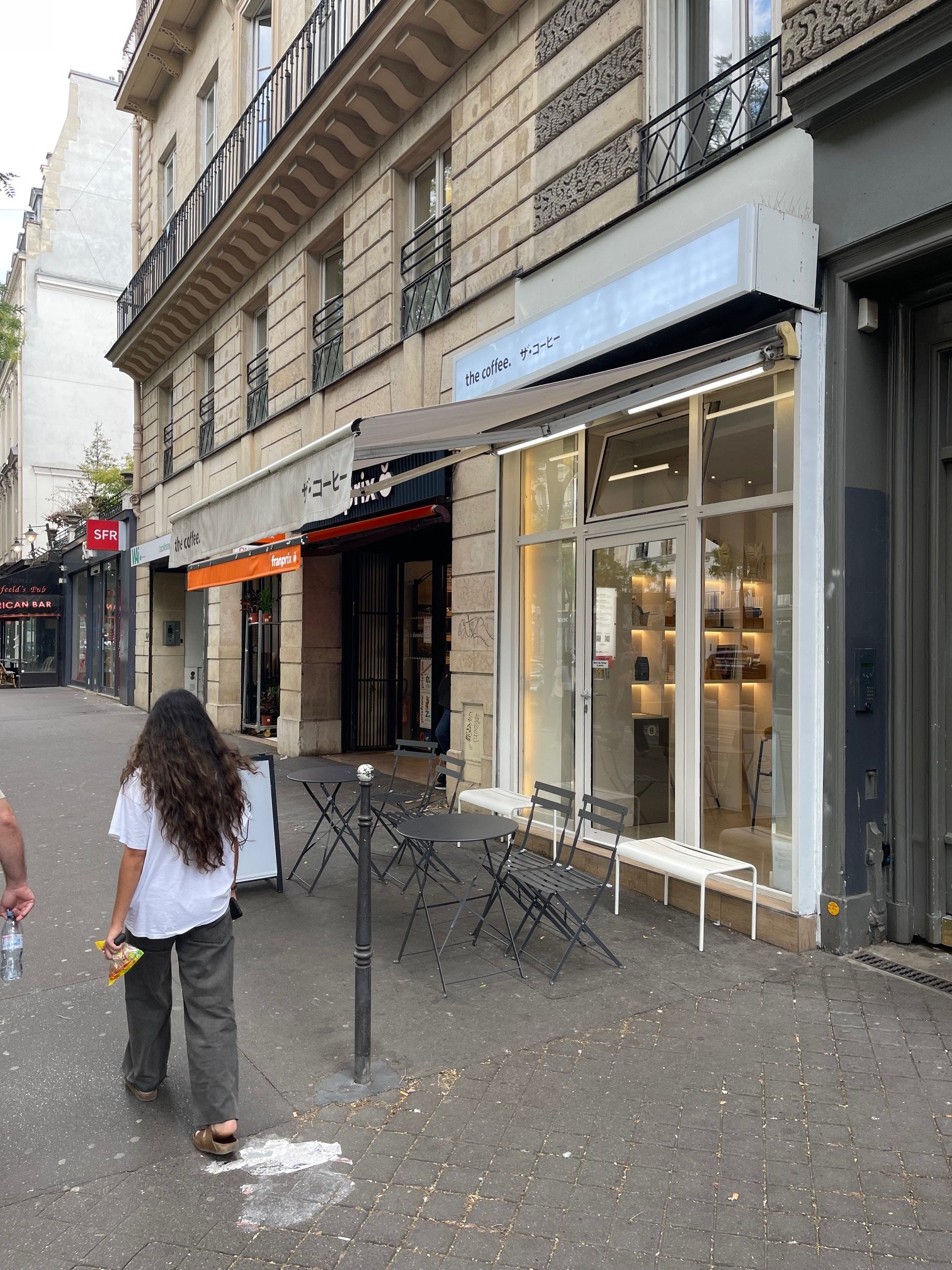
    Last week in Paris, we went to check out the above café called The Coffee. It was our first time. The brand is a Brazilian coffee chain founded in 2017 by three brothers who wanted to combine Japanese minimalism with the best of Brazilian coffee. Brazil, by the way, is the world’s largest producer of coffee.

    Since then, they’ve gone on to open nearly 300 stores around the world — from Rio de Janeiro to Paris and Seoul to Sydney. Earlier this year, they opened their first locations in Toronto: on King Street West, in the Financial District, and in Yorkville. And today, I’m excited to share that their next location will be at the base of Junction House.

    This feels like a perfect fit for the area and the building. One of the things that we tried to do with the design of the project was blend Canadian minimalism with the rich history of the Junction. So I’m happy to see this brand land here, especially since we (the developer) no longer own the retail component and weren’t involved in the leasing. Kudos to Lee Chow Group (the owner) and the JLL Retail Group.

    It’s exciting to see a global brand like The Coffee choose the Junction. They clearly know what’s up. I’m now looking forward to becoming a loyal customer.

    If you’d like to follow them on Instagram, here’s their Canadian account.

  • By 2080, nearly everyone will live in a city

    September 17, 2025 · View original


    Cities exist because they offer economic and social benefits. People generally come to cities to make money, find a partner, and interact with other humans. Occasionally, we underestimate this desire to cluster — which was the case during our recent pandemic. But the reality is that this is a human tendency that has existed for thousands of years and that also happens to be accelerating.

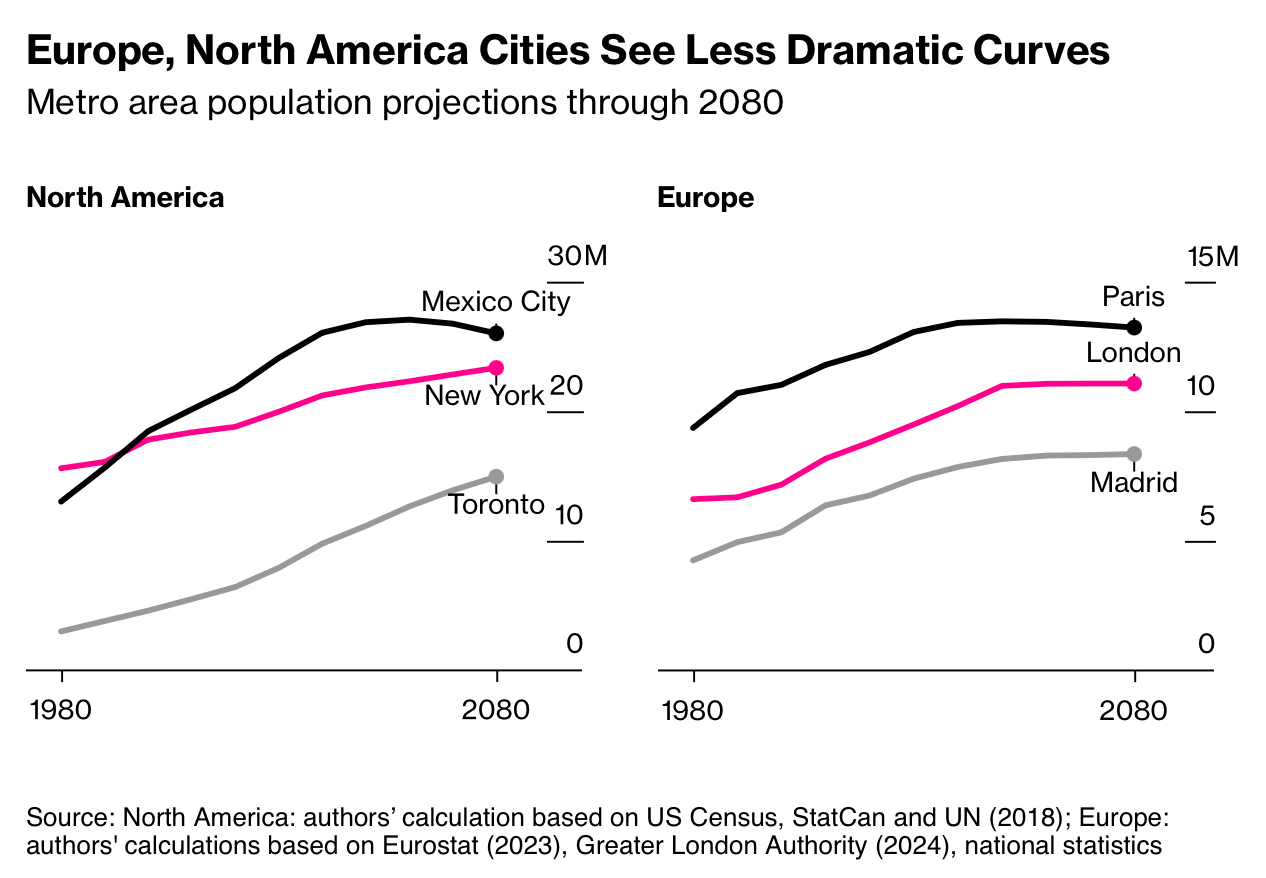
    I mean, as recent as 1980, only about 40% of the world’s population was living in an urban area. Today, this figure is closer to 60%, and by 2080, it is predicted that up to 90% of the people on this planet will live in an urban center.

    This will take the number of megacities with over 10 million people from 3 (in 1980) to nearly 100 in 2080 (according to projections from UN-Habitat). But here’s the thing: cities help people become wealthier, but once people become wealthier, they tend to have far fewer children. This inverse correlation is well established. So intuitively, there should be limits to the growth we are seeing.

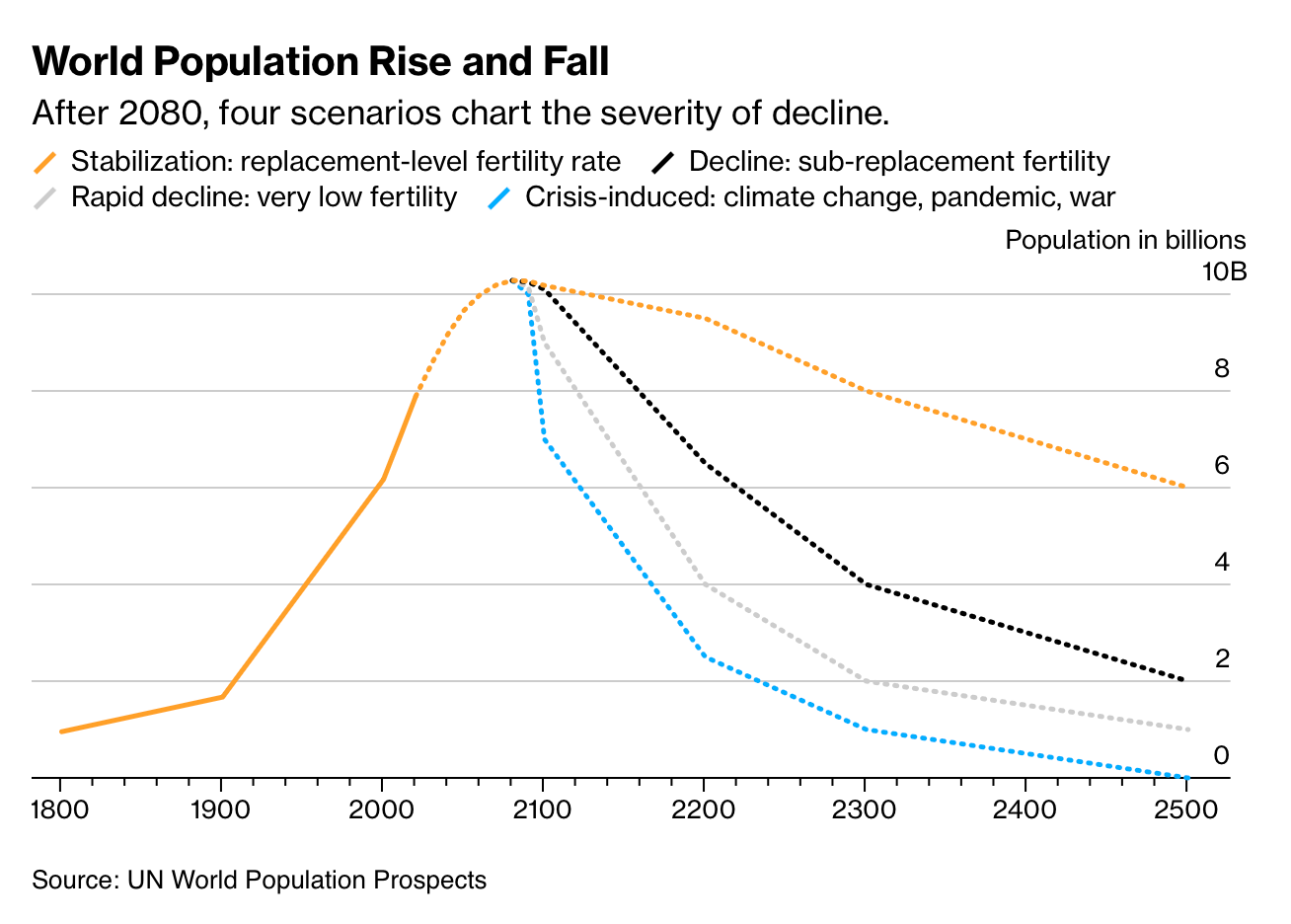
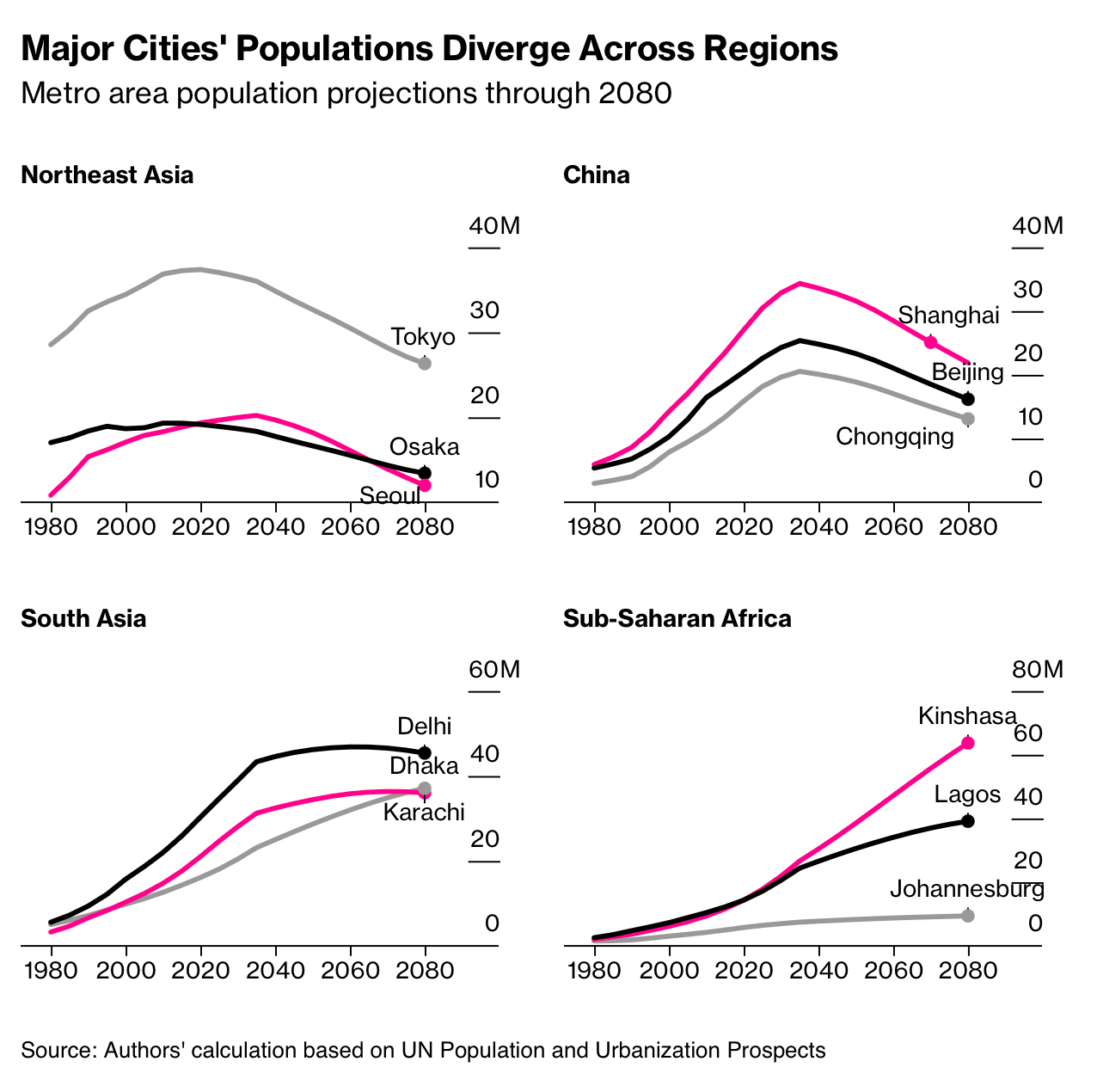
    Here’s an interesting article from CityLab by Greg Clark, Borane Gille and Jennifer Dolynchuk that pegs this peak somewhere around 2080. We will still remain extremely urban, but overall our population will start to decline. And for some cities, like Tokyo, this decline has already started.

    Charts via CityLab

  • Cities are like pomegranates

    September 16, 2025 · View original


    I’ve been trying to think of the right city analogy to explain what it’s like to really experience a place. Onions are perhaps the obvious choice because of the layers you peel back. But that’s not entirely accurate, because the layers of an onion tend to be uniform. I think a better choice would be a pomegranate.

    Pomegranates are a nice-looking fruit. Good colors. They also have high symbolic value in many cultures. They are typically associated with abundance and fertility. And so I would imagine you could enjoy one just by looking at it or by having an artificial replica of one on display.

    But the real benefits of a pomegranate arrive when you dig for its jewel-like seeds, called arils. This is the stuff that tastes good and is rich in antioxidants, fiber, and vitamins. But it requires some work to uncover these seeds and they’re not uniformly distributed. Instead, they tend to be clustered. They are also surrounded by a white membrane that is bitter and generally unpleasant to eat. So most people work around these parts.

    This is a lot like how cities work. It’s easy to experience a city on a superficial and symbolic level. Most cities have a prejudicing brand that gives you some indication of how you should feel while you’re there. But the best parts come when you go digging. There will be bitter and unpleasant parts, no doubt, but that’s just the price you pay to enjoy their hidden jewels.

    If any of you can think of a better fruit or vegetable to use, please let me know.

  • A few observations about Paris (second edition)

    September 15, 2025 · View original


    Our time in Paris has come to an end. It’s time to get back to the greatest city in the world (Toronto). As has become customary around here, I’d like to summarize some of my anecdotal observations from the trip. Here goes:

    – The first one is an obvious one. Paris has transformed itself into a cycling city. Bold planning moves have explicitly prioritized biking, and you can feel it everywhere you go, including outside of the Périphérique. Young and old, families and individuals, everyone seems to cycle in Paris. In parallel to this, it feels like there has been a noticeable reduction in vehicular traffic. Many of the smaller streets around Paris almost feel like they’ve been pedestrianized. But in fact, it’s just because there are so few cars. – Because of this change, I asked an Uber driver this past week if traffic has gotten worse and if it has generally gotten harder to drive in Paris. His response was absolutely. So I then asked him how Parisians generally feel about all of the changes and all of the new cycling lanes. The first part of his answer didn’t surprise me. He said people who live in Paris love it because it’s now easier to get around and they don’t need to own a car. It’s more efficient. But people who drive into the city or pass through it don’t like it. Fair. However, as somebody who drives for a living, the second part of his answer did surprise me. He said, the changes needed to be done — bikes are a more efficient form of transport and they have greatly reduced pollution within the city. I thought this was quite an enlightened and selfless response. – The geography of Paris is changing. Parisians used to think of their city as only existing within the boundaries of the Boulevard Périphérique. (This is technically the boundary of Paris proper, but there is also the Métropole du Grand Paris, which encompasses the greater urban region.) New investments in transit, new developments, and pioneering urbanists are changing this mental model. A New Paris has arrived. And its modal split seems to be skewed toward non-car forms of mobility, to the point that younger Parisians don’t even seem to bother getting a driver’s license. – Anecdotally, I also noticed a big uptick in running, in the number of gyms/fitness studios in the city, and in the number of people walking around in athleisure wear. I view this as North American culture creeping in. Historically, my understanding is that running — and getting sweaty in public — was considered a bit of a faux pas. But at one point this week, I saw a parade of people running in and out of a Drip and doing laps down a busy street filled with cafés. Clearly, attitudes have changed. – Paris is, of course, well known for its cafés and terraces. But I would like to emphasize how beneficial these spaces are for the city. Every terrace comes equipped with a large awning that extends out into the street and creates a kind of outdoor room. These rooms then fill up with an endless supply of people facing outward, adding life, conversation, and eyes on the street. It’s a wonderful way to create urban vibrancy, and you really feel the difference on streets where they don’t exist. More cities need to figure out how to replicate this simple formula. – Food is different in Paris (and in Europe more broadly). There is real concern over the quality of ingredients and what we put in our bodies. We touched on this briefly, here. The difference is that you feel as if you can eat whatever you want, and the end result is that you feel satisfied, not gross. You also don’t feel as if you’ve just ingested a sodium bomb. – On this trip, Bianca and I spent a lot of time exploring the 9ème, 10ème (where we were staying), and 11ème arrondissements, with regular trips south to Le Marais. We’ve now been to Paris enough that we’re starting to figure out which areas we like the most. (If you have a favorite area, please leave it in the comments section below.) – Finally, I would like to end by saying that the trains in Paris are something they should be proud of. When we come to Paris, we always take the train into the city and, on this trip, we took the metro on a number of occasions to get out to places like Pantin and Boulogne. Not once did we wait more than a minute or two for a train. In fact, even during off-peak times, the maximum headway between trains seemed to be 4 minutes. With this at your doorstep, and with all the new cycling infrastructure that has been introduced, I guess it’s no wonder that many Parisians couldn’t care less about driving.

    Until next time, Paris.

  • How Le Corbusier’s lmmeuble Molitor actually got developed

    September 14, 2025 · View original


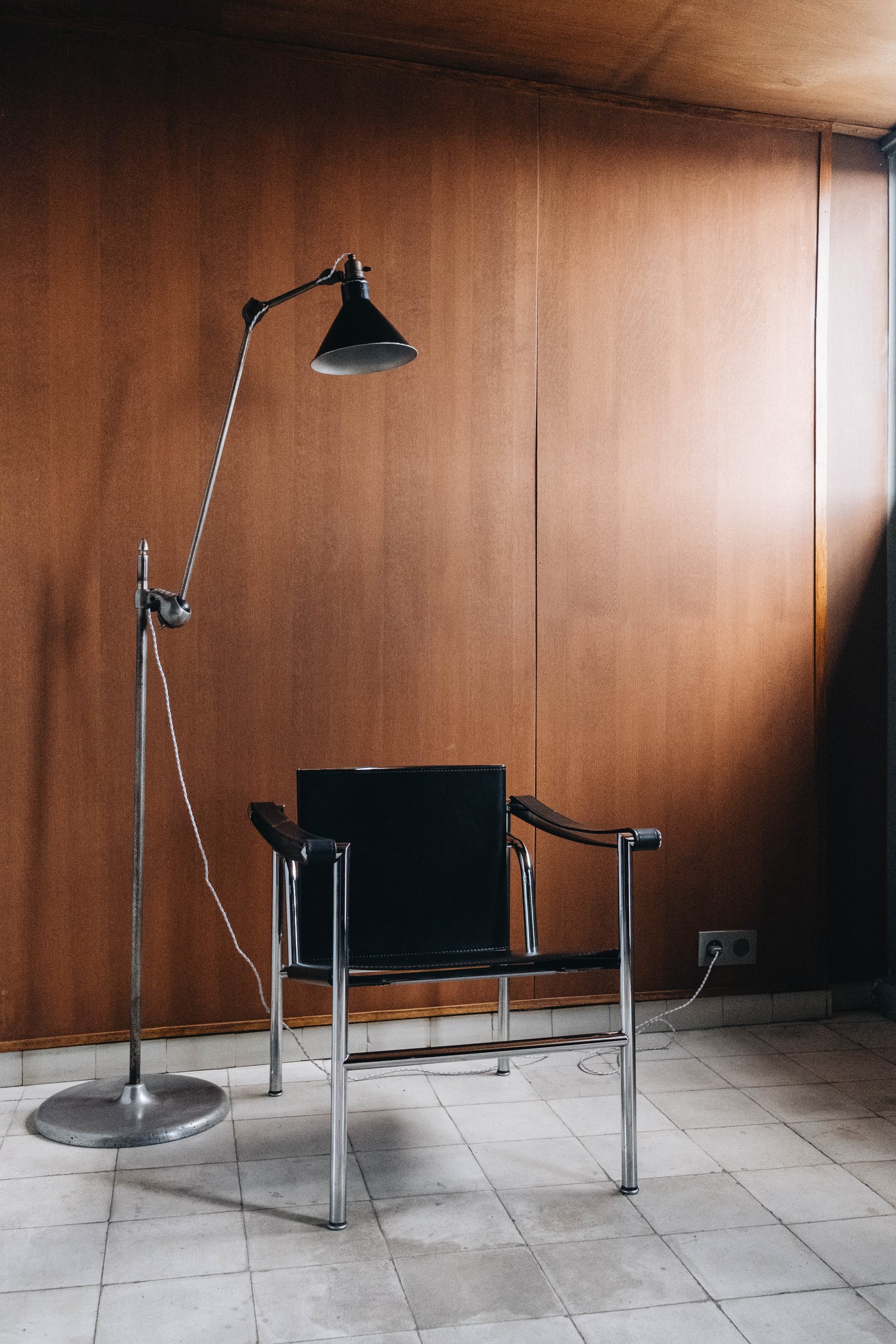
    L’immeuble Molitor is an 8-storey, 15-unit (copropriété) apartment building in the wealthy Paris suburb of Boulogne-Billancourt. It was designed by Le Corbusier and his cousin Pierre Jeanneret, and was constructed between 1931 and 1934. Today, it is one of 16 projects designed by Le Corbusier that are designated as a UNESCO World Heritage Site. And so if you’ve at all studied architecture of the 20th century, you know this project. It’s canonical. It’s also where Le Corbusier and his wife Yvonne Gallis lived for most of their lives until their deaths in 1965 and 1957, respectively. But what they don’t teach you in architecture school — and I think it’s a shame they don’t — is how the project was developed.

    The building was developed by la Société Immobilière de Paris Parc des Princes and two promoters (developers) named Marc Kouznetzoff and Guy Noble. They acquired the site right on the border of Paris and Boulogne in 1931 and then asked Le Corbusier and Pierre to design it. But they struggled to obtain the necessary financing and eventually asked the two architects to work their social circles for people who might want to pre-buy apartments in the building. They also wanted to show that avant-garde architecture, of which this firmly was at the time, could be more attractive than traditional architecture.

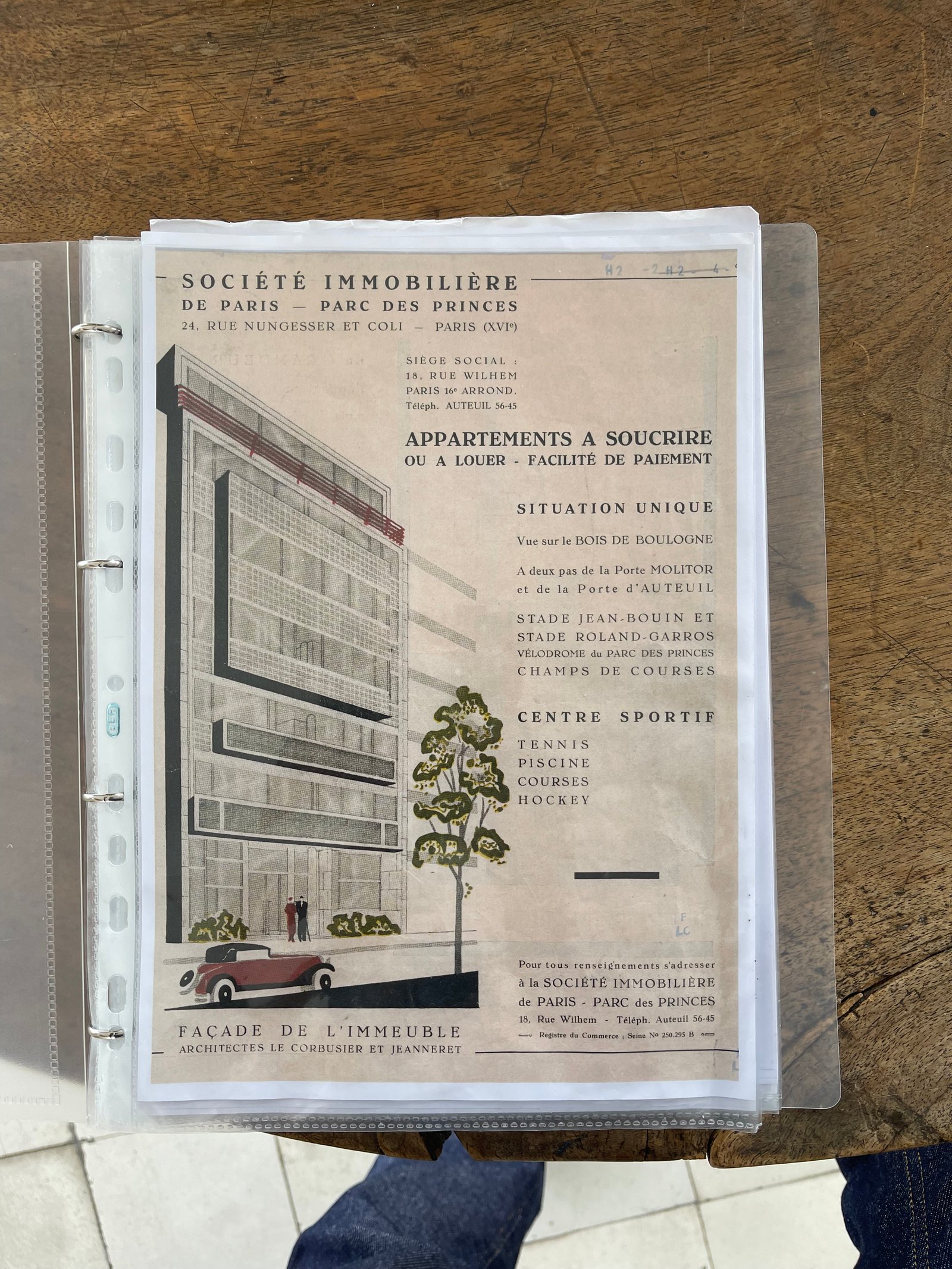
    To that end, here’s a marketing poster from that period (which I think is super interesting):

    Like the emailers you’d see today, it shows a rendering of the building (with fancy rich-looking people out front), it touts the project’s unique location and views, it mentions the architects (by the 1930s, Le Corbusier would have already been an internationally recognized figure), and it promises that the payment structure will be easy. So all in all, not much has changed over the last century when it comes to marketing new apartments: “Move-in today with only 5% down. Don’t miss this unique location in the heart of X, with incredible views of Y.”

    Construction on the project started in February 1932, but it was slow-moving due to financing constraints and a lack of apartment pre-sales. The project was eventually finished in 1934, but then in 1935 the developer went bankrupt. This precipitated a lengthy legal battle in which the ownership of Le Corbusier’s own apartment was even called into question. The dispute was not settled until 1949. During this time, the building not surprisingly fell into disrepair, and it would not be until 1950 that a proper renovation would be undertaken. Once again, this is not the story that is typically taught in architecture schools.

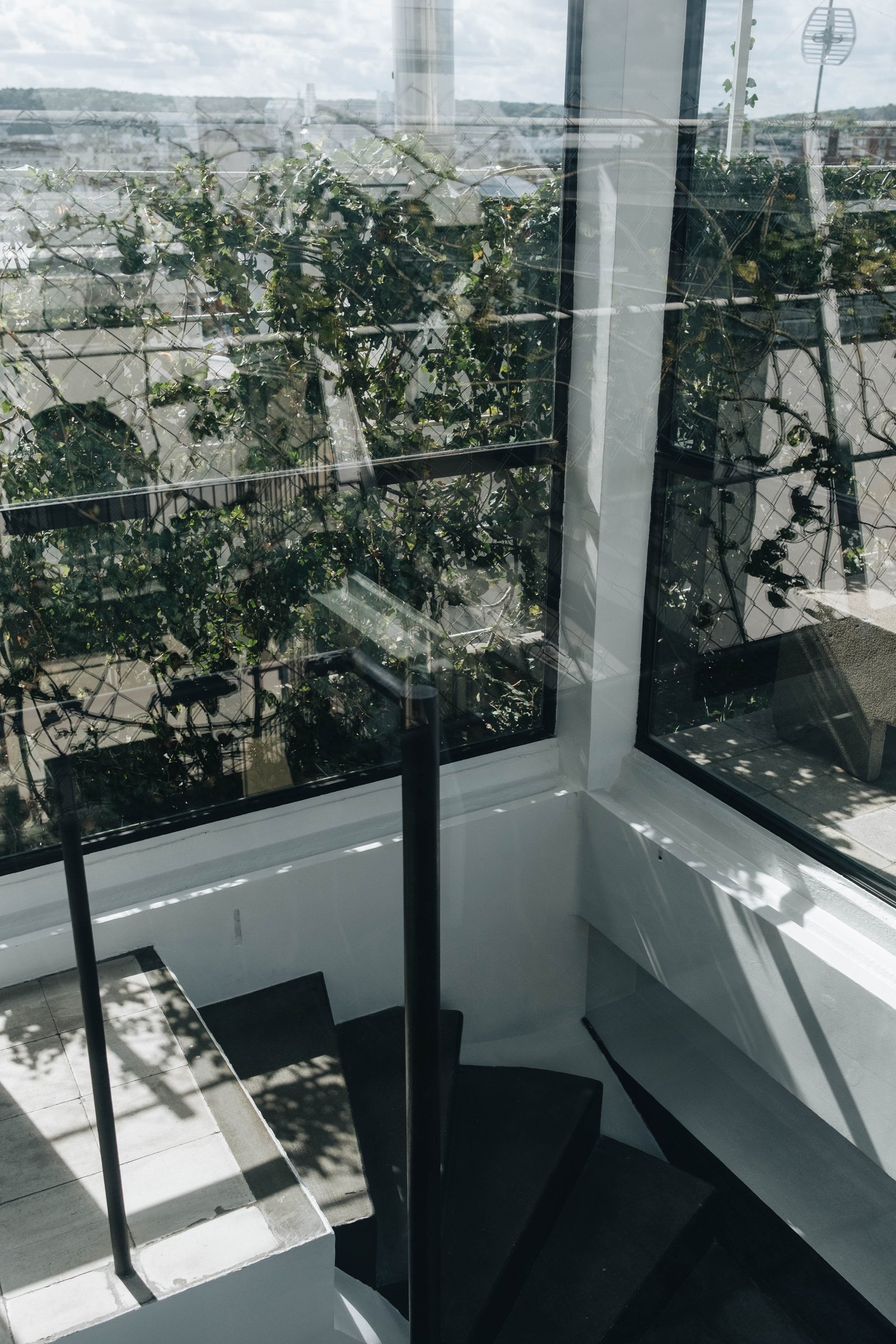
    Having visited the building this week during Paris Design Week, I can tell you that the common areas feel tired. There’s paint peeling in the lobby and the exit stair — which you’re required to take to visit Le Corbusier’s penthouse apartment — isn’t in the best condition. There are tiles missing on the stairs, and the inner courtyard feels a tad grim. At the same time, there are some very nicely appointed apartments in the building that sell/list for over €14,000 per m2. That feels pretty good to me. And so I guess all is well that ends well in the world of architecture and development.

  • Paris isn’t as architecturally conservative as it may seem

    September 13, 2025 · View original


    It would be easy to assume that Paris might be a city trapped in its architectural past. Its global brand is most often associated with the work of Haussmann from the 19th century. The city itself is almost entirely devoid of modern skyscrapers. And heritage preservation rules are, from what I gather, strict. But look behind and beyond Haussmann’s facades, and you’ll find a city that is progressive and experimental.

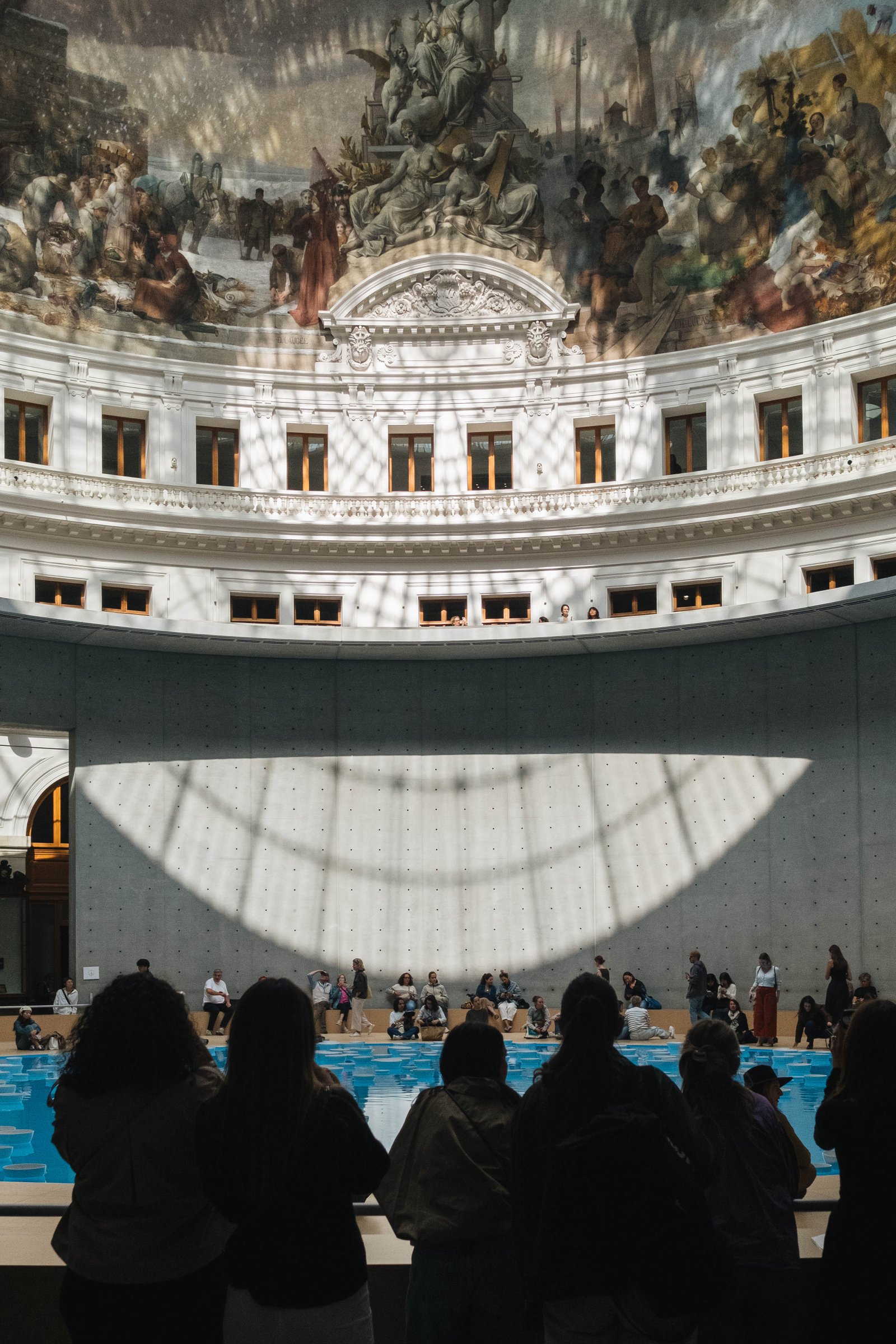
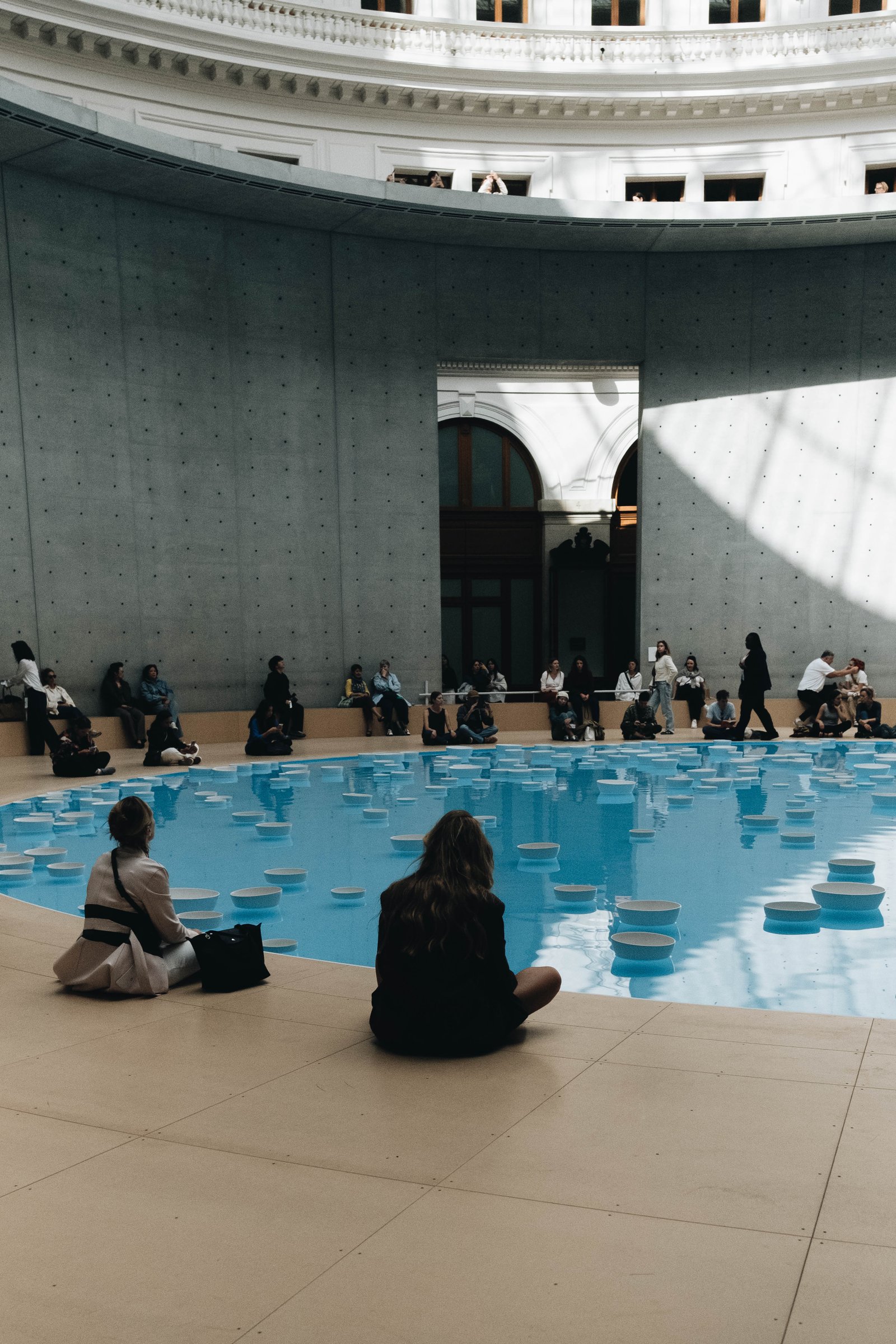
    Take, for example, the Bourse de Commerce. Originally constructed in the 18th century as a hall to both store and sell wheat, a recent renovation by Japanese architect Tadao Ando dropped an exposed concrete cylinder right in the middle of it. It is now a contemporary art museum and, in my opinion, one of the most architecturally interesting buildings in the city.

    Paris certainly cares about its past — as it should — but it’s also not afraid to intervene and break free from it in dramatic ways.

  • What it’s like to stay in a Paris aparthotel

    September 12, 2025 · View original


    We are staying in an aparthotel in Paris. We decided on this type of accommodation for a few reasons. One, we wanted a kitchen so that we could prepare meals. Two, we wanted to be able to do laundry, given that this is the last leg of our trip and we almost exclusively travel with carry-ons. And three, we wanted a workspace area.

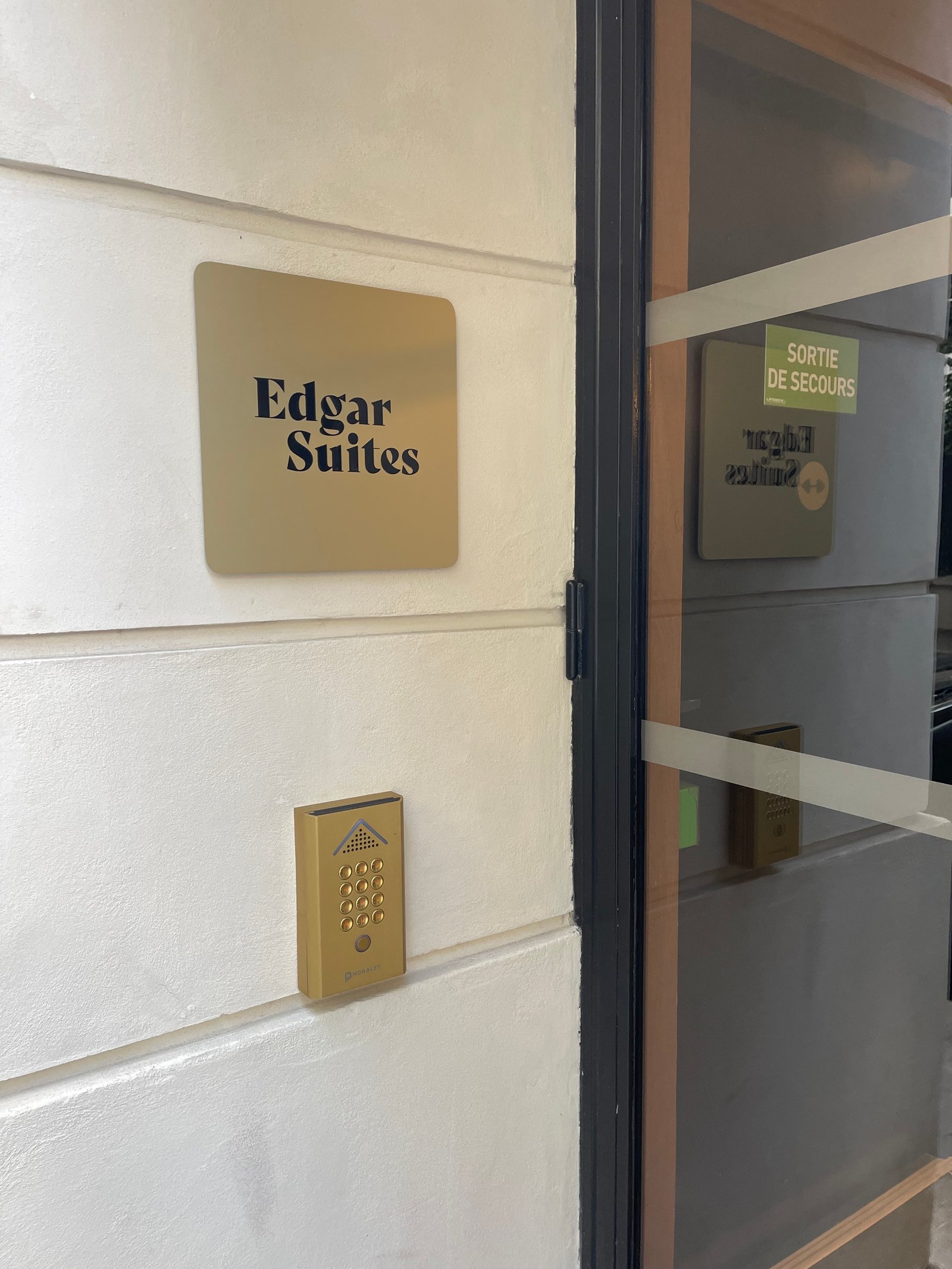
    The options for these criteria are generally aparthotels, serviced apartments, and Airbnb rentals. But we struggled to find a suitable Airbnb that was reasonably priced and didn’t feel lived in. So we ended up booking a place from Edgar Suites, which has a really nice portfolio of properties across Paris and other cities in France.

    My view is that we will see more of these kinds of properties as cities systematically work to restrict — and sometimes ban — Airbnb. And so a fourth reason I wanted to stay here was to do some market research.

    Here’s what I can tell you about our stay.

    The check-in process was entirely digital. The night before check-in, I received an email with a code for the building, a one-time code for our apartment (for initial validation), and a go-forward code once our check-in had been validated. Everything worked seamlessly.

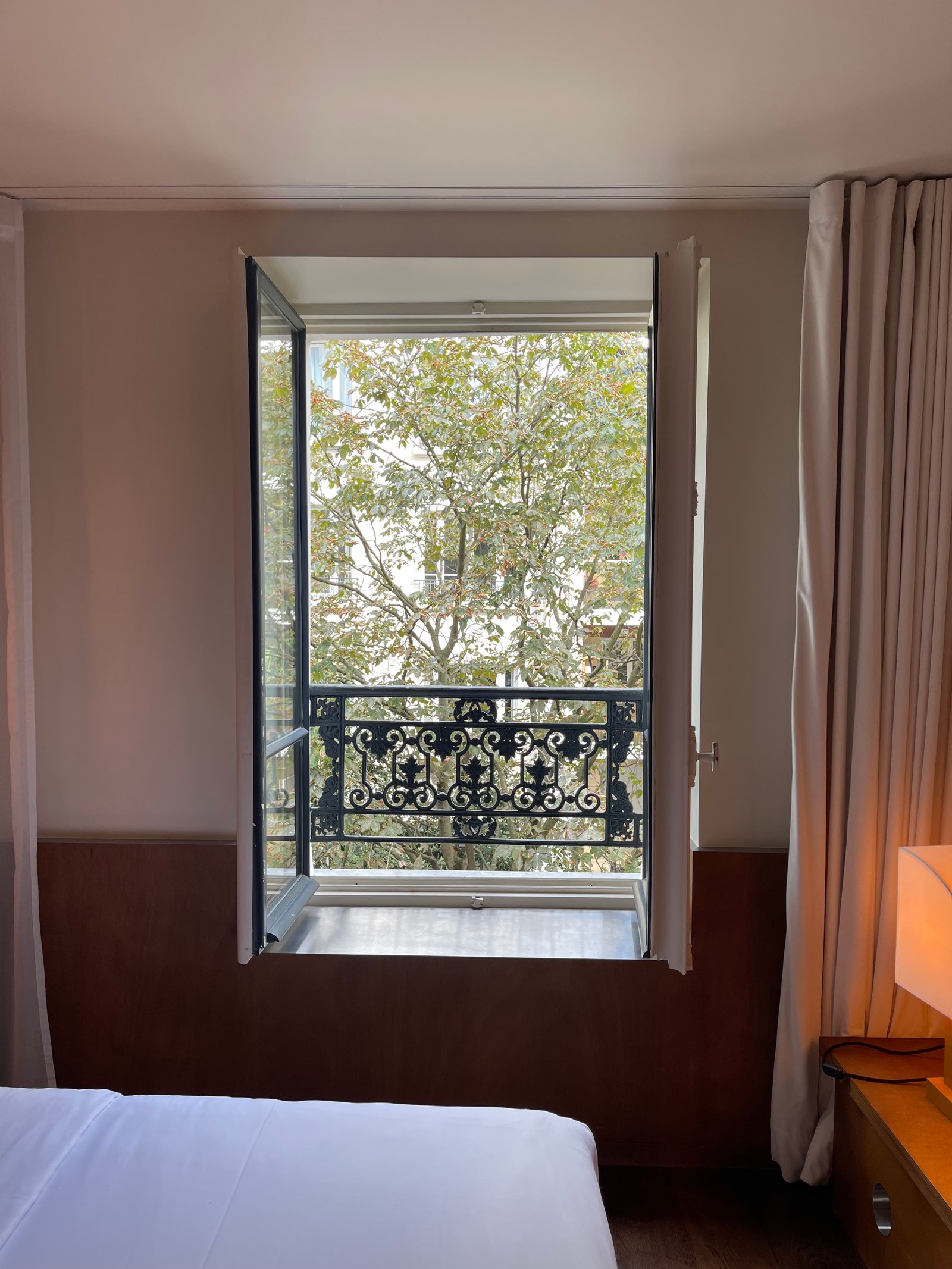
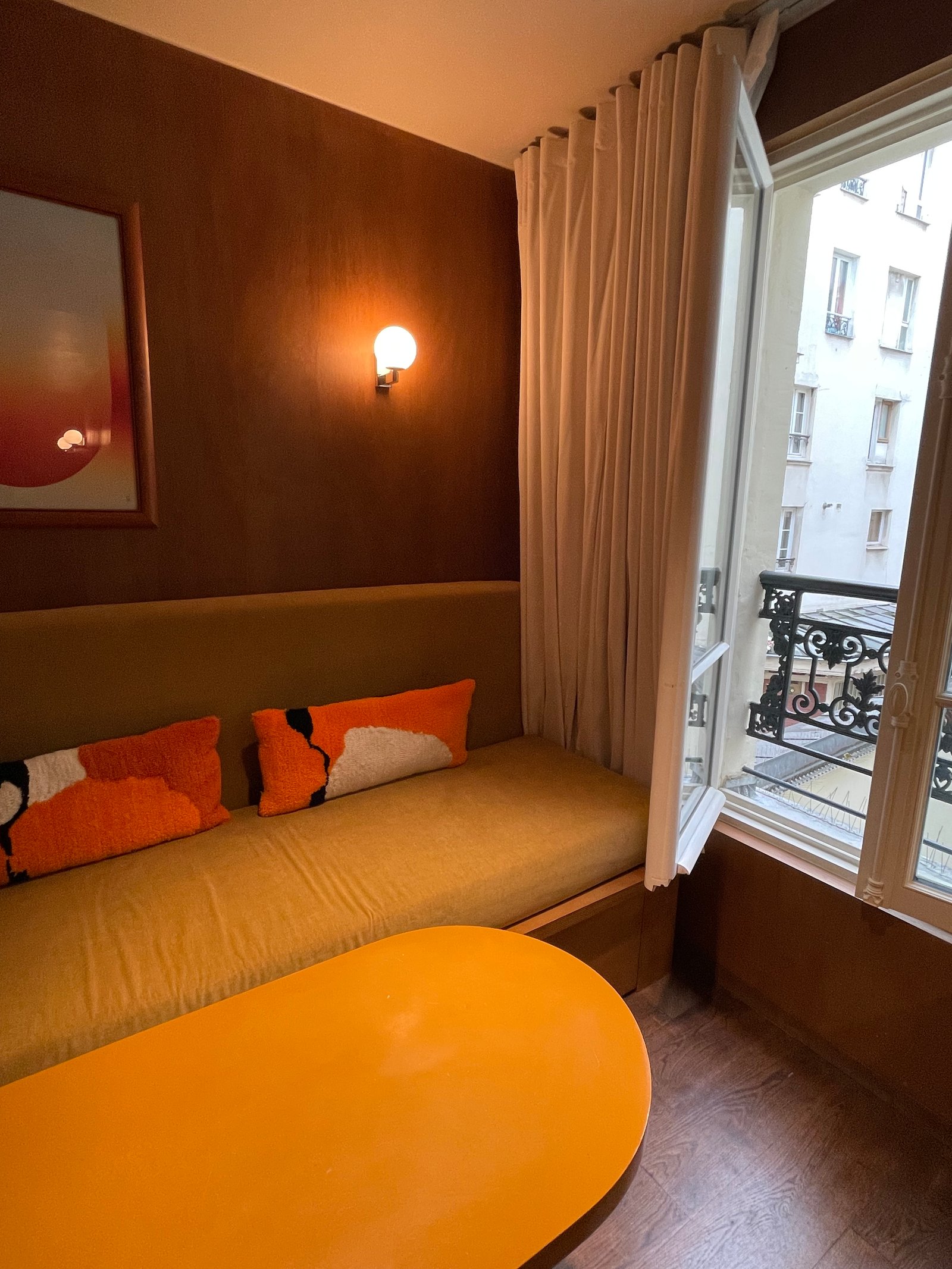
    There weren’t many pictures of our exact suite online, so, to be honest, we weren’t 100% sure what we were getting. But we knew it was going to be compact. In Paris real-estate speak, it’s a two-piece apartment. That means there are two rooms: a living/kitchen area and a bedroom. The bedroom is a generous 3m x 3.5m. And the street-facing window has a nice ledge that can be used for doing one’s makeup or as a place for brazen pigeons to land.

    The bathroom is a good size (about 1.5m x 2m), and there’s also a separate water closet (toilet room). These are extremely common throughout Europe no matter how small the apartment might be. In Canada, these are far less common and only really appear in the top-end of the market. I certainly think they’re a nice feature, but I personally wouldn’t sacrifice in other areas of a small space just to have it.

    The kitchen is more of a kitchenette. Its linear dimension is just under 1 meter (or 3’3″). We’ve made some fairly elaborate meals in this kitchen, but it certainly requires some jockeying around. It’s nice not having to eat every meal out, especially if you’re also trying to work.

    Opposite the kitchen is banquette seating and a table for everything. It’s the dining table, the work table, and the kitchen prep table. It also folds up against the wall if you’d like to have exactly one incremental person come over and sit in this room. Outside of the kitchen/living area is the building’s courtyard (see here for plans of the building).

    For those of you who also like to nerd out about dimensions, it’s about 5.8m in its longest direction, which means that’s the separation distance between our kitchen and our neighbor’s bed. So even though this is a small space, it is a dual-aspect apartment. The toilet room also has a window opening up onto this courtyard space.

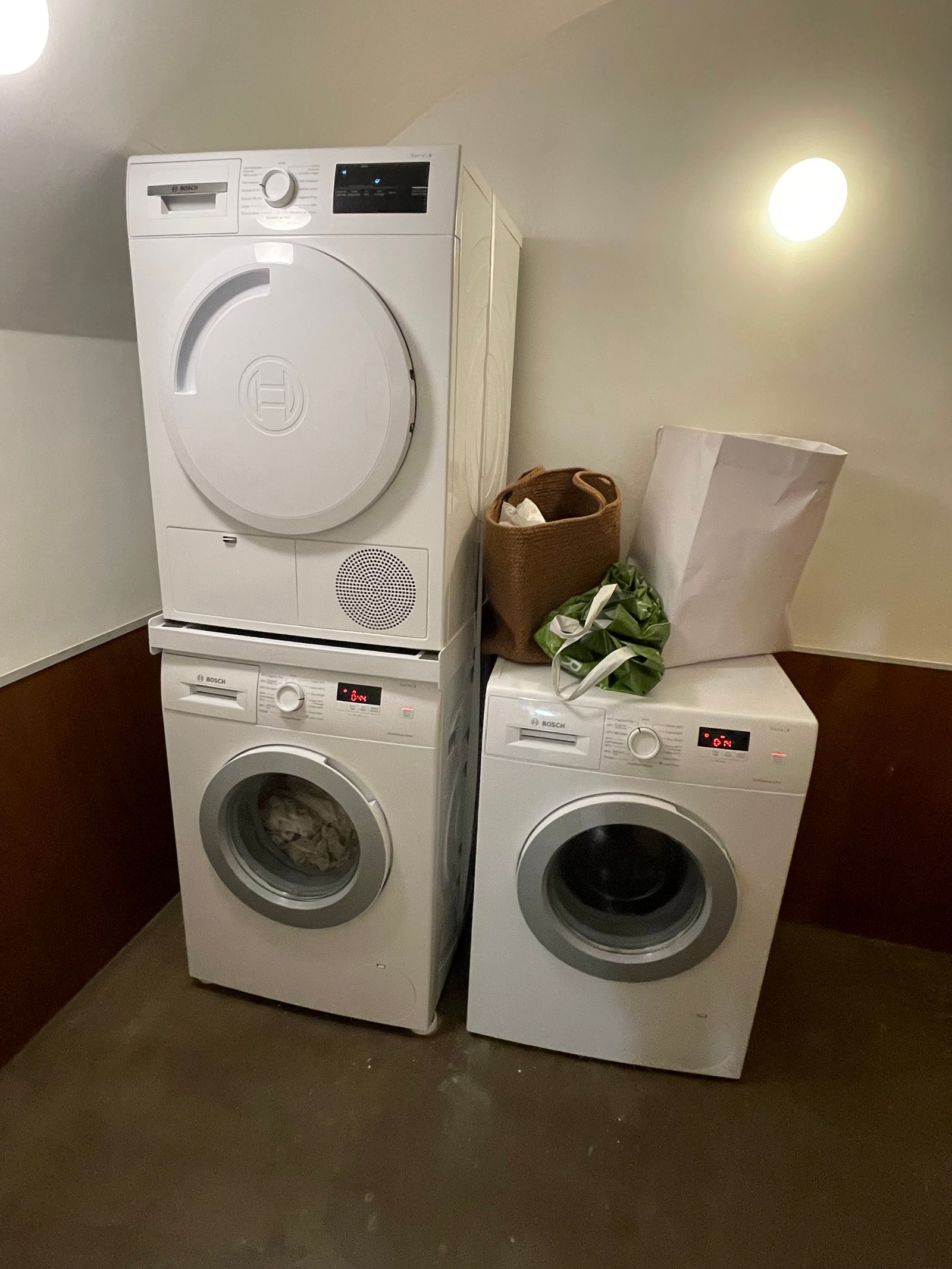
    Finally, the laundry facilities are located in the basement of the building. There are two washing machines and one dryer. We’ve done multiple loads and they’ve been great. There’s also a small gym on the main floor, which I would add to the list of highly desirable amenities for an aparthotel, or any hotel for that matter.

    Overall, we’ve been very happy with our stay. My only comments would be that a larger living space would be needed for longer stays, there’s a surprising lack of conveniently placed outlets in the apartment (one of my part-time jobs is charging devices), and better bathroom products would be a nice upgrade. My wife has taught me that desirable bathroom products, including body lotion, are a huge value-add in hospitality.

    If any of you have stayed in a great aparthotel or serviced apartment, please share a link in the comments section below. I am betting that they will only become more common for longer stays, family travel, remote work, and people who are less tethered to one place.

  • The New Paris: Discovering Greater Paris beyond the Périphérique

    September 11, 2025 · View original


    When most people think of Paris, they only think of Paris proper, meaning the 20 neighbourhoods that exist within the confines of the Boulevard Périphérique. But as we talked about yesterday, that is quickly changing as a result of new investments in transit, a more porous border (le Périph), and progressive new developments. Greater Paris is transforming itself into a larger and more cohesive urban region, and it is creating what is, in effect, a new Paris.

    Because of this, the preconceived notions that many Parisians hold about the areas outside of the Périph are changing. Old money has long clustered in the western inner suburbs, eschewed the east, and preferred to drive. But today a new generation is colonizing the east and making different mobility choices while they’re at it.

    Earlier this week, I got a taste of what that looks like. Olivier Raoux and Amaury De Benoist of Alios Développement were kind enough to invite me to tour two of their projects, one of which is on the other side of the Périph and called Les Grandes-Serres de Pantin. So I got up early, pretended I was going to work like everyone else, and jumped on the metro in the 10ème. Within 15 minutes I was at Église de Pantin station. And a few minutes after that, I was crossing the Ourcq Canal.
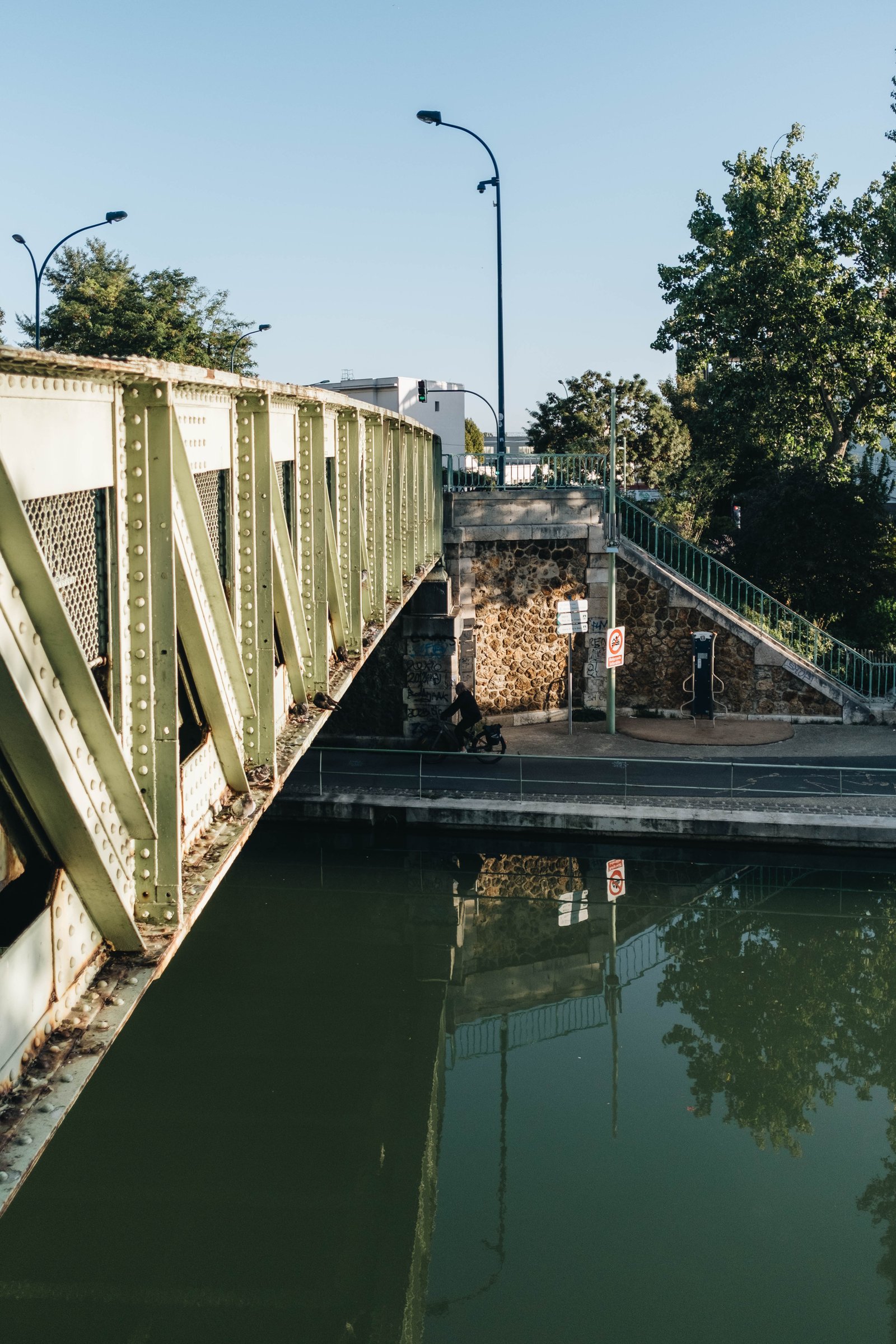
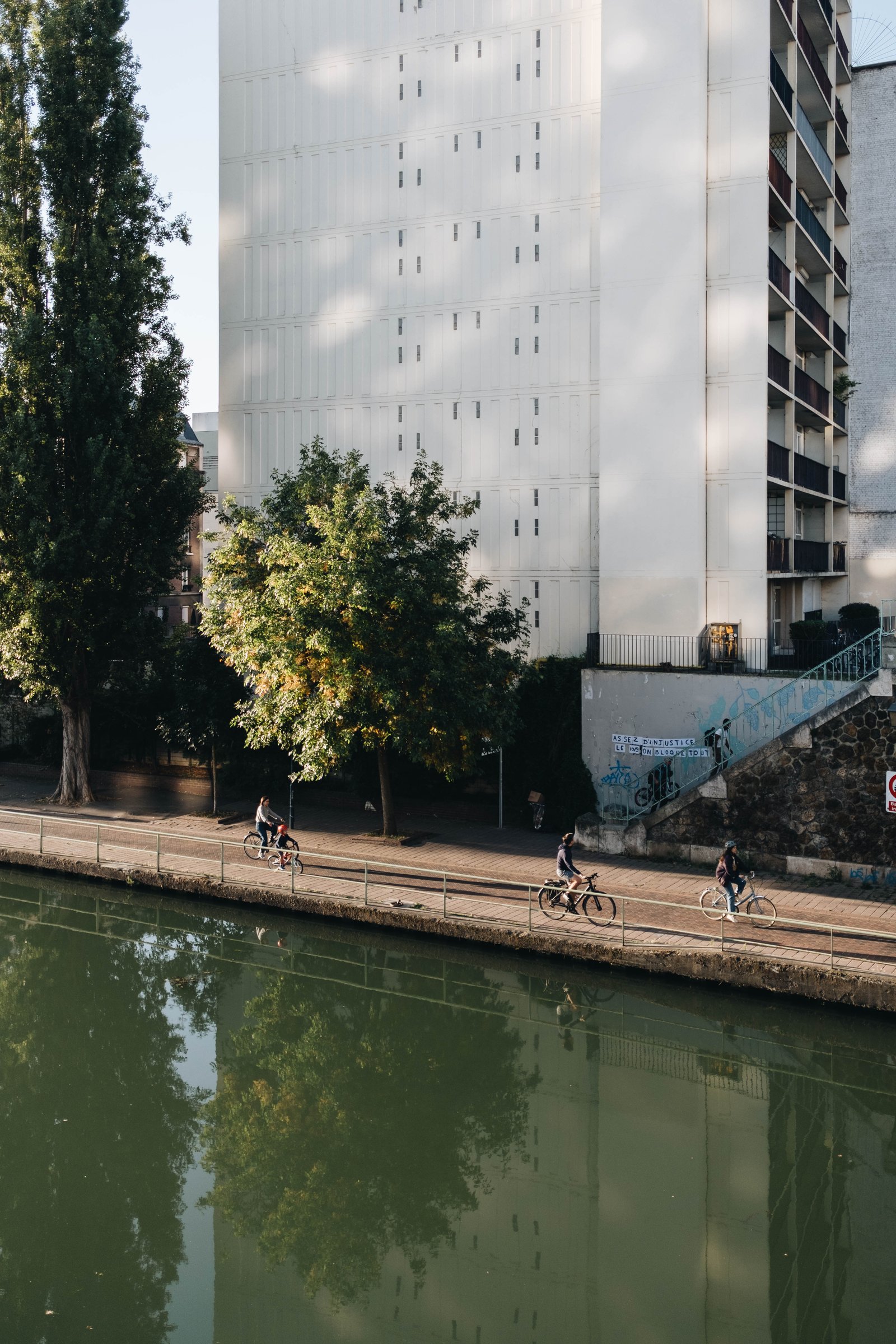
    The first thing I noticed was the people. It was just after 8am and it was busy. Everyone, including young children, seemed to be biking to work or school. I had been expecting to find a neighbourhood that was on its way to becoming something, but instead I found a neighbourhood that had seemingly already arrived, and I was late. It was also further evidence that Paris is now unapologetically a biking city.
    Once across, I learned that a new pedestrian bridge is also going to be built leading directly from the metro station to the site, making the short commute from transit even shorter. Here is the mockup:
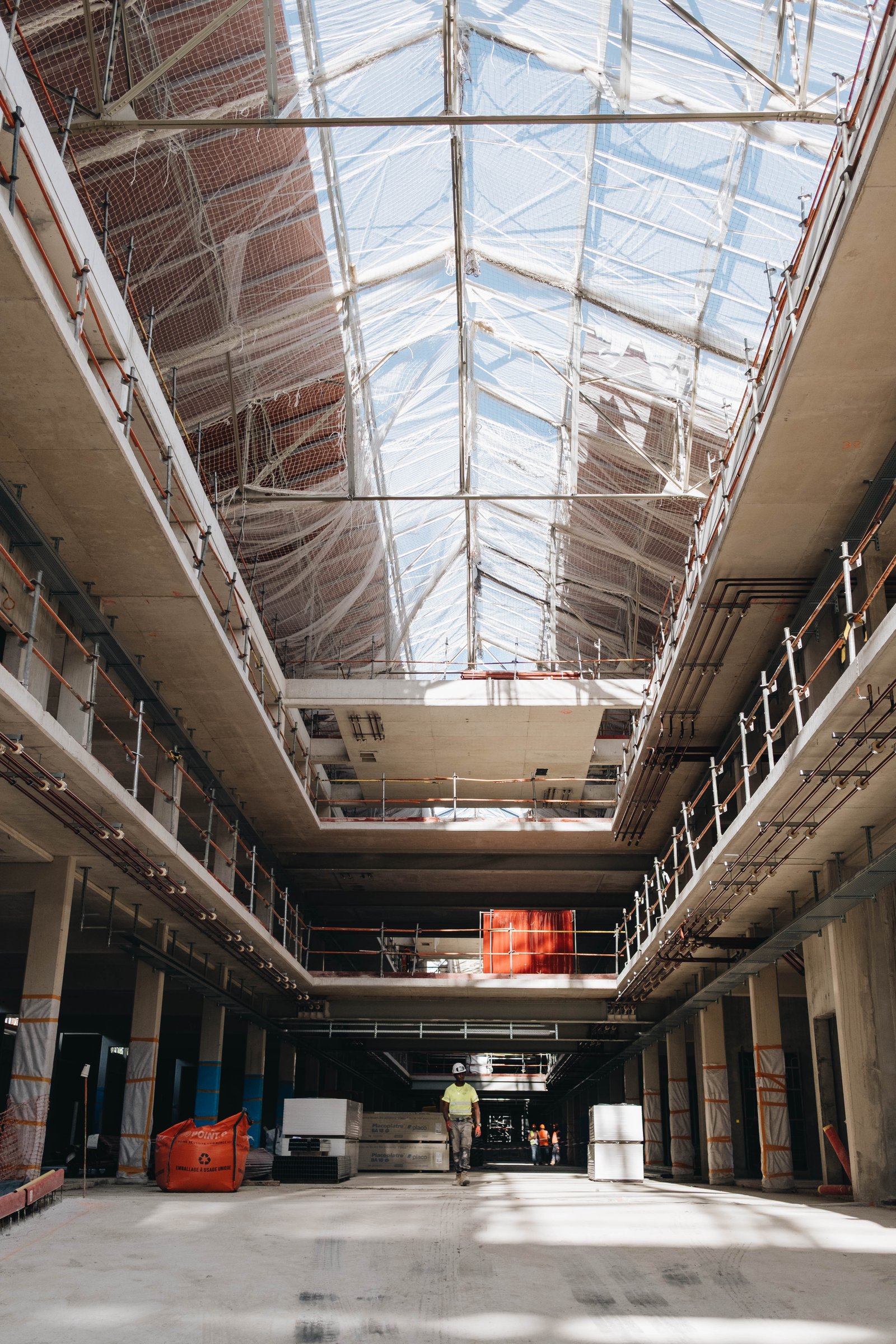
    This pedestrian bridge will connect to a new public plaza at the entrance to the project’s anchor building. A former spring factory from the late 19th century, it will soon serve as the focal point for a new mixed-use office park. Its program will include a food market, daily retail services, schools, a large auditorium, DJ events, and the project’s first office tenants, among other things. It’s a major forward investment, but one that will provide many of the amenities for the larger development — and clearly establish a place in Pantin.

    As a quick aside, during our site walk, the gentleman below asked me if I would take his photo. He then asked where the photo would be used (I told him it would be on this world-renowned blog), and he took note of the URL. But unfortunately, I didn’t get his name. So if you’re reading this monsieur, please get in touch with your details at [hello@globizen.com](mailto:hello@globizen.com) and I’ll update this post with a credit to you.

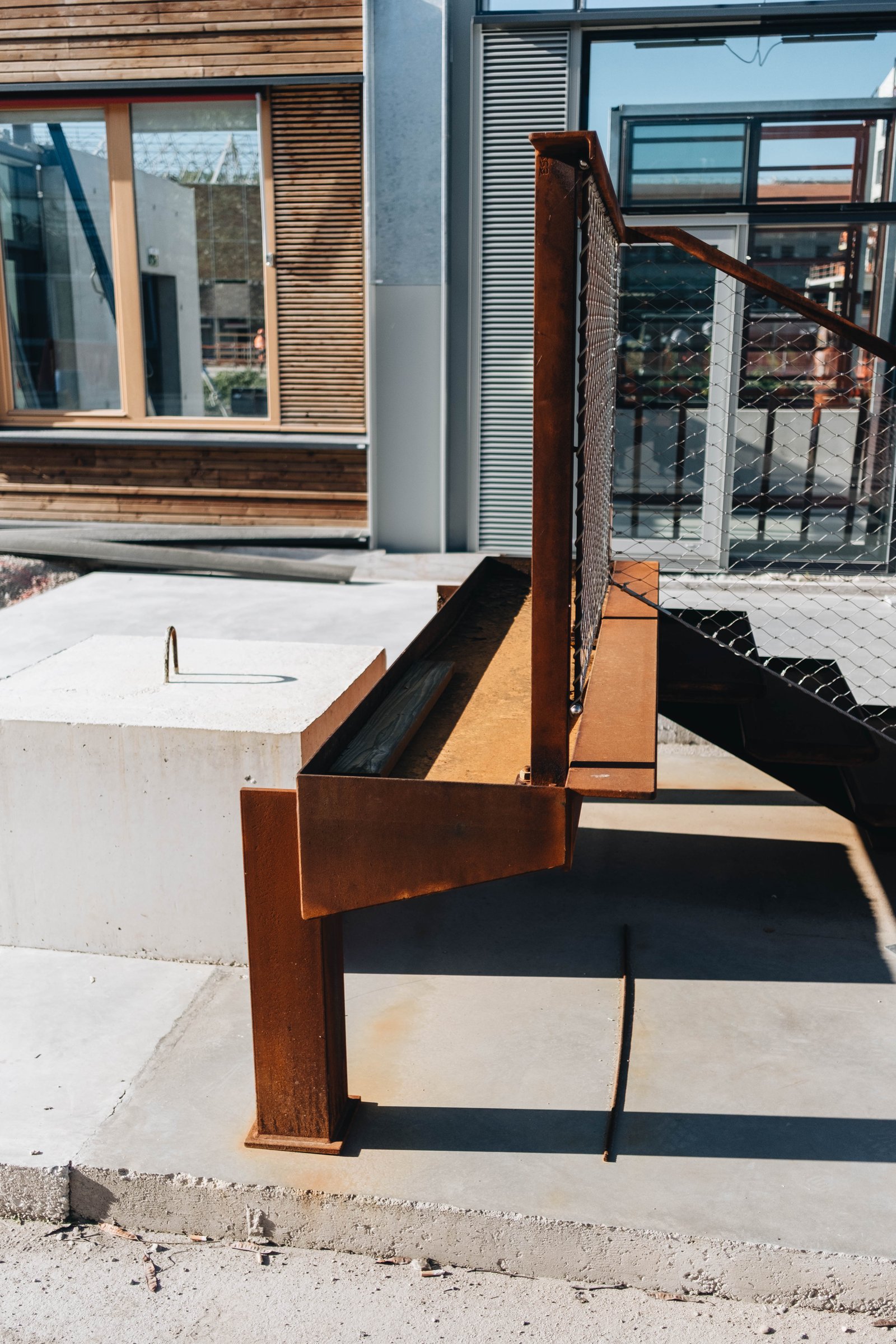
    In addition to the main hall, the project’s first ground-up office building is also under construction.

    The structure is a combination of cast-in-place concrete (which, by the way, was of truly impressive quality) and mass timber floor slabs. By code, the mass timber slabs must be encapsulated, which is also the case in Canada above certain heights. But that has not stopped the top floor of the building from looking like this:
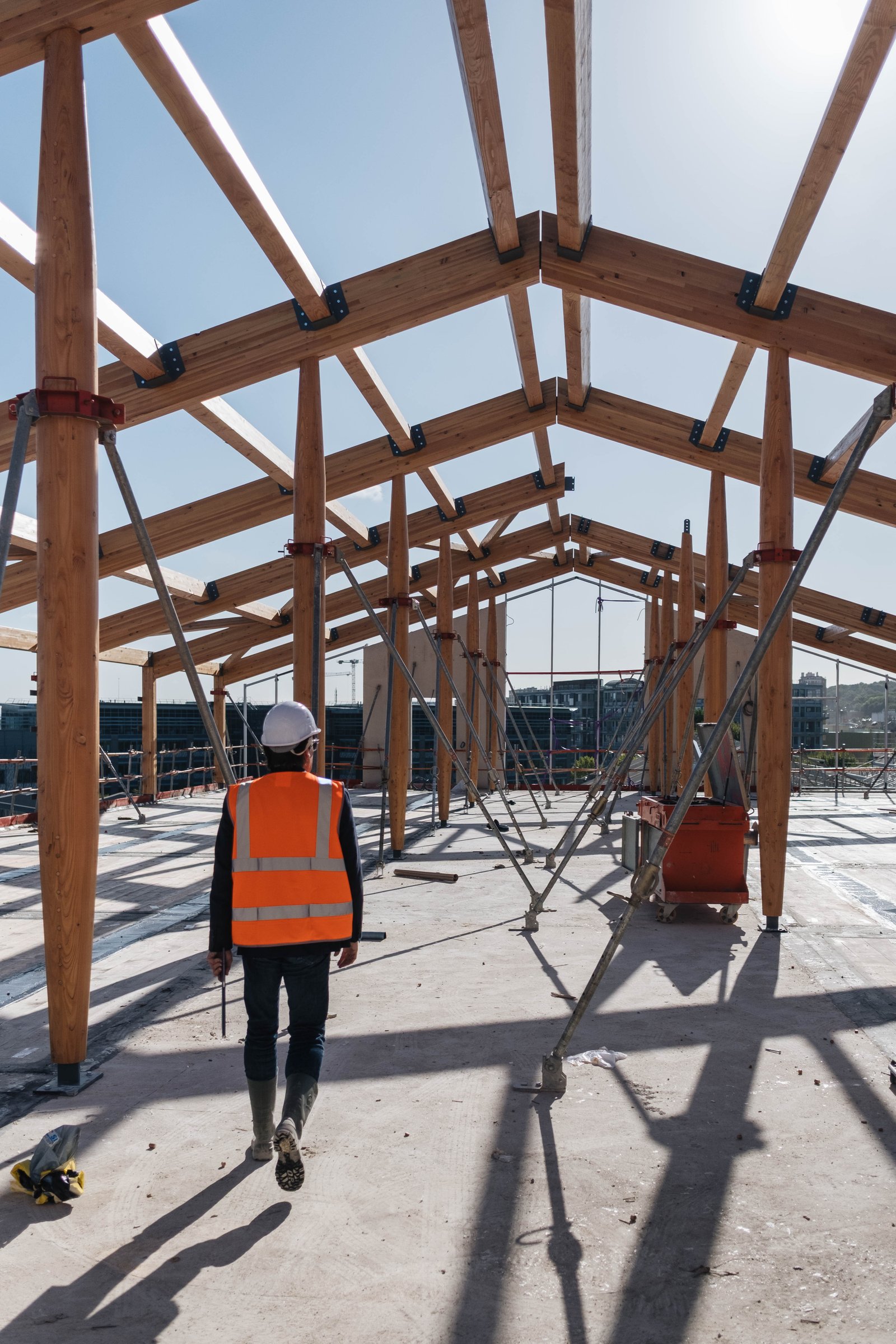
    I spent a morning with Olivier and Amaury, and I can say Alios shares many of the same values that guide our work at Globizen. They invest in architecture and design, they focus on quality of place, and they work diligently to build their city in ways that other developers may be overlooking. It was impressive to see. Thank you both, once again, for being so generous with your time and for inviting me to tour your projects.

    I’ll also add that I left the meeting feeling genuinely excited about the future of Paris. Or should I say, new Paris. Step outside the Périphérique and you’ll find neighbourhoods humming with energy, creativity, and new ideas.