Daily insights for city builders, delivered every morning at 6 AM ET. I’m Brandon Donnelly — a Toronto-based real estate developer and founder of Globizen. I’ve been writing here since 2013.

Month: January 2025

  • Tall and skinny in Ho Chi Minh City

    January 11, 2025 · View original


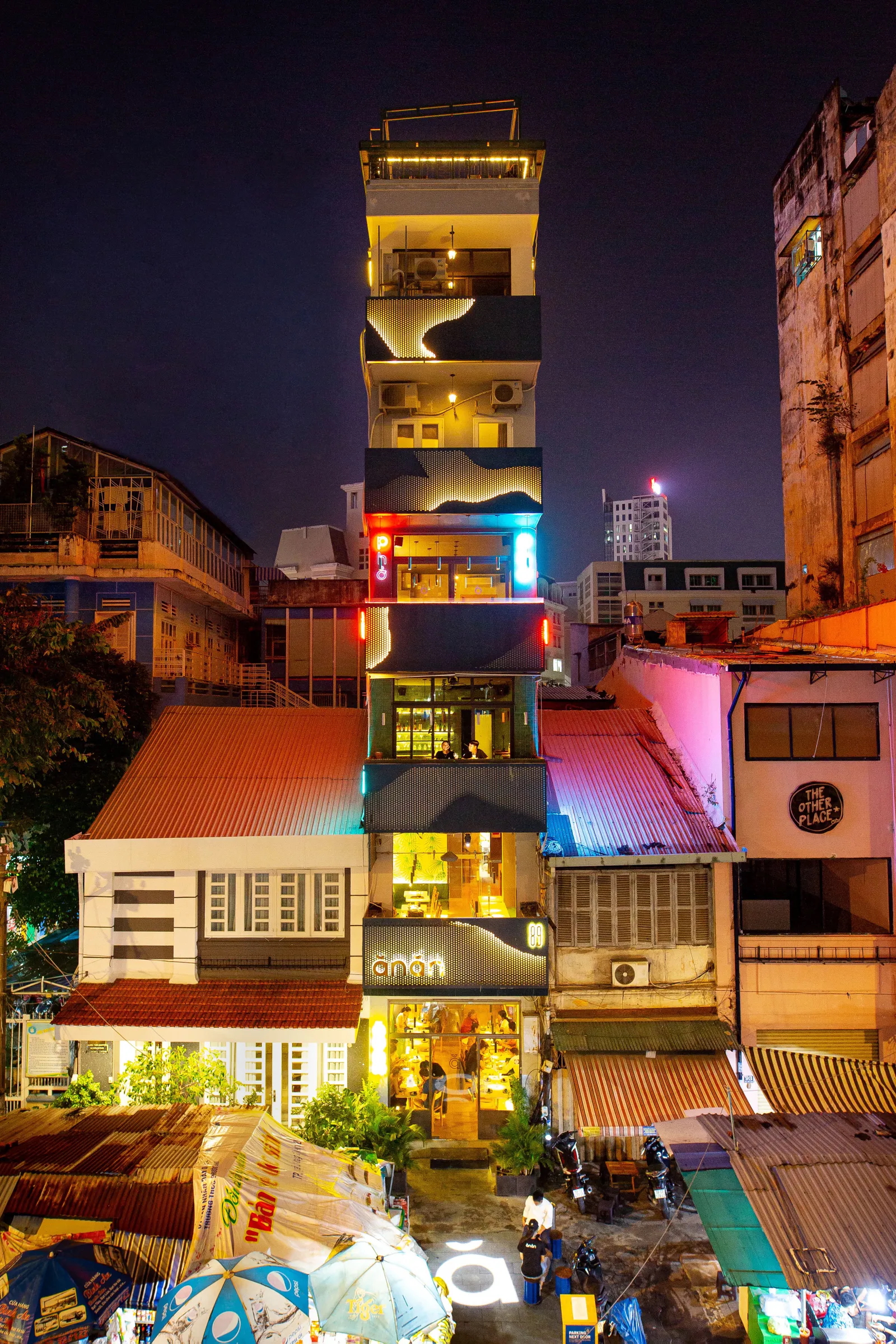
    Also on Conde Nast Traveler’s list of the best places to go this year is Ho Chi Minh City. I’ve never been, but I would love to go. More importantly, though, check out the photo they used, which is of the city’s first Michelin-starred restaurant, Anan Saigon:

    From what I can tell, the building (and lot) is maybe 3-4m wide. And it looks to be 7 storeys (the top floor is partially concealed because of the angle of the camera).

    On the first two floors you have what I am presuming to be the main restaurant spaces. On the third floor there is a bar. Maybe this is also part of the restaurant. And on the fourth floor you have Anan’s pho restaurant (I checked their website).

    Above that it looks to flip to residential. And then again above that it looks to be residential. Finally, on the top floor it appears to be more commercial in nature, so I’m guessing it’s a rooftop bar for Anan. If anyone has been here, please let me know if I’m getting this right.

    Regardless, this is a terrific photo and a powerful example of what’s possible on small urban lots if you just let people build.

  • A great hotel can help you build your city

    January 10, 2025 · View original


    Hotels are an important city-building tool. Let me give you an example. Each year, Conde Nast Traveler publishes a list of the best places to visit right now. Here’s the 2025 list. If you scroll through it, one of the 25 places you’ll find is Marseille. And if you look at the first picture, you’ll find a hotel/restaurant called Tuba Club.

    Long-time readers of this blog will know that I’m a big fan of Marseille and that, back in 2021, Neat B and I stayed at this hotel. In fact, the whole reason we even decided to stop in the city for the first time was so that we could check out this exact place. It opened the summer before and I had seen it written up somewhere.

    I can also tell you that if you flip through Monocle’s new handbook about France and go to the hotel section, you will likewise find Tuba Club. The place is seemingly everywhere and now has a loyal following.

    But here’s the important thing: it only has 5 rooms! And the room we stayed in was best accessed via a window and a large rock outcropping beside it. There’s no way this place would meet code anywhere in Canada. But boy was it cool. And because we loved the experience so much, we decided to go back to Marseille the following summer and check out more of the city. It didn’t disappoint.

    Now I tell people and write blog posts about how much I love Marseille. And it all started with 5 non-code-compliant rooms perched on a bunch of rocks in a sleepy fishing port on the south end of the city. A great hotel can help you build your city.

  • Data center energy usage as a share of the US total

    January 9, 2025 · View original


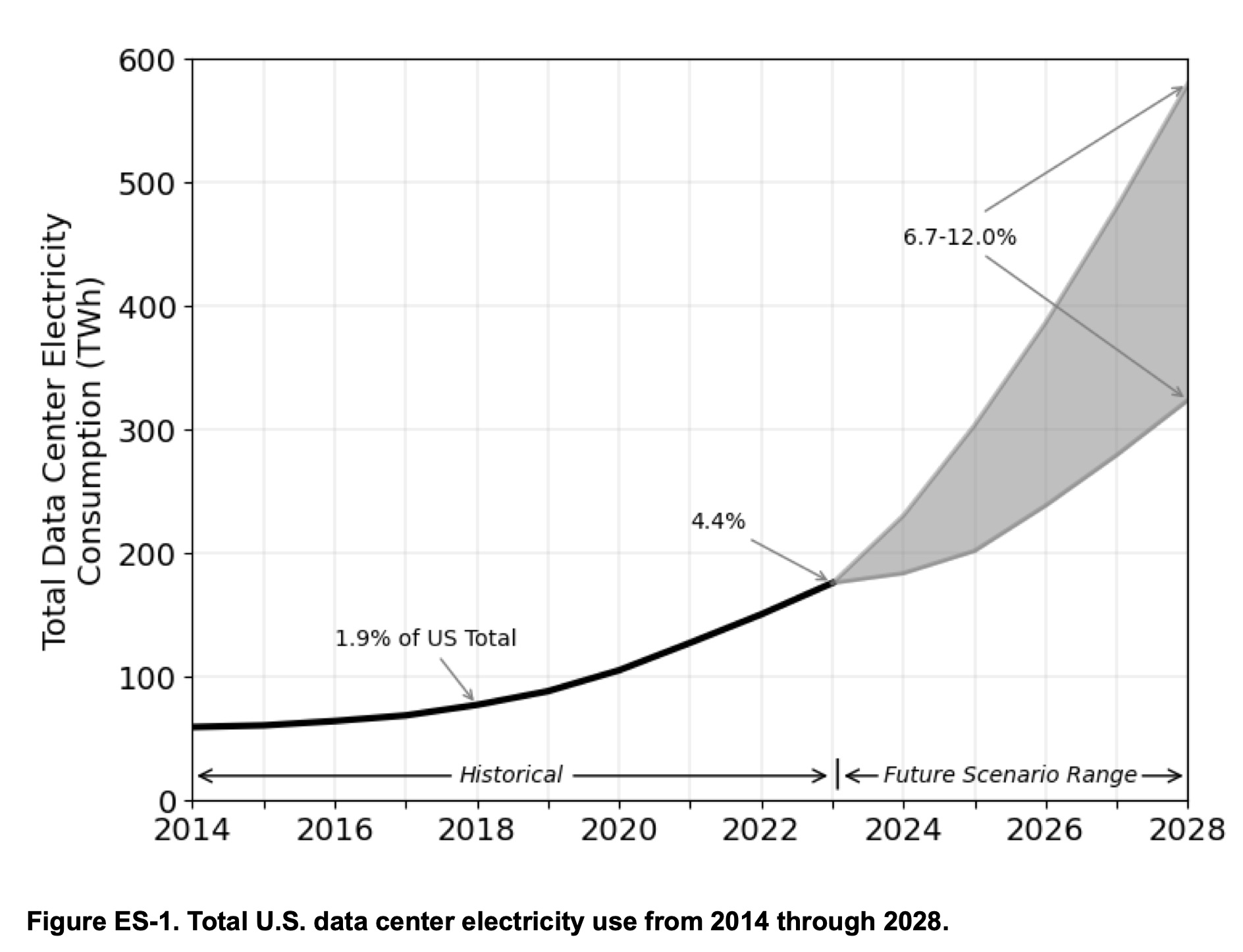
    Last month, the Berkeley National Laboratory, under contract with the US Department of Energy, published this report estimating total data center energy usage across the country. It also forecasted future demand out to 2028.

    As you can see, in 2018, total electricity consumption by US data centers was estimated at approximately 76 TWh or 1.9% of the US total. In 2023, consumption more than doubled to 176 TWh or 4.4% of the US total. And by 2028, this is expected to further jump to somewhere between 6.7-12% of the US total.

    Here’s some commentary from the report:

    > With significant changes observed in the data center sector in recent years, owing to the rapid emergence of AI hardware, total data center energy use after 2023 is presented as a range to reflect various scenarios. These scenarios capture ranges of future equipment shipments and operational practices, as well as variations in cooling energy use. The equipment variations are based on the assumed number of GPUs shipped each year, which depends on the future GPU demand and the ability of manufacturers to meet those demands. Average operational practices for GPU-accelerated servers represent how much computational power, and how often AI hardware in the installed base is used, to meet AI workload demand. Cooling energy use variations are based on scenarios in cooling system selection type and efficiency of those cooling systems, such as shifting to liquid base cooling or moving away from evaporative cooling. Together, the scenario variations provide a range of total data center energy estimates, with the low and high end of roughly 325 and 580 TWh in 2028, as shown in Figure ES-1.

    This strikes me as being an important macro trend and a big deal. All signs point to more data centers being needed. And before we know it, they’re going to represent a meaningful chunk of total electricity usage.

    Note: TWh = terawatt hour = one trillion watt hours

  • Not a hotel

    January 8, 2025 · View original


    I think that lots of people would like to live in multiple places around the world. I know I would. That’s why when people get rich and have the means, they often start to buy second homes. To that end, here’s an interesting concept out of Japan called Not a Hotel.

    Their model is fairly simply. What they do is build incredible design-forward vacation homes across Japan and then sell fractional shares, while at the same time offering full concierge and management services.

    The typical fraction is for 30 days (1/12th), but if you’d like, you can buy up to the entire year. Ownership gives you access to the property for the amount of days you’ve purchased, or you can trade your days and stay at other homes within the Not a Hotel network.

    On the nights you don’t use, the company operates the home like a hotel and the owner gets the benefit of reduced management fees.

    Most of their homes are already completely sold out. But 1/12th of this home in Kitakaruizawa is available for US$490,000. And on the other end of the spectrum, 1/36th of this Bjarke Ingels-designed home is available for US$2,460,000.

    Here’s a video of the home:

    YouTube video

    Fractional ownership is not a new model, but it is still relatively niche. I also think that the way Not a Hotel is going about it — with their focus on over-the-top design and architecture — is pretty unique.

  • NYC congestion pricing tracker

    January 7, 2025 · View original


    Today is the third day of New York’s new congestion relief zone. And if you’re curious to see how it’s already impacting traffic conditions, here is a website run by Joshua Moshes and Benjamin Moshes, under the supervision of Brown University Professor Emily Oster.

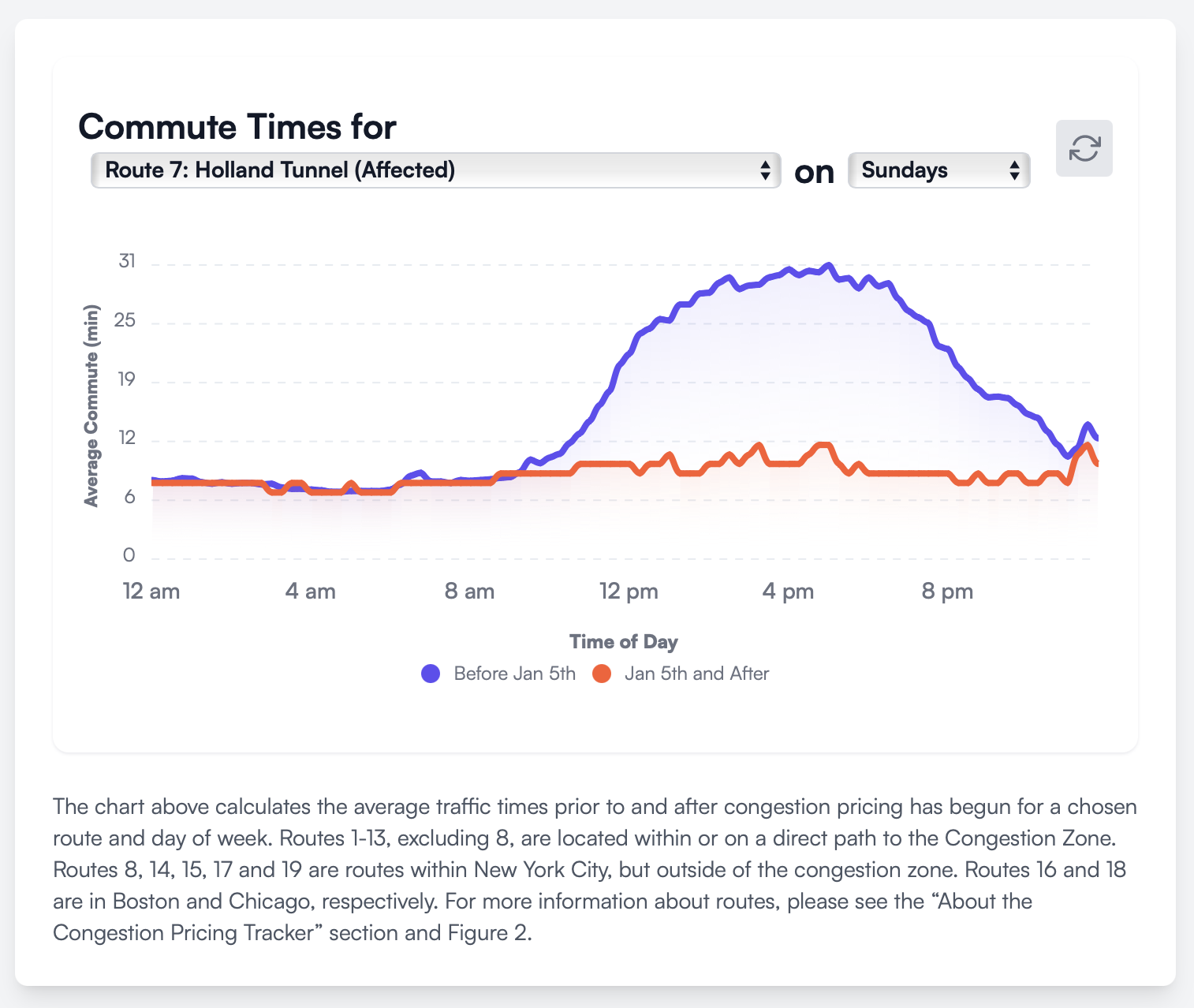
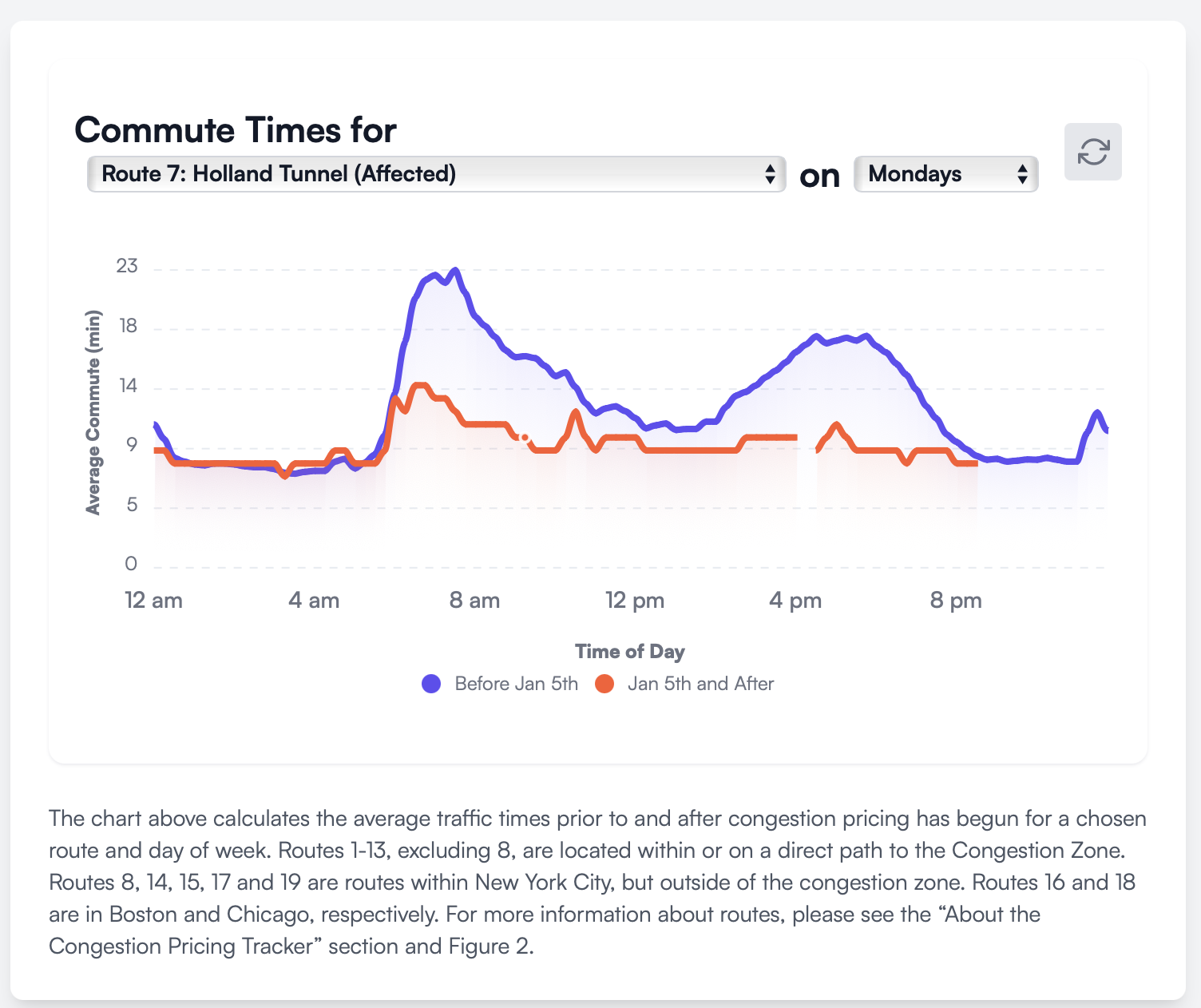
    The site collects Google Maps traffic data every 15 minutes for 19 routes leading into Manhattan (some of which are directly affected by the new relief zone and some of which are not). It then calculates average traffic times for each day of the week, both before and after the congestion charge.

    Here is the Holland Tunnel on Sunday (which was day number one):

    And here is the Holland Tunnel on Monday (which was the first weekday):

    Already, we are seeing a meaningful reduction in average traffic times. Maybe demand is more elastic than I suggested yesterday. But obviously we’re only looking at two days. So I’ll check back in later once we have more data points. In the meantime, if you’d like to follow along, you now have a website.

  • Finally, New York City gets its congestion relief zone

    January 6, 2025 · View original


    Good morning. Well, it finally happened.

    After decades of delay and negotiations, New York City finally implemented congestion pricing for the area of Manhattan south of 60th Street. This is a first for the United States, and so it’s a big deal not just for the city, but for this part of the world. It went into effect yesterday, on Sunday at midnight, so that the MTA could work out any kinks before this morning’s rush hour. And apparently everything went smoothly. Drivers are now required to pay $9 to enter the zone during peak hours (5am to 9pm during weekdays). The charge is also expected to rise to $15 by 2031. Of course, this is a highly contested initiative. Trump is still vowing to kill the program as one of his first acts in office and, as soon as the pricing came into effect, suburban drivers started protesting it in Manhattan. I thought Jarrett Walker had a clever response to this:

    > Tweet: Tip: An effective protest is one that doesn’t prove the other side’s point.

    One of the common rebuttals when it comes to things like road and congestion pricing is this one: “yeah, this might work in cities like London which have great transit systems, but it doesn’t work in our city because we don’t have that and it will unfairly disadvantage those who have no other alternative but to drive.” In fact, this exact excuse was recently raised by local politicians here in Toronto. But this is New York fucking City. It has the highest annual transit ridership in North America (beating out Mexico City by nearly 2x) and it has the largest system by total length. According to the 2012-2016 American Community Survey, 85% of people traveling to Manhattan’s CBD (I’m assuming lower Manhattan here) also take transit. And only 11% drive a car. So what exactly is the problem here?

    This objection also ignores the fact that, generally speaking, congestion pricing has two main goals: (1) to, of course, reduce traffic congestion and (2) to generate money for more efficient modes of transport. In this case, the MTA is hoping this new congestion relief zone will generate up to $15 billion that can then be reinvested in transit and other infrastructure. Demand for roads can also be relatively inelastic in the short term, meaning demand doesn’t change all that much as the price moves up and down. This makes it a good place to find money for public infrastructure, but it might mean that $9 is too low to have a dramatic impact on traffic congestion. We will see; I’m sure we’ll get some data soon enough.

    My prediction is that this will ultimately have an impact on congestion and that people in New York will get over the $9 charge. They’ll also come to appreciate the reduced traffic congestion within the zone. So I think this road pricing will stick, and my hope is that it will become an example for other cities in the US and across North America. Congratulations on finally getting this over the line, NYC. It was certainly a hard-fought battle.

    Cover photo by Veronika Galkina on Unsplash

  • The secrets of the greatest snow on earth

    January 5, 2025 · View original


    I’ve been reading this book before bed over the last few days. It’s about the Wasatch Mountains in Utah, but more broadly it’s about how snow works, why and where in the world epic storms happen, how not to get killed in avalanches, and how global warming is impacting our climate. It’s written by Jim Steenburgh, who is professor of atmospheric science at the University of Utah and author of the blog Wasatch Weather Weenies. And I’m finding it really fascinating, even if there are limits to how granular I want to get on the science behind stellar dendrite snowflakes.

    One of the main questions he answers is, of course, the title of the book: Why is the powder skiing and snowboarding so good in Utah? Is it in fact, the greatest snow on earth? (The State of Utah started using this very successful slogan in 1962 and it made its way onto license plates starting in 1985). It turns out that there’s lots of science to support this claim, particularly when it comes to the Big and Little Cottonwood Canyons on the east side of the Salt Lake Valley. This is where you’ll find resorts like Snowbird, Alta, Brighton, and Solitude.

    Little Cottonwood Canyon has one of the most dramatic snowfall contrasts in the world. At its entrance in the valley, the average annual snowfall is about 100 inches. But drive 7 or so miles into the canyon to Snowbird (which during a snowstorm can be super treacherous), and the average annual snowfall increases to over 500 inches. Generally speaking, the average annual snowfall in the canyon increases by about 100 inches per 1,000 feet of elevation gain.

    One of the reasons for this is that the terrain surrounding the Cottonwoods is both high and broad, which means that it is exposed to storm flows coming from nearly any direction. During “stable storms”, this can also create a blocking front, where storms get caught on the windward side and continue to dump in one place, instead of passing over the mountain. This is one of the reasons why there’s this saying: “It doesn’t need a reason to snow in Little Cottonwood Canyon; it needs a reason to stop.”

    Another very snowy place in the world is Japan’s Hokkaido Island. In fact, Jim argues that if there’s any place that could give Utah a run for its money with the claim of the greatest snow on earth, it’s here. Based on historical data, Hokkaido Island has a 90% chance of at least 100 inches of snow in the month of January. This is a lot more than Utah, though snowfall falls off more quickly outside of the peak months.

    So statistically, if you want the highest probability of powder snow during the month of January, Hokkaido is the place for you. It also happens to be where we’re going for our annual ski and snowboard trip this year. I’ll be sure to report back and confirm whether this is true or not.

    The last chapter in the book is on climate change and he starts by stating the obvious: global warming is real. The climate of the Wasatch Mountains today is demonstrably warmer than it was when they were mining silver in Little Cottonwood Canyon in the late 19th century. That is bad news for skiing and snowboarding, and already in the Western US, declines in the average snowpack below elevations of 8,000 feet have been observed.

    The good news is that there’s yet to be a clear and consistent trend above 8,000 feet (at least according to Jim when he wrote the first edition of this book about a decade ago). So stay high up, my friends. If you’re interested in this topic, or climate in general, I would highly recommend you check out Jim’s book. Or at the very least, his blog. I’m going to take my copy of the book and leave it at Parkview Mountain House the next time I’m there so it’s available to everyone who visits. It’s fascinating stuff.

    Cover photo by Alex Moliski on Unsplash

  • Firm Profile: SuperLA

    January 4, 2025 · View original


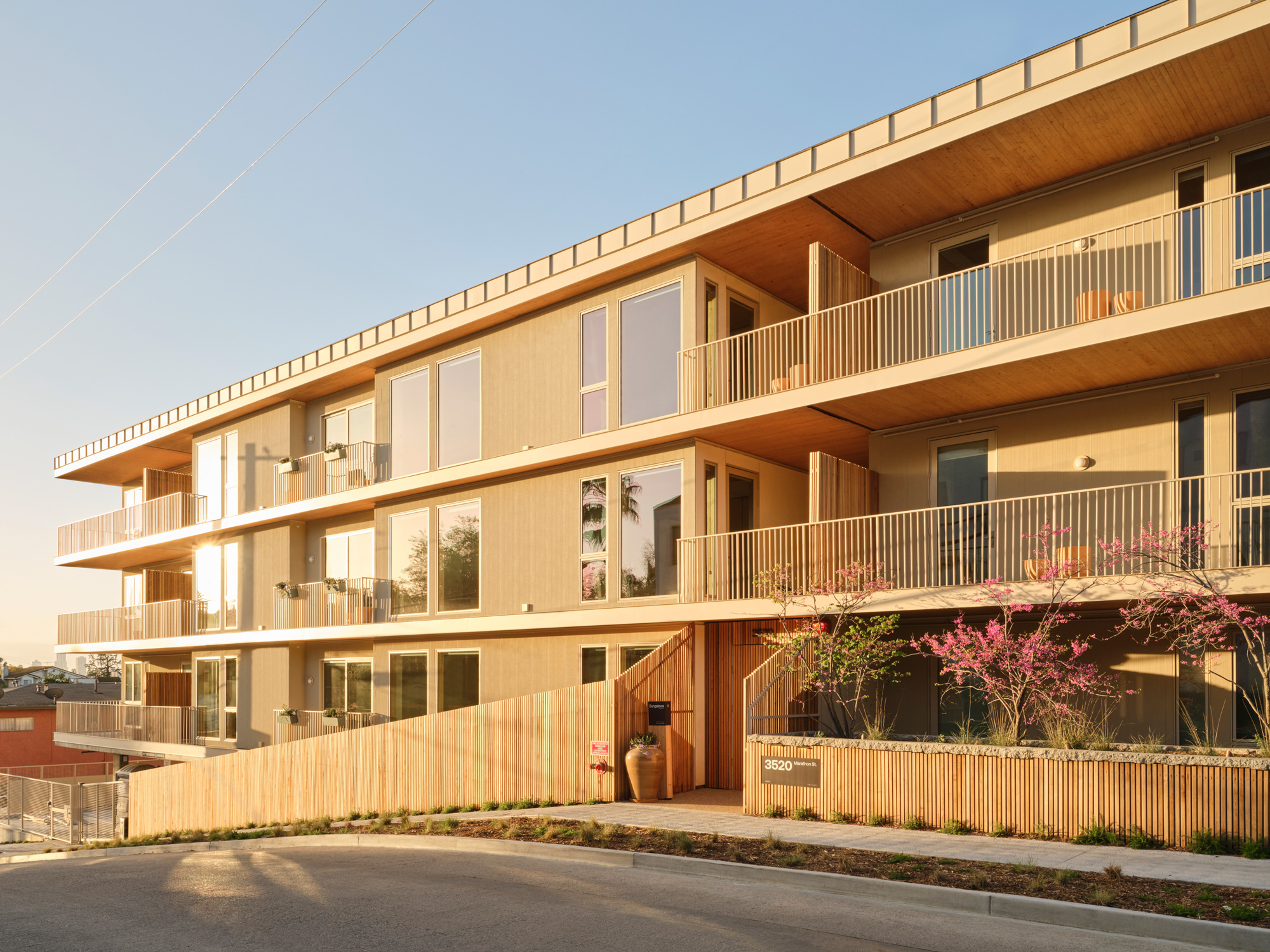
    I was just introduced to a development firm based in Los Angeles called SuperLA. They are focused on sustainably built infill apartments and last year they completed what is the first ever mass-timber multifamily housing project in Southern California. Located at 3520 Marathon Street in Silver Lake and called the “Bungalows on Marathon”, the project is 3-storeys (with parking underneath that takes advantage of the slope of the site) and has 9 homes.

    Six of the homes are one-bedroom (~660 sf of interior space) and three of the homes are two-bedroom (~1,320 sf of interior space). It’s a beautiful project. And because it’s LA, all of the building’s circulation is outside and tucked toward the back of the site. It’s also not a huge site — my rough Google Map take-offs have it at approximately 12m x 40m. So let’s call it the equivalent of two Toronto single-family lots.

    Based on suite count, this is similar to the kind of density that you could get in single-family neighborhoods throughout Toronto. However, the built form here on Marathon is decidedly more urban. Despite its horizontality, LA is not as low-density as many might think. For more on SuperLA, here’s their website. They’ve also done a great job with their brand and identity.

    Photos via SuperLA

  • My 3 use cases for VR/AR

    January 3, 2025 · View original


    I was at a family lunch this week and we got on to the topic of VR/AR headsets. Some of my relatives have the Meta Quest, but nobody has the Apple Vision Pro and nobody has even tried it. However, the comment was that the Meta one is already pretty convincing, so the Vision Pro must be that much more amazing. Like I do on this blog, I encouraged everyone to go and book a demo.

    What is obvious, of course, is that Vision Pro is far from a mainstream product. Few people are buying it. It’s too expensive. And I think most people can’t imagine a world where it becomes part of their daily life. But as we were all talking, I was reminded that I’m dangerously close.

    Here are 3 use cases that I’m already excited about:

    Watching movies and doing work on airplanes. I love traveling. But sitting on a plane sucks. If I could watch immersive movies and bury myself in work, I think I might actually enjoy having my femur crushed by the seat in front of me. It would be an environment free of any distractions. Already I have found reliable in-flight wifi to be a game changer for productivity. – Experiencing live sports from seats I wouldn’t pay for in real life. To be fair, I don’t generally watch a lot of sports unless a Toronto team is in the playoffs. But selling an unlimited number of courtside seats (or their equivalent) to people via Vision Pro seems like an obvious use case. I would pay for this after experiencing Lebron dunk in my face in the demo, especially if it works with groups of people. And if it doesn’t already exist, I’m sure there will be a way to stream live content. – Walking through the BIM model of a yet-to-be-constructed building. The construction industry needs this. I need this. I walk all of our sites at least once a week. But imagine if it were possible to do this before construction actually starts and costly mistakes are found on site. That’s always been the promise of BIM, but alas, it hasn’t solved the problem of poorly coordinated drawings and too many site changes.

    The list of great use cases is endless. These are just 3 that immediately came to mind and that wouldn’t require the technology to be significantly better to spur greater adoption. In fact, the technology is already there and convincing enough. I also don’t think the above requires the hardware to be as small, or as fashionable, as a pair of sunglasses. It just needs to be cheaper, a bit more portable, and have a few incremental features.

    At that point, I’ll be ready to buy. What about you?

    Cover photo by Bram Van Oost on Unsplash

  • What Globizen is focused on for 2025

    January 2, 2025 · View original


    Welcome again to 2025.

    Yesterday we spoke about what might happen in 2025 and my predictions for the year ahead. Today we’re taking about what Globizen is specifically focused on. But first, I think it’s important to reiterate what we’re all about. We are a city building company and community focused on creating better places. These words were chosen carefully. We want to be both a business and a community.

    What this means is that in addition to obviously working on our own property portfolio, we also want to collaborate with others on this mission of creating better places. It is recognition that “city building” takes many forms; we couldn’t possibly do it all; and we want to broadly support all those who are doing great things and working to build more livable, beautiful, and economically vibrant places.

    Now, our work. At the highest level, we are focused on three development strategies:

    Differentiated end-user focused condominiums in prime locations. While we do think that it will take a few years for the market to absorb the current pipeline of condominium projects under construction in the GTA, we also believe these 3 things to be true: (1) end-users represent a more durable demand segment for housing compared to investors; (2) prime locations in global cities such as Toronto will maintain their value over the long term; and (3) design-focused and differentiated product offerings only become more valuable in a down market. Overall, this thesis is based on the view that we are in the midst of a housing reset and that there is/will be a market for the right projects. In some cases we will aim to execute in the short-term, and in other cases we will set ourselves up to be patient. – Infill apartments in walkable and transit-oriented communities. We see the scale of housing that is permitted on an as-of-right basis continuing to grow. Over the last few years, Toronto added permissions for fourplexes, then 6-storey apartments, and the current plan is to streamline the process for even larger mid-rise buildings. This is creating two interconnected opportunities: (1) the ability for developers to feasibly develop smaller projects; and (2) the opportunity for a systems-based approach to development — one that allows a greater repetition of designs, materials, and the overall process. We call this the “productization of housing”, and it’s fundamental to our multi-family rental strategy. – Hotels, creative retreats, and hospitality experiences. Increased travel, remote work (including from digital nomads), and a desire for unique in-person experiences; these are all important and growing macro trends that will continue to reshape the landscape of our cities. We think of this as being centered on an underlying aspiration to be a kind of citizen of the world, and so we’re interested in real estate opportunities that can respond to this demand. Last year, we completed our first “creative retreat” in Park City, Utah. And this year, we’re focused on bringing the first design and lifestyle hotel to the waterfront in Canada’s largest wine region — the Niagara Benchlands.

    Alongside these specific strategies, we are committed to growing our real estate advisory and development management services business. This is something we started in earnest in 2024 and want to do more of this year. Finally, we would like to grow our lifestyle shop and ramp up content creation in a way that can support our real estate strategies and our broader goal of promoting and creating better places. It’s going to be a fun year.

    If you’d like to work with us on any of this, please do get in touch.