Daily insights for city builders, delivered every morning at 6 AM ET. I’m Brandon Donnelly — a Toronto-based real estate developer and founder of Globizen. I’ve been writing here since 2013.

Month: January 2025

  • End users > investors

    January 31, 2025 · View original


    I am currently sitting in CDG and running on somewhere between 3-4 hours of sleep. We spent the entire day in Paris on a layover and are now waiting to board for Tokyo. So today’s post is going to be two quick announcements related to Junction House. One, we just received the final architectural photos from Double Space Photography, and they turned out great. If you’d like to take a look, most of them can be found here. And two, we just listed suite 607. It’s a spacious two-storey and two-bedroom suite, and one of the best in the building. Over the last few months, we’ve been seeing strong demand from end users (as opposed to investors) and I’m sure this one will go that way as well. For much of the last cycle, it was frankly easier and more profitable to just target investors. But I would argue that the opposite is true today. And that’s a positive thing for the market.

    Cover photo: Double Space Photography

  • Just recreate the past

    January 30, 2025 · View original


    After the fire at Paris’ Notre-Dame in 2019 and the destruction of the cathedral’s wooden spire, President Macron came forward with an idea: France would host an international design competition and look to replace the lost spire with a “contemporary architectural gesture.”

    This precipitated a bunch of bold and “out there” proposals, but ultimately the public wasn’t down with this idea. Polls showed that the majority were in favor of just restoring the 19th century spire designed by Eugène Viollet-le-Duc. And so the idea was dropped.

    This, of course, is not surprising. For better or for worse, I bet that if you asked a random sampling of people whether they prefer old-looking architecture (technical industry term) or something modern, the majority would likely say they prefer the former.

    Of course, in this case, we’re not just talking about any old-looking building. Notre-Dame dates back to the 12th century and is one of the country’s most recognizable symbols. People are naturally going to feel strongly.

    But what is perhaps more interesting is that is an instance of history repeating itself. Viollet-le-Duc’s 19th century spire was obviously not Notre-Dame’s original medieval spire. It had replaced a previous one that had, for whatever reason, become unstable over the course of a cool five centuries.

    And interestingly enough, the idea of doing something different was also rigorously discussed in the 19th century and the answer, then, was also no:

    > Viollet-le-Duc himself turned down a proposal to add two new spires atop the towers, arguing that such a monument “would be remarkable but would not be Notre-Dame de Paris”. Instead, he proposed to rebuild the original medieval spire and bell tower over the transept, which had been removed in 1786 because it was unstable in the wind.

    Striking the right balance between preservation and progress is always a tricky one. But it’s maybe comforting to know that this struggle has been going on for as long as we’ve been designing structures. And in the case of Notre-Dame de Paris, there’s a long history to look to: just stick to the past.

    I’ll let all of you be the judge as to whether this was and is the right approach.

    Cover photo by Fabio Rogerio Sant Ana on Unsplash

  • Hong Kong still uses bamboo scaffolding

    January 29, 2025 · View original


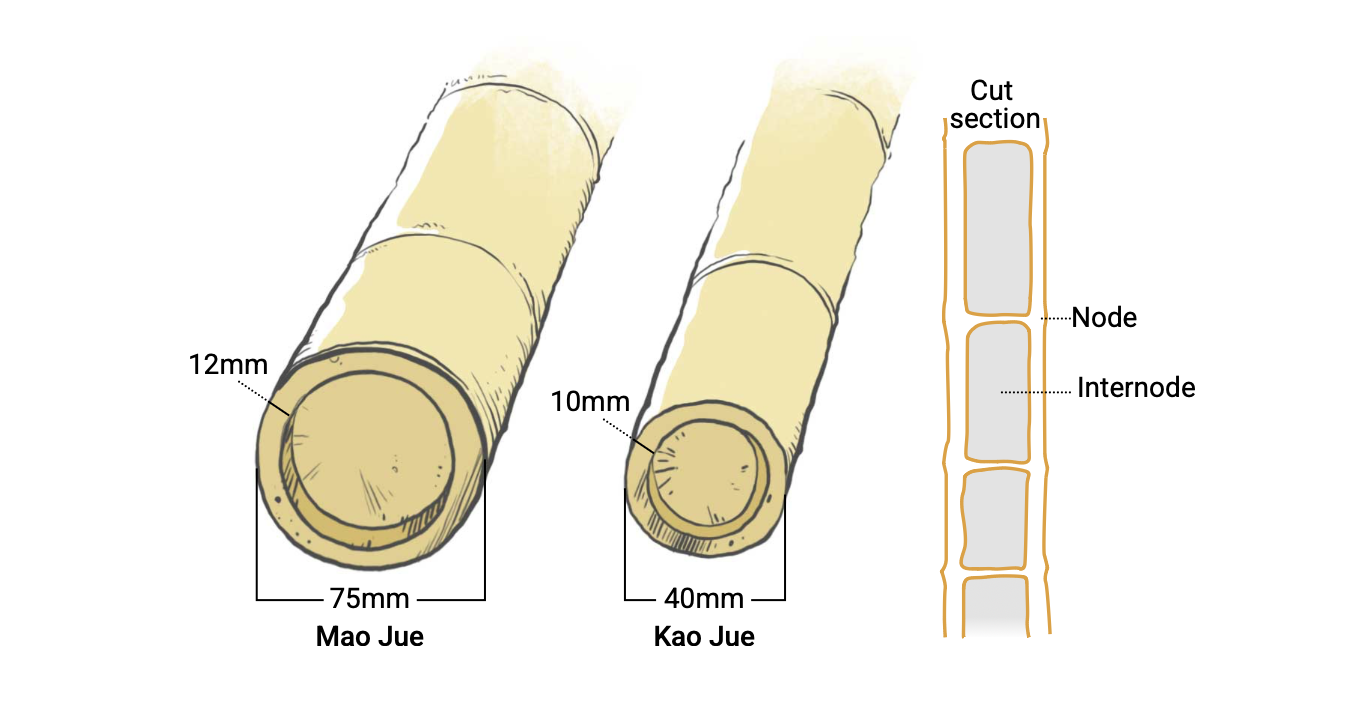
    Hong Kong is one of the last cities in the world that still uses bamboo scaffolding for construction. Why? Well, for one thing, it grows very tall, and quickly (source):

    > Bamboo is one of the fastest-growing plants in the world, and in some cases can grow 60cm a day, and eventually 40 metres tall. Bamboo has thick underground roots called rhizomes, which can grow quickly, creating new shoots metres away.

    And it’s cell-like structure performs very well under compression:

    > Compared to steel, bamboo is much lighter, six times faster to erect and 12 times faster to dismantle. It’s also a fraction of the cost. Bamboo scaffolding doesn’t require sophisticated machinery or complex tools to erect, just skilled workers with nylon ties. If properly erected, bamboo scaffolding can be stronger than steel and far more flexible. The resulting structure is also easy to modify, if necessary. Bamboo scaffolding can be used for entire structures, or part of them. In Hong Kong it is common to see “bamboo balconies” jutting from the sides of buildings where renovations are being carried out on individual units, many floors up. A bamboo pole can also be cut to fit an awkward space, which is ideal for Hong Kong, where construction spaces can be tight amid the densely packed maze of buildings.

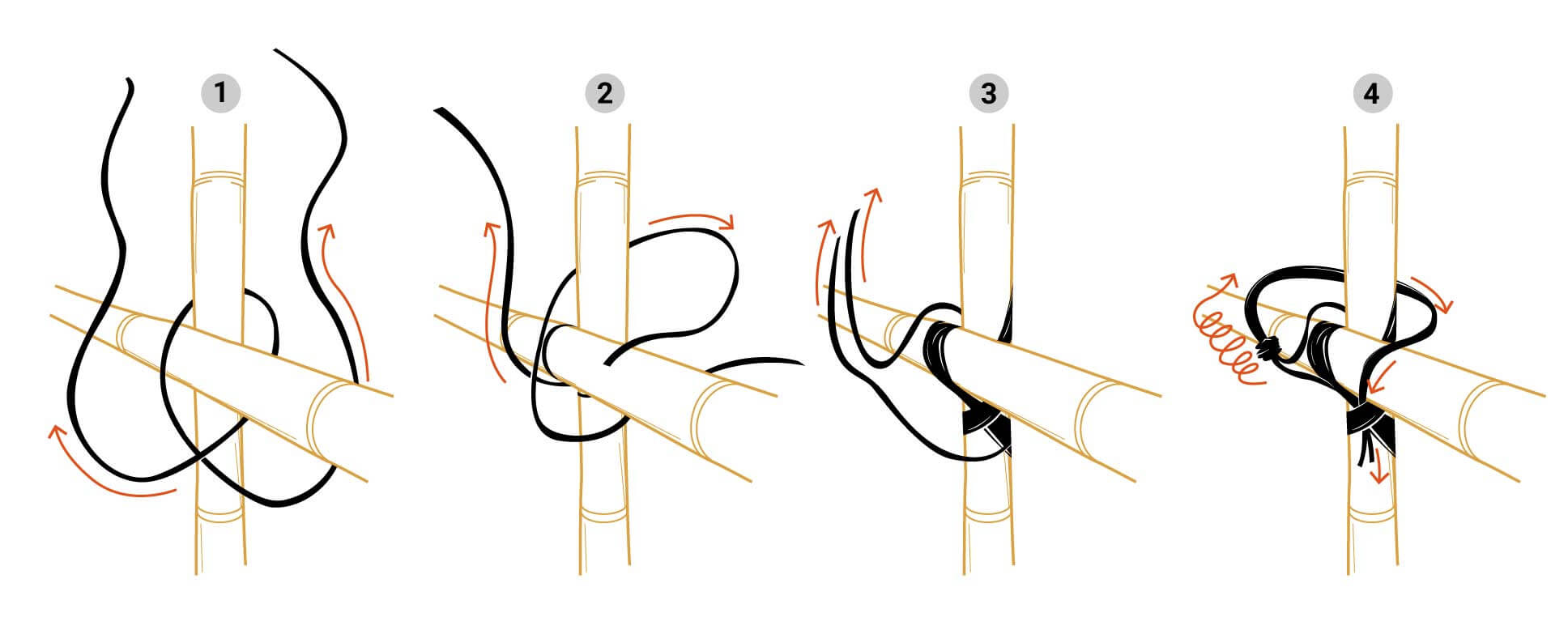
    But it’s unclear how long this will remain true. Young people aren’t learning the trade at the same rate as previous generations. And today, there are only 2,479 registered bamboo scaffolders left in Hong Kong. Assuming you have the nerves, the hardest part of the job is apparently the knot. It can take years to master.

    If you’re interested in this topic, I recommend you read this article. I found it fascinating.

    Images: South China Morning Post

  • We all walk too fast

    January 28, 2025 · View original


    Past research has shown that as cities get larger, people tend to walk faster. The probable explanation for this is that as cities get bigger, they also tend to get wealthier, and so the opportunity cost of not walking fast increases. In other words, people’s time is worth more.

    Of course, there’s something naturally unsettling about this. But it appears to be demonstrably true. Here’s another, more recent, study that compares pedestrian behavior in 1979-1980 to 2008-2010 for four urban public spaces in New York, Boston, and Philadelphia.

    What the researchers did was use William Whyte’s famous observational work from 1980 and then use computer vision to compare it to 2008-2010. And what they found was that, on average, walking speeds had increased by about 15% and that time spent lingering in these public spaces had basically halved across all locations.

    These are pretty dramatic changes that speak to a different, or at least, evolving, urban life. Increasingly, we’re all just atoms racing around and trying to get to our next engagement.

    Now, part of this can likely be attributed to the greater opportunity cost thing. But another possible explanation might be the advent of the internet and smartphones. Could this be a symptom of our social lives moving away from our streets and being replaced by online platforms?

  • 14th annual

    January 27, 2025 · View original


    It’s almost that time of year again.

    Later this week, marks the start of our 14th annual ski and snowboard trip. Our group missed two years because of the pandemic and so, technically, this should be the 16th annual, but who’s counting? This is a trip that happens every year like clockwork and, this year, we’re checking off a big mountain destination that has been on many/most of our bucket lists: Hokkaido, Japan. If you read my recent post called “The Secrets of the greatest snow on earth,” you might remember that Hokkaido is one of the snowiest places on the planet. Every January, there is a 90% probability that the island will get at least 100 inches of snow!

    Before Hokkaido, we’re also going to be spending a handful of days in Tokyo. The first and only time I’ve been to Japan was back in undergrad, over 20 years ago. I’m really excited to see how the city has evolved, and to see it with fresh eyes. I was in the early days of studying architecture back then, and just starting to understand my obsession with cities. So I’m sure that I’ll have a much different appreciation this time around. Neat B is also coming to experience Japan’s legendary powder and she’s never been to Asia before. So I’m equally excited to see Japan anew through her eyes.

    This past weekend we started making our travel list. Generally, our approach is to list the things we absolutely want to see and do, including noteworthy architecture, and then let the rest happen organically. Often some of the best travel experiences are the ones you didn’t plan. I also have a friend from graduate school that now runs his own practice in Tokyo: Kenta Fukunishi Architecture Office. Our group is going to lean on him to show us what’s hot in contemporary Japanese architecture. My buddies and I haven’t seen him since 2009.

    I’m also hoping that some of you will have recommendations for Tokyo and/or Hokkaido, which is why I’m blogging about this trip a little early. Tokyo is obviously massive. It’s the largest metro area in the world. And so more than most places, it demands curation. We’re not even going to make a dent over the course of a few days there. If any of you have any suggestions, please leave them in the comment section below or shoot me an email at brandon dot donnelly at globizen dot com.

    In terms of what you can expect here on the blog, expect photos and expect to see me measuring the width of impossibly narrow streets. I’ll also be sharing a lot of content to our Globizen Instagram account, so make sure you follow us there. As always, this blog will get updated every morning — though I’m sure I’ll screw up the time zones on the way there and not know what day it is. And as always, I’ll have my Fujifjilm camera on me. It’s also my goal on this trip to capture more videos. It’s something I love to do, but never have seem to make time for. Let’s change that.

    Here’s to the 14th annual!

    Cover photo by Steven Su on Unsplash

  • Beautiful federal civic architecture

    January 26, 2025 · View original


    One of the many things that Trump has already signed since reentering office is a memo directing the General Services Administration to come back to him within 60 days with recommendations on how to make Federal public buildings in the US look a certain way. More specifically, the memo states that, “Federal public buildings should be visually identifiable as civic buildings and respect regional, traditional, and classical architectural heritage in order to uplift and beautify public spaces and ennoble the United States and our system of self-government.” This is something he initiated during his first time in office, with a draft order called “Making Federal Buildings Beautiful Again,” and so let’s break this down — specifically some of the words chosen for this memo.

    Firstly, what exactly is classical architecture? Generally speaking, it is architecture that is based on and derived from the design principles of classical Greek and Roman architecture. Think the European classical period between the 8th century BC and the 5th century AD. And it is true that much of the early Federal architecture following the American Revolution did follow these principles. That’s because, at the time, the US didn’t have its own architectural language to represent the values being espoused by its founding generation. So what they did was say, “hey, we want to somehow represent democratic and republican values, so let’s just borrow from previous and existing design precedents.” Here, one could argue that Europe innovated and the US copied.

    So what this memo is saying is that the US should go back to this Federal-style of architecture. This is clear. But at the same time, the word regional is used. This implies that the classical architecture to be built in DC can and should be different than the classical architecture to be built in Los Angeles. Does this mean that local Federal architecture will be free to respond to local climates and with local materials so long as the end result is something that still speaks to Greek and Roman values? For example, could a Federal building in California have deep overhangs that block out the sun during the day and allow for passive cooling/ventilation in the evenings? I’m not sure.

    Then there’s the language about self-government. This is what the US is built on — individual freedoms and liberties. And so I find it incredibly ironic that, here, we have memo saying that all Federal buildings should be designed and built using basically a singular approach to architecture in order to lend dignity to the values of individual freedoms. In other words, “we want every building to look the same or similar so that it shows how much autonomy we allow and how little intervention there is from external authorities.” Wait, shouldn’t it be the exact opposite? Rather than ennoble the United States, it feels anti-American. Let local communities and architects decide what is regional and what is appropriate, and get out of the way.

  • Urban street networks compared

    January 25, 2025 · View original


    One of the interesting things about street networks is that — once laid out — they rarely change in a substantial way. Not unless Haussmann comes along and decides to renovate. That can be a good thing if you get it right like in the case of Philadelphia or Barcelona. But it can also be a bad thing if you’re maybe wishing the founders went with design option B.

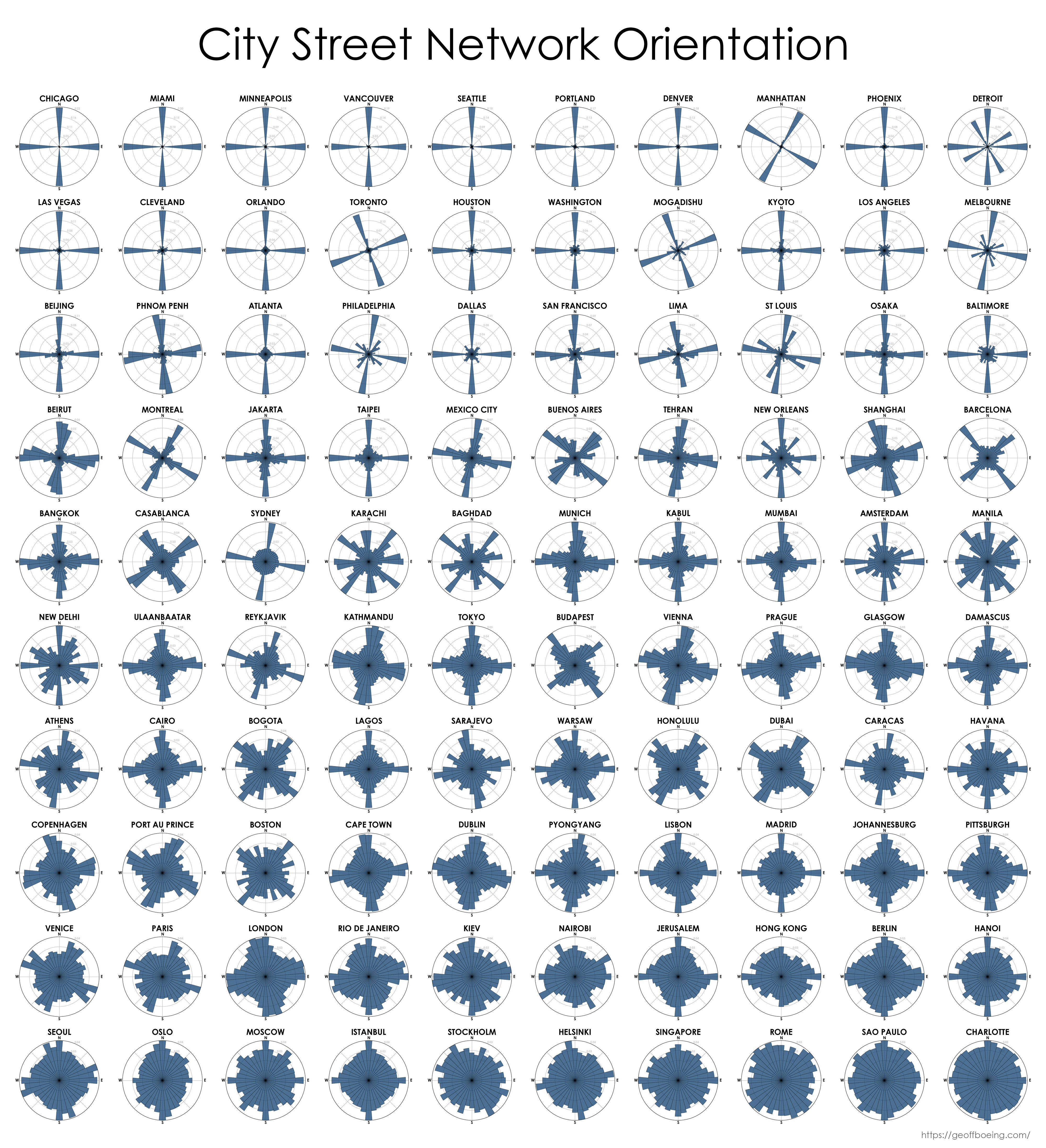
    On that note, here’s an interesting set of polar histograms from Geoff Boeing, who is a professor of urban planning and spatial analysis at the University of Southern California, that sorts city street networks by most-ordered/gridded to most-disordered:

    What these diagrams don’t tell you is how walkable or dense a city might be. But they do tell you how many of its streets follow a strict orthogonal grid — see Chicago and Beijing — and how many of its streets are all over the place, like in the case of Rome and Charlotte.

    They also tell you when the grid is askew, like in the case of Toronto (because of the angle of our shoreline) and in the case of Manhattan (because of the angle of the whole island). And if you were to revisit these diagrams well into the future, I suspect you wouldn’t see much difference from what you see here.

  • Energy and progress

    January 24, 2025 · View original


    YouTube video

    Here’s an interesting presentation by Albert Wenger, who is a partner at Union Square Ventures. He starts by showing a logarithmic chart comparing per capita energy consumption and GDP per capita. Then, by way of a clear empty area in the chart’s data points, he makes the argument that there’s no such thing as a wealthy, low-energy nation. If you’re a wealthy country, you consume a lot of energy. That’s just how it works. He then goes through a number of historical energy breakthroughs, landing on the point that, today, we are in need of much more energy. In other words, we need another energy breakthrough. We need it because we’re still burning fossil fuels and putting too much carbon into the atmosphere, and because we have really big energy needs: everything from data centers to the full electrification of our homes, buildings, and cars. One piece of good news is that we are seeing exponential growth in solar energy. Today, our global install base is still relatively small, but the thing about exponential growth is that it can creep up on you fast.

    It’s an interesting presentation. And if you’d prefer to read his talk instead, which is/was my preference, you can do that here.

  • Away from home

    January 23, 2025 · View original


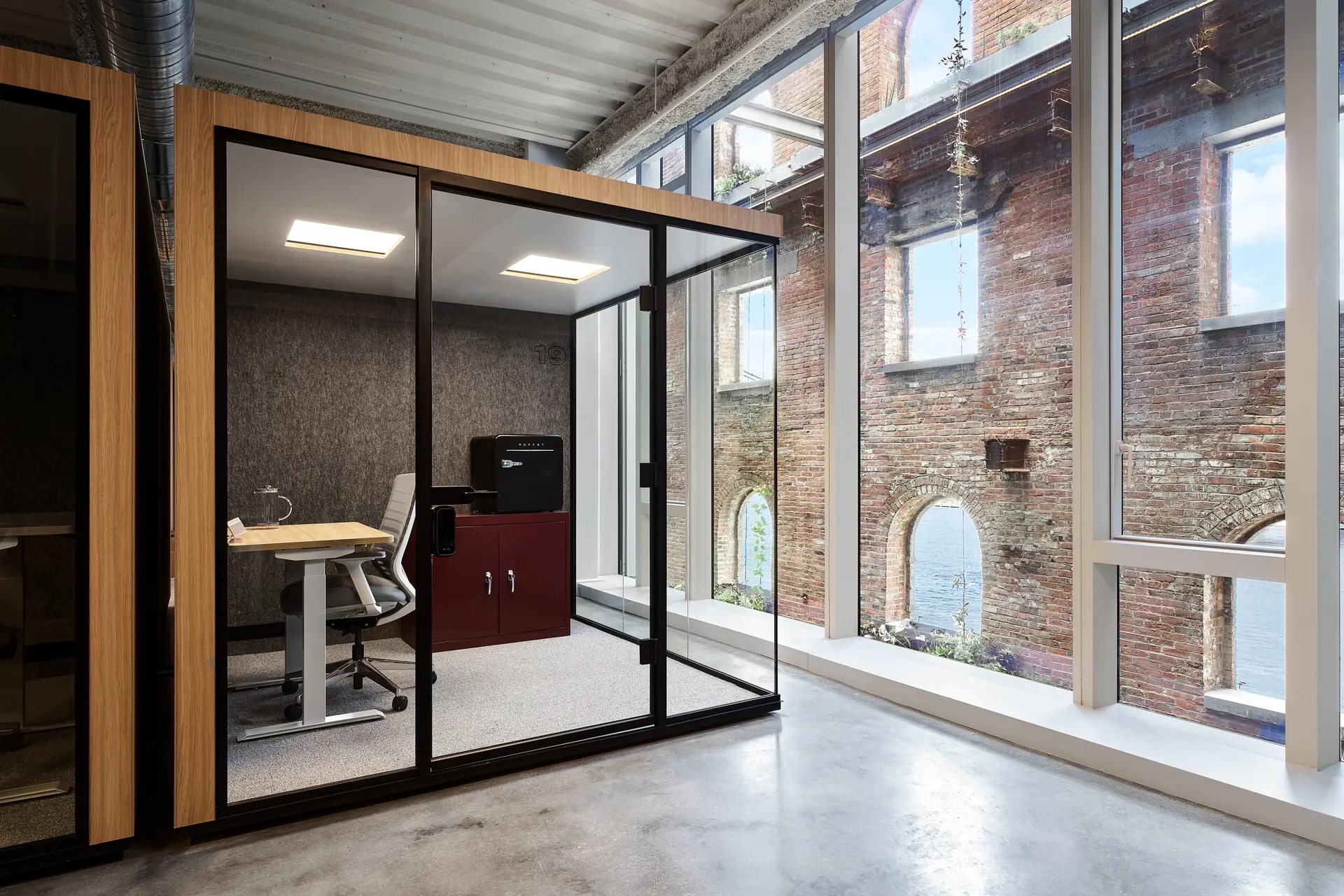
    I just read about a popular co-working company in New York called Framework. The concept is super simple. They rent single-person office pods (see above). Each one is sound insulated and has a sitting/standing desk, a filing cabinet, a kettle, a french press, and a small fridge. And at their latest location in Williamsburg, these rent for $820 per month. Their tagline is “your home office away from home” and I think that’s a good way of describing the offering. Because let’s consider the math.

    These pods are 8 feet x 8 feet. So at $820 per month, one would be effectively paying about $12.81 per square foot in rent, which I would assume is significantly higher than average apartment rents in the city. If you take the present value of $820 per month over 25 years at a rate of 5% (to generally simulate mortgage payments), you get close to $140k in value. My point being that if you can afford an additional $820 per month for an office pod, then you could likely afford to rent or buy a home with an additional 64 square feet.

    But from what I can tell, that’s not necessarily the main problem that Framework is solving. The key words seem to be: “away from home.” Home can be distracting for some people and in some situations. If you’re trying to get serious work done, I can see why shuttering yourself in a pod would be an attractive solution.

    Photo via Framework

  • Sundance

    January 22, 2025 · View original


    Tomorrow is opening day for the 2025 Sundance Film Festival in Park City and Salt Lake City. This year it takes place from January 23 to February 2. For those of you who maybe aren’t familiar, Sundance is the largest independent film festival in the US. In 2023, it had 423,234 combined in-person and online viewers, and, last year, it saw 72,840 in-person attendees (in a city with just over 8,000 people). So even though there’s an online component, it’s still very much an IRL experience.

    If any of you have been before, you’ll know that it’s an awesome time to be in Park City. I have vivid memories of singing Phil Collins in a karaoke Uber. The bars and restaurants are also packed and the sidewalks are overflowing with people. So much so that, this year, Main Street is going to be converted to pedestrian only, which I understand is a first. The urbanist in me was obviously happy to hear this, and I now look forward to seeing it play out on the socials.

    If any of you are interested in attending, Parkview Mountain House still has some dates available during the festival. Here’s the link.

    Cover photo by Kirby Taylor on Unsplash