Daily insights for city builders, delivered every morning at 6 AM ET. I’m Brandon Donnelly — a Toronto-based real estate developer and founder of Globizen. I’ve been writing here since 2013.
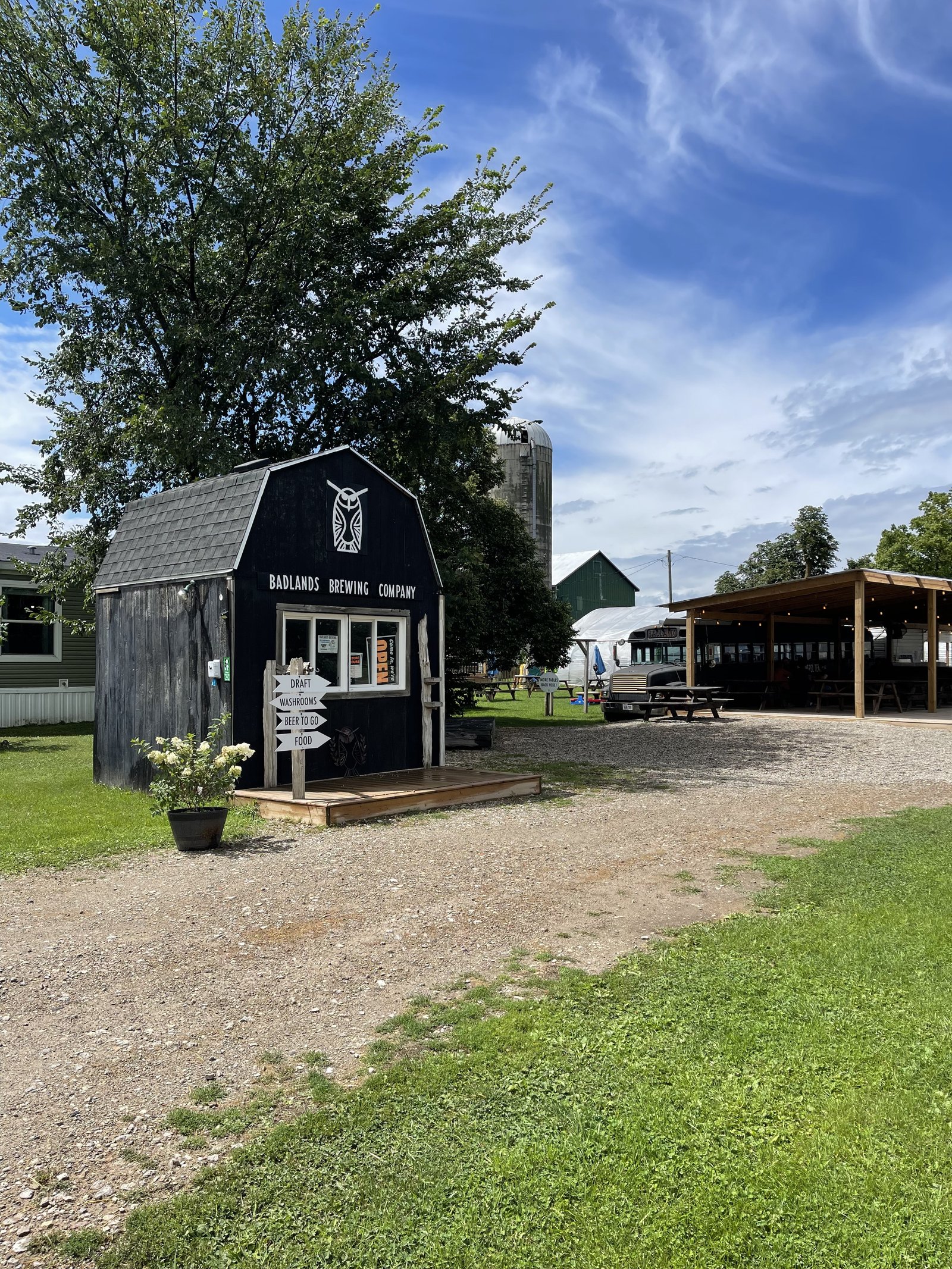
My friend Austin Kjorven convinced me that we should ride 70 km today so that I can try the beer and burgers at Badlands Brewing Company. Here’s the route we took:
I can now confirm that their smash burgers are as advertised. Great buns. I even had two of them just to make sure the first one wasn’t some sort of fluke.
My knees are, however, still giving me problems. I even tried KT tape and the brightest compression socks available in Austin’s closet.
Still, it was an awesome ride. If you happen to find yourself near Caledon, Ontario, definitely check out the Badlands Brewing Company.
Our growing desire — and ability — to live, work, and/or play in other places is, in my opinion, a powerful macro trend. We spoke about that here, here, and here. And one of the things that has obviously empowered this trend is the growth of short-term rentals.
But right now, the winds are not in favor of this model.
In September 2023, nearly a year ago, New York City enacted one of the strictest short-term rental laws to date, requiring hosts to be physically present while a dwelling is being rented. Yeah, that eliminates the majority of use cases.
Then in June of this year, Barcelona mayor Jaume Collboni announced a complete ban of short-term rentals starting November 2028. This is expected to return some 10,000 apartments to the long-term housing market.
Regardless of whether it will be effective, it is obvious why this is being done: housing unaffordability and too many annoying tourists. (We are flying to Barcelona next week and will endeavor to not be annoying.)
But at the end of the day, this is not going to extinguish our underlying desire to live, work, and play around the world. So I think these restrictions will create new opportunities to service this demand. It also strengthens the bull case for the tried-and-true formula of purpose-built hotels.
Sometimes on this blog, I like to write about things that I wish would happen. For example, back in 2014 I wrote this post calling Toronto’s Bloor-Danforth subway corridor a “land use crime scene.” And in it, I called the intersection of Bloor & Dundas West one of the best connected mobility hubs in the region. Then earlier this year, I quoted a post by Reece Martin where he referred to this same node as “the second-best transit node in the country” after Union Station.
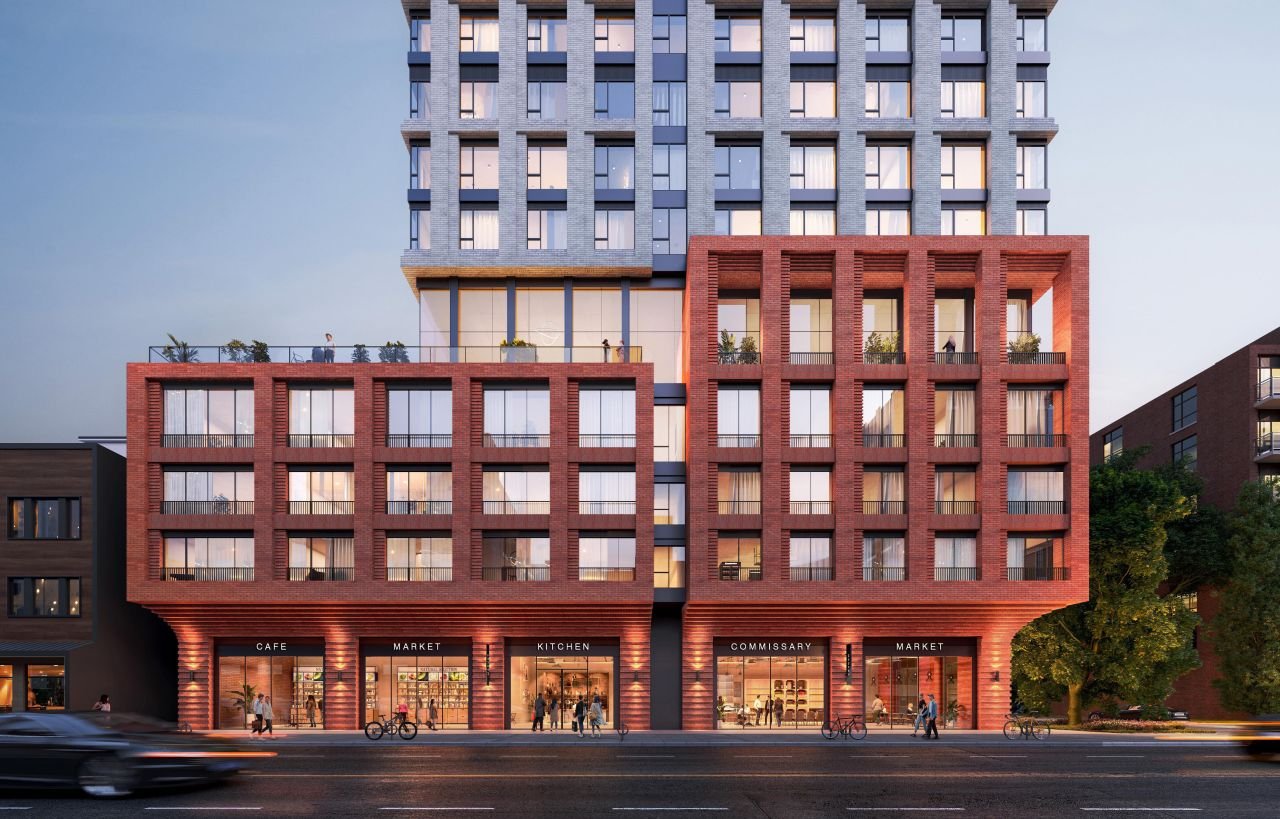
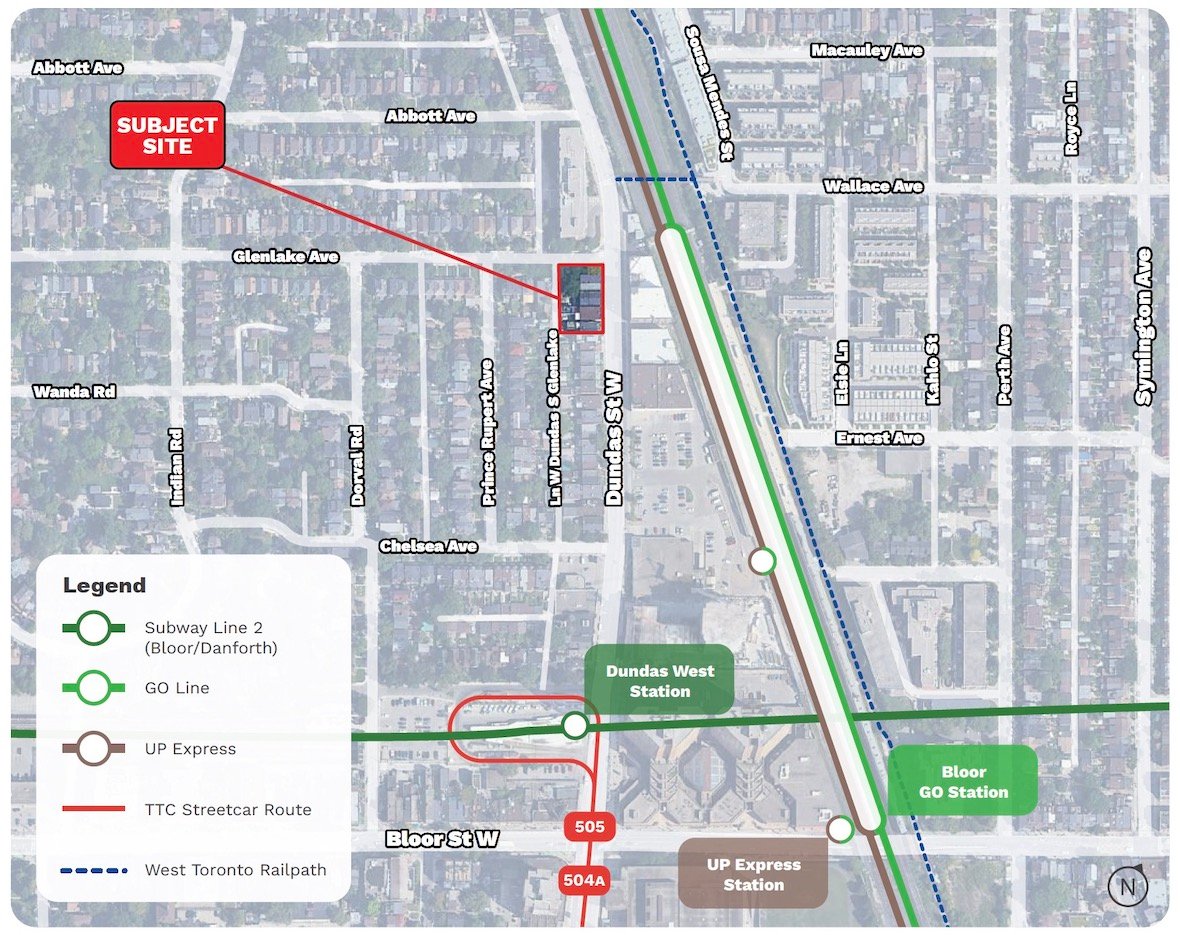
I’m fairly confident that these posts did absolutely nothing. But today, I am happy to report that my friend and former colleague, Adrian Tarapacky (now VP of Development at Fairway Development Group), has submitted a rezoning application for a new tall building at 2475 Dundas Street West. The site is just north of Bloor Street West, at the intersection of Glenlake Avenue, and it’s exactly the kind of development I was wishing for when I wrote the above posts.
Here’s a rendering of the proposed podium:
And here’s the context:
Any developer will tell you that it’s not easy assembling this many parcels, which is likely one of the reasons why the street/area remains this underdeveloped. So great work, Adrian. I look forward to you bringing more vibrancy to my neighborhood and the second-best transit node in the country. I also know that you have impeccable taste in lunch sandwiches, so I look forward to seeing what happens with the ground floor retail spaces.
Conventional planning wisdom tells us that smaller city blocks are generally preferable to larger city blocks. They make for more interesting walks (which can change our perception of distance) and they improve overall connectivity. This is why you’ll often hear planners advocate for things like “mid-block connections.” It is a way of creating the feeling of smaller blocks.
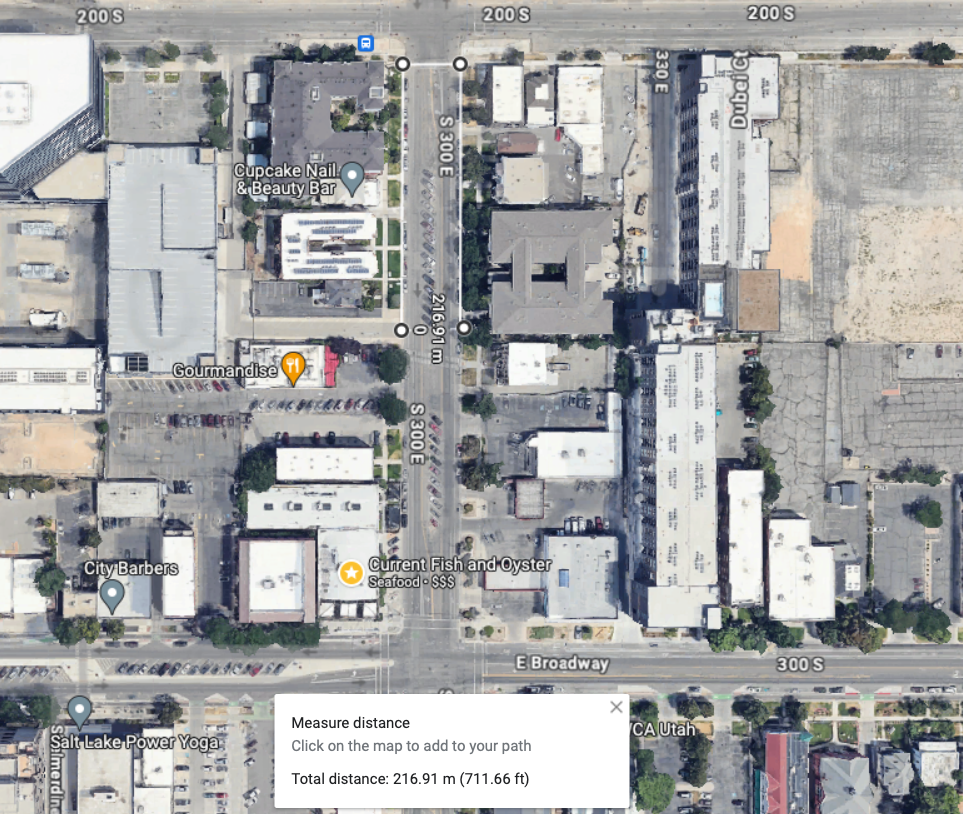
Salt Lake City, as we have talked about, is the opposite of this. Its blocks measure 660 feet x 660 feet (call it 200m x 200m for those of us more accustomed to using the international standard for measuring things). This means that if you were to walk only 2 blocks (inclusive of 2 streets), your walk would be close to 500m, which is a commonly used walking/transit radius.
Things get a bit tricker when you’re not walking in a straight line. For example, if you found yourself wanting to cross a street somewhere in the middle of a block — and you wanted to obey all traffic safety rules and not jaywalk — you would need to walk over 200m just to get to the opposite side. So basically a whole other block.
There are also instances where even this street grid gets interrupted. This past weekend, I spent an evening walking to and from dinner on Main Street. And at one point, I got caught trying to cross the convention center (which occupies 3 blocks). I guess I could have tried to cut through, but I walked around, which added 2 additional blocks (~600m in total).
Thankfully, SLC also has many instances of new mid-block streets/connections, road diets, internal laneways, and enhanced center medians, among many other things. I mean, here are some plans to turn Main Street into a pedestrian promenade. All of these interventions are an effort to soften the city’s underlying block structure, which we know tends to be indelible in cities.
In 1620, an Englishman by the name of Edmund Gunter invented a land surveying device known as Gunter’s chain. As the name suggests, it was an actual chain (see above). Each chain contained 100 links and, when fully extended, it measured 66 feet.
This was a monumental innovation as it greatly simplified land surveying and made it a lot easier to measure out acres — especially if you maybe weren’t great with math. So it is perhaps no surprise that this simple device forever changed our cities.
But first, here’s the only math you need to know:
Number of chains x number of chains / 10 = number of acres
For example:
A lot measuring 66 feet by 66 feet would mean it has an area of 4,356 square feet, or 0.1 acres (1 acre = 43,560 square feet). It would also mean that this lot measures 1 chain by 1 chain, or 1 square chain. Take 1 square chain and divide it by 10, and you arrive at the same 0.1 acres.
Similarly, a lot measuring 660 feet by 660 feet would mean it has an area of 435,600 square feet, or 10 acres. Using Gunter’s chain, this lot is 10 chains by 10 chains, which equals 100 square chains. Divide 100 square chains by 10 and you arrive at the same 10 acres.
Put differently, 1 acre equals 10 square chains in Gunter’s system.
Because of its simplicity and utility, the chain became a statutory unit of measurement in England by the 1670s. And as a result, it spread throughout the British Empire, meaning it started to influence how new cities were being planned and laid out.
Let’s look at the example of Salt Lake City.
We have spoken before about the city’s famously large blocks. They have the dubious distinction of being the largest in the US. But what you may not have noticed is that the typical SLC block measures exactly 660 feet x 660 feet. Its typical streets are also 132 feet wide.
This is because of Gunter’s chain. These are 10-chain x 10-chain blocks and 2-chain streets.
The same is true of other cities. Looking on the other end of the spectrum, Portland’s compact street grid is comprised of blocks that measure 198 feet x 198 feet. These are, in other words, 3-chain blocks. Its typical streets are also 33 feet wide. So half-chain streets.
Units of measurement have a lasting way of influencing how we plan and design things. This is true at small scales and it’s also true of our cities. In tomorrow’s post, we’ll look more closely at Salt Lake City’s street grid and what it does to walkability.
There is a simple tool to combat traffic congestion that has been proven to be effective. There are real-world examples of where it has been deployed to great and long-lasting success. It’s called road pricing. And we seem to be deathly afraid of it.
This is even if the benefits are real and measurable:
Jonas Eliasson, director of travel accessibility at the Swedish Transport Administration, has first-hand experience with the effects of the congestion charge implemented in Stockholm in 2006. Public polling showed two-thirds of voters were against the road-pricing plan before it was introduced in a pilot program. A local politician called it the “most expensive way ever devised to commit political suicide.” But after it began, Stockholm traffic levels dropped by 25 per cent, more than double initial estimates. In a subsequent referendum, Stockholm residents voted to adopt the congestion charge permanently.
There are lots of reasons why road pricing is commonly opposed, but at the end of the day, it works, and we know all too well — especially here in Toronto — that the status quo sucks:
“Over the years, transportation economists and planners have pointed out that there really is no other solution to traffic congestion than more efficient pricing,” he said in an interview. “So every time somebody said ‘No, I don’t want road pricing or congestion pricing,’ they’re actually saying, ‘I want traffic congestion.’”
I’ve been writing about this topic for almost as long as I’ve been writing this blog. So at this point, I think we just need to run a pilot. No more studies and reports. No more protracted debates.
Let’s try it out and see how many people prefer (1) less traffic congestion and (2) more money for alternative modes of transport.
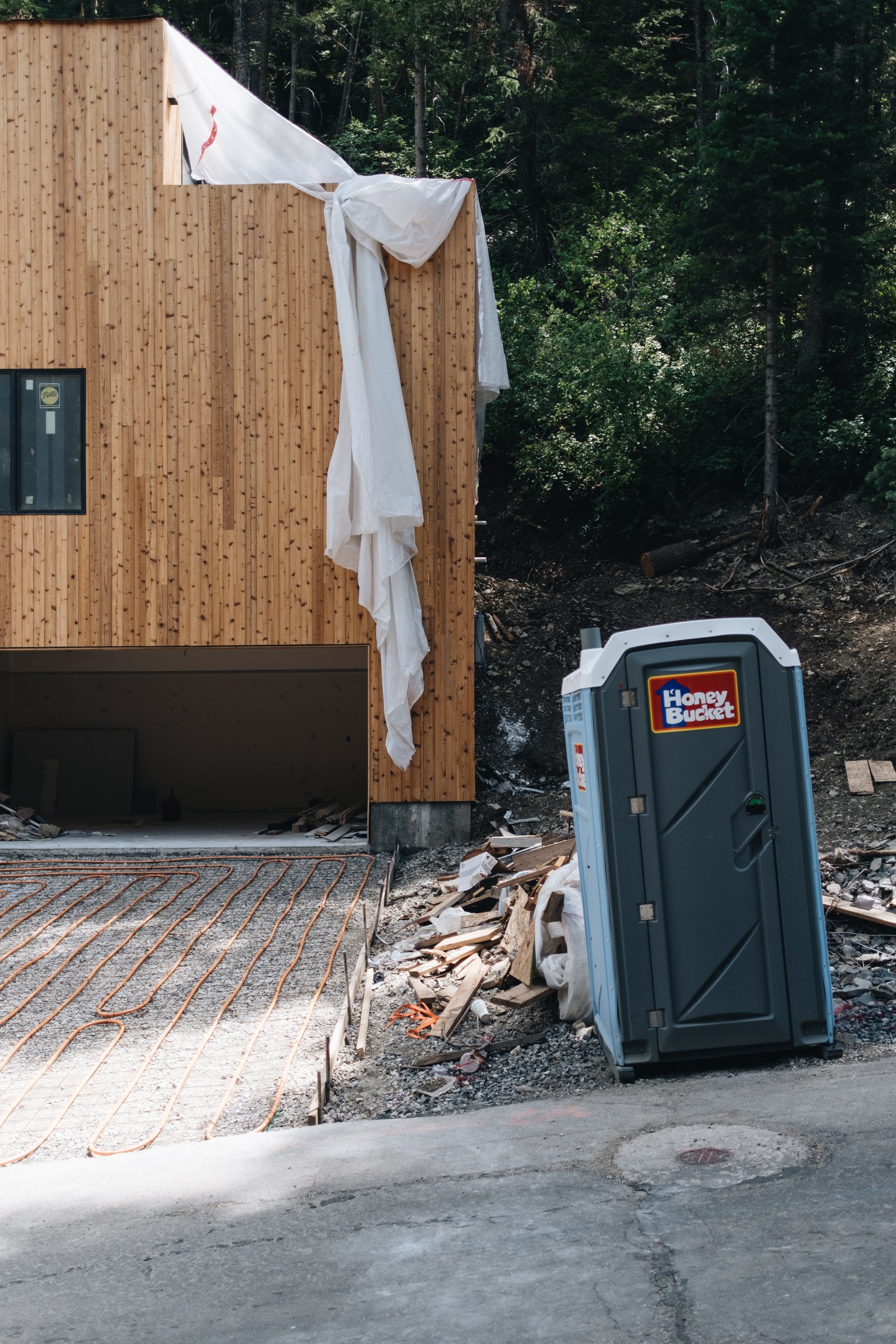
We are into the final push at Parkview Mountain House. The radiant tubes are in for the heated driveway and walkway (essential), and the concrete is scheduled to be poured later this week. The kitchen countertops were installed this morning, and the backsplash was templated, with install scheduled for this Wednesday. The finish carpenter is back this week, and then the painters will be coming next week. The appliances and hot tub are also on standby in their respective warehouses and will be delivered to site as soon as the team is ready. As always, things are frenetic. But we’re pushing to get occupancy this month. I’m also excited to announce that we just hired an excellent management company. We’re in the midst of that onboarding process, and we’re looking forward to starting bookings sometime this fall. If you haven’t yet added yourself to our list, drop your email over here. We’ll be offering a bunch of discounted bookings on a first-come, first-served basis to the people on this list.
If you hang around Park City long enough, you will come across things with the name Ontario. There’s Ontario Avenue. There’s the Ontario hiking trail at Deer Valley. And I’m sure there are other things.
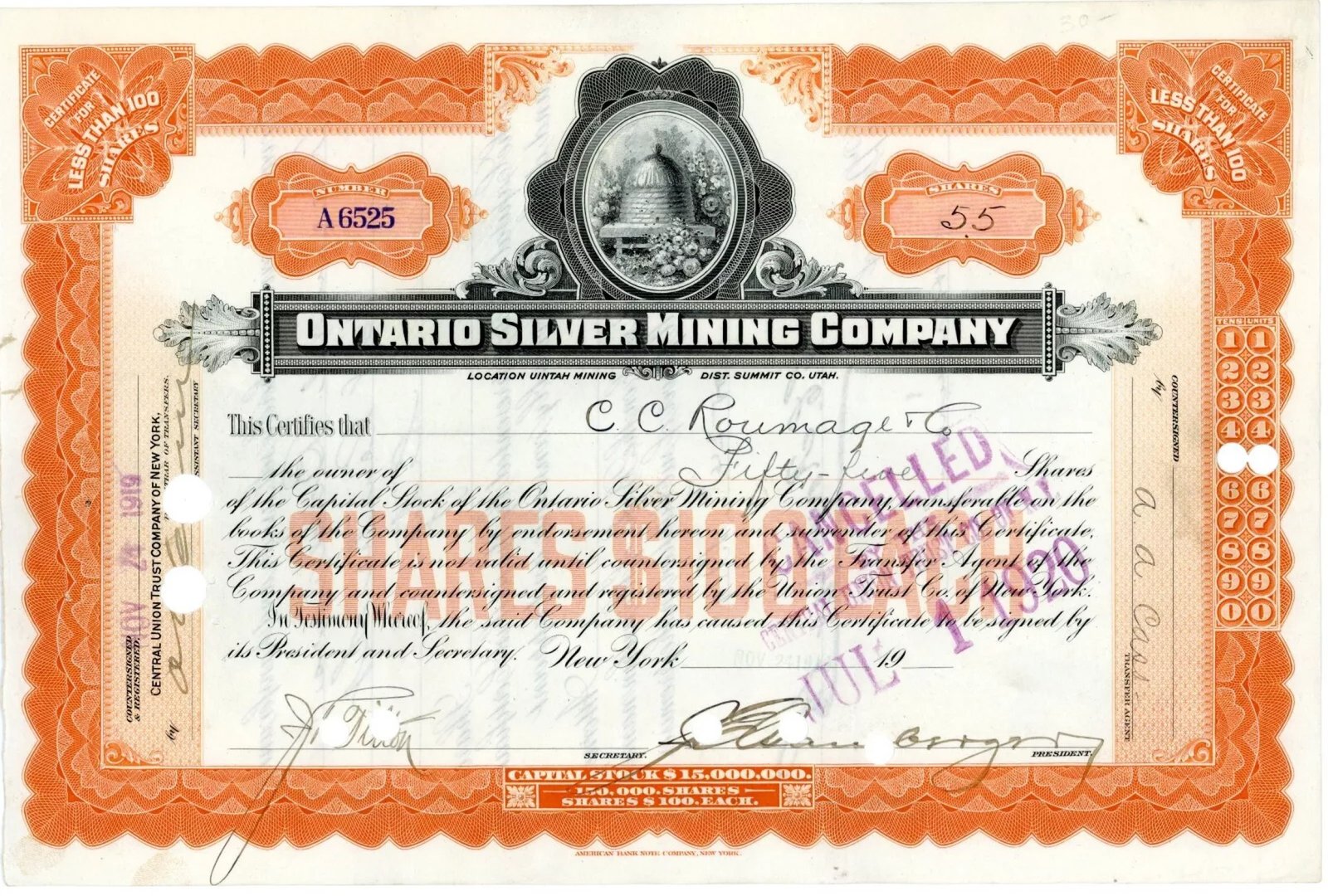
As a Canadian, I couldn’t help but wonder why. So today I looked it up. And it turns out that the mining company that first put Park City on the map was the Ontario Silver Mining Company (see above stock certificate).
Established in 1872, it was a major contributor to Park City’s economy (when it was a mining town) and it is usually credited as the mine that generated the most consistent yield in Utah during the late 19th century.
Cool, so why was it called Ontario? Well, according to the Park City Museum, the mine was first discovered by prospectors from Canada (though they later sold off their claim to George Hearst for a handsome $30,000).
I can’t seem to find any info about these Canadians, but the province of Ontario did get its name in 1867, so at least the chronology check outs.
It is Neat B’s birthday this weekend and we are hanging out in Utah. Today, we hiked up to Cecret Lake, which is accessible from the Alta Ski Area in Albion Basin. Alta is a ski-only resort, so hiking is the only way that my kind — snowboarders — gets to see this area. The basin is known for its beautiful wildflowers and it didn’t disappoint. Cecret Lake is also a watershed area for Salt Lake City. So as you hike up, there are signs telling you not to swim in the lake or do things like bath your dog. Because what goes into the watershed will end up in the faucets of Salt Lake City within 24 hours (according to the signs). If you haven’t done this hike, I would highly recommend it. It’s easy/moderate, and a great way to work up an appetite for In-N-Out Burger, which is a real treat for us Torontonians.
I’ve told versions of this story before, but I was reminded of it again today.
When I was in grad school studying both architecture and real estate, I used to walk back and forth across campus and jump between two very different kinds of academic experiences. On the one side of campus, it was taboo to talk about money. And on the other end, the only important thing to talk about was money. (I am exaggerating in both cases, but I think only slightly.)
Given that I was studying and genuinely interested in both, this always felt like a weird false dichotomy. I mean, why not care about, you know, multiple things? But that’s generally not the way it was. Talking about money tainted the purity of design. And talking about things like design and beauty felt out of place and less serious in a room where cap rates were being debated and serious financial models were being honed.
This is not to say that nobody was thinking across disciplines. I was in a joint program, after all. I can also remember attending a lunch & learn where a student asked a seasoned real estate executive what he should study in addition to finance. The response he got was something along the lines of, “the furthest thing from finance. Study something that will give you a different perspective on real estate.”
I remember this really resonating with me — probably because I was searching for breadcrumbs to make me feel like less of an outsider at Wharton. Still, this came across as a unique perspective at the time.
Knowing how money stuff works is absolutely fundamental. (We need to teach more of it in schools to young people.) And as a developer, it all starts with managing risk, executing (i.e. doing what we said we would do), and being an honest steward of other people’s money. Don’t do this, and you likely won’t be a developer for very long.
But then, what else? What unique insights can we bring to the assumptions that feed a finely honed model? Fast forward to today and this is now the basis for how the Globizen team aims to look at real estate opportunities. We want to cover all ends of campus. And that means we are more than okay talking about unserious things like design and beauty.