
Tech:NYC has just launched a new podcast called Talk:NYC. The first episode is with venture capitalist and blogger Fred Wilson. (Though, it should be noted that Fred and his wife, Joanne, are also involved in the real estate development space.) In this episode, Julie Samuels and Fred Wilson talk about why he came to New York, how to manage through a downturn, where working spaces are going, and why the magic of New York is still there — among a bunch of other things. Click here if you can’t see the embedded podcast below.
Month: September 2020
-
Ikea launches new digital influencer campaign in Tokyo
Social media, as we all know, isn’t all that real. Photos are cropped, edited, and distorted all the time. But that’s kind of how things work these days and it’s not just on social media. Back in 2014, it was revealed that about 75% of Ikea’s catalogues were made up of computer generated images. It’s simply a lot faster to do that than stage a bunch of spaces for photoshoots. Fast forward six years and Ikea is now taking it a step further by integrating “digital influencers” into their ads. Here’s what that looks like:
This particular campaign was done to promote a new store in Tokyo’s Harajuku district. And it features a popular digital influencer known as Imma. This is my first foray into the world of digital influencers, but Imma is apparently popular enough to have some 265,000 followers on Instagram. What I have just learned is that a real human is first photographed and filmed for all of this content. Imma’s digital head is then transplanted onto said content. That’s how these digital influencers are created.
It all feels very Japanese to me. It also feels a bit like the starting premise of a great Black Mirror episode. But on the other hand, is it really all that different from the highly doctored content that already graces the internet?
-
New York City makes outdoor dining permanent
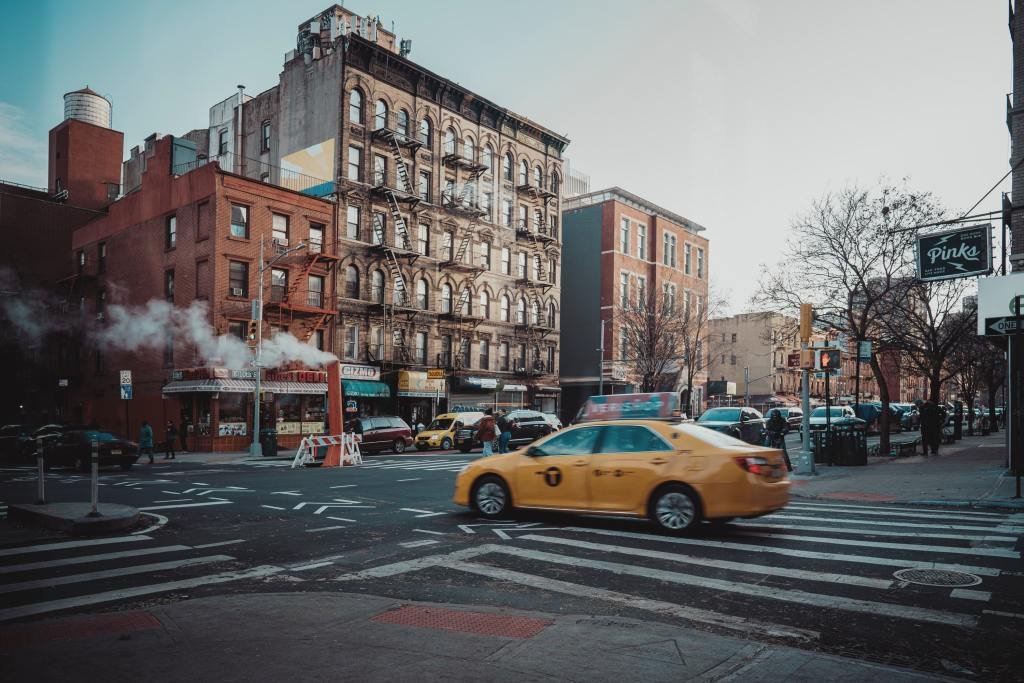
New York City just made its “Open Restaurants” program permanent. Originally set to expire at the end of the October, the al fresco dining program — which allows restaurants to use sidewalks and curb lanes adjacent to their business — is now being thought of as something that will permanently reshape public space in the city.
Along with this announcement, the City also provided clarity on how heating and enclosures may be used throughout the winter months. Electrical heaters can be used anywhere. But propane heaters can only be used on sidewalks and you’ll need to get a permit from the fire department. Prior to this announcement, there was an outright ban on propane heaters.
Tents and other enclosures are now permitted, but at least 50% of the side walls needs to remain open for ventilation. Otherwise it gets classified as indoor dining and those rules would then apply. However, fully enclosed structures, such as cool looking Instagrammable domes, are allowed for individual parties provided there’s “adequate ventilation.” Whatever that means.
This is yet another example of how COVID-19 is forcing us to reconsider the way we think about and use public space within our cities — perhaps forever. And in this particular case, it’ll be interesting to see to what extent cities embrace dining outside in the winter. Some of us already do it when we, for example, après ski. Could the same thing work in our cities?
Photo by Aleks Marinkovic on Unsplash
-
Latest artist collaboration: Juanita Lee-Garcia x Slate Asset Management x Junction House

Today I’m excited to announce the latest artist collaboration at Junction House. (For a background on the others, click here.) Bogota-born, Toronto-based Juanita Lee-Garcia has created a series of hand-cut collage panels for the construction hoarding at Junction House (the background color is the project’s signature electric blue color).
In this installation, Lee-Garcia uses repetition and image repurposing to investigate the limits and the potential of decor in consumer culture. Her work uses simple gestures such as slicing, inserting, folding, and layering to build these new and abstract forms. They are intended to feel both fresh and unfamiliar, as well as comforting — perhaps because of some of their cultural associations.
We love these sorts of collaborations because we want every single one of our development projects to be more than just a new building. We want it to be a catalyst for positive city building change. So the next time you’re in the Junction, I would encourage you to stop by 2720 Dundas Street West and take in Juanita’s work. Limited edition prints of the panels are also available on her website.
-
Canadian immigration rebounds
Population growth — so, immigration — is a crucial demand driver for the real estate industry, and for the growth of the overall Canadian economy. Last year, Canadian immigration averaged about 28,400 people per month, according to a recent equity research report (on the apartment sector) by TD Bank. The total number for 2019 was 341,175 people.
Not surprisingly, this number fell off in March of this year with the closing of our borders. In March, immigration declined to 18,560 per month and bottomed out in April with only 4,135 immigrants being admitted to the country. This has no doubt been a factor in some of the rent softening that we have seen in the multi-family space.

While it’s unlikely that Canada will meet its 2020 target of 320,000 to 370,000 new immigrants, it’s important to note that we have seen a fairly swift recovery (see above). In June of this year, the number rebounded to 19,175 new immigrants. And I’m certain that most of this cohort still went straight toward our biggest cities.
It’s also important to keep in mind that Canada’s three-year goal (2020-2022) remains 1 million new immigrants. TD is of the opinion that this target is still attainable, as this “short-term immigration headwind” is likely to flip into a tailwind once our borders become more porous and we get to the other side of this pandemic.
Looking back on this post from earlier in the week, I think it’s pretty safe to say that you could bucket this immigration blip into (1) short-term dislocation. It is not a (3) long-term structural change. Canada remains one of the greatest countries in the world. We will continue to attract smart and ambitious people from all around the world, and most will want to settle in our urban centers.
All of this, of course, will be good for the real estate industry and will be vital to the strength of the Canadian economy as a whole.
Chart: TD Securities
-
Drive and listen

Who needs to travel when you have, this? This, is a site called Drive & Listen, which allows you to drive around cities — well, watch vides of people driving around cities — while listening to local radio stations. It’s oddly fascinating in an I-spend-hours-on-Google-street-view kind of way. (It’s okay if you do that too.) A colleague sent out the link this morning and I thought it was a pretty clever idea, particularly right now, when many/most of us are yearning to travel, but can’t. The first cities I visited were Buenos Aires, Tokyo, Sao Paulo, Lisbon, Berlin, and, of course, Toronto.
Photo by Sasha • Stories on Unsplash
-
Everything has a cost
A new report was just published by Urbanation and the Federation of Rental-Housing Providers of Ontario (FRPO) arguing that the Greater Toronto Area is undersupplying rental housing to the tune of about 20,000 units per year. This number considers both purpose-built rental housing and condominiums that are purchased by investors and later rented out. (Shane Dingman also covered the report in this recent Globe and Mail article.)
These findings probably won’t come as a surprise to a lot of you. It is pretty common for most big/growing cities to operate with a perpetual housing supply deficit. With all of the barriers to development, it’s often impossible to keep pace with demand. This naturally creates upward pressure on pricing. But the other factor that cannot be ignored is development costs. How much does it cost to actually deliver new supply?
Here’s an excerpt from the report that speaks to this consideration:
While the results of the infill development potential exercise are encouraging, the economics
of intensifying these sites may be too difficult for owners to ultimately move them forward in many cases even with a zero land cost, as achievable rents outside of Central Toronto are
often not high enough to offset development and operating costs.It’s also something that we’ve talked about many times before on the blog. Even with free land, there are going to be countless sites and neighborhoods where it does not make economic sense to build anything new: development costs > potential revenues. And so to build, somebody is going to have to pay. Either the costs need to be subsidized or the revenues needs to be topped up somehow. Otherwise, supply = 0.
If you’re facing a deficit of 20,000 units per year, this seems like something you may want to consider. How might we increase supply? And how might we increase the supply of affordable housing? Many, including some of the folks interviewed in Shane’s Globe and Mail article, believe that inclusionary zoning is one such solution. Force new developments to deliver a certain percentage of affordable units (kind of like forcing restaurants to offer up 5-10% of their tables at a loss).
But again, I think it’s important to remember that whenever costs exceed revenues, somebody is going to have to pay for that shortfall, otherwise supply = 0. Something has to give, whether that be reduced costs, greater density, or higher rents on the remaining market rate units. I think part of the allure of inclusionary zoning is that it creates the allusion of a free lunch. But here’s the thing: everything has a cost.
-
What is it that I believe?
Back in 2008, I was living in the United States. And at that time, during the financial crisis, I remember people positing that the US wouldn’t be able to build another commercial office building for at least the next twenty years. That’s how bad things felt. People were panicking. But of course, that never happened. Yes, it took some time for real estate values to recover and for people to deleverage, but ultimately things did recover. New buildings were built and new ideas flourished.
In fact, I’ll never forget what a close friend of mine said to me a few years after that moment in 2008. He said to me, “you know what Brandon, the crisis was probably one of the best things to happen to me. It meant that I couldn’t find a job and I was forced to start my own company. I probably wouldn’t have done that otherwise.”
Today, we’re living through a different kind of crisis with its own set of uncertainties. Some, or perhaps many, seem to think it could lead to the demise of cities, similar to how our last crisis was supposed to lead to the demise of new office buildings (at least for a period of time). It’s easy to get caught up in narratives and headlines at times like this. And there are always ways to convince ourselves that this time might be different. Sure, we’ve had pandemics before, but previous generations didn’t have the tech that we have, right? Perhaps.
The challenge is that we’re all trying to decode how much of what’s happening today is related to (1) short-term dislocation, (2) trends that were already happening and just got accelerated, or (3) durable and long-term structural changes. My own view is that the post-mortems will reveal more of (1) and (2), as opposed to (3). And that will mean that some of us have maybe been making long-term decisions (flee the city) based on short-term dislocation (a 1-2 year health crisis).
Of course, I could be wrong. But it’s what I believe and what I have conviction around.
Headlines are designed to target what Seth Godin and others refer to as our “lizard brain.” That being the primitive part of our brain that tells us when we’re, among other things, scared, hungry, fearful, and horny. What excites the lizard brain is not a headline saying that everything will probably be just fine. What excites the lizard brain is a headline saying that everything is utterly broken and a new paradigm is now upon us — pay attention or perish.
It’s for this reason that I think it can be helpful to pause and ask yourself: “What is it that I truly believe?”
-
[Video] The Glenkerry House in East London
The Open House festival is on this week in London. It’s an annual festival that celebrates London’s urban landscape and it is something that has been going on for the past three decades. (Toronto has something similar called Doors Open.) But this year, as is the case for all of us, they had to get a little creative with online events and other kinds of programming. Below is a short video that was created as part of the Open House Films collection. It is about the brutalist Glenkerry House in East London. Its architecture (by Ernő Goldfinger). Its ideals. And the people who call it home. Looking for more short urbanism films similar to this one? Look here.