
Canada must become a global superpower
The silver lining to the US starting a trade war with Canada and regularly threatening annexation is that it has forced this country out of complacency. Indeed, I'm hard pressed to remember a time, at least in my lifetime, when patriotism and nationalism has united so much of Canada. According to a recent survey by Angus Reid, the percentage of Canadians expressing a "deep emotional attachment" to the country jumped from 49% in December 2024 to 59% in February 2025. And as further evidence of...

The bank robbery capital of the world
Between 1985 and 1995, Los Angeles' retail bank branches were robbed some 17,106 times. In 1992, which was the the city's worst year for robberies, the number was 2,641. This roughly translated into about one bank robbery every 45 minutes of each banking day. All of this, according to this CrimeReads piece by Peter Houlahan, gave Los Angeles the dubious title of "The Bank Robbery Capital of the World" during this time period. So what caused this? Well according to Peter it was facil...
The story behind those pixelated video game mosaics in Paris
If you've ever been to Paris, you've probably noticed the small pixelated art pieces that are scattered all around the city on buildings and various other hard surfaces. Or maybe you haven't seen or noticed them in Paris, but you've seen similarly pixelated mosaics in one of the other 79 cities around the world where they can be found. Or maybe you have no idea what I'm talking about right now. Huh? Here's an example from Bolivia (click here if you can't see...

Canada must become a global superpower
The silver lining to the US starting a trade war with Canada and regularly threatening annexation is that it has forced this country out of complacency. Indeed, I'm hard pressed to remember a time, at least in my lifetime, when patriotism and nationalism has united so much of Canada. According to a recent survey by Angus Reid, the percentage of Canadians expressing a "deep emotional attachment" to the country jumped from 49% in December 2024 to 59% in February 2025. And as further evidence of...

The bank robbery capital of the world
Between 1985 and 1995, Los Angeles' retail bank branches were robbed some 17,106 times. In 1992, which was the the city's worst year for robberies, the number was 2,641. This roughly translated into about one bank robbery every 45 minutes of each banking day. All of this, according to this CrimeReads piece by Peter Houlahan, gave Los Angeles the dubious title of "The Bank Robbery Capital of the World" during this time period. So what caused this? Well according to Peter it was facil...
The story behind those pixelated video game mosaics in Paris
If you've ever been to Paris, you've probably noticed the small pixelated art pieces that are scattered all around the city on buildings and various other hard surfaces. Or maybe you haven't seen or noticed them in Paris, but you've seen similarly pixelated mosaics in one of the other 79 cities around the world where they can be found. Or maybe you have no idea what I'm talking about right now. Huh? Here's an example from Bolivia (click here if you can't see...
Share Dialog
Share Dialog
We tend to think of buildings as being very permanent structures. After all, our cities are filled with buildings that are hundreds of years old. And in some cases, much older.
But the reality is that buildings, just like everything else, depreciate over time. They have life cycles and they need to be regularly maintained and periodically renovated in order for them to survive.
This morning I was reading the blog of Witold Rybczynski, who is an author and architecture professor at the University of Pennsylvania. A few months ago he wrote a post talking about the short life cycle of modernist buildings.
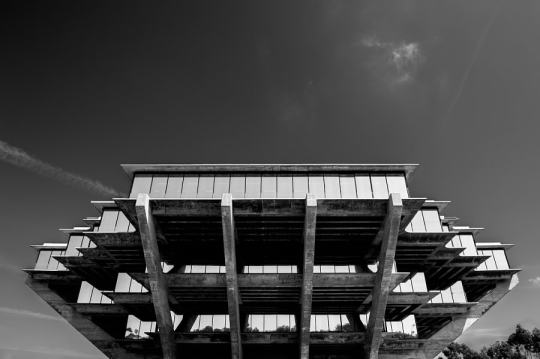
According to a recent colloquium at the Getty Center, the average life span of a conventionally built building (masonry and wood) is about 120 years. But for modernist buildings (reinforced concrete and glass curtain wall) it’s half that: 60 years.
And if you are to consider the typical big box retail store, the life expectancy is probably a third of that – if even that. Usually it is cheaper to just tear down the old box and build a new one when needs change. That’s part of the reason why the leases usually have clauses that try and prevent the retailer from just “going dark” and stopping operation.
So we are literally not building them like we used to. And there’s a lot of debate in architecture and building circles about whether or not this poses a serious problem for cities. It is clear that Witold is unhappy about this shift.
I am a strong believer in heritage preservation. I believe wholeheartedly that cities are far richer with layers upon layers of history. But I also acknowledge that in our world of 6 second Vine videos, we seem to be less worried about whether something will last 60 or 120 years.
Perhaps that’s a problem. Or perhaps the times are just changing.
We tend to think of buildings as being very permanent structures. After all, our cities are filled with buildings that are hundreds of years old. And in some cases, much older.
But the reality is that buildings, just like everything else, depreciate over time. They have life cycles and they need to be regularly maintained and periodically renovated in order for them to survive.
This morning I was reading the blog of Witold Rybczynski, who is an author and architecture professor at the University of Pennsylvania. A few months ago he wrote a post talking about the short life cycle of modernist buildings.
According to a recent colloquium at the Getty Center, the average life span of a conventionally built building (masonry and wood) is about 120 years. But for modernist buildings (reinforced concrete and glass curtain wall) it’s half that: 60 years.
And if you are to consider the typical big box retail store, the life expectancy is probably a third of that – if even that. Usually it is cheaper to just tear down the old box and build a new one when needs change. That’s part of the reason why the leases usually have clauses that try and prevent the retailer from just “going dark” and stopping operation.
So we are literally not building them like we used to. And there’s a lot of debate in architecture and building circles about whether or not this poses a serious problem for cities. It is clear that Witold is unhappy about this shift.
I am a strong believer in heritage preservation. I believe wholeheartedly that cities are far richer with layers upon layers of history. But I also acknowledge that in our world of 6 second Vine videos, we seem to be less worried about whether something will last 60 or 120 years.
Perhaps that’s a problem. Or perhaps the times are just changing.
No comments yet