Daily insights for city builders, delivered every morning at 6 AM ET. I’m Brandon Donnelly — a Toronto-based real estate developer and founder of Globizen. I’ve been writing here since 2013.

Tag: wyoming

  • The real smart city is going to be a crypto city

    Vitalik Buterin — who is best known as the cofounder of Ethereum — recently penned this post on his blog where he argues that “crypto cities broadly are an idea whose time has come.” (Credit to Shamez Virani for sending the post to me this morning.) There has been a lot of discussion over the years about the rise of smart cities. I for one am not really sure what that means besides the fact that it sounds good and it likely involves a bunch of tech and data collection. But maybe crypto can help.

    What Vitalik argues in his post is that we are now at a point in time where blockchain technologies have the opportunity to do two things for cities. One, we can take existing systems and processes and use blockchains to make them more “trusted, transparent, and verifiable.” That would be a very good thing. But the more interesting one is number two. We have the opportunity to use blockchains to create radically new forms of asset ownership (land and other scarce assets) and municipal governance.

    One specific example is that of a “city coin”, which cities like Miami are already experimenting with. Supposedly they are one of the first, which of course aligns with Mayor Suarez’s vision to position Miami as a preeminent tech and crypto hub. Though as Vitalik points out in his post, it’s important to maintain some optionality, especially since we are still very much in the early innings of this new frontier. (This recent episode on the Tim Ferriss Show had a great analogy in saying that the anthem at the beginning of the game isn’t even over yet.)

    So how might a “city coin” living on a blockchain work?

    Well let’s imagine that there are incentives in place for all of us who live in Toronto to own the Toronto coin (there’s still time to come up with a better name). You need it to pay your property taxes, you need it to pay for parking, and you need it to vote in the next election, among many other things. So there’s an incentive to buy and hold it if you’re a resident of this great city, but there is far less incentive to hold it if you don’t live here. (Maybe you own a bit of it because you’re a frequent visitor and/or your relatives live here.)

    One of the interesting things about something like this is that it would immediately create economic alignment. Now all of a sudden, everyone who lives in Toronto and owns Toronto coin would have a vested interest in seeing Toronto thrive. At the very least they would want to see the coin hold its value and ideally they would hope to see it appreciate.

    At the same time, the Toronto coin could be used for all sorts of governance matters. Take for example, land use and zoning decisions. What if we set things up such that these decisions weren’t made by the people who show up to community meetings in the basement of their local church but that they were instead made by everyone who holds the Toronto coin? i.e. The entire city, all of whom are, in a way, equity holders.

    In theory we could do this kind of voting today. However, part of the problem is that the economic alignment isn’t there without something like a Toronto coin. Right now a big part of the economic incentive rests with homeownership. If I own a home and a new development is proposed next to me, I am incentivized to do whatever it takes to selfishly maximize my own individual outcomes. And if that means no development and no more homes for people, then so be it.

    But what if we all had part of our net worth tied up in the Toronto coin? And what if when housing supply did not meet housing demand, the value of our coins dropped because it meant fewer residents (less demand for Toronto coin) and more people voting with their feet and moving to other geographies (more demand for some other coin)? This is one of the things about the crypto space. It turns everyone into evangelists because there are now strong economic incentives to be that way.

    Who knows if this is the way that things will actually play out. But it is part of the promise of crypto and it is not some pipe dream. It is already starting to take hold around the world and in the US in places like Wyoming and Colorado. For more on this topic, make sure to check out Vitalik’s full blog post.

  • Future flexibility in multi-family buildings

    It was recently reported that Jimmy Fallon and his wife are selling their New York City Penthouse in Gramercy Park. It’s listed for $15 million. In looking at the photos, it’s pretty much what I would have expected. It’s fun and quirky. And they have a “saloon room” that looks like it could be in Wyoming. But what I also find interesting is how they assembled this apartment over time.

    It started in 2002. Jimmy Fallon was single and he bought his first place in the building — a one bedroom for $850,000. According to the article, he couldn’t really afford it. But as he was nearing the end of his run on SNL, Lorne Michael encouraged him to buy his own place. So he went and did that in Gramercy Park in a building that dates back to the 1800s.

    As life evolved and as Jimmy got married, he and his wife started buying contiguous apartments — three more to be exact. Their penthouse apartment is now about 5,000 square feet and spans three floors in the building. It’s an interesting case study in the flexibility of multi-family buildings. Here is a building that was built in the 1800s and has probably seen a myriad of changes over its lifetime.

    Future flexibility is something that is talked about here in Toronto in the context of new construction. We talk about “knock-out panels” so that someone like Jimmy can grow into a larger suite. I’m not sure how often this actually happens, but I would imagine the frequency is relatively low. But it’s very possible and not just in older buildings like The Gramercy Park.

  • US counties with the highest per-capita income

    Below are the US counties with the highest per-capita income (as of 2018), according to this recent Bloomberg article:

    Teton, WY is home to the Jackson Hole valley (which has some of the best skiing in the world). And Pitkin, CO is home to Aspen. Turns out, rich people like ski towns.

    Interestingly enough, 2018 saw per capita income grow in the greatest number of US counties since 1981. According to the Bureau of Economic Analysis, it was 97% of all counties:

    For the full Bloomberg article, click here.

    Charts: Bloomberg

  • That’s a wrap

    Jackson Hole never disappoints. 

    The valley is this wonderful combination of cowboy town, expansive flat plains, wildlife, snowcapped mountains, challenging skiing and snowboarding, ‘mountain modern’ architecture, and twangy accents.

    One of the highlights of the trip was discovering a hot spring along the side of the Snake River. We never would have found it had it not been for a few locals. Apparently it’s called the “stinky spring.” 

    The setup was no frills — a bunch of rocks arranged as basins in order to catch the surprisingly steamy sulfur water. But the experience of sitting in the mountains and jumping between the icy river and hot springs was priceless. 

    That’s another great thing about ski towns: they change your perception of snow, winter, and the outdoors. When it snows in Jackson, people smile and grab their skis and snowboards. I aspire to bring that same energy to winter in the city.

    I could never be a ski bum, but I can certainly appreciate why others make that choice. Until the 10th annual

  • 9th annual

    Delta: “Final destination today?”

    Me: “Jackson.”

    Delta: “Ooohh, everyone is going to Jackson today!”

    Me: “That’s because they’ve been getting a lot of snow.”

    It’s that time of year again. I’m at the airport right now about to leave for my annual retreat to the mountains. 

    If you know me or you’re a regular reader of this blog, you’ll know that I’ve been doing this every year at roughly the same time for almost a decade. Next year will be our 10th “annual”, so that likely means we’ll have to ratchet things up a bit.

    Jackson Hole received 6″ of fresh powder last night and the weather forecast for this week is filled with even more snow. However, I think we may stay off Corbet’s Couloir. (Whatever you do, don’t click-through.)

    Regular scheduled programming will resume tomorrow. If you need to reach me, you know how. There never seems to be a good time to be out of the office, but traditions are traditions, right?

  • Saying no to “Mountain Modern”

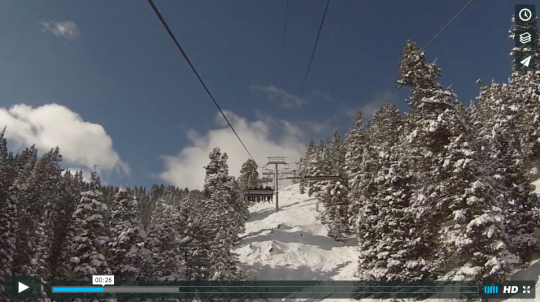
    Jackson, Wyoming is one of my favorite places on the planet. (Here is a ski/snowboard video that my friends and I made a few years ago in Jackson.)

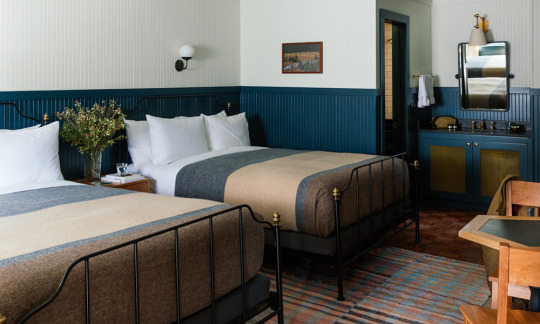
    Earlier this year, Eagle Point Hotel Partners and the Brooklyn-based design firm Studio Tack completed a renovation of the Anvil Motel in Jackson – it’s now the 49-room Anvil Hotel

    Apparently reclaimed motels are the new hospitality trend.

    What I appreciate about their approach, is the emphasis on creating something that feels local and contextual. Here are a couple of snippets from Surface Magazine:

    The designers wanted to avoid a rustic feel, or what Ruben Caldwell, one of Studio Tack’s four partners and an avid backcountry skier, calls “Mountain Modern,” referring to architecture, common in places like Vail, Colorado, and Lake Tahoe, California, that excessively uses reclaimed wood and Cor-Ten steel. “We knew we didn’t want to steer anywhere near that,” says Chou, a long-time snowboarder who more recently got into skiing. “It takes a bit of familiarity with ski towns to know what you don’t want to do.”

    The vibrancy of Jackson’s local culture impressed the design team—and Caldwell so much so that he moved there full-time last year. “As a design team,” Caldwell says, “we’re hyper-aware of the need for projects to be deeply embedded into the local scene.”

    It’s easier to copy and paste. But the results are always better when you take a bit of time to understand a place. 

    Image: Anvil Hotel

  • Snowboarding, vlogs, Cape Town, and marketing

    This morning, instead of my usual routine of writing alongside a cup of coffee, I decided to finally edit all of the skiing and snowboarding footage that I took last month in Park City, Utah. Click here for the final cut.

    Compared to the video we did for Jackson Hole, I don’t like the selfie perspective as much. It doesn’t show enough of the person. This time we used the Go Pro 3-way arm, but in Jackson we used a plastic tube that I think was used for a beer funnel before that. Next year we’ll go back to that.

    Video is a lot of fun and I would love to figure out a way to incorporate more of it into this blog. But that’s a far bigger time commitment and I am not prepared to allocate resources to that. I write every day. That’s my thing.

    I am, however, not ignorant to what’s happening in the world of video blogging. And I think there are lots of opportunities for businesses who have the resources to allocate towards projects like this.

    Take for instance this vlog by New York video guy Casey Neistat. It’s probably the best piece of marketing that the Phantom 4 drone could have asked for. It’s authentic. I watched it and now I want one. Take my money. 

    (Note to city geeks: It’s worth watching just for the drone aerials of Cape Town, South Africa.)

    To my knowledge, I don’t think people are doing anything like this in the real estate business. But eventually it will happen. Because people are becoming increasingly immune to your typical marketing pieces.

  • A cold ski town is building one of the first vertical farms in the world

    image

    I have a soft spot for Jackson Hole, Wyoming. It’s a beautiful town and, out of all the places I’ve snowboarded, it’s easily my favorite.

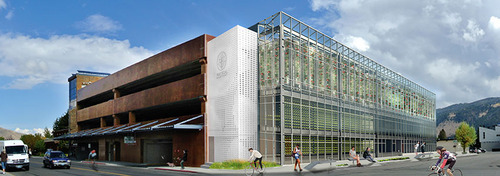
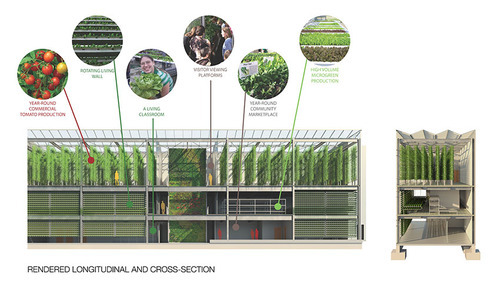
    That’s why I was excited to learn that Jackson is currently building one of the first vertical farms in the world (and in a cold ski town at that). Using a vacant site in the middle of town, a new venture called Vertical Harvest is building a three storey, 13,500 square foot hydroponic greenhouse. It’s being done as a public/private partnership.

    image

    The business will operate year round and supply fresh produce to the local community – replacing food that was previously being shipped in from Mexico and California. 

    The site itself is 1/10 of an acre, but it’s expected to have the same output as a 5 acre piece of land using conventional agriculture methods. 95% of their product is already committed through pre-purchase agreements. 

    Here are some of the businesses that have jumped onboard:

    • Rendezvous Bistro
    • Il Villaggio Osteria
    • Q Roadhouse
    • The Kitchen
    • Jackson Hole Mountain Resort’s five restaurants
    • Snake River Brewery
    • St. John’s Medical Center’s Refuge Grill

    What makes this project even more exciting is their commitment to employing members of the local community with disabilities. This is apparently a growing concern in Jackson, and so Vertical Harvest will be doing their part to address that.

    If you’d like to learn about the design of the facility, check out this article by Fast Company. The team was was very methodical in ensuring that this facility would consume less energy than the status quo of shipping in food from out of state.

    The go-live date is this fall (2015). I should probably plan another trip to Jackson.

    Images from Vertical Harvest

  • Alleys and laneways

    In addition to having an incredible mountain just 12 miles away, the town of Jackson is also a really cool place in its own right. It’s a cowboy town with endless wilderness all around it. But since it’s such a big tourist destination, the town is filled with great restaurants, art galleries, and the obligatory real estate brokerages trying to sell vacation properties.

    Here’s what the town looks like from the top of Snow King (the in-town ski mountain). Photo credit: David Stubbs for the New York Times.

    But from a land use standpoint, I also find the town really interesting because of its network of fine grain alleys. Here’s a picture of Gaslight Alley. For those of you who are regular readers of this blog, you’re probably aware that I’m a big supporter of laneway housing in Toronto. I think it’s a hidden opportunity. It could be another—more intimate—layer to the city.

    Today, building a laneway house is virtually a non-starter with the City of Toronto. Whether it’s issues of utilities or the fact that laneways don’t easily accommodate service vehicles (maybe we need smaller service vehicles), the city has a litany of reasons for why they just won’t work.

    But I’m absolutely certain that we could figure out solutions to all of the obstacles if we really put our minds to it. It’s not a question of not being able to do it, it’s a question of not wanting to do it.

  • The powder clause

    Jackson Hole has been on the top of my list of places to visit for a number of years now. And having just snowboarded it for the first time, I can honestly say that it lives up to the hype. It’s by far the most aggressive mountain I’ve ever had the pleasure of riding on. We also got lucky with 9” of fresh powder.

    But in addition to some great riding, I also learned of something new today: the “powder clause”. And from what we’ve heard from the locals, lots of employers in the region offer it. What it means is that if there’s a fresh dumping of snow, you’re allowed to take the morning off work so that you can go ski “the pow.” I think this is brilliant.

    If you’re from a big city (or you don’t ski), this may seem a bit absurd. But I think the “powder clause” underscores a growing trend happening in a lot of cities around the world. We’re seeing the rise of the consumer city. Historically, cities were all about agglomeration economies. But today, amenities matter. People choose first where they want to live and then look for a job (or start their own company).

    Some places are blessed with natural amenities. But for the rest of us, we have to work at creating our own. That’s where city building comes into play.