
Daily insights for city builders, delivered every morning at 6 AM ET. I’m Brandon Donnelly — a Toronto-based real estate developer and founder of Globizen. I’ve been writing here since 2013.

Tag: workspace

  • East Room co-working space

    image

    Amy Bath needs to leave comments here on ATC more often because she has great feedback and insights.

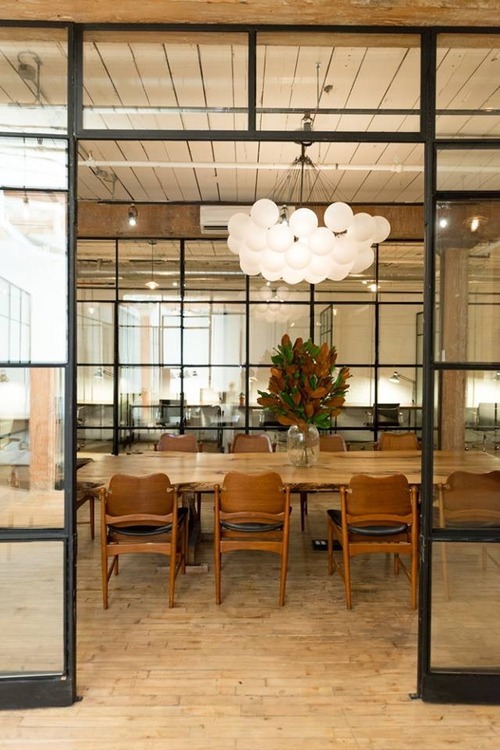
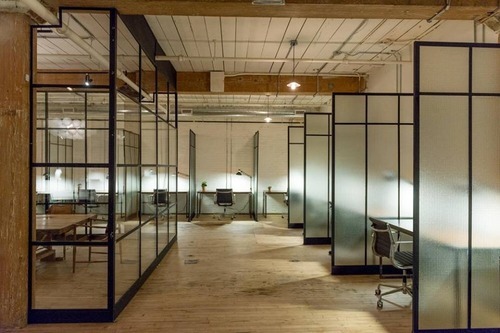
    This morning she tipped me off to a brand new co-working space on the east side of Toronto called East Room. If you haven’t yet heard of it, I would encourage you to check out their website. They’re in a gorgeous heritage building along the Don Valley and they seem to have executed really well. I love their design aesthetic.

    //platform.instagram.com/en_US/embeds.js

    They currently offer two different memberships: a resident membership ($500/month) and a club membership ($250/month).
    image

    This is exciting to me because I have a soft spot for both good design and the east side of Toronto. But probably more importantly, it speaks to the changing nature of work and the workplace, as well as to the shifts in how space is being consumed.

    Co-working spaces are, of course, blowing up all over the world from Philadelphia to Berlin. The internet has empowered new ways to freelance and make money, and these kinds of spaces are really a result of that. Because even though it’s entirely possible for many of us to work remotely at home, we still crave the social interaction that comes from being within an office environment. And that’s a big part of what these spaces are. They’re a social fabric.

    Amy’s hope is that condos will eventually start including amenity spaces that are similar to co-working spaces, and I think that’s a really interesting idea. The challenge, however, is that most developers today (and property managers) aren’t equipped to operate these kinds of environments.

    But maybe it’s only a matter of time before some do become equipped, because I’m sure we’re going to see more, not less, of these kinds of urban spaces.

    Images: @eastroom_
  • The changing nature of how and where we work

    image

    Yesterday I came across a post called, The Workplace of the Future, by venture capitalist Tomasz Tunguz. In it, he references a book called, Cubed: A Secret History of the Workplace, and talks about the changing nature of how and where we work.

    What’s immediately interesting to think about is how recent the modern workplace really is:

    The information worker is a relatively new concept. Peter Drucker coined the term in the 50s. By then companies had already developed new ways of housing information workers. The very first information workers were accountants hunched over “Bob Crachit” desks in the back rooms of factories. Booming railroad companies demanded more organization and created offices within the new skyscrapers along the Chicago skyline. With these new offices came stacks of paper and folios, and cabinets in which to file them. Then, the Mad Men wrought an era of typewriters and mahogany corner offices. Next, Bell Labs invented the suburban office park, moving offices from the city as part of post-war suburbanization and in the 70s, Herman Miller crafted the now-ubiquitous cubicle, which was called the “Action Office” when it launched. Oh, the irony.

    It’s also interesting to think about how quickly things seem to be changing. Up until quite recently, everybody seemed to be singing the virtues of the open office plan. However, today, more and more companies are shying away from that kind of space planning:

    In 2011, the organizational psychologist Matthew Davis reviewed more than a hundred studies about office environments. He found that, though open offices often fostered a symbolic sense of organizational mission, making employees feel like part of a more laid-back, innovative enterprise, they were damaging to the workers’ attention spans, productivity, creative thinking, and satisfaction. Compared with standard offices, employees experienced more uncontrolled interactions, higher levels of stress, and lower levels of concentration and motivation. When David Craig surveyed some thirty-eight thousand workers, he found that interruptions by colleagues were detrimental to productivity, and that the more senior the employee, the worse she fared.

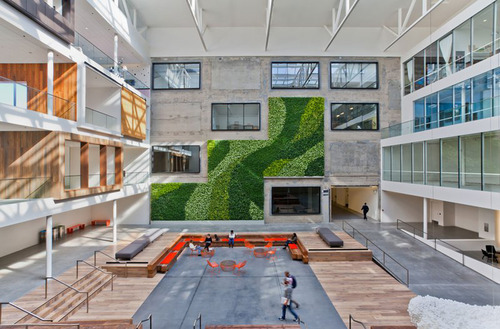
    Today, the most radical changes are appearing in startup offices around the world and are being driven by a desire to have spaces that embody their unique corporate cultures. This means everything from cool brick-and-beam architecture to bike racks in the office to flexible rooms and spaces that encourage mobility throughout the day. And to further reinforce these cultures, companies are creating positions like Chief Culture Officer and Chief Vibe Officer.

    But as I’ve said before on ATC, the other big shift is simply location and the return to cities. More and more startups, for example, are choosing San Francisco over Silicon Valley and it’s because the city is where young people want to live. It’s increasingly where the talent is. This has already brought about many changes in workplace design, but it likely bring about many more. 

    Image: Airbnb’s San Francisco Office