Daily insights for city builders, delivered every morning at 6 AM ET. I’m Brandon Donnelly — a Toronto-based real estate developer and founder of Globizen. I’ve been writing here since 2013.

Tag: workplace

  • Royal Bank of Canada to employees: “Get back in the office”

    Royal Bank of Canada, which is one of the largest employers in the country, sent an internal memo to employees this week with statements like these:

    “When our teams come together on-site more frequently, we are solving complex problems faster, learning and growing more effectively, and ultimately building deeper connections with one another.”

    “Without frequent in-person engagement our long-term competitiveness is at risk.”

    I feel strongly that we are going to continue to see more of this. Current work-from-home arrangements are not at all static. We have not yet reached a post-pandemic equilibrium. That will likely take a few more years.

    More flexibility, rather than less, is something we all want, and I don’t believe that’s going away. But I do believe that for the most productive and congealed teams, the default workplace will remain the office.

    P.S. Office Space (embedded video above) is a great movie.

  • Workplace occupancy-sensor company raises $125 million funding round

    Density, which is a company that provides occupancy-tracking sensors, announced this week that it has just completed a $125 million funding round at a ~$1 billion valuation. This is their Series D. Official announcements, here and here.

    On a practical level, the company provides workplace space analytics. They offer sensors that allow companies to anonymously measure how people are using their offices.

    How long people are at their desks for (possibly weird), which conference rooms are most used, where people socialize, and so on. With the idea being that if you measure it, you can then optimize it. It’s about how to best use your real estate.

    But their overarching mission is “to measure and improve out footprint on the world.” Their ambitions seem to go beyond just office space. It’s about how we occupy our cities, and using analytics to more efficiently design and build them going forward. And that’s pretty interesting.

    I’m not intimately familiar with the company, but I thought I would share the news with all of you in case you’d also like to check them out.

  • East Room co-working space

    image

    Amy Bath needs to leave comments here on ATC more often because she has great feedback and insights.

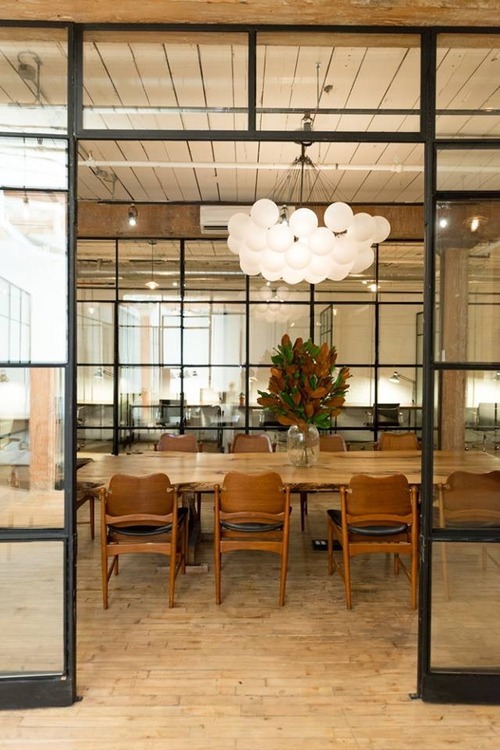
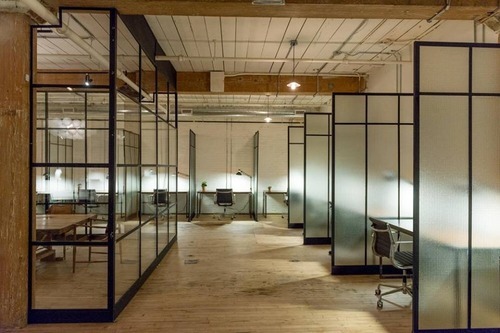
    This morning she tipped me off to a brand new co-working space on the east side of Toronto called East Room. If you haven’t yet heard of it, I would encourage you to check out their website. They’re in a gorgeous heritage building along the Don Valley and they seem to have executed really well. I love their design aesthetic.

    //platform.instagram.com/en_US/embeds.js

    They currently offer two different memberships: a resident membership ($500/month) and a club membership ($250/month).

    image

    This is exciting to me because I have a soft spot for both good design and the east side of Toronto. But probably more importantly, it speaks to the changing nature of work and the workplace, as well as to the shifts in how space is being consumed.

    Co-working spaces are, of course, blowing up all over the world from Philadelphia to Berlin. The internet has empowered new ways to freelance and make money, and these kinds of spaces are really a result of that. Because even though it’s entirely possible for many of us to work remotely at home, we still crave the social interaction that comes from being within an office environment. And that’s a big part of what these spaces are. They’re a social fabric.

    Amy’s hope is that condos will eventually start including amenity spaces that are similar to co-working spaces, and I think that’s a really interesting idea. The challenge, however, is that most developers today (and property managers) aren’t equipped to operate these kinds of environments.

    But maybe it’s only a matter of time before some do become equipped, because I’m sure we’re going to see more, not less, of these kinds of urban spaces.

    Images: @eastroom_

  • How are you attracting and retaining top talent?

    Yesterday I received a comment on my post about service and product companies with a suggestion to check out an interesting Fast Company article talking about the future of work (thank you Amy). The article was based on a research report – commissioned by CBRE and a real estate developer in China (Genesis) – called Fast Forward 2030: The Future of Work and the Workplace.

    This is a topic that’s getting a lot airtime right now because Millennials are starting to impact work in a big way. But what’s interesting about it is how broad these impacts will be. Changes in how we work will affect the way we design our cities; the way architects and developers build and lease space; the type of people and roles companies will need to hire and create; and so on.

    Here’s a snippet from the report:

    “Providers of commercial buildings and places to work will need to develop new, sometimes counter intuitive, business models and work with partners who understand service and experience in order to compete with emerging workplace competitors. Successful providers will work with tenants to unlock ‘win win’ solutions that reduce occupier costs, increase flexibility, and simultaneously provide enhanced levels of community, amenity and user wellbeing. Cities will have a role to lead and nurture changes that will support the changing landscape of work.”

    I plan to go through the report in more detail this weekend, but I did want to point out one thing. When business leaders from around the world were asked what their biggest competitive advantage would be by the year 2030, the top choice was: the ability to attract and retain top talent. This topped organizational vision and even the ability to innovate.

    This might not come as a surprise to some of you, but it’s worth repeating. And in many ways, it’s a chain that begins first with cities. 

    If you’ve ever watched The Startup Kids documentary, you’ll know that when Alexander Ljung (CEO of Soundcloud.com) was about to found his company, he actually started by first traveling around Europe looking for the coolest city in which to base his company. The last city on his trip was Berlin and that just so happened to be the team’s favorite. So that’s where Soundcloud was founded.

    My point with that story is simply that the “workplace” of today – forget the future – means so much more than just your rentable area. Yes, that’s important. But there’s a lot more to consider when trying to get the best people. Cities play a huge role.