Daily insights for city builders, delivered every morning at 6 AM ET. I’m Brandon Donnelly — a Toronto-based real estate developer and founder of Globizen. I’ve been writing here since 2013.

Tag: wind

  • Rise of renewables in the US

    Here are some fascinating figures (from Environment America) about the growth of renewables in the United States:

    • Between 2011 and 2020, renewable energy production (solar, wind, and geothermal) grew at an average rate of 15% per year. Assuming this same rate of growth, the US could be on target to meet all of its electricity needs with renewables by 2035.
    • The US produces 23x more solar power and 3x more wind power than it did in 2011.
    • The median efficiency for new residential solar panels increased by 37% from 2010 to 2019. At the same time, the cost of distributed solar photovoltaic systems fell by 71% and the cost of utility-scale systems fell by about 80% between 2010 and 2018.
    • During this same time period (2010-2018), the cost of land-based wind power fell by 66%.
    • The median range of new electric vehicles increased by more than 3x between 2011 and 2020. The median range is now more than 250 miles on a single charge. By the middle of this year, cumulative plug-in EV sales surpassed 2 million units.
    • Texas is the US state that currently produces the most renewable energy.

    To download the full report by Environment America, click here.

    Photo by Nuno Marques on Unsplash

  • Current state of renewable energy

    image

    The United Nations and Bloomberg New Energy Finance recently published a report covering global trends in the renewable energy space for 2017

    Here are some of their key findings:

    – 2016 was a record year in terms of renewable power capacity installed worldwide. This includes wind, solar, biomass and waste-to-energy, geothermal, small hydro, and marine sources.

    – The share of global electricity generated from renewable sources rose from 10.3% (2015) to 11.3% (2016).

    – However, overall investment in renewables declined in 2016 for two main reasons. Costs went down (good news). And China and Japan exhibited a dramatic slowdown in terms of investment activity (bad news).

    – Acquisitions of renewal assets, such as wind farms and solar parks, hit a new peak at $72.7 billion.

    – A number of promising new pricing records set in 2016: $29.10 per MWh for solar in Chile and $30 per MWh for onshore wind in Morocco.

    – In one year, the cost of solar generation dropped on average about 17% and onshore wind dropped about 18%.

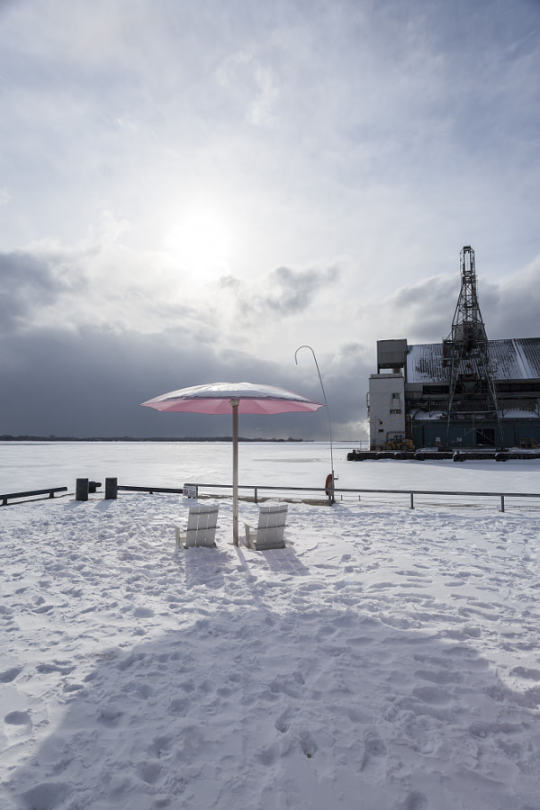
  • 4 design strategies for your cold-climate waterfront

    Photograph Sugar Beach in Toronto by christophmarten on 500px

    Sugar Beach in Toronto by christophmarten on 500px

    Since we’ve been discussing waterfronts lately, I thought I would share this post from ArchDaily talking about 4 ways that cold-climate cities can make the most of their waterfronts.

    They are:

    1. Plan for winter sun
    2. Create plazas that block wind
    3. Break up outdoor spaces with comfort stations (not sure why they just have to be stations)
    4. Design for active winter programming

    These, of course, aren’t new design strategies. Cities have been built around their climates since, probably, the beginning of cities. It wasn’t until more recently that we started basically ignoring local climates and focusing more on what mechanical systems can do to make us feel comfortable.

    But I think that was a mistake. I don’t think that mechanical systems are bad though. I just think that there’s a lot that we can do first – without mechanical systems – to address local climates.

    If you’ve ever sat on a patio during a swing season (i.e. right now) where the wind was blocked and you were in the direct sun, you already know that there’s a lot that can be done without relying on active systems.

    But the other thing I like about this post is that it acknowledges the fact that winter waterfronts require just as much, if not more, design attention than a warm-climate waterfront.

    Saying that we’ll (insert cold-climate city name here) never be Miami or Barcelona or Sydney is just giving up.

  • Bad neighbors build wind turbines

    image

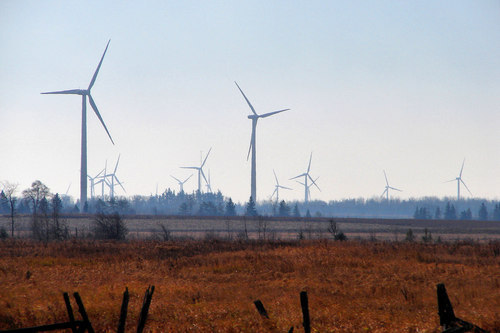
    On Friday when I was driving up to Thornbury, I ended up taking a route that goes through Shelburne, Ontario. I’ve taken this route at some point before, but I don’t remember seeing so many wind turbines. I guess it must have been before this particular wind farm had been built out.

    It turns out that these wind turbines belong to the Melancthon wind facility, which is the largest installation in Canada. The facility contains 133 wind turbines and has the capacity to generate 545,000 megawatt hours each year – enough renewable energy to power roughly 70,000 households. The facility is owned and operated by TransAlta and they’ve entered into a 20-year contract to supply renewable energy to the Ontario Power Authority.

    But what I also happened to notice were the many signs posted around with wording like the title of this post: “Bad neighbors build wind turbines.” And after speaking about it with people over the course of this weekend, I very quickly learned that there was fierce community opposition to this project.

    The concern with wind turbines is typically twofold. People don’t like the way they look and they worry about the noise that they will generate. There’s even an alleged condition called “Wind Turbine Syndrome.”

    I personally think they look quite beautiful. They seem so symbolic of the future and progress. But I am intrigued by the noise concern and so I decided to do a bit of research. I found this video from the UK. The big takeaways are that living beside a main road is generally much louder than living beside a wind turbine, and that a wind turbine isn’t usually that much louder than a quiet suburb, until you get fairly close to it. So I wonder if it’s really as bad as people are making it out to be.

    Either way, the issue at hand is incredibly important. We’re talking about renewable energy. And while you may not like the look of wind turbines scattered across the horizon as much as I do, I strongly believe that we need to figure out ways to wean ourselves off of fossil fuels. It’s for this reason that I’m a big supporter of both wind and solar power.

    So perhaps the counter to those signs scattered around Shelburne is the following: Responsible communities build wind turbines.

    Image: Wikipedia

  • Who knew Gherkins were so aerodynamic

    Lately I’ve been learning a lot about wind and how certain building forms can create dramatically different microclimates.

    In light of this, I’ve gained a new appreciation for the 30 St Mary Axe tower in London (colloquially known as “the Gherkin”). I’ve always been a fan and I was well aware of its sustainability initiatives, but I didn’t fully grasp how much wind played a role in its design.

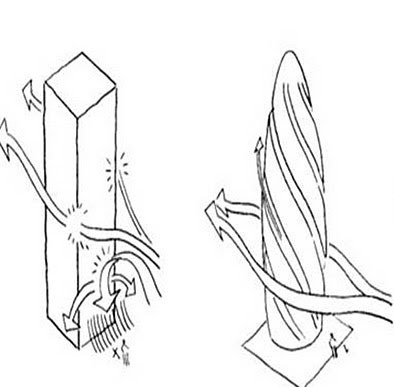
    Because of its cylindrical shape and the fact that the tower tapers as you move towards the top, the bulk of the wind hitting the building either flows around it or gets pushed upwards, towards the sky. This is in contrast to a typical square or rectangular building where the bulk of the wind often gets pushed down towards street level.

    image

    The benefit of this is that it obviously creates a more pleasant environment for pedestrians at street level. However, in addition to this, it also means that the wind loads against the building were brought down to a minimum and so the structure of the building could also be reduced. 

    This is the kind of architecture I love: architecture that performs.