Daily insights for city builders, delivered every morning at 6 AM ET. I’m Brandon Donnelly — a Toronto-based real estate developer and founder of Globizen. I’ve been writing here since 2013.
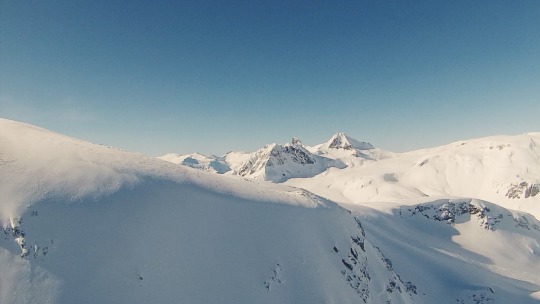
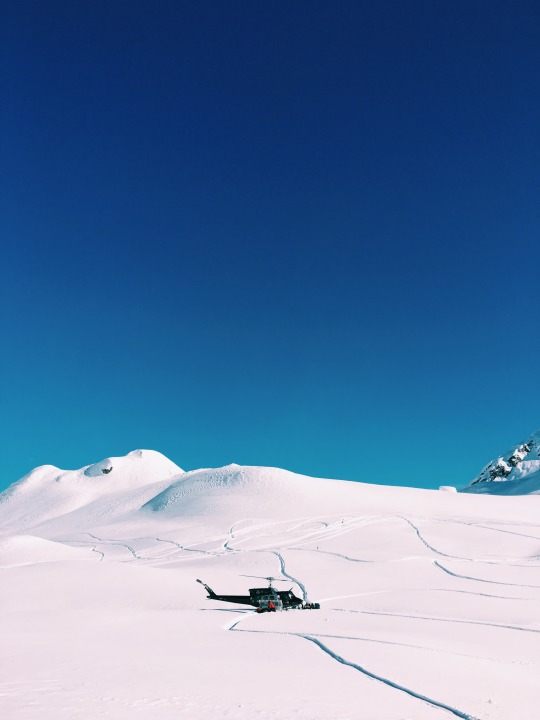
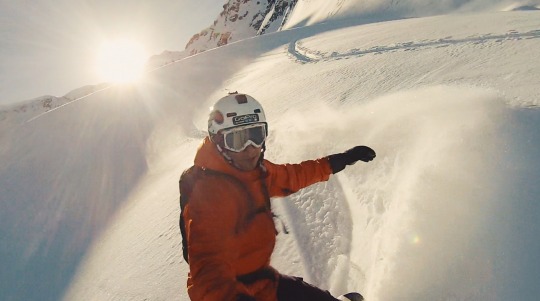
I’m in Whistler right now and I went heliboarding for the first time yesterday. It had been on my bucket list for maybe 10 years and so it feels fantastic to check it off.
Here’s what I can tell you: WOW. It did not disappoint.
It was easily one of the greatest life experiences I have ever had. We also got lucky with a crystal clear bluebird day.
I don’t do many photoblog posts here on this blog, but I’m going to do one today, because I think the occasion demands it. But of course, even these photos don’t do the experience any justice.
View from the helicopter:
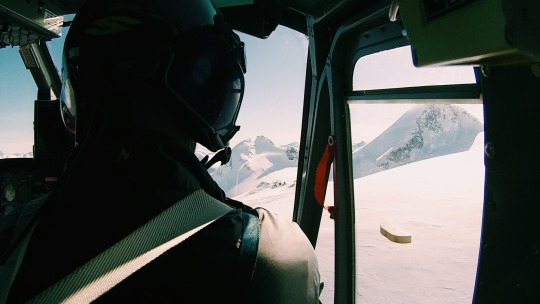
View over the pilot’s shoulder as we were about to land:
I am all booked for my annual retreat to the mountains, which means I now have snowboarding on the brain. This year we are headed back to Whistler (/Powder Mountain) so that we can all check heli boarding (and heli skiing) off the bucket list. That’s one goal – among a few others – that I plan to accomplish in 2017.
If you don’t snowboard (or ski), this probably means nothing to you. It can be hard to explain the feeling. Thankfully, Christian Haller (Swiss snowboarder), Kris Lüdi, and Stephan Maurer have just released a short film that may very well be the closest approximation to the real thing. It’s called GLUE.
The whole point of the movie is to portray, in an authentic and visual way, what it’s like to snowboard. To do that, a lot of the footage was shot using a “follow cam.” There are also a lot of close-up shots. I just love the perspectives when it kicks in at 1:50.
If you can’t see the video below, click here. And if snow and snowboarding aren’t your thing, check back tomorrow for regular scheduled programming.
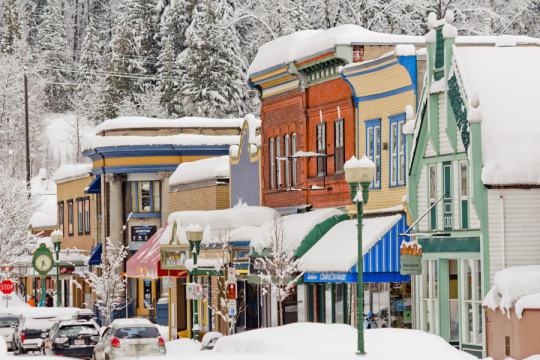
Despite being rainy and unusually warm, I had a great time in Revelstoke, BC. I first heard about the city a few years ago when I told a close friend of mine (who is an avid snowboarder) that I was going to Whistler. He told me: “Forget Whistler. Go to Revelstoke.”
Revelstoke has been on the map for skiers and snowboarders for decades. Some consider it to be the helicopter skiing capital of the world. But there are only so many people who can afford $1,000+ per day skiing, so it wasn’t until 2007 when the first gondola opened up on Mount Mackenzie that people started calling Revelstoke the next Whistler, the next Jackson Hole, the next Zermatt, and so on.
As both a snowboarder and a real estate developer, this is of course exciting. Everybody wants to be a part of the next big thing and they want to call it before anyone else. That’s how you make money – by being right about things before the masses catch on and/or when everyone else thinks you’re wrong.
But 2007 happens to come before 2008. And 2008 wasn’t a kind year to the real estate community. Revelstoke was no exception.
The condos at the base of the mountain weren’t selling (about half of the ones that did sell were sold to Canadians I was told). Expansion plans to become the largest ski resort in the world were scaled back. And the resort teetered on the brink of bankruptcy. But since then, new ownership has taken over the resort and the sentiment on the ground seems to be that Revelstoke – as a real estate play – is somewhere near the bottom.
But something even more interesting is happening in Revelstoke, beyond just luxury condos at the base of a mountain. And since I was on the disabled list for the second half of my vacation, I had time to explore.
I was fortunate enough to meet a local entrepreneur (who happened to also be from Toronto) and his message to me was clear: Ontario is moving in. Both talent and capital from Ontario are starting to flock to this small mountain town of almost 8,000 full-time residents (it’s technically classified as a city). And from my experience at the bars and restaurants in town, he appears to be right.
Now, you might be thinking these people are just ski bums looking for an excuse to live in a mountain town. But is that such a unique and bad thing? Today’s up and coming generation is looking for lifestyle + career. And so if your city or community can offer both, you have a competitive advantage when it comes to attracting talent.
Revelstoke knows they have the outdoor amenities and the “epic pow”, so now all they need to do is bring the businesses. And that’s exactly what Revelstoke wants to do. If you’re an entrepreneur or business owner, Revelstoke wants you to move there. I’m serious. The vision is to create a sustainable live, work, and play mountain community in the BC interior.
I hope that happens.
Drop me a line if you want to talk mountains and business.
Post Update: The beautiful photo of Revelstoke at the top of this post was taken by Ian Houghton out of BC. This is his business website and this is his Facebook page.
I’ve spoken about global cities, such as New York and London, many times before on Architect This City. I’ve also talked about the rise of consumer cities. That is, cities with a high “urban amenity premium”, which could be great outdoor amenities or great restaurants, theatre and so on. These are places of consumption.
Sometimes global cities and consumer cities are one and the same. But there are also cities–such as Vancouver–where I view the urban amenity premium as outweighing their status as a global city. Vancouver, quite simply, is an awesome place to live and enjoy life. I almost went to UBC for grad school because of Whistler Blackcomb and the city itself.
Today, I’d like to introduce another type of city into the discussion mix: the necessary city. I heard about it here and, although it seems somewhat intuitive, I think it’s an important reminder that, even though a city may not be an alpha global city, it may be fulfilling a specific function for a particular industry or aspect of the global economy. It may still be a necessary city for your corporate headquarters.
For example, Houston is the city for energy companies. If that’s your business, you likely need a presence there. For fashion and luxury, it’s Paris. And if you’re in the auto industry:
The major global equipment manufacturers are widely dispersed, but when you look at leading global parts suppliers, they virtually all have their North American headquarters in Detroit – including the German, Japanese and Korean ones. Among them are companies like Robert Bosch, Denso, Yazaki and Hyundai Mobis. If you’re in the auto industry in America, you have to deal with Detroit. Unsurprisingly, Detroit boasts several nonstop flights to key Asian destinations.
In essence, we’re talking about cities making themselves necessary by becoming niche experts. And what I think is interesting about this concept is that it’s likely much more attainable for a lot of cities. Most cities will never become New York. And most cities will never be able to transform themselves into the next Silicon Valley.
But maybe those are the wrong economic development goals. It’s not about becoming the next, whatever; it’s about finding and owning a particular niche and making yourself absolutely necessary to the global economy.
I spent this morning booking the last leg of my flights for my annual ski and snowboarding trip this February. It’s a tradition that a few of us started during grad school at Penn. We call it the “Penn Annual” and we’re now into our fifth year. This year we’re going to Jackson Hole, which has been on the top of my list of places to snowboard for a number of years now.
We started the Annual because we obviously love to ski and snowboard, but we also did it as a way to reconnect at least once a year. It’s a forced reunion. We pick a spot and all convene. The core group is about 4-5 people. But depending on where we go, it often expands as local friends and family join in.
Interestingly enough, we’re apparently a defined target market known as the “brocation” segment. Or at least this is what a marketing guy told us during the Third Annual in Lake Tahoe. So far we’ve been to Tremblant, Stowe, Lake Tahoe and Whistler. We usually alternate between Canada and the US. Next year we’re already thinking it’ll be Banff.
One of the things we’ve talked about doing since the beginning is turning the The Annual into a larger Penn alumni reunion and networking event. In fact, we’ve parked pennannual.com. If we did this, we could bring down the per person costs, as well as create a much larger pull for participants. I love the idea of staying connected and meeting new Quakers (as well as others).
Of course this is one of those ideas that usually loses air once the trip is over. But this year I thought I’d put it out there on my blog, and also send the idea over to Penn Alumni. So if you’d like to join us in Jackson Hole, drop me a line.