Daily insights for city builders, delivered every morning at 6 AM ET. I’m Brandon Donnelly — a Toronto-based real estate developer and founder of Globizen. I’ve been writing here since 2013.

Tag: west don lands

  • Making River City

    My good friends over at Urban Capital recently released a short film about the making of their River City project here in Toronto. (If you can’t see the embedded video above, click here.)

    For those of you who aren’t familiar, River City is a 4-phase development on the east side of downtown that was really the first project in what was known as the West Don Lands area. Urban Capital secured the right to develop the then government-owned lands in 2008 through a public tender process that was run by Waterfront Toronto.

    It’s a tricky and unobvious kind of site in that it’s surrounded by infrastructure and it came with a whole host of development challenges, including flood risk. But the team figured it out and River City has gone on to win a number of awards including the Ontario Association of Architect’s Lieutenant Governor’s Award for Design Excellence.

    River City is an important project for Toronto in that it dared to be different. It’s like no other project in the city, and I’m not just saying this because they’re my friends. I’m saying it because I want our city to be a global leader in architecture, design, and development, and to continue to push the envelope.

    River City did exactly that.

  • Rendering of block 8

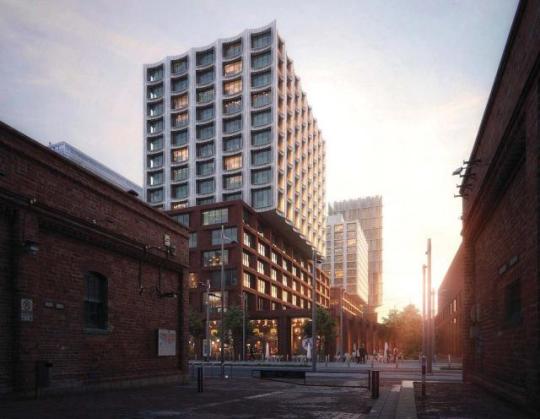
    I really like what has been put forward for Block 8 in the newly developing West Don Lands neighborhood of Toronto. Here is a rendering looking east from the Distillery District toward the proposed westernmost tower:

    image

    It feels like an extension of the Distillery District, which was clearly the intent. The materiality also reminds me of Junction House. Red brick at the base to fit within its context, and a more modern material palette on the upper floors. 

    I also like how, in this instance, the building steps out on its south side, as opposed to in. It’s something different. Not every building has to look like a wedding cake, right?

    The architecture is by COBE Architects and architectsAlliance. The developers are Dream, Kilmer Group, and Tricon. And the plan is for 756 rental apartments, of which 225 will be affordable and integrated throughout the 3 towers. 

    For more information, check out Urban Toronto.

  • Gray on gray on gray

    This past weekend was gorgeous in Toronto. I always love seeing the city come to life after the winter and last weekend was the first sign of that this year.

    Being the fair-weather cyclist that I am, I had the flat fixed on my single speed bike and I was ready to go by the weekend. I managed to test out the GoPro handlebar mount that I mentioned last week but, quite honestly, the footage was so jittery and bouncy that it made me nauseous to watch it. So I need to rethink my city geek filming strategy. 

    (Sidebar: GoPro needs to make it easier to turn their raw footage into content that is actually worth sharing.)

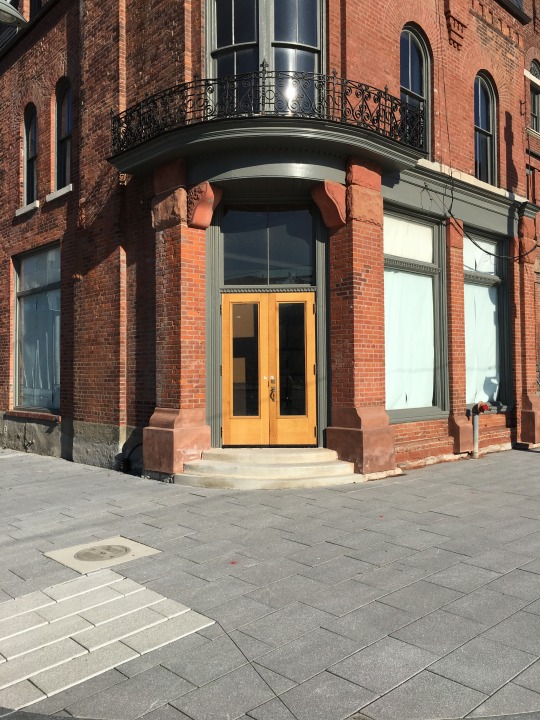
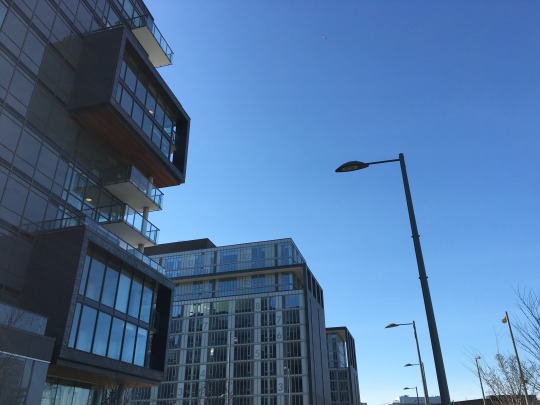
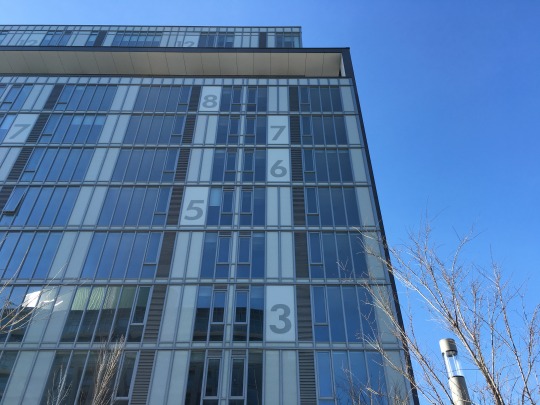
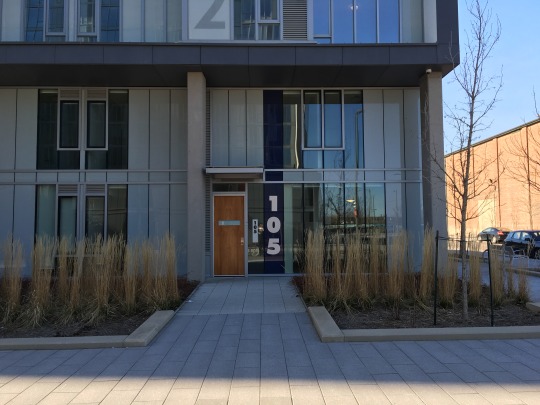
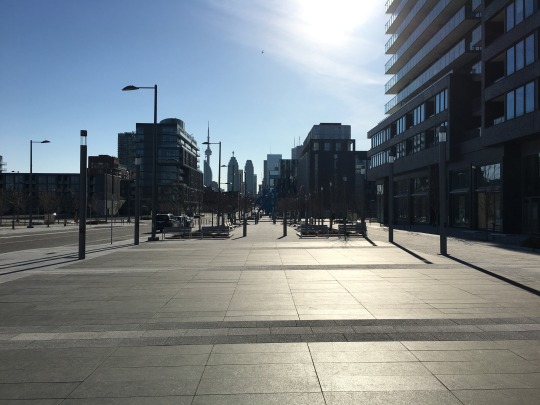
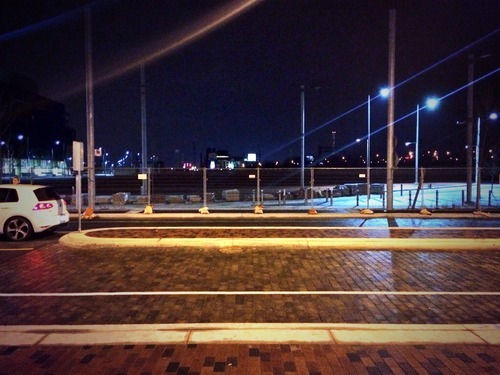
    Still, I had a good ride over to the new Canary District on the east side of downtown. The gates just recently game down, so I was itching to take a look at it. Here are a couple of photos to give you some context for the rest of this post:

    None of the retailers have moved in, so the area currently feels like Toronto post zombie apocalypse (to use a friend’s description of the neighborhood). But all of the bones are in place for an incredible downtown neighborhood.

    Here are some of my thoughts as I was riding around:

    The opening of this neighborhood repositions the Distillery District. Initially, the Distillery District struggled as a kind of island on the edge of downtown. But thankfully they stuck to their initial vision for the community and now they get the benefit of this new mixed-use anchor to the east of it.

    Trinity Street to the north of the Distillery District proper is a fantastic opportunity to not only extend the magic of the Distillery northward, but also “plug” the area into Front Street East, which is the primary east-west spine that connects the Canary District back to the downtown core. I hope we (the city, developers, and so on) take advantage of this.

    The Front Street Promenade running through the Canary District and connecting into Corktown Common (park) is going to be an absolutely magical urban space once the restaurants, cafes, and retailers open up. I can’t wait for this to happen. Live Work Learn Play has been orchestrating the retail component.

    Finally, why are all of the buildings gray? 

    Gray brick. Gray window wall. Gray spandrel panel. It’s gray on gray on gray. We’re playing into that boring Canadian stereotype here. I hope the subsequent developments introduce some wild colors. Although some red brick to tie into the Distillery District would work well too. The best nearby architecture (just to the north) is the River City complex by Saucier + Perrotte.

    Notwithstanding the gray, I’m super excited about the Canary District and I am generally bullish on the east side of downtown. If you’ve had a chance to visit, I’d love to also hear your thoughts in the comment section below.

  • Community building on the east side of downtown

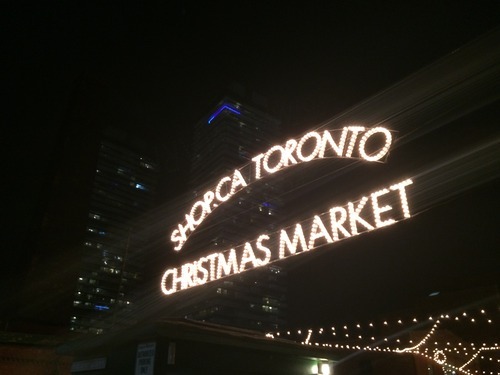
    Yesterday evening I went to the Toronto Christmas Market in the Distillery District. I had actually never been before, but it was something that I had been meaning to check out for a few years now. And it was wonderful. If you’ve never been, I would highly recommend you go. This past weekend was the opening weekend and it runs all throughout Advent until Sunday, December 21st.

    For those of who might not be aware, the Christmas Market festivity is a longstanding tradition that originated primarily in German-speaking Europe. Accounts of a “December market” were found as early as the end of the 13th century. The Toronto Christmas Market is a slightly more recent tradition (it’s only about 5 years old), but it was already selected as one of the world’s best.

    But Christmas carollers and hot toddies aside, the Market is also a fantastic opportunity to see the Distillery District in all its glory. Every time I visit the Distillery, I can’t help but feel how lucky we are to have a district like this in the city. The architecture and scale of the place is incredible and – alongside the Toronto Islands and Kensington Market, sometimes – it’s pretty much the only car free zone we have.

    However as someone who lived near the Distillery District in its early days, I remember how much of an “island” it was when it first opened. It felt disconnected from the rest of the city and the only way to get people there was to hold a special event. The retailers and galleries struggled and many didn’t last.

    With all the condos that have been built, literally on top of the neighborhood, that has changed dramatically. Today the area has become much more balanced as a mixed-use community. But the real tipping point, I think, will come next year when Toronto hosts the Pan Am Games and the West Don Lands neighborhood starts to come online just to the east of Cherry Street.

    Now all of a sudden the Distillery District won’t feel like the edge of downtown anymore, it will feel more like the middle of it. As my friend Alex Bozikovic of the Globe and Mail pointed out to me this weekend, the Pan Am Games are going to put the east side of downtown on people’s radars. And I would completely agree. Once that happens, the Distillery District will finally start to reach its maximum potential.

  • Looking east

    There’s a fairly real divide between east and west here in Toronto. When people talk about real estate or describe the kind of person they are, they often say things like: “I’m an east end kind of person” or “I only want to buy on the west side.” There’s such a split that somebody recently said in a meeting I was in that the east vs. west real estate divide is like Christianity vs. Judaism. 

    Historically, the west has generally been considered more desirable than the east–regardless of what scale you’re looking at. Downtown west vs. downtown east, Etobicoke vs. Scarborough, and so on. And for whatever reason, this seems to be the case in a lot cities I’ve been to. Consider Montreal, Vancouver, New York, and London, to name a few. 

    But lately, I’ve been noticing a growing acceptance of the east side. Friends are telling me that, even though they don’t know the east all that well, they’re almost agnostic to which side they buy a home on.

    At the same time, we’re seeing Toronto’s development boom spread to the east along streets like Church and Jarvis; paralleling the kind of intensification we’ve already seen on the west along Bay Street, University Avenue and further. I’m also noticing a lot of west end restauranteurs open up on the east side. See Carbon Bar and Gusto 501 as two recent examples.

    But with the neighborhoods like the Distillery District and Leslieville attracting lots of yuppies and with neighborhoods like Regent Park and the West Don Lands coming online, it shouldn’t come as a big surprise to you that developers and other entrepreneurs are looking east. Maybe you should too.

  • Every street can’t be everything to everyone

    Yesterday I spoke about why Toronto shouldn’t be so quick to dismiss streetcars and light rail. Today, I’d like to talk about some of the hard decisions we need to face if we really want to get our city moving.

    Toronto is a city of neighborhoods and small main streets–at least in the areas where our streetcars live. Streets such as King and Queen are only 4 lanes. And the problem we’re facing is that we’re trying to accommodate every single use case on them: cars, on-street parking, cyclists and streetcars. But in doing so, we’ve made the experience terrible for everybody. Streetcars move at a snail’s pace, drivers are frustrated by the lumbering streetcars, cyclists fear for their life driving by parked cars (doors can swing open at any time), and so on.

    And with the rise of downtown shoulder neighborhoods such as Liberty Village, King West, the Distillery District and the soon to be complete West Don Lands, the strain on our east-west corridors is only going to get worse–much worse, in fact. Already the King streetcar is the busiest streetcar route in the city, moving almost 60,000 people per day. That’s more than the (under utilized) Sheppard subway line.

    What I hope is clear to the ATC community though, is that the answer isn’t uniformly the car. We can’t have every single resident from Parkdale to Leslieville hopping into their car and driving downtown to their office at Yonge & King. It ain’t going to work. And so we’re going to need to make some difficult decisions about how we’re going to get our city moving on the backbone of transit.

    Sure the downtown relief subway line (screw the politics I’m attaching it to downtown) would be the ideal solution to connecting our emerging shoulder neighborhoods, but that’s not going to happen overnight. And so how do we improve the efficiency of what we already have? First, we need to accept the fact that every street isn’t going to be everything to everyone at all times. We need to choose who we want to optimize for.

    So here’s an idea that’s been floated many times before but never acted upon: let’s get rid of cars on King St and Queen St in the core during rush hour.

    This would give our streetcars the room to efficiently move people across downtown, minimizing the dreaded “bunching up” that occurs as a result of traffic congestion. It would make transit a reliable choice and there are ways to pilot it. But let’s be clear: this is not about being anti-car. It’s about optimizing uses and getting people moving. Cars would continue to get priority on Richmond St and Adelaide St, and transit riders (as well cyclists) would get priority on King and Queen.

    Of course, the Rob Ford viewpoint would say that we should be optimizing all streets for cars and getting the streetcars completely out of the way. But if that’s the approach we want to take, then we’re building the wrong kind of city. We shouldn’t be focused on intensifying and creating new inner city neighborhoods, because that only tips the scale in favor of transit. Instead, we should be focused on decentralization.

    But that’s what not we’re doing. We’re intensifying our city to the point that we’re now faced with a number of difficult–yet enviable–decisions about how we’re going to live and how we’re going to move around in the future. We’re a city in transition.

    Our mission here should be to figure out how to move people around the city as efficiently possible. Let’s put politics aside and recognize that time is one of our most precious resources. And when we put people in lumbering streetcars and debilitating traffic jams, we’re completely squandering that resource. It hurts productivity and it hurts our overall prosperity as a global city.

    There’s a place for subways, streetcars, buses, bikes and cars in our city. So let’s just get on with making them all work.

  • Why the Pan Am Games are good for Toronto

    The Pan American Games are coming to Toronto in 2 years – 559 days to be exact. While not as high profile as the Olympics, some of you may be surprised to learn that the Pan Am Games will involve three times as many athletes as the Vancouver Olympics did.

    However, the big question with these sorts of events is always whether or not they create a lasting economic boon for the host city. History is littered with examples of economic disasters and lingering Olympic debts. I’d love to see a full analysis of what it costs to bid for a game, how much public money has to go up, how much private investment it spurs, and so on.

    At the same time, I suspect that some of the positive externalities might be hard to measure. How do you attach a value to the brand equity you get from hosting a major international sporting event? It’s hard, but for many people around the world the 2015 Pan Am Games could be the event that embeds Toronto into their psyche. 

    But there is another big benefit to playing host. It creates a real deadline. When cities bid for games they make all sorts of promises about the kinds of things they’re going to build and provide. In the case of Toronto, it accelerated the creation of a new mixed-income neighbourhood called the West Don Lands (which will be used to house the athletes during the games).

    “Originally, build out of the 32 hectare (80 acres) West Don Lands was planned to unfold in three strategic phases and take between 10 and 12 years, subject to market conditions. With the Pan Am Games, more than half of the community will be in place for the Games in 2015.” -Waterfront Toronto

    So in effect, we’ve leveraged the games in order to expedite capital projects that were already in the pipeline. I like this, because without a hard and fast deadline, I can almost assure you that these publicly run projects would have fallen behind schedule. Deadlines and goals are good.

    Here’s an example why:

    When I first started my MBA program at Rotman, we did an interesting organizational behaviour exercise involving origami cranes. The class was split into groups and each group was asked to go away and build paper cranes. If you’ve ever built one of these, you’ll know that they can be tough at first.

    But what each group wasn’t aware of was that they were all given different instructions in terms of the number of cranes they were expected to build. Their goals were different. At the end of the exercise, all of the cranes were counted and each group wrote their “production” levels on the board.

    What was discovered was that each group more or less built the exact number of cranes that they were asked to build. This is interesting, because presumably every group had the raw ability to produce the same number of paper cranes. All that changed was the motivation.

    Returning to the case of the Pan Am Games, the mandate is clear: We need to house 10,000 athletes and officials by the summer of 2015, or else we’ll look utterly incapable in front of the world. We have a deadline. And that’s a good thing.