Daily insights for city builders, delivered every morning at 6 AM ET. I’m Brandon Donnelly — a Toronto-based real estate developer and founder of Globizen. I’ve been writing here since 2013.
We spent yesterday and today at the Venice Biennale (both the Giardini and the Arsenale). I really enjoyed it and I’m glad that I was finally able to attend. One of my favorite exhibits was Bahrain’s. It is called “Sweating Assets”, and it’s a demonstration of how air conditioning condensate might be harnessed from the country’s significant cooling infrastructure.
Here’s a video of it in action:
In the middle of the exhibit is a big glass box. This is meant to represent a ubiquitous conditioned space. And as the humid Venice air hits this glass box, condensation is created. This water is then channeled to various soil deposits, where greenery is already starting to grow. And presumably it will continue to grow over the life of the exhibit.
They were careful not to come across as encouraging excessive air conditioning. This was not the point. Instead, the message was: Air conditioning is already an omnipresent necessity in the country, and here is how something that is mostly ignored today — AC condensate — could be turned into a meaningful asset.
I thought it was clever. And they also gave out a nice book for free.
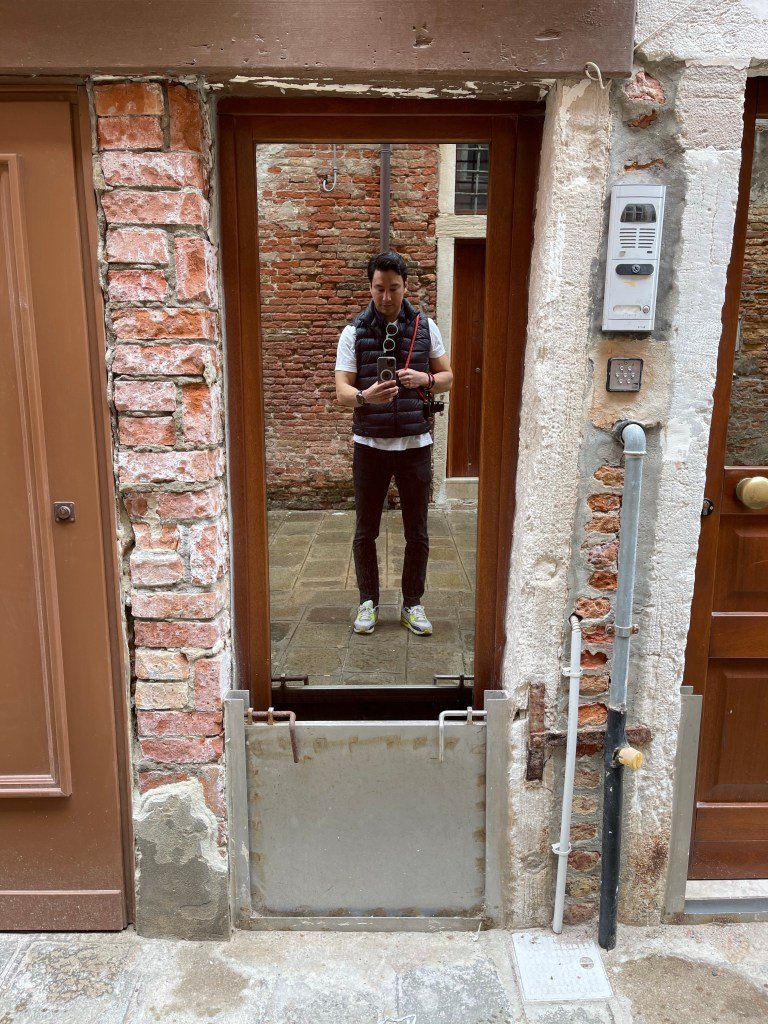
This entire city is centered around controlling water. Omnipresent front-door flood dam:
Venice has great doorbell game. If it hasn’t already been done, I think someone should make a coffee table book of these:
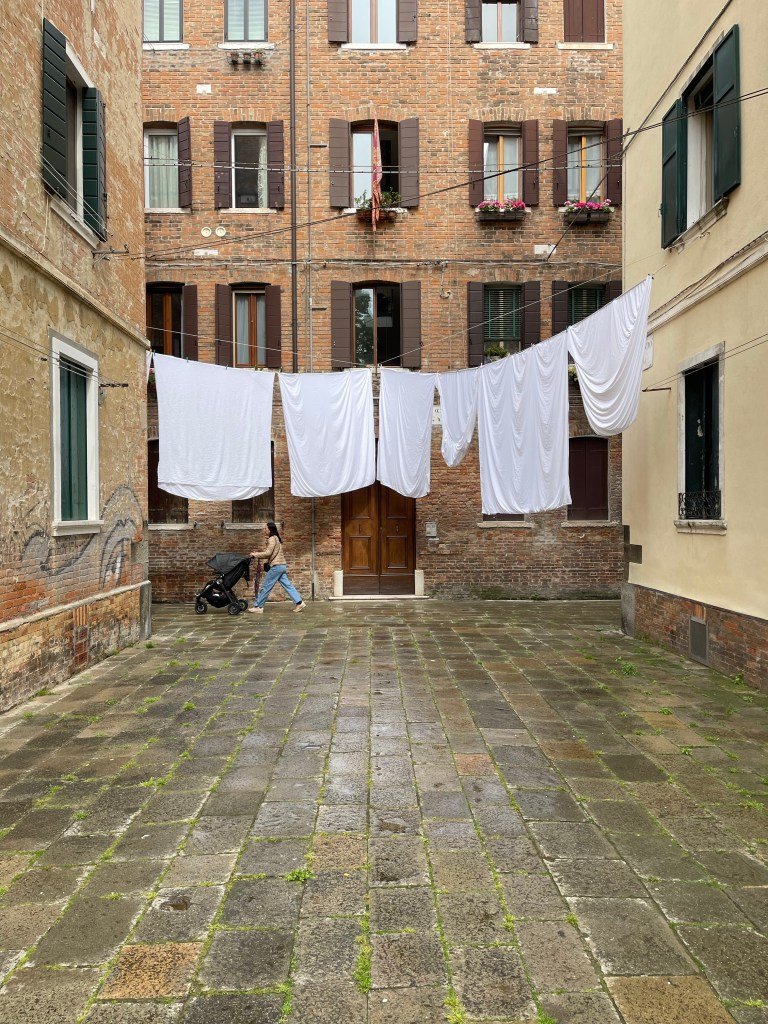
This city is also quite prolific when it comes to urban laundry:
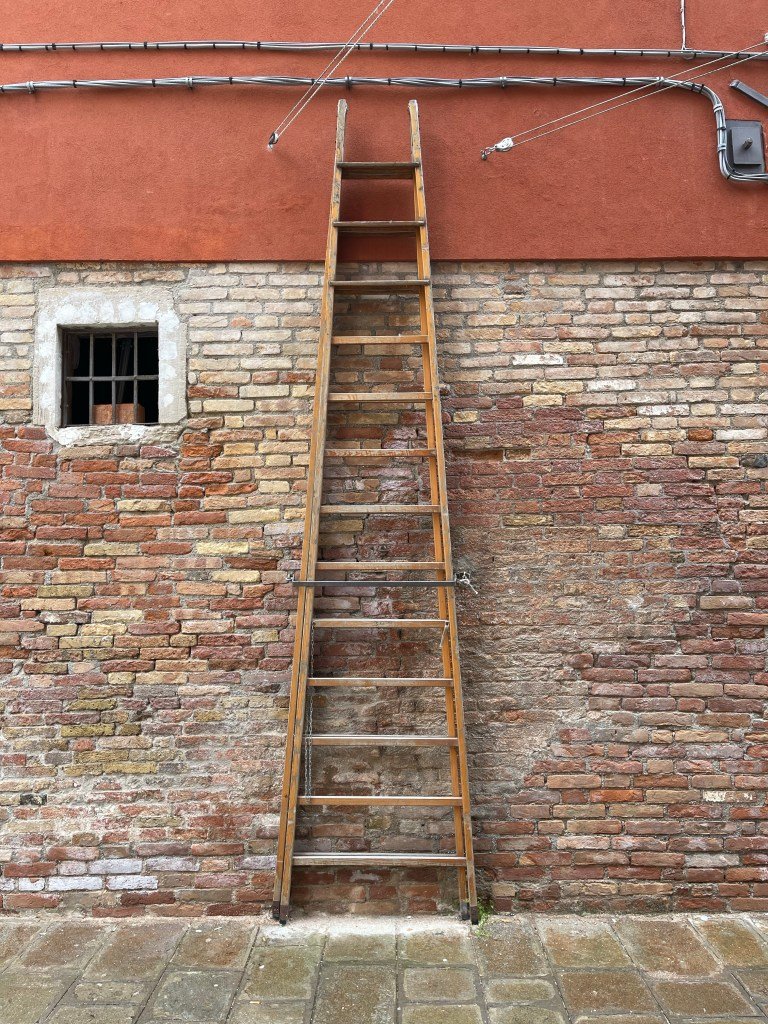
We found a number of these street ladders. Presumably laundry related:
Religion in the streets:
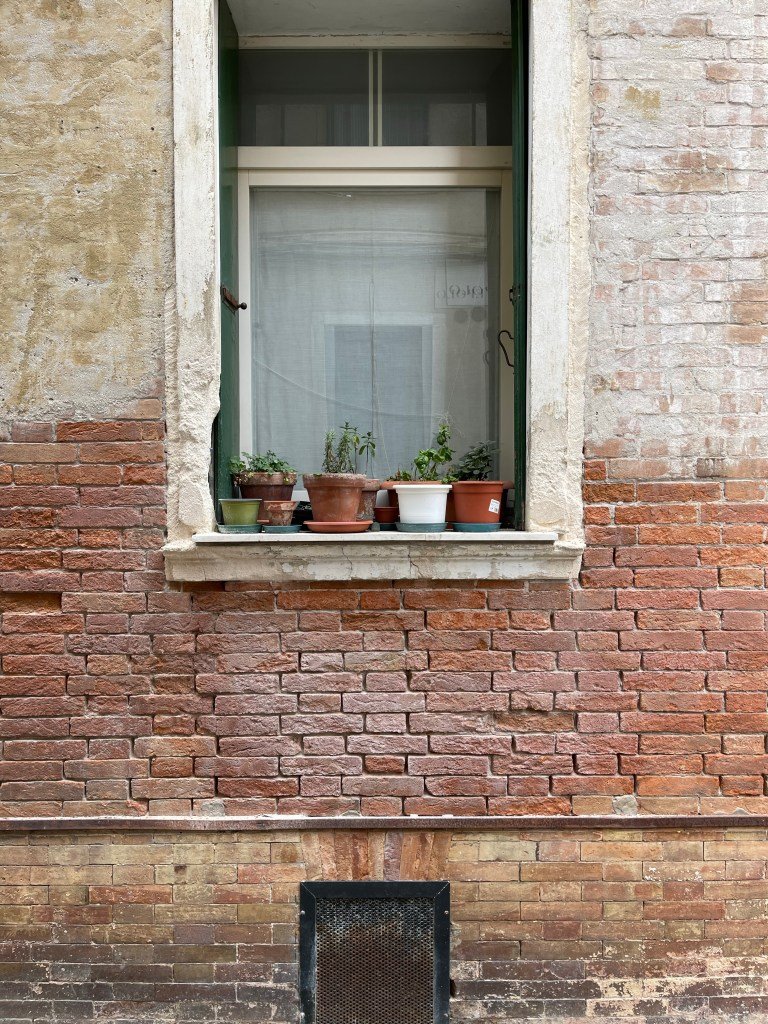
Window garden:
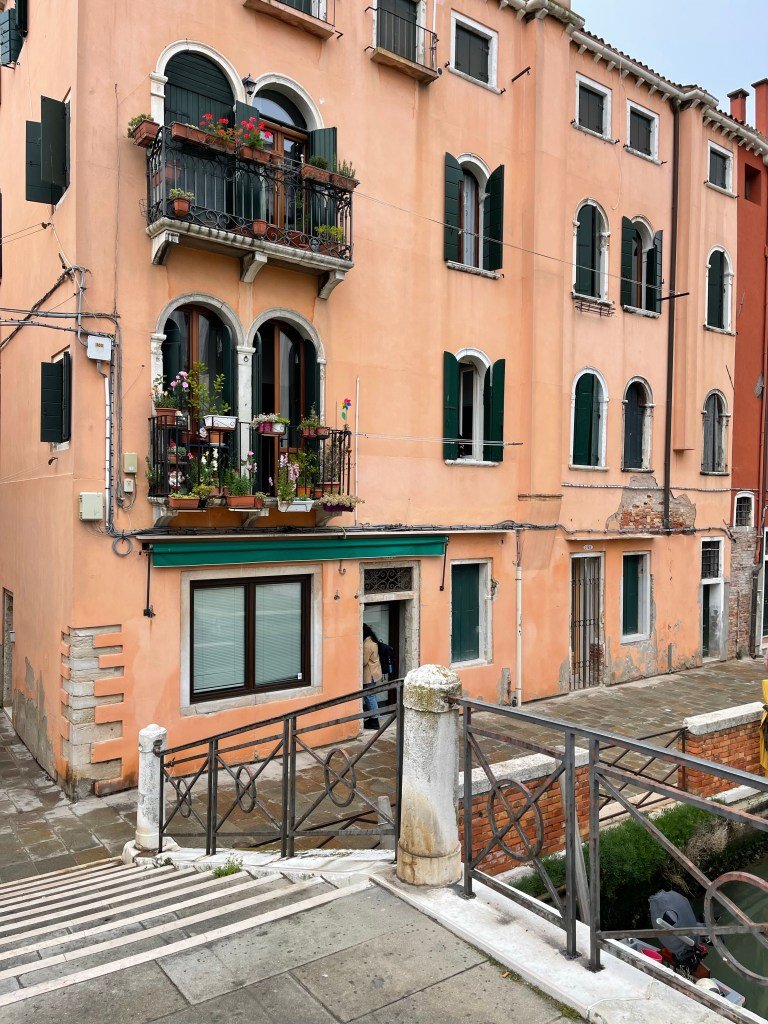
Balcony gardens. Your reminder that (1) small balconies can still be impactful and that (2) balconies with a relationship to the street are used differently:
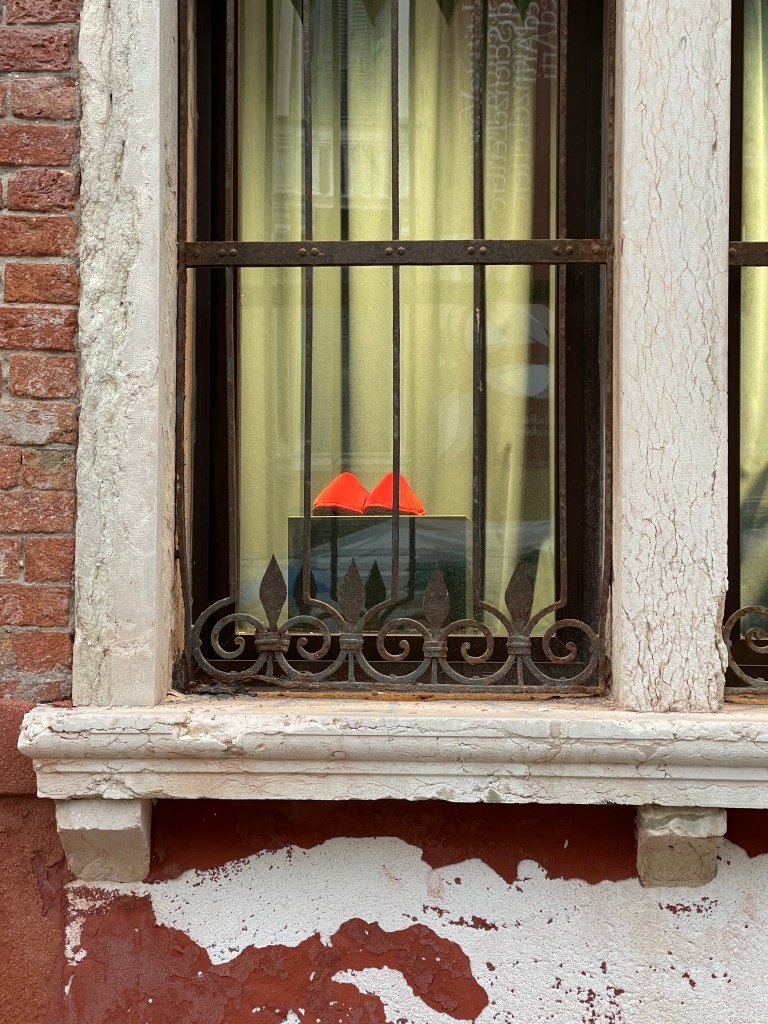
Colorful shoes and green curtains:
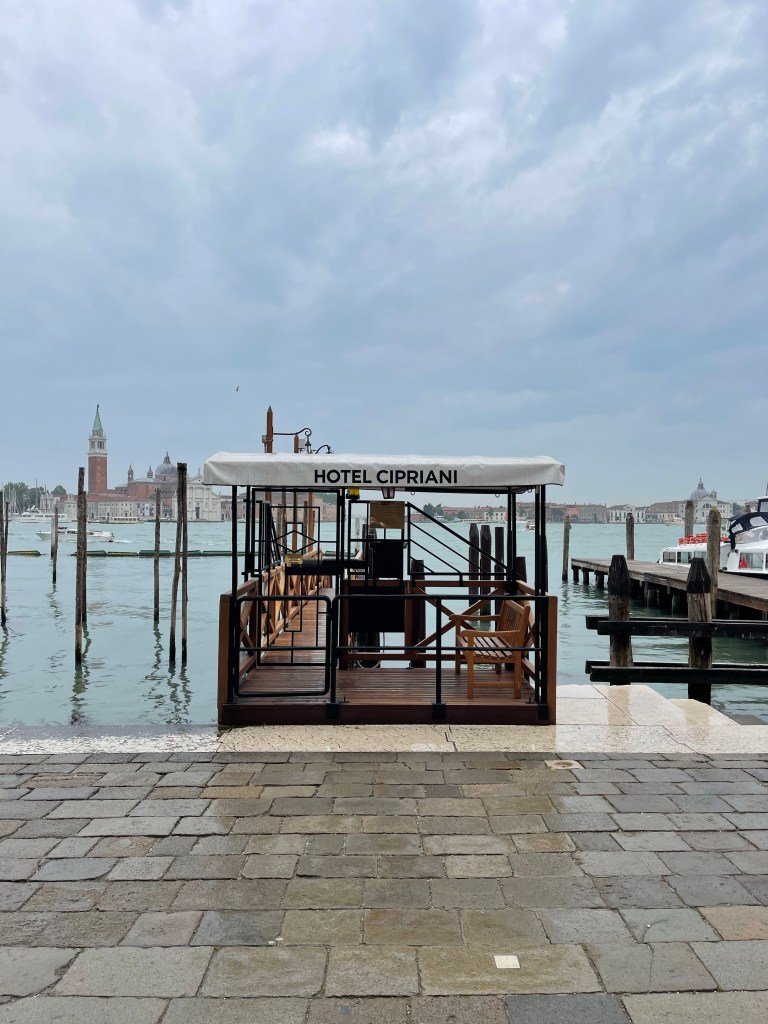
Grand Canal:
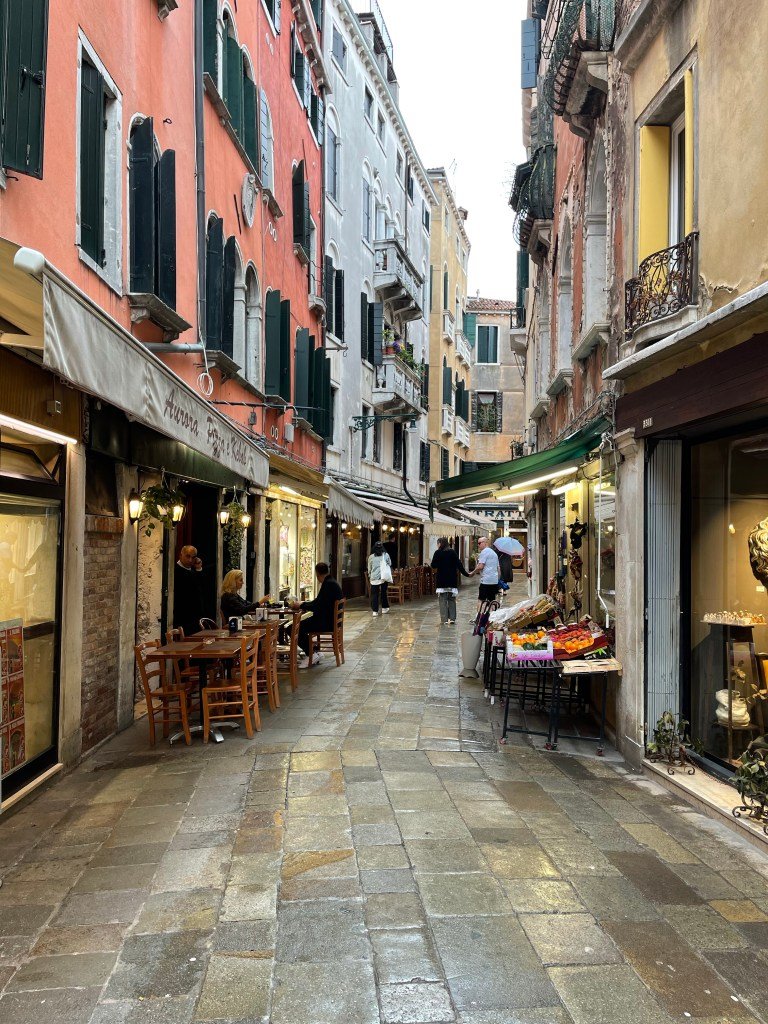
The kind of street we should allow in North American cities:
One of the things that I have wanted to do since I was in architecture school was visit the Venice Biennale. Partially because I would hear people say, ” so and so exhibited at the Biennale this year”, and that made it sound cool. But mostly because it’s the oldest cultural exhibition of its kind in the world — it was inaugurated in 1895 — and because there’s an entire section of it dedicated to architecture. So I’m excited to say that it looks like this month is going to be the month.
The way I am told the Venice Biennale of Architecture works is that there are two main components. There are the national pavilions in the Biennale Gardens, and there is the Arsenale, which is where lots of different nations exhibit under one roof. Canada is one of the 29 countries that has its own pavilion and, if you aren’t familiar with its history, it’s worth watching this short video:
At the time of writing this post, it only had 277 views, so I’m guessing that most of you have not seen it. I felt patriotic when I watched it, because the purpose of these pavilions is that they host each country’s official representation during the Biennale. It’s Canada to the world and that makes me proud. This year, Canada is being represented by Architects Against Housing Alienation (AAHA) with an exhibit called “Not for Sale!”
Here’s an excerpt from the project description:
Real estate speculation is a form of extortion. It converts homes into spatio-financial assets, changing the form, function, and aesthetics of housing to better serve the logics of wealth storage and speculation. The process is violent, resulting in an urban environment that is racist, sexist, and classist at a systemic level. This global phenomenon is nowhere more visible than in Canada, a country whose economy is now dominated by real estate.
In other words, it looks like the pavilion is going to be turned into a scathing criticism of what I do for a living: real estate development. How neat! The other neat thing about the Venice Biennale is that One Delisle is going to be featured in an exhibition called, “Reconceptualizing Urban Housing.” Our team has been working on this project with Studio Gang since 2016, and so it’s a great honor to have it recognized on such a global stage.
It also means that the Venice Biennale is going to simultaneously tell me that my work is doing some amount of good for Toronto, and that I’m also contributing to racism, sexism, and classism at a systemic level. I can’t wait.
Canadian cities are well known in the world of film for their ability to stand-in for other global cities. They rarely play themselves, which actually pisses me off. Because I take it as a sign that we’re not doing nearly enough to make Canadian cities the most beautiful and remarkable cities in the world. Canadian cities should play starring roles. Movies should want to feature them, rather than repurpose them.
That said, it’s an interesting phenomenon to explore. And that’s exactly what the Canadian pavilion will be doing this year at the Venice Biennale. The exhibition is called Impostor Cities and it will explore the various buildings and cityscapes that have been featured in films but that most people probably had no idea were Canadian.
It is perhaps a new perspective on Canadian cities, bringing our stand-ins into the limelight. And it’ll be available online and onsite (yes, real life) starting May 22. I’m sure it’ll be great. I just hope that it makes us realize how embarrassing it is that our cities aren’t being celebrated in the way that they should be. Let’s be bolder. Let’s build greatness.