Daily insights for city builders, delivered every morning at 6 AM ET. I’m Brandon Donnelly — a Toronto-based real estate developer and founder of Globizen. I’ve been writing here since 2013.

Tag: vacation rental

  • The final push at PMH

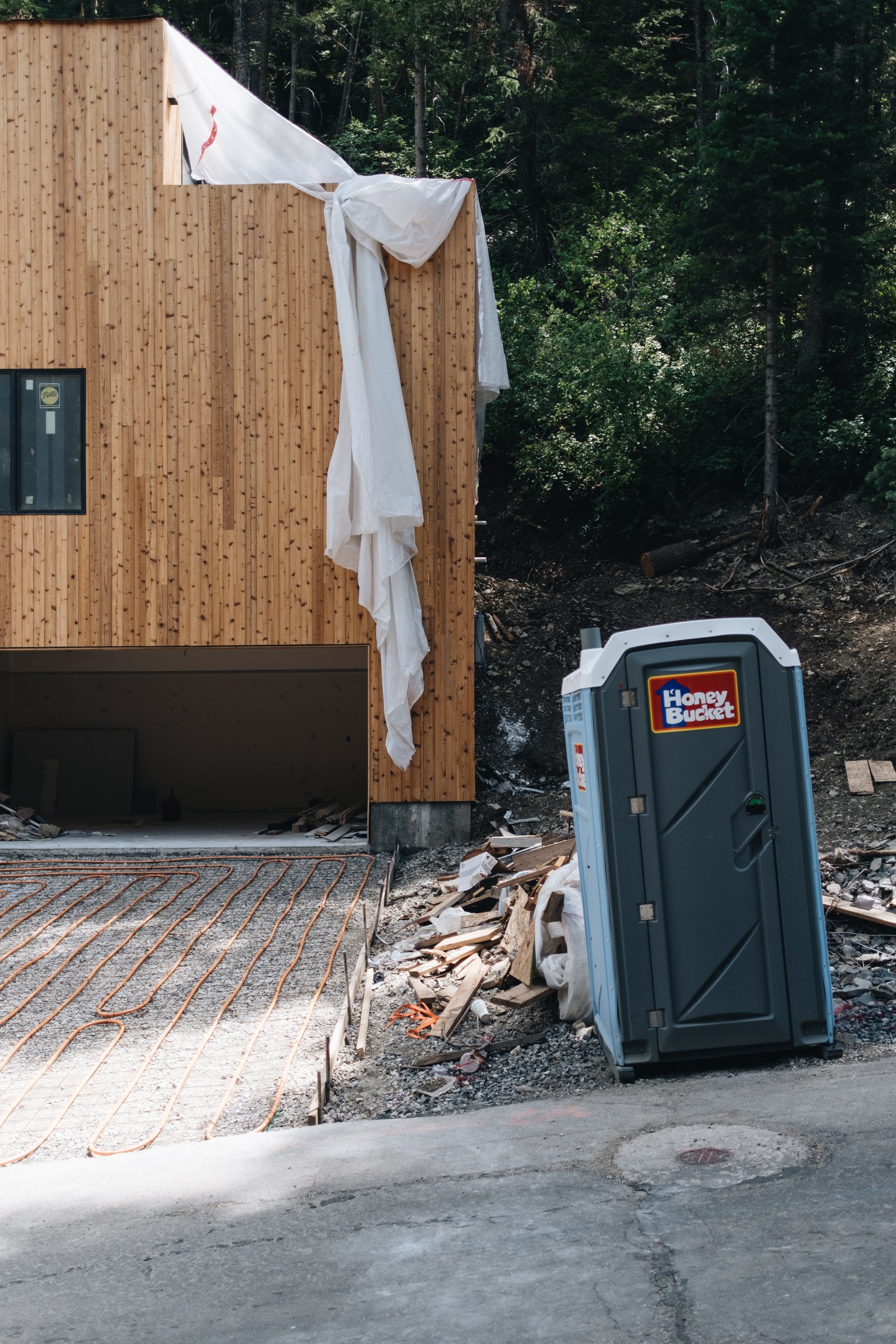
    We are into the final push at Parkview Mountain House. The radiant tubes are in for the heated driveway and walkway (essential), and the concrete is scheduled to be poured later this week. The kitchen countertops were installed this morning, and the backsplash was templated, with install scheduled for this Wednesday. The finish carpenter is back this week, and then the painters will be coming next week. The appliances and hot tub are also on standby in their respective warehouses and will be delivered to site as soon as the team is ready. As always, things are frenetic. But we’re pushing to get occupancy this month. I’m also excited to announce that we just hired an excellent management company. We’re in the midst of that onboarding process, and we’re looking forward to starting bookings sometime this fall. If you haven’t yet added yourself to our list, drop your email over here. We’ll be offering a bunch of discounted bookings on a first-come, first-served basis to the people on this list.

  • Vacation rentals in Park City

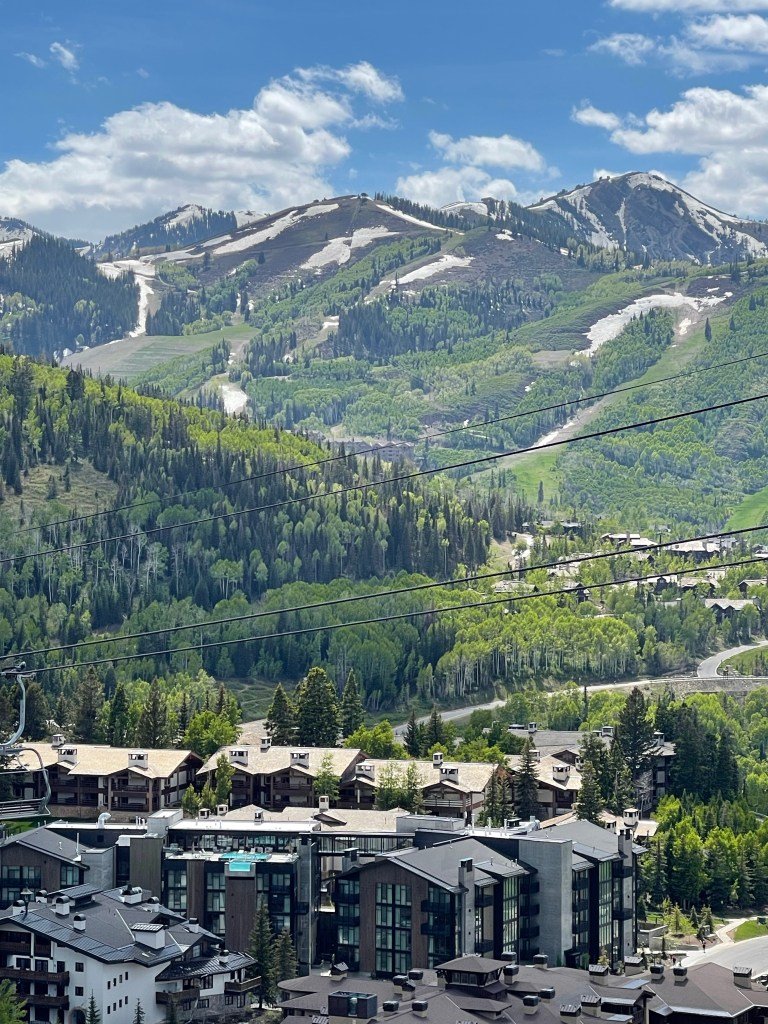
    We spent his morning meeting with prospective property managers for Parkview Mountain House. Here’s what we learned about the short-term rental market in Park City, Utah:

    • Property management fees generally range from 20-35% of revenue (these are turnkey solutions)
    • Airbnb is somewhere around 80% of the market here; though it does tend to skew toward slightly smaller rentals, whereas VRBO skews larger
    • Sundance Film Festival and New Year’s Eve are the two busiest times in Park City (demand greatly exceeds the available vacation rentals — 120%?)
    • Many Sundance guests tends to be people on expenses accounts: not price sensitive, but apparently very demanding
    • Winter is obviously peak demand because of snowboarding and skiing, but demand is still strong in the summer because of cycling, hiking, golfing, fishing, etc.
    • The two slowest times are spring (mud season) and fall
    • Many PMs will track booking lead times, which is the period of time between booking and check-in
    • This past winter season, demand was strong but average lead times were way down — meaning people were booking last minute and responding to snowstorms
    • During heavy snowfall seasons, like the one Utah had this past winter, you’ll likely need to budget for roof snow clearing (a few thousand for the season)
    • Heated driveways are a very good idea in the mountains
    • The most popular / most searched amenity is by far a hot tub; servicing one will run you about $125 per month

    I always find it fascinating to dig in and learn about a new industry and/or market. And that’s exactly what we did this morning.

  • Second home and investor mortgage applications accounted for 14.1% of all applications in February

    As a follow-up to my recent post about the rise of the second home, here is a chart (via the WSJ) showing second home and investor mortgage applications as a share of all applications in the US. In February of this year (2021), second home and investment properties accounted for 14.1% of all applications. This is a record number going back to January 2010.

    What’s also interesting about this chart is that, but for COVID, it shows a general decline over the last decade. I’m not sure what the split is between vacation and investment properties, but can we conclude that pre-COVID Americans were becoming less interested or perhaps less able to own a second home? And could the reason be that instead of owning a second home, more people simply started relocating permanently?

    There is also an obvious seasonality to these applications. Each of the above valleys tend to correspond to the spring and summer months. It’s almost as if every fall/winter we start thinking to ourselves, “Right, winter. Let’s look for a place somewhere else.” Is it that, or are there other forces at work here?

  • Project Profile: Hinterhouse by Ménard Dworkind Architecture & Design

    I recently discovered a company called Hinter (a colleague, who clearly knows me very well, sent it to me). It’s exactly the kind of the company that I would love to start, if only there were 30 hours in a day. They’re a non-traditional hotel in that they work with “iconic architects” to build unique spaces that are distributed and hidden in nature. (They also have a policy of planting 10 new trees for every booking.)

    Today’s post is a profile of their Hinterhouse (hh1) by Montréal-based Ménard Dworkind Architecture & Design. The space is located in La Conception, Québec, which is about 15 minutes from Mont-Tremblant. It’s 980 square feet (which is all you really need) and has 2 bedrooms. There’s also a private sauna and outdoor shower in a separate outbuilding. As soon as I saw it, I felt inspired and immediately opened up Realtor.ca to look for available land. Maybe it will do the same for you.

    All photography by David Dworkind.

  • The WeWork of vacation rentals

    The word on the street is that Sonder — the marketplace for vacation rentals and competitor to Airbnb — is close to finalizing a $200 million investment round that would value the company at $1 billion.

    I first wrote about Sonder back in 2016 after I met someone from their business development team here in Toronto. I have yet to stay in a Sonder, but I’ve looked at their rentals a few times.

    One of the main differences between Sonder and Airbnb is that the former head leases their rental supply. And they do this by trying to go higher up on the food chain and partner with developers and real estate operators.

    In this regard, they are similar to WeWork. And it allows them to sit somewhere in between Airbnb and a conventional hotel. The supply is distributed, but the service offering is more consistent.

    Of course, this arguably makes their business model slower (they have to negotiate leases) and more costly (they’re committing to fixed costs). So it becomes a question of: How valuable is that consistent service offering?

    Lately when I travel, I’ve been trending more toward hotels, as opposed to Airbnb-like rentals. I like the experiences that many hotels are now focused on creating and I like knowing that if my flight arrives late (in a place like Brazil), I’ll be able to get into my room.

    I guess consistency does matter.

    Photo by Spencer Watson on Unsplash

  • Sonder — intimate neighborhoods, consistent quality

    Airbnb has been a game changer. I know many people who have made Airbnb their full-time career or who “stay for free” when they travel because they Airbnb their home. Airbnb likes to focus on the “community” rather than on the business possibilities, but regardless, it unlocked space in a new way.

    Here’s another take on decentralized vacation rentals: Montreal-based Sonder. Similar to Airbnb, you submit your property to their platform. But unlike Airbnb, they take care of everything from reservations and guest communication to operations and housekeeping. It’s a completely hands-off approach for owners.

    The value proposition to guests is that they get a more consistent experience, but with all the “local color” of a traditional vacation rental. And for owners, they get to maximize revenue without having to be as hands-on as with an Airbnb. (Presumably Sonder’s take is greater.) In many ways, it’s like a decentralized hotel chain. Same supply source as Airbnb, but they are now unifying the customer experience.

    It’s fascinating to watch this software/internet layer developing on top of real estate. It’s giving me all sorts of ideas.