Daily insights for city builders, delivered every morning at 6 AM ET. I’m Brandon Donnelly — a Toronto-based real estate developer and founder of Globizen. I’ve been writing here since 2013.

Tag: urbanism

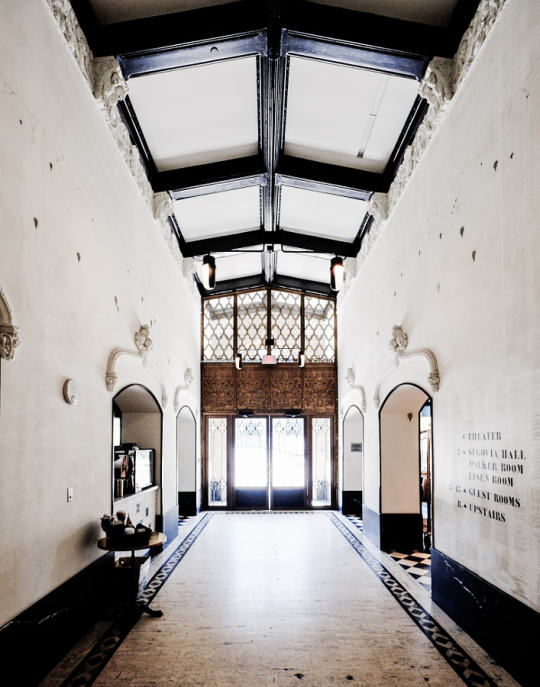
  • Ace Hotel coming to Toronto’s Fashion District

    https://500px.com/embed.js

    The word on the street right now is that Ace Hotel will be opening up a location in Toronto’s Fashion District at 51 Camden Street

    Unlike its other outposts around the world, which entailed the renovation of a historic building, this one will be a new build. And according to HotelChatter, Shim-Sutcliffe Architects have been retained for the project.

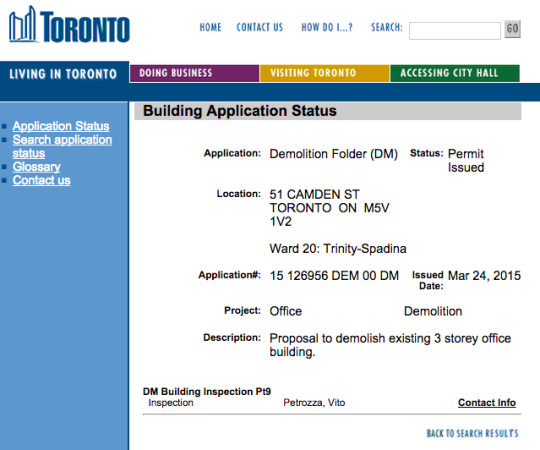
    Already a demolition permit has been issued for the existing 3 storey office building:
    image

    For those of you who may not be familiar with the Ace Hotel brand, the first hotel opened in Portland in 1999 when 3 friends transformed a halfway house into an affordable hotel for creative types. 

    Since then, the hotel has expanded to New York, Los Angeles, Seattle, Palm Springs, as well as many other cities, and has become a kind of cultural institution for the creative class.

    I’m excited that they have (allegedly) picked Toronto for their next property and I’m excited that Shim-Sutcliffe will be (supposedly) designing it.

  • Lisbon is the new Berlin

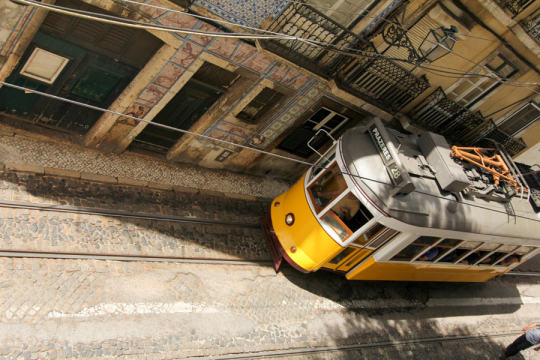
    Photograph Tramway à Lisbonne by yannick le goff on 500px

    Tramway à Lisbonne by yannick le goff on 500px

    This morning I stumbled upon a blog post by a Berlin-based venture capitalist (Ciarán O’Leary) talking about how Lisbon feels like the next Berlin. In other words, it feels like the next great European startup hub.

    Here’s his reasoning:

    • The tech scene is organic – it happened on its own, came out of nowhere. That is much more fun and sustainable than any kind of political or targeted economic strategy.
    • There are a ton of constraints (funding, local talent base, etc.) so entrepreneurs need to hustle to make things happen. Hustle is good.
    • Berlin was an economic void, Portugal had a massive economic crisis and Lisbon sure isn’t letting that crisis go to waste.
    • Entrepreneurship has the real chance to be a center stage act, not a side gig. It’s everywhere.
    • The city is very, very cool. You just want to be here.
    • You can have a great life on a startup salary.
    • Everyone speaks english; everyone is welcoming and open. That matters a lot when you want to attract international talent and funding.

    Of course, he’s not the only one calling Lisbon the next Berlin. The EU also named Lisbon “the most entrepreneurial region in Europe in 2015.” Isn’t it interesting what can grow out of economic crisis? See PIGS.

    I also don’t think it’s a coincidence that Monocle held its first ever Quality of Life Conference in Lisbon. It’s a testament to O’Leary’s point above that, “You just want to be here.”

    And while being “very, very cool” may not seem immediately relevant to creating a robust startup environment, it really is. It may be the most important point. It makes the city a magnet for talent. 

    Just the other day I was trying to explain Berlin to someone and I used a similar lexicon. I said: “It’s an unbelievably cool city. It bleeds hipness. You will love it.”

    If you’re a city, that’s a great thing to be.

  • A Jane’s Walk about the Gardiner Expressway

    image

    This May 2nd at 1:00pm I’m going to be participating and speaking at a Jane’s Walk here in Toronto called, Gardiner Expressway: To be or not to be? 

    The other “walk leaders” include Andrew Hilton, City Councillor Jaye Robinson, Ed Levy, Kyle Baptista, and architect Les Klein (Quadrangle Architects).

    This will be my first time going to a Jane’s Walk, but it’s clearly a topic that I’m interested in. For over a year I have been arguing that we should remove the Gardiner East (the portion east of Jarvis Street).

    This has proved to be a contentious position and topic. One critic said that I only want to remove the Gardiner East so that – as a real estate developer – I can make it harder for people to get into the city, which in turn will force them into buying more condos in the city. 

    That was not my thinking.

    Instead, I view it as an opportunity to truly unlock the eastern portion of Toronto’s waterfront and the Portlands area. Take a look at the Keating Channel (shown above) and tell me whether or not you could imagine a better and more urban kind of waterfront. I get excited when I think of the potential.

    And, if we’re going to do this, I believe now is the time, before the area gets developed. Because once it gets developed around the Gardiner, things will never be quite the same – even if we do eventually remove or bury it.

    Click here for more information on the Jane’s Walk. Please also keep in mind that there will be many other viewpoints expressed at the Walk. This is just mine.

    Image: Gardiner Expressway and Don River, Flickr

  • Introducing The Spaces

    image

    At some point in the past, I preregistered for a site called The Spaces. I don’t remember doing it, but I’m sure that the site seemed promising when I landed on it and so I gladly handed over my email address. I’m always on the lookout for new and interesting things.

    Today that site has (soft) launched. And if you like architecture, design, art, and/or property, I am certain you will love it. I am already a fan.

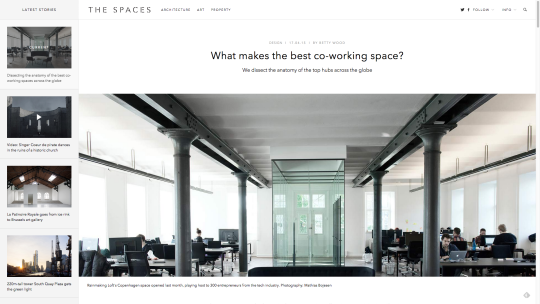
    Based in London, The Spaces is about exploring the new ways in which are we living and working. Spaces ranging from residences to coworking spaces and everything in between. It’s about unique and progressive spaces and the people behind them. I love the concept.

    Since this is still a soft launch, I am sure the team is looking for feedback from the market. So if you have some, please share it in the comment section below. I will make sure they read it.

    Click here to check out The Spaces. Happy Friday all 🙂

  • Imagining the way things could be

    Photograph Old in new by Andrew Johnston on 500px

    Old in new by Andrew Johnston on 500px

    I was out for lunch with a colleague of mine yesterday afternoon and he said to me: “Brandon, I’m really surprised that you’re so interested in technology. It just seems so different compared to real estate and architecture.”

    And I’ve certainly heard that exact same comment from a number of people before. But I don’t see it that way and here are a few reasons why.

    The common thread for me between architecture, real estate development, and technology is that in all of these cases it is about imagining the way things could be in the future and then creating it. It’s about change. It’s about growth. It’s about creation. And I consider myself a builder in practically every sense of the word.

    At the same time, each of these disciplines is about creating engaging spaces for people. Architects and real estate developers do it in the physical world, but many technology products strive to do exactly the same thing in the online world.

    In fact, a couple of years ago I was fascinated to learn that Facebook has and continues to draw inspiration from many of the same books and philosophies that architects, planners, and developers rely on when it comes to creating engaging communities. The medium might be different, but it’s still about people.

    Finally, as I’ve said many times before here on Architect This City, I think that the distinction between tech and non-tech companies and industries is quickly evaporating. Is Airbnb a tech company or a hospitality company? Is Uber a tech company or a taxi company? Pretty soon we’ll be saying that about many other industries.

    Maybe it’s because I’ve always been interested in wading through the overlaps between disciplines, but this is just the way I see it.

  • Condo or rental apartment — does it matter?

    Photograph Community by Evgeny Tchebotarev on 500px

    Community by Evgeny Tchebotarev on 500px

    Toronto is the condo capital of North America. For a number of years now, there have been more condos under construction in this city compared to any other in North America, including New York.

    But recently the real estate community has become incredibly interested in building multi-family apartments (also known as purpose-built rental buildings). Which is why about 7 months ago I wrote a post called, Rise of rental.

    It has been decades since Toronto built rental apartment buildings at any sort of scale. That means that our existing stock is generally pretty old and that condominiums – rented out by individual investors – have been almost exclusively fulfilling the need for rental apartments in this city.

    But given that purpose-built rental apartments are on the rise, I’ve been thinking a lot lately about them and about the consumer perspective. 

    And so here’s my question to you:

    If you were looking for a place to rent, would it make a difference whether it was a condominium (rented out by an individual investor) or whether it was a professionally managed apartment building? You can assume that the suite itself is identical.

    There are obviously many differences between both forms of tenure, but I’m curious to what extent that factors into the decision making process for consumers. It hasn’t really been an option in recent years, but that seems destined to change.

    I hope we can have a discussion in the comment section below.

  • What Rio de Janeiro looks like through an 80 megapixel camera

    Here’s a stunning time-lapse video of Rio de Janeiro that was shot with an 80 megapixel camera. It was done by LA-based photographer Joe Capra.

    [vimeo 119343870 w=500 h=281]

    10328×7760 – A 10K Timelapse Demo from SCIENTIFANTASTIC on Vimeo.

    Make sure you watch it full screen.

    As far as videos and photos go, it’s probably as close as you’re going to get to actually being there. And if you’ve never been to Rio de Janeiro (which I haven’t), it’s a great way to see and understand the city’s built environment. I loved looking at all of the details.

  • Why Toronto-Waterloo needs all-day two-way urban rail service

    image

    This morning I stumbled upon an interesting Medium article talking about the need for an all-day two-way urban rail service between Toronto and Waterloo. 

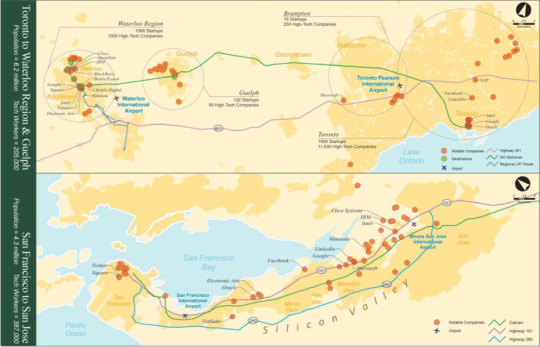
    The argument is that along this corridor sits a technology ecosystem that is second in size only to San Francisco-Silicon Valley and that current connectivity levels represent a missed opportunity of epic proportions. Presently this rail service will feed you into Toronto during the morning rush hour and take you back out in the evening rush hour. But that’s it.

    According to this report prepared by the City of Kitchener (which is beside Waterloo), efficient train service would stitch together an ecosystem of approximately 12,800 technology companies, 2,800 startups, and 205,000 technology employees. It would also connect 6 universities and 4 colleges, many of which are ranked top in the world.

    There’s an argument here that this is exactly the sort of thing that governments should be doing to encourage innovation and entrepreneurship. Rather than trying to be heavily involved in actual startups, they should be creating an environment that maximizes output and then getting out of the way. 

    I think this makes a lot of sense. Don’t you?

    Image: The Innovation Express

  • Moving downtown

    Last month it was announced that Amazon will be taking 127,000 square feet across 5 floors in a new office tower in Toronto’s emerging South Core neighborhood. The space will be used for about 800 employees and they’re expected to take occupancy this fall.

    At the same time, I learned that Amazon will be joining Apple (positioned 6 floors below them in the same tower) and Cisco in South Core.

    On top of all this, a friend of mine then tweeted out a list of major tenant re-locations here in the city. The data is from CBRE and the timeframe is from 2009 to 2014 (Q1).

    The first thing I noticed when I looked at the data is that there’s a clear trend towards downtown. Perhaps that was the point of the study, but it’s still interesting nonetheless. 

    From Google and Deloitte to eBay and Aol, every single tenant in the CBRE list is or will be moving downtown (or to the shoulders of downtown).

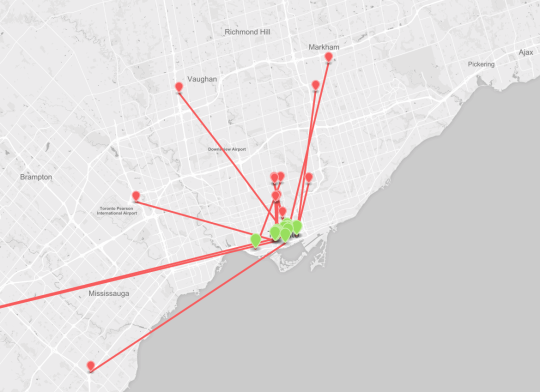
    Here’s what that looks like from a regional scale (red marker is where they were; green marker is where they are going):

    image

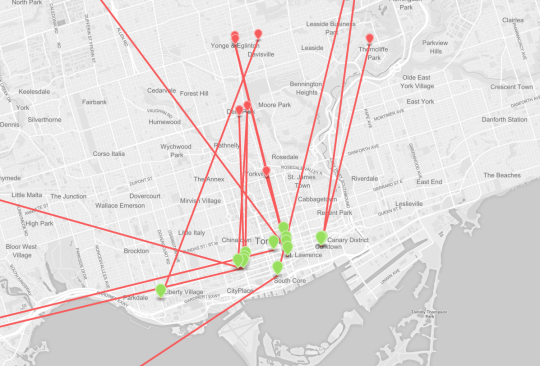
    And here’s what it looks like zoomed in closer:

    image

    This, of course, is a trend that has been happening for years. But I still think it’s worthwhile repeating how clearcut it seems to be. 

    Companies know that their greatest asset is human capital. And they have quickly realized that a lot of young smart people want to live and work in dense walkable communities. They’re simply moving to where people already want to be.

    So here’s a question for the Architect This City community: On a scale of 1 to 10, how important is a company’s location when determining whether or not you’d like to work for them? Let’s talk about it in comment section below.

  • 10 ways that cities can take advantage of the urban manufacturing revival

    image

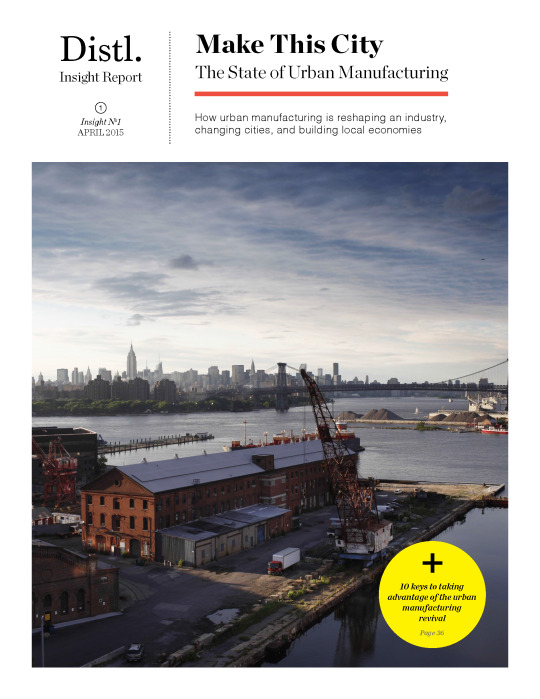
    My good friends over at Distl here in Toronto have recently published their first Insight Report. It’s called, Make This City: The State of Urban Manufacturing, and it’s available via free download here. I like the title 😉

    The report is 39 pages and is really well put together. There’s research, case studies spanning San Francisco to Toronto, and some great takeaways for city builders.

    Since the internet likes listicles, here’s a preview of some of those takeaways – 10 ways that cities can take advantage of the urban manufacturing revival: 

    1. Preserve urban industrial areas
    2. Focus on the niche
    3. Public investment is a good investment
    4. Think mixed-use
    5. Diversify learning
    6. Redefine industrial assets
    7. Connect supplier & retailer
    8. Leverage your city’s brand
    9. Form supportive organizations
    10. Leverage partnerships with both the private and public sectors

    But it’s definitely worth a complete read and I plan to do exactly that this weekend. Click here to download Make This City.