Daily insights for city builders, delivered every morning at 6 AM ET. I’m Brandon Donnelly — a Toronto-based real estate developer and founder of Globizen. I’ve been writing here since 2013.

Tag: urbanism

  • Five great surges of capital and technology, 1771-2017

    Carlota Perez is a professor that specializes in the social and economic impact of technological change. In 2002, she published an influential book called Technological Revolutions and Financial Capital: The Dynamics of Bubbles and Golden Ages.

    One of her arguments is that economic growth since the Industrial Revolution has occurred through a series of cycles and surges, ultimately culminating in a fifth great surge centered around information and telecommunications. This is our current economic environment.

    Perez was recently interviewed by strategy + business and they published this diagram (if it’s too small, click through to the article):
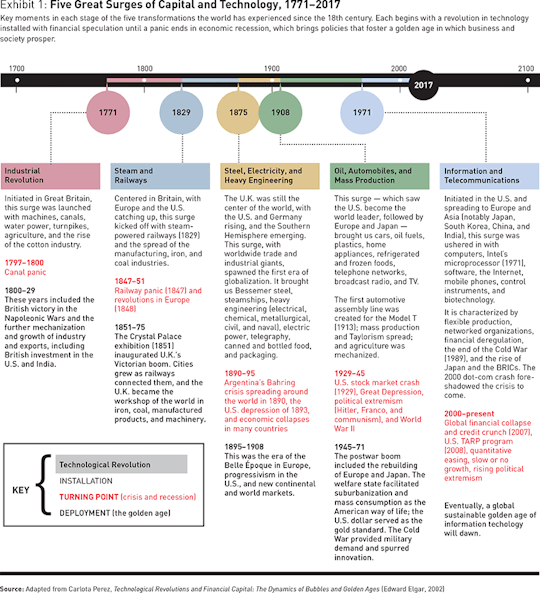
    The five surges of capital and technology since 1771 are:

    1. Industrial Revolution
    2. Steam and Railways
    3. Steel, Electricity, and Heavy Engineering
    4. Oil, Automobiles, and Mass Production 
    5. Information and Telecommunications

    Number 4 – oil, automobiles, and mass production – is what produced widespread suburbanization, a middle class filled with homeowners, and new forms of retail employment. And I am sure that most of you would agree that it’s not quite over yet.

    According to Perez, each cycle has two phases: an installation phase and a deployment phase. This latter phase is a “golden age.” But in between these two phases is a turning point that is typically characterized by some sort of crisis and recession. 

    Her belief is that we are in this turning point right now. You see it with Brexit. The demagogues being elected. And more. If you buy this, the key question naturally becomes: How do we cross this chasm and enter our next golden age?

    What’s also important to keep in mind about this theory is that it means that what we are seeing today, socio-economically, is not in fact new. We’ve been through this before. I’ll end with this quote from the interview with Perez:

    In the 1920s, wealth distribution looked the same as it does today. The top 1 percent received 25 percent of society’s total income. By the 1950s it was down to 10 percent. Every installation period brings inequality until the state comes back actively to reverse it and relieve social unrest.

    So what’s happening today may be temporary and it may be history repeating itself. If you’re interested in this topic, you can read the full interview here.
  • Bowling Lane House, Calgary

    I just finished going through the work of Studio North. My friend Peter introduced me to them through this Globe article

    They are a Calgary-based design-build practice that have completed a number of laneway houses, as well as bigger projects such as this 34 unit townhouse project in Canmore, Alberta.

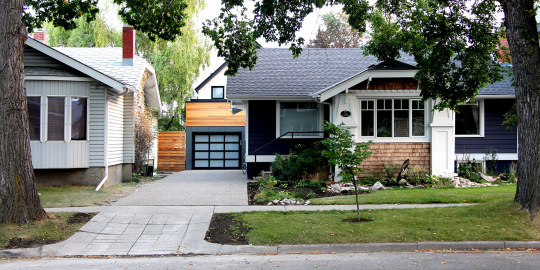
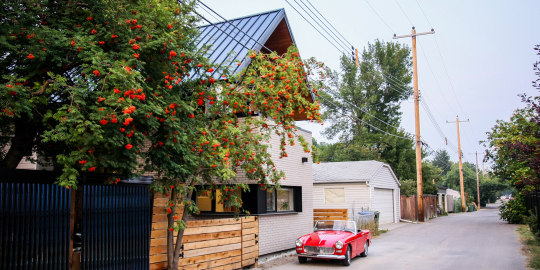
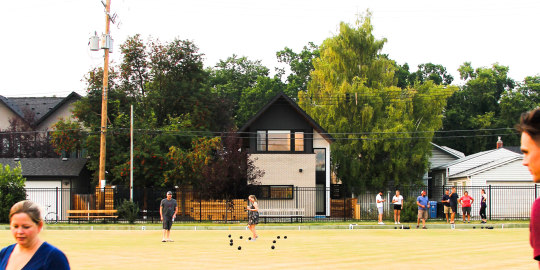
    What (not surprisingly) caught my attention was their focus on laneway/accessory dwellings. Pictured above is their Bowling Lane House in Crescent Heights, Calgary. 

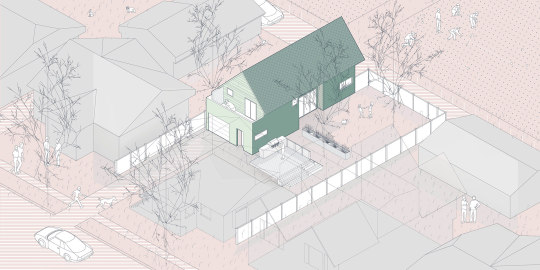
    It’s a 700 sf one-bedroom house that sits behind a 1920′s heritage house. Here is an axonometric of that relationship (the existing house was made transparent):

    Here is an elevation from the main street. Look at how neatly it tucks behind the existing house. All you really notice is the garage of Bowling Lane House.

    Here is how Bowling Lane House fits into its laneway.

    And here are two images of the double height space that they managed to create within this 700 sf house.

    Notwithstanding that this is a wider lot than what you might typically find in Toronto, it is precisely the kind of housing – both in terms of design quality and scale – that I was trying to create with Mackay Laneway House. It’s also where I was planning to move.

    Kudos to the Studio North team for driving this initiative in Calgary. You can check out the rest of their projects here. They have a number of other laneway houses within their portfolio. And all of them are beautiful.

    All images from Studio North.

  • Junction House Community Meeting

    image

    Okay, last Toronto-centric post for the week. We are back to regular scheduled programming tomorrow.

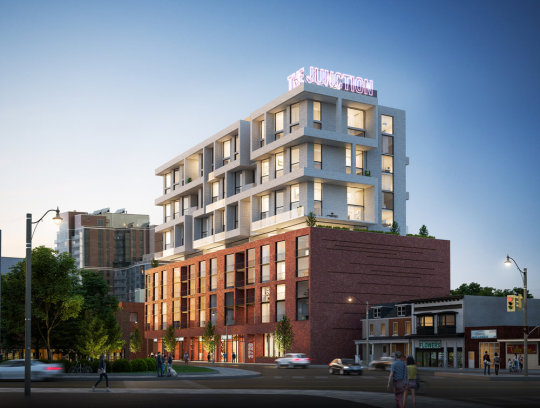
    Later this month, Councillor Gord Perks will be hosting a community meeting for Junction House (see conceptual rendering above).

    You can find all of the details, here, on the Globizen blog. But pop it into your calendars: Tuesday, November 21, 2017 from 7 to 9pm.

    Even if you can’t attend, definitely weigh in on the rooftop public art component over in the comments on the Globizen blog.

    I hope to see you all there. It’s always nice when happy people come out.

  • Bringing laneway suites to Toronto

    This morning I presented and sat on a panel at BILD called “bringing laneway suites to Toronto.” The other participants were Councillor Mary-Margaret McMahon, George Pantazis (Planner at the City of Toronto), Mike Collins-Williams (Director, Policy at OHBA), and Andrew Sorbara (co-founder of Lanescape).

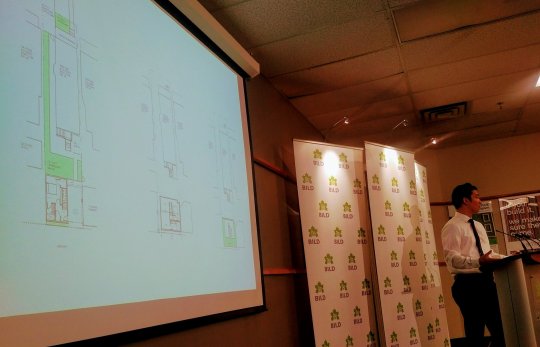
    Here is a photo that Mike took of me while I was talking about my failed laneway house:

    image

    For those of you wondering if/when this will happen in Toronto, here are the key takeaways from this morning: The city is already drafting laneway suite policies specific to Toronto & East York (not the other parts of the city) and they are due to report back to council in Q2-2018. Nothing is 100% certain at this stage, but there’s lots of optimism. 

    Councillor McMahon delivered this morning’s opening remarks and I was impressed by her deep commitment to laneway suites. I was also impressed by her stance on NIMBYISM, saying that education is important and that we can’t let NIMBYs stop what makes sense for the greater city.

    She gave the example of the 6 storey condominium in her ward that faced fierce community opposition a number of years back. If you can’t put a midrise building on a main street in this city, where can you put it? 

  • New Buca concept coming to midtown Toronto

    Earlier today Slate announced that King Street Food Company will be bringing a new Buca restaurant concept to the north west corner of Yonge + St. Clair in 2018. 

    (BlogTO calls Buca one of the best Italian restaurants in the city.)

    Below is a rendering of the new podium design at 2 St. Clair West, which is where they’ll be going. The design/rendering is by Gensler (the same talented group that did Ravine Bench).

    image

    The corner is going to be transformed into a double-height space and the architecture is meant to express that feeling of grandeur at the intersection. There will also be an outdoor patio at grade.

    We are all super excited about this.

    If you would like to read the full press release, you can do that here.

  • 738,000 single-family homes were built last year in the US

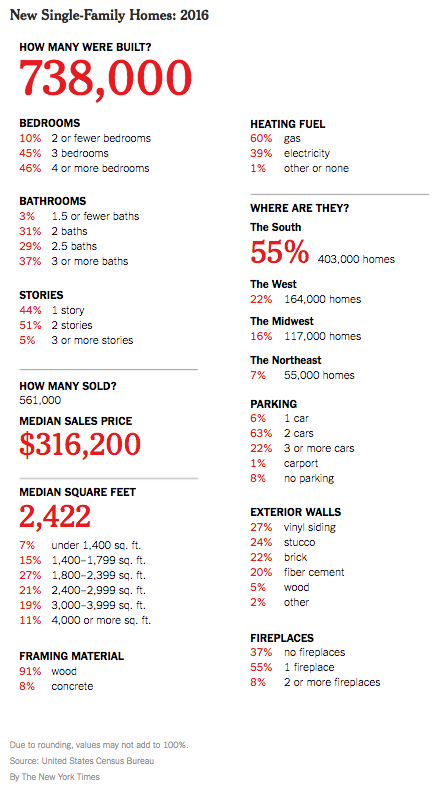
    The New York Times recently published “a portrait of new single-family homes” in the US in 2016. Here’s that portrait:

    For those of those living in dense urban centers, this portrait is perhaps a reminder that in many other places a large single-family home can be had for about the price of a studio apartment.

    Nothing in the above portrait likely surprised you, but it’s interesting to note that over half of all new single family homes delivered last year were in “The South.” Only 7% were built in the dense northeast.

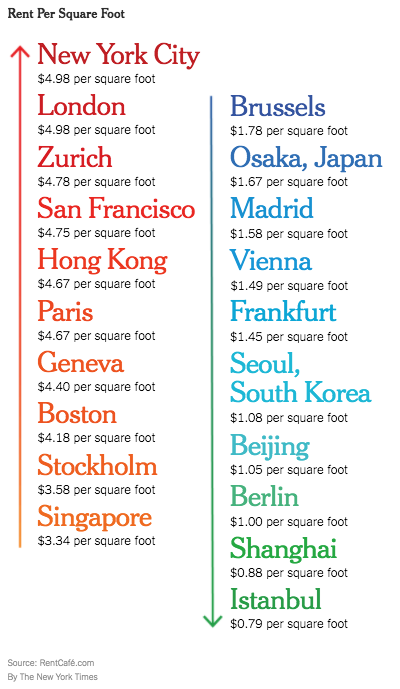
    The New York Times also recently looked at “international rents per square foot” using data from RentCafe. Here they are:

    New York City sits at the top with an average rent of $4.98 psf. This is across all boroughs. I am surprised by how low some of these international rents are. But averages rarely tell you the whole story.

    In any event, I do think that these two graphics start to speak to the economic spikiness that we are seeing across the US. 

  • Locals hate you

    BlogTO recently reported that “snarky anti-condo signs” have been popping up around Toronto. Here is one of them via Instagram. It reads (in all caps): Dear Condo Dwellers: Locals Hate You Go Fuck Yourself

    I find these posters curious, though it is obvious that they are a reaction to growth, intensification, and general change in this city.

    For one, it implies that condo dwellers and locals are mutually exclusive. In other words, “locals” don’t live in condos. Presumably the implication is that they live in low-rise grade-related single-family housing. Or maybe they live in rental housing? Is it a tenure thing?

    According to the latest 2016 Census data, just over 26% of private dwellings in Toronto are condominiums. And about 30% of people live in a building that has 5 or more storeys. If you include “apartments” less than 5 storeys, this latter number jumps to 40%. So many potential non-locals.

    However, it could be that these posters are primarily directed toward new condos and new condo dwellers. This poster seems to have been plastered in front of this recently completed condo building on College Street.

    If that is the case, then I wonder if there is a temporal cut-off for the hate. For example, the condo building that houses (at its base) my regular grocery store was completed in 1983. 

    The units are large and the demographic seems to skew a bit older. Are these condo dwellers – some of which may have been there for over 3 decades – to be hated? Are they non-locals? Or does urban myopia set in after awhile and they become locals?

    At the same time, it wouldn’t be unusual for the residents of an older condo building to oppose a new proposed condo building. So perhaps “local” isn’t about building typology and it’s more about who came first. That’s certainly a tricky one. Better end here.

    A curious poster that could use a bit more specificity. What do you make of it?

  • Singapore just capped vehicle growth at 0%

    When I was in New York a few weeks ago, my friend (a New Yorker) said to me that he couldn’t imagine owning a car (he used to but got rid of it with zero remorse). He then elaborated on all of the nuisances that driving in the city produces.

    There are parts of Toronto where you can feel similarly. I feel fortunate to live in one of those parts. Of course, there are other parts of this city where the exact opposite is true. It’s inconvenient not to have a car. These are typically areas where lower land costs have been exchanged for higher transportation costs.

    The City of Toronto has a land area of approximately 630 square kilometers. If that’s all the land we had (the metro area is almost 6,000 square kilometers), you can bet we would think about land use and transportation a bit differently.

    Take for instance, Singapore, a city-state with an area of approximately 719 square kilometers. The Land Transport Authority estimates that 12% of the republic’s total land area is taken up by roads.

    Because of this, they just announced that they have lowered their vehicle growth rate (for cars and motorcycles) from 0.25% per annum to 0% effective February 2018. They can do this through their Certificate of Entitlement (COE) quota. And it won’t be revisited until 2020.

    Put differently: No more cars and motorcycles until, maybe, 2020.

  • Winner take all, or most, economy

    The world is increasingly spiky. Inequality is growing and it is increasingly geographic in nature. We know that people tend to make more money in urban areas compared to rural areas – even when they possess the exact same level of education. The returns to being smart and educated are simply greater in cities.

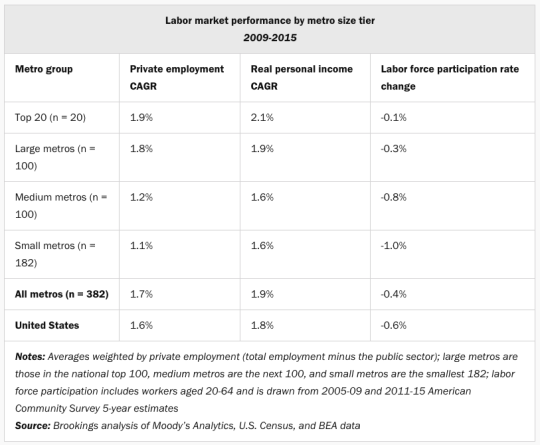
    But they also depend on the size of the city. Mark Muro and Jacob Whiton of Brookings recently published data looking at labor market performance – by metro size – from 2009-2015 (right after the financial crisis). What they found is that larger metropolitan areas simply performed better than smaller ones.

    image

    In summary:

    City size matters because it’s a major influence on city prosperity and adaptability as well as local worker fortunes. Bigger cities are more productive. They are more innovative. They draw better-educated workers by offering higher wages.

    The situation is even more pronounced across the pond. According to the New York Times (quote from Richard Florida), a third of Britain’s gross domestic product comes from London alone.

    What is far less clear is what should be done to address the decline of some of the smaller cities in America – cities that are stagnating and feeling left behind. But perhaps the first step is acknowledging what has happened and what remains feasible in today’s global economy.

    Here is another quote from the above NY Times article:

    Mr. Trump’s promise to relieve the pain by reviving the coal and steel industries, by keeping immigrants out of the country and by raising barriers against manufactured imports is only a rhetorical balm to satisfy an angry base seeking to reclaim a prosperous past that is no longer available.

    That rhetorical balm.

  • Amazon orange

    This week (Thursday) was the deadline to submit proposals for Amazon HQ2. About 100 cities across North America are thought to have a bid in. 

    New York lit up every single landmark in the city with “Amazon orange” in an “embarrassing attempt” to try and win this thing. That’s how bad cities want this.

    I already think that Toronto has won an incredible prize with Sidewalk Toronto. Arguably, it may turn out to be more impactful to this city than Amazon HQ2. It’s an opportunity to define the future of, not just this city, but all cities. It’s an opportunity to lead.

    At the same time, I continue to believe that there’s no better place for Amazon HQ2 than here in Toronto. Not surprisingly, our bid emphasized the point that I’ve been hammering home on this blog since Amazon first announced the RFP. Toronto’s key competitive advantage: talent. 

    Below is an excerpt from the submission cover letter. The entire letter emphasizes our ability to grow, attract, and retain top talent.

    Thirty-nine percent of the Toronto Region—and 51% of Toronto proper—are born outside of Canada. We welcome more new immigrants each year than New York, LA, and Chicago combined. We speak over 180 languages and dialects. Toronto is heralded as the most multicultural city in the world, and our labour force and economy benefit directly from our diversity and inclusivity. We build doors, not walls. And those doors open to highly-skilled economic immigrants and international students who can easily become permanent residents and citizens.

    For the full Toronto region submission, click here

    Okay, enough about Sidewalk Labs and Amazon. Regular scheduled programming will resume on the blog starting tomorrow.