Daily insights for city builders, delivered every morning at 6 AM ET. I’m Brandon Donnelly — a Toronto-based real estate developer and founder of Globizen. I’ve been writing here since 2013.

Tag: urbanism

  • Introducing the new Corktown Plaza

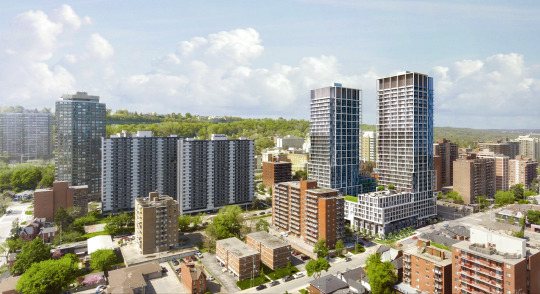
    This evening Slate hosted a pre-application community meeting in Corktown, Hamilton, where we presented our proposed design for the redevelopment of Corktown Plaza

    There was a short presentation by Slate, GSP Group, CORE Architects, and Janet Rosenberg and Studio, and then we shifted to an open house format where members of the community could speak directly with all members of the project team.

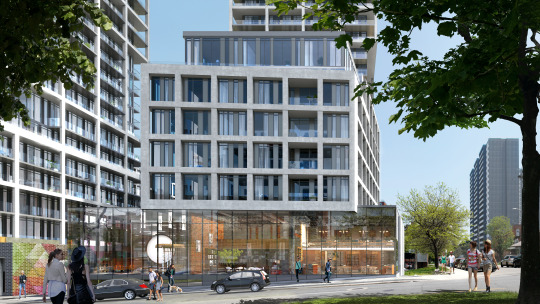
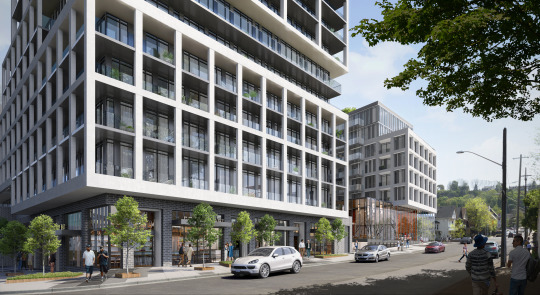
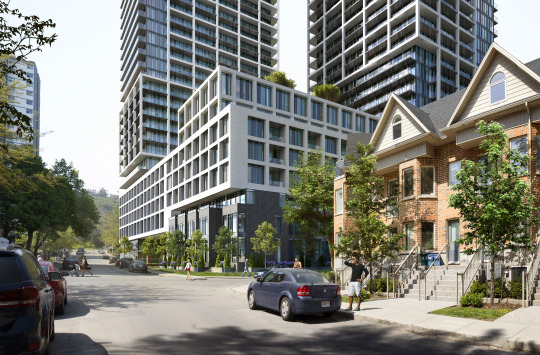
    Below are a few of the project renderings, all completed by our friends at ADHOC Studio

    imageimageimageimage

    The proposed design includes fine grain and large format retail spaces and a 9.5m pedestrian setback along John Street South (rendering #2 and #3); grade-related family-oriented townhouses on Young Street and Catharine Street South (rendering #4); and two 100% rental towers (31 and 34 storeys) to be built over two phases.

    The other notable feature is a mid-block pedestrian connection that will run from John to Catharine and become an important place for local public art. The plan is to work with the community and Councillor Jason Farr to run a separate engagement process for this component of the project. We want to work with local artists. If you have any suggestions, please send them over.

    Here, here, and here are what some people had to say about the proposal on Twitter. Thanks to everyone who attended this evening.
  • Going dockless

    A couple of months ago I wrote about Bird, the electric scooter sharing company that is trying to solve the last-mile problem. They are expanding across the US and it is seemingly wildly popular.

    But its popularity is also leading some people to call them a public nuisance. Perhaps the biggest contributor to that is the fact that the system is dockless. That is, when you get to your destination you can park the Bird wherever you want.

    That’s obviously a great feature for users (who wants to look around for a docking station?), but it’s also causing a proliferation of “Bird litter” in the cities and neighborhoods where they are widely used. 

    I am sure this will eventually get resolved.

    The other thing about going dockless is that you now have a charging problem. Where and when do these scooters get charged and by whom? Bird solves this problem through decentralized contract workers called “Bird hunters.”

    You register to be one and then Bird pays you $5 to $20 for every scooter charged, depending on how difficult the Bird is to find. And as you can expect, these scooters are getting left all over the place.

    I thought this was a clever solution. And apparently it is popular with high school students looking to earn extra cash. Some are making several hundred dollars a day by spending their evenings picking up and dropping off Birds.

  • Balkrishna Doshi

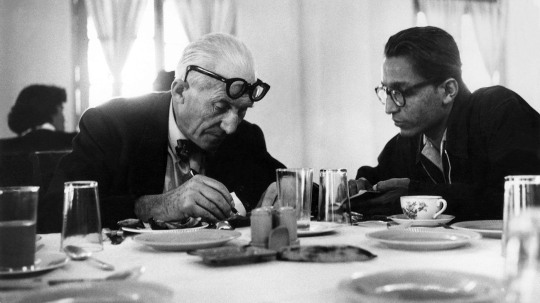
    On Friday evening, here in Toronto at the Aka Khan Museum, this year’s Pritzker Architecture Prize was awarded to Indian architect, Balkrishna Doshi. He is 90 and will receive US$100,000, as well as the honor of being the first Indian to receive architecture’s Nobel Prize. This year was also the first year it was awarded in Canada.

    Alex Bozikovic of the Globe and Mail sat down with Doshi while he was in Toronto. Article here. Doshi also lectured at the Daniels Faculty at the University of Toronto earlier in the week. 

    Some of you will probably recognize the name because of his collaborations with Le Corbusier and Louis Kahn. But as Alex quoted in his article, this year’s prize is about, “expanding the scope of architecture’s usefulness.” Doshi’s architecture is less about objects and more about the public good it creates.

    For more on Doshi, check here.

    On a related note, I was happy to see worlds collide in my Instagram feed this morning with this photo from the event. It’s a picture of Jeanne Gang, Meg Graham, and Andre D’Elia of Studio Gang and Superkul, respectively. 

    We are thrilled to be working on projects here Toronto with both firms.

    Photo via The Pritzker Architecture Prize

  • Anachronistic employment areas

    Today I was at the Land & Development Conference here in Toronto. I started live tweeting during the breakfast, but my vintage iPhone 6 couldn’t keep up, so I had to stop. Some insights throughout the day. But a lot of what you would expect. I suppose it’s more about the networking.

    I would, however, like to reiterate something that Ken Greenberg mentioned about Employment Areas/Lands in Toronto. For those of you who aren’t familiar, these lands are essentially intended to serve one, and only one, purpose: employment. And the process for introducing a mix of uses, including residential, is an onerous one to say the least.

    I appreciate why this is the case. But I agree with Greenberg in that this kind of single use zoning is antiquated. It does not reflect the realities of the market today. There are other mechanisms we can use to maintain and provide for employment, and ensure that we don’t end up with a city of all residential.

  • 1 out of 5 commuters in Manila relies on ride-hailing

    Earlier this year Uber sold its Southeast Asia business to Grab. At the time, it was estimated that Grab had 95% of the ride-hailing market in Southeast Asia. That’s why Uber decided to sell. Instead of continuing to bleed, they figured it would be better to instead merge businesses in exchange for a “sizeable stake in Grab.” This is similar to the deal that it struck in China with Didi.

    It’s clear evidence of cultural advantage. Though maybe you could argue it’s first mover advantage. Either way, many, including Wired, have argued that while Uber has dominated in the West, it has often struggled in the developing world. Different markets. When Grab launched you could pay with cash because so many users didn’t have a credit card.

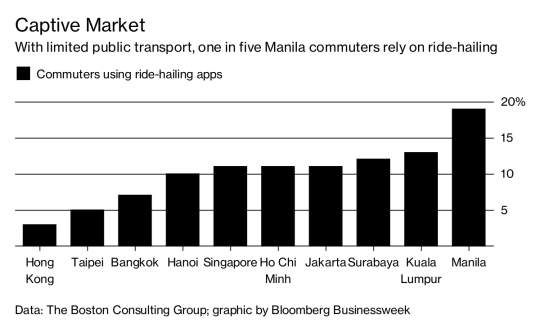
    Here is another interesting insight from Bloomberg (see above): Nearly 1 out of every 5 commuters in Manila relies on a ride-hailing service because the public transit situation is allegedly so dire. Grab controls 90% of the market with 35,000 vehicles receiving somewhere around 600,000 requests a day.

    When Uber launched it was positioned as “Everyone’s private driver.” It was expensive. It was luxurious. And it was done because they knew they weren’t going to be able to compete on speed and/or price in the early days. But now ride-hailing services are tackling the very opposite end of the spectrum.

  • Pre-application community meeting in Hamilton

    At the end of last year, Slate hosted a “pre-design community meeting” for the redevelopment of Corktown Plaza in Hamilton. It was the first time we hosted a meeting like this.

    We learned things that evening and this May 24th we’ll be hosting our “pre-application community meeting.” See above for the full invite details. Lots of pre things.

    At last year’s meeting we had no design. It was about learning. At this month’s meeting we will be presenting a design proposal for the site. So hopefully some of you will be able to make it out.

    Regular scheduled programming will resume tomorrow on the blog.

  • Could high low-rise infill buildings work?

    Dylan Reid recently wrote an interesting article about, what he calls, high low-rise infill buildings along Toronto’s main streets. 

    He describes the typology in this way: “These are generally 4-storey mixed-use buildings built quickly on one or two lots, replacing smaller previous buildings. They are often inserted beside existing, attached buildings.“

    Now, Reid acknowledges that this a challenging scale to develop at. He links to one of my articles in Urban Capital’s Site Magazine where I talk about exactly that: the diseconomies of scale associated with building small. (Though, I was talking about mid-rise, not high low-rise.)

    Reid addresses these challenges with a number of potential cost savings, including no parking minimums and no rezoning process. He also suggests that these projects may be better suited to existing landowners (who may own the land free and clear of a mortgage).

    Getting rid of parking minimums and streamlining approvals would certainly help, though I remain doubtful about overall feasibility. But what I wanted to comment on today was the last point about these projects being better suited to existing landowners.

    One problem with this line of thinking is that if we’re talking about land on a street where greater densities such as mid-rise are also permissible, the land is going to get valued based on mid-rise and not high low-rise.

    So when a prudent landowner thinks about developing their land, they may also consider the opportunity cost of simply selling their land based on its highest and best use.

    That thought process might go something like this. I own a piece of land. If I were to sell this land today and take on no development risk, I could make $X. If I were to instead develop this land, I could make $Y.

    If $Y is less than $X, then I’m obviously not going to develop. But if the spread between $Y and $X isn’t enough to compensate me for the risk of developing (and there’s lots of risk in developing), then I’m also not going to do it. (Developers run a similar test by marking the land cost in their pro forma to market.)

    And if $X is based on greater densities than $Y ($X is based on mid-rise densities and $Y is based on high low-rise densities) and if $Y is also being challenged by further diseconomies of scale, then I’m sure you can start to see how the math may not pencil.

    I say all of this not to shit on Reid’s article. It’s a good article. You should go read it. And we should all continue to think about ways to increase the supply of housing in this city and in others.

  • Everything delivered on demand

    Last week I had something delivered from Amazon almost every single day. They weren’t necessarily big things though. One day it was a new corn broom for the patio. Another day it was a small set of hooks that I wanted to hang some lights. And the list goes on. 

    This is what Amazon wants us to do. Order every little thing, instantly, as soon as you think about it. And it’s magically convenient.

    Developers and architects are of course thinking about the implications of this shifting shopping habit on new residential developments. Usually it comes in the form of a large “Amazon room” and/or a parcel locker system. 

    I recently measured the package room in my building (geeky, I know). It’s about 10′ x 6′ and it sometimes isn’t enough for the volume of daily packages generated by ~360 units. 

    The other thing that happened last week is that my concierge said to me: “Brandon, we have become a full fledge post office with the amount of packages that come through here every day.” Every evening there’s a lineup of people waiting to collect their packages. 

    That immediately signaled to me that simply providing a larger room probably isn’t enough. This trend is only going to continue. How could we better design and optimize for this shift?

    I am sure that there many companies working on this problem. Hopefully they will surface in the comments and in my inbox following this post.

    Photo by Maarten van den Heuvel on Unsplash

  • Less, rather than more, housing

    Earlier this year I wrote about the California housing bill (827) intended to dramatically increase housing supply around transit stations all across the state. Well that bill was rejected last month and the Los Angeles Times wrote this post post-mortem explaining why and how it went wrong. Their argument is that it came down to opposition from low-income residents who feared that an increase in housing supply would lead to greater displacement.

    On a related note, the Official Plan Amendment and Zoning By-law Amendment that would permit laneway suites in Toronto went to Community Council this week. They voted to defer the decision for a month. Only 3 of 13 councillors voted to pass the proposal, despite there being 185 letters of support and only 4 letters of opposition. For more information on what the hell happened, check out this Lanescape post.

  • The Cherry Street Lakefilling project

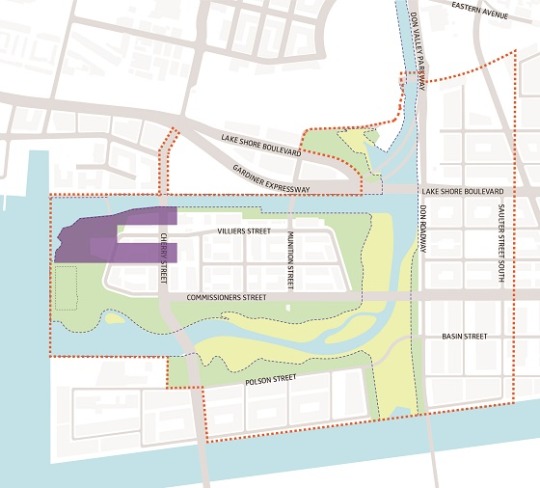
    It’s going to take a generation to build it out, but one of the most exciting revitalization projects in Toronto is going to be the Port Lands area. However, before that can really start happening and new communities can be built, the entire area needs to be flood protected. Currently about 290 hectares (717 acres) in this part of the city are prone to flooding.

    One component of the flood protection program is the Cherry Street Lakefilling Project. Below is a plan of what that means (from Waterfront Toronto). The area in purple is new land that will be created as part of the process. Supposedly this is important for a few reasons. For one, it will allow the Cherry Street bridge to be relocated, which, in its current location, is creating a pinch point during floods.

    image

    I am mentioning all of this today because I am personally excited about this revitalization project. Hopefully I’ll see it complete in my lifetime. And maybe I’ll be fortunate enough to work on some of the buildings when that time comes. I also really wanted to share the below video with you all, showing the lakefilling in action. I bet many of you aren’t aware that this is happening.

    If you can’t see the video below, click here.

    [youtube https://www.youtube.com/watch?v=C0q_Wvn91zE?rel=0&w=560&h=315]