Daily insights for city builders, delivered every morning at 6 AM ET. I’m Brandon Donnelly — a Toronto-based real estate developer and founder of Globizen. I’ve been writing here since 2013.

Tag: urbanism

  • Airbnb and affordable housing

    image

    Fred Wilson published a good post last weekend on the proposed bill that went to New York City Council this week regarding new reporting requirements for Airbnb and their hosts in NYC. You can read more about his position on his blog, but he is in favor of a comprehensive bill that would properly legitimize short-term rentals. He is also not opposed to city and state taxes on the service.

    What I wanted to focus on today were his comments around housing. This is already sounding like a broken record, but Fred draws attention to the severe supply-demand imbalance that is occurring in the boroughs of Brooklyn, Queens, and the Bronx, precisely because many/most young people were priced out of Manhattan long ago and want to live in these places.

    But I particularly like his comments around what makes for good policy and what makes for good politics. I agree with his view that it is often a case of the latter over the former. I think a lot of the excitement around Airbnb is a red herring. For me, it’s akin to the fixation on foreign buyers and their impact on the local housing market in places like Toronto and Vancouver.

    Yes, they are factors. But the data suggests they are marginal ones. As Fred points out, they are almost certainly not the root cause of the problem. The reality is that we need a lot more housing – both market-rate housing and subsidized housing. The challenge is that nobody wants to pay for the latter and so we’ve instead decided to focus on things that sound like they’re going to help.

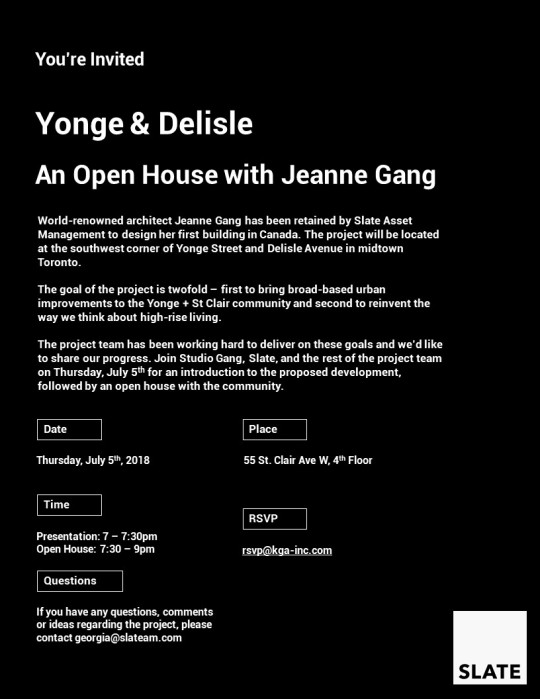
    Photo by Jon Tyson on Unsplash

  • Construction costs are no joke right now

    I don’t know what it’s like in your market, but everyone is talking about it in the industry here in Toronto. Combine these rapidly rising hard costs with higher development charges and inclusionary zoning and you get significant upward pressure on condo prices and apartment rents. 

    This is also one of the reasons – perhaps it is the main reason – why you’re seeing some projects get cancelled. These are projects that maybe sold in one market (lower revenues) and are now trying to build in another (higher costs). The math no longer works. Sorry.

    I mention this today not to complain, although I’m always up for a good industry commiseration over beers, but because I often hear people lament that Toronto needs better design. Why aren’t developers using triple-glazed windows? Why aren’t developers thermally breaking the balconies?

    I will always advocate for better design. That is core to my belief system. But everything costs money. There are very real limits in this equation. And markets have a funny way of telling you exactly what those are.

    Photo by Filip Mroz on Unsplash

  • An open house with Jeanne Gang

    image

    On Thursday, July 5th, Slate Asset Management, Studio Gang, and the rest of the project team will be hosting a community open house where we will introduce designs for a new block plan and mixed-use building at Yonge + St. Clair. This will be Studio Gang’s first project in Canada. We’re pretty excited.

    It’s important to note that while the proposed design has been influenced by some of the early discussions we had with city staff and the local Councillor, we are still very much at the beginning of this process. Which is why alongside this community open house, we are also launching yongedelisle.ca.

    This will be our “neighbourhood engagement” website as we go through the planning process. You’ll find updates from the project team as they become available, and you’ll also have a direct way to get in touch. We’re also testing out this interactive page where you can vote on the city building principles that matter most to you.

    So hopefully we’ll see you on Thursday, July 5th. Invite details above. Please RSVP, here, if you can. But if you forget to do that, don’t worry, you can still just show up. For more on Jeanne Gang, click here.

  • Toronto: 2000 vs. 2025

    Last week, Joe Berridge, Partner at Urban Strategies, gave a presentation at the Institute on Municipal Finance & Governance titled, Toronto: The Accidental Metropolis. I’ve seen Joe give similar presentations to this one before, and I always thoroughly enjoy his focus on Toronto’s position as a global city.

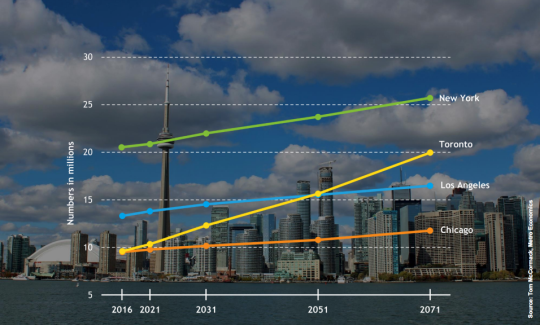
    Here is a slide from the presentation that projects out Toronto’s population to 2071 and compares it to the largest cities in the US.

    image

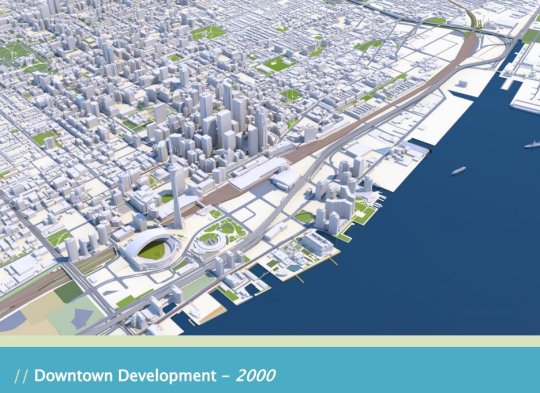
    But the two slides that have been really making the rounds online are the following ones. The first is a rendering of what downtown Toronto looked like in 2000. 

    image

    I remember this time clearly. Queen West seemed to end at Spadina. King West and Ossington weren’t things. And “Richmond and Adelaide” felt like the greatest club district in the world. (If you’re not from Toronto, these references will likely mean nothing to you. Sorry.)

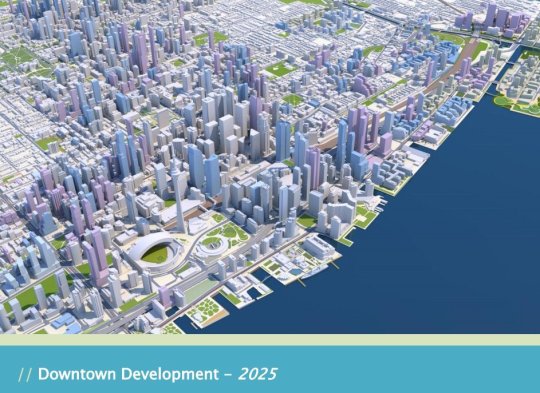
    The second slide is a rendering of what Toronto will look like in 2025. The transformation is just incredible.

    image

    I’ve seen some people comment that the Toronto of 2000 was relatively affordable; the Toronto of 2018 is unaffordable; and the Toronto of 2025 will be even more unaffordable with all of this new development.

    But I don’t understand that logic. Considering the growth rate shown in the first slide, imagine how unaffordable this city would be if we weren’t building new places for people to live and new places for people to work.

    For the full slide deck, go here. And for recent aerial photos of Toronto’s downtown core, check out my Instagram page.

  • We’re new here. Find your home.

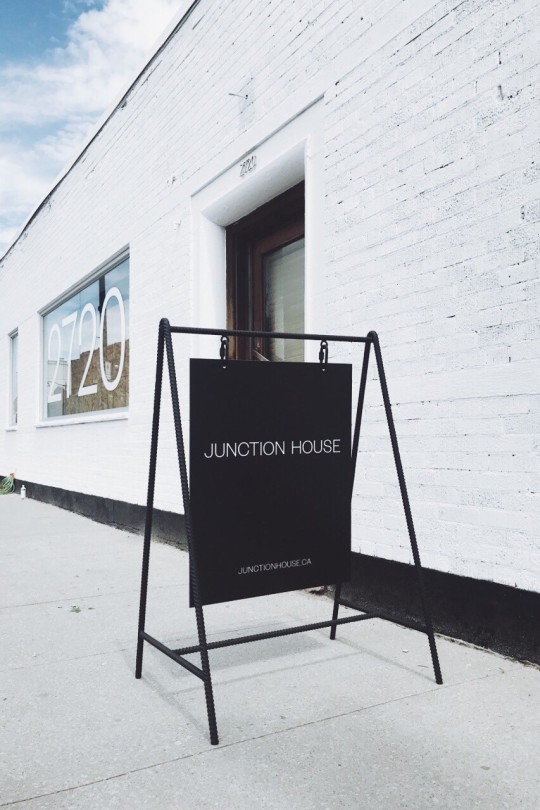
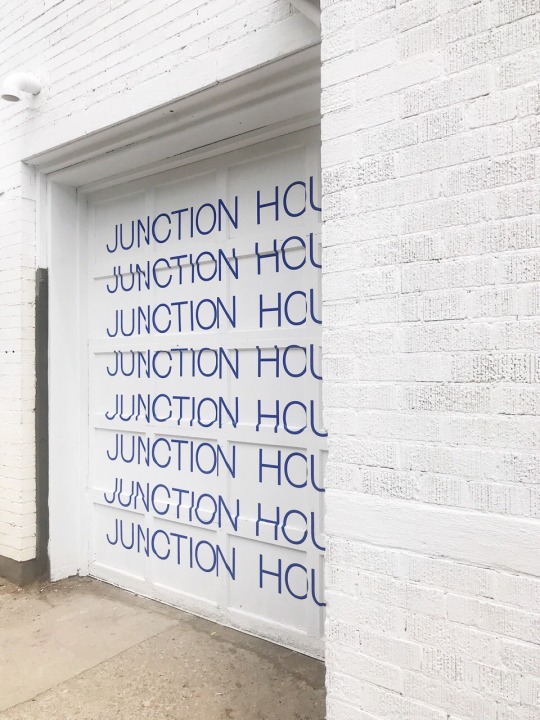
    A simple registration page is now live for our upcoming Junction House (condo) project. We also got this neat sign made:

    Of course, eventually there will be a full website, but this is for people who want to get on the early registrant list and tell us what they are looking for in a new home. Early registration. Early access to suites.

    We’re thrilled with the way the overall brand & identity is coming together for Junction House and we think it reflects the architecture and our project ambitions. 

    Hopefully you all like it as well.

    Photos by Vanderbrand

  • Where are all the kids?

    This evening, when I was reading the internet, I came across this New York Times article from 2017 talking about how San Francisco has the lowest percentage of children of any of the largest cities in the U.S. It’s around 13% of the population. (Supposedly it was the second lowest in 2015. Pittsburgh was first.)

    The article goes on to claim that the city has approximately the same number of dogs as it does children. That number is somewhere around 120,000. Not surprisingly, many blame the city’s prohibitive housing costs as the main culprit for the lack of kids. Families simply cannot afford to live in the city.

    This got me searching for more information. Richard Florida looked at similar data back in 2015, but it’s important to note that he looked at metro areas and not the city propers. So the data doesn’t speak to whether families were forced to move out from the urban core to the suburbs in search of more affordable housing or for more space.

    Nevertheless, he finds no statistical association between the share of children in a city and things like urban density, economic output per capita, or median home prices. He instead finds that the share of children is positively correlated with two main factors: immigration and with ethnicity – specifically people of Latin origin.

    Click here if you’d like to read the rest of Florida’s analysis. And if any of you have additional data on this topic, please do share it below. I think I’m going to continue digging into this question of kids and cities.

    Image: Photo by William Bout on Unsplash

  • Photography heli tour

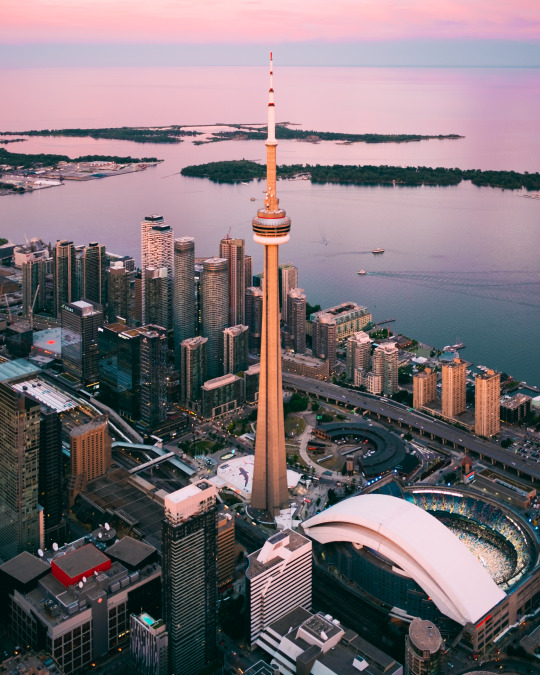
    Tonight I went a photography heli tour with @normandthegang

    I took almost 500 photos, including a bunch of aerials of our development sites. And we got lucky with a pretty spectacular pink sunset. 

    Here is a photo that I took of the CN Tower with my Fuji X Series (35mm prime lens):

    Lake Ontario actually looked like that. This is not post-production chicanery. Follow me on Instagram to see the rest of the photo series.

    Thanks again for the invite Norm. That was a lot of fun. 

  • How New York City became boring

    image

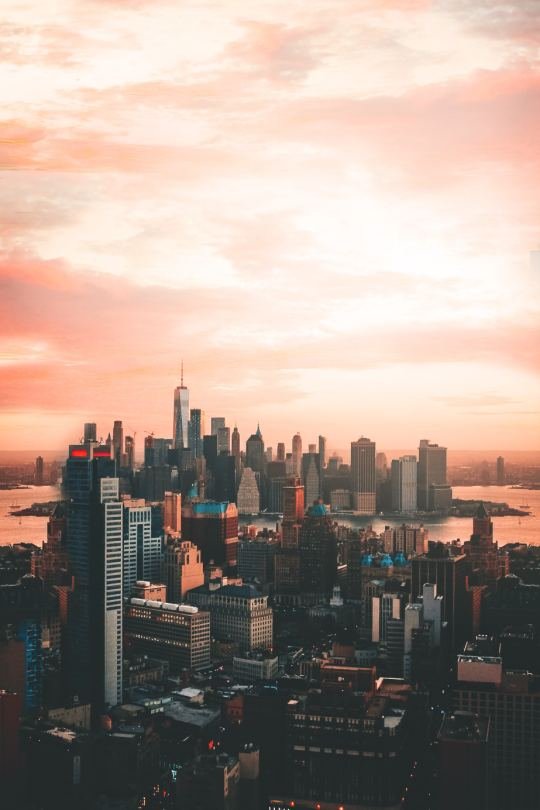
    On the cover of the July 2018 issue of Harper’s Magazine is a picture of New York City – with Rafael Viñoly’s 432 Park Avenue as the focal point – and the title: Death of a Great American City. New York and the Urban Crisis of Affluence.

    The long-form article is by Kevin Baker and it is an account of how New York City has transformed itself over the past few decades from a place of culture and character (and of cockroaches and discarded crack vials) into a place for the ultra-wealthy to buy ultra-luxury real estate that may or may not sit empty for more often than it is occupied.

    “As New York enters the third decade of the twenty-first century, it is in imminent danger of becoming something it has never been before: unremarkable. It is approaching a state where it is no longer a significant cultural entity but the world’s largest gated community, with a few cupcake shops here and there. For the first time in its history, New York is, well, boring.”

    This narrative and/or phenomenon is of course not unique to New York City, though it is surely more pronounced when you are one of, if not the, preeminent global city. In fact, I was sent this article by a reader who was wondering about the possible parallels here in Toronto. Thank you Natasha.

    The desire, which is how Baker ends his article, is that New York City should be a city of “workers and eccentrics” as well as “visionaries and billionaires.” It should be a place for “street photographers” and “hedge fund operators.” That sounds like a pretty cool place to me.

    But we all know how challenging this has proven to be for cities.

    Photo by Dean Rose on Unsplash

  • SoCal Googie

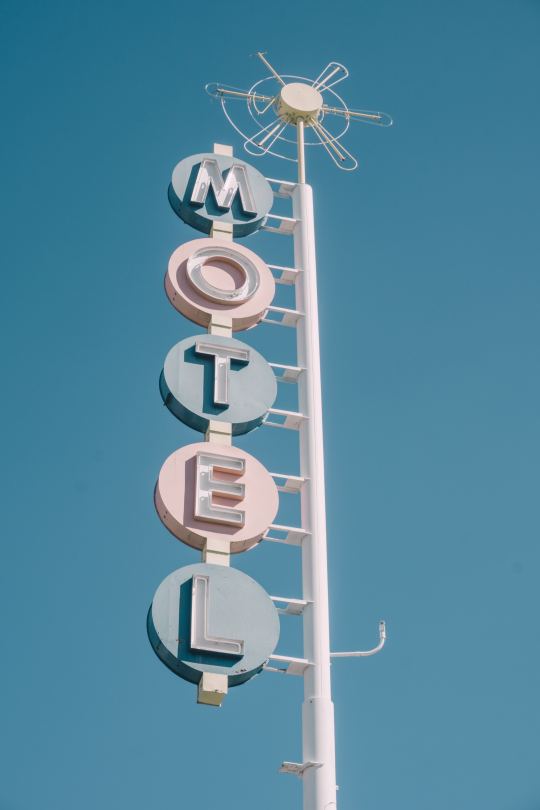
    I must have been sick for this lesson in architecture school, because I just discovered, through Curbed, that there is a subset of mid-century modern architecture known as Googie. It originated in Southern California in the 1940s and was all about the future, car culture, the Space Age, and the many other things that dominated the postwar years. Think starbursts, curvaceous geometric shapes, and bright colors. We all know the architecture. But did you know it was called, Googie?

    Supposedly the Googie movement was given its label by architecture critic Douglas Haskell, who used it in a derogatory way to describe criticize the architectural fashion at the time. Googie was the name of an actual coffee shop in West Hollywood designed by John Lautner. And that’s something that is noteworthy about Googie. It was a form of architecture for average buildings: coffee shops, gas stations, motels, and those sorts of things.

    There will always be critics who eschew that which is fashionable at the time. I suppose one could argue that if you’re being fashionable, then you’re not being timeless. Because fashion is about what’s current. And good architecture should be timeless, right? But there’s something so fascinating about a kind of built form that perfectly captures a particular time and place. Middle of the 20th century. Car-oriented Southern California. 

    Sometimes good architecture and design also needs a bit of time and distance in order to fully appreciate it. What was once garish may one day become treasured. Just give it a generation or two.

    Photo by ian dooley on Unsplash

  • 2720 Dundas Street West

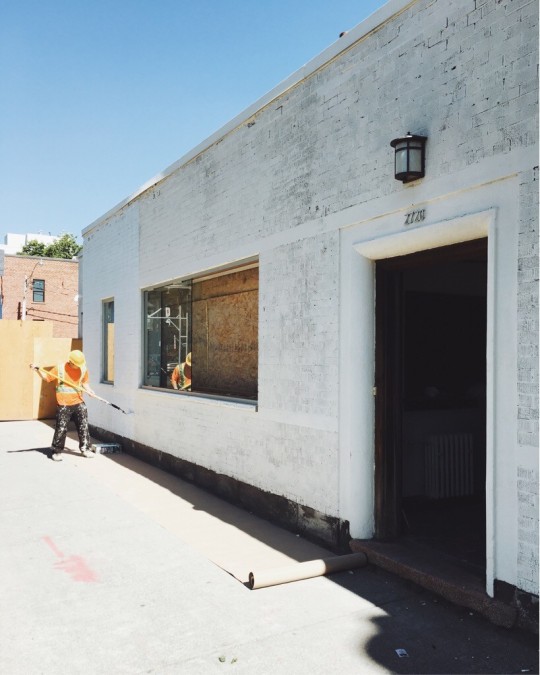
    If you’ve been in the Junction lately, you have probably noticed some activity at the location of our proposed Junction House. Here is a photo that I took this morning of 2720 Dundas Street West. (Sidebar: What an absolutely gorgeous summer day in Toronto.)

    image

    We’re giving the front a coat of fresh white to mark the beginning of the registration phase. Pretty soon you’ll be able to leave your name with us so that we can send you insightful emails and get in touch with you when condo sales begin. 

    At some point 2720 will become home to the Junction House sales office (maybe we’ll even call it something pretentious like a presentation gallery). But that point is not right now. 

    I can, however, tell you that in addition to superkül (architecture), we are working with Paul Johnston / Unique Urban Homes (sales), Dialogue 38 (interior design), and Vanderbrand (creative agency). 

    I am also personally spending a lot of time obsessing over kitchen details and other minutia. I think Charles Eames once said, “The details are not the details. They make the design.”

    If you’d like to be kept in the loop on Junction House, you can follow Slate Developments (nascent account), the Globizen Group, and myself on Instagram. And of course, you’ll also hear all about it on the blog. Have a great weekend friends.