Daily insights for city builders, delivered every morning at 6 AM ET. I’m Brandon Donnelly — a Toronto-based real estate developer and founder of Globizen. I’ve been writing here since 2013.

Tag: urban landscape

  • Long live the neon

    image

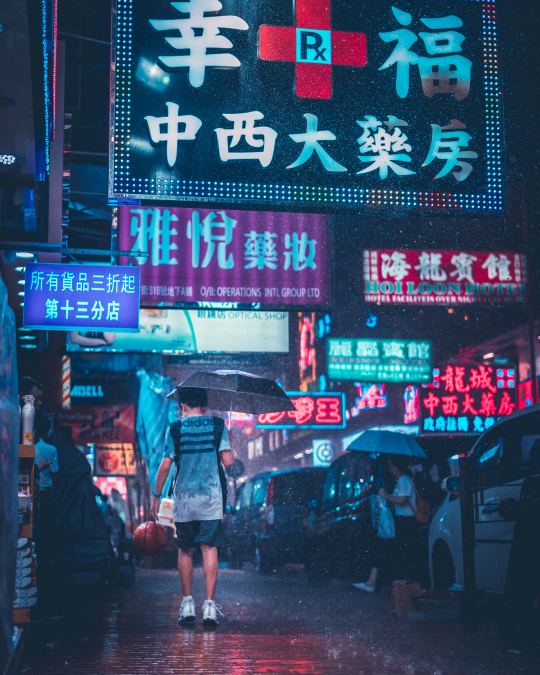
    I like this article and photo essay in the Guardian talking about “Hong Kong’s fight to save its neon shimmer.” Neon lights have been a ubiquitous feature of the Hong Kong nightscape since about the middle of the 20th century. They were an outcropping of increasing economic prosperity. And in many ways they really represent the culture of the city – a frenetic free market where entrepreneurs have no choice but to compete for attention. 

    But thanks to more restrictive sign ordinances and new technologies (though LED can be made to look pretty similar to neon), there’s growing concern that a fundamental part of Hong Kong’s urban landscape may be disappearing. The article mentions a newish (2017) advocacy group called the Hong Kong Neon Heritage Group, which is trying to raise awareness about the city’s remaining lights.

    Love live the neon.

    Photo by Sean Foley on Unsplash

  • The third Los Angeles

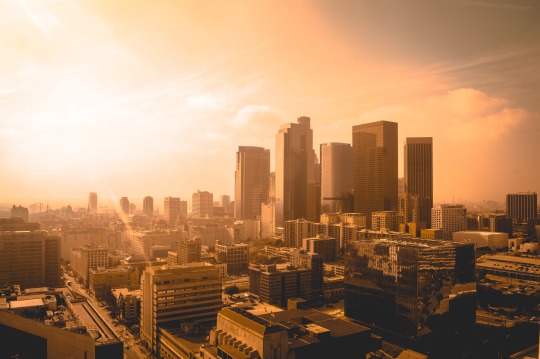
    I just stumbled upon an interview with Christopher Hawthorne (architecture critic for the Los Angeles Times) talking about a “third Los Angeles.” 

    His argument is that the first Los Angeles ran from about 1880 to World War II, and was characterized by a form of urbanism that most of, today, do not associate with LA. It was a city of streetcars, innovative multi-family housing, and local landscapes.

    The second Los Angeles was the second half of the 20th century. And it is the LA that probably comes to mind for most people when they think of LA. It is the city of freeways, single-family homes, and sprawl.

    The third Los Angeles is the city’s most recent iteration and started sometime around 2000. Like many things in life, it is in some ways a return to the past: namely the first LA. It is about urban intensification, transit, and more drought resistant landscapes. It is a city that senses its geographic limits.

    I like how he talks about some of the challenges associated with intensification and this third LA:

    “People in very good conscience who live in Santa Monica or San Francisco think of a moratorium on development as a progressive thing to support rather than reactionary or conservative or just in their own political self-interest. I don’t have a problem with somebody who bought a house at a certain point saying, “I bought into a certain place, you know, I want it to stay this way, and I’m going to use whatever resources I can to keep it that way.” They have every right to say that, even if I disagree. I have a problem with people saying that’s consistent with a progressive agenda about cities or a forward-looking attitude about the environment or about resources. It’s not.”

  • 16 mobile theses and how tech might change the built environment

    Caucasian woman standing near passing subway in train station by Gable Denims on 500px.com

    https://500px.com/embed.js

    One of the things that I try and do here on this blog is examine the intersection of design, real estate, and technology. I didn’t explicitly set out to do that, but more and more I find myself thinking that way when I’m writing and when I’m giving talks.

    Part of that is because of my passions, but part of it is because there is a big and important overlap. One example of that is autonomous, self-driving cars. The tech community is enamoured with driverless cars, but everyone involved in the built environment should also be thinking about their impacts. Because it’ll be significant.

    Benedict Evans – who is a venture capitalist with Andreessen Horowitz in the Valley – recently published a post called, 16 mobile theses. It’s a look at 16 topics, trends, and shifts that are happening in the tech space. (There’s also a related podcast discussion.)

    If you’re involved in internet products, you absolutely need to give it a read. But I also think it’s interesting to read it through the lens of a designer or real estate person. Productivity is changing. Notions around the living room are changing. And yes, autonomous vehicles are going to have a profound impact on the urban landscape of our cities – just as cars did initially.

    Below are 3 excerpts from Benedict’s post that I really enjoyed.

    The first is about mobile and just how massive it is:

    “The mobile ecosystem, now, is heading towards perhaps 10x the scale of the PC industry, and mobile is not just a new thing or a big thing, but that new generation, whose scale makes it the new centre of gravity of the tech industry. Almost everything else will orbit around it.”

    The second is about how “networked” is quickly becoming a given:

    “Our grandparents could have told you how many electric motors they owned – there was one in the car, one in the fridge and so on, and they owned maybe a dozen. In the same way, we know roughly how many devices we own with a network connection, and, again, our children won’t. Many of those uses cases will seem silly to us, just as our grandparents would laugh at the idea of a button to lower a car window, but the sheer range and cheapness of sensors and components, mostly coming out of the smartphone supply chain, will make them ubiquitous and invisible – we’ll forget about them just as we’ve forgotten about electric motors.”

    And the third is about those self-driving cars:

    “The move to electric and the move (if and when) to autonomous, self-driving cars fundamentally change what a car is, but also what the whole automotive system might look like. Electricity changes the mechanical complexity of cars and hence changes who might build them and what they might look like. Autonomy and on-demand services change who buys them, meaning the buying criteria will be different. But they could also change the urban landscape just as much as cars themselves did – what do mass-market retail or restaurants look like if no-one needs to park?”

    Can you think of other ways in which tech will impact cities and the spaces we occupy?

  • What sea level rise is doing to the urban landscape of cities

    Resiliency is an important topic in urbanist circles these days.

    New York is working on a 10 mile “Dryline” to protect itself from future storms similar to Hurricane Sandy. And Miami Beach – one of the most vulnerable cities in the U.S. to sea level rise – is frantically building pump stations and raising its seawalls, streets, and sidewalks.

    Here’s what the city’s public works director had to say via a Curbed article published about a week ago:

    Miami Beach is planning to spend upwards of $500 million over the next five years on the pump stations and street-raising projects. “We are quite certain we are going to buy ourselves another 30 years, and we are hoping we are going to buy ourselves another 50 years,” Carpenter said.

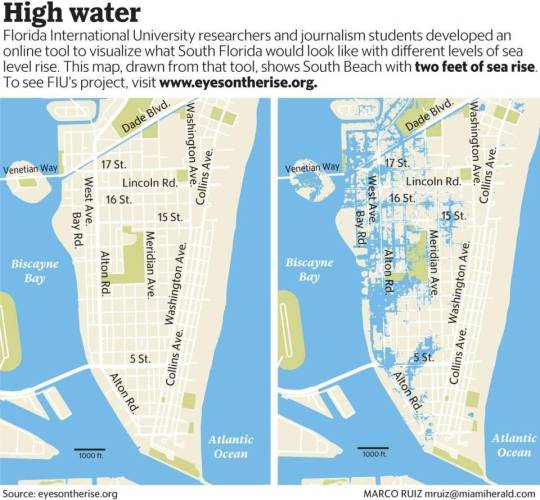
    According to Wired, sea levels off the coast of South Beach have risen by 3.7 inches since 1996. But over the last 5 years the high tide levels have had an average increase of about 1.27 inches per year!

    This matters a great deal because of what South Beach would look like if sea levels increased by 2 feet (via the Miami Herald):

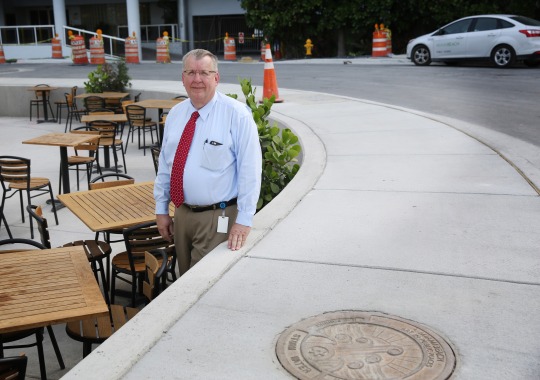
    It’s for this reason that Miami Beach has been working to alter its street elevations and install pumps – as many as 80 of them over the next 5 years – that quickly drain stormwater into Biscayne Bay. (The drains are equipped with backflow preventers so that the water leaves but doesn’t come back into the island.)

    Here’s an example of a raised street and sidewalk (via the Miami Herald):

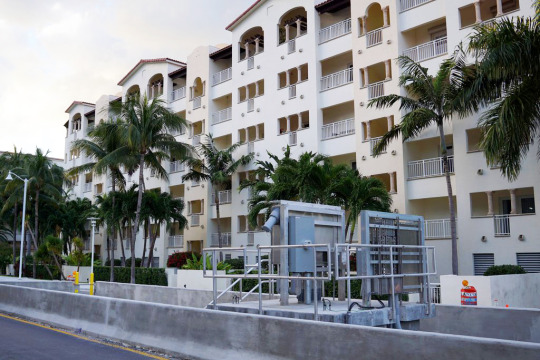
    And here’s an example of a pump station (via Curbed):

    All of this strikes me as necessary work for Miami Beach. But I also think it’s important to keep in mind that all of this is patch work – regardless of how necessary it is right now. 

    The bigger question is: what are we doing to stop sea level rise? That’s the only way we’re going to get to true, urban, resiliency.

  • Rethinking downtowns to improve urban mobility

    Jarrett Walker of Human Transit recently published an interesting post talking about downtowns. His argument is that we shouldn’t be planning our transit networks around the traditional notion of a single-centered city.

    Here’s a snippet:

    So growing a single downtown isn’t the key to becoming a great transit city. Quite the opposite, it’s best to have a pattern of many centers, all generating high demand, and supporting balanced two-way flows between them that let us move more people on less infrastructure.  This is the great advantage of Paris or Los Angeles or the Dutch Randstad over Chicago or Manhattan.

    Now, there are many cases where a singular economic center still dominates an urban region. See downtown Toronto. And many will argue that the current economic environment is creating more, rather than less, concentrated urban spikiness.

    But at the same time it is quite clear that many of our cities have shifted away from a monocentric model to a polycentric one. 

    I mean, just look at all employment nodes that have developed across the Toronto region. The idea that everyone comes downtown in the morning and then leaves in the evening has become an anachronism for many. Early in my career I spent 4 years commuting from downtown to the suburbs.

    So what is happening is that our cities need to start performing more like point-to-point networks. This isn’t a new thought. But it’s a lot harder to execute on compared to what many cities have been used to. 

    You need a critical density of both residents and employers and the right kind of connectivity to create a true “mobility hub.” In Toronto, you could argue that we really only have one of those and it’s centered around Union Station.

    But I think that will change for many cities. And when we do get it right, we will be doing a lot to improve the crippling traffic congestion that so many of our cities are suffering from.

  • The housing typologies of American cities

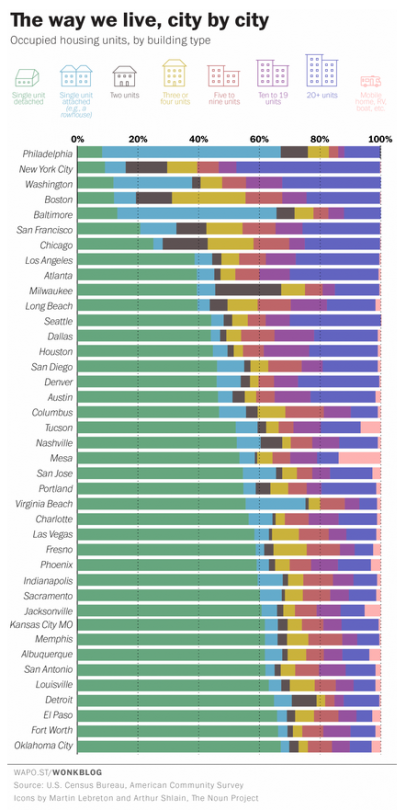
    Yesterday the Washington Post published a great chart showing the housing types of the 40 largest cities, by population, in the US. The list is ordered from lowest to highest according to the percentage of single-family houses in the city (green bar).

    Here’s the chart:

    image

    Not surprisingly, many of the cities at the top of this list (meaning they have the lowest percentage of single-family houses) are in the older east coast cities. 

    It’s also interesting to see just how much the rowhouse dominates the urban landscape in Philadelphia and Baltimore. In Philadelphia, almost 60% of the housing stock is an attached rowhouse.

    Housing is the backdrop for such a big portion of our lives. And when you live in a particular kind of home, it impacts your life whether or not you realize it. The dense rowhouses of Philadelphia and the single-family houses of Oklahoma City are the result of two very different kinds of urban landscapes.

    In Toronto, that backdrop is in the midst of a dramatic change. More and more of us are now living in high-rise condos. That hasn’t always been the case, of course. It’s a recent shift. But it looks like it’ll be a big part of our future.

  • Assembled realities of the New York landscape

    New York photographer Jeff Chien-Hsing Liao has an upcoming solo exhibition at the Museum of the City of New York next month called Assembled Realities. I just heard about it through CityLab.

    Here’s a bit of background on his work:

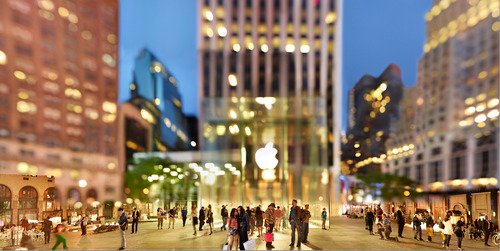
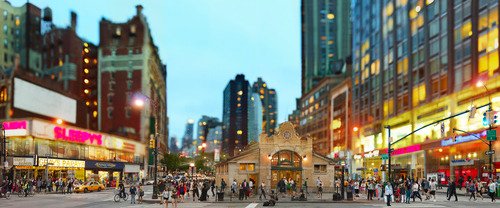
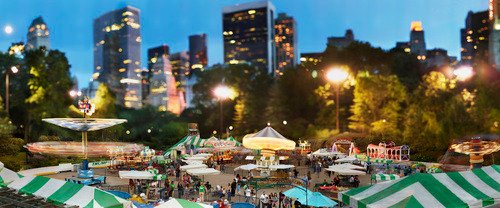
    Pushing the boundaries of traditional documentary photography, Liao (b. 1977) creates large-scale panoramas by combining multiple exposures of the same location taken over the course of several hours. The resulting composite photographs are often fantastical; complex, hyper-real views that no single shot—or the eye—could capture.

    And here’s two more of his photos:

    For higher resolution versions, click here.

    I love how his photos begin to distort reality and how they focus your attention – in many cases – on New York’s vibrant street life. I thought you might all enjoy them as well.