There’s an interesting debate happening online right now. A recent article by Derek Thompson (of the Atlantic) made the claim that today’s urban renaissance is great for young college graduates, but not so good for kids.
Here’s a quick synopsis:
Cities have effectively traded away their children, swapping capital for kids. College graduates descend into cities, inhale fast-casual meals, emit the fumes of overwork, get washed, and bounce to smaller cities or the suburbs by the time their kids are old enough to spell.
Raising a family in the city [New York City] is just too hard. And the same could be said of pretty much every other dense and expensive urban area in the country.
Michael Lewyn (of the Touro Law Center) responded to this argument with a post titled “the myth of the childless city.” While it is true that the US fertility rate is at an all-time low, the numbers — at least some of them — suggest that cities aren’t all that childless:
Furthermore, not all urban cores are doing poorly in retaining children. Washington, D.C. had just under 32,000 children under 5 in 2010, and has over 45,000 today. In Philadelphia, the number of children under 5 increased from just over 101,000 in 2010 to 104,152 in 2018. Even in San Francisco (which, according to The Atlantic article, “has the lowest share of children of any of the largest 100 cities in the U.S.”), the number of under-5 children increased from 35,203 in 2010 to 39,722 in 2018.
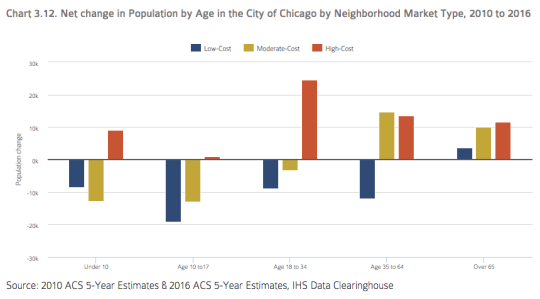
What I would be curious to see is a more granular look at where children are being raised within specific cities, and how that may, or may not, be changing over time. City boundaries can be broad.