Daily insights for city builders, delivered every morning at 6 AM ET. I’m Brandon Donnelly — a Toronto-based real estate developer and founder of Globizen. I’ve been writing here since 2013.

Tag: urban cycling

  • Using maps on a bike

    I have started using Apple Maps when I cycle. I’ve been using Apple instead Google because it automatically pairs with my watch and tells me (through vibrations) when I need to turn somewhere, but I’m not here to argue that one is better at navigating than the other.

    What’s great about using either Apple or Google Maps is that it will take you on routes that have bike lanes or, at the very least, routes that have less vehicular traffic.

    Toronto’s cycling network is far from complete. But I have been impressed by how far I can go on dedicated lanes and by how many lanes/trails exist that I didn’t know about. Here is the city’s 2024 map showing only dedicated bikeways:

    It is not fun riding a bike when you have to fight with city traffic. And so this is a great way to try and avoid that, and not think too much about which routes you should be taking. It’s also a great way to test the completeness of your city’s biking network.

    I’m glad that Toronto is becoming a much better place to ride a bike.

  • Meet Replica

    Sidewalk Labs is currently building out a platform called Replica that will support them in their development plans here in Toronto. Replica is

    “a user-friendly modeling tool that uses anonymized mobile location data to give planning agencies a comprehensive portrait of how, when, and why people travel in urban areas.”

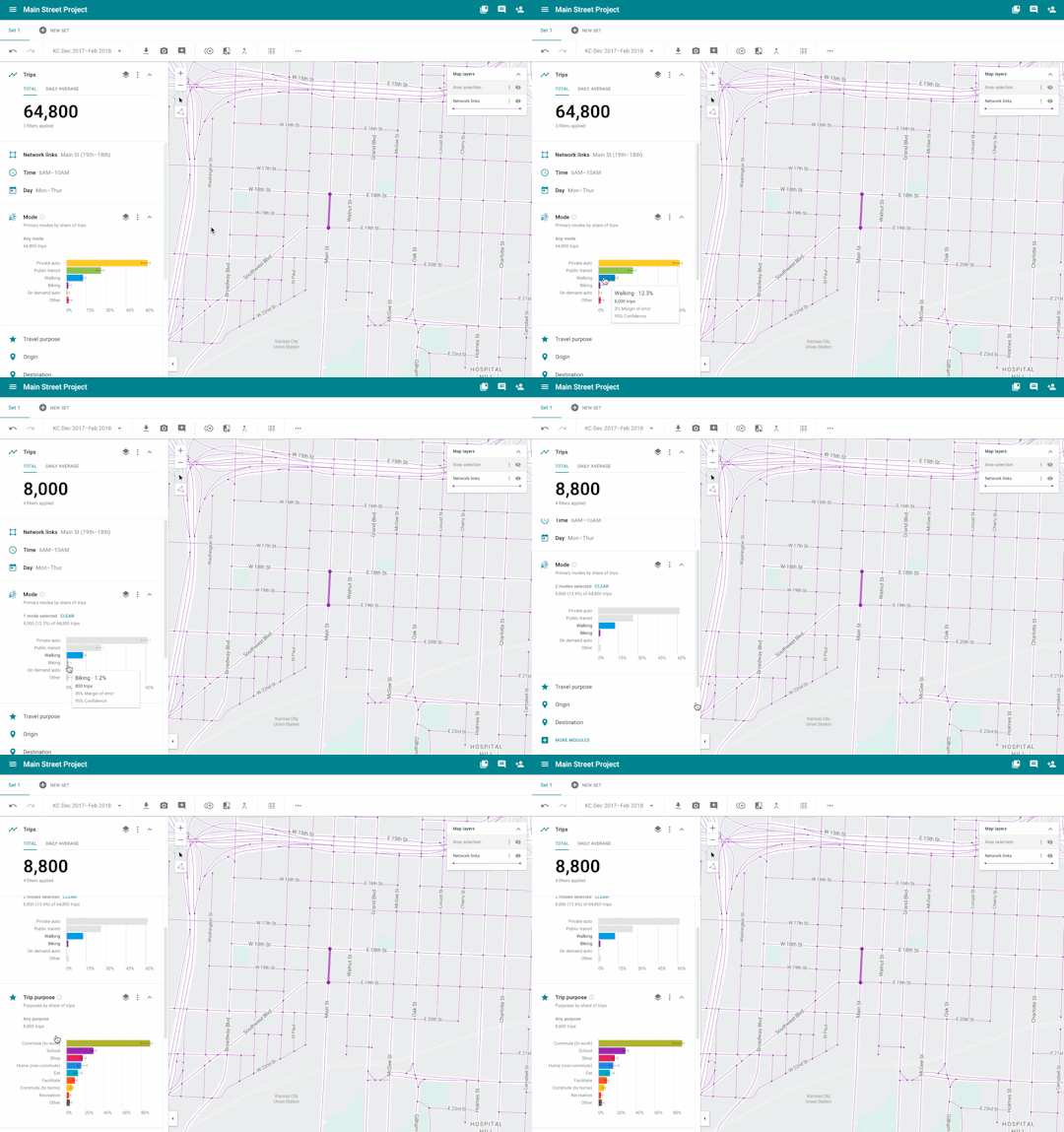
    Here is a preview of the Replica dashboard showing a section of Main Street in Kansas City. I hope the animated GIF shows up for you.

    The platform uses a combination of mobile location data (~5% of the population) and on-the-ground checks, typical stuff like manual traffic counts and transit boardings.

    The goal is to understand in real-time who is using a street, as well as how (driving? cycling?) and why (going to work?).

    Their introductory blog post obviously stresses the importance of personal privacy, but I am curious how they determine where people are going.

    I suppose if they pair journeys with destinations (and the durations at those destinations) they can make reasonable assumptions around the why.

    I think the benefits to all of this are clear. But does any or all of this worry you from a privacy standpoint?

  • Inviting behaviors

    The following paragraph is a great way to describe urban cycling and to explain how our built environment can explicitly invite certain behaviors:

    “If you want people to drive, build more automobile infrastructure. If you want people to bike, build better bike infrastructure. In San Francisco, as in most US cities, we’ve treated the idea of bike infrastructure as secondary to optimizing traffic flow, and have wound up protecting parked cars with bike lanes instead of the opposite. Because of this our bike lanes are plagued with double-parking. While enforcement is an important piece of the puzzle, we usually fail to admit how inviting a striped space between parked cars and traffic appears to an Uber driver. Our built environment invites a driving behavior that causes cyclists to spend much of their commute pushed into traffic, encouraging a culture of every-man-for-himself cycling behavior, adding to the discouraging perception that bikes are for the young and fearless only. This perception is elevated by the fact that bicycling deaths in San Francisco are hovering at least four times higher than the average rate in Copenhagen, a city with ten times as many cyclists.”

    This snippet is from a blog post written by Alex Schuknecht (urban designer with Gehl). In the posts he also contrasts the cycling cultures of San Francisco and Copenhagen – two cities of similar size and density, but with fundamental differences. It’s a good read.

    Many of us probably assume that we are agents of our own lives. We decide what we do and when we do it. We’re our own boss. That’s at least how I want to feel.

    But the built environment is distinct from the natural environment in that we design it. It is not a given. And the environments we collectively choose to fund and build will ultimately have a significant impact on the way we “choose” to live our lives. 

    This gets back to the first line of the above quote: build more of this; get more of that. It’s also related to the startup mantra: “you make what you measure.” If all we’re measuring is traffic flow, then that’s the kind of city we will make. And that’s certainly be done.

    I don’t think a lot of us think in these terms. But we should.

  • The VanMoof hack

    8 years ago the Amsterdam-based bicycle company VanMoof started shipping bicycles to its customers. And since that time, they struggled to find a quality shipping partner that wouldn’t damage the bikes in transit. 

    They tried every varietal of shipping company, but the problem persisted. And since their goal was and is to sell 90% of their bikes online by 2020, they knew that they needed to solve this problem.

    So here’s what they did. This is a great story.

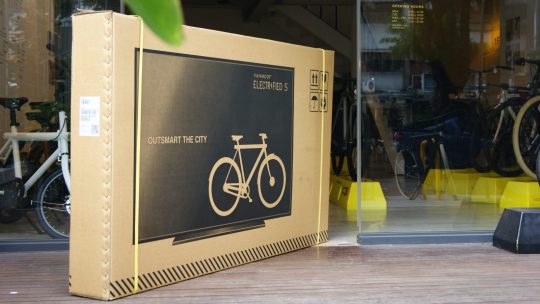
    They noticed that their bicycle boxes were about the same size as a large flatscreen TV. And since flatscreen TVs seem to always arrive in perfect condition, they decided to print a TV (along with an image of their bicycle) on the box.

    Here’s what that looks like (via QZ):

    The result? They immediately saw a 70-80% drop in shipping damages. That’s all it took. I love that.

    Since I know that a lot of you are cyclists, I thought you might appreciate this little hack. Their bikes are also quite stylish and reasonably priced if you happen to be in the market. (I am waiting to hear back on whether they ship to Canada.)

  • Changing Lanes — A fireside chat with Jennifer Keesmaat and Janette Sadik-Khan

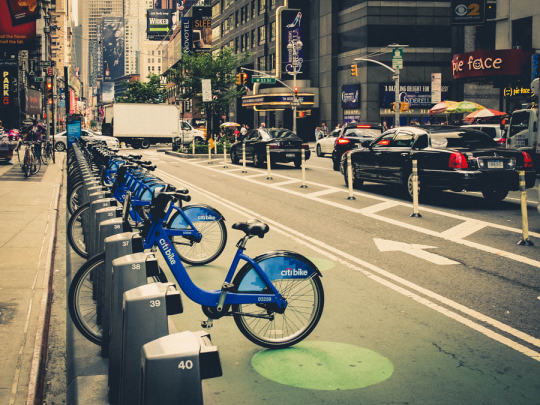
    Citi Bike by Pete  on 500px.com

    https://500px.com/embed.js

    When I was in Miami at the beginning of this month I missed an interesting event that I normally would have attended. It was a conversation between the Chief Planner of Toronto, Jennifer Keesmaat, and the former commissioner of the New York City Department of Transportation, Janette Sadik-Khan.

    Sadik-Khan was appointed under the Bloomberg administration and quite famously oversaw a huge number of urban changes in New York. Projects such as the addition of hundreds of kilometers of new bike lanes and the creation of 60 new pedestrian plazas across the city – including the one in Times Square.

    I was bummed I couldn’t attend, but thankfully Keesmaat wrote a post on her blog following the event and the Metcalf Foundation shared videos of the conversation. 

    Here’s a piece that I liked from Keesmaat’s blog post:

    “But she also pointed out that when they demonstrated what could be done, when they quickly mobilized around action, residents clamoured for similar changes in their neighbourhoods. Not surprisingly, this is why her book is called Streetfight – because it is a fight. City building is often the battle of ideologies, and when you’re trying to change the status quo, there is always a significant demographic of the population that is fully committed to maintaining business-as-usual.”

    If you have some time, you can also click here to watch the videos. There’s about an hour and a half worth of video, so you might want to open up a bottle of wine or something.