Daily insights for city builders, delivered every morning at 6 AM ET. I’m Brandon Donnelly — a Toronto-based real estate developer and founder of Globizen. I’ve been writing here since 2013.

Tag: urban capital

  • 5 city builders who read Architect This City

    image

    A few weeks ago I wrote about showcasing the Architect This City community. The idea was that there are lots of interesting and talented people who subscribe to this blog, but that there’s no scalable way for me to connect with everyone.

    So I wanted to provide an opportunity for you to share a bit about yourself on this blog. I could selfishly learn more about the kinds of people who read ATC; you and/or your company could benefit from a bit of exposure; and you all could get the opportunity to connect with one another.

    I didn’t get quite as many responses as I thought I would — which is partially why it has taken me so long to write this post — but I did get a lot of positive feedback on the idea. So I’m excited to share 5 of the people and companies that did respond.

    Darren Davis @ Auckland Transport (Auckland, New Zealand)

    Proudly car-free Principal Public Transport Planner, and arch transit nerd, at Auckland Transport. Auckland Transport is in the midst of the biggest redesign of the city’s public transport system since the introduction of electric trams in 1902. We are taking a once-in-a-generation opportunity to reimagine public transport by going back to first principles, in an exercise inspired by Human Transit and strongly influenced by its author, Jarrett Walker. 

    Travis Goodhand @ Entuitive (Calgary, Canada)

    We are a consulting engineering practise — structural, building envelope, restoration, and special projects & renovations — bringing together engineering and intuition to enhance building performance. Entuitive is creative, collaborative, and advanced.

    Taya Cook, Development Director @ Urban Capital (Toronto, Canada)

    We develop forward thinking condominiums with a focus on urban location, fantastic design and superior customer experience. I work there. Really B, do you need more reasons for awesomeness?

    Sara Parratt-halbert @ South Yorkshire Forest Partnership (Sheffield, UK)

    Currently managing a Europe-wide €4m ERDF funded project, ‘Stimulating Enterprising Environments for Development and Sustainability’ (SEEDS).  SEEDS is working with 8 partners across 6 countries towards establishing acceptance of the temporary use of abandoned places and spaces as an integral part of longer term planning.

    Cynthia Mykytyshyn @ Urbanspace Gallery (Toronto, Canada)

    Urbanspace Gallery is a unique venue, dedicated to diverse exhibitions and events that explore how cities work and how we might improve them. Our purpose is to present issues related to community, public space, housing, transportation, planning, governance, and sustainability (among others) in order to further the discussion about our own city and others around the world, while fostering a space of learning and reflection.

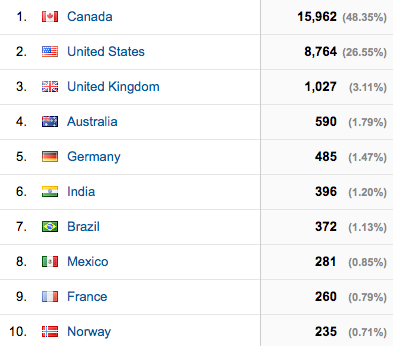
    Most of the people who responded were from Toronto and Canada. And that’s not surprising given how local a lot of my content is. Half of the ATC reader base is currently from Canada.
    image

    But I did also get emails from many other places all around the world. It always amazes me to see where people are reading from. My only wish is that I could learn more from them (you). So drop me a line. I hope to do another community profile sometime soon.

    Many thanks to everyone who responded!

    Image: How Does Your Neighbourhood Grow? (Urbanspace Gallery)
  • 8,000 glowing balloons are recreating the Berlin Wall

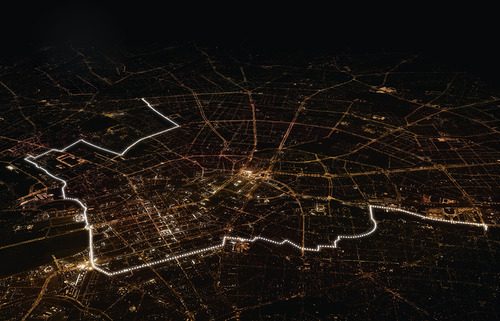
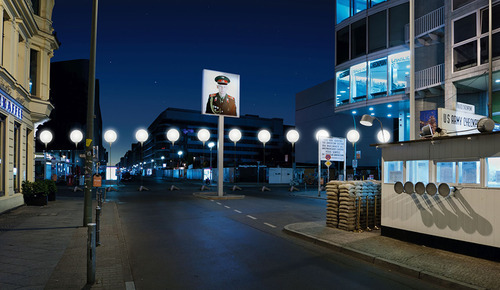
    Starting today and running until the end of the weekend, 8,000 glowing balloons will recreate a 15 km long section of the former Berlin Wall. It’s to commemorate 25 years since the fall of the wall

    Here’s an aerial view of what it’ll look like:

    I think this is a fascinating art installation. And I wish I could be there to see it first hand. My friend Nick Iozzo is there right now with his wife, so hopefully they’ll respond to this blog post with some highlights.

    Lots of cities today feel divided in some way.

    Here in Toronto, we talk about the divide between the core and the inner suburbs – the latter of which has become known as Ford Nation. We also talk about an east vs. west divide, though it’s not really a legitimate concern. Developer Urban Capital actually has an event next week on this very topic that I’ll be attending. They’re calling it: “an intelligent discussion on a not so important topic.”

    But none of these divides are anything like the divide faced in Berlin. The Berlin Wall was arguably the most visible physical manifestation of the entire Cold War. Once a major point of entry for Eastern Bloc emigrants, East Berlin was basically bleeding people before the wall went up in 1961. It was designed to keep East Berliners in place.

    I can’t even imagine what it would be like to live in a place like that.

    Images: Daniel Buche

  • How much space do you need?

    Urban Capital has just unveiled its new Smart House condo project here in Toronto. With units starting at 289 square feet, the project is all about ultra-compact and ultra-smart living.

    While micro-apartments are trending right now, they’re not a new idea. Architects have been fascinated by modular, adaptable and compact living for ages. Here’s an example of 100 square foot living capsules built in Tokyo in the 1970s.

    Tokyo, of course, is a unique example. There you have the entire population of Canada living in one city. But that doesn’t mean that Toronto isn’t feeling the pressures of urban intensification. Apartments are getting smaller.

    But the interesting thing about space is that it’s a relative thing. I personally live in 650 square feet and find it more than enough space. Though I also place a huge value on my time and try to minimize the amount of traveling I need to do.

    And this is really the trade off you make with space. As you move further away from a city (and housing costs drop), you’re effectively shifting those housing costs to transportation costs. Which includes real costs like gas and time, as well as more intangible costs like quality of life.

    However, I know many people that are willing to make that trade off for more space. But I wonder sometimes how much of that incremental space is necessity versus perceived necessity.

    How much space do you need?

  • Following up on the downtown eastside

    Cross-posted on Dirt

    Last month I wrote a post on why I was bullish on Toronto’s downtown eastside. I outlined 3 reasons: amount of change; connectivity; and the fact that I believe the Distillery District has better long term potential than Liberty Village.

    Since then, I’ve spent quite a bit of time in the area. I recently did a biking tour of the under construction River City condos, Underpass Park, Corktown Common Park (which is only open until September since construction isn’t finished yet), and the Canary District condos.

    Every time I visit this area of the city I become more excited about its prospects. There’s still a long way to go, but we seem to be on the right track towards building the West Don Lands into a successful downtown neighbourhood. Pretty soon, the Distillery District won’t feel like such an island.

    However, the real challenge is going to be the Front Street Promenade, which is intended to be the main drag of the neighbourhood. Getting the right retail mix and creating real urbanity isn’t always easy. But if do get it right, it could be a tremendous anchor for the eastside, which we all know can be a bit sleepy compared to King and Queen West.

    I would encourage you to check out the area when you have a moment. Corktown Common offers great views of the city and the emerging area.