
Daily insights for city builders, delivered every morning at 6 AM ET. I’m Brandon Donnelly — a Toronto-based real estate developer and founder of Globizen. I’ve been writing here since 2013.

Tag: uoft

  • Releasing the shackles on mid-rise development

    I love mid-rise buildings. I think they are an incredibly livable scale of housing, which is why I am looking forward to moving into Junction House when we begin occupancies next year. But as we have talked about many times before on the blog, the mid-rise economics are challenging in this city, which is why we also don’t have any other Avenue-style mid-rise projects in the pipeline right now. We haven’t been able to find land where the math works.

    Here are two excerpts from a recent Globe and Mail article — titled “Toronto’s mix of planning rules limits growth of mid-rise housing” — that speaks to this dynamic:

    For well over two decades, Toronto’s official plan has called for transit-oriented intensification along the “Avenues,” much of it expected in the form of mid-rise apartments that can be approved “as of right” – meaning without zoning or official plan appeals. Such buildings are often seen as more livable and human scale than 50- or 60-storey towers.

    Yet, ironically, the highly prescriptive Mid-Rise Guidelines – combined with skyrocketing land, labour and building costs, as well as timelines that can run to six years for a mid-sized building – have turned these projects into pyramid-shaped unicorns, often filled with deep, dark and narrow units dubbed “bowling alleys.”

    “The economics are so frail,” says architect Dermot Sweeny, founding principal of Sweeny & Co., who describes the angular plane requirements as “a massive cost” because they make the structure more complicated and expensive while reducing the amount of leasable or saleable floor space.

    The critiques extend beyond the industry. Professor of architecture Richard Sommer, former dean of the John H. Daniels Faculty of Landscape, Architecture and Design at the University of Toronto, describes the controls in the guidelines as “very crude.” “They’re built around a mindset of deference to low-rise communities.”

    My opinion is that, at a minimum, we need to revisit the “guidelines” that govern these kinds of projects and we need to make this scale of development “as-of-right.” In the same way that laneway suites work, where you simply apply for a building permit, we need to make it just as easy for mid-rise housing. There just too many barriers and too many opportunities for something to come up that could hold up the entire project for months or years.

    Building at a variety of scales is important for the fabric and vitality of our cities. Unfortunately, I have all but made up my mind that small doesn’t work unless it’s as-of-right. I would love to build another laneway house and I fully expect that to happen at some point in the near future. But I just can’t seem to get my head around another mid-rise building right now. I wish that wasn’t the case. And it’s certainly not because of a lack of effort.

  • Director, Real Estate

    The University of Toronto is looking for a Director, Real Estate to manage their tri-campus portfolio of income producing real estate, as well as the development opportunities that they have on and adjacent to their three campuses. The downtown campus alone is over 120 buildings across 130 acres.

    A good friend of mine is helping with this search; I went to the University of Toronto (twice); and I believe that institutions, such as U of T, play an important city building function. So I’m sharing this opportunity with all of you today. For more on the University’s development strategy, click here.

    They are looking for someone with 10+ years of experience. The salary will be competitive and commensurate with this level of experience. And you would be reporting directly to the Chief of University Planning, Design & Construction. 

    If you’re interested, you can apply here. You have until January 25, 2019 to do that. I hope the position gets filled with a star. Also, sorry if this post isn’t relevant to you. Regularly scheduled programming will resume tomorrow.

  • Uber to invest $200 million in Toronto

    Uber CEO Dara Khosrowshahi was in Toronto today, where he announced that the company plans to invest more than $200 million over the next five years to expand the autonomous vehicle research lab that it already has here in the city. 

    The Toronto outpost of Uber’s Advanced Technologies Group (ATG) – which is its only international outpost – is led by renowned University of Toronto professor, Raquel Urtasun. She is also the cofounder of the Vector Institute for Artificial Intelligence and splits her time between Uber and UofT.

    With this investment, Uber also expects to open its first engineering facility in Canada and grow its local headcount to 500, up from the 200 or so it has today. Some of these hires will be local. Some will be international. And some will be transplants from Uber’s other offices.

    Also notable about the announcement is that Khosrowshahi mentioned that he thinks fully autonomous vehicles roaming the streets of our cities is a good 10 years away. But I wonder if that isn’t political PR speak intended not to spook its drivers. So are we closer to the mid-2020′s?

    Either way, as a proud Torontonian and UofT alumnus, I was happy to see this announcement. I think it’s far more exciting than the Apple event that took place earlier this week.

  • The MFA is the new MBA

    Harvard Business Review recently published a conversation between Roger Martin – who is the former dean of the Rotman School – and Tim Brown – who is CEO of the global design firm IDEO. The title of the talk is “Capitalism Needs Design Thinking.” But I decided to call this post something else after reading Roger say this:

    My friend Dan Pink argued in an HBR piece in 2004 that the MFA is the new MBA. I wrote to Dan to say that if that’s the case we have a problem because America pumps out a mere 1,500 MFAs a year versus 150,000 MBAs. Thirty MFAs per state per year is just a rounding error. This is one of the reasons I was so keen on transforming business education. It’s a huge infrastructure: 27% of all graduate students in America are in an MBA program. If they’re all being taught how to analyze things to death, that’s going to affect how they’ll shape the future of business.

    But what this conversation is really about is the future of democratic capitalism, which is why I think it’s a nice tie-in to yesterday’s Architect This City post about startups and inequality.

    I’m very worried about the fact that in America we’ve now gone 24 years without the median household income rising — it was the same in 2013 as it was in 1989. That’s unprecedented in American history. The longest that’s ever happened before is when it took just under 20 years to recover, after the Great Depression. This long period of stagnation has coincided with the top 1% of the economy doing spectacularly.

    And so while it’s easy to point fingers at the tech community and say that it’s to blame for rising income inequality, the reality, I think, is that there are other more fundamental issues that need addressing. Roger and Tim believe that design thinking can help. Here’s another great snippet from the former:

    I think the way that government generally works is to think, think, think, think, and then finally create legislation that brings about some change, and then they ignore their legislation and say okay, we’re finished with that. Then people go and figure out how to game that legislation, and the government doesn’t do anything about it. Whereas if they had a design view of it, they’d say when they passed a bill, that’s just the best idea we’ve got now, we have to go see how it works in practice, and then fix it. That’s just not the mentality.

    Technology is having a profound impact on the world. And it’s something that is very visible. But part of the challenge is that governments aren’t keeping up. They are almost never out in front.

    So when something new comes along, like Airbnb or Uber, the reaction is to just stop it. It doesn’t conform to the rules and regulations currently in place, and so it shouldn’t exist.

    But as Roger and Tim point out, maybe we need to look at our rules and regulations as simply part of an iterative process (like designers do). Because if we did that, maybe we’d be better equipped to transfer the benefits of innovation over to society as a whole.

    Image: HBR

  • Panel: What is Smart Now?

    image

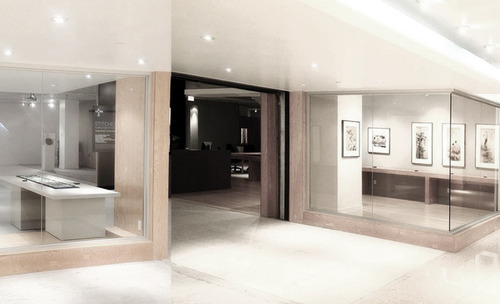
    This Tuesday evening at 630pm, WORKSHOP – which is a design studio, gallery, and retail shop located in Yorkville, Toronto – will be hosting a panel discussion titled: What is Smart Now?

    On the panel will be a building scientist, a computer scientist, and two architects. The moderator will be Larry Wayne Richards, who is Creative Director of WORKSHOP and the former dean of the Faculty of Architecture, Landscape, and Design at the University of Toronto. He was dean when I was completing my undergraduate degree and is one of my favorite people in the world of Toronto architecture.

    Here’s a bit more on the panel:

    For more than half a century, visionaries and companies such as Monsanto, Hewlett-Packard, Microsoft, and Samsung have promoted the concept of technologically smart homes with highly integrated, interactive systems.  However few of these homes have actually been realized, leaving us to wonder why.

    Meanwhile, architects, builders, and home owners have become aware of the advantages of being smart in terms of energy efficiency and sustainability, from using common sense to selectively employing high-tech.  

    But now, with the digital realm and software advancing rapidly, will sophisticated smart home systems merge with recent advances in high performance materials and energy-efficient construction, making “totally smart” (and affordable) homes commonplace? Will we finally be living in the magical future that was imagined 50 years ago?  And what are the implications for architects and architectural education?

    And here are the panelists:

    • PAUL DOWSETT, Architect and Founding Principal, Sustainable TO
    • SRINIVASAN KESHAV, Professor of Computer Science, University of Waterloo
    • TED KESIK, Professor of Building Science, University of Toronto
    • JANNA LEVITT, Founding Partner, LGA Architects, Toronto
    • LARRY WAYNE RICHARDS (Moderator), Creative Director, WORKSHOP

    Given the current “Internet of Things” trend and the fact that software is creeping into so many non-tech fields, such as housing, I think this is a really timely discussion to be having. I also think it’s critical for these kinds of conversations to be cross-disciplinary. There are infinite opportunities in the housing market for people who are able to think in that way.

    If you’d like to attend, click here to sign up. It’s free and open to the public. WORKSHOP is located in the lower concourse level of 80 Bloor Street West.

    Image: WORKSHOP

  • Real artists ship

    Last night at 10pm I finished my last MBA exam, ever.

    I’ve spent the past 2.5 years completing my MBA part-time at the Rotman School (at the University of Toronto). Since I had already done a 3-year masters (I know, it’s a lot of school), I had decided that my opportunity costs were simply too high and I wanted to remain working.

    But in order to do that, it meant I had classes from 7-9am and then went to work for the day. This past semester I had those morning classes 3 times a week. It’s made for an intense 2.5 years, especially when you add in group meetings, tutorials and other commitments.

    But as much as I’m happy to be finished the program (I fast tracked to finish a semester early), there’s always something bittersweet about closing one chapter and moving onto another.

    Since 2011, being a “MBA student” has been part of my personal brand. I would talk about the classes I was taking, and I would try and apply what I was learning to what I was doing in real life—both professional and personal. Believe it or not, I once had a debate with a Baptist Minister over the discount rate I used in one my calculations for a lease agreement.

    And while I have learned a lot through almost 6 years of graduate education in both Canada and the US, this is in many ways only the beginning. When I was younger I used to tell myself that my 20s should be about formal education, exploring, and crafting my identity, and that my 30s should be about execution.

    Well now it’s time to execute. In the words of the Steve Jobs: “Real artists ship.

  • From sunset to sunrise

    Tonight is Nuit Blanche in Toronto. Running from sunset to sunrise, the festival is a collection of more than 110 contemporary art projects scattered all around downtown. It’s one of my favourite events in the city.

    This year one of my good friends has organized an installation called My Virtual Dream. It involves some sort of large dome structure and is located at University & College in front of the UofT pharmacy building on the north west corner.

    But other than the art, one of the things I love about Nuit Blanche is what it does for the city. It brings everybody out and onto the streets in order to explore and experience the city in a totally different way. Spaces get repurposed and new environments emerge. It’s a fun time to be in Toronto.