Daily insights for city builders, delivered every morning at 6 AM ET. I’m Brandon Donnelly — a Toronto-based real estate developer and founder of Globizen. I’ve been writing here since 2013.

Tag: travis kalanick

  • CloudKitchens quietly expands across Latin America

    Despite having somewhere around 4,000 employees and being valued at upwards of $15 billion (2021 figure), CloudKitchens remains an incredibly secretive company. In 2020, it was reported that they had spent over $130 million in the preceding two years on properties in about two dozen cities, and this week the Financial Times reported that they have been quietly building “dark kitchens” across Latin America, alongside a new food and convenience goods business called Pik N’ Pak.

    The way this all supposedly works is that the “dark kitchens” prepare the food for delivery and pick-up takeaway, and any excess space within these buildings is used to store convenience goods like over-the-counter medicines and pet foods. I guess it is literally about picking and packing various items that you can then attach to takeout orders. In both cases, the food and goods are delivered to customers using local app companies such as Uber Eats.

    All of this appears to represent a shift in the supply chain for takeout food and various convenience goods. But what I am really curious about right now is what the real estate footprint of this network looks like within our cities. What is the optimal square footage of a ghost kitchen? What radius do they serve? And how does this ultimately change the landscape of our cities? I don’t know the answers to these questions, but change appears to be underway. Here’s an excerpt from the above FT article:

    “…the growth of dark kitchens across Latin America has caused controversy in certain cities. The proliferation in São Paulo, the largest city in the Americas, sparked objections from residents living nearby, with banners against new facilities appearing in well-heeled neighbourhoods. The town hall has proposed local regulation of dark kitchens and earlier this year placed a temporary ban on the issue of new licences. People have complained about noise, smells, smoke and motorcycle drivers — known colloquially as motoboys — waiting outside to collect orders. One unhappy local said his son had been nicknamed “bacon” and bullied in school because of the odour on his clothes, according to Cris Monteiro, a city councilwoman.”

    Travis Kalanick seems to have a knack for upsetting people and changing the way our cities operate. Although, the same could be said about a lot of other startups.

  • CloudKitchens has spent more than $130 million on property over the last two years

    According to a recent Wall Street Journal review of property and corporate records, Travis Kalanick’s ghost kitchen startup, called CloudKitchens, has spent over $130 million over the past two years buying more than 40 properties in about two dozen cities.

    Travis is co-founder and the former CEO of Uber and this latest startup provides commercial kitchens to restauranteurs who are looking for a low-cost way to launch delivery-only food concepts.

    In some ways, it can be compared to coworking spaces for delivery-only restaurants. Instead of renting a full restaurant space, you lease 200-300 square feet of real estate at a lower cost address. CloudKitchens then handles all of the distribution and fulfillment, effectively lowering the barriers to entry for food startups.

    Some of the properties that they have been buying include a vacant restaurant space in Miami Beach for $9.2 million (May 2020) and an industrial property in Queens, New York for $6.6 million (March 2020). They’ve also bought in cities like Portland and Las Vegas.

    As you might imagine, now is a pretty good time to be buying some of these properties. And if you think about it, there are some real cost advantages to what they are doing, not to mention some co-working-style arbitrage on the real estate.

    The company is apparently going to great lengths to conceal what and where they are buying. But what is perhaps more interesting is their asset-heavy approach. They’re buying lots of real estate, which is inline with what companies like Opendoor are doing, but is distinct from Uber’s asset-light approach.

    It is also different from what many other ghost kitchen startups are doing. It seems that most are leasing their spaces. There has to be a reason for this difference.

  • My new gig…

    image

    So this is interesting.

    Earlier this month, Travis Kalanick – co-founder of Uber and its former CEO – formed a new venture fund called 10100. According to the WSJ, it was funded with his own money after he sold 30% of his position in Uber for a cool $1.4 billion. 

    Ten-one-hundred’s spartan website explains that the goal of the fund is “large-scale job creation, with investments in real estate, ecommerce, and emerging innovation in China and India.” On the non-profit side, the initial focus will be on “education and the future of cities.”

    Then this week, Travis tweeted out “My new gig…” and disclosed that 10100 had entered into an agreement to buy a controlling interest in a real estate holding company called City Storage Systems (CSS) for $150 million. 

    He also announced that he would become CEO.

    The focus of CSS is on the redevelopment of distressed real estate, particularly parking, retail, and industrial assets. He goes on to say: “There are over $10 trillion in these real estate assets that will need to be repurposed for the digital era in the coming years.”

    This whole series of events is a big bet on some significant changes in the real estate space.

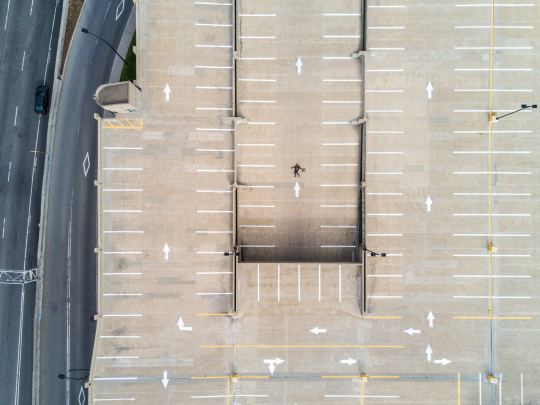
    Photo by Martin Reisch on Unsplash

  • Should Uber be shut down?

    image

    Last week Travis Kalanick – the cofounder who built Uber into the most highly valued privately held startup in the world – stepped down as chief executive at the request of his investors. This was the culmination of months of controversy related to the company’s toxic corporate culture.

    So what’s next? 

    Benjamin Edelman, associate professor at Harvard Business School, recently argued that this is it for the company: Uber Can’t be Fixed – It’s Time for Regulators to Shut It Down. I discovered the article through a good friend of mine who has felt similarly since the beginning. Uber’s business model is predicated on illegality and that should not be misconstrued as “innovation”.

    I have a few thoughts on this.

    But let me start by saying that this post is not a comment on the company’s corporate culture or its internal practices related to lobbying governments. I have not really been following what’s going on internally and I’ll leave other, more informed, people to comment on those matters.

    With that said, here are 3 thoughts.

    One, shutting down the company feels like an extreme case of throwing out the baby with the bathwater. Lots of companies go through restructuring, assuming that’s needed, without completely capitulating.

    Two, before Uber came along it was still challenging to pay for a taxi in Toronto with a credit card. More often than not the driver would tell you that the machine was broken or ask that you instead pay with cash. At that point, I would have accepted a clunky payment machine mounted to the rear of the front seats as an innovation.

    To say that Uber’s technological innovations were all banal things that its competitors were already about to introduce is downplaying so much of what the company has done outside of its beneficial cost structure. 

    We got perfect information: Where is my car right now? We got full pricing transparency before even accepting a ride: Should I take an Uber or transit or should I drive? We got the ability to get in and out of a taxi without pulling out our wallets: I’ll quickly jump out at this red light. We got dynamic ride pooling and cost sharing: Let’s split this ride 3 ways to bring the fare down. And we got clean cars that didn’t smell.

    Why weren’t any of the incumbent taxi companies do this?

    Three, I fully agree that Uber (unfairly?) benefited from a meaningful cost advantage by operating in the unregulated side of the market. This was a huge boon for the company because, as the data suggests, the demand for taxis is highly elastic.

    But I also believe that the incumbent taxi companies were perpetuating a marketplace that was anything but free enterprise. It ensured that the status quo was maintained and that those who historically benefited from the system continued to benefit from the system.

    Because of this, I’m not sure that we would have seen the innovation that we saw without a company like Uber deciding to operate within a gray area and not ask for permission. Protectionism may have stomped it out. This may be why Hailo – which operated in the regulated side of the taxi marketplace here in Toronto – ultimately wasn’t able to survive.

    Though I suppose you could argue that Hailo’s failure (at least here in Toronto) strengthens the argument that Uber was only able to thrive because of its illegal cost structure. 

    However, it’s important to remember that Uber got its start by actually charging more than traditional taxis. At the outset it didn’t have enough liquidity in its marketplace to compete based on speed and/or price, and so it decided to offer a premium experience. 

    UberX didn’t introduce steep discounts until later on and even today many people will gladly accept surge pricing at multiples of a regular taxi fare. Clearly customers are deriving some other benefits from the app.

    Edelman ends his piece by referencing Napster as an example of another startup that defied legality and was ultimately forced to shut down. Again, shutting Uber down seems extreme to me, but I do agree with his conclusion. Regardless of what happens, the lawful innovations that Uber introduced are here to stay.

    Photo by Carl Joseph on Unsplash

  • The self-driving car arms race

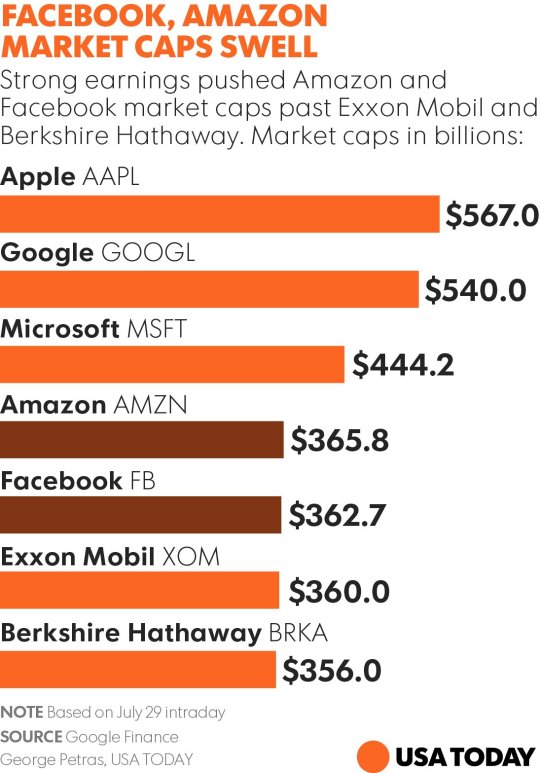
    Earlier this month, I came across the following chart from USA today. 

    image

    It was based on market caps as at July 29 and so the order wouldn’t look quite the same today. Still, here are the largest companies by market cap and the top 5 are US consumer-facing technology firms.

    Remember when it was a big deal that Apple had surpassed Exxon Mobil as the world’s most valuable company?

    We are living in a tech-driven world.

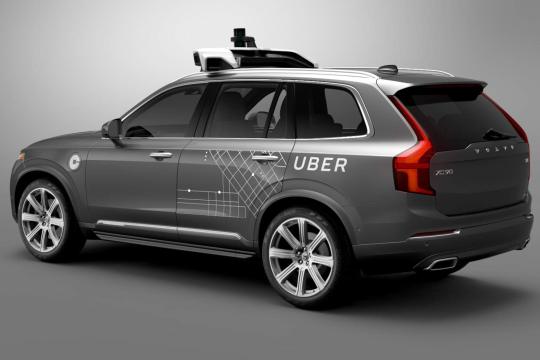
    Then yesterday, I was reading this New York Times article talking about Uber’s acquisition of Otto (a startup focused on self-driving truck technology) and its plans to allow riders in Pittsburgh to summon self-driving vehicles later this month.

    The vehicle will be a tricked out Volvo:

    image

    These two snippets from the NY Times stood out for me:

    Suddenly, it seems, both Silicon Valley and Detroit are doubling down on their bets for autonomous vehicles. And in what could emerge as a self-driving-car arms race, the players are investing in, or partnering with, or buying outright the specialty companies most focused on the requisite hardware, software and artificial intelligence capabilities.

    “There’s an urgency to our mission about being part of the future,” Travis Kalanick, Uber’s chief executive, said on Thursday in an interview. “This is not a side project. This is existential for us.

    The way it will work in Pittsburgh this summer is that the self-driving Volvos will still arrive with a driver, in addition to a sidekick in the passenger seat taking notes about how the vehicle is performing. But the goal is to start weaning us off of human drivers. These pilot rides will be free to start.

    This is quite possibly the start of a general change in terms of the way cities operate (quote from Bloomberg):

    In the long run, Kalanick says, prices will fall so low that the per-mile cost of travel, even for long trips in rural areas, will be cheaper in a driverless Uber than in a private car. “That could be seen as a threat,” says Volvo Cars CEO Hakan Samuelsson. “We see it as an opportunity.”

    Uber is currently logging about 100 million miles per day. Hopefully it is clear at this point that this is not as simple as ride sharing vs. traditional taxis. Cities who are thinking about it in this way are thinking short-term and missing the bigger picture.

    Companies such as Uber, Tesla, and Google are aiming for a fundamental rethink of urban mobility. There is an arms race going on that I believe will completely eradicate the need for human drivers.