Daily insights for city builders, delivered every morning at 6 AM ET. I’m Brandon Donnelly — a Toronto-based real estate developer and founder of Globizen. I’ve been writing here since 2013.
This week it was announced that US president Joe Biden has revoked a number of Presidential Actions, one of which is Executive Order 13967 — Promoting Beautiful Federal Civic Architecture.
Signed on December 18, 2020 by former president Trump, the order, which I wrote about last February, encouraged the use of “classical and traditional architecture” for all federal buildings.
Part of the argument was that too many buildings are being made for only architects to appreciate. This includes, you know, modern architecture and styles like brutalism.
Well that order has been revoked and that means that “beautiful” federal civic architecture is now free to be anything it wants. Look to the past, look to today, and/or look to the future.
What is the right way to do heritage preservation? How should you approach an addition to an existing building? I was reminded of this topic this week, which then reminded me of a post I wrote last summer when this issued flared up in Ottawa because of the “Chateau Laurier battle.” The takeaway from last year’s post was this: “We cannot recreate the past, only parody it.” Indeed, the Province of Ontario maintains that “legibility” is an important principle in the conservation of built heritage properties. People should be able to distinguish the new from the old. Don’t blur the distinction.
I will also say that in architecture school they instil in you the ideas that buildings should be honest, they should reflect the current milieu, and that materials should be truthful. What this loosely means is that you want to use materials where they are most appropriate and you want to reveal their true nature. Don’t pretend that things are something they are not. i.e. Don’t be fake. At the same time, I very early on learned that most people don’t give a shit about the kind of nuanced and theoretical discussions that happen within architecture schools. They like what they like.
And there’s a big segment of the market that wants buildings to look as they did a long time ago. They want tradition. They want historic. Or they at least want some sort of “transitional” style that sits somewhere between old and kind of new. They want architects like Robert A.M. Stern and Richard Wengle, both of which are extremely popular and talented. So really, who am I to judge? As most of you will know, I’m a modernist. I am more interested in the future than I am in the past. But I recognize that the past is important and should not be forgotten. How best to do that is up for debate.
We’ve taught generations of architects to speak out as artists, but we haven’t taught them how to listen.
This is a line from a recent New York Times op-ed that has been making the rounds online today called: How to Rebuild Architecture.
The premise of the article is that architects have marginalized themselves by being pompous elitists who increasingly serve only the rich and don’t respond to public opinion about architecture.
For too long, our profession has flatly dismissed the general public’s take on our work, even as we talk about making that work more relevant with worthy ideas like sustainability, smart growth and “resilience planning.”
The author’s recommendation is that architects need to get better at listening to their clients and listening to the public.
Reconnecting architecture with its users — rediscovering the radical middle, where we meet, listen and truly collaborate with the public, speak a common language and still advance the art of architecture — is long overdue. It’s also one of the great design challenges of our time.
What’s interesting about this viewpoint is that it’s precisely the sort of thing that entrepreneurs and business people are trained to do today. The mantra is that you should never build your product or service in isolation. Get out of the building. Talk to customers. Get feedback. Adjust. And iterate.
But architects don’t like to do this. Why is that?
The answer, at least partially, comes down to taste. As the author correctly pointed out, the kinds of buildings that architects like are often not the same ones that the general public likes.
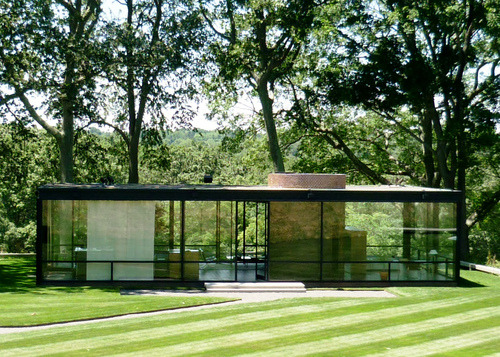
I don’t have any hard data to support this claim, but I suspect that most people out there – particularly those with money – would prefer their home to look like something that Robert Stern designed as opposed to a glass box designed by Philip Johnson.
And yet the latter is what architects and architecture students make pilgrimages to. I certainly did when I was in architecture school.
In fact, I think you’d have a difficult time getting into any architecture school right now with a portfolio of work as traditional as the work of Robert Stern. It’s simply not part of the architectural discourse at this stage.
So to many architects, it can be difficult – even painful – to listen to what the public wants. Architects are not trained in terms of market size and profit maximization. It’s about passion. It’s a labor of love. And when you’ve already fallen in love, it can be hard to change your mind.